Why Your Infrastructure Needs a Partner with Proven Skills

Why the Advantages of a Company Built for Scale and Precision Matter for Your Infrastructure

modern electrical infrastructure Denver Colorado - advantages of a company built for scale and precision

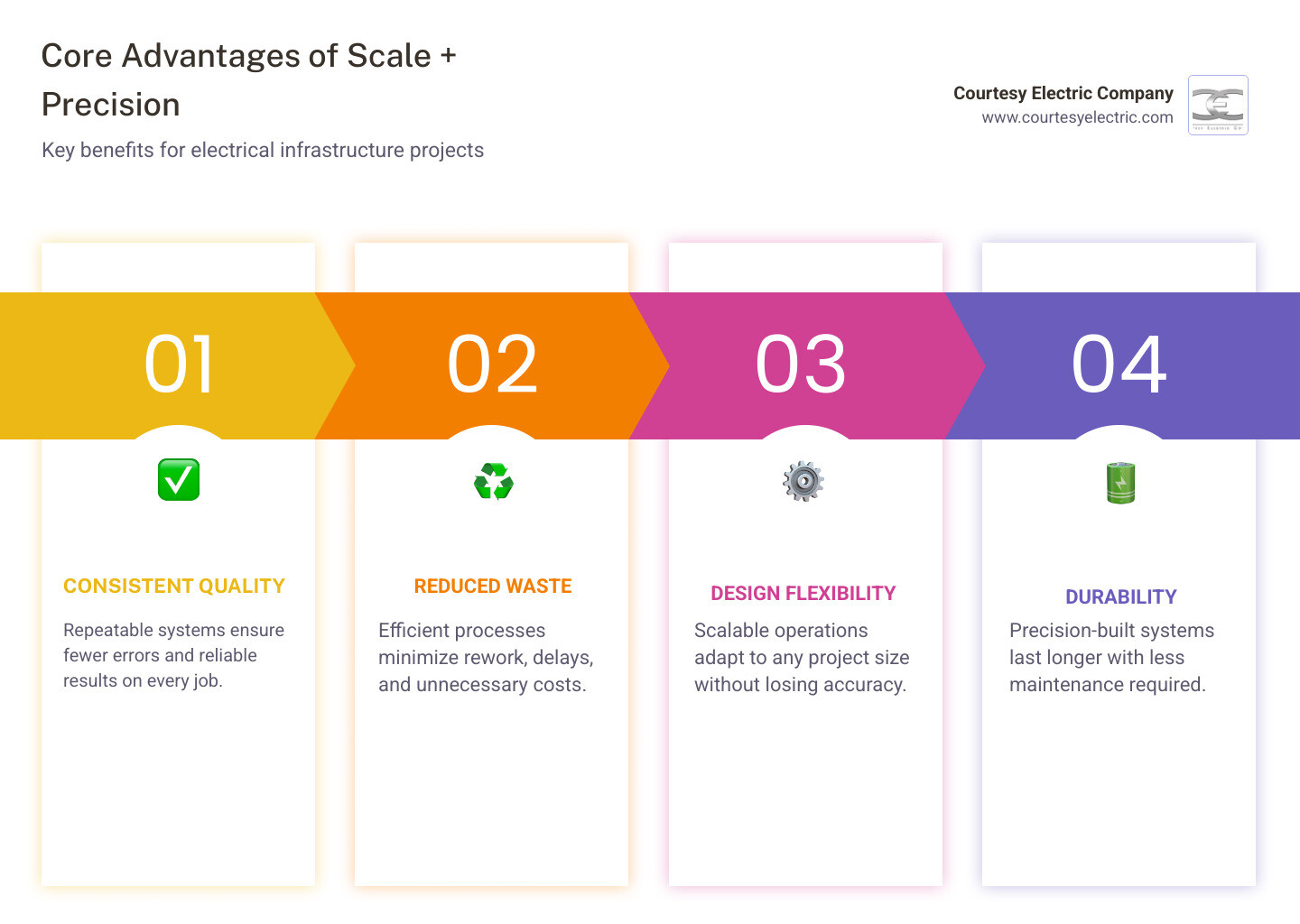
The advantages of a company built for scale and precision are clear and measurable — and they matter especially when you're trusting someone with your home's electrical infrastructure:

  • Consistent quality — Repeatable systems mean fewer errors and more reliable results on every job
  • Reduced waste — Efficient processes cut down on rework, delays, and unnecessary cost
  • Design flexibility — Scalable operations adapt to your project without sacrificing accuracy
  • Faster delivery — Streamlined workflows get the job done right and on schedule
  • Durability — Precision-built systems last longer and require less ongoing maintenance
  • Operational agility — A company built for scale can handle one home or an entire development without skipping a beat
  • Access to better technology — Scale enables investment in smarter tools, from AI-assisted planning to advanced diagnostics

Here's why that matters to you as a homeowner or developer in Colorado: most electrical problems — outages, panel failures, integration breakdowns — don't come from bad intentions. They come from contractors who aren't set up to deliver consistent, high-accuracy work at any volume. A company built for scale and precision closes that gap.

Precision manufacturing dominates roughly 70% of the growing industrial market, and that same principle is reshaping how modern electrical contractors operate. The old model — show up, improvise, repeat — is giving way to something more rigorous: companies that build systems, use data, and scale their expertise without losing accuracy.

I'm David Meyer, Vice President of Courtesy Electric, a Colorado electrical contractor with over 50 years of experience where I've seen how the advantages of a company built for scale and precision separate contractors who deliver from those who disappoint. That foundation shapes everything we do, from single-family panel upgrades to large multi-family infrastructure builds.
infographic showing the scale-precision loop benefits for electrical contractors and homeowners - advantages of a company

Defining the Modern Model: Scale Meets Precision

In the business world of April 2026, the definition of a successful company has shifted. We no longer measure "scale" simply by how many employees are on the payroll. Instead, modern leaders look at leverage. A company built for scale today is a "Leverage-First Organization." This means we prioritize systems, automation, and smart alliances to achieve outsized impact without the bloat of traditional, labor-heavy models.

In the electrical industry, this looks like moving away from "random acts of contracting" toward a structured, precision-based approach. While traditional models often struggle with "diseconomies of scale"—where getting bigger just makes things more expensive and disorganized—a precision-scaled model does the opposite. It uses "thin-slicing" to break down complex projects into repeatable, high-accuracy tasks.

By focusing on "economic truth"—the reality that growth must be earned through efficiency rather than just financial theater—we ensure that every project, whether it's a backup generator install in Highlands Ranch or a large-scale development in Denver, benefits from the same rigorous standards. This momentum compounds. When a company builds a machine to "stack the bricks" rather than just stacking them by hand, the results are more durable and the growth is more sustainable.
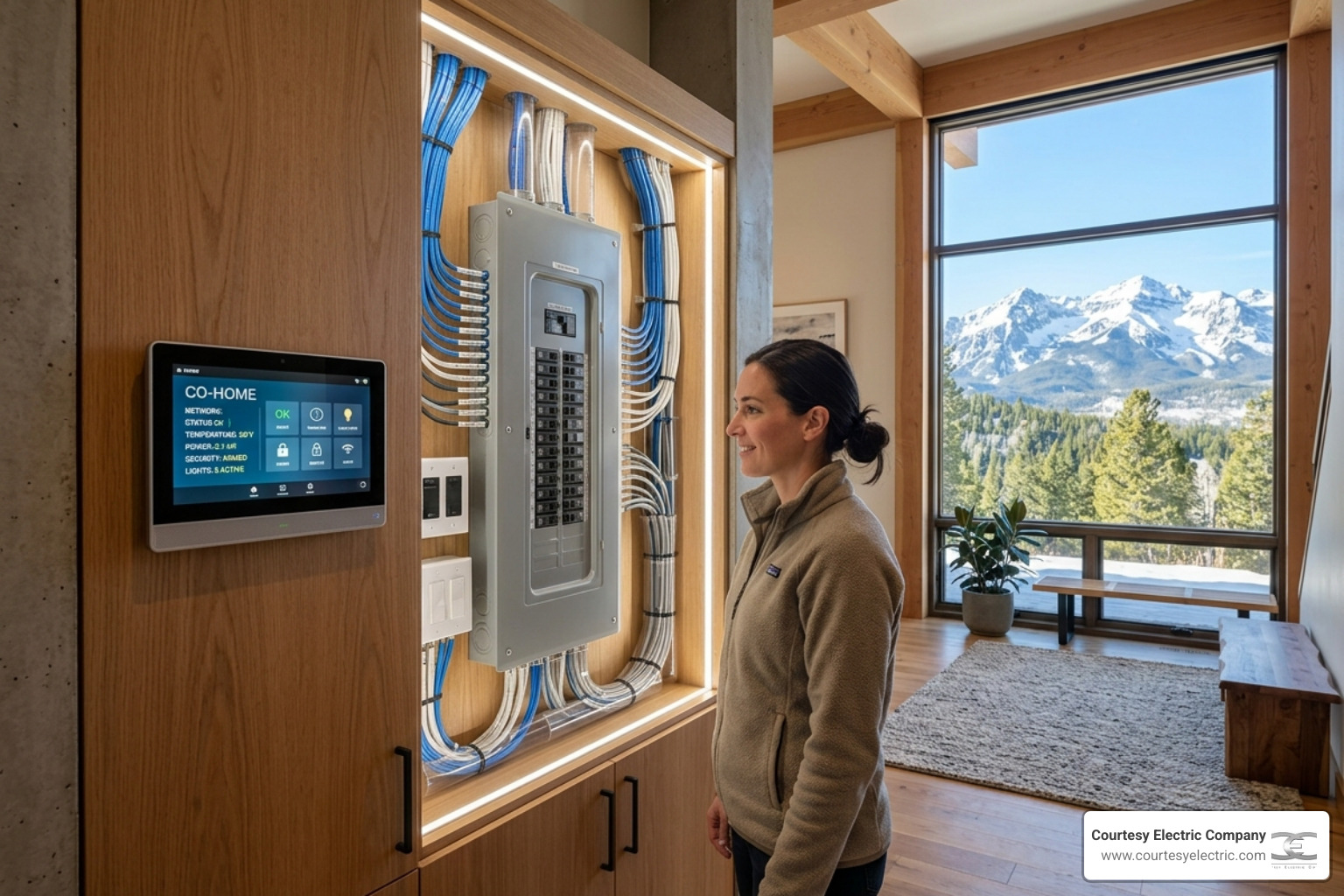
high-tech electrical systems and smart panels in a modern Colorado home - advantages of a company built for scale and

At Courtesy Electric, we’ve spent decades refining this balance. You can learn more about our mission and history to see how we’ve evolved from a local shop in 1976 to a precision-driven leader in the Front Range.

The Core Advantages of a Company Built for Scale and Precision

When a company is engineered for both size and accuracy, the customer wins in several specific ways. In high-accuracy industries like aerospace or medical manufacturing, precision is a requirement for safety. We believe residential and multi-family electrical infrastructure should be held to that same standard.

1. Superior Product Quality and Consistency

Precision is the ability of a system to repeatedly produce identical, high-quality results. In manufacturing, this might mean a CNC machine hitting a tolerance of ±0.05 mm. In electrical work, it means every wire pull, every panel termination, and every smart-home integration is performed to a documented, high-standard specification. This reduces defects and ensures that your system functions exactly as designed, every time.

2. Design Flexibility and Customization

One of the greatest myths is that "scale" means "cookie-cutter." In reality, precision technologies like 3D modeling and advanced CAD software allow for incredible customization. We can adapt a power backup solution specifically for a unique home in Black Forest while maintaining the same structural integrity we use for a hundred-unit complex.

3. Reduced Waste and Cost Efficiency

Precision manufacturing is inherently cost-efficient because it minimizes material waste and rework. When you get it right the first time, you don't spend money fixing mistakes. This efficiency allows scaled companies to invest in better materials and higher-tier equipment—like SPAN smart panels or Franklin battery storage—without passing on the costs of inefficiency to the client.

4. Increased Durability

Systems built with precision simply last longer. Whether it's a high-capacity scale measuring displacement with SAW technology or a home electrical grid, tight tolerances and exact specifications mean less wear and tear on components over time.

To see these benefits in action, browse our completed projects across the Front Range, which showcase everything from residential upgrades to complex infrastructure.

How Precision Drives High-Accuracy Results

The "how" behind these advantages often involves Industry 4.0 solutions. Technologies like AI-driven diagnostics, automation, and specialized machinery (like CNC machining in the parts we source) ensure that components meet rigorous standards like ISO 9001:2015.

In the electrical field, we use these principles to manage "tight tolerances" in energy distribution. As homes become more complex—incorporating EV charging, solar, and battery backups—the margin for error shrinks. A precision-scaled company uses specialized expertise and advanced tools to ensure these systems play nicely together.

Why Precision is One of the Advantages of a Company Built for Scale and Precision

The primary reason precision is such a heavy-hitter is repeatability. In the past, a great electrical job depended entirely on which technician showed up that day. In a precision-built company, the system ensures the quality. By using standardized playbooks and high-accuracy tools, we reduce the "human error" factor. This leads to a massive reduction in defects, which is why precision manufacturing now holds 70% of the market share over conventional methods.

For homeowners, this means peace of mind. Our residential services are built on these repeatable frameworks, ensuring that your home’s "heart"—the electrical panel—is installed with the same accuracy as a medical device or an automotive component. Check out some of our featured projects to see the level of detail we bring to every job.

Scaling Without the Overhead: The Leverage-First Approach

Traditional growth often leads to "bloat"—more managers, more meetings, and more mistakes. Modern "20x companies" (those that produce 20 times the output of their peers) avoid this by using a "leverage-first" approach. They use technology to handle the "table-stakes" activities, allowing their best talent to focus on high-impact work.

This means using smart infrastructure to scale. For example, when building for builders and developers, we don't just add more labor; we add better systems. We use an "audit-to-agent" mindset, where repetitive tasks are automated or streamlined, ensuring that our skilled electricians are spending their time on complex problem-solving rather than administrative friction.

Maximizing the Advantages of a Company Built for Scale and Precision Through Technology

We are currently seeing a revolution in "Sovereign Internal Automation." For a company like ours, this involves:

  • Smart Panels: Using SPAN panels to give homeowners digital control over every circuit.
  • Predictive Analytics: Monitoring system health to catch a failure before it happens.
  • Digital Twins: Creating digital maps of electrical infrastructure for large-scale communities to streamline future maintenance.

Real-World Impact Across High-Stakes Industries

The success of the scale-and-precision model isn't theoretical. It’s the reason why companies like Google and Uber reached the S&P 500 in just six years, compared to the 36 years it took legacy giants.

Feature Labor-Heavy Model (Traditional) Leverage-First Model (Modern)
Growth Method Linear hiring (more people = more work) Exponential leverage (systems = more work)
Error Rate High (dependent on individual skill) Low (dependent on system precision)
Response Time Slow (bureaucratic layers) Rapid (agile frameworks)
Cost Control Difficult (overhead grows with size) High (fixed costs spread over volume)
Quality Variable Consistent and Repeatable

This model is vital in industries like:

  • Automotive: Where precision parts are essential for assembly line speed.
  • Medical: Where a 0.01 lb difference in medication measurement can be life-altering.
  • Residential Infrastructure: Where we apply these same high-stakes standards to your home.

Our multifamily residential portfolio illustrates this perfectly. Managing the electrical needs of hundreds of families in a single complex requires a level of precision and scale that traditional "man-with-a-truck" operations simply cannot match.

Frequently Asked Questions about Scale and Precision

What is a company built for scale and precision?

It is an organization designed to grow its output and impact through systems, technology, and leverage rather than just adding headcount. It maintains "tight tolerances" in its operations, ensuring that as it grows, the quality of its service remains consistently high.

How does precision manufacturing improve product quality?

By using advanced machinery (like CNC) and software (like CAD), precision manufacturing eliminates the variances found in manual work. This results in fewer defects, better fitment of components, and a more reliable end product.

Why is scalability essential for modern growth?

In a dynamic market like the Colorado Front Range, demand can shift rapidly. Scalability allows a company to adjust its production volumes or service capacity quickly without losing the accuracy or quality that customers expect.

Conclusion

In the end, the advantages of a company built for scale and precision come down to sustainability and trust. Whether you are a homeowner in Parker looking for a reliable backup generator or a developer in Denver planning a new community, you need a partner who won't buckle under the weight of a complex project.

By choosing a partner that prioritizes leverage over labor and precision over guesswork, you ensure that your infrastructure is built to last. At Courtesy Electric, we’ve spent half a century proving that you don't have to choose between a company that is "big enough to handle it" and "accurate enough to do it right." We are built for both.

Ready to see what a precision-scaled electrical partner can do for your next project? Learn more about us and let’s build something durable together.

Why Specialized Expertise is the Key to Better Housing Solutions

Why How Multi Family and Residential Expertise Sets Us Apart Matters More Than Ever in 2026

multi family and residential housing development Denver Colorado - how multi family and residential expertise sets us apart

How multi family and residential expertise sets us apart comes down to one thing: understanding that not all housing is built — or wired — the same way.

Here is a quick breakdown of what that difference looks like in practice:

Factor General Electrical Contractor Multi-Family & Residential Specialist
Infrastructure design Basic load estimates Full master planning for high-density systems
Project scope Single unit focus Entire building or development lifecycle
Regulatory knowledge Standard code compliance Fair Housing Act, ADA, HUD, EPA standards
Technology integration Standard installs Smart panels, EV charging, battery storage, microgrids
Risk management Per-job basis Portfolio-level vacancy and cash flow awareness
Community impact Minimal involvement Community engagement and local government collaboration

Housing in Denver and across the Colorado Front Range is getting more complex. Urbanization is pushing demand for multi-family developments — from duplexes to large mixed-use towers — while homeowners are simultaneously asking for smarter, more resilient single-family systems. The US multifamily building market exceeded $110 billion in value in 2021 and has continued to climb. That scale brings serious infrastructure demands that a generalist simply is not equipped to meet.

The gap between a contractor who can wire a building and one who truly understands how multi-family and residential systems differ — in load balancing, shared utilities, code compliance, and long-term durability — is wider than most people realize.

I'm David Meyer, Vice President of Courtesy Electric, a Colorado electrical contractor with roots going back to 1976. Having worked both in the field and in leadership, I've seen how multi family and residential expertise sets us apart from contractors who treat every project the same. That hands-on foundation shapes everything we do — and it's what this article is about.

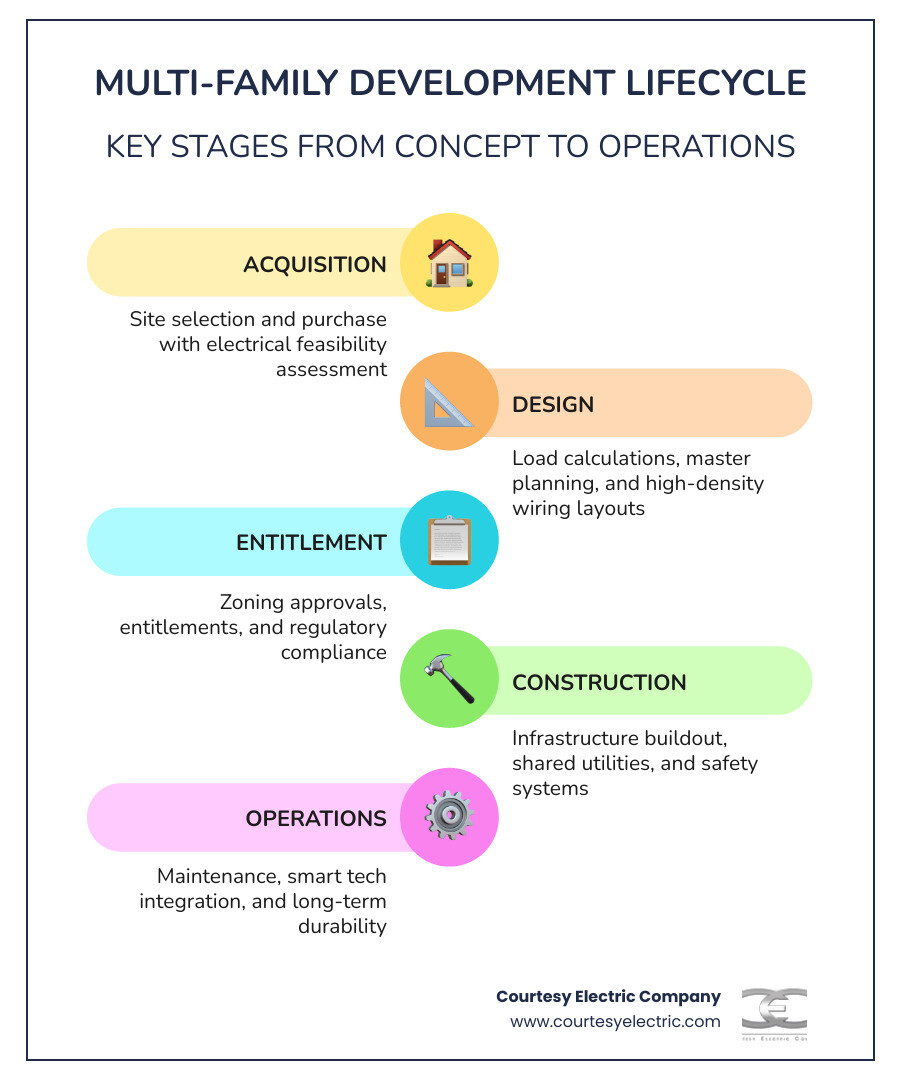
Infographic showing multi-family development lifecycle stages: acquisition, design, entitlement, construction, operations

Defining the Landscape: Multi-Family vs. Single-Family Properties

To understand why specialized knowledge is vital, we first have to define the playground. In real estate, "residential" is a broad umbrella, but the electrical guts of a single-family home in Parker and a 50-unit apartment complex in Denver are worlds apart.

Multi-family housing is defined as any property with more than one household living in it simultaneously. This ranges from a simple duplex or triplex to garden apartments, high-rise condominiums, and massive student housing complexes. While a single-family home is a self-contained ecosystem, a multi-family building is a shared organism.

Electrical Feature Single-Family Home Multi-Family Development
Utility Feed Single lateral/service drop High-voltage transformers & switchgear
Metering One master meter Complex individual bank metering
Load Balancing Simple household demand High-density diversity factors
Safety Systems Standard smoke/CO detectors Integrated fire alarms & emergency lighting
Common Areas Private lighting/power Shared hallways, elevators, & amenities

The population density in multi-family units creates a unique set of challenges. You aren't just powering one kitchen; you're powering fifty. This requires a massive leap in scalability and a deep understanding of zoning requirements. When we look at our residential services, we see how individual homeowners prioritize comfort and tech. When we look at our Single Family Residential Portfolio, the focus is on bespoke, high-quality installations for a single client. But in multi-family, we are designing for hundreds of stakeholders at once.

How multi family and residential expertise sets us apart in infrastructure design

Infrastructure is where the "magic" happens—or where the disasters begin. For a multi-family project to succeed in 2026, the electrical master planning must be flawless from day one. We don't just look at the blueprints and start pulling wire. We engage in rigorous load calculations to ensure the local grid can handle the surge of a new development.

Our expertise in entitlements and master planning allows us to work alongside developers to ensure the site is viable. High-density wiring isn't just about more wire; it’s about efficient routing, heat dissipation in stacked units, and ensuring that a fault in Unit A doesn't leave Unit B through Z in the dark. You can see the results of this meticulous planning in our Multifamily Residential Portfolio, where we’ve successfully powered large-scale communities across the Front Range.

Unique technical requirements for diverse housing types

Different housing types demand different technical "personalities." A luxury condo high-rise in downtown Denver requires low-voltage integration for smart building access and high-speed data, while a suburban garden apartment might focus more on efficient outdoor lighting and centralized HVAC systems.

Centralized systems—where heating, cooling, or water heating is shared—require specialized control wiring that a standard residential electrician might never encounter. Furthermore, individual metering is a logistical hurdle; every tenant wants to pay only for what they use, requiring us to design complex meter banks that remain accessible for utility companies but secure from tampering. Above all, fire safety compliance is non-negotiable. In a multi-family setting, the electrical system is the backbone of the life-safety network, from smoke evacuation fans to emergency exit illumination. This is the core of what we do in multifamily electrical work: building for safety at scale.

A large-scale apartment complex under construction in the Colorado Front Range with electrical conduits visible - how multi

Multi-family projects aren't just "built"; they are managed through a full lifecycle. Our team doesn't just show up for the "rough-in" and disappear. We understand the acquisition strategies of our partners—knowing that when an investor buys an underperforming asset, they need a contractor who can handle a full electrical "repositioning."

Repositioning often involves taking an older building with outdated, dangerous "Stab-Lok" panels or aluminum wiring and bringing it into the 21st century. This requires operational excellence. We have to perform these upgrades while residents are living there, which takes a level of coordination and respect that goes far beyond basic technical skill. Every electrician on our team is trained to handle these high-pressure, high-stakes environments where risk management is the top priority.

Strategic advantages of how multi family and residential expertise sets us apart

Why do developers choose us? Because we understand the business of real estate. Multi-family investing is prized for its cash flow stability and resilient nature. In 2026, with urbanization demand at an all-time high, a 100-unit building with two vacancies still operates at 98% occupancy. Compare that to a single-family rental where one vacancy equals a 100% loss of income.

Our team brings market insights that help developers secure commercial financing. Lenders want to see that a project has a "future-proof" electrical plan. By including EV charging stations and energy-efficient systems, we help mitigate the risk of future obsolescence. Our MultiFamily Electricians are experts at installing systems that increase the long-term value of the asset, making the property more attractive to institutional investors and residents alike.

Handling complex entitlements and community engagement

Before a single shovel hits the dirt, there is a mountain of paperwork and public meetings. Entitlements—the legal process of getting permission to build—can be a minefield. We assist our partners with site evaluations and value engineering. If a proposed design is too expensive to power, we find a smarter way to do it without sacrificing quality.

We also understand the importance of local government collaboration. In places like Highlands Ranch or Black Forest, community engagement is key. Residents want to know that a new development won't strain the local grid or create light pollution. We design systems that respect these local concerns, using dark-sky-compliant lighting and energy-saving technologies that prove the developer is a "good neighbor."

Innovation and Sustainability in Modern Housing Solutions

The year 2026 has brought a revolution in how we power our lives. It’s no longer just about keeping the lights on; it’s about energy independence. This is where our residential expertise truly shines. We are seeing a massive shift toward smart home technology that allows residents to monitor their usage in real-time.

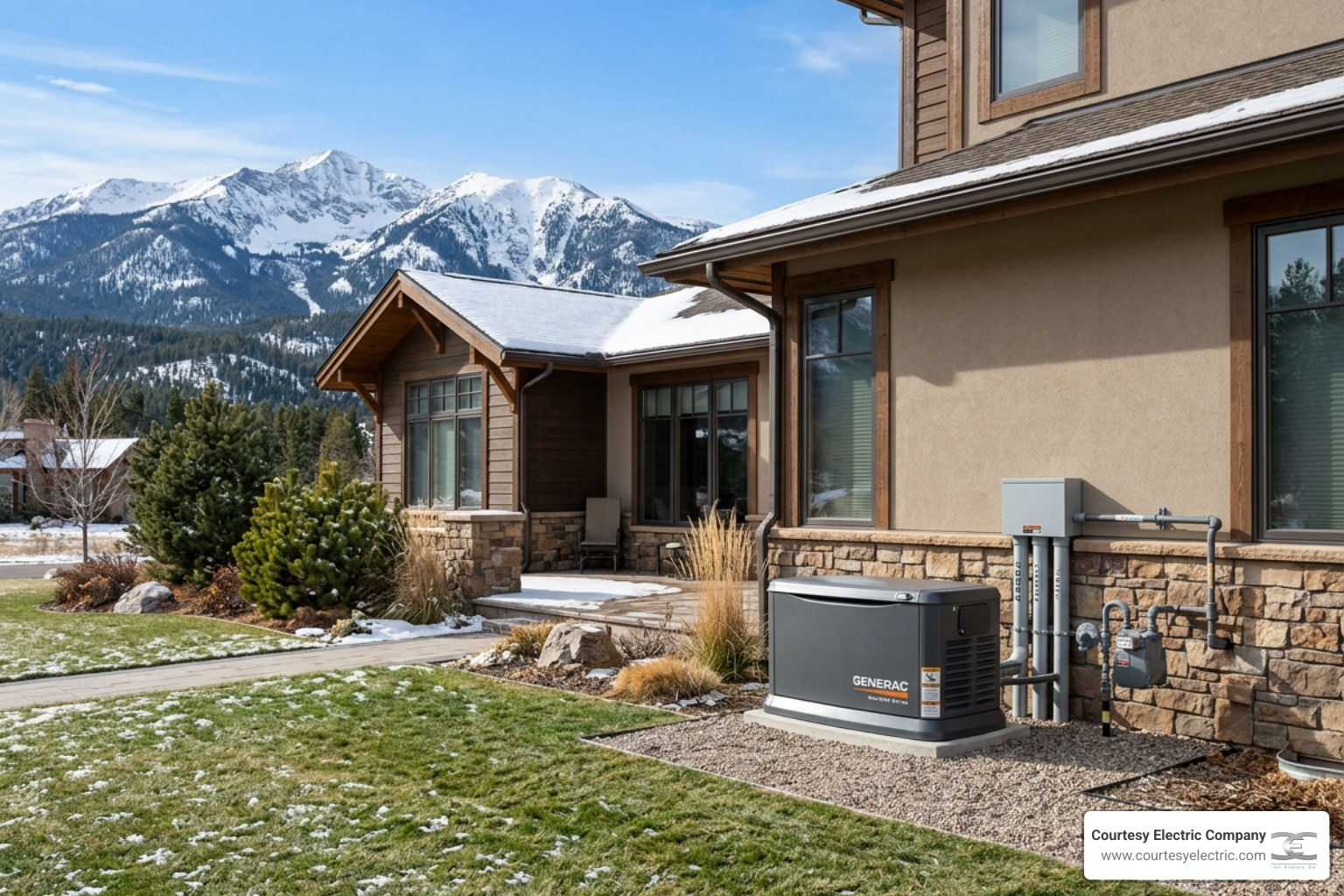
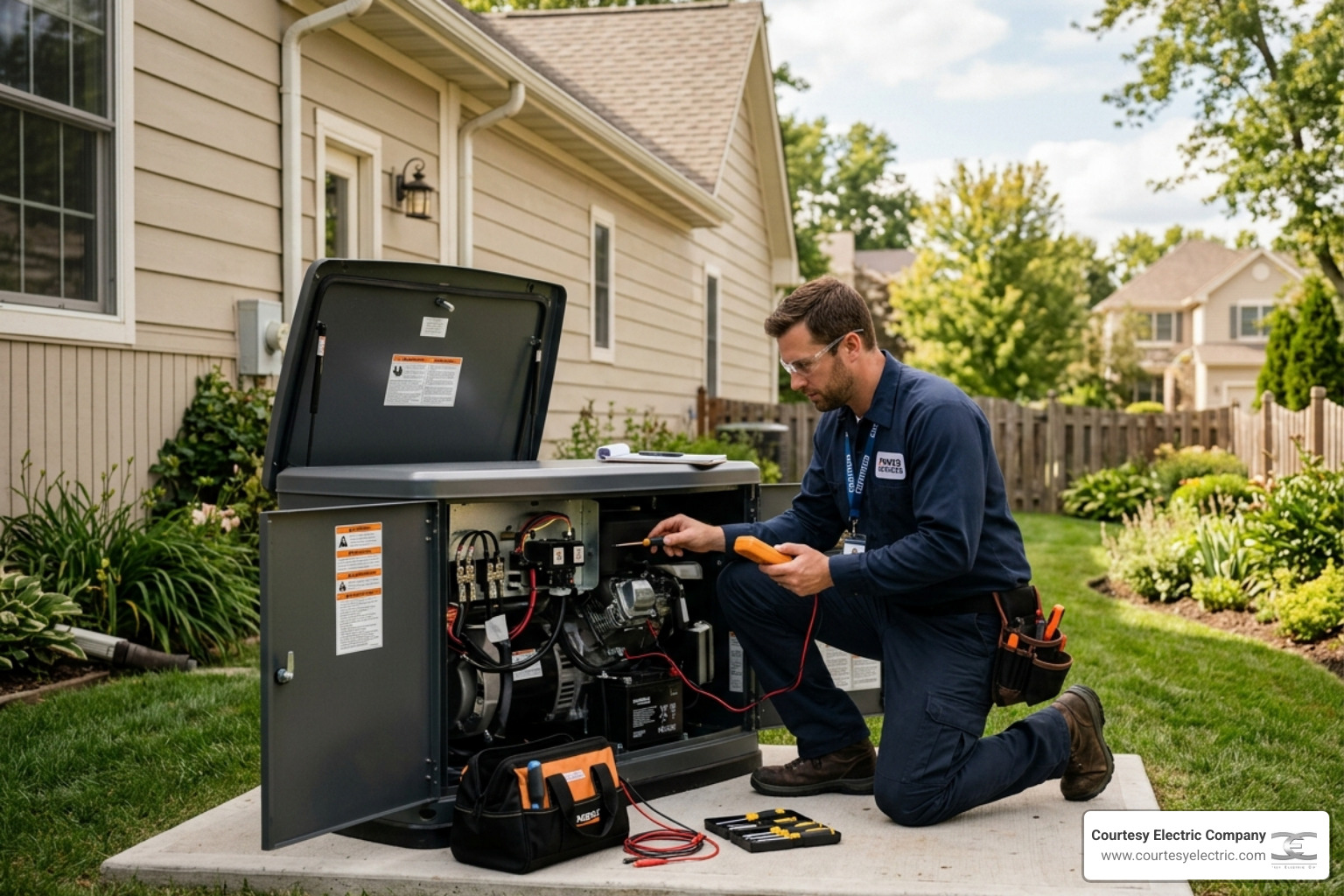
We specialize in high-end solutions like SPAN panels, which replace the "dumb" breaker box of the past with a smart interface that can prioritize loads during a power outage. Combined with Franklin battery storage, a home or even a small multi-family unit can keep essential systems running indefinitely. For those who want the ultimate peace of mind, we are premier installers of Generac backup power and Cummins generators. These aren't just luxuries anymore; in the face of Colorado's unpredictable weather, they are essential infrastructure.

Solving complex challenges through how multi family and residential expertise sets us apart

The regulatory landscape of 2026 is dense. Between ADA (Americans with Disabilities Act) requirements for accessible switching and EPA regulations regarding energy consumption, there is zero room for error. We ensure that every multi-family project meets HUD standards for safety and habitability.

Our Residential team is specifically trained in the nuances of Fair Housing Act compliance. This means ensuring that electrical outlets, thermostats, and intercoms are at the correct height for all residents. We also focus heavily on energy efficiency. By using LED retrofitting, smart sensors, and high-efficiency transformers, we help property owners reduce their "Triple Net" expenses and improve their bottom line.

Integrating future-proof technology in Denver developments

If you are building in the Front Range today and you aren't thinking about EV charging, you are building a relic. We integrate EV charging stations into every multi-family design, from shared parking garages to individual townhome stalls. But it goes further than that. We are looking at:

  • Microgrids: Allowing a community to generate and store its own power.
  • Sustainable Materials: Using low-carbon conduits and recyclable wiring components.
  • Real-time Data Analytics: Giving property managers the tools to see where energy is being wasted across a 200-unit portfolio.
  • Smart-Grid Readiness: Ensuring the building can "talk" to Xcel Energy or local co-ops to shed load during peak times, saving everyone money.

Frequently Asked Questions about Specialized Housing Expertise

What defines multi-family housing compared to single-family units?

Multi-family housing refers to buildings designed to house multiple separate families or households. The key technical difference lies in the shared infrastructure. While a single-family home has its own dedicated utility connection and yard, multi-family units share walls, floors, roofs, and communal spaces like lobbies or gyms. From an electrical perspective, this means managing a massive "master" service that is then subdivided into individual metered units.

What are the key benefits of multi-family investing in 2026?

The biggest benefit is the economy of scale. It is significantly more efficient to maintain one roof and one electrical service for 20 units than it is for 20 separate houses. Furthermore, multi-family properties offer resilient cash flow; even with a few vacancies, the property remains profitable. In the current 2026 market, the high demand for urban living makes these properties "recession-resilient" assets that attract favorable commercial financing.

Why is specialized electrical expertise critical for multi-family projects?

Because the stakes are higher. If a single-family home has an electrical fault, one family is inconvenienced. If a 100-unit building has a major switchgear failure, 100 families are in the dark, elevators stop working, and fire pumps may fail. Specialized expertise ensures system redundancy, complex load balancing (so everyone can run their AC at 5:00 PM without blowing a fuse), and strict adherence to the life-safety codes that keep high-density communities safe.

Conclusion

At the end of the day, how multi family and residential expertise sets us apart is our commitment to the three pillars of our mission: Quality, Integrity, and Dependability. Whether we are wiring a custom home in Parker or a massive multi-family development in the heart of Denver, we bring the same level of Colorado-bred excellence to the job.

We aren't just contractors; we are partners in building the future of the Colorado Front Range. From the initial design and entitlements to the installation of cutting-edge SPAN panels and Franklin batteries, we provide the specialized knowledge that ensures your housing solution is safe, sustainable, and profitable.

If you are a developer looking for a partner who understands the lifecycle of an asset, or a homeowner looking to protect your family with a Generac standby generator, we are here to help. Learn more about our team and see why Courtesy Electric Company has been the trusted name in Colorado electrical infrastructure since 1976.

Bright Ideas for Spring Outdoor Lighting Maintenance

Why Spring Outdoor Lighting Maintenance Can't Wait

spring outdoor lighting maintenance

Spring outdoor lighting maintenance is the process of inspecting, cleaning, realigning, and testing your outdoor light fixtures after winter — so your system is safe, bright, and ready for the outdoor living season ahead.

Here's a quick overview of what it involves:

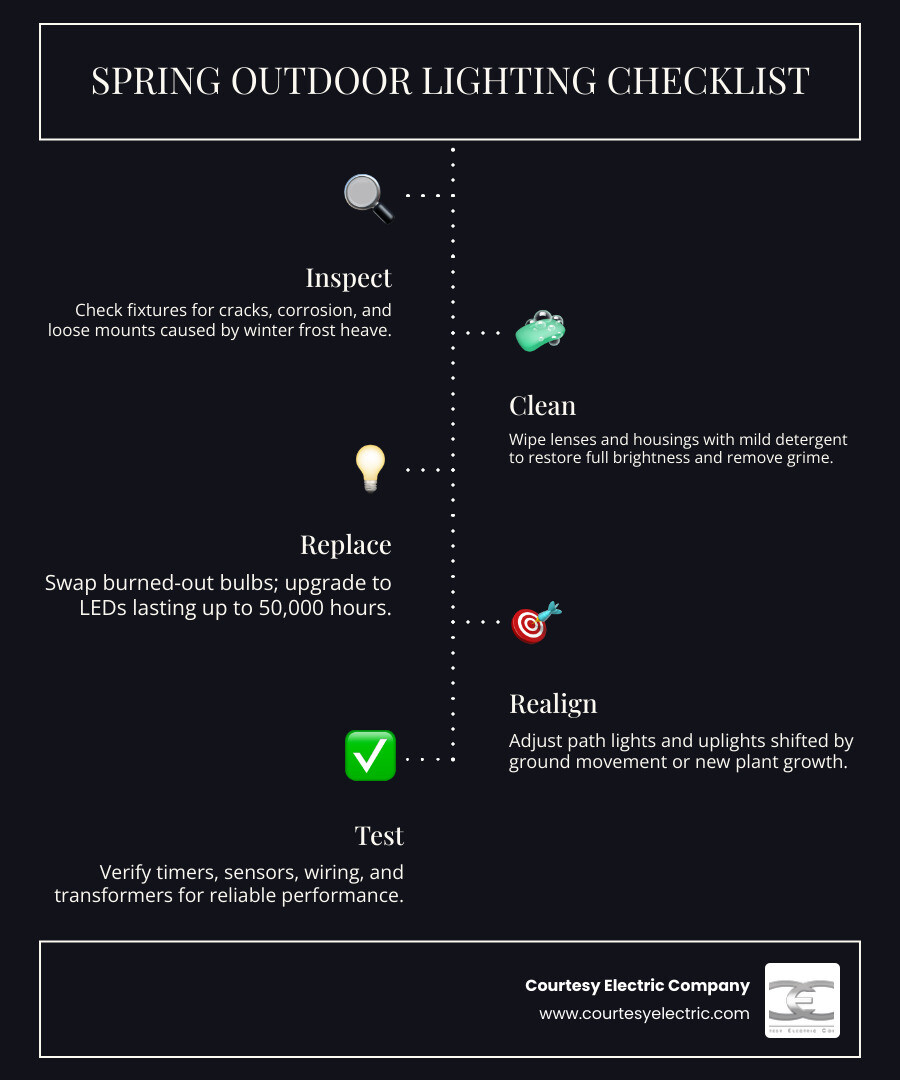
  1. Inspect fixtures for cracks, corrosion, and loose mounts
  2. Clean lenses and housings to restore full light output
  3. Replace burned-out or dimming bulbs (consider upgrading to LED)
  4. Realign path lights and uplights shifted by frost heave or ground movement
  5. Trim overgrown vegetation blocking light beams
  6. Test timers, motion sensors, and photocells for the new season
  7. Check wiring and low-voltage transformers for damage or voltage drops

Winter is hard on outdoor lighting. Freezing temperatures, moisture, and shifting ground can knock fixtures out of alignment, crack lenses, and leave wiring exposed. Then spring arrives — and with it, new plant growth that can quickly block the beams you spent time positioning last fall. By the time you notice a flickering path light or a dark corner of your yard, the problem may have been building for months.

The good news? A focused spring checkup can catch most of these issues early, before they turn into costly repairs or safety hazards. Regular upkeep also extends the life of your fixtures — quality low-voltage LEDs, for example, can last up to 50,000 hours according to the U.S. Department of Energy, but only when the system supporting them is properly maintained.

I'm David Meyer, Vice President of Courtesy Electric — a Colorado-based electrical contractor with nearly 50 years of experience serving homes and properties across the Front Range, where freeze-thaw cycles make spring outdoor lighting maintenance especially critical. In this guide, I'll walk you through exactly what to check, clean, and fix this season so your outdoor lighting performs at its best all year long.

Spring outdoor lighting maintenance checklist infographic with steps: inspect, clean, replace, realign, trim, test, and

Why Spring is the Ideal Time for Maintenance

beautifully lit Colorado landscape in spring April 2026 - spring outdoor lighting maintenance

As we move into April 2026, homeowners across the Denver area and the Colorado Front Range are starting to see the first signs of spring. This transition period is about more than just planting flowers; it is the absolute best time to address your exterior electrical needs. During the winter, the ground undergoes "frost heave"—a process where moisture in the soil freezes and expands, literally pushing light fixtures and stakes out of the ground.

When the ground thaws in the spring, these fixtures often settle in crooked positions or with loose mounts. Furthermore, the shift in daylight savings time means your timers are likely out of sync with the actual sunset. Performing spring outdoor lighting maintenance now ensures that your curb appeal is restored and your property remains secure as you begin spending more time outside.

Restoring Performance After Winter

Colorado winters are notorious for heavy snow accumulation and rapid temperature swings. These conditions often lead to moisture ingress, where melting snow finds its way into unsealed fixtures, potentially causing shorts or corrosion. Additionally, salt from driveways and general winter grime can coat your lenses, significantly dimming the light output. To keep your system running efficiently, check out these Landscape Lighting Maintenance Tips Fraser CO to help combat the effects of our unique high-altitude climate.

Preparing for Outdoor Living Season

Spring is the gateway to evening entertainment on the patio and backyard barbecues. Properly maintained lighting increases your property value and ensures high visibility for guests navigating walkways. Beyond aesthetics, functional lighting is a core part of our Residential Electrical Services, providing the safety and security every Front Range homeowner deserves.

Your Essential Spring Outdoor Lighting Maintenance Checklist

To get your system back in peak shape, we recommend a systematic approach. A thorough visual inspection is the first step, followed by deep cleaning and technical testing. If you are new to the area or just installed a system, our Landscape Lighting Guide Winter Park CO offers a great foundation for understanding how these systems should look when they are working correctly.

Step-by-Step Spring Outdoor Lighting Maintenance: Cleaning

Before you start, always ensure the power is off to avoid any electrical mishaps.

  • Lenses: Use a microfiber cloth and a mild, pH-neutral detergent to wipe away pollen, mud, and hard water stains. Avoid abrasive cleaners that can scratch glass or plastic lenses.
  • Housings: Wipe down the metal or plastic housings to remove spider webs and debris.
  • Insects: Open up any non-sealed fixtures to remove dead insects that may have crawled inside seeking warmth during the winter. Restoring lens clarity can improve your light output by as much as 20% to 30%. If you notice any moisture trapped inside a "sealed" fixture, it may be time for a professional Electrical Service to reseal or replace the unit.

Inspecting for Damage and Wear

Walk your property during the day to look for physical red flags. Check for cracked housings, which are common after a heavy hail season or if a snowplow got a bit too close to the driveway. Look for loose mounts where the soil has softened. Corrosion on the sockets or fixtures is another sign that moisture has compromised the system. For those in more rugged terrain, reviewing the Best Landscape Lighting Services in Winter Park CO can provide insight into the durable fixtures required for mountain environments.

Cleaning and Inspecting Fixtures for Damage

Different materials require different levels of care. While brass and copper fixtures develop a natural patina that many homeowners love, aluminum and plastic fixtures need regular cleaning to prevent the finish from pitting or fading.

Fixture Type Cleaning Frequency Recommended Cleaner
Path Lights Monthly Mild soap & water
Flood/Spot Lights Quarterly Non-abrasive glass cleaner
Well Lights Every 2 Months Clear debris from lens
Transformers Seasonally Dry cloth (check for pests)

Checking Wiring and Connections

One of the most common issues we see during spring outdoor lighting maintenance is exposed cabling. Shifting soil or hungry local wildlife can damage low-voltage wires. If you see wires peeking through the mulch, they are at risk of being cut by a lawnmower or shovel. Inspect for frays or chew marks, especially near the base of the fixtures. Ensuring your wires are properly buried and protected is essential for long-term reliability, as noted in our guide for Landscape Lighting in Fraser CO.

Testing Transformers and Controls

Your transformer is the heart of your system. Check it for "humming" sounds or excessive heat, which could indicate an overload or a looming failure. Use a multimeter to check for voltage drops at the end of long runs. This is also the time to test your Lighting Control systems. Ensure photocells are clean so they accurately detect sunset, and recalibrate motion sensors that might have been triggered by blowing snow all winter.

Managing Vegetation, Realignment, and LED Upgrades

As the Colorado sun gets stronger in April and May, your plants will start to grow—fast. This growth can quickly turn a beautiful accent light into a glare-inducing nuisance or hide a path light entirely.

Adjusting Spring Outdoor Lighting Maintenance for New Growth

Take a walk through your yard at night to see how the "light portraits" have changed.

  • Pruning: Trim back any branches or shrubs that are touching the fixtures.
  • Realignment: Adjust the angle of your uplights to account for new canopy growth.
  • Overlap: Path lights should ideally have a 30% to 50% beam overlap to ensure there are no dark "trip hazards" between fixtures. Properly managing your foliage ensures that your lights highlight your landscape rather than getting swallowed by it. For more tips on design, see the Best Landscape Lighting Guide Centennial CO.

The Benefits of Upgrading to LED

If you are still using old halogen bulbs, spring outdoor lighting maintenance is the perfect time to switch to LED. Quality low-voltage LEDs can last up to 50,000 hours, which is nearly 25 times longer than traditional bulbs. They are incredibly energy-efficient and come in various color temperatures. We typically recommend a warm 2700K to 3000K for residential landscapes to create an inviting, high-end look. Upgrading is a simple way to modernize your Residential Electrical Services and lower your monthly utility bills.

Frequently Asked Questions about Spring Outdoor Lighting Maintenance

How often should I clean my outdoor light fixtures?

We recommend a deep clean every 3 to 6 months. In the Denver area, pollen season in late spring and dust storms can create a film on your lenses faster than you might expect. A quick monthly wipe-down of path lights will keep them looking their best between major maintenance sessions.

Can I replace my own landscape lighting bulbs?

Yes, most homeowners can handle bulb replacement. However, you must ensure the new bulbs are compatible with your transformer's voltage (usually 12V for landscape systems) and match the wattage of the existing system to avoid overloading the circuit. Always turn off the power before reaching into a fixture.

What are the signs that my lighting system needs professional repair?

If you notice flickering lights, dimming across an entire zone, or breakers that frequently trip, there is likely an underlying electrical issue like a short circuit or a failing transformer. Persistent moisture inside a "sealed" unit is also a sign that the fixture's integrity has failed. In these cases, it's safest to call for a professional Electrical Service to diagnose the problem.

Conclusion

Taking the time for spring outdoor lighting maintenance ensures that your home remains a beacon of safety and beauty throughout the year. From the Highlands Ranch to the Black Forest, the unique Colorado climate demands a little extra TLC for our outdoor electrical systems. Whether you are looking for a simple tune-up or a full system upgrade to modern LED technology, our team at Courtesy Electric Company is here to help.

We have been serving the Denver and Colorado Front Range area since 1976, specializing in everything from smart home integrations to robust backup power solutions. Don't let a minor winter issue turn into a major summer headache. Schedule your professional spring outdoor lighting maintenance with Courtesy Electric Company today and let us help you keep your property shining bright.

Essential Electrical Safety Tips for a Spark-Free Home

Why Electrical Safety Tips Every Homeowner Should Know Can Save Lives — and Your Home

electrical safety tips every homeowner should know

Electrical safety tips every homeowner should know can mean the difference between a safe home and a devastating fire or injury. According to the U.S. Consumer Product Safety Commission, roughly 31,000 home electrical fires occur every year — and the majority happen while families are asleep, between midnight and 6:00 a.m.

Here are the core electrical safety tips every homeowner should prioritize:

  1. Schedule annual electrical inspections with a licensed electrician
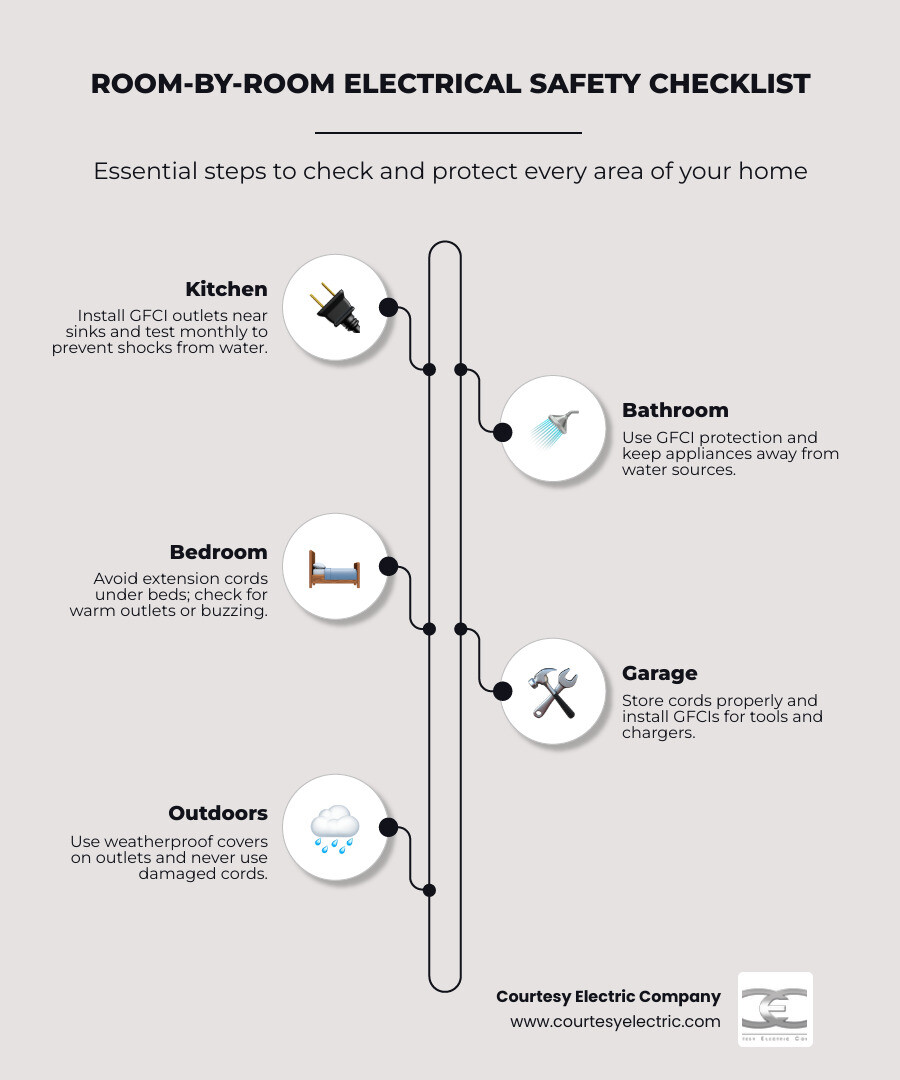
  2. Install GFCI outlets in kitchens, bathrooms, garages, and outdoor areas
  3. Never overload outlets or power strips with high-wattage appliances
  4. Replace frayed or damaged cords immediately — don't tape or ignore them
  5. Use extension cords temporarily only — never as permanent wiring
  6. Install AFCI breakers to protect against dangerous arc faults
  7. Know where your main breaker is and how to shut off power quickly
  8. Test GFCI outlets monthly and smoke detectors regularly
  9. Unplug appliances when not in use, especially overnight
  10. Call a licensed electrician for anything beyond basic tasks like changing a bulb

Electricity powers everything we rely on daily — but faulty wiring, overloaded circuits, and ignored warning signs quietly put homes at risk. The National Fire Protection Association reports that damaged or faulty wiring alone accounts for 69% of all electrical fires. That's a staggering number, and most of those fires were preventable.

Whether your Colorado Front Range home is decades old or newly built, electrical hazards don't announce themselves. They build slowly — behind walls, inside panels, and under rugs — until something goes wrong.

I'm David Meyer, Vice President of Courtesy Electric, a Colorado electrical contracting company with roots going back to 1976, and I've seen how the right knowledge and the right habits keep families safe — because electrical safety tips every homeowner should know aren't just good advice, they're essential protection for your home and everyone in it. In this guide, I'll walk you through the most important steps you can take right now, room by room and system by system.

Room-by-room home electrical safety checklist infographic for homeowners - electrical safety tips every homeowner should

Identifying Hazards and Electrical Safety Tips Every Homeowner Should Know

Identifying potential electrical hazards is the first step toward a safer home. Many homeowners assume that if the lights turn on, everything is fine. However, research shows that faulty or damaged wiring and related equipment cause 69 percent of electrical fires. These issues often hide behind your drywall or inside your Electrical Service panel.

flickering lights in a living room indicating potential electrical issues - electrical safety tips every homeowner should

How do you know if your home is trying to tell you something? You have to look for the "silent" warning signs. One of the most common indicators is flickering or dimming lights, which often suggests a circuit is being overloaded or that there is a loose connection somewhere in the system.

Other red flags include:

  • Persistent Burning Odors: If you smell something like burning plastic or ozone near an outlet or the breaker box, shut off the power immediately. This is a sign of arcing or melting insulation.
  • Buzzing or Sizzling Sounds: Electricity should be silent. If you hear a hum or a pop coming from a switch or outlet, it’s a sign of a loose wire or a failing component.
  • Warm Outlets or Switches: If a wall plate feels hot to the touch, it indicates that the electrical load is too high or the wiring is deteriorating.
  • Tripped Breakers: While breakers are designed to trip to prevent fires, frequent tripping means your system is struggling to keep up with your modern power demands.
  • Pest Damage: In the Denver area, squirrels and mice are notorious for nesting in attics and chewing on wire insulation. Exposed copper is a massive fire risk.

If you notice any of these signs, don't wait for "someday" to fix them. These are immediate indicators that your home's infrastructure needs professional attention to prevent a spark from becoming a disaster.

How Can I Prevent Shocks in My Denver Kitchen or Bathroom?

Water and electricity are a lethal combination. In areas like kitchens, bathrooms, and laundry rooms, the risk of electrical shock increases significantly. This is where Ground Fault Circuit Interrupters (GFCIs) become your best friend.

A GFCI is a specialized outlet designed to protect people from electrocution. It works by monitoring the flow of electricity; if it detects an imbalance as small as 1/2000 of an amp, it shuts off the power in a fraction of a second. This is fast enough to prevent a deadly shock if, for example, a hair dryer falls into a filled sink.

For Homeowners in the Front Range, ensuring GFCIs are installed in all "wet zones" is a non-negotiable safety standard. This includes:

  • Kitchens: All outlets serving countertop areas.
  • Bathrooms: Every single outlet must be GFCI-protected.
  • Garages and Basements: These areas often have damp concrete floors that can ground a person, increasing shock risk.
  • Outdoor Areas: Exterior outlets must not only be GFCIs but should also have weatherproof "in-use" covers to keep moisture out even when something is plugged in.

Electrical safety tips every homeowner should know for wet zones

To keep your family safe around water sources, follow these specific practices:

  • The Monthly Test: GFCIs can fail internally while still providing power. Every month, press the "Test" button to ensure the power cuts out, then press "Reset." If it doesn't trip, the outlet is faulty and must be replaced.
  • Dry Hands Only: Never touch a switch, plug, or appliance with wet hands.
  • Unplug Small Appliances: When you aren't using the toaster, blender, or curling iron, unplug it. If an appliance falls into water while plugged in, it can still be live even if it's turned off.
  • Keep Distance: Keep all electrical devices at least three feet away from tubs, sinks, and showers.

Are My Extension Cords and Outlets Creating a Fire Risk?

Extension cords are one of the most misused items in modern homes. The National Fire Protection Association estimates that roughly 3,300 home fires originate in extension cords each year, resulting in 50 deaths and hundreds of injuries.

The most important thing to remember is that extension cords are for temporary use only. They are not designed to be a permanent extension of your home's wiring. When used long-term, the insulation can degrade, and the cord can overheat.

Avoid "daisy-chaining," which is the dangerous practice of plugging one power strip or extension cord into another. This creates excessive heat and can easily melt the plastic casing, leading to a fire. If you find yourself relying on power strips for Low Volt electronics or daily appliances, it’s a sign that your home needs more permanent outlets installed.

Feature Extension Cords Permanent Wiring
Intended Use Temporary (holidays, projects) Permanent (daily power)
Durability Vulnerable to foot traffic/crushing Protected behind walls/conduit
Safety High trip and fire hazard Lowest risk when installed to code
Capacity Limited by wire gauge (AWG) Sized for specific circuit loads

Electrical safety tips every homeowner should know for childproofing outlets

If you have young children or pets, standard outlets pose a significant risk. Curious toddlers often try to insert metal objects like keys or paperclips into the slots.

To prevent these accidents, we recommend:

  • Tamper-Resistant Receptacles (TRRs): These are modern outlets with built-in shutters that only open when equal pressure is applied to both sides (like when you plug in a cord). They are much safer than plastic "plugs" that kids can easily pull out and choke on.
  • Cord Management: Keep cords tucked away behind furniture so they aren't a "pull" temptation for kids or a "chew toy" for pets.
  • Education: Teach children from a young age that outlets are "hot" and only for adults to use.
  • Safe Storage: Store unused appliances and their cords in high cabinets where little hands can't reach them.

When Should I Schedule a Professional Electrical Inspection in the Front Range?

As we move through April 2026, it's important to realize that many homes in the Denver area were built during eras with different electrical standards. An annual electrical inspection is the best way to catch aging components before they fail.

If your home was built between the late 1960s and mid-1970s, it might have aluminum wiring. Aluminum expands and contracts more than copper, which can lead to loose connections and fires. A professional can check these connections and "pigtail" them with copper to ensure safety.

Another critical safety component is the Arc-Fault Circuit Interrupter (AFCI). While GFCIs protect against shocks, AFCIs protect against fires. They detect dangerous "arcing"—invisible sparks that occur when a wire is damaged or pinched—and shut off the circuit before a fire can start. Arc faults cause a whopping 30,000 home fires throughout the U.S. each year. Modern codes require AFCIs in most living areas, and upgrading your panel to include them is a smart move for any homeowner.

At Courtesy Electric, we pride ourselves on Quality, Integrity & Dependability. When you Schedule an inspection, we look at everything from your grounding system to the health of your breakers. Plus, our work is backed by a solid Warranty, giving you peace of mind that your home is in expert hands.

Frequently Asked Questions about Home Electrical Safety

What DIY electrical tasks are safe for homeowners?

Most electrical work should be left to the pros, but there are a few things you can safely handle:

  • Changing Light Bulbs: Always match the wattage to the fixture's rating. If a fixture is unmarked, use a 60-watt bulb or an LED equivalent to avoid overheating.
  • Resetting Breakers: If a circuit trips, you can flip it back to the "on" position once. If it trips again immediately, stop and call an expert.
  • Testing GFCIs: As mentioned, you should test your GFCIs monthly using the built-in buttons.
  • Dusting: Keeping your exhaust fans and the area around your electrical panel clean and free of dust can prevent overheating.

For anything involving opening the panel, adding new circuits, or troubleshooting a dead outlet, please Contact a licensed electrician.

How do I create a home electrical emergency plan?

Every second counts during an electrical emergency. Here is how to prepare:

  1. Locate the Main Breaker: Ensure every adult in the home knows how to find the main service panel and flip the large "Main" switch to kill all power to the house.
  2. Keep It Accessible: Never block your electrical panel with boxes, shelves, or furniture. You need to reach it instantly in the dark.
  3. Fire Extinguishers: Keep a Class C (or A-B-C) fire extinguisher on every floor. Class C is specifically designed for electrical fires because the chemicals are non-conductive. Never use water on an electrical fire!
  4. Emergency Contacts: Keep our number and local emergency services saved in your phone. If you see smoke or fire from an outlet, evacuate and call 911 first. Integrating Home Security systems with smoke and heat detectors can also provide an early warning.

What appliances should never be plugged into extension cords?

High-wattage "heat-producing" or "cooling" appliances draw a massive amount of current and should always be plugged directly into a wall outlet. These include:

  • Space Heaters: These are a leading cause of winter fires when plugged into thin extension cords.
  • Refrigerators and Freezers: The compressor kick-start can easily overheat a power strip.
  • Air Conditioners: Window units require a dedicated, high-capacity circuit.
  • Microwaves and Toasters: These draw significant power in short bursts that can degrade temporary cords.

Conclusion

Your home’s electrical system is the heartbeat of your daily life, but it requires respect and regular maintenance. By following these electrical safety tips every homeowner should know, you are taking active steps to protect your property and your loved ones from preventable hazards.

From the initial infrastructure design to the latest in smart home technology, Courtesy Electric Company is dedicated to providing the Denver and Colorado Front Range community with the highest standard of Electrical Service. Whether you need a simple safety inspection, an electrical panel upgrade, or a robust backup power solution like a Generac generator or Franklin battery storage, we are here to help.

Don't wait for a flicker or a smell of smoke to take action. Take a walk through your home today, check your cords, test your GFCIs, and give us a call for a professional evaluation. Let’s keep your Colorado home bright, powered, and—most importantly—safe.

Warning Signs Your Home Wiring Is Trying to Tell You Something

Your Home's Electrical System Is Talking — Are You Listening?

how to spot electrical problems before they become dangerous

How to spot electrical problems before they become dangerous is something every homeowner should know — especially in older Colorado Front Range homes where wiring can quietly deteriorate behind walls for years.

Here are the most common warning signs to watch for right now:

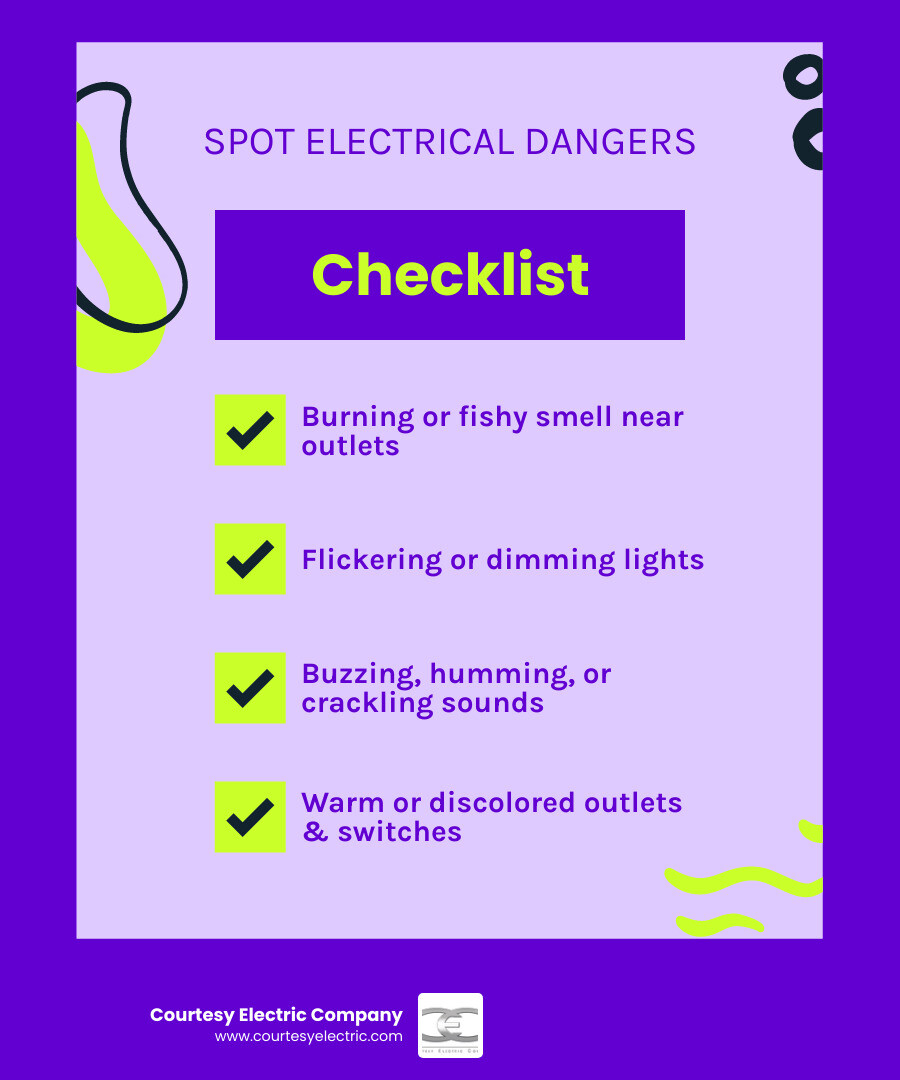
  • Burning or fishy smell near outlets, switches, or panels — stop using the area and call an electrician immediately
  • Flickering or dimming lights — often signals overloaded circuits or loose wiring connections
  • Buzzing, humming, or crackling sounds from outlets or your panel — indicates arcing from loose or damaged wiring
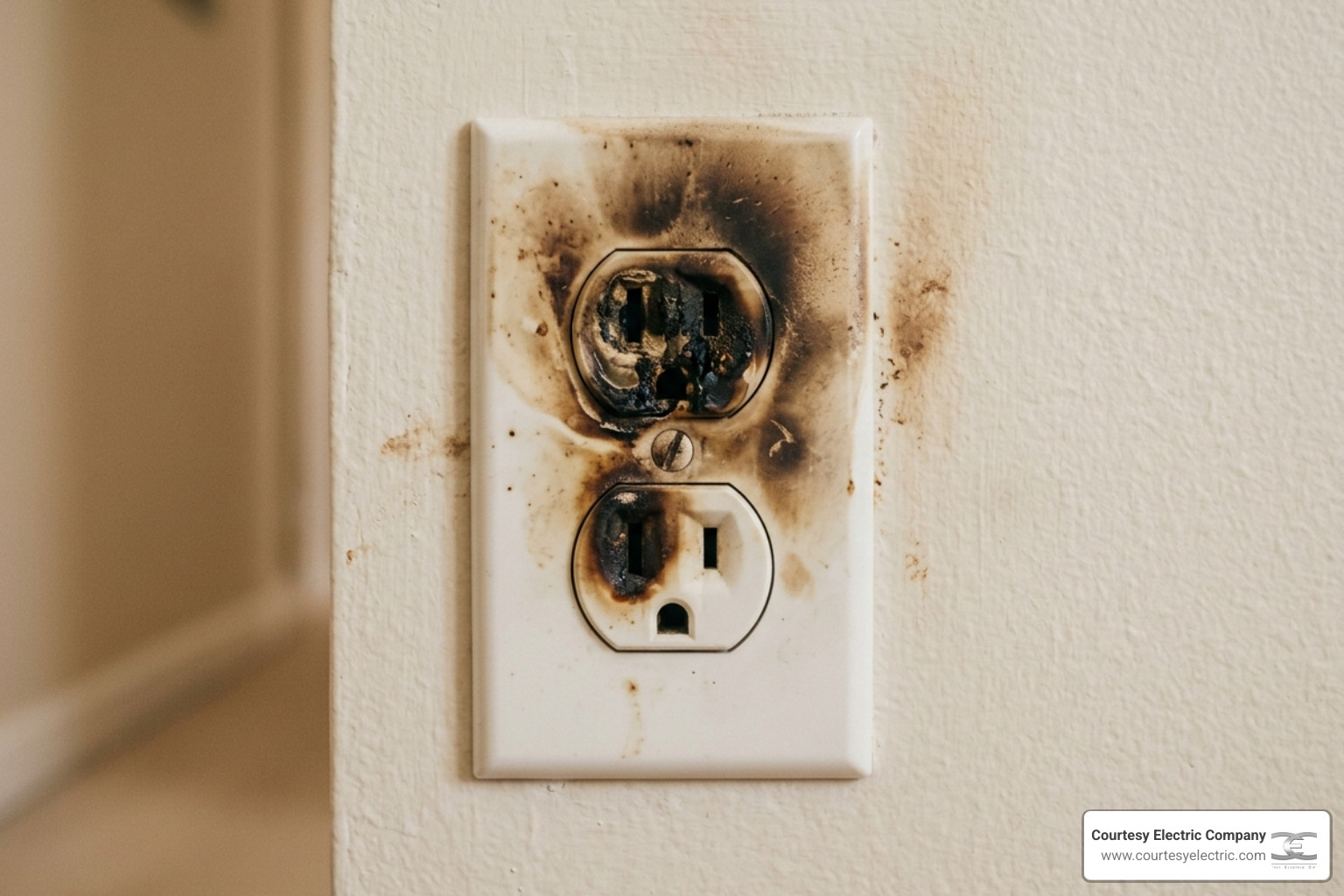
  • Warm or discolored outlets and switch plates — a sign of overloading or faulty wiring that can cause fires
  • Frequently tripping circuit breakers — your panel is telling you something is wrong, not just inconvenient
  • Sparks from outlets or loose receptacles — stop using them immediately and have them inspected
  • Two-prong outlets, aluminum wiring, or knob-and-tube systems — outdated wiring that can't handle modern electrical loads
  • Missing GFCI outlets in kitchens, bathrooms, or outdoor areas — a serious shock hazard near water
  • Heavy reliance on extension cords — a sign your home doesn't have enough circuits for your current needs

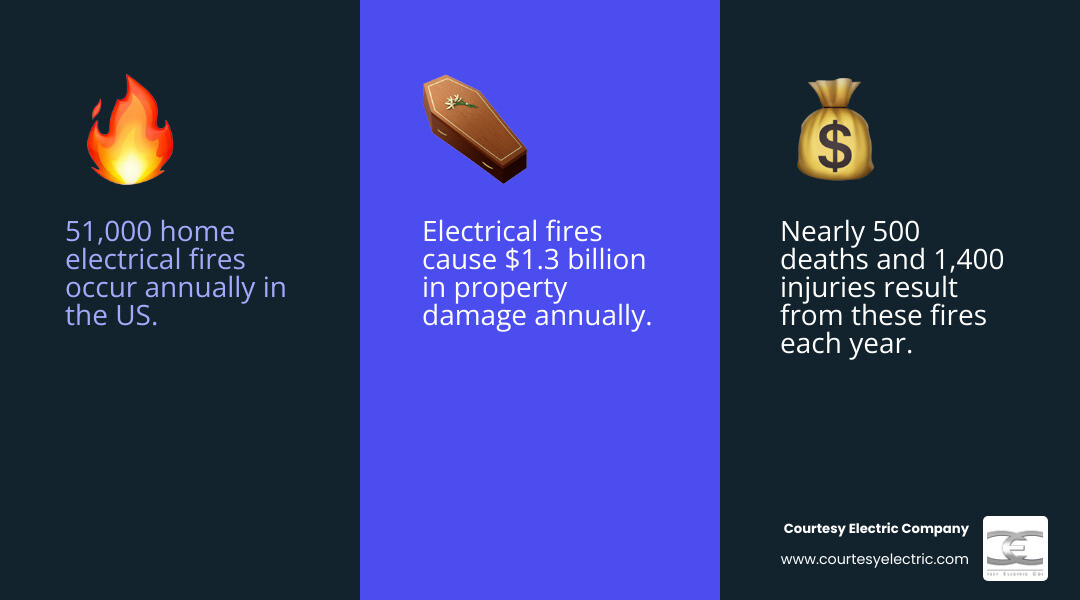
According to the Electrical Safety Foundation International, electrical malfunctions ignite more than 51,000 home fires every year in the United States. Most of those fires don't start without warning — they start after homeowners ignored early signals their system was under stress.

Electrical problems rarely appear out of nowhere. Your home gives you clues — smells, sounds, and visual signs — long before a dangerous situation develops. The key is knowing what those clues mean and acting on them quickly.

I'm David Meyer, Vice President of Courtesy Electric, a Colorado electrical contracting company with roots going back to 1976 — and knowing how to spot electrical problems before they become dangerous is something I've seen make the difference between a quick fix and a devastating fire. Let's walk through exactly what to look for in your home.

Infographic showing 9 common home electrical warning signs and what each one means - how to spot electrical problems before

Sensory Red Flags: How to Spot Electrical Problems Before They Become Dangerous

When we talk about electrical safety in April 2026, we focus heavily on the sensory experience. Your eyes, ears, and nose are often the first line of defense in identifying a hazard. Electricity is designed to be a silent, invisible helper. When it starts making itself known through smells or sounds, it’s usually because energy is escaping where it shouldn’t.

A common sign of trouble is a "fishy" smell. While it sounds strange, many modern electrical components use plastic and heat-resistant chemicals that emit a distinct, acousitcally "off" or fishy odor when they begin to melt. If you smell something burning but can't find the source in the kitchen, check your outlets. This is a toxic indicator of damaged wiring hidden behind your drywall.

Visual cues like flickering or dimming lights are also major red flags. While we might joke about a "ghost" in the house, flickering is usually caused by a poor connection or an overloaded circuit. If your lights dim every time the refrigerator kicks on, your Electrical Service is struggling to keep up with the demand.

What Buzzing and Humming Indicates in Your Walls

Electricity should flow silently. If you hear a buzzing, humming, or crackling sound coming from a switch or an outlet, you are likely hearing "arcing." Arcing happens when electricity jumps across a gap in a circuit — essentially a tiny, continuous lightning strike inside your wall.

This is often caused by loose connections or frayed wiring. Over time, the vibration of the electrical current or the natural expansion and contraction of wires can loosen screws at the terminal. This creates resistance, which generates heat. If you notice these sounds, especially when using Landscape Lighting Maintenance Tips Fraser CO or high-power exterior features, it’s a sign of electrical wear that requires professional attention.

Why Burning Smells Require Immediate Action

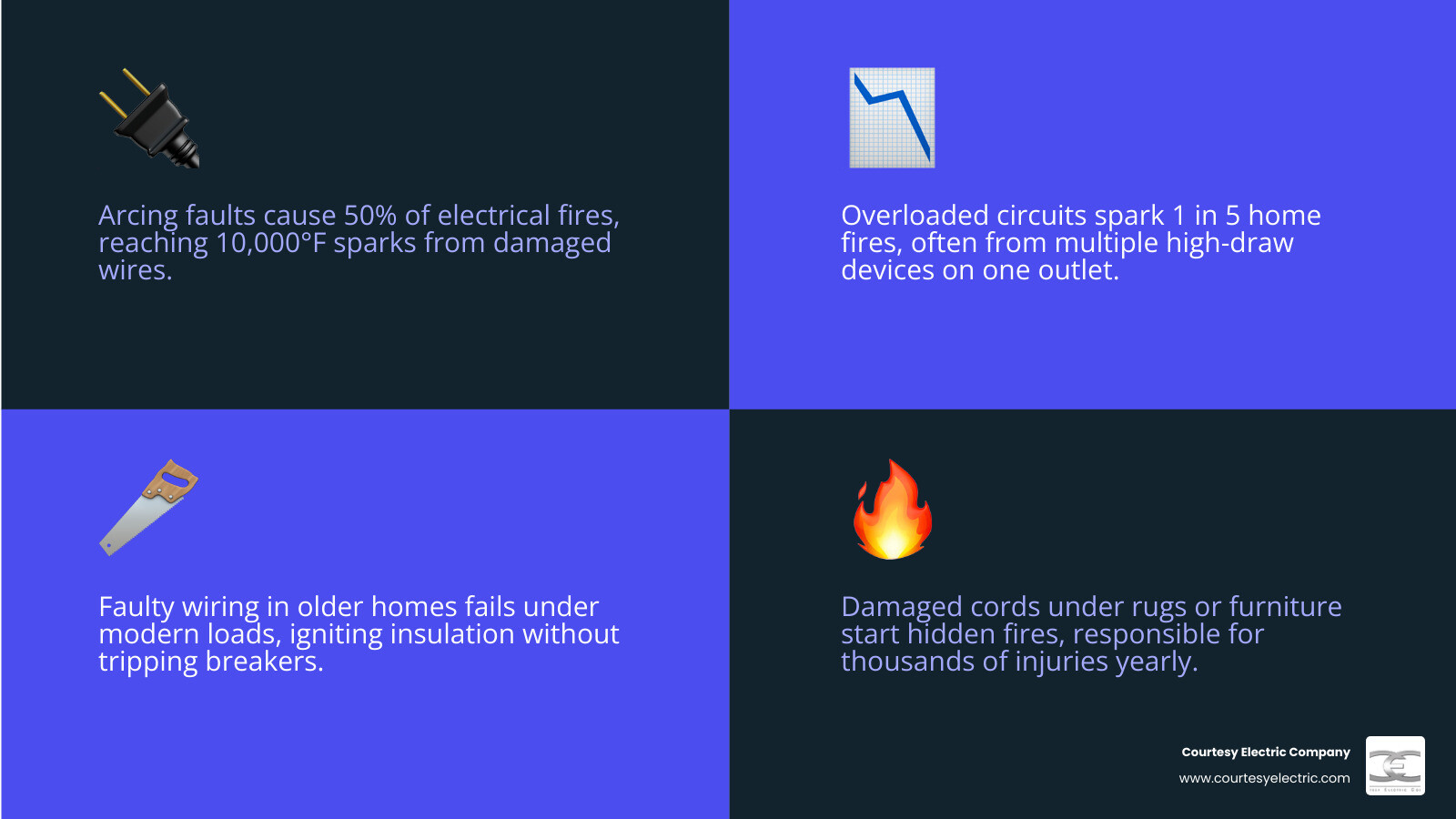
If you detect a smell of burning plastic or ozone near your electrical panel or an outlet, this is a true emergency. It means the insulation on your wires is already melting. Once the insulation is gone, the raw wires can touch, creating a short circuit that can reach temperatures up to 35,000 degrees Fahrenheit.

Immediate steps to take:

  1. Shut off the power: Go to your breaker panel and turn off the circuit involved. If you can't tell which one it is, use the main shut-off.
  2. Unplug devices: Remove any appliances from the affected area.
  3. Evacuate if necessary: If you see smoke or the smell intensifies, get everyone out and call 911.
  4. Call a pro: An emergency inspection is the only way to ensure the fire hazard has been neutralized.

A scorched electrical outlet showing brown heat damage around the plug holes - how to spot electrical problems before they

Why Your Circuit Breakers and Outlets Are Acting Up

Your circuit breaker is the "brain" of your home's safety system. Its only job is to trip and cut power when it detects too much current flowing through the wires. If your breakers trip frequently, it’s not just an annoyance; it’s a warning that you are exceeding the safe capacity of your home’s wiring.

Frequent tripping can be caused by:

  • Overloaded Circuits: Plugging too many high-draw items (like space heaters or hair dryers) into one circuit.
  • Short Circuits: A "hot" wire touching a neutral wire.
  • Ground Faults: Electricity escaping the circuit to find a path to the ground (common in wet areas).

If you are setting up a high-performance area, such as a media room, following a Home Theaters Maintenance Guide Centennial CO can help you ensure you aren't overloading a single 15-amp circuit with speakers, projectors, and amplifiers.

How to Spot Electrical Problems Before They Become Dangerous in Your Kitchen and Bathrooms

Water and electricity are a deadly combination. This is why Ground Fault Circuit Interrupter (GFCI) outlets are required in kitchens, bathrooms, laundry rooms, and outdoor spaces. A GFCI monitors the flow of electricity and can shut off the power in as little as 1/40th of a second if it detects a leak.

You can identify these by the "Test" and "Reset" buttons on the face of the outlet. If your kitchen or bathroom lacks these, or if they don't pop when you hit the test button, you are at a high risk for electric shock. We recommend testing these monthly. If you have outdoor amenities, checking them against a Fire Features Maintenance Guide Granby CO ensures your exterior safety devices are also up to code.

The Danger of Sparks and Loose Receptacles

Are sparks from outlets normal? Usually, no. A tiny blue spark when you plug in a high-draw appliance can be normal (similar to static electricity), but a large spark, a "pop," or a yellow/white spark is a sign of a short circuit.

Loose receptacles are another hidden danger. If a plug feels wobbly or falls out of the outlet easily, the metal contact points inside have worn out. This creates a poor connection, which leads to arcing and heat buildup. This minor issue is a leading cause of electrical fires, but fortunately, it's a quick and inexpensive fix for a licensed electrician. Even when maintaining outdoor areas, such as using a Fire Features Maintenance Winter Park Guide, ensure all exterior plugs are seated firmly in weather-proof housings.

Identifying Outdated Wiring and Panel Risks in Older Denver Homes

The Denver Front Range is full of beautiful historic homes, but many still rely on outdated electrical infrastructure. If your home was built before 1970, there is a high probability that your wiring wasn't designed for the "always-on" digital world of 2026.

Aluminum Wiring: Common in homes built between 1965 and 1973, aluminum wiring expands and contracts more than copper. This causes connections to loosen over time, leading to a fire risk that is 55 times higher than copper-wired homes.

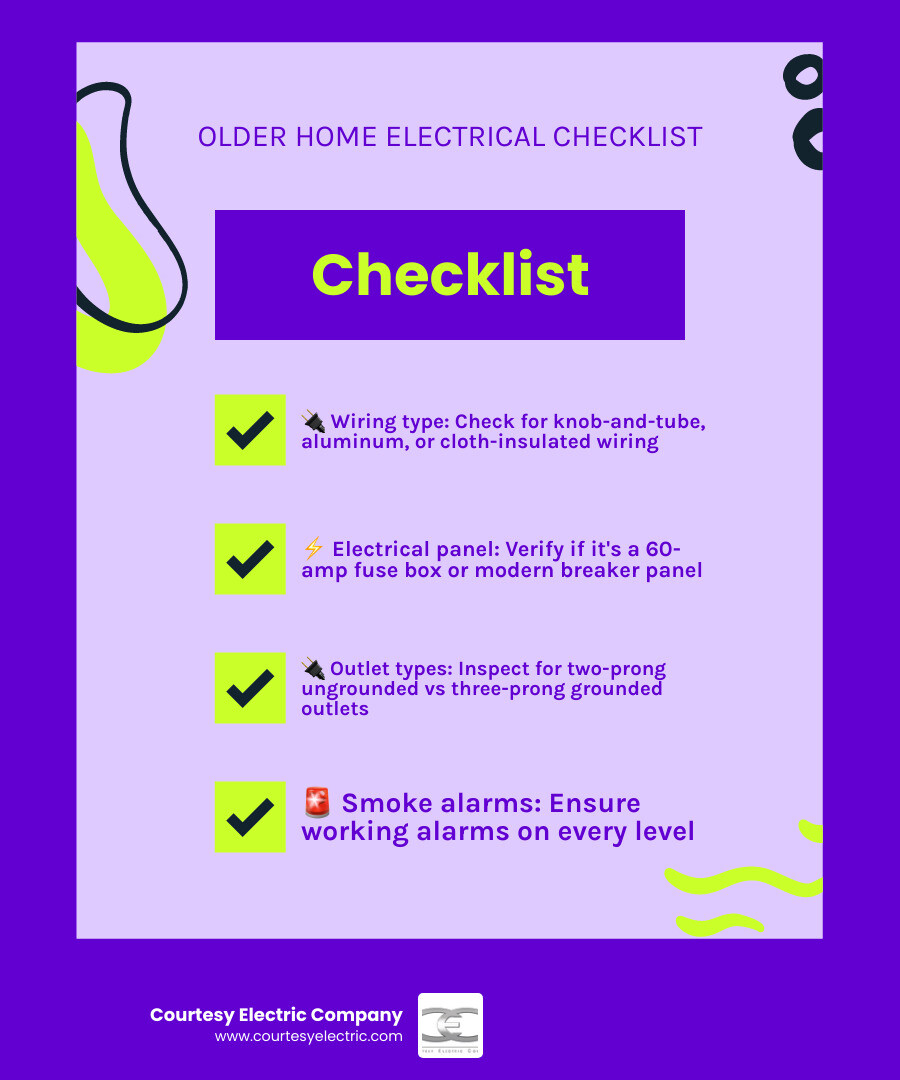
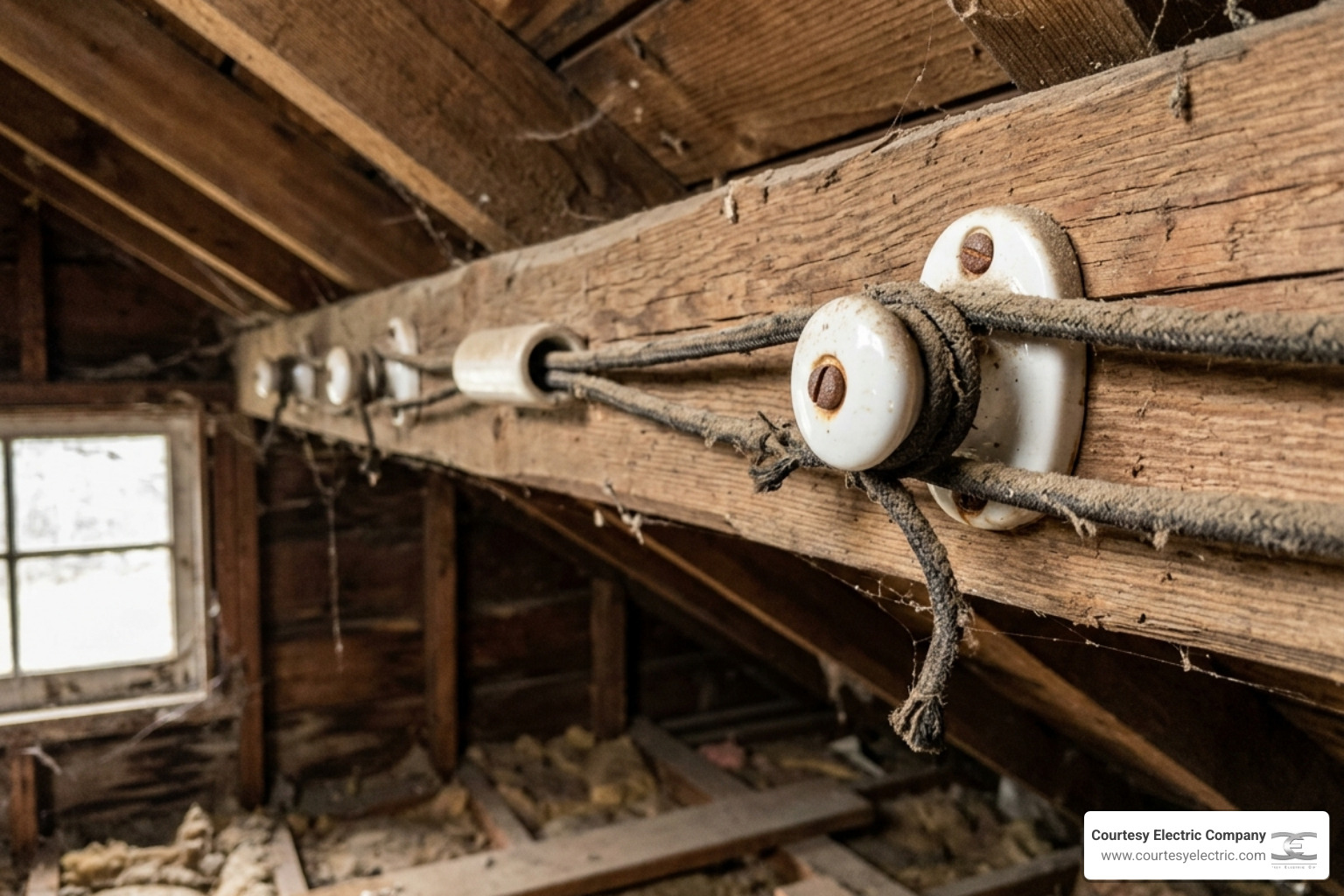
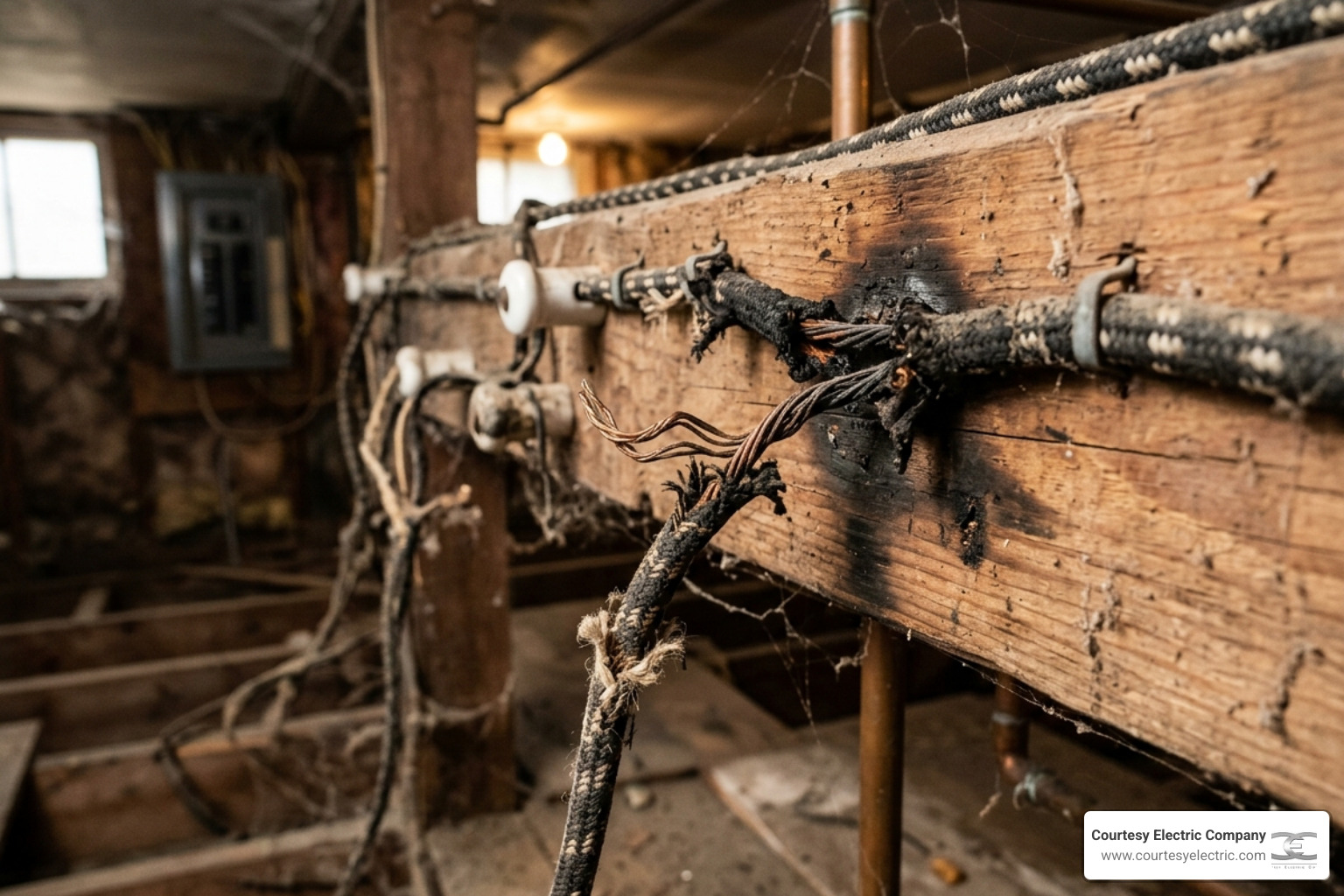
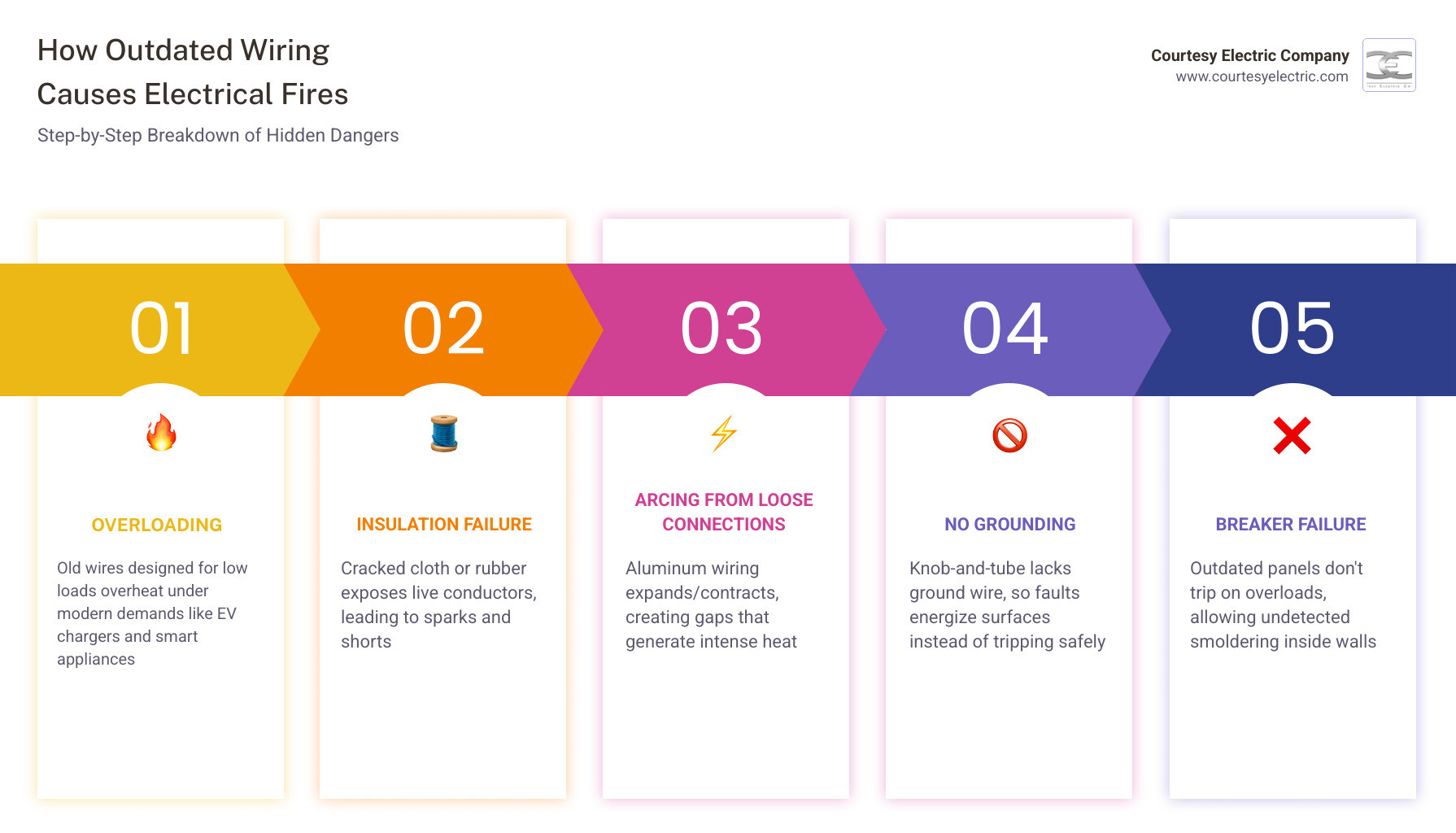
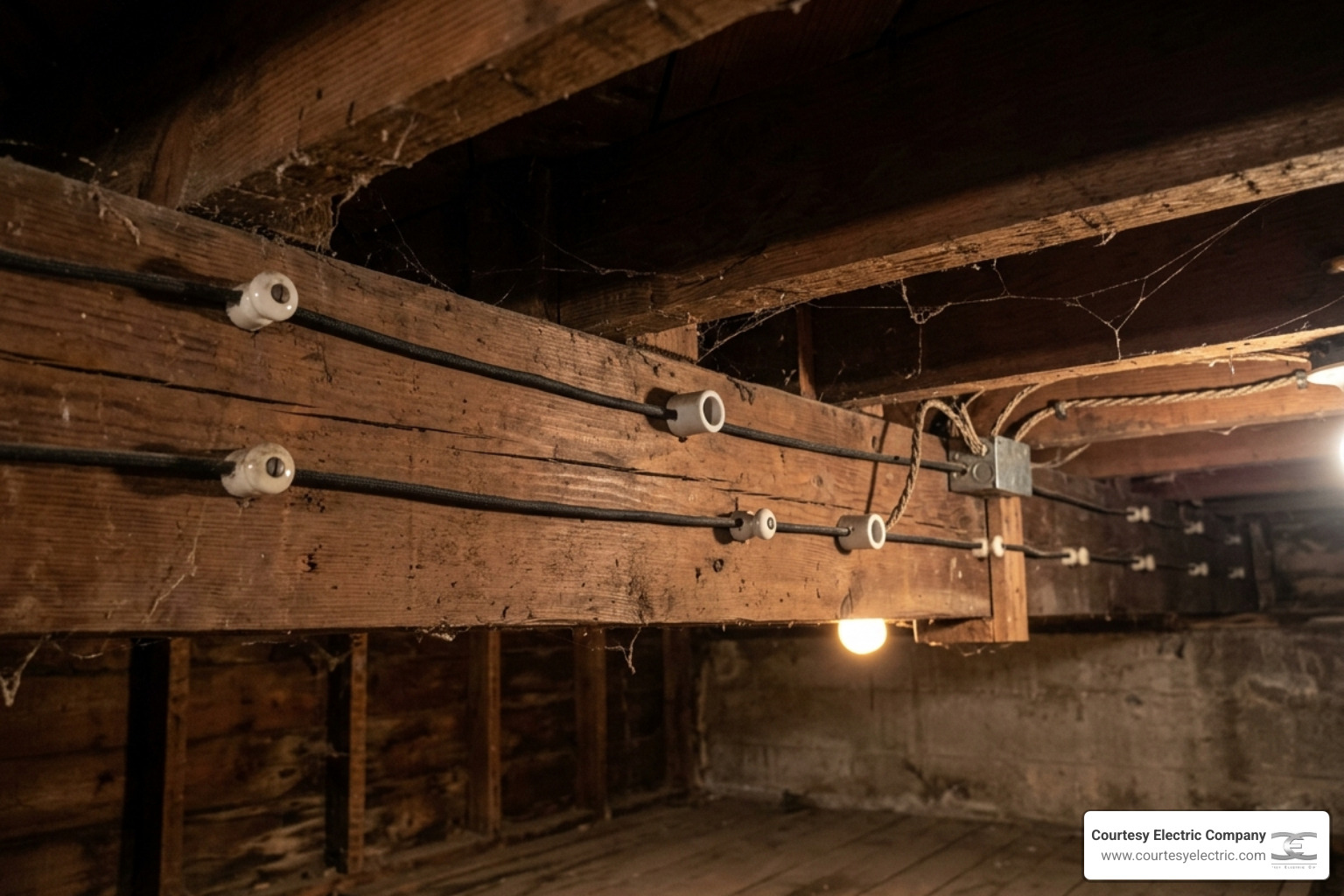
Knob-and-Tube: Found in homes from the 1880s to the 1940s, this system lacks a ground wire. It uses ceramic "knobs" and "tubes" to run wires through joists. While it was innovative then, it is dangerous now because the cloth insulation becomes brittle and flakes off, leaving bare wires exposed.

If you rely on backup power, like a standby generator, it is vital to follow a Generators Maintenance Guide Fraser CO to ensure your transfer switch and old wiring can handle the transition during a blackout.

Modern Breakers vs. Old Fuse Boxes

Feature Modern Circuit Breaker Old Fuse Box
Safety Automatically trips and can be reset Fuses blow and must be replaced
Capacity Designed for 100-200+ Amps Often limited to 60 Amps
Risk High reliability High risk of "over-fusing" (fire hazard)
Insurance Preferred by providers May lead to denied coverage

How to Spot Electrical Problems Before They Become Dangerous in Homes Over 50 Years Old

If your home is over 50 years old, the insulation on the wiring is likely reaching the end of its lifespan. Modern appliances like air fryers, EV chargers, and high-end HVAC systems pull much more power than the lights and radios of the 1950s.

Using a Generators Fraser CO Complete Guide can help you understand how a modern backup system integrates with an older home, but often, a full panel upgrade is the first step. Insurance companies in Colorado are increasingly refusing to cover homes with ungrounded two-prong outlets or active knob-and-tube systems because the fire risk is simply too high.

When to Consider a Panel Upgrade or Smart System

Your electrical panel is the heart of your home. If you see rust or corrosion on the outside of the panel, it is almost certain there is moisture damage on the inside. Moisture leads to resistance, resistance leads to heat, and heat leads to fire.

In 2026, we are seeing a massive shift toward smart panels like the SPAN panel. These allow you to monitor your energy usage in real-time from your phone and prioritize which circuits stay on during a power outage. If you are investing in Battery Storage Maintenance in Winter Park CO, a smart panel helps you stretch your battery life significantly. Combining this with the Best Generators Services in Fraser CO ensures your Front Range home remains powered and safe regardless of the weather.

Proactive Steps to Protect Your Front Range Property

One of the biggest mistakes homeowners make is the long-term use of extension cords. Extension cords are intended for temporary use — think holiday lights or a weekend project. They are not designed to be permanent wiring. If you have cords running under rugs or stapled to baseboards, you are creating a friction and heat hazard.

Heavy reliance on power strips is also a sign that your home needs more outlets. "Daisy-chaining" (plugging one power strip into another) is a major fire code violation. If you find yourself doing this in your home office or entertainment center, refer to Home Theaters Maintenance Tips Granby CO for advice on proper power distribution.

The Consumer Product Safety Commission recommends a professional electrical inspection every 10 years. If you’ve recently added a Battery Storage Maintenance Guide Granby CO routine to your home care, it’s the perfect time to have a licensed electrician look at the rest of your system.

Frequently Asked Questions about Home Electrical Safety

Why do my lights dim when the vacuum starts?

This usually happens because the vacuum and the lights are on the same circuit. The vacuum requires a large "surge" of power to start its motor, which causes a momentary voltage drop for everything else on that wire. While common, it indicates that your circuits are near their capacity. We often recommend installing dedicated lines for high-draw appliances to prevent this.

Are small sparks from an outlet ever normal?

A quick, blue flash when you plug something in is often just a "spark of connection" as the circuit is completed. However, yellow or white sparks, sparks that last longer than a split second, or sparks accompanied by a "pop" or burning smell are signs of a short circuit or a faulty outlet.

How often should I test my GFCI outlets?

You should test them once a month. Simply press the "Test" button — you should hear a click and the "Reset" button should pop out. If the power doesn't cut off, or if the button won't stay in when you reset it, the GFCI is faulty and must be replaced immediately to protect you from shocks.

Conclusion

At Courtesy Electric Company, we believe your home should be a sanctuary, not a source of stress. Since 1976, we’ve helped Denver and Front Range families stay safe by modernizing their electrical systems, from simple outlet repairs to installing sophisticated Generac generators and SPAN smart panels.

Knowing how to spot electrical problems before they become dangerous is the first step in responsible homeownership. If you’ve noticed any of the signs we discussed — the smells, the sounds, or the flickering lights — don’t wait for a "more convenient" time to fix it. Electrical issues only get more expensive and more dangerous the longer they are ignored.

Whether you are in Parker, Highlands Ranch, or the Black Forest, our team is ready to provide quality installations and peace of mind. Contact us today for a free estimate and let’s make sure your home’s electrical system is working for you, not against you.

Electrical Service

The Homeowner's Guide to Knowing When DIY Electrical Is a Bad Idea

Why Knowing When to Call an Electrician vs DIY Could Save Your Home

homeowner inspecting a modern circuit breaker panel - when to call an electrician vs diy

When to call an electrician vs DIY is one of the most important decisions a homeowner can make — and getting it wrong can mean a house fire, a failed inspection, or a denied insurance claim.

Here's a quick breakdown to help you decide:

Task DIY Safe?
Replacing a light bulb Yes
Swapping a decorative outlet cover Yes
Resetting a tripped breaker (once) Yes
Replacing a like-for-like light fixture With caution
Installing a dimmer or USB outlet With caution
Adding a new circuit No — call a pro
Upgrading your electrical panel No — call a pro
Installing an EV charger No — call a pro
Whole-home rewiring No — call a pro
Any work involving the main panel No — call a pro

The short answer: Stick to simple, like-for-like replacements that don't involve new wiring or the electrical panel. For anything beyond that, hire a licensed electrician.

Electrical failures cause over 50,000 home fires every year in the United States. Nearly 400 people die annually from home electrical fires, and improper DIY electrical work is a major contributing factor — responsible for roughly 500 deaths and $1.3 billion in property damage. Those aren't abstract numbers. They represent real homes, real families, and real mistakes that seemed small at the time.

The modern home runs on a complex web of wiring, breakers, and load-bearing circuits that are largely invisible until something goes wrong. And when something does go wrong with electricity, it rarely gives you a warning before it becomes dangerous. Unlike a leaky faucet or a squeaky door, a faulty wire connection can smolder behind a wall for weeks before igniting.

This guide is designed to help Colorado Front Range homeowners draw a clear, honest line between what's safe to handle yourself and what needs a licensed professional — no guesswork, no risk-taking.

I'm David Meyer, Vice President of Courtesy Electric Company, a Colorado electrical contractor with roots going back to 1976, and understanding when to call an electrician vs DIY has been central to everything I've learned working from the field up through the business side of this trade. Let's walk through exactly where that line is — so you can make confident, safe decisions about your home's electrical system.

DIY vs professional electrician decision guide with residential electrical fire statistics and safe task checklist - when to

Safe Home Projects: When to Call an Electrician vs DIY for Minor Tasks

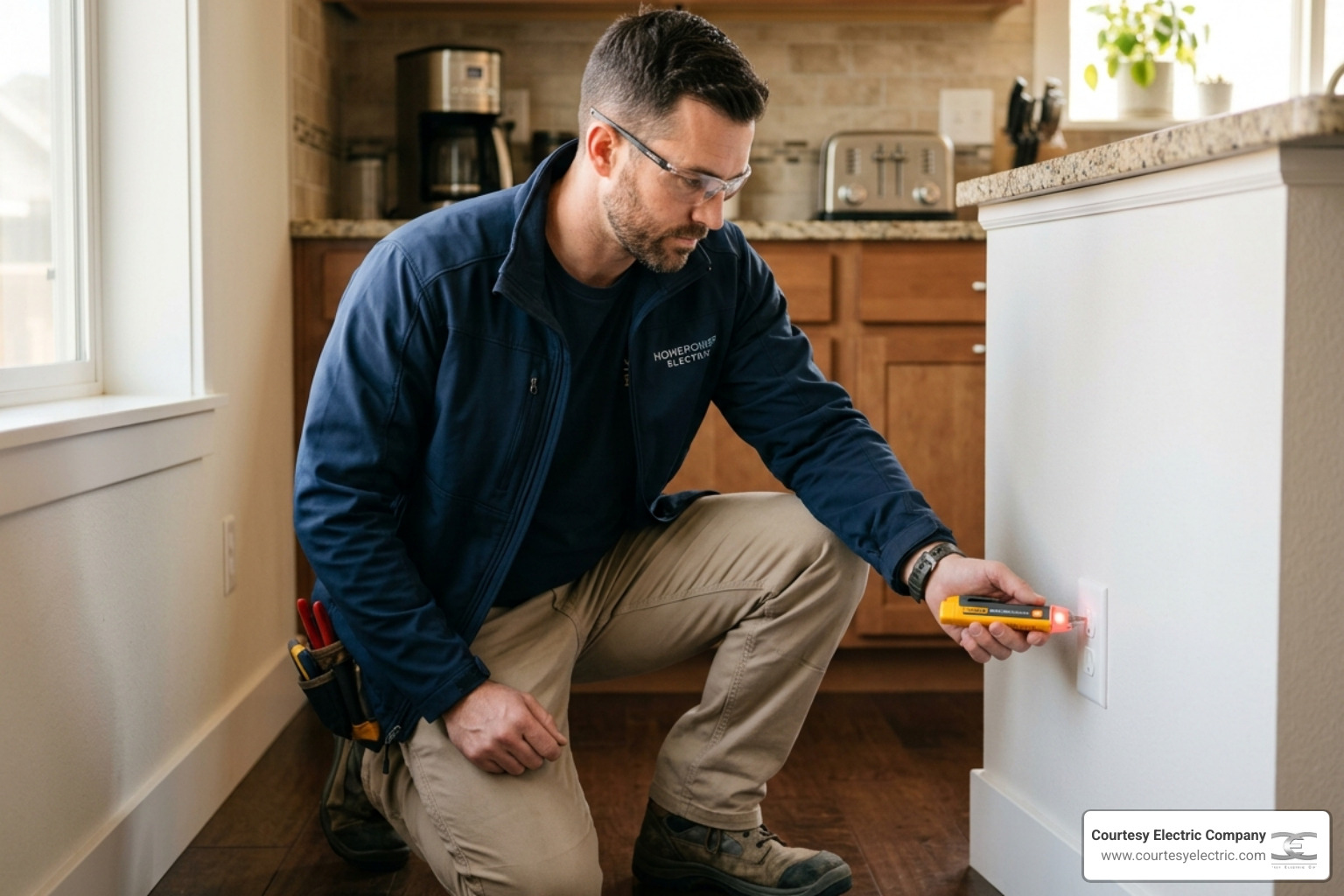
professional using a non-contact voltage tester on a wall outlet to ensure power is off - when to call an electrician vs diy

We all love the satisfaction of a "quick win" around the house. In April 2026, with smart devices becoming even more prevalent in Denver homes, the urge to DIY is stronger than ever. However, safety must always be your North Star. Before you even touch a screwdriver, you need a basic tool kit: a non-contact voltage tester, a pair of insulated pliers, and a reliable screwdriver.

The most important tool is the voltage tester. We cannot stress this enough: never assume the power is off just because you flipped a switch. Test every wire, every time.

There are several tasks that are perfectly safe for a homeowner who is comfortable with basic tools. Replacing a burnt-out light bulb or swapping a cracked decorative faceplate doesn't require a permit or a professional. Similarly, testing your smoke detector batteries or setting up a plug-in smart home hub is low-risk. If a breaker trips once, it’s usually safe to reset it—provided you know what caused the trip (like running a space heater and a vacuum on the same circuit).

If you're looking to enhance your home's ambiance, you might explore lighting control options that are battery-powered or plug-and-play. For more comprehensive electrical service, however, the boundary begins to shift.

Simple repairs where you might not need to call an electrician vs DIY

If you have a foundational understanding of how circuits work, some "swaps" are manageable. This includes changing a standard light switch for a dimmer switch or replacing an old outlet with a modern USB-integrated version. The key here is "like-for-like." You are not adding new wires; you are simply connecting existing wires to a new device.

Homeowners often tackle these minor upgrades when installing central vac systems or setting up surround sound systems that require low-voltage connections. As long as you aren't opening the main service panel or cutting into structural wiring, these aesthetic or functional upgrades can often be DIY projects. Just remember: if the wiring you find inside the wall looks frayed, scorched, or doesn't match the diagram you're following, stop immediately.

Identifying hazards and when to call an electrician vs DIY for troubleshooting

Troubleshooting is where DIY often becomes dangerous. If you're wondering when to call an electrician vs DIY, the answer is "the moment you smell something funny."

Keep an eye out for these red flags:

  • Flickering Lights: This isn't just a nuisance; it often indicates a loose neutral wire or an overloaded circuit.
  • Buzzing Sounds: Electricity should be silent. A hum or buzz from a wall or outlet is a sign of arcing—electricity jumping through the air—which is a leading cause of fires.
  • Warm Outlets: If an outlet cover is warm to the touch, there is too much heat building up behind the wall.
  • Persistent Breaker Trips: If a breaker trips a second time after you've reset it, the system is telling you there is a serious fault.

When it comes to home security, ensuring your system has a stable, professional power source is vital. For these and other services, professional intervention ensures that "small" problems don't turn into catastrophic failures.

The High Stakes of DIY: Permits, Insurance, and Code Compliance

In Colorado, and specifically across the Front Range, we adhere to strict building codes. These aren't just "suggestions" to make your life difficult; they are based on decades of fire safety data. The National Electrical Code (NEC) is updated regularly to reflect new technologies and safety findings.

One of the biggest risks of DIY electrical work isn't just a shock—it's the legal and financial fallout. Most significant electrical work requires a building permit. If you perform unpermitted work, you could face several issues:

  1. Insurance Claim Denials: If a fire starts due to DIY wiring, your insurance company may refuse to pay the claim because the work was not performed by a licensed professional or inspected by the city.
  2. Real Estate Complications: When you go to sell your home in Denver or Parker, a home inspector will likely flag non-professional work. You may be forced to tear it out and pay a pro to redo it at the last minute to save the sale.
  3. Liability: If unpermitted work causes injury to a guest or a future owner, you could be held personally liable.

Professional low voltage installations and high-voltage upgrades come with a paper trail—permits, inspections, and certificates—that protect your property value and your peace of mind.

DIY Risks Professional Benefits
Potential for fire/shock Guaranteed safety and code compliance
Risk of insurance denial Work is insured and warrantied
Failed home inspections Passed inspections and proper permits
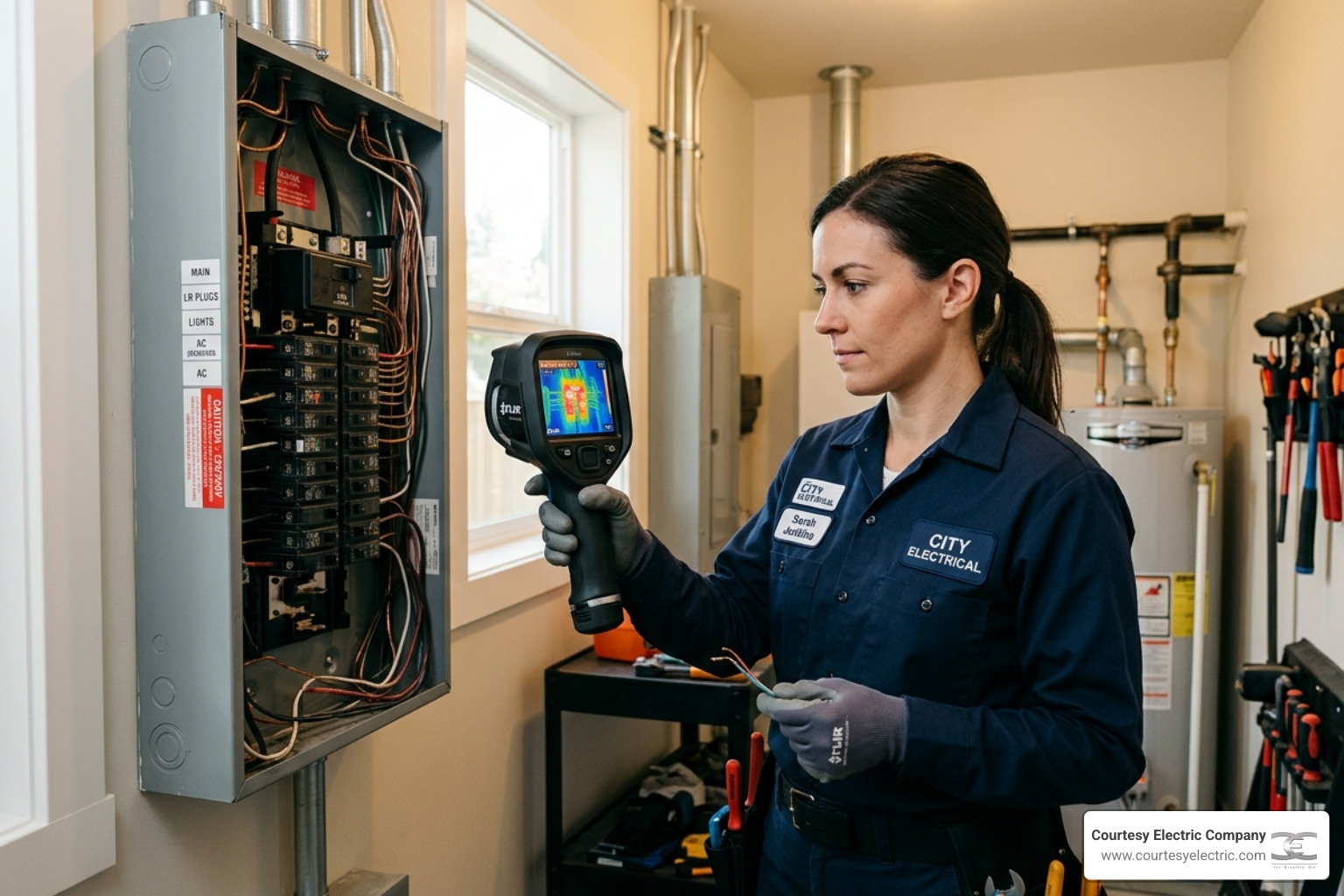
Hidden damage behind walls Expert diagnostic tools (like thermal imaging)

Complex Installations That Always Require a Licensed Pro

There are some projects that simply have no "DIY" version. These require a deep understanding of load calculations, wire degradation, and grounding systems. At Courtesy Electric Company, we specialize in these high-complexity electrical service needs.

  • EV Charger Stations: Installing a Level 2 charger isn't as simple as plugging in a toaster. It requires a dedicated high-voltage circuit and often a significant increase in your home's electrical load.
  • Main Panel Upgrades: Working inside the main breaker box is incredibly dangerous because the main bus bars remain "live" even when the main breaker is shut off. Whether you're moving to a SPAN smart panel or just increasing your amperage, this is a job for us.
  • Whole-Home Rewiring: If you live in an older home in the Front Range with knob-and-tube or aluminum wiring, remediation is a massive undertaking that requires specialized techniques to prevent fire hazards.
  • Dedicated Appliance Circuits: Adding a hot tub, a new double oven, or a heavy-duty workshop compressor requires calculating the "load" to ensure you don't melt your wires or trip your main breaker.
  • Outdoor Wiring: Water and electricity are a lethal combination. Outdoor kitchens and landscape lighting require specific GFCI (Ground Fault Circuit Interrupter) and weather-rated components to prevent electrified soil or water features.

Our team provides comprehensive services that ensure these complex systems are balanced, grounded, and safe for decades to come.

Frequently Asked Questions about Electrical Safety

Do I need a permit for installing an EV charger in Denver?

Yes. In Denver and surrounding areas like Highlands Ranch and Aurora, installing an EV charger is considered a significant modification to your home's electrical system. A permit ensures that your panel can handle the extra load and that the wiring is sized correctly for the high current the charger will draw. A licensed electrician will handle the permit process and the subsequent safety inspection for you.

Can DIY electrical work void my home insurance coverage?

It absolutely can. Most homeowners' insurance policies have clauses requiring that all "mechanical" work (electrical, plumbing, HVAC) be performed by licensed professionals according to local codes. If a DIY project leads to a fire, the insurance company can argue that you increased the risk through negligence, leading to a total claim denial. Always keep documentation of professional work for your records.

What are the most common DIY electrical mistakes to avoid?

We see the same mistakes over and over when we're called in to fix a DIY project gone wrong:

  • Reversed Polarity: Connecting the hot and neutral wires to the wrong terminals. This can make a device work, but it leaves it "energized" even when turned off, creating a major shock hazard.
  • Improper Grounding: Skipping the ground wire or attaching it incorrectly, which removes your home's primary defense against surges.
  • Incorrect Wire Gauge: Using a wire that is too thin for the amount of electricity (amperage) flowing through it. This causes the wire to overheat and can start a fire behind your drywall.
  • Loose Connections: If a wire nut isn't tight, the connection can "arc," creating intense heat.

To learn more about how our team avoids these pitfalls through years of training, explore our background and mission.

Conclusion

Deciding when to call an electrician vs DIY doesn't have to be a gamble. While swapping a light bulb or a faceplate is a great way to stay involved in your home's upkeep, the "invisible" nature of electricity makes it one of the most dangerous areas for trial and error.

Since 1976, Courtesy Electric Company has been the trusted name for quality, integrity, and dependability across Denver and the Colorado Front Range. Whether you are in Parker, Black Forest, or downtown Denver, we are here to ensure your home is safe, modern, and up to code. We specialize in the future of home energy—from Generac and Cummins generators to SPAN smart panels and Franklin battery storage.

Don't leave your family's safety to a YouTube tutorial. We offer free estimates on all electrical installations, providing you with a professional roadmap for your next project.

Contact us for a professional electrical service consultation and let us give you the peace of mind that comes with knowing the job was done right the first time.

Stay Safe in the Springs with This Electrical Maintenance List

Why a Spring Electrical Safety Checklist Matters for Colorado Homes

spring electrical safety checklist for colorado homes

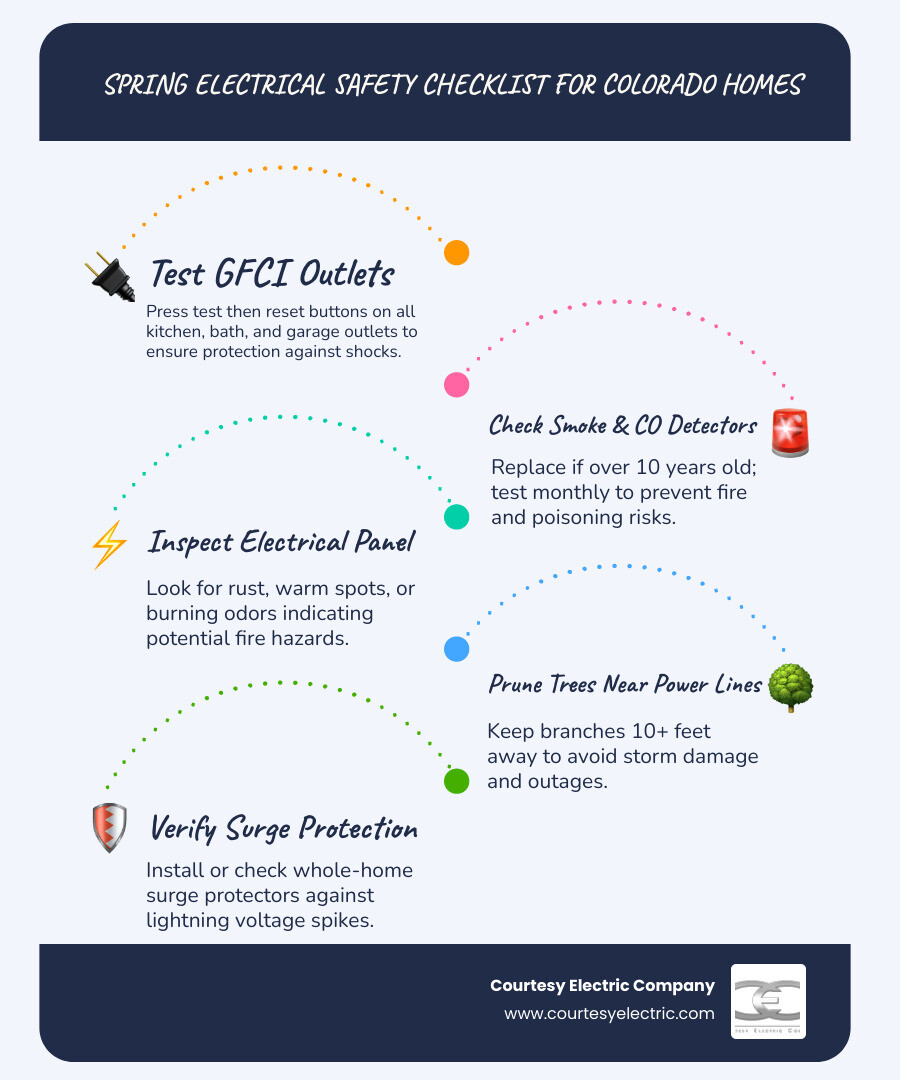
A spring electrical safety checklist for colorado homes is one of the most important steps Front Range homeowners can take before storm season hits. Here is a quick overview of what to check this spring:

Spring Electrical Safety Checklist for Colorado Homes:

  1. Test all GFCI outlets (press test, then reset)
  2. Check smoke and carbon monoxide detectors — replace if older than 10 years
  3. Inspect your electrical panel for rust, warm spots, or burning smells
  4. Look over all extension cords and appliance cords for fraying or damage
  5. Install or verify whole-home surge protection
  6. Check outdoor outlets for weatherproof covers
  7. Prune tree branches at least 10 feet from power lines
  8. Inspect outdoor wiring and landscape lighting for winter damage
  9. Test your backup generator or battery system
  10. Schedule a professional inspection if your home has older wiring

Colorado's spring weather is unpredictable. One afternoon you have sunshine, and by evening a lightning storm is rolling across the Front Range. That combination of freeze-thaw cycles, heavy snowmelt, and powerful thunderstorms puts real stress on your home's electrical system — often in ways you can't see from the surface.

According to the NFPA, electrical failures and malfunctions were the second leading cause of U.S. home structure fires from 2012 to 2016, accounting for 13% of all incidents. Many of those fires could have been prevented with routine seasonal checks.

Spring is the right time to catch problems that built up over winter before summer storms make them worse.

I'm David Meyer, Vice President of Courtesy Electric — a Colorado electrical contractor with roots going back to 1976. Having worked across the Denver Front Range for years, I've seen how Colorado's seasonal swings create unique electrical hazards that a standard spring electrical safety checklist for colorado homes needs to specifically address. In the sections below, I'll walk you through exactly what to check, what to watch out for, and when to call in a pro.

10-point spring electrical safety checklist overview for Colorado Front Range homeowners - spring electrical safety

Why Spring Weather Stresses Colorado Electrical Systems

In the Denver area and across the Front Range, our homes endure some of the most dramatic weather shifts in the country. As we move into April 2026, we have to consider how the past winter has impacted our Residential electrical infrastructure.

The Freeze-Thaw Cycle and Saturated Soil

Colorado is famous for its "yo-yo" weather. We might have a 60-degree day followed by a deep freeze. This constant expansion and contraction of the soil can actually shift your home's grounding rod or loosen the connections where power enters your house. When the spring snowmelt begins, the soil becomes saturated. Wet soil is highly conductive, which means any fault in your underground wiring or grounding system can become a major shock hazard.

Lightning and Voltage Spikes

As warmer air returns, so do the powerful thunderstorms that roll off the Rockies. Lightning doesn't even have to strike your home directly to cause damage; a strike nearby can send a massive voltage spike through utility lines. Without proper grounding and protection, these surges can fry sensitive electronics, from your smart fridge to your home office setup.

Essential spring electrical safety checklist for colorado homes

When we perform a professional Electrical Service, we look at the home as a complete system. For your DIY spring check, it helps to visualize the "path of power" from the street to your devices.

modern residential electrical panel in a Denver home - spring electrical safety checklist for colorado homes

Storm Preparedness and Surge Protection

Most people think a power strip from a big-box store is enough. In reality, those offer very little protection against a significant Colorado lightning strike. We recommend whole-home surge protection installed directly at your main panel. This acts as a gateway, blocking surges before they ever reach your outlets.

Emergency Power Planning

With spring comes the risk of power outages from heavy, wet "tree-breaker" snow or high winds. Now is the time to:

  • Test your generator: If you have a Generac or Cummins standby generator, run a test cycle. Ensure it has fresh fuel and no debris is blocking the exhaust.
  • Check battery backups: Systems like Franklin battery storage should be checked for charge levels and firmware updates.
  • Create a Storm Kit: Keep LED flashlights, fresh batteries, and a portable phone bank in a dedicated spot. Know how to manually open your electric garage door so you aren't trapped during an outage!

Indoor spring electrical safety checklist for colorado homes

Our Homeowners guide focuses on the high-traffic areas where moisture and electricity meet.

  • GFCI Testing: Ground Fault Circuit Interrupters (those outlets with the "Test" and "Reset" buttons) are lifesavers in kitchens, bathrooms, and garages. Press the "Test" button monthly. If the "Reset" button doesn't pop out, the outlet is faulty and needs immediate replacement.
  • Smoke and CO Detectors: Test every unit. If a detector is more than 10 years old, the internal sensors degrade—replace the entire unit, not just the battery.
  • Water Heater Safety: Check your water heater temperature. It should be set to 120 degrees or less to prevent scalding and reduce the electrical load.
  • Cord Inspection: Pull your furniture away from the walls. Check for "heat damage" or fraying on cords. Never run extension cords under rugs, as trapped heat can lead to a fire.

Outdoor spring electrical safety checklist for colorado homes

Winter is hard on exterior components. We've been About this business long enough to know that a single cracked outlet cover can lead to a short circuit during a rainstorm.

  • The 10-Foot Rule: Inspect the area where power lines enter your home. Tree branches should be pruned back at least 10 feet. Warning: Never trim branches near power lines yourself; always hire a professional tree service.
  • Weatherproof Covers: Check your outdoor "bubble covers." They should be intact and snap shut completely to keep out Colorado's driving rain and snow.
  • 811 Digging Safety: Planning a new garden or fence this spring? Call 811 before you dig. Striking an underground power line is dangerous and incredibly expensive to repair.
  • Landscape Lighting: Check for exposed wires that may have been uncovered by snowmelt or shifted soil.

Identifying Hidden Hazards in Older Front Range Properties

Many homes in Denver, Parker, and Highlands Ranch were built during eras with different electrical standards. Part of our Warranty and quality commitment is helping owners of older homes identify "invisible" risks.

Aluminum Wiring (Mid-1960s to 1970s)

If your home was built between 1965 and 1973, it might have aluminum branch-circuit wiring. Aluminum expands and contracts more than copper, which can cause connections to loosen over time, leading to overheating and fire risks.

Knob-and-Tube Risks

In very old Denver neighborhoods, you might still find knob-and-tube wiring. This system lacks a ground wire and relies on open air for cooling. If a previous owner added insulation over this wiring, it creates a massive fire hazard.

Modern Solutions: SPAN Smart Panels

One of the best ways to modernize an older home is by upgrading to a SPAN smart panel. These panels allow you to monitor every circuit in your home from your phone, giving you real-time alerts if a circuit is drawing too much power or behaving strangely.

When to Call a Professional for Electrical Maintenance

While a checklist is a great start, some things require a licensed expert. Our Services team recommends calling us immediately if you notice:

  1. Flickering Lights: This often indicates a loose neutral wire or an overloaded circuit.
  2. Burning Smells: An ozone or "fishy" smell near an outlet is a sign of electrical arcing.
  3. Warm Outlets or Switches: If a wall plate feels hot to the touch, there is a dangerous heat buildup behind the wall.
  4. Frequent Breaker Trips: If your AC or vacuum constantly trips the breaker, your panel may not be able to handle modern electrical loads.

We specialize in Generac and Cummins backup power and Franklin battery storage to ensure that even when the Colorado grid fails, your home stays bright and safe.

Frequently Asked Questions about Colorado Home Safety

Feature GFCI Protection AFCI Protection
What it does Protects people from shocks Protects homes from fires
How it works Detects moisture/ground faults Detects dangerous arcing/sparks
Where it goes Kitchens, Baths, Outdoors Bedrooms, Living Areas
Testing Monthly via "Test" button Monthly via "Test" button

How long do surge protectors last? Most "point-of-use" power strips only last 2–3 years. They have a limited amount of "joules" they can absorb. Once those are used up, they are just a regular extension cord with zero protection.

Why does my grounding system need maintenance? Colorado's dry, rocky soil can be poor for grounding. Over time, the copper rod can corrode or the connection can loosen due to the freeze-thaw cycles we mentioned earlier. A professional can test the "ohms" of your ground to ensure it’s actually working.

What is the 10-year rule? This applies to smoke detectors. Even if you change the batteries, the sensing chamber inside gets clogged with dust and pollutants over a decade. If the date on the back of the unit is from 2016 or earlier, it’s time for a new one.

Conclusion

At Courtesy Electric Company, we believe that safety is built on a foundation of quality and integrity. Since 1976, we have been the Denver area's trusted experts for everything from complex multi-family infrastructure to helping a homeowner install their first smart panel.

Don't let a spring storm catch you off guard. Taking the time to walk through this spring electrical safety checklist for colorado homes can save you from costly repairs and keep your family safe. If you find anything concerning during your inspection, or if you're ready to upgrade your home with a backup generator or battery system, we are here to help.

Schedule your professional electrical service today and let our experienced team give you the peace of mind you deserve this spring.

Simple Steps to Keep Your Home Safe from Electrical Fires

Electrical Fires Kill Hundreds of Americans Every Year — Here's What to Do About It

how to prevent electrical fires in your home

How to prevent electrical fires in your home is one of the most important safety questions you can ask as a homeowner. And the numbers make it clear why.

Every year, home electrical fires account for an estimated 51,000 fires, nearly 500 deaths, more than 1,400 injuries, and $1.3 billion in property damage across the United States. As of April 2026, these figures remain a serious and ongoing concern — especially in older homes across the Colorado Front Range where aging wiring struggles to keep up with modern electrical demands.

Here are the core steps to prevent electrical fires in your home:

  1. Watch for warning signs — flickering lights, buzzing outlets, burning odors, or tripped breakers
  2. Install AFCI and GFCI protection — these devices catch dangerous faults that standard breakers miss
  3. Test smoke detectors monthly — 65% of home fire deaths occur in homes without working smoke detectors
  4. Use appliances and cords correctly — plug major appliances directly into wall outlets and never overload circuits
  5. Have your electrical system professionally inspected — every 3 to 5 years, or sooner if your home is older
  6. Replace damaged cords and outdated wiring — frayed cords and aluminum wiring from the 1960s and 70s are serious hazards
  7. Keep space heaters 3 feet from flammables — and never plug them into extension cords
  8. Secure lithium-ion batteries properly — e-bikes, laptops, and other devices pose emerging fire risks

I'm David Meyer, Vice President of Courtesy Electric — a Colorado electrical contracting company with over 50 years of experience helping Front Range homeowners understand how to prevent electrical fires in your home through proper wiring, panel upgrades, and safety device installation. In the sections below, I'll walk you through every major risk area and exactly what you can do about each one.

Infographic showing top causes of home electrical fires and key prevention steps - how to prevent electrical fires in your

How to prevent electrical fires in your home: Recognizing the Warning Signs

Most electrical fires don't happen out of the blue. Your home usually tries to tell you when something is wrong, but the messages can be subtle. Recognizing these red flags is the first step for homeowners who want to stay safe.

One of the most obvious signs is a scorched or discolored outlet. If you see brown or black marks around the plug-in slots, stop using that outlet immediately. This is a clear sign of overheating. Similarly, if an outlet or switch plate feels hot to the touch, or if you feel a tingling sensation when touching a residential appliance, you have a serious grounding or wiring issue.

Don't ignore your senses. Do you hear a buzzing, popping, or sizzling sound coming from your walls or outlets? That is often the sound of electricity "jumping" across a gap—a dangerous phenomenon known as arcing. Smells are equally telling. A persistent "plastic" or "rubbery" burning smell is a major warning. Interestingly, many people describe the smell of burning electrical insulation as "fishy." If your house smells like a seafood market and you haven't been cooking, call an electrician.

Frequent nuisances like flickering lights or circuit breakers that trip repeatedly are not just "old house quirks." They are signs that your system is overloaded or has a loose connection. When a breaker trips, it’s doing its job to prevent a fire, but if it happens often, the circuit is telling you it can't handle the load.

Identifying invisible hazards behind the walls

While scorched outlets are easy to see, many hazards are hidden. Arcing faults—where electricity strays from its intended path—are responsible for starting more than 28,000 home fires each year. These faults often occur behind walls due to loose connections, aged wire insulation, or even a nail driven into a wall in the wrong spot.

Our electrical service team often uses thermal imaging to find these "hot spots" that the naked eye can't see. These invisible hazards are why we emphasize that a circuit isn't safe just because the lights are on. Over time, the heat from a loose connection can degrade surrounding wood or insulation until it reaches its ignition point.

Electrician using a thermal camera to inspect a residential electrical panel for hot spots - how to prevent electrical fires

Essential Safety Devices for Modern Fire Prevention

Modern technology has given us incredible tools to stop fires before they start. If your home was built more than 20 years ago, you might be missing out on life-saving equipment.

Device Primary Function Where to Install
AFCI (Arc-Fault Circuit Interrupter) Detects dangerous arcing/sparking to prevent fires. Bedrooms, living rooms, and most general living areas.
GFCI (Ground-Fault Circuit Interrupter) Prevents electrocution by detecting "leaks" to ground. Kitchens, bathrooms, garages, and outdoor outlets.
Smoke Detectors Warns of smoke/fire presence. Every level, inside every bedroom, and outside sleeping areas.
Surge Protectors Protects electronics from voltage spikes. At the main panel or at individual sensitive electronics.

Smoke detectors are your last line of defense, yet 65% of home fire deaths occur in homes with no working smoke detectors. We recommend testing these monthly and replacing the entire unit every 10 years.

For your home, we also suggest whole-home surge protection. Unlike power strips, these are installed at the main panel and protect your entire electrical system—including major appliances—from external power surges. Plug-in surge protectors wear out and should generally be replaced every 3 to 5 years to remain effective.

Upgrading to modern technology to prevent electrical fires in your home

If you are curious about the best way to modernize your safety, look into AFCI breakers. While standard breakers protect against short circuits and overloads, they cannot see the low-level arcing that causes many fires. AFCI breakers are now required by code in most new residential constructions for a reason—they work.

Another simple but effective upgrade is the installation of tamper-resistant (TR) receptacles. These look like standard outlets but have internal shutters that prevent children from sticking hairpins or keys into the slots. Since electrical receptacles are involved in 5,300 fires every year, these are a "must-have" for families.

For those looking for the ultimate in safety and energy management, we specialize in SPAN panels. These smart electrical panels allow you to monitor every circuit in your home from your phone, letting you see exactly which appliances are drawing too much power or behaving strangely before a fire can start.

Safe Practices for Appliances and Power Distribution

How you interact with your appliances daily plays a huge role in how to prevent electrical fires in your home. Even the best wiring can't protect you from poor habits.

Major appliances—refrigerators, stoves, washers, and especially space heaters—should always be plugged directly into a wall outlet. Never use an extension cord or power strip for these high-draw items. Extension cords are not designed to handle that much current for long periods and can easily overheat.

Speaking of space heaters, they are a leading cause of home fires. Always follow the "3-foot rule": keep anything that can burn (curtains, rugs, bedding, furniture) at least three feet away from the heater. When you leave the room or go to sleep, turn the heater off and unplug it.

Clothes dryers are another hidden risk. Failure to clean the lint trap and the dryer ducting accounts for 31% of dryer fires. Make it a habit to clean the lint filter after every single load, and have your dryer vent professionally cleaned at least once a year. If you notice your clothes are taking longer to dry, that’s a sign of dangerous lint buildup.

Best practices to prevent electrical fires in your home with high-draw devices

Extension cords are for temporary use only. If you find yourself using one for more than 90 days, it’s time to schedule a permanent outlet installation. When using power strips, ensure they have internal overload protection. Never "daisy-chain" power strips (plugging one into another), as this creates a massive fire risk.

Modern life also brings new risks: lithium-ion batteries. Whether it's an e-bike, a laptop, or a cordless tool, these batteries store a lot of energy. Only use the manufacturer-provided charger, and never charge these devices on a bed or sofa where heat can't dissipate. If a battery looks swollen, smells, or gets excessively hot, contact a professional for disposal advice.

For Electric Vehicle (EV) owners in Denver and the Front Range, we recommend a dedicated circuit. Charging an EV puts a continuous, heavy load on your home's electrical system. A dedicated circuit ensures you aren't overloading existing wires that weren't designed for that level of demand.

Addressing Hidden Risks: Wiring, Pests, and Landscaping

If your home was built between the late 1960s and mid-1970s, you might have aluminum wiring. Aluminum expands and contracts more than copper, which can lead to loose connections and fires. You don't necessarily need to rewire the whole house, but you should have an electrician install "copper pigtails" or special connectors to make the system safe.

Pests are another often-overlooked factor. Mice, rats, and squirrels love to chew on the plastic insulation of wires in attics and crawlspaces. This leaves the bare wire exposed, which can easily spark a fire against wooden joists or insulation. During your next residential inspection, make sure your electrician checks these hard-to-reach areas.

Outside the home, landscaping can interfere with safety. Keep bushes and trees trimmed away from your outdoor electrical meter and any overhead power lines. If a branch falls on a line, it can send a surge into your home. Also, be wary of counterfeit electrical products. Only buy breakers, outlets, and cords that have a "UL" (Underwriters Laboratories) or "ETL" mark, signifying they have been tested for safety.

Professional inspections and emergency response

Knowing how to prevent electrical fires in your home also means knowing when you are out of your depth. DIY electrical work is one of the most common causes of fires we see. Unless you are changing a lightbulb or resetting a tripped breaker, it is usually safer to call a pro.

We recommend a professional electrical inspection every 3 to 5 years. For homeowners in older areas like Highlands Ranch or Parker, this is even more critical.

Finally, have an emergency plan. If an electrical fire does start:

  1. Don't use water. Water conducts electricity and can give you a fatal shock while spreading the fire.
  2. Use a Class C or Multi-purpose (ABC) fire extinguisher. These are designed for electrical fires.
  3. Turn off the power. If you can safely reach the main breaker, shut it off to stop the "fuel" for the fire.
  4. Get out and call 911.

Conclusion

At Courtesy Electric Company, we’ve been serving the Denver and Colorado Front Range since 1976. We’ve seen the devastation that a simple wiring mistake or an ignored warning sign can cause. Our mission is to provide the quality installations and electrical service needed to keep our community safe. Whether you need a panel upgrade to support a new EV charger or a full safety audit of your older home, we are here to help.

What is the most common cause of electrical fires?

The most common causes involve electrical distribution and lighting equipment. Specifically, arcing faults—where electricity sparks across damaged or loose wires—are a primary culprit. These often happen in hidden areas like inside walls or behind outlets in your home.

How often should I have my electrical system professionally inspected?

Most experts recommend a professional inspection every 3 to 5 years. However, you should schedule one immediately if your home is over 40 years old, if you've recently purchased the home, or if you’ve noticed any of the warning signs like flickering lights or burning smells.

What type of fire extinguisher is safe for electrical fires?

You must use a Class C fire extinguisher for electrical fires. Most home extinguishers are labeled "ABC," which means they are safe for ordinary combustibles (A), flammable liquids (B), and electrical equipment (C). Never use water on an electrical fire. If you have questions about your home's safety, please contact us today for a free estimate on safety upgrades.

Don't Get Burned by These Common Electrical Hazards

Why Every Colorado Homeowner Needs an Electrical Fire Safety Checklist for Your Home

electrical fire safety checklist for your home

An electrical fire safety checklist for your home is one of the simplest tools you can use to protect your family and property from one of the most preventable disasters out there. According to data from the National Fire Protection Association, electrical distribution and lighting equipment sparked an average of over 31,000 home structure fires per year between 2019 and 2023 — causing hundreds of deaths, thousands of injuries, and over $1.6 billion in property damage annually.

Here is a quick checklist to get you started:

  • Outlets and switches: No warmth, discoloration, buzzing, or loose plug fit
  • Cords: No fraying, cracking, pinching, or permanent extension cord use
  • Electrical panel: AFCIs and GFCIs installed and tested monthly
  • Appliances: Major appliances plugged directly into wall outlets
  • Smoke alarms: Installed on every level, tested monthly, replaced every 10 years
  • Carbon monoxide detectors: Installed on every level, replaced every 7 years
  • Space heaters: Kept 3 feet from flammables, never left unattended
  • Lighting: Bulbs match the wattage rating of each fixture
  • Professional inspection: Schedule one if your home is over 30 years old

The scary part? Many electrical hazards hide inside walls, behind panels, and under furniture — completely out of sight until something goes wrong. A single arc fault, a frayed cord under a rug, or an overloaded outlet can start a fire faster than most people expect. In fact, if a fire breaks out in your home, you may have less than three minutes to get out safely.

I'm David Meyer, Vice President of Courtesy Electric — a Colorado electrical contracting company with roots going back to 1976 — and electrical fire prevention is something our team takes seriously on every residential job we touch. From decades of field experience across Denver and the Front Range, this electrical fire safety checklist for your home is designed to help you spot real hazards before they become emergencies.

Top 5 electrical fire hazards in modern homes infographic showing arcing faults, overloaded circuits, faulty wiring, damaged

Common Causes of Electrical Fires in 2026

As we move through 2026, the way we use energy in our Denver homes has changed significantly. While the physics of electricity remains the same, our reliance on high-tech devices has introduced new stressors to older infrastructure. The most common culprit remains the arcing fault. This occurs when electricity "jumps" or arcs between damaged wires, often caused by a nail driven into a wall or a cord pinched by heavy furniture. These invisible sparks can reach temperatures high enough to ignite wooden studs or insulation long before a standard breaker ever trips.

Aging wiring systems are another major concern, particularly in established neighborhoods throughout the Colorado Front Range. Homes built several decades ago weren't designed to handle the simultaneous load of modern life. When you combine an aging system with overloaded circuits—think of a single outlet powering a computer, a printer, and a portable heater—you have a recipe for disaster. High-wattage appliances, like air conditioners and space heaters, draw massive amounts of current. If the wiring isn't up to the task, it generates heat, which eventually breaks down the protective insulation.

Furthermore, the rise of lithium-ion battery charging has added a new layer of risk. From smartphones to high-powered laptops, these batteries can undergo "thermal runaway" if they are damaged or charged with uncertified, counterfeit cables. To keep your home protected, ensuring your Electrical Service is modern and robust is no longer a luxury; it’s a necessity.

Emerging Risks in Modern Homes

The 2026 home looks a lot different than it did even ten years ago. We are seeing a massive influx of EV charging stations in residential garages. While these are fantastic for the environment, they require a dedicated, high-amperage circuit. Attempting to "DIY" a charger installation or using an inadequate circuit can lead to catastrophic overheating.

Similarly, the popularity of e-bikes has brought large lithium-ion batteries into our mudrooms and garages. These should never be left charging overnight unattended. We also see "smart home hub overloads," where homeowners plug dozens of smart plugs, bridges, and cameras into a single power strip. While each individual device draws little power, the cumulative heat in a confined space can be dangerous. Exploring our Services 1 can help you understand how to integrate these modern technologies safely into your home's infrastructure.

Your Essential Electrical Fire Safety Checklist for Your Home

Walking through your home with a critical eye is the best way to prevent a tragedy. We recommend performing a full walkthrough every six months. Start with the basics: look at your wall outlets. Are the plates discolored or charred? This is a sign of dangerous heat buildup.

A homeowner carefully inspecting a wall outlet for signs of heat or loose connections - electrical fire safety checklist for

When you plug something in, the fit should be snug. If a plug slides out easily or hangs loosely, the connection is poor, which creates resistance and heat. Listen closely as well. Do your switches make a crackling, buzzing, or sizzling sound when you flip them? Does an outlet feel warm to the touch? These are immediate red flags that require professional attention. For more information on what we look for during an inspection, visit our home page.

Using an Electrical Fire Safety Checklist for Your Home to Inspect Outlets

Modern safety standards have introduced several "silent heroes" into our homes. Tamper-resistant (TR) receptacles are now required in new construction. They feature internal shutters that prevent children from sticking foreign objects into the slots. Even if you don't have kids, these are a smart upgrade for when grandchildren or guests visit.

You should also be testing your GFCI (Ground Fault Circuit Interrupter) outlets monthly. These are the ones with "Test" and "Reset" buttons found in kitchens, bathrooms, and garages. Simply plug in a small lamp, hit "Test" (the light should go out), and then "Reset." If it doesn't trip, the protection has failed, and you are at risk of a lethal shock. Just as important is AFCI (Arc-Fault Circuit Interrupter) protection. While GFCIs protect you from shocks, AFCIs protect your home from fires by detecting those dangerous "arcs" we mentioned earlier. Learn more about our commitment to installing these life-saving technologies.

Managing Cords and Power Strips for Your Electrical Fire Safety Checklist for Your Home

Cords and plugs are involved in a disproportionately high number of fire-related deaths. A common mistake is using extension cords as permanent wiring. They are designed for temporary use only. Over time, they can degrade, get stepped on, or overheat under rugs.

Check every cord in your house for fraying, cracking, or exposed copper. If you find a damaged cord, don't wrap it in electrical tape—replace the appliance or the cord entirely. Also, ensure there is plenty of airflow around electronics. Piling blankets or papers around a gaming console or a charging laptop traps heat, which can lead to a fire. If you have questions about safe cord management, contact our team.

Identifying Faulty Wiring and Overloaded Circuits

How do you know if the wiring behind your drywall is failing? Your home usually tries to tell you. Flickering lights are more than just an annoyance; they often indicate a loose connection in your circuit or a problem with the service entrance. Similarly, if you find yourself running to the garage to flip a breaker back on multiple times a week, your system is crying for help.

For homeowners in older parts of Denver or the Front Range, aluminum wiring is a specific concern. Popular in the late 60s and early 70s, aluminum expands and contracts more than copper, which can lead to loose connections and fires at outlets.

Feature Standard Circuit Breaker Arc-Fault Circuit Interrupter (AFCI)
Primary Goal Prevents circuit overloads/shorts Prevents electrical fires from arcing
Detection Detects high current flow Detects dangerous "sparking" patterns
Protection Protects the wiring from melting Protects the home structure from ignition
Requirement Standard in all homes Required for most living areas in modern code

Signs of a Strained Electrical System

A strained system often shows "voltage drops." If your lights dim the moment your refrigerator kicks on or when you start the vacuum, your circuits are likely at capacity. Another major warning sign is a tingling sensation when you touch a metal appliance or faucet. This indicates a "ground fault" where electricity is looking for a path to the earth through you. If this happens, stop using the appliance immediately and schedule an inspection.

Best Practices for High-Wattage Appliances and Space Heaters

Space heaters are a leading cause of home fires during Colorado winters. The golden rule is the three-foot clearance: keep anything that can burn—curtains, blankets, furniture, or paper—at least three feet away from the heater.

Always plug space heaters and other high-wattage appliances (like window A/C units or microwaves) directly into a wall outlet. Power strips and extension cords are not rated to handle the sustained high current these devices draw and can easily melt or ignite. Look for the NRTL safety seal (like UL or ETL) on any heating device you buy, which ensures it has been tested for safety. Our Services 1 page offers more tips on managing high-load appliances.

Kitchen and Laundry Room Safety

The kitchen and laundry room are high-risk zones. In the kitchen, keep your exhaust fan clean. Grease buildup can ignite if a stovetop fire occurs. Also, get into the habit of unplugging small appliances like toasters and coffee makers when they aren't in use. Even when "off," they can have internal faults.

In the laundry room, dryer lint is a major fuel source. Clean the lint trap after every single load, and have your dryer vent duct professionally cleaned at least once a year. A clogged vent causes the dryer to overheat, which can ignite the highly flammable lint trapped inside the machine. Proper Electrical Service maintenance includes checking these high-use areas.

Maintaining Smoke Alarms and Carbon Monoxide Detectors

You might have the best electrical fire safety checklist for your home, but if a fire starts while you’re asleep, your smoke alarms are your only line of defense. You need an alarm on every level of your home, inside every bedroom, and outside every sleeping area.

Test the buttons monthly. If you have older units that use 9-volt batteries, change them every six months (a good rule is to do it when the clocks change). However, modern alarms often come with 10-year sealed batteries. Regardless of the battery type, the entire unit must be replaced every 10 years. Carbon monoxide detectors have an even shorter lifespan—usually around 7 years. Check the date on the back of your devices today! Find more safety resources on our home page.

Creating a 2026 Emergency Response Plan

If the worst happens, you won't have time to think. You need a practiced plan. Ensure everyone in the family knows two ways out of every room. If the hallway is full of smoke, is there a window that can be used?

Designate a meeting place outside, like a specific tree or the mailbox. For electrical fires, specifically, you should have a Class C fire extinguisher (or a multi-purpose A-B-C extinguisher) available. Never use water on an electrical fire, as water conducts electricity and could result in a fatal shock. Learn more about our commitment to community safety and preparedness.

Frequently Asked Questions about Electrical Fire Safety

What should I do if I smell burning but see no fire?

If you smell an "acrid" or "fishy" odor—which is often the smell of melting plastic or wire insulation—turn off your main breaker immediately. This stops the flow of electricity to the potential fault. Do not turn it back on until a licensed electrician has inspected the home.

How often should a professional inspect my home's wiring?

If your home is over 30 years old, or if you have recently moved into a new-to-you older home, you should have a professional inspection immediately. For newer homes, a comprehensive check every 3 to 5 years is a good standard to ensure no pests have chewed wires and no connections have loosened.

Can I use a power strip for my portable heater?

No. Most power strips are not designed to handle the high, continuous current required by a space heater. This can cause the power strip to overheat and catch fire before its internal breaker even trips. Always plug heaters directly into the wall.

Conclusion

At Courtesy Electric Company, we’ve spent the last 50 years helping Denver and Front Range families stay safe. Whether we are installing a high-tech SPAN smart panel or simply helping a homeowner work through an electrical fire safety checklist for your home, our goal is the same: quality, integrity, and dependability.

Don't wait for a flickering light to become a fire. Take the time today to walk through your home and check your outlets, cords, and alarms. If you find anything that makes you uneasy, our team of experts is here to help with everything from infrastructure design to smart home integrations. Stay safe, Colorado!

Ready to ensure your home is up to code? Explore our Electrical Service options today.

Don't Be Left in the Dark with These Summer Lighting Maintenance Tips

Why Every Colorado Homeowner Needs Summer Outdoor Lighting Maintenance Tips This Season

summer outdoor lighting maintenance tips

Summer outdoor lighting maintenance tips every Colorado Front Range homeowner should know:

  1. Inspect fixtures for cracks, corrosion, and loose mounts before peak summer use
  2. Clean lenses and covers with a soft cloth, mild soap, and water (power off first)
  3. Test GFCI outlets using the test/reset button on each outdoor circuit
  4. Check wiring for cracked insulation, loose connections, or signs of overheating
  5. Replace aging bulbs proactively — ideally at around 80% of their rated lifespan
  6. Adjust motion sensors and timers for longer summer daylight hours
  7. Inspect after storms for water infiltration, tripped breakers, and physical damage

Summer in Colorado is prime time for backyard gatherings, evening entertaining, and showing off your home's curb appeal after dark. But while you're planning the next patio get-together, your outdoor lighting system is quietly taking a beating. Colorado's intense high-altitude sun bakes fixtures to temperatures exceeding 140°F during the day, then rapid nighttime cooling creates metal fatigue in electrical connections — a cycle that quietly degrades even well-installed systems. Add in summer thunderstorms, irrigation spray, pollen, and insects, and you have the perfect recipe for flickering lights, corroded wiring, and preventable electrical hazards.

The stakes are real. According to the National Fire Protection Association, electrical distribution and lighting equipment contributes to an average of 33,470 electrical fires every year in the United States. A little seasonal attention goes a long way toward keeping your home safe, your yard looking great, and your energy bills in check.

I'm David Meyer, Vice President of Courtesy Electric — a Colorado-based electrical contractor with roots going back to 1976 — and applying solid summer outdoor lighting maintenance tips is something our team helps Front Range homeowners with every season. Let's walk through exactly what you need to do to keep your outdoor lighting safe, bright, and efficient all summer long.

5-step summer outdoor lighting maintenance cycle infographic for homeowners - summer outdoor lighting maintenance tips

Why Summer Outdoor Lighting Maintenance Tips Are Essential for Colorado Homes

sun-baked outdoor light fixture in a Colorado yard - summer outdoor lighting maintenance tips

When we talk about summer outdoor lighting maintenance tips, we aren't just talking about making things look pretty. In the Denver area and across the Front Range, our climate presents unique challenges. The intense UV radiation at our elevation can cause plastic components to become brittle and crack in just a few seasons. Furthermore, summer weather can bake outdoor lighting fixtures to temperatures exceeding 140°F. When that heat is followed by rapid nighttime cooling, it creates a phenomenon known as metal fatigue. This constant expansion and contraction can loosen electrical connections over time, leading to arcing or failure.

Neglecting these systems doesn't just result in a dark yard; it can lead to serious safety risks. As mentioned, there are an average of 33,470 electrical fires each year caused by electrical distribution and lighting equipment. By following a consistent Landscape Lighting Maintenance Tips Fraser CO routine, you significantly reduce the risk of fire and electrical shock. Maintenance ensures that your investment in curb appeal also serves its primary purpose: keeping your family safe and your property secure.

Protecting Your System from Summer Hazards

Summer brings a specific set of hazards that our indoor lights never have to face. One of the most common issues we see at Courtesy Electric is "thermal shock." Imagine a landscape light that has been sitting in the 90-degree Denver sun all day, reaching internal temperatures well over 100 degrees. Suddenly, your irrigation system kicks on, spraying cold water directly onto the hot glass lens. This can cause the lens to shatter or the seals to fail.

Beyond water, we have to deal with pest intrusion. Spiders love the warmth of light fixtures, and their webs can trap heat and debris, while small insects can crawl into unsealed housings and cause short circuits. UV degradation is another silent killer, eating away at wire insulation and plastic stakes. If you live in areas like Fraser, you know that the transition from mountain spring to summer is quick, making Landscape Lighting in Fraser CO maintenance a high priority to catch winter damage before summer heat exacerbates it.

Step-by-Step Guide to Cleaning and Inspecting Fixtures

homeowner cleaning a landscape light lens with a soft cloth - summer outdoor lighting maintenance tips

Cleaning your fixtures is the easiest way to immediately improve the look and performance of your system. Dirt, dust, and Colorado pollen can settle on lenses, reducing light output by as much as 30% without you even realizing it.

  1. Safety First: Always turn off the power at the breaker before you begin any cleaning or maintenance.
  2. Remove Debris: Clear away dried leaves, mulch, or grass clippings from around the base of the fixture. This improves airflow and prevents flammable materials from touching hot components.
  3. The Gentle Touch: Use a microfiber cloth and a bucket of water with a drop of mild dish soap. Avoid abrasive cleaners or scrub pads that can scratch the glass or metal finish.
  4. Lens Clarity: Wipe down the lens thoroughly. If you notice hard water spots from your sprinklers, a mixture of vinegar and water can help dissolve the mineral deposits.
  5. Fixture Alignment: Over time, soil shifts and pets (or kids) can knock lights out of place. While cleaning, check that your path lights are straight and your uplights are still hitting their targets. If you're unsure about the original design, check out a Landscape Lighting Installation Guide Fraser CO for tips on proper positioning.

Summer Outdoor Lighting Maintenance Tips for Fixture Longevity

To truly "summer-proof" your system, you need to go beyond a simple wipe-down. Inspect the interior of the fixtures if they are accessible. Look for insect nests or cocoons that might be blocking vents. Check for signs of corrosion, especially on the metal sockets where the bulbs sit.

One of our favorite professional summer outdoor lighting maintenance tips is the use of dielectric grease. Applying a small amount of this non-conductive grease to bulb bases and electrical connections can prevent moisture from causing corrosion. This is especially helpful in the humid microclimates created by lush summer landscaping. For those in Centennial, keeping up with these small details is key to following the Best Landscape Lighting Guide Centennial CO for long-term system health.

Critical Safety Checks for Wiring and Connections

This is the part of maintenance that saves lives. Because outdoor wiring is exposed to the elements, it requires a higher level of scrutiny than your indoor outlets.

  • GFCI Testing: Your outdoor lights should be protected by Ground Fault Circuit Interrupter (GFCI) outlets or breakers. These devices are designed to shut off power instantly if they detect a leak of current (which could cause a shock). Press the "Test" button once a month; the "Reset" button should pop out. If it doesn't, the outlet is faulty and needs immediate replacement.
  • Exposed Wires: Colorado's expansive soils and heavy rains can cause buried wires to surface. Inspect your flower beds and lawn for any exposed cables. These are trip hazards and are easily damaged by lawnmowers or weed whackers.
  • Drip Loops: Ensure that any wire entering a fixture or a junction box has a "drip loop"—a small U-shaped dip in the wire before it enters the housing. This ensures that rainwater runs to the bottom of the loop and drips off, rather than running straight into the electrical connection.
  • IP-Rated Seals: Check the rubber gaskets and seals on your fixtures. If they are cracked or brittle, they won't keep moisture out during a summer downpour. You can find more detailed safety specs in our Landscape Lighting Guide Winter Park CO.

Post-Storm Inspection Checklist

Summer storms in the Front Range can be intense, often bringing hail and heavy winds. After a significant weather event, perform a quick walk-around:

  1. Check for Water Infiltration: Look inside fixture lenses for condensation or standing water. If water got in, it means a seal has failed.
  2. Inspect for Physical Damage: Look for cracked lenses or bent poles caused by hail or falling branches.
  3. Reset Breakers: If your lights won't turn on, check your main electrical panel. A surge during a storm may have tripped a breaker.
  4. Surge Protection: If you find yourself resetting breakers often after storms, it might be time to discuss whole-home surge protection. For specialized help after a storm, you can reach out to the Best Landscape Lighting Services in Winter Park CO.

Upgrading for Efficiency and Performance

If you are still using old incandescent or halogen bulbs, summer is the perfect time to upgrade. Not only do these older bulbs use more energy, but they also burn much hotter, which contributes to the "baking" effect that damages your fixtures.

Feature Incandescent/Halogen LED Technology
Energy Reduction Baseline Up to 80% Lower
Lifespan 1,000 - 2,000 Hours Up to 50,000 Hours
Heat Output Very High Very Low
Durability Fragile glass/filament Solid-state (Vibration resistant)
Maintenance Need Frequent bulb changes Minimal

Replacing older bulbs with LEDs can drastically cut replacement costs and energy use. Quality low-voltage LEDs can last up to 50,000 hours with proper maintenance. Furthermore, many modern systems allow for smart controls, motion sensors, and timers that can be adjusted from your phone. This makes it easy to change your lighting schedule as the days get longer in June and July. If you are considering a full system refresh, consult a Landscape Lighting Installation Guide Fraser CO to see how modern tech fits into your existing layout.

Choosing the Right Summer Outdoor Lighting Maintenance Tips for Bulbs

When buying replacement bulbs or fixtures, pay attention to the ratings.

  • Wet-Rated: These are designed for fixtures that are directly exposed to rain and snow.
  • Damp-Rated: These are for covered areas like porches or under eaves where moisture is present in the air, but the fixture isn't directly rained on.
  • Thermal Management: Look for bulbs with built-in heat sinks. These aluminum fins help dissipate heat, which is crucial during Colorado's 90-degree summer days.

Using the wrong bulb in an enclosed fixture is a common mistake. Most standard household LEDs are not rated for enclosed outdoor fixtures because they can't shed heat fast enough, leading to premature failure. Always match the voltage and wattage to your transformer's specifications to avoid overloading the circuit.

Frequently Asked Questions about Summer Lighting

How often should I clean my outdoor light fixtures?

We recommend a thorough cleaning and inspection every 3 to 6 months. However, in the Front Range, you should do a quick visual check after any major storm or if you notice a significant increase in pollen or dust. Seasonal adjustments are also necessary to ensure your timers match the shifting sunset times.

When should I call a professional electrician for maintenance?

While cleaning and bulb replacement are great DIY tasks, you should call us at Courtesy Electric if you encounter:

  • Exposed or frayed wiring that you can't easily bury.
  • GFCI outlets that won't reset or trip immediately after being reset.
  • Flickering lights that persist even after a bulb change (this usually indicates a loose connection or transformer issue).
  • Moisture trapped inside a "sealed" fixture.
  • Any plans for system upgrades, such as adding new zones or moving to a smart panel like SPAN.

Can I use indoor LED bulbs in my outdoor fixtures?

Generally, no. Indoor LEDs are not built to handle the temperature extremes or the moisture levels found outdoors. Furthermore, they often lack the proper thermal management needed for enclosed outdoor housings. Using an indoor bulb outside can lead to a short circuit or even a fire hazard. Always look for bulbs specifically labeled for "Outdoor Use" or "Wet Locations."

Conclusion

Taking the time to follow these summer outdoor lighting maintenance tips will ensure your home stays beautiful and safe all season long. From the simple act of wiping down a lens to the critical task of testing your GFCI outlets, every bit of effort helps protect your investment.

At Courtesy Electric Company, we've been serving the Denver and Colorado Front Range community since 1976. We pride ourselves on quality, integrity, and dependability. Whether you need a simple repair, a full residential infrastructure design for a multi-family project, or the latest in smart home technology, we're here to help. We specialize in high-end installations including SPAN smart panels, Generac and Cummins standby generators, and Franklin battery storage systems to keep your home powered no matter what the Colorado weather throws at us.

Don't wait for a flickering light or a tripped breaker to tell you there's a problem. Contact us today for a free estimate on your next electrical project or to schedule a professional inspection of your outdoor lighting system. For more local insights, check out our Best Landscape Lighting Services in Winter Park CO or Contact Courtesy Electric Company for Professional Electrical Services to get started. Stay bright, Colorado!

Summer Energy Saving Tips for Your Home in the Rockies

Why Summer Is the Toughest Season for Your Home's Electrical System in Colorado

summer electrical tips for colorado homeowners

Summer electrical tips for Colorado homeowners are something every Front Range household should have on hand before temperatures start climbing. Colorado summers bring intense heat, afternoon thunderstorms, and surging energy demand — all at the same time. That combination puts real pressure on your home's wiring, circuits, and electrical panel.

Here are the most important summer electrical tips to keep your Colorado home safe and efficient:

  1. Schedule HVAC maintenance in spring — before peak cooling season begins
  2. Watch for overload warning signs — tripped breakers, flickering lights, warm outlets, or burning smells
  3. Plug portable AC units directly into wall outlets — never into power strips or extension cords
  4. Set your thermostat to 78°F when home, higher when away, to reduce electrical load
  5. Test GFCI outlets monthly — especially in kitchens, bathrooms, garages, and outdoor areas
  6. Install whole-home surge protection to guard against Front Range lightning storms
  7. Inspect your electrical panel if it's more than 25 years old — older Colorado homes often have 60- or 100-amp panels that can't handle modern cooling loads
  8. Unplug unused appliances to eliminate phantom energy draw
  9. Change AC filters every 2–3 months to keep your system running efficiently
  10. Call a licensed electrician if you notice any persistent electrical issues before summer demand peaks

Air conditioning alone accounts for roughly 12% of total home energy use — and that number climbs sharply during Colorado's hottest months. Improving your electrical system and HVAC efficiency can cut summer cooling costs by as much as 20% to 50%, according to the U.S. Department of Energy. For Front Range homeowners dealing with older homes, frequent storms, and rising energy demands, those savings matter.

I'm David Meyer, Vice President of Courtesy Electric — a Colorado electrical contractor with roots going back to 1976. With decades of hands-on experience helping Front Range homeowners navigate everything from panel upgrades to battery storage systems, I've put together these summer electrical tips for Colorado homeowners to help you stay cool, safe, and in control all season long.

Infographic showing top summer electrical tips for Colorado homeowners including AC load management, GFCI testing, surge

Preparing Your Home for the Heat: Summer Electrical Tips for Colorado Homeowners

As we move into April 2026, the Colorado Front Range is already preparing for the inevitable summer heatwaves. For many of us in Denver, Parker, or Highlands Ranch, the transition from heating to cooling happens fast. Preparing your home’s infrastructure is the best way to avoid a mid-July breakdown when every HVAC company in the state has a two-week waiting list.

The key to a stress-free summer is proactive Electrical Service. When your air conditioner kicks on, it draws a significant "inrush" of current. If your system is poorly maintained, that draw is even higher, putting unnecessary strain on your breakers and wiring.

Technician inspecting an outdoor AC unit for debris and electrical connections - summer electrical tips for colorado

Optimizing Your Cooling System

Your air conditioner is likely the largest electrical load in your home. To keep it from working harder than it needs to, start with the basics. Clear away any grass clippings, dead leaves, or "cottonwood fluff" that has accumulated around your outdoor condenser unit. This debris restricts airflow, forcing the motor to draw more power to achieve the same cooling effect.

Inside the home, ensure all vents are open and unobstructed. A common myth is that closing vents in unused rooms saves energy; in reality, it increases pressure within the ductwork and can actually cause the blower motor to work harder. Regular Residential maintenance, including checking for cracked or shifting vents, ensures that the cool air you’re paying for actually reaches your living space.

Smart Thermostats and Energy Management

In Colorado’s semi-arid climate, we can often take advantage of the "diurnal swing"—the big temperature drop at night. A smart thermostat or a well-programmed schedule can save you a fortune. We recommend setting your AC to 78°F when you are home. While that might sound high to some, using ceiling fans in conjunction with this setting can make the room feel 4 degrees cooler through the wind-chill effect.

Smart energy management also involves avoiding "peak demand" hours. Many Colorado utilities charge more for electricity in the late afternoon. By pre-cooling your home in the morning and using Lighting Control to dim lights or shut off unnecessary electronics during the 4:00 PM to 8:00 PM window, you can significantly lower your monthly bill.

Identifying and Preventing Electrical Overloads

An overloaded circuit is more than just an inconvenience; it’s a fire hazard. In the summer, we see a massive uptick in service calls related to tripped breakers. This usually happens because homeowners are running high-draw appliances—like the AC, a vacuum, and a microwave—on the same circuit simultaneously.

Why Older Colorado Homes Struggle with Modern Loads

Many homes in the older neighborhoods of Denver or Black Forest were built in an era when a 60-amp or 100-amp panel was plenty. Today, with electric vehicles, home offices, and high-efficiency central air, those panels are often pushed to their absolute limit.

If your lights flicker when the AC compressor starts, or if your panel is warm to the touch, it’s a sign that your Homeowners insurance might soon be a concern. Upgrading to a 200-amp service is a common necessity for modern life. During these upgrades, we also look at Low Volt wiring and grounding to ensure the whole system is cohesive and safe.

Safe Use of Portable AC Units: Summer Electrical Tips for Colorado Homeowners

Portable AC units are a lifesaver for older homes without central air or for third-floor bedrooms that stay too hot. However, they are "energy hogs." A single portable unit can draw 1,000 to 1,500 watts, which is nearly the entire capacity of a standard 15-amp household circuit.

To use them safely, follow these summer electrical tips for Colorado homeowners:

  • Plug directly into the wall: Never use a power strip or an extension cord. These devices aren't rated for the sustained high current an AC unit requires and can melt or catch fire.
  • Check the circuit: Avoid running a computer or a high-end Central Vac Systems on the same circuit as the portable AC.
  • Ventilation: Ensure the exhaust hose is short and straight. A kinked hose makes the unit run longer and hotter, consuming more electricity.

Protecting Your Home from Front Range Summer Storms

If you’ve lived in Colorado for a single summer, you know the "afternoon boomers." These thunderstorms bring some of the highest lightning strike frequencies in the country to the Front Range. A strike doesn't even have to hit your house to cause damage; a strike nearby can send a massive voltage spike through the utility lines.

Storm Preparedness: Summer Electrical Tips for Colorado Homeowners

Standard power strips provide very little protection against a true Colorado lightning surge. We highly recommend installing a whole-home surge protector directly at your main panel. This device acts as a gateway, shunting excess voltage safely into the ground before it can reach your sensitive electronics.

This is especially critical if you have invested in high-end Home Security or expensive Surround Sound Systems. One millisecond of high voltage can fry the motherboards of every connected device in your home.

Maintaining GFCI Outlets for Summer Safety

Ground Fault Circuit Interrupter (GFCI) outlets are those outlets with the "Test" and "Reset" buttons. They are designed to shut off power instantly if they detect a leak of current—preventing lethal shocks. In summer, they are vital because we spend more time around water: pools, hot tubs, and using power tools on damp lawns.

You should Schedule a quick walk-through of your home once a month to test these. Simply press the "Test" button; the "Reset" button should pop out and power should cut off. If it doesn't, the internal mechanism has failed, and you are no longer protected from shocks. Ensure all outdoor outlets have weatherproof "in-use" covers that stay closed even when a cord is plugged in.

Advanced Energy Solutions and Resilience

In 2026, many Colorado homeowners are moving beyond basic safety and toward total energy independence. With the average household experiencing over 8 hours of power outages annually—often during severe summer storms—resilience has become a top priority.

Managing Outages with Standby Generators

When the grid goes down during a heatwave, a standby generator from Generac or Cummins can keep your AC running, your food cold, and your medical devices powered. Unlike portable generators, these are permanently installed and connected to your home's electrical system via an automatic transfer switch. They run on natural gas or liquid propane, meaning you don't have to worry about storing or pouring gasoline in the middle of a storm. Our Electrical Service team specializes in sizing these units to match your specific household needs.

Maximizing Efficiency with Smart Home Technology

For the ultimate in modern efficiency, we recommend the SPAN smart panel. Traditional panels are "dumb"—they just sit there. A SPAN panel allows you to see exactly how much energy every circuit in your house is using in real-time from your phone. You can turn off non-essential loads (like the water heater or dryer) during a power outage to stretch your battery life.

Speaking of batteries, the Franklin battery storage system is a game-changer for Residential customers. It stores excess energy (from the grid or solar) and deploys it when rates are high or during an outage. This kind of load balancing is the future of Colorado living, especially as our grid faces more pressure from extreme weather.

A Summer Electrical Safety Checklist for Colorado Homes

To help you keep track of everything, we've compiled this quick-reference checklist. Use it to audit your home before the July heat arrives.

Feature Passive Cooling (Low Cost) Active Cooling (High Load)
Efficiency High (uses almost no power) Lower (requires significant current)
Methods Blackout curtains, night ventilation Central AC, Portable AC units
Electrical Impact Reduces total home load Increases risk of circuit overload
Best Practice Use during morning/evening Use with a smart thermostat at 78°F

Your Summer Safety To-Do List:

  • Ceiling Fans: Ensure they are rotating counter-clockwise to push cool air down.
  • Smoke/CO Detectors: Test all alarms. High heat and humidity can sometimes trigger old, sensitive sensors.
  • Outdoor Lighting: Check for frayed wires on landscape lighting caused by winter snow or pests.
  • Extension Cords: Inspect any cords used for electric mowers or trimmers for cracks or exposed copper.
  • Phantom Loads: Unplug the "vampire" electronics in your guest room or home theater that draw power even when turned off.

Frequently Asked Questions about Summer Electrical Safety

What are the main signs that my home's electrical system is overloaded?

The most common signs include circuit breakers that trip frequently, dimming or flickering lights when the AC turns on, buzzing sounds from outlets, and outlet covers that feel warm to the touch. If you smell a faint "fishy" or burning odor near your panel or an outlet, call us immediately—that is a sign of melting insulation.

How can I reduce energy consumption while staying cool in Colorado?

Utilize "nighttime ventilation" by opening windows once the sun goes down and the air cools. Close blackout curtains on south-facing windows during the day to prevent the "greenhouse effect." Finally, ensure your AC filters are clean; a dirty filter can increase energy use by 15% because the fan has to work so much harder to pull air through the dirt.

When is an electrical panel upgrade necessary for my older home?

If your home still has a 60-amp or 100-amp panel and you are adding central air, an EV charger, or a hot tub, an upgrade is almost certainly required. Additionally, if your panel is a brand like Federal Pacific or Zinsco (common in older Colorado homes), these are known safety risks and should be replaced regardless of their amperage.

Conclusion

At Courtesy Electric Company, we’ve been serving the Denver and Colorado Front Range community since 1976. We believe that every homeowner deserves a home that is not only comfortable but safe and efficient. Whether you need a simple GFCI replacement, a whole-home surge protector, or a high-tech SPAN panel and Franklin battery installation, our mission is to provide quality, integrity, and dependability.

Don't wait for the first 90-degree day to find out your system can't handle the heat. Contact us today for a free estimate on your summer upgrades. For more information on how we can help you stay powered through every season, visit our Electrical Service page. Stay cool, Colorado!

8 Genius Ways Smart Tech Can Slash Your Summer Cooling Costs

Why Your Summer Electric Bill Keeps Climbing — And How Smart Tech Fixes It

smart home energy management interface showing summer cooling efficiency - how to reduce your summer electric bill with

How to reduce your summer electric bill with smart technology is one of the smartest moves a Colorado homeowner can make heading into another record-breaking summer. With Denver Front Range temperatures pushing higher every year, air conditioners run longer, harder, and more expensively than ever before. The result? Monthly electric bills that can feel completely out of control.

Here are the most effective smart devices for cutting your summer cooling costs:

Smart Device What It Does Estimated Annual Savings
Smart Thermostat Automates cooling schedules, detects occupancy, learns your habits Up to $150/year
Smart Plugs Eliminates phantom load from idle electronics $20–$60/year
Smart LED Bulbs Reduces lighting-related electricity use Up to 75% less energy
Smart Power Strips Cuts standby power to multiple devices automatically Varies by usage
Whole-Home Energy Monitor Identifies energy hogs at the circuit level Up to $100+/month
Smart Blinds/Shades Blocks solar heat gain passively during peak sun hours Reduces cooling load significantly
SPAN Smart Panel Manages energy distribution and peak-time usage Maximizes savings across all systems
Battery Storage (e.g., Franklin) Stores off-peak energy for use during high-rate hours Reduces grid dependence

The core idea is simple: most homes waste a surprising amount of electricity without their owners ever realizing it. According to the U.S. Department of Energy, heating and cooling alone accounts for roughly 55% of a home's total energy use. On top of that, 75% of the electricity powering household electronics gets consumed when those devices are completely turned off — a hidden drain known as phantom load. Smart technology puts you back in control by automating the decisions that cut waste, without sacrificing comfort.

I'm David Meyer, Vice President of Courtesy Electric — a Colorado electrical contractor with roots going back to 1976 — and I've seen how the right smart energy systems transform what homeowners pay to stay cool all summer long. Understanding how to reduce your summer electric bill with smart technology is something I'm passionate about, and the solutions available today are more accessible and effective than ever. Let's walk through exactly how to make them work for your home.

infographic showing components of a Smart Home Energy Management System including thermostat, smart plugs, LED lighting

How to Reduce Your Summer Electric Bill with Smart Technology

When we talk about modern energy efficiency in Denver, we aren't just talking about turning off the lights when you leave a room. We are talking about building a cohesive ecosystem where your home "thinks" for you. By integrating low volt solutions and smart controllers, you can achieve HVAC optimization that slashes your cooling costs by over 20%.

The heavy hitter in this category is the smart thermostat. These devices do more than just hold a temperature; they use occupancy detection to sense when you’ve left for a hike in the foothills and automatically raise the temperature to save energy. When you head back toward town, geofencing technology recognizes your smartphone’s location and begins cooling the house so it’s perfect the moment you walk through the door.

For the best results, we always recommend looking for ENERGY STAR certified models. These units undergo independent testing to verify they actually deliver the savings they promise. In our experience across the Front Range, these devices often pay for themselves within the first year or two of operation.

Smart Thermostats: How to Reduce Your Summer Electric Bill with Smart Technology

Adaptive learning is the "secret sauce" of a high-end smart thermostat. Instead of you having to program a complex schedule, the device watches your patterns. It learns when you wake up, when you brew your coffee, and when the house is empty.

To maximize your savings, the U.S. Department of Energy recommends setting your thermostat to 78°F when you are at home. While that might sound high to some, smart technology helps bridge the comfort gap. By using remote room sensors, the thermostat can prioritize the room you are actually in—like your home office during the day or your bedroom at night—rather than wasting energy cooling a vacant guest room or kitchen.

One professional tip we often give Denver homeowners: check your thermostat placement. If your thermostat is mounted on a wall that receives direct afternoon sunlight or is near a heat-producing appliance, it will "think" the whole house is scorching and run your AC unnecessarily. Smart sensors allow you to bypass these "hot spots" for a more accurate and efficient cooling cycle. Furthermore, many smart thermostats now include humidity control, which is vital for maintaining comfort even when the temperature is slightly higher.

Smart Fans and Air Circulation

Don't overlook the humble ceiling fan—especially when it's been upgraded with smart tech. A smart ceiling fan can be integrated into your home automation system to turn on only when it senses motion in the room.

In the summer, ensure your fans are rotating counterclockwise. This creates a downdraft that produces a "wind-chill" effect on your skin. According to Energy.gov, this effect allows you to raise your thermostat by about 4 degrees with no reduction in comfort. By utilizing more efficient DC motors and automated scheduling, smart fans ensure you aren't spinning blades in an empty room, which is a common way energy is wasted in larger Colorado homes.

Stop Energy Vampires with Smart Plugs and Power Strips

Did you know that your toaster, game console, and coffee maker are likely "eating" money while you sleep? This is known as "phantom load" or standby power. In the average American home, roughly 75% of the power used by electronics is consumed while the devices are technically turned off.

When we help clients with home security and automation, we often look at how these small leaks add up to big bills. By using smart plugs and power strips, you can effectively "unplug" these devices with a single tap on your phone or a pre-set timer.

Smart Plugs: How to Reduce Your Summer Electric Bill with Smart Technology

Smart plugs are the ultimate "set-it-and-forget-it" tool for the modern home. These small adapters plug into your existing outlets and connect to your home Wi-Fi. They allow you to monitor exactly how much energy a specific appliance is drawing in real-time.

If you have an old "energy hog" refrigerator in the garage or a high-end gaming PC that stays in standby mode, a smart plug can be programmed to cut power entirely during the night or during peak-pricing hours. This simple move can save homeowners between $20 and $60 per year per device. For those on time-of-use (TOU) plans with their utility providers, scheduling energy-intensive devices to run only during off-peak hours is one of the fastest ways to see a lower bill next month.

Automate Lighting and Window Treatments for Passive Cooling

One of the most overlooked aspects of how to reduce your summer electric bill with smart technology is managing solar gain. When the Colorado sun beats down on your windows, it creates a greenhouse effect that forces your AC to work overtime.

Smart lighting and automated window treatments work together to keep your home cool naturally. By switching to LED bulbs, you immediately reduce lighting energy use by up to 75%. Even better, LEDs produce significantly less heat than old incandescent bulbs, meaning your AC doesn't have to fight the heat generated by your own lamps. Integrating these into a lighting control system allows for automated dimming and scheduling that ensures lights are never left on in empty rooms.

Smart Blinds: How to Reduce Your Summer Electric Bill with Smart Technology

Smart blinds and motorized shades are a game-changer for passive cooling. These systems use sunlight sensors to detect when the sun is hitting your windows most intensely. They can be programmed to close automatically during the hottest part of the day, providing vital thermal insulation and blocking UV rays that heat up your floors and furniture.

Some advanced smart windows even feature self-tinting technology that reacts to external temperatures. By preventing heat from entering your home in the first place, you can see an efficiency boost of up to 30%. This "passive cooling" strategy is incredibly effective in our dry, sunny climate, allowing you to maintain a comfortable indoor temperature without constantly cycling the compressor on your air conditioner.

Leverage Smart Panels and Battery Storage for Peak Savings

For homeowners who want the absolute gold standard in energy management, we look toward the "brain" of the home: the electrical panel. Traditional panels are "dumb"—they distribute power but don't tell you where it's going.

We specialize in installing SPAN smart panels and Franklin battery storage systems. These technologies use machine learning and real-time tracking to give you circuit-level data on your energy consumption. Instead of waiting for a bill at the end of the month to realize you had an "energy leak," you can see exactly which appliance is drawing too much power right now.

Feature Traditional Electrical Panel SPAN Smart Panel
Energy Monitoring None (Total house only via meter) Real-time, circuit-by-circuit
Remote Control Physical breakers only Digital control via smartphone app
Battery Integration Requires external gateways/transfer switches Native, seamless integration
Load Shedding Manual only Automatic based on priority settings
Appliance Health Unknown until failure Detects abnormal patterns (e.g., failing compressor)

Identifying Energy Hogs with Whole-Home Monitors

Systems like the Wiser Energy monitor or the intelligence built into SPAN panels allow you to set an energy budget. If your usage starts trending toward a higher utility tier, you’ll receive an alert. This level of granularity helps you identify "energy hogs"—like an aging AC unit or a pool pump—that might be failing and drawing more power than they should.

In the Denver area, many utilities have moved to Time-of-Use (TOU) rates, where electricity is much more expensive during the late afternoon and early evening. By pairing a smart panel with a Franklin battery storage system, you can engage in "peak shaving." This means your home runs on stored battery power during the most expensive hours of the day and recharges from the grid when rates are lowest. This strategy maximizes your savings and moves you closer to true grid independence.

Frequently Asked Questions about Smart Energy Management

What is the ROI for smart energy-saving technology?

The return on investment varies based on which devices you choose, but smart thermostats and LED lighting typically pay for themselves within 12 to 24 months. More advanced systems like SPAN panels or battery storage provide long-term ROI by protecting your home from rising utility rates and increasing your property value. Research shows that homes with energy-efficient features often sell for 2-3% more than comparable homes.

Can voice assistants like Alexa or Google Home manage my cooling?

Absolutely. Voice assistants act as a central hub, allowing you to say, "Alexa, set the house to energy-saving mode," which can simultaneously dim lights, close smart blinds, and adjust the thermostat. This makes managing your energy consumption much more intuitive and convenient.

Is professional installation required for smart energy systems?

While smart plugs and some DIY thermostats are easy for homeowners to handle, larger systems require a professional touch. Installing smart electrical panels, whole-home energy monitors, and battery storage systems involves working directly with high-voltage infrastructure. For residents in the Colorado Front Range, our team at Courtesy Electric ensures these systems are installed safely and integrated correctly with your existing wiring to ensure you get the maximum possible savings.

Conclusion

Mastering how to reduce your summer electric bill with smart technology is a journey that starts with a few small changes and can lead to a fully optimized, energy-independent home. Whether you are looking to install a simple smart thermostat or you want to overhaul your home's "brain" with a SPAN panel and battery backup, the technology is here to help you beat the heat without breaking the bank.

At Courtesy Electric Company, we’ve been serving the Denver and Front Range communities since 1976. We pride ourselves on quality installations and helping our neighbors navigate modern energy management. From Parker to Highlands Ranch and up through the Black Forest, we are here to help you stay cool and save money.

Ready to take control of your utility costs? Start saving today with professional electrical service and contact us for a free estimate on your next smart home upgrade.

Don't Get Left in the Dark This Colorado Winter

Why Generator Maintenance Before Colorado Storm Season Can't Wait

standby generator covered in snow during Colorado winter storm - generator maintenance before colorado storm season

generator maintenance before colorado storm season is one of the most important steps Front Range homeowners can take to protect their families from unexpected power outages. Here's a quick overview of what it involves:

Quick-Answer Checklist: Generator Maintenance Before Colorado Storm Season

  1. Inspect battery terminals, fuel lines, and electrical connections for corrosion or damage
  2. Test battery voltage (should be 12.6V or above) and replace if older than three years
  3. Change oil and filters using a cold-weather synthetic like SAE 5W-30
  4. Check fuel quality and add stabilizer or anti-gel treatment as needed
  5. Test the auto-start and automatic transfer switch (ATS) function
  6. Run a full load test for at least 20–30 minutes to catch performance issues
  7. Clear the area around your generator of debris, snow, and vegetation
  8. Schedule a professional inspection before storm season peaks

Colorado's storm season is unlike anywhere else in the country. The Front Range can swing from a sunny 60-degree afternoon to a full-on bomb cyclone overnight. Denver sits at roughly 5,280 feet above sea level — and many surrounding communities sit even higher. That thin air affects how your generator burns fuel, how well it cools itself, and how hard your battery has to work just to turn the engine over. Add in sub-zero wind chills, heavy wet snow, and sudden ice storms, and you have a recipe for generator failure at exactly the wrong moment.

The stakes are real. Cold weather alone can strip up to 50% of a battery's cranking power, and diesel generators can lose 2–3% of their rated output for every 1,000 feet of elevation. Without proper preparation, a generator that looks fine on paper can fail to start when the grid goes down and your home needs it most.

I'm David Meyer, Vice President of Courtesy Electric — a Colorado electrical contractor with roots going back to 1976 — and generator maintenance before Colorado storm season is something our team deals with hands-on every year across the Denver metro and Front Range. Understanding how altitude, cold, and Colorado's unique storm patterns stress backup power systems is central to what we do, and this guide covers everything you need to keep your generator ready when it matters most.

Colorado seasonal storm timeline infographic showing peak storm risks by month for Front Range homeowners - generator

Why Generator Maintenance Before Colorado Storm Season is Critical

technician performing a diagnostic check on a Generac standby generator - generator maintenance before colorado storm season

In the Front Range, we don't just get "storms"—we get weather events that test the structural integrity of our infrastructure. Whether it's a "Bomb Cyclone" dumping three feet of heavy, wet snow or a high-wind event that sends branches through power lines, our local grid is under constant pressure. When the grid fails, your generator is your only line of defense.

However, a generator is a complex machine that often sits idle for months. During those quiet periods, seals can dry out, fuel can degrade, and rodents looking for a warm home can chew through critical wiring. If you wait until the sky turns gray to check your system, you’re already too late. Proper generator maintenance before colorado storm season ensures that when the lights flicker and die, your backup system hums to life in seconds. For a deeper look at the specific units we often service, check out our Generators Fraser Co Complete Guide.

One of the most overlooked factors in Colorado generator performance is altitude. Most generators are designed and rated at sea level. As you move up into Denver, Parker, or Highlands Ranch, the air becomes thinner. This means there is less oxygen available for the combustion process.

For every 1,000 feet you rise above sea level, a diesel generator typically loses about 2% to 3% of its rated power. If you have a unit rated for 20kW at sea level, it might only be capable of producing 17kW in a mountain community. This "derating" affects the air-to-fuel ratio, often causing the engine to run "rich," which can lead to carbon buildup and reduced efficiency. During our inspections, we prioritize turbocharger health and air intake systems to ensure your engine is breathing as easily as possible in our high-altitude environment.

Combating 50% Battery Power Loss in Sub-Zero Temps

If your generator won't start, 90% of the time it’s a battery issue. Chemical reactions inside a battery slow down significantly as the temperature drops. By the time we hit sub-zero temperatures in the Black Forest or Denver, a battery can lose up to half of its cranking power.

We use conductance testing to measure the internal health of your battery, not just its resting voltage. A battery might show 12.6V on a multimeter but fail to provide the "oomph" needed to turn over a cold engine. We often recommend thermostatically controlled battery warmers or "battery blankets" for our Front Range clients. These ensure the battery stays at an optimal temperature, preventing the dreaded "click-click-click" when you need power the most. We also check for terminal corrosion, which acts as a barrier to electrical flow, and apply dielectric grease to keep connections clean.

Essential Steps for Pre-Storm Inspection and Testing

A thorough visual inspection is your first line of defense. We recommend homeowners walk around their units at least once a month, but especially as we approach the storm season. Look for "gifts" left by local wildlife; mice and squirrels love the insulated cabinets of a Generac or Cummins unit. They can shred insulation for nests and chew through control wires, leading to expensive repairs.

Check the enclosure integrity. Are the panels secure? Is there any rust or denting that could allow moisture to seep into the electrical components? Ensuring the housing is weather-tight is a simple but vital part of generator maintenance before colorado storm season. For more DIY tips, see our Generators Maintenance Guide Fraser Co.

Professional Generator Maintenance before Colorado Storm Season: When to Call an Expert

While homeowners can handle basic cleaning and visual checks, there are components that require a professional touch. At Courtesy Electric, our technicians carry factory certifications that allow us to dive deep into the system's brain.

Complex diagnostics, such as checking the Automatic Transfer Switch (ATS) or recalibrating the voltage regulator, should never be a DIY project. The ATS is the gatekeeper between the utility grid and your generator; if it fails, your generator might run, but your house will stay dark. We specialize in high-level service and are recognized as one of the Best Generators Services In Fraser Co. We ensure that every electrical connection is torqued to spec and that the firmware is updated to prevent software-related glitches during a storm.

Testing Auto-Start and Full Load Performance

"Exercising" your generator is not just about letting it idle for five minutes. A true test involves a simulated outage. We recommend performing a full load test where the generator actually takes over the electrical load of the house.

During this 20-to-30-minute cycle, we monitor:

  • Voltage Stability: Does the power stay consistent as the AC or well pump kicks on?
  • Frequency (Hz): Is the engine running at the correct RPM to maintain 60Hz?
  • Unusual Vibrations: Are there rattles or shakes that suggest loose mounting bolts or internal wear?
  • Exhaust Color: Is the exhaust clear, or is there blue/black smoke indicating oil or fuel issues?

Advanced Maintenance: Oil, Filters, and Cooling Systems

In Colorado’s variable climate, the fluids in your generator are its lifeblood. Standard motor oil can become thick and sluggish—almost like molasses—when temperatures dip below zero. This makes it incredibly difficult for the starter to spin the engine.

Feature Standard Motor Oil Synthetic SAE 5W-30
Cold Start Flow Poor (Thickens) Excellent (Stays Fluid)
High Temp Protection Moderate Superior
Viscosity at 0°F High Resistance Low Resistance
Recommended for CO No Yes

We exclusively recommend synthetic SAE 5W-30 for our Denver and Front Range customers. The "5W" rating ensures the oil flows quickly at 5 degrees, protecting the engine the second it fires up. We also check the spark plug gap and inspect air filters for any restriction caused by summer dust or wildfire smoke. If you're considering a new system, our Generators Installation In Fraser Co page details how we set these systems up for long-term success.

Preventing Wet Stacking in Colorado Generators

Wet stacking is a common issue for diesel generators that aren't run hard enough. It occurs when unburnt fuel accumulates in the exhaust system because the engine hasn't reached its optimal operating temperature. This leads to carbon buildup, "soupy" black exhaust, and can eventually become a fire hazard.

To prevent this, we perform annual load bank testing. We use a machine to apply a 80% to 100% load on the generator, forcing it to run hot and burn off those deposits. It’s essentially a "workout" for your generator that keeps the exhaust manifold healthy and the engine internals clean.

Fuel System Integrity and Gelling Prevention

For our diesel customers, "gelling" is a major concern. In extreme cold, the paraffin wax in diesel fuel can crystallize, clogging filters and stalling the engine. We treat all diesel systems with specialized anti-gel additives and monitor the "cloud point" of the fuel.

For those with propane or natural gas units, we check for line leaks and ensure the regulators haven't been compromised by ice or debris. We also drain water separators. Condensation is common in Colorado due to our massive temperature swings; if that water freezes in a fuel line, your generator is going nowhere.

Safety and Compliance for Front Range Homeowners

Safety is our top priority at Courtesy Electric. Every year, we hear tragic stories of carbon monoxide (CO) poisoning related to improper generator use. A generator should never be operated in a garage, basement, or near an open window. Even with the garage door open, CO can linger and seep into the living spaces. We ensure all our installations meet strict clearance requirements—typically at least 20 feet from doors, windows, and vents.

Beyond physical safety, there is regulatory compliance. The Colorado Department of Public Health and Environment (CDPHE) has specific rules for larger units, including Air Pollutant Emission Notices (APEN) reporting. While most residential units are exempt from heavy reporting, we maintain digital action logs for all our clients to ensure that if an inspector ever knocks, you have the maintenance records to prove your system is clean and compliant.

Frequently Asked Questions about Generator Maintenance before Colorado Storm Season

How often should I schedule professional maintenance in Colorado?

We recommend a tiered approach for the Front Range:

  • Quarterly (PM1): A basic "check-up" to inspect batteries, fluids, and clear debris.
  • Annually (PM2): A deep dive including an oil change, filter replacement, and a full load bank test.
  • Every 3 Years (PM3): A comprehensive service that includes cooling system flushes, belt replacements, and valve adjustments.

What are the signs my generator needs immediate repair?

Don't ignore the warning signs! Call us if you notice:

  • Fuel Odors: This could indicate a leak in the lines or a tank issue.
  • Inconsistent Starting: If it takes more than two "cranks" to fire up, the battery or starter is failing.
  • Excessive Smoke: Black, blue, or heavy white smoke all indicate different internal engine problems.
  • Warning Lights: Modern Generac and Cummins units have "Common Alarm" lights; if it’s glowing red or yellow, it needs attention.

To ensure 100% reliability, we recommend:

  1. Thermostatically Controlled Block Heaters: These keep the engine block warm, ensuring the oil stays fluid and the metal components don't "cold-seize."
  2. Battery Blankets: Essential for maintaining cranking power in sub-zero temps.
  3. Crankcase Heaters: These specifically target the oil pan to keep the lubricant at the perfect viscosity.
  4. Breathable Covers: Protect the unit from ice buildup while still allowing moisture to escape, preventing rust.

Conclusion

At Courtesy Electric Company, we’ve spent decades building a reputation for quality, integrity, and dependability. We aren't just contractors; we’re your neighbors in Denver, Parker, and across the Front Range. We know exactly what a Colorado winter can throw at a home, and we know that a well-maintained generator is the difference between a cozy evening by the fire and a cold, dark, and potentially dangerous night.

Whether you need a new Generac or Cummins installation, a Franklin battery storage system to complement your solar, or just a reliable partner for your generator maintenance before colorado storm season, we are here to help. We offer free estimates and a team of experts who treat your home’s safety as their own.

Don't wait for the next bomb cyclone to find out your backup power isn't ready. For the Best Generators Services In Fraser Co and the surrounding areas, trust the experts who have been powering Colorado since 1976.

Schedule your 2026 pre-storm inspection today and give your family the peace of mind they deserve.

The Homeowner's Guide to a Stress-Free Generator Installation

What Homeowners in Denver and the Colorado Front Range Need to Know About Generator Installation

home standby generator installed on residential property - generator installation what to expect

Generator installation what to expect is one of the most common questions Colorado homeowners ask before committing to a whole-home backup power system — and it's a smart question to ask before the next outage catches you off guard.

Here's a quick overview of what the process looks like from start to finish:

  1. Initial consultation - A professional assesses your home's power needs and selects the right generator size and placement location.
  2. Permitting and approvals - Electrical, plumbing, and zoning permits are pulled, along with any required HOA approvals. This typically takes one to two weeks.
  3. Site preparation - A concrete pad or gravel base is installed and allowed to cure before the generator arrives.
  4. Physical installation - The generator is placed, wired to your electrical panel via an automatic transfer switch, and connected to your fuel source. This takes roughly two days.
  5. Testing and walkthrough - The crew runs a simulated outage, confirms everything works, and walks you through how to operate and maintain the system.

The physical work takes about two days, but the full process — from your first call to final activation — typically runs four to six weeks when you factor in permitting, equipment lead times, and site prep.

Colorado winters don't wait, and neither does an aging power grid. Homeowners across the Front Range are increasingly turning to home standby generators to stay protected when storms knock out utility power for hours or even days at a stretch. Unlike a portable generator you have to drag out of the garage and manually connect, a standby system kicks on automatically — within seconds of an outage — whether you're home or not.

The installation itself is a multi-step project involving licensed electricians, gas connections, local building inspectors, and sometimes your utility company. It's not complicated when you have the right team, but it does require planning. Knowing what to expect at each stage helps you make smarter decisions, avoid unnecessary delays, and feel confident in your investment from day one.

I'm David Meyer, Vice President of Courtesy Electric, and I've spent years overseeing generator installations and backup energy systems across Denver and the Colorado Front Range — giving me direct insight into generator installation what to expect at every phase of the process. In this guide, I'll walk you through each step so you can move forward with clarity and confidence.

5-step home standby generator installation journey infographic for Colorado homeowners - generator installation what to

Understanding the Basics: Standby vs. Portable Systems

Before diving into the nuts and bolts of the installation, it is important to understand why homeowners in Parker, Highlands Ranch, and across Denver are moving away from portable units in favor of standby systems.

A portable generator is often what people think of first—a small unit on wheels that you pull out of the garage, fill with gasoline, and start with a pull-cord or button. While useful for camping or very short outages, they require you to be physically present, brave the weather to set them up, and constantly manage fuel levels.

In contrast, a home standby generator is a permanent installation. It sits outside your home, much like a central air conditioning unit, housed in a weather-resistant enclosure. The biggest difference is the "Automatic Transfer Switch" (ATS). This device acts as the brain of the system, constantly monitoring the utility grid. When the power drops, the ATS signals the generator to start and switches your home’s electrical load over to the generator—all within about 10 to 20 seconds.

Because these units are connected directly to your home's natural gas line or a large propane tank, there is no need to hunt for gas cans in the middle of a blizzard. It is truly a hands-free operation that protects your home even if you are away on vacation. For a deeper look at how these systems integrate into Colorado homes, check out our Generators Fraser CO Complete Guide.

standby generator vs portable unit comparison - generator installation what to expect

Preparing Your Property: Generator Installation What to Expect During Site Selection

Choosing the right spot for your generator is not just about aesthetics; it is about safety and compliance with strict national and local codes. In April 2026, safety standards like NFPA 37 are more important than ever to ensure exhaust fumes stay out of your living space.

When we visit your property for a site assessment, we look for a location that meets several criteria:

  • Clearance from the Home: NFPA code requires at least 1.5 feet of clearance between the generator and the house.
  • Openings and Vents: The unit must be at least 5 feet away from windows, doors, and soffit vents to prevent carbon monoxide from entering the home.
  • Property Lines: Most Denver-area municipalities require the unit to be 5 feet from property lines.
  • Accessibility: We need enough room for our technicians to perform future maintenance comfortably.

The foundation is another critical factor. While some smaller units can sit on a bed of level pea gravel (usually at least four bags deep), we often recommend a professional concrete pad. Concrete provides a stable, long-term base that prevents the unit from settling or tilting over time due to Colorado's expansive soils and drainage patterns. To learn more about how we handle these specific local challenges, see our Best Generators Services in Fraser CO page.

Determining the Right Size for Your Home's Power Needs: Generator Installation What to Expect

One of the most vital parts of the planning phase is "sizing" the generator. This isn't about the physical dimensions of the machine, but its electrical capacity, measured in kilowatts (kW).

We perform a detailed electrical load calculation to determine how much power your home consumes. We don't just look at the total wattage; we account for "peak starting power." Appliances like air conditioners and well pumps require a massive surge of electricity just to get the motor spinning. If your generator is undersized, it might stall when the AC tries to kick on.

You have two main options:

  1. Essential Circuits: Powering just the basics—fridge, furnace, some lights, and your Wi-Fi.
  2. Whole-House Coverage: Sizing the unit to run everything at once, including high-draw items like electric ovens and multiple AC units.

Choosing the right kW capacity ensures your system runs efficiently without being overloaded. You can find more details on sizing options in our guide to Generators Installation in Fraser CO.

You might think you can just buy a generator and hook it up, but in the Denver metro area, the paperwork is often the longest part of the journey. A professional installation requires multiple permits and approvals:

  • Electrical Permits: To ensure the wiring to your main panel and transfer switch is safe and up to code.
  • Plumbing/Gas Permits: To verify the fuel line connection is leak-free and properly pressured.
  • Zoning Requirements: To confirm the placement doesn't violate local ordinances or noise bylaws.
  • HOA Approvals: If you live in a managed community, your Homeowners Association likely has rules about where a generator can be placed and what it looks like.

We also coordinate with the gas utility. A standby generator is often the largest gas-consuming appliance in a home. In many cases, your existing gas meter may need to be "upsized" by the utility company to ensure there is enough flow to run the generator and your furnace simultaneously during a cold snap.

The Installation Timeline: From Consultation to Activation

While the actual "work" at your house happens quickly, the total project timeline is usually 4 to 6 weeks. Here is a realistic look at how that time is spent:

  • Week 1: Initial consultation and site assessment. This is where we determine the kW size and the best location.
  • Weeks 2-3: Permitting and equipment sourcing. We submit the plans to the city or county and wait for the green light. We also ensure your specific model (whether it’s a Generac or Cummins) is ready for delivery.
  • Week 4-5: Site preparation. We install the concrete pad or gravel base so it is ready for the unit's arrival.
  • Week 6: The big day. The physical installation and final inspections.

It is important to remember that delays can happen due to municipal permit backlogs or supply chain issues, but we keep you informed every step of the way. Regular maintenance after this process is key to keeping that investment running, which you can read about in our Generators Maintenance Guide Fraser CO.

Installation Day: Electrical and Fuel Connections

When installation day finally arrives, a team of licensed professionals will descend on your property. You can expect a fair amount of activity, but it is a well-coordinated process.

The first major task is installing the Automatic Transfer Switch (ATS). This is usually mounted next to your main electrical breaker panel. To do this safely, we will need to shut off your home's main power for a few hours. We recommend planning for this by keeping your refrigerator doors closed and ensuring your electronic devices are charged.

Next comes the fuel connection. Most homes in the Denver area use natural gas, which involves running a dedicated line from your gas meter to the generator. If you live in a more rural part of the Front Range or Black Forest without natural gas access, we will integrate the system with a large on-site propane tank.

Finally, we install a grounding rod—a non-negotiable safety step that protects the generator and your home’s sensitive electronics from electrical surges or lightning strikes.

Feature Natural Gas Propane (LP)
Availability Available via city utility lines Requires on-site storage tank
Refueling Continuous supply; never runs out Requires monitoring tank levels
Convenience Highest; no manual intervention Needs scheduled deliveries
Reliability High (lines are buried) High (independent of utility)

Final Testing and Homeowner Walkthrough

Once the last wire is tightened and the gas line is tested for leaks, we don't just pack up and leave. The final phase is the most exciting: the "Simulated Outage."

We will intentionally cut the utility power to your home to show you exactly how the system reacts. You’ll hear the generator engine roar to life, and within seconds, you’ll see the lights in your home flicker back on. This "load test" confirms that the generator can handle the electrical demands of your appliances without issue.

After the test, we perform a final walkthrough with you. We will show you:

  • The Control Panel: How to read the status lights and what to do if an alert appears.
  • The Weekly Self-Test: Most generators are programmed to run for about 10-12 minutes once a week (often at a low-noise setting) to keep the engine lubricated and the battery charged. We will help you pick a time that won't disturb your sleep!
  • Documentation: We provide all manuals and help you with the warranty registration process.

Frequently Asked Questions About Generator Installation

Do I need to be home during the entire installation?

While you don't need to be there for every minute of the outdoor work, we do require you to be home for at least 1 to 2 hours. This is when we need access to your indoor electrical panel and when we perform the final walkthrough and training.

How long will my power be turned off during the process?

Typically, your power will be out for 2 to 4 hours on the second day of installation. This allows our electricians to safely install the transfer switch and connect it to your main breaker panel. We will always coordinate this window with you in advance.

What maintenance is required after the generator is installed?

Think of your generator like a car that sits in the driveway. It needs an annual professional "tune-up," which includes changing the oil and filters, checking the spark plugs, and testing the battery. Most manufacturers also recommend a "break-in" oil change after the first 25 to 30 hours of continuous use during a major outage.

Conclusion

At Courtesy Electric Company, we know that a home standby generator is more than just a piece of machinery—it is an investment in your family’s safety and comfort. Whether you are in the heart of Denver or the higher elevations of the Front Range, our goal is to make generator installation what to expect a transparent and stress-free experience.

From the initial load calculation to the moment your lights stay on during a blizzard, we take pride in providing quality, turnkey installations that you can depend on for decades. If you are ready to stop worrying about the next power outage, we are here to help.

Protect your home with professional electrical services

Keep the Lights On with These Pro Maintenance Tips

Why generator maintenance tips for homeowners Can Mean the Difference Between Power and Darkness

home standby generator installed in a residential yard - generator maintenance tips for homeowners

Following generator maintenance tips for homeowners is one of the most important things you can do to protect your home during a power outage. Here are the essential tasks to keep your generator ready when you need it most:

Core Generator Maintenance Tasks at a Glance:

Task Frequency
Visual inspection for leaks, rust, and debris Weekly
Test run under partial load (20-30 min) Monthly
Check battery voltage (target: 12.4-12.7V) Monthly
Check and top off oil level Monthly
Inspect air filter Every 25-50 hours
Change oil and oil filter Every 100-200 hours or annually
Replace spark plugs Every 100-200 hours or once per season
Replace air filter Every 200 hours or once per year
Professional full-service inspection Annually or every 200 hours
Battery replacement Every 3-5 years

Poorly maintained generators fail at a rate 63% higher than those that receive regular care. For Colorado Front Range homeowners, where winter storms and high-altitude weather can knock out power without warning, that statistic is not just a number — it is a cold house, spoiled food, and a generator that refuses to start at 2 a.m. during an ice storm. Regular upkeep is what separates a generator that quietly does its job from one that lets you down the moment it matters most. A well-maintained unit can serve your home reliably for 15 to 20 years. A neglected one may give out in as few as five to seven years.

I'm David Meyer, Vice President of Courtesy Electric, a Colorado electrical contractor with roots going back to 1976 and decades of hands-on experience installing and servicing home backup power systems across Denver and the Front Range. My experience with generator maintenance tips for homeowners comes from working directly in the field — not just overseeing it — and I'll walk you through exactly what it takes to keep your backup power system performing at its best.

10-point generator maintenance checklist for homeowners with task frequency and key metrics - generator maintenance tips for

Why Generator Maintenance Tips for Homeowners are Essential for Reliability

When we install a high-quality Generac or Cummins system in a Denver home, we often tell the homeowners that they aren't just buying a machine; they are buying an insurance policy against the unpredictable Colorado grid. However, just like you wouldn't expect a car to run for twenty years without an oil change, you can’t expect a standby generator to sit idle in the snow for months and then roar to life perfectly without a little TLC.

homeowner inspecting a generator control panel during a routine check - generator maintenance tips for homeowners

The stakes are higher than most people realize. Research shows that poorly maintained generators have a 63% higher failure rate during emergencies. In our region, an emergency usually means sub-zero temperatures or heavy spring snow weighing down power lines. If your generator fails then, you risk frozen pipes and a very uncomfortable night.

By following consistent generator maintenance tips for homeowners, you are actively extending the lifespan of your investment. A well-cared-for unit can last up to 20 years, whereas a neglected one might fail in as little as five to seven. Beyond longevity, regular maintenance is often a requirement to keep your manufacturer's warranty valid. Most importantly, it ensures family safety. Whether you rely on electricity for medical equipment, a home office, or just keeping the sump pump running to prevent a flooded basement, reliability is non-negotiable. For a deeper dive into the specific needs of our local systems, check out our Generators Fraser CO Complete Guide.

Establishing a Routine Maintenance Schedule

Consistency matters more than perfection. We recommend setting a recurring "date night" with your generator—or at least a recurring calendar alert. Because generators sit idle for long periods, they face unique challenges like moisture buildup, fuel degradation, and even uninvited guests (rodents love a warm generator enclosure).

Maintenance Frequency Key Tasks to Perform
Weekly Visual check for leaks, loose wires, and debris; confirm no warning lights.
Monthly 20-30 minute exercise run; check oil levels; inspect battery terminals.
Semi-Annually Detailed cleaning; check air filter; inspect fuel lines for cracks.
Annually Full oil/filter change; spark plug replacement; professional load test.

Most modern standby generators have an hour-meter. We typically suggest a major service every 200 operating hours or once a year, whichever comes first. If we’ve just installed a new unit for you, remember the "break-in" period: most manufacturers require an initial oil change after the first 25 to 30 hours of use to clear out any tiny metal shavings from the new engine. For more details on timing, see our Generators Maintenance Guide Fraser CO.

Monthly Generator Maintenance Tips for Homeowners

Once a month, you should perform a "mini-physical" on your unit. Most standby systems are programmed to perform a weekly "exercise cycle," which is a short run to keep the engine lubricated and the seals from drying out. However, a monthly 20-30 minute test run under a partial load is even better. This ensures the generator isn't just turning over, but actually producing stable power.

During this monthly check, look at your battery. The battery is the single most frequent point of failure when maintenance is ignored. Use a multimeter to check the voltage; you’re looking for a range between 12.4V and 12.7V. If it’s dipping below 12.4V, the battery may be reaching the end of its life. Also, take a moment to clear away any leaves, nests, or snow that might be blocking the intake louvers.

Annual Generator Maintenance Tips for Homeowners

Once a year, it’s time to bring in the pros. While many homeowners are comfortable checking oil, an annual professional tune-up covers the more technical "health markers" of your system. We check the Automatic Transfer Switch (ATS) to ensure it’s communicating perfectly with your home's electrical panel. We also perform frequency calibration and voltage stability tests. If your generator's output fluctuates too much, it can actually damage sensitive electronics like your computer or smart TV.

An annual visit also includes a full inspection of the enclosure integrity. In the Colorado Front Range, our extreme temperature swings can cause gaskets to shrink or fasteners to loosen. We make sure everything is tight, dry, and ready for storm season. You can find more about these specialized visits on our page for the Best Generators Services in Fraser CO.

Essential DIY Tasks: Oil, Filters, and Spark Plugs

If you’re the type of homeowner who enjoys a Saturday morning project, there are several tasks you can handle yourself. Think of oil and filters as the "bloodwork" of your generator.

For our climate in Denver and the surrounding areas, we almost always recommend full synthetic oil, specifically a 5W-20 or 5W-30 viscosity. Synthetic oil flows much better in the freezing temperatures of a Colorado January, which means less wear and tear on your engine during a cold start.

The 200-Hour Rule: Generally, you should change the oil and the oil filter every 200 hours of operation. However, if we are in the middle of a heatwave or a particularly dusty summer, we recommend bumping that up to every 100 hours. A clean air filter is equally vital. A clogged filter starves the engine of oxygen, leading to overheating and poor power output. We suggest inspecting the air filter every 25 hours of use during an extended outage.

Spark Plug Efficiency: Don't overlook the spark plugs. For Generac systems, we typically recommend inspecting the spark gap every 400 hours. However, for the best reliability, many of our customers simply replace them once a year or every 200 hours. A fresh spark plug ensures the engine ignites fuel efficiently, preventing that dreaded "hunting" or surging sound where the engine struggles to maintain a steady RPM. For help with your initial setup, visit our guide on Generators Installation in Fraser CO.

Protecting the Fuel System and Battery Health

A generator is only as good as the energy it consumes. Whether your unit runs on gasoline, propane, or natural gas, fuel management is a critical part of generator maintenance tips for homeowners.

If you have a portable generator that runs on gasoline, you need to be aware that gasoline begins breaking down after just 30 days. Stale fuel creates a gummy "varnish" that can ruin your carburetor. Always use a quality fuel stabilizer, which can extend the shelf life of your gas to 12-24 months. For standby units running on propane, keep an eye on your tank levels; we recommend never letting them dip below 20%. For natural gas units, a quick visual check of the connections to ensure there’s no corrosion or debris near the shut-off valve is plenty.

The Battery Cycle: As we mentioned, the battery is often the weak link. Even if it seems fine, we recommend a proactive replacement every three to four years. Cold Colorado winters are brutal on lead-acid batteries. If you see white, crusty powder on the terminals, that’s corrosion. You can clean this off easily with a stiff wire brush and a paste made of baking soda and water. Just make sure the generator is off and the battery is disconnected before you start scrubbing!

Safety Protocols and Weather Protection

Safety should always be your top priority. The most dangerous mistake a homeowner can make is improper placement.

carbon monoxide safety and generator placement infographic - generator maintenance tips for homeowners infographic

The 20-Foot Rule: Never, ever run a generator—portable or standby—indoors, in a garage, or near an open window. Carbon monoxide (CO) is an odorless, colorless killer. We recommend placing your generator at least 20 feet away from any doors, windows, or vents. Ensure the exhaust is pointed away from your home and your neighbors' homes. It’s also vital to have working CO detectors on every level of your house.

Clearance and Airflow: Your generator needs to breathe. Maintain at least 3 feet of clear space on all sides of the unit. This isn't just for maintenance access; it’s for airflow. If the unit is crowded by shrubs or stored under a tarp, it can overheat and shut down—or worse, become a fire hazard.

In our area, we also have to deal with critters. Mice and squirrels love to chew on wires. We often install "fascia kits" or base plugs that help seal the bottom of the unit, preventing rodents from making a home inside your engine. Also, ensure your generator is installed on a level, elevated pad (like a concrete or gravel bed) to protect it from local flooding or heavy snowmelt.

Recognizing Warning Signs and Seeking Professional Help

Sometimes, your generator will try to tell you it’s unhappy before it actually fails. Learning the "sounds of trouble" can save you from a massive repair bill down the road.

  • Struggling Starts: If the engine cranks for a long time before starting, your battery or spark plugs are likely failing.
  • Rough Idling: If the generator sounds like it’s "stuttering" or the RPMs are bouncing up and down, you might have a fuel line issue or a clogged filter.
  • Unusual Noises: Metallic grinding, loud rattling, or knocking sounds are signs of internal engine wear. Turn the unit off immediately.
  • Exhaust Smoke: A little smoke on startup is normal, but persistent black smoke (too much fuel), blue smoke (burning oil), or white smoke (coolant leak in liquid-cooled units) needs professional attention.
  • Warning Lights: Don't ignore the yellow light! On Generac systems, a yellow light usually indicates that a scheduled maintenance interval has been reached. It doesn't mean the unit won't run, but it’s a reminder that you’re overdue for a checkup.

If you see electrical flickering in your home while the generator is running, or if the generator’s circuit breaker trips frequently, there may be an issue with the voltage regulator. These are complex repairs that involve high-voltage components and should always be handled by a certified technician. For expert help in the Denver area, visit our Best Generators Services in Fraser CO page.

Frequently Asked Questions

How long can a generator sit unused before it fails?

A generator shouldn't sit for more than a month without being run. If it sits for several months, the oil can settle, seals can dry out, and moisture can accumulate in the alternator windings. Running your generator for 20-30 minutes every month is the best way to ensure it stays lubricated and ready for action.

Can I perform my own generator oil changes without voiding the warranty?

Yes, most manufacturers allow homeowners to perform basic maintenance like oil and filter changes. However, you must keep a detailed log and copies of your receipts for the oil and filters you purchased. If the engine fails and you can't prove you maintained it, the manufacturer may deny your warranty claim.

What is the most common reason a home generator fails to start?

The winner (or loser) is almost always the battery. Whether it’s due to age, extreme cold, or corroded terminals, a dead battery is the #1 service call we receive. Following the generator maintenance tips for homeowners regarding battery testing and cleaning will prevent the vast majority of "no-start" situations.

Conclusion

Peace of mind shouldn't be a luxury—it should be a standard feature of your home. By following these generator maintenance tips for homeowners, you’re taking the guesswork out of emergency preparedness. Whether you are in Denver, Parker, Highlands Ranch, or the Black Forest, the Colorado Front Range is a beautiful place to live, but our weather demands respect and preparation.

At Courtesy Electric Company, we’ve been helping our neighbors stay powered up since 1976. From quality installations of Generac and Cummins units to smart home integrations like SPAN panels and Franklin battery storage, we are here to ensure your home remains a sanctuary, no matter what the weather does outside.

Don’t wait for the next storm to find out if your generator is ready. Schedule your professional generator service with Courtesy Electric Company today and rest easy knowing your lights will stay on when the neighborhood goes dark.

From Outage to On: Understanding How Your Standby Generator Works

How Does a Standby Generator Work — And Why It Matters for Colorado Homeowners

standby generator installed outside a home - how does a standby generator work

How does a standby generator work is a straightforward question with a surprisingly elegant answer. When the grid goes down, your standby generator detects the outage, starts its engine, and restores power to your home — all within 10 to 30 seconds, and all without you lifting a finger.

Here is the quick version:

  1. Power loss detected — Built-in sensors continuously monitor your utility feed. The moment voltage drops, the control module registers the outage.
  2. Engine starts automatically — The generator's engine fires up, typically reaching operating speed within seconds.
  3. Transfer switch activates — The automatic transfer switch (ATS) disconnects your home from the dead utility grid and connects it to the generator.
  4. Power flows to your home — Electricity is produced through an alternator and distributed to your circuits, keeping appliances, lights, and heating running normally.
  5. Grid power returns — Once utility power stabilizes, the ATS switches your home back to the grid.
  6. Generator cools down and stands by — The engine runs a brief cool-down cycle, then shuts off and returns to standby mode, ready for the next outage.

For Colorado Front Range homeowners, this sequence matters more than most people realize. Severe winter storms, high-wind events, and aging grid infrastructure across the Denver metro area mean that outages can arrive without warning and last for hours — or days. A permanently installed standby generator removes the uncertainty entirely. Your home stays on. Your food stays fresh. Your sump pump keeps running. Your family stays comfortable.

The adoption numbers tell the story: in 2002, fewer than 1% of U.S. homes had a backup generator installed. By 2023, that figure had climbed to nearly 6% — and it continues to rise as homeowners prioritize energy resilience.

I'm David Meyer, Vice President of Courtesy Electric, and I've spent my career in the field working on standby generator systems, electrical panels, and backup power infrastructure across Colorado — so I understand exactly how a standby generator works from both the technical and practical sides. Let me walk you through everything you need to know.

infographic showing the 30-second standby generator power restoration cycle step by step - how does a standby generator work

Defining the Standby Generator System

When we talk about a standby generator, we aren’t talking about that noisy machine you pull out of the garage and chain to a tree. A standby generator is a permanent piece of home infrastructure. Much like a central air conditioning unit, it sits on a concrete or composite pad outside your home, housed in a weather-resistant enclosure designed to withstand the brutal Colorado sun and heavy Front Range snow.

These systems are stationary power plants. They are hardwired into your home’s electrical system and connected directly to a fuel source, such as a natural gas line or a large liquid propane tank. This direct connection is what allows them to act as a seamless safety net. For a deeper look at the various types of power solutions available in our region, you can explore our Generators Fraser CO Complete Guide.

Distinguishing Standby from Portable Units

The differences between standby and portable units are night and day. While a portable generator requires you to be home, head outside in the storm, fill it with gasoline, and run extension cords to your fridge, a standby unit is fully autonomous.

  • Automatic Start: Standby units use an Automatic Transfer Switch (ATS) to start without human intervention.
  • Fuel Supply: Because they use natural gas or propane, there’s no "gas station run" required during a blizzard.
  • Circuit Integration: Standby generators can power your entire home—including hardwired items like your furnace, sump pump, and water heater—whereas portables are usually limited to what you can plug into them.
  • Wattage Capacity: Standby units offer significantly higher wattage, typically ranging from 7.5 kW to 26 kW for residential use, compared to the much smaller output of most portable models.

How Does a Standby Generator Work to Restore Power?

The magic happens in the sequence. To understand how does a standby generator work, you have to look at it as a conversation between the machine and your home. The system is always "listening" to the utility grid.

When a transformer blows in Highlands Ranch or a line goes down in Parker, the generator doesn't just "turn on"—it executes a programmed operational sequence. Within 10 to 30 seconds, the engine reaches the correct RPM, the alternator begins producing a clean electrical sine wave, and the transfer switch flips the "source" of your home's power from the grid to the generator.

a generator control panel during an active outage showing digital status updates - how does a standby generator work

How does a standby generator work to detect a blackout?

The "brain" of the system is the control module. It acts as a 24/7 sentry. Using sophisticated voltage sensors, it continuously monitors the incoming utility power. It isn't just looking for a total blackout; it also watches for dangerous fluctuations or "brownouts" that could damage your sensitive electronics.

When the voltage from the utility drops below a safe threshold, the control module initiates a signal. It processes this data in milliseconds, ensuring that a momentary flicker doesn't trigger a full start-up, but a legitimate outage does.

How does a standby generator work to produce electricity?

Once the engine is humming, the alternator takes over. This is where mechanical energy becomes electrical energy through a process called electromagnetic induction.

Inside the alternator, an internal combustion engine spins a rotor (a moving magnetic field) inside a stator (stationary coils of copper wire). As the magnetic field sweeps across the wires, it forces electrons to move, creating an electrical current.

However, raw electricity isn't safe for your laptop or smart fridge. That’s why modern units from brands like Generac and Cummins include an Automatic Voltage Regulator (AVR). This component ensures the power is steady and "clean," preventing the surges that often occur when utility power is restored.

The Critical Function of the Automatic Transfer Switch (ATS)

If the generator is the heart of the system, the Automatic Transfer Switch (ATS) is the brain. You cannot safely run a standby generator without one. Its primary job is grid isolation.

When the generator starts, the ATS physically disconnects your home from the utility lines before connecting it to the generator. This prevents "back-feeding," a dangerous situation where electricity from your generator travels back into the grid, potentially electrocuting utility workers trying to fix the lines. For more on the technical side of this setup, check out our guide on Generators Installation in Fraser CO.

Managing the Return to Utility Power

The ATS is also responsible for the "handoff" back to the grid. It doesn't switch back the instant it sees a spark of life from the utility company. Instead, it waits for several minutes to ensure the grid power is stable and not just flickering.

Once stability is confirmed, the ATS reconnects your home to the grid. The generator doesn't just stop abruptly; it enters a "cool-down cycle." It runs for about five minutes without a load to let the engine components shed heat gradually. After the cool-down, it shuts off and returns to standby mode, waiting for the next time it's needed.

Essential Components and Fuel Options

To keep your home running during a Colorado winter, several components must work in harmony. The engine (the muscle), the cooling system (to prevent overheating during long summer outages), and the fuel system (the lifeline) are all critical.

We often recommend specific brands because of their reliability in high-altitude environments like the Front Range. You can read more about our preferred systems in the Best Generators Services in Fraser CO article.

Fuel Comparison Table

Fuel Type Advantages Disadvantages
Natural Gas Continuous supply; clean-burning; no tank to refill. Dependent on utility pipelines; slightly lower power output.
Propane (LP) Clean-burning; high energy density; independent of pipelines. Requires a large on-site tank; needs refilling after long use.
Diesel Very efficient; handles heavy loads; long engine life. Requires fuel delivery logistics; louder; fuel can degrade over time.

Sizing Your System for Denver Homes

Sizing a generator is not a "one size fits all" process. If you undersize the unit, it will stall when your AC kicks on. If you oversize it, you're paying for capacity you don't need.

We calculate your needs based on starting wattage vs. running wattage. For example, a 3-ton central air conditioner might only need 5,000 watts to run, but it could require 12,000 watts just to start the compressor. We typically recommend a 20% safety cushion to account for unexpected loads, like someone accidentally turning on the microwave while the dryer is running.

Ensuring Reliability Through Maintenance and Sizing

A standby generator is an investment that can last 15 to 30 years, but only if it’s maintained. Most modern units are programmed to perform a "weekly self-test." This is a 20-minute exercise where the generator starts up and checks its own systems. It’s the equivalent of taking a car for a quick drive to keep the battery charged and the oil circulating.

Routine maintenance is also vital. In Colorado, we recommend professional inspections every six months. This includes changing the oil and filters, checking the spark plugs, and ensuring the battery is healthy enough to start the engine in sub-zero temperatures. For a full checklist, see our Generators Maintenance Guide Fraser CO.

Frequently Asked Questions about Standby Generators

How long does a standby generator last?

With proper care and routine maintenance, a high-quality standby generator can easily last 15 to 25 years. Industrial-grade models can sometimes push 30 years if they aren't subjected to excessive runtimes.

Can a standby generator power my entire house?

Yes. Whole-home generators (typically 20kW to 26kW) are designed to handle everything from your HVAC system and kitchen appliances to your home office and security systems. We can also set up "managed power" systems that prioritize essential circuits if you choose a smaller unit.

Does the generator run automatically when I am not home?

Absolutely. That is the primary benefit of a standby system. Whether you are at work in Denver or on vacation in the mountains, the system will detect an outage and restore power automatically, protecting your home from frozen pipes or spoiled food.

Conclusion

Understanding how does a standby generator work is the first step toward true energy independence. In the Colorado Front Range, where the weather is as unpredictable as the power grid, having a system that thinks for itself can be the difference between a minor inconvenience and a major household disaster.

At Courtesy Electric Company, we’ve been the Denver electrical experts since 1976. We specialize in the installation of Generac and Cummins generators, as well as modern smart home integrations like Franklin battery storage and SPAN panels. We are here to ensure that when the lights go out in your neighborhood, they stay on in your home.

Ready to secure your home’s power? Request expert electrical services in Denver today for a free estimate and let us help you find the perfect backup solution for your family.

Why Colorado Weather Makes a Standby Generator Your New Best Friend

Critical Whole Home Generator Benefits for Colorado Homeowners

whole home generator powering Colorado home during blizzard at night - whole home generator benefits for colorado homeowners

#

Whole home generator benefits for Colorado homeowners are more relevant than ever as Front Range weather grows increasingly unpredictable and grid outages become a when-not-if reality.

Here's a quick summary of the key benefits:

Benefit What It Means for You
Automatic power restoration Power returns in 10–30 seconds — no action needed
Whole-home coverage Runs HVAC, refrigerator, lights, and critical systems simultaneously
Property protection Keeps sump pumps and furnaces running to prevent flooding and frozen pipes
Food and appliance safety Eliminates spoilage risk during multi-day outages
Medical and security systems Powers oxygen concentrators, CPAP machines, alarms, and cameras
Home value increase Adds measurable resale value to your property
Long lifespan 20–30 years of reliable backup power with proper maintenance

Colorado's Front Range is no stranger to punishment. Spring blizzards drop heavy, wet snow onto power lines. Summer thunderstorms bring lightning and high winds that topple trees onto infrastructure. Winter cold snaps push the electrical grid to its limits. And at elevation — where much of Colorado sits — the risks compound fast.

Losing power here isn't just uncomfortable. It can mean burst pipes, a flooded basement, spoiled food, or a medical device going dark. Fewer than 6% of American homes currently have a standby generator, which means most homeowners are one bad storm away from a serious problem.

A whole home standby generator changes that equation completely.

I'm David Meyer, Vice President of Courtesy Electric, a Colorado electrical contractor with roots going back to 1976 — and helping Front Range homeowners understand whole home generator benefits for Colorado homeowners is one of the things I'm most passionate about. In the sections below, I'll walk you through everything you need to know to make a confident, informed decision.

professional standby generator installation outside a modern Colorado home - whole home generator benefits for colorado

When we talk about the whole home generator benefits for Colorado homeowners, we aren't just talking about keeping the lights on so you can finish a book. We are talking about maintaining the entire ecosystem of your home. In an era where many of us work from home or rely on high-tech security, a power outage is a massive disruption to both safety and productivity.

One of the most immediate benefits is the preservation of your home's security perimeter. When the grid goes down, many security cameras, smart locks, and alarm systems rely on battery backups that may only last a few hours. A standby generator ensures your home remains a fortress, keeping your family safe even when the neighborhood is dark.

For families relying on medical equipment, such as oxygen concentrators or CPAP machines, the benefit shifts from "convenience" to "necessity." We often see homeowners in Denver and Parker install these systems specifically to ensure that life-saving devices never skip a beat. Furthermore, the financial protection offered by food preservation cannot be overlooked. A refrigerator only stays cold for about four hours without power; a full freezer might last 48. During a multi-day outage following a spring blizzard, you could easily lose hundreds of dollars in groceries. For a more in-depth look at how these systems integrate with your lifestyle, check out our Generators Fraser CO Complete Guide.

Protecting Your Property from Frozen Pipes and Flooding

In Colorado, the greatest threats to your property often happen in the dark. During a winter power outage, your furnace fan stops. Without heat circulating, pipes in exterior walls can freeze and burst in a matter of hours, leading to tens of thousands of dollars in water damage.

Similarly, our spring seasons often bring heavy rain alongside rapid snowmelt. If your sump pump loses power during a torrential downpour, your basement could flood before you even realize the power is out. A standby generator acts as an insurance policy against these disasters. By keeping the furnace running and the sump pump active, you avoid the catastrophic costs of remediation. To see how we handle these specific setups, visit our page on Generators Installation in Fraser CO.

Maintaining Comfort During Extreme Front Range Temperatures

The Colorado Front Range is famous for its temperature swings. We can go from a 90-degree summer afternoon to a freezing night in a heartbeat. During summer heatwaves, the strain on the electrical grid often leads to brownouts or localized failures. For elderly residents or those with heat sensitivity, losing air conditioning isn't just a nuisance—it’s a health risk.

The whole home generator benefits for Colorado homeowners include the ability to run high-load appliances like central AC units and electric heating elements. Unlike portable units that struggle to power a single window AC, a properly sized standby generator keeps your entire HVAC system operational, ensuring your home remains a sanctuary regardless of the thermometer outside.

How High Altitude and Fuel Choice Affect Performance

Living at 5,000 feet or higher changes the "math" of power generation. Because the air is thinner in places like Highlands Ranch and Black Forest, internal combustion engines have less oxygen to work with. This leads to what we call "altitude derating."

Fuel Type Pros Cons Reliability in CO
Natural Gas Unlimited supply; no refueling needed; cleaner burning. Dependent on underground utility lines. High (Front Range Urban/Suburban)
Propane Reliable in rural areas; high energy density; long shelf life. Requires on-site tank; needs monitoring/refills. High (Mountain/Rural)

In Colorado, engines typically lose about 3% to 4% of their rated power for every 1,000 feet above sea level. This means a generator rated for 20 kW at sea level might only produce 14–15 kW at a high-elevation home in the foothills. We take this into account during every consultation to ensure your system isn't underpowered when you need it most.

Sizing Your System for the Colorado Climate

Choosing the right size is the most critical step in the process. For the average Colorado home, we typically recommend a generator in the 20–25 kW range. This capacity allows you to power the "big three": the HVAC system, the kitchen (fridge/stove), and the water heater, while still having enough overhead for lights and Wi-Fi.

If you have a larger home with multiple AC units or a luxury kitchen, you might need to move up to a 30 kW+ unit. Conversely, smaller homes focusing only on essential circuits might find a 10–14 kW unit sufficient. We perform detailed load calculations to ensure that the whole home generator benefits for Colorado homeowners are fully realized without paying for capacity you’ll never use.

Standby Generators vs. Portable and Battery Solutions

Many homeowners ask us if they can just get by with a portable gasoline generator. While portables are cheaper upfront, they come with significant drawbacks. You have to drag them out in the snow, fumble with frozen pull-cords, and run dangerous extension cords through cracked windows. Most importantly, you have to store and pour large amounts of gasoline—a major fire hazard and a massive chore during a blizzard.

Battery backup systems, like the Franklin battery storage solutions we install, are fantastic for short-term outages and "peak shaving" to save on energy bills. However, for the multi-day outages we sometimes see in Colorado, a generator is often the superior choice because it can run as long as there is fuel (natural gas or propane). For a comparison of how these services fit into your home plan, see our Best Generators Services in Fraser CO.

The Advantage of Automatic Power Restoration

The "magic" of a standby generator lies in the Automatic Transfer Switch (ATS). This device monitors the grid 24/7. When it detects a power failure, it disconnects your home from the utility line (to prevent "back-feeding," which can kill utility workers) and starts the generator.

The entire process usually takes between 10 and 30 seconds. You don't have to be home, and you don't have to lift a finger. This seamless transition is why standby units are the gold standard for Colorado residents who travel or have second homes in the mountains.

Essential Maintenance for Long-Term Reliability

A standby generator is an investment designed to last 20 to 30 years, but only if it’s cared for. Think of it like a car that sits in the garage; it needs periodic "exercise" and check-ups to ensure the oil hasn't degraded and the battery is still holding a charge.

Standard maintenance includes:

  • Annual Oil and Filter Changes: Crucial after extended runs.
  • Battery Testing: Cold Colorado winters are tough on lead-acid batteries.
  • Spark Plug and Air Filter Replacement: Ensures the engine runs efficiently at high altitudes.
  • System Testing: Most units are programmed to "self-test" weekly for 15 minutes.

Consistent upkeep ensures that when the sky turns gray and the wind starts howling, your generator is ready to perform. For a detailed checklist, refer to our Generators Maintenance Guide Fraser CO.

Frequently Asked Questions about Colorado Backup Power

How long can a whole home generator run continuously?

If connected to a natural gas line, a standby generator can technically run indefinitely, though it should be shut down every 24–48 hours for a quick oil check during very long outages. Propane-powered units are limited by the size of your tank; a standard 500-gallon tank can usually power a home for a week or more depending on the load.

Do I need a permit for generator installation in Denver?

Yes. In Denver and surrounding municipalities, you need both electrical and mechanical (gas) permits. This ensures the unit is safely distanced from windows (to prevent carbon monoxide entry) and that the wiring meets the National Electrical Code. As a licensed contractor, we handle all the permitting and inspections for our clients.

How does altitude affect my generator's power output?

As mentioned, the 3–4% loss per 1,000 feet is a hard rule of physics for internal combustion engines. If you live in a high-altitude area like Black Forest, we simply "upsize" the engine capacity to compensate for the thinner air, ensuring you still get the effective kilowatts your home requires.

Conclusion

Investing in a standby generator is about more than just avoiding the dark; it’s about protecting your biggest investment—your home—and ensuring your family’s lifestyle remains uninterrupted. Whether it's preventing a flooded basement in Denver or keeping the heat on during a Highlands Ranch blizzard, the whole home generator benefits for Colorado homeowners provide a level of peace of mind that is truly priceless.

At Courtesy Electric Company, we’ve been the Front Range’s trusted electrical partner for decades. From installing top-tier Generac and Cummins generators to integrating smart SPAN panels and Franklin battery storage, we have the expertise to build a resilient power plan tailored to your home.

Ready to secure your home against the next big storm? Request a free estimate for your Colorado home today and let us help you find the perfect backup solution.

Is Your Old Home a Fire Trap? Use This Electrical Checklist

Is Your Older Home Hiding a Fire Hazard? Start Here

electrical safety checklist for older homes

An electrical safety checklist for older homes is the fastest way to find out if your house is quietly putting your family at risk. Homes built decades ago were never designed to handle today's electrical demands — and that gap can be deadly.

Here are the most critical items to check right now:

  1. Wiring type — Do you have knob-and-tube, aluminum, or cloth-insulated wiring?
  2. Electrical panel — Is it a fuse box rated for only 60 amps, or a modern breaker panel?
  3. Outlet types — Are your outlets two-prong (ungrounded) or three-prong?
  4. GFCI protection — Are GFCI outlets installed in kitchens, bathrooms, and outdoor areas?
  5. AFCI breakers — Does your panel have arc-fault protection to detect hidden wiring faults?
  6. Cord and appliance condition — Are any cords frayed, pinched, or running under rugs?
  7. Smoke alarms — Are working alarms installed on every level of the home?
  8. Outlet and switch condition — Do any feel warm, buzz, or show burn marks?
  9. Breaker behavior — Do breakers trip frequently or fail to reset?
  10. Outdoor and garage safety — Are outdoor outlets GFCI-protected and rated for exterior use?

Electrical malfunctions are the fourth leading cause of house fires, according to FEMA — and older homes are disproportionately at risk. According to the National Fire Protection Association, three out of five home fire deaths happen in homes without working smoke alarms. If your home is more than 40 years old, the wiring inside your walls may have been designed for a world without microwaves, EV chargers, or smart home systems. That mismatch between old infrastructure and modern demand is exactly where fires start.

I'm David Meyer, Vice President of Courtesy Electric — a Colorado electrical contracting company with roots going back to 1976. I've spent years helping Front Range homeowners navigate the hidden risks of aging electrical systems, and putting together a practical electrical safety checklist for older homes is one of the most important first steps any homeowner can take. In the sections below, I'll walk you through everything you need to know, room by room.

10-point electrical safety checklist infographic for older homes with icons for wiring, panels, outlets, and smoke alarms

Identifying Outdated Wiring in Older Homes

knob-and-tube wiring in an attic with porcelain insulators and cloth-covered wires - electrical safety checklist for older

If your home was built before 1950, there is a high probability that it contains knob-and-tube wiring. This system uses porcelain "knobs" to support wires and "tubes" to protect them as they pass through wood framing. While it was the standard in the early 20th century, it is now considered a significant risk. Why? Because knob-and-tube wiring lacks a ground wire, meaning there is no safe path for excess electricity to travel if a fault occurs. Furthermore, these wires were designed to be air-cooled; if a previous owner added insulation to the attic or walls, they may have inadvertently created a fire hazard by trapping heat around the wires.

Homes built in the 1960s and early 1970s often feature aluminum wiring. During this era, copper prices spiked, and builders turned to aluminum as a cheaper alternative. However, aluminum expands and contracts more than copper when heated. This movement causes connections at outlets and switches to loosen over time, leading to "arcing"—sparks that can ignite surrounding wood or insulation.

Finally, keep an eye out for cloth-insulated wiring. Common in mid-century homes, this insulation becomes brittle and flakes off over time, leaving live metal wires exposed inside your walls. If you spot wires that look like they are wrapped in a woven fabric rather than smooth plastic, you are likely looking at a system that has reached the end of its safe lifespan. For more information on how we handle these legacy systems, explore our residential services.

The Ultimate Electrical Safety Checklist for Older Homes

Safety isn't just about what’s behind the walls; it’s about how your home behaves daily. When we perform an electrical safety checklist for older homes, we look for the "silent" warning signs that indicate a system is under duress.

Start by walking through your home and checking for these red flags:

  • Flickering or Dimming Lights: This often happens when a high-draw appliance (like a refrigerator or AC unit) kicks on, signaling that your circuits are overloaded.
  • Warm-to-the-Touch Outlets: If a wall plate feels hot, there is likely a loose connection or damaged wiring behind it.
  • Persistent Burning Odors: A faint smell of ozone or burning plastic near an outlet is an emergency. Turn off the breaker immediately.
  • Buzzing or Sizzling: Loose wires vibrate at the 60Hz frequency of our power grid, creating a literal "buzz."
  • Loose Plug Fit: If a plug falls out of an outlet easily, the internal contacts are worn out, which can cause overheating.

If you notice any of these signs, it is time to seek professional electrical service to prevent a small issue from becoming a catastrophe.

Room-by-Room Electrical Safety Checklist for Older Homes

To make your inspection manageable, take it one room at a time:

The Kitchen

  • Are countertop appliances like toasters and coffee makers unplugged when not in use?
  • Are all outlets within six feet of the sink GFCI-protected?
  • Are large appliances (refrigerator, dishwasher) on dedicated circuits?

The Bathrooms

  • Are all outlets GFCI-protected?
  • Are hair dryers and curling irons kept away from water and unplugged after use?
  • Are portable heaters used in the bathroom? (Hint: They shouldn't be, unless they are wall-mounted and rated for wet areas).

The Bedrooms

  • Are electric blankets in good condition with no frayed cords?
  • Are lamps positioned at least one foot away from curtains or bedding?
  • Are you using the correct wattage bulbs? Using a 100W bulb in a 60W fixture can melt the socket.

The Basement, Garage, and Exterior

  • Is the fuse box or breaker panel clearly labeled?
  • Are power tools used with heavy-duty extension cords that are not frayed?
  • Do outdoor outlets have weatherproof covers?

Essential Maintenance: Testing Your Electrical Safety Checklist for Older Homes

A checklist is only effective if it's used regularly. The U.S. Consumer Product Safety Commission (CPSC) recommends a thorough electrical inspection every six months. A great way to remember this is to do it whenever you change your clocks for Daylight Saving Time.

Device Testing Frequency How to Test
GFCI Outlets Monthly Press the "Test" button (power should cut); press "Reset" to restore.
AFCI Breakers Monthly Open the panel and press the "Test" button on the breaker.
Smoke Alarms Monthly Press the test button; replace batteries annually.
Circuit Breakers Yearly Switch them off and on three times to ensure the internal mechanisms don't stick.

Upgrading Beyond Two-Prong Outlets and Fuse Boxes

One of the most common sights in older Denver homes is the two-prong outlet. These outlets are a significant safety concern because they lack a ground wire. Without a ground, a surge or a short circuit has no place to go—except through your expensive electronics or, worse, through you.

Many homeowners rely on 3-prong adapters (the little gray "cheater" plugs) to plug in modern devices. This is a dangerous practice. Unless that little green tab on the adapter is properly secured to a grounded screw, you have no surge protection. In fact, many insurance companies will refuse to cover a home that hasn't been upgraded to at least 100-amp service, as older 60-amp fuse boxes simply can't handle the load of modern living.

Upgrading to a 200-amp service is the modern standard, especially if you plan on adding an EV charger or a hot tub. This ensures your home meets current safety codes and remains insurable. To learn more about how these upgrades protect your investment, visit our section for homeowners.

When to Call a Professional for Your Denver Home

While a DIY electrical safety checklist for older homes is a great starting point, some things require a licensed expert. If you are dealing with a panel that is over 25 years old, or if you still have a fuse box, it’s time for a professional evaluation.

At Courtesy Electric Company, we specialize in bringing historic Front Range homes into the 21st century. This includes installing SPAN smart panels, which allow you to monitor your energy usage in real-time from your phone. For those worried about Colorado’s unpredictable weather, we provide Generac and Cummins standby generators and Franklin battery storage solutions. These systems ensure that even if the grid goes down during a spring blizzard, your home stays warm and safe.

Our team is deeply familiar with the specific electrical codes in Denver, Highlands Ranch, and across the Front Range. We pride ourselves on the quality and integrity of our work, which you can read about on our about page.

Frequently Asked Questions about Older Home Electrical Safety

How often should I have my older home's electrical system inspected?

If your home is over 40 years old, the CPSC recommends a professional inspection every 3 to 5 years. However, you should perform your own visual walkthrough using an electrical safety checklist for older homes every six months. If you’ve just moved into a historic property, an immediate inspection is vital to identify hidden hazards like knob-and-tube wiring. Contact us to schedule a professional assessment.

Are two-prong to three-prong adapters safe for permanent use?

No. These adapters are intended for temporary use only. They do not provide a true ground unless the house is specifically wired for it, which is rare in homes with two-prong outlets. Using them permanently increases the risk of fire and can destroy sensitive electronics during a power surge.

Why do my breakers trip when I use the microwave and toaster?

This is a classic sign of a "circuit overload." In older homes, multiple outlets in the kitchen are often tied to a single 15-amp circuit. Modern appliances draw a lot of power; when used simultaneously, they exceed the circuit's capacity. The solution is usually to install a dedicated circuit for high-draw appliances or to upgrade your panel capacity.

Conclusion

Living in a historic Denver or Front Range home is a point of pride for many of us. Preserving that charm shouldn't mean compromising on safety. By using this electrical safety checklist for older homes, you can identify potential fire traps before they become emergencies.

Whether you need a simple outlet upgrade or a full panel retrofit with modern smart technology, Courtesy Electric Company is here to help. Since 1976, we have built our reputation on quality, integrity, and dependability. Don't let your home's aging wiring remain a mystery.

Schedule your electrical safety inspection today and give your family the peace of mind they deserve.

Why Maintenance is the Best Investment for Your Generator

Why Maintenance Is the Best Investment for Your Generator

modern home standby generator installation outside a Colorado home - how proper maintenance extends generator life

How proper maintenance extends generator life is one of the most important things a homeowner can understand before a power outage hits. The short answer:

How Proper Maintenance Extends Generator Life — Quick Summary

Maintenance Action Impact on Generator Life
Regular oil and filter changes (every 100–200 hours) Reduces engine friction and prevents wear
Annual or biannual professional inspections Catches small issues before they become costly failures
Load bank testing Removes carbon buildup and verifies full-power readiness
Battery checks and replacement every 2–3 years Prevents the most common cause of startup failure
Fuel stabilizer use and fresh fuel rotation Stops fuel degradation and carburetor damage
Weatherproof enclosures and proper placement Protects components from moisture, debris, and temperature extremes
Routine exercise runs (weekly or monthly) Keeps internal systems lubricated and ready

A well-maintained standby generator can last anywhere from 15 to 25 years. Neglect it, and you may be looking at a costly replacement far sooner — right when you need reliable backup power most. For homeowners across the Colorado Front Range, where winter storms and unexpected outages are a real concern, that difference in lifespan is not just a number on paper. It is the difference between a generator that starts when the lights go out and one that lets you down.

The primary cause of generator failure is not age — it is a lack of maintenance. That single fact should reframe how you think about your generator. It is not a set-it-and-forget-it appliance. It is a mechanical system that rewards consistent care and punishes neglect.

I'm David Meyer, Vice President of Courtesy Electric, a Colorado electrical contractor with roots going back to 1976. Through decades of installing and servicing Generac and Cummins generators across Denver and the Front Range, I've seen how proper maintenance extends generator life — and how quickly a neglected unit can fail at the worst possible moment. In the sections below, I'll walk you through exactly what it takes to protect your investment and keep your backup power ready year-round.

infographic showing 7 key generator maintenance actions and their impact on extending generator lifespan - how proper

How Proper Maintenance Extends Generator Life in Denver

In the mile-high environment of Denver and the surrounding Front Range, generators face unique challenges. From thin air to rapid temperature swings, your backup power system works harder than it would at sea level. Statistically, a standby generator's average life expectancy ranges from 15 to 20 years, but with diligent care, we often see these units push toward the 25-year mark.

The secret to this longevity is a proactive approach. Think of your generator like a car that sits in the garage most of the year but must be ready to drive at 80 mph the moment you turn the key. Without regular check-ups, internal components can seize, fluids can degrade, and sensors can fail. By following a Generators Maintenance Guide Fraser Co, you are essentially buying insurance for your insurance.

certified electrician performing a detailed inspection on a Generac standby generator in a residential backyard - how proper

How proper maintenance extends generator life through fluid management

The lifeblood of any engine is its oil. In April 2026, modern synthetic lubricants have made engines more resilient, but they still require regular changes every 100 to 200 hours of operation. Fresh oil reduces internal friction and prevents the overheating that severely shortens a generator's life.

Beyond oil, fuel management is critical. Gasoline and diesel can degrade over time, leading to gummed-up carburetors or clogged injectors. Using high-quality fuel stabilizers and refreshing stored fuel at least annually prevents contamination. For liquid-cooled units, keeping coolant levels topped off and checking hoses for leaks ensures the engine doesn't warp under the high heat of a long-duration power outage.

How proper maintenance extends generator life by preventing wet stacking

Wet stacking is a common issue, particularly for diesel generators, where unburned fuel builds up in the exhaust system. This usually happens when a generator is operated under a light load—typically less than 60% of its rated capacity. This buildup leads to carbon deposits on the injectors and exhaust valves, reducing efficiency and potentially causing permanent engine damage. Regular maintenance includes monitoring these loads and ensuring the engine reaches the proper combustion temperature to burn off these deposits, keeping the internal components clean and functional.

Feature Maintained Generator Neglected Generator
Average Lifespan 20–25 Years 10–12 Years
Reliability 99% Startup Success High Risk of Failure
Repair Costs Low (Preventative) High (Emergency/Component Replacement)
Efficiency Optimal Fuel Consumption High Fuel Waste/Poor Combustion

Essential Maintenance Tasks for Maximum Longevity

To keep your system in peak condition, we recommend a mix of DIY checks and professional service. A comprehensive Generators Fraser Co Complete Guide will always emphasize that the "little things" matter most.

For instance, air filters should be replaced annually (or more often in dusty Front Range environments) to ensure the engine can "breathe." Spark plugs should be inspected for gap and carbon fouling every 100 hours of use. Perhaps most importantly, battery health must be monitored. A dead battery is the #1 reason generators fail to start. We recommend replacing batteries every 2 to 3 years, regardless of how they "look," as their ability to hold a charge in Colorado's cold winters can drop off suddenly.

Routine inspection schedules for standby systems

A standard schedule typically involves:

  • Weekly: Automatic "exercise" runs for 20-30 minutes to circulate oil and charge the battery.
  • Monthly: A visual check of the enclosure for debris, rodent nests, or leaks.
  • Biannually: A professional inspection of all electrical connections and fluid levels.
  • Annually: A full tune-up, including oil and filter changes.

Keeping detailed records—either in a physical log or via digital apps like Mobile Link—is vital for tracking these intervals and maintaining warranty eligibility.

Critical component care for Colorado homes

Living in the Front Range means your generator's electrical components are exposed to significant temperature fluctuations. We pay special attention to the transfer switch and control panel. Loose electrical connections caused by thermal expansion and contraction can lead to arcing or system failure. Our technicians calibrate sensors and check voltage regulation to ensure the power delivered to your home is clean and safe for sensitive smart home electronics.

The Role of Professional Inspections and Load Bank Testing

While homeowners can handle basic cleaning, certain tasks require specialized diagnostic tools. Professional service goes beyond a visual check; it involves system diagnostics that can detect underlying issues in the stator or rotor long before they cause a breakdown.

Why load bank testing is vital for backup power

Load bank testing is one of the most important services we provide. It involves connecting an artificial load to the generator to simulate a full-power outage. This forces the engine to work at its maximum capacity, which serves two purposes: it verifies that the cooling system and alternator can handle the stress, and it reaches high enough temperatures to burn off carbon deposits (effectively curing wet stacking). This is the only way to be 100% sure your generator will handle your AC, well pump, and lights all at once. For the highest level of care, seek out the Best Generators Services In Fraser Co.

Benefits of advanced diagnostic monitoring

By April 2026, we are utilizing advanced methods like insulation resistance testing and polarization index checks. These tests tell us about the health of the generator’s internal wiring. We can even perform harmonic testing to ensure the electricity produced won't damage your SPAN smart panel or high-end appliances. Catching a "shorted turn" in a rotor today can save you from a catastrophic failure next winter.

Environmental Protection and Placement Strategies

Where and how your generator is installed plays a massive role in how long it lasts. Proper Generators Installation In Fraser Co ensures the unit is protected from the elements while maintaining the necessary airflow for cooling.

Winterization for the Colorado Front Range

In Colorado, winterization isn't optional. We install cold weather kits that include battery warmers and oil heaters. These ensure that when it's -10°F in Highlands Ranch, the oil is thin enough to flow and the battery has enough "cranking amps" to turn the engine over. Keeping the exhaust venting clear of snow and ice is also a critical safety step we teach all our clients.

Proper placement to reduce mechanical stress

A generator should always sit on a level, stable surface—ideally a reinforced concrete pad. If a generator is unlevel, the oil may not circulate properly, leading to "dry" spots in the engine that wear out quickly. We also ensure a 20-foot clearance from windows and vents to prevent carbon monoxide from entering the home, and we keep the area clear of flammable materials and debris like autumn leaves that can clog the intake louvers.

Frequently Asked Questions

How long does a well-maintained standby generator last?

With proper care, a high-quality standby generator from brands like Generac or Cummins typically lasts between 15 and 25 years. The exact lifespan depends on how many hours it runs each year and how strictly you follow the maintenance schedule. Units that are exercised weekly and serviced annually almost always outlast those that are ignored.

How often should I change the oil in my generator?

Most manufacturers recommend an initial "break-in" oil change after the first 25 hours of use. After that, you should change the oil every 100 to 200 hours of operation, or at least once a year—whichever comes first. If you are running the generator continuously during a multi-day outage in extreme heat or cold, you should check the oil level every 8 to 24 hours.

What is the most common cause of generator failure?

The single most common cause is a dead or weak battery. Because generators often sit idle for weeks, the battery can lose its charge or succumb to terminal corrosion. Regular testing and proactive replacement every 3 years is the best way to avoid this frustration.

Conclusion

Investing in a generator is about more than just buying a piece of machinery; it is about investing in your family's safety and comfort. At Courtesy Electric Company, we have spent nearly 50 years helping Denver and Front Range homeowners achieve that peace of mind. Whether you need a new installation of a Generac or Cummins system, or you want to ensure your current unit is ready for the next big storm, our team is here to provide the quality, integrity, and dependability you deserve.

Don't wait for the grid to go down to find out if your maintenance has been sufficient. Let us help you protect your investment and ensure your home stays powered through whatever the Colorado weather throws your way.

Protect your home with professional Electrical Services

How Panel Upgrades Keep Your Home Safe and Sound

Why Outdated Wiring Is One of the Biggest Fire Risks Hiding in Your Home

outdated electrical wiring fire risk - how outdated wiring increases fire risk

How outdated wiring increases fire risk comes down to a simple mismatch: old wires designed for a handful of lights and appliances are now being asked to power smart TVs, EV chargers, home offices, and high-draw kitchen appliances — all at once. The result is overheating, arcing, and in too many cases, fire.

Here is a quick breakdown of the main ways aging wiring puts your home at risk:

  • Overheating — Old wires cannot handle today's electrical loads and heat up dangerously inside walls where you cannot see them
  • Deteriorating insulation — Cloth and rubber coatings crack over time, exposing live conductors that can spark or arc
  • Loose connections — Aluminum wiring expands and contracts with temperature changes, creating gaps that generate heat and arcing
  • No grounding — Older systems like knob-and-tube wiring lack a ground wire, so faults have nowhere safe to go
  • Failed breakers — Outdated panels, especially certain brands, may not trip when a circuit is overloaded, letting wires overheat undetected
  • Code non-compliance — Aging systems lack modern safety devices like AFCI breakers and GFCI outlets that catch dangerous faults early

According to the U.S. Fire Administration, an estimated 23,700 electrical fires occurred in U.S. homes in 2023 alone — with aging wiring among the leading contributors. If your Denver-area home was built more than 40 years ago and the electrical system has never been updated, there is a real chance you are living with one or more of these hazards right now.

I'm David Meyer, Vice President of Courtesy Electric, and understanding how outdated wiring increases fire risk has been central to my work throughout my career — from hands-on field experience to overseeing large-scale residential electrical upgrades across the Colorado Front Range. In the sections below, I'll walk you through exactly what to look for, why it matters, and what to do about it.

Infographic showing how outdated wiring causes electrical fires step by step - how outdated wiring increases fire risk

Identifying the Culprits: Common Types of Outdated Wiring in Older Homes

When we walk into a historic home in Denver or a mid-century ranch in Highlands Ranch, the first thing we look at isn't the paint or the crown molding—it’s what is happening behind the drywall. Many homes in the Colorado Front Range still rely on infrastructure that was cutting-edge when the radio was the primary source of entertainment.

Old knob-and-tube wiring visible in a dark basement ceiling - how outdated wiring increases fire risk

The three most common types of outdated wiring we encounter are:

  1. Knob-and-Tube (K&T): Prevalent in homes built before the 1950s, this system uses porcelain "knobs" to support wires and "tubes" to protect them as they pass through wood framing.
  2. Aluminum Wiring: Common in homes built between the mid-1960s and the late 1970s due to a copper shortage.
  3. Cloth-Insulated Cables: Used primarily before the 1960s, these wires rely on rubber and cloth jackets that become brittle with age.

The danger in all three isn't just their age; it’s how they interact with the massive electrical demands of 2026. For more information on how we handle these systems, check out our Electrical Service page.

The lack of grounding: Why knob-and-tube and how outdated wiring increases fire risk

The biggest fundamental flaw with knob-and-tube wiring is the total absence of a grounding conductor. In modern three-wire systems, the ground wire provides a safe "emergency exit" for electricity if a fault occurs. Without it, that excess energy has nowhere to go.

If a wire becomes loose or insulation fails, the electricity may seek a path through nearby wood, insulation, or even a person. Furthermore, K&T wiring was designed to dissipate heat into open air. Over the decades, many homeowners have added blown-in insulation to their attics to combat Colorado winters. When you bury K&T wiring in insulation, you trap that heat, which is a primary reason how outdated wiring increases fire risk. It’s essentially like wrapping a heating element in a blanket and leaving it on 24/7.

Oxidation hazards: Aluminum connections and how outdated wiring increases fire risk

Aluminum wiring was a popular alternative to copper for a brief window, but it came with a significant catch: aluminum expands and contracts much more than copper when it carries a current. This constant "breathing" at the connection points—like outlets and switches—causes the wires to wiggle loose over time.

Once a connection is loose, electricity has to "jump" across the gap to complete the circuit. This is called arcing. Arcing generates intense heat—often exceeding 1,000 degrees Fahrenheit—which can ignite the plastic of the outlet or the wood studs inside your walls. Additionally, aluminum oxidizes. Unlike copper rust, which is still somewhat conductive, aluminum oxide is an insulator. This creates resistance, which generates even more heat, further illustrating how outdated wiring increases fire risk in homes built during the disco era.

Understanding how outdated wiring increases fire risk in modern homes

To understand why your 1970s wiring is struggling, we have to look at the math. In 1976, a typical home might have had a refrigerator, a few lamps, and a small television. Today, we are charging electric vehicles, running high-end gaming computers, and powering smart home hubs.

Electrical Feature 1970s Home Demand 2026 Smart Home Demand
Typical Panel Capacity 60 - 100 Amps 200 Amps
Primary Appliances Fridge, Stove, Radio Smart Fridge, Induction Cooktop, EV Charger
Safety Devices Standard Fuses/Breakers AFCI, GFCI, Surge Protection
Common Wiring Aluminum or early Copper High-grade Copper (THHN/Romex)
Home Office None (maybe a typewriter) Multiple Monitors, Servers, High-speed Mesh

This massive increase in load creates "amperage overload." When you pull more power through a wire than it was rated for, the wire itself becomes a heating element. Over time, this heat cooks the insulation from the inside out until it fails completely.

The danger of brittle cloth insulation

If your home was built before the 1960s, there’s a high probability your wiring is wrapped in rubber and a cloth braid. By 2026, that cloth has likely become "mummified." It’s dry, brittle, and prone to flaking off at the slightest touch.

We often see "rodent damage" in these older systems. Squirrels and mice in the Front Range love the texture of old cloth insulation. Once they chew through that outer layer, you have exposed live conductors sitting inches away from dry wood or nesting material. This is a recipe for a "silent" fire that starts in the attic or crawlspace and spreads before the smoke detectors even go off.

Incompatibility with modern safety devices

Modern electrical codes require Ground Fault Circuit Interrupters (GFCIs) in wet areas and Arc Fault Circuit Interrupters (AFCIs) in living areas. These devices are designed to "sense" a problem and shut off power in milliseconds.

Outdated wiring often lacks the necessary configuration to support these devices. For example, an AFCI breaker is specifically designed to detect the "signature" of a spark (arcing) and trip before a fire starts. If your wiring is too old to handle an AFCI, you lose that critical layer of protection, which is another way how outdated wiring increases fire risk.

The Role of Outdated Electrical Panels in Home Safety

If the wiring is the "veins" of your home, the electrical panel is the "heart." In many older Denver homes, that heart is failing. We frequently encounter panels from manufacturers that have been out of business for decades because their products were found to be inherently dangerous.

Brands like Federal Pacific Electric (FPE) and Zinsco are notorious in the electrical industry. Documented studies have shown that FPE "Stab-Lok" breakers have failure rates exceeding 60%. This means that when a short circuit occurs, the breaker simply refuses to trip. Instead of cutting the power, it allows the electricity to continue flowing, turning your wiring into a red-hot wire that can ignite your home in seconds.

At Courtesy Electric, we stand behind our replacements with a robust Warranty because we know a modern panel is the single most important safety upgrade you can make.

Why old breakers fail to trip

A circuit breaker has one job: to stop the flow of electricity if it becomes unsafe. In older panels, the mechanical components can corrode or "weld" together. When this happens, the breaker might look like it's in the "on" position, but internally, it has lost the ability to move.
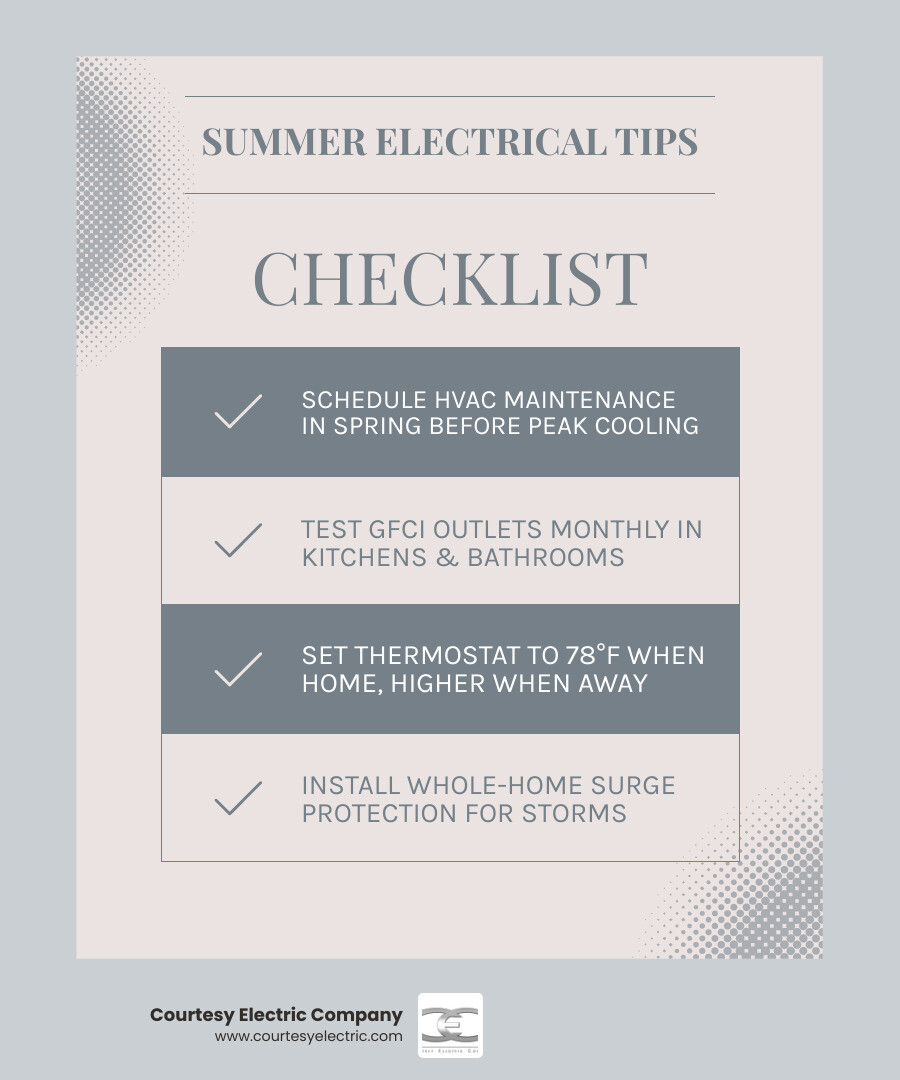
This leads to "internal smoldering." The wires inside the wall get hotter and hotter, the insulation melts, and a fire starts—all while the breaker stays stubbornly "on." This lack of protection is a terrifying example of how outdated wiring increases fire risk when paired with a failing panel.

Upgrading to 200-amp service for 2026 technology

Most homes built 40 or 50 years ago were outfitted with 60-amp or 100-amp service. In 2026, that is barely enough to run a central air conditioner and a microwave at the same time. If you’re looking to install an EV charger in Parker or a smart kitchen in Black Forest, you likely need a 200-amp upgrade.

Upgrading your service isn't just about "more power"; it's about "safer power." A 200-amp upgrade involves installing a modern panel with AFCI and GFCI protection on every circuit, providing a level of safety that was literally impossible when your home was built. It’s the ultimate way to future-proof your property while eliminating fire hazards.

Warning Signs Your Denver Home Needs an Electrical Upgrade

You don't always need an electrician to tell you there’s a problem. Your home is likely already sending you signals. If you notice any of the following "red flags," it’s time to take action before a minor issue becomes a major disaster.
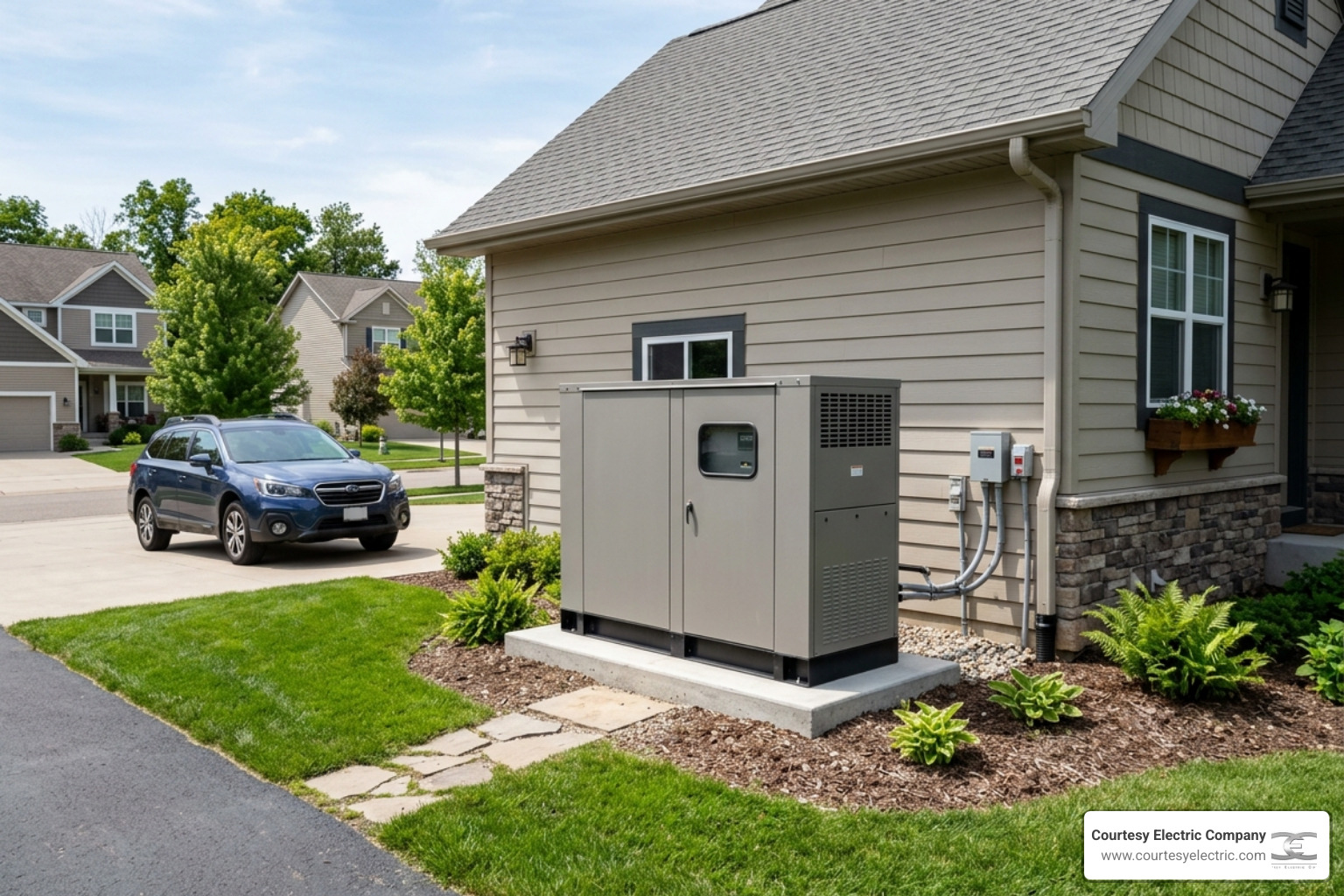
  • Flickering or Dimming Lights: This often happens when a high-draw appliance (like the AC) kicks on, indicating your system can't handle the load.
  • Burning Smells: An acrid, "fishy," or plastic-burning smell near an outlet or the panel is a sign of active arcing or melting insulation.
  • Discolored Outlets: Scorched or brown marks on an outlet cover mean heat is building up behind the wall.
  • Buzzing Sounds: Electricity should be silent. A buzzing or hissing sound indicates a loose connection or a failing breaker.
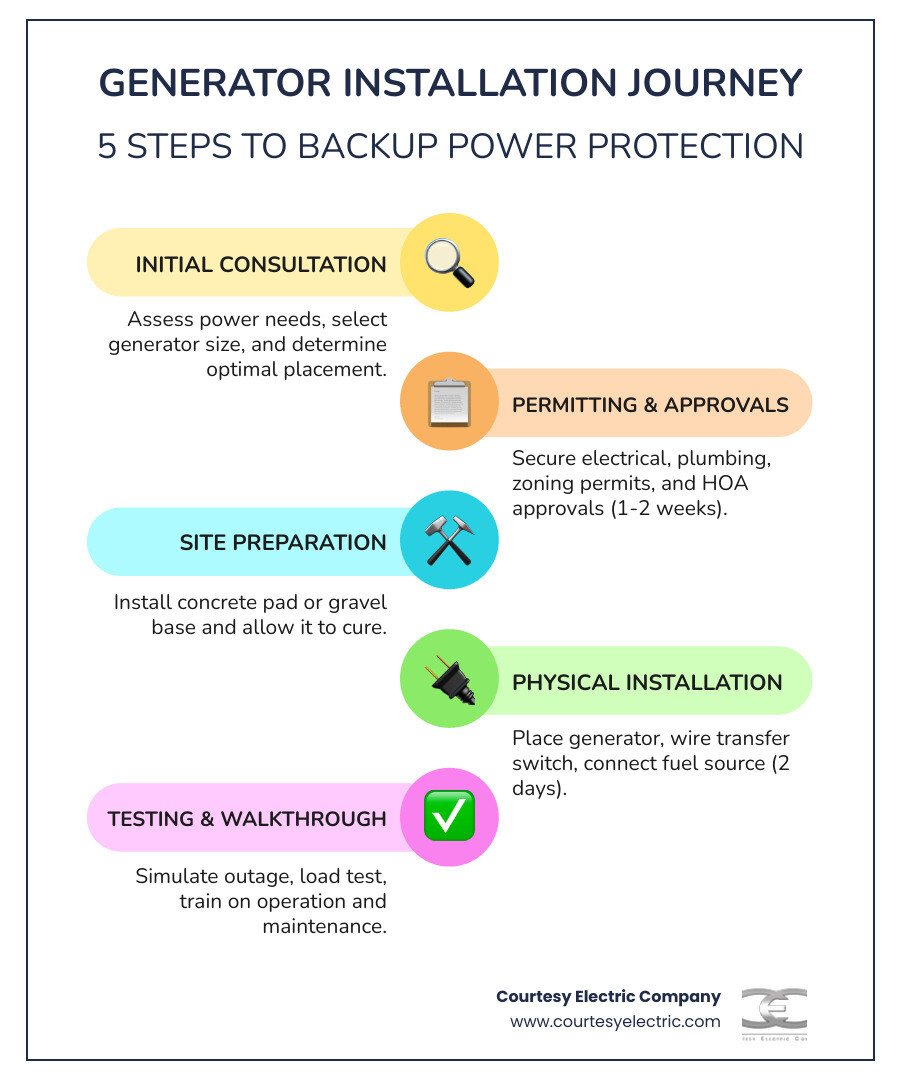
  • Frequent Breaker Trips: If you’re visiting the garage to reset a breaker once a week, your system is crying for help.
  • Warm Switch Plates: If an outlet or light switch feels warm to the touch, there is a dangerous level of resistance inside.

Steps to Safely Upgrade Your Home’s Electrical System

Upgrading your home’s electrical system is a structured process that requires professional expertise. This isn't a weekend DIY project—it involves high-voltage components and strict adherence to the National Electrical Code (NEC).

  1. Professional Inspection: We start by using thermal imaging cameras to "see" heat signatures behind your walls. This helps us identify exactly how outdated wiring increases fire risk in your specific home.
  2. Load Calculation: We calculate your home's total power needs, accounting for everything from your refrigerator to your future EV charger.
  3. Permit Acquisition: We handle the paperwork with local authorities in Denver, Parker, or Highlands Ranch to ensure the work is legal and inspected.
  4. Copper Rewiring: We replace old, dangerous aluminum or K&T wiring with modern, high-grade copper conductors.
  5. Panel Replacement: We swap out the old "heart" of your home for a modern 200-amp panel, often recommending smart solutions like SPAN panels for better energy management.
  6. Whole-Home Surge Protection: We install a device at the panel that protects your sensitive electronics from Colorado’s frequent lightning strikes and power surges.

The benefits of a professional electrical overhaul

Beyond the obvious benefit of not having your house catch fire, a professional upgrade offers several practical advantages. First, it significantly increases your property value. In a competitive market like the Front Range, a "fully rewired" home is a major selling point.

Second, it impacts your wallet through insurance. Many insurance companies in Colorado will outright refuse to cover homes with knob-and-tube or aluminum wiring. By upgrading, you not only become eligible for better coverage but often qualify for lower premiums. Finally, there is the "Peace of Mind" factor. Knowing that you can plug in your devices without worrying about what’s happening inside your walls is priceless.

Frequently Asked Questions about Electrical Fire Risks

How often should I have my home's wiring inspected in Denver?

For homes over 40 years old, we recommend a professional safety inspection every 1 to 2 years. If your home is newer (built after 1990), every 3 to 5 years is generally sufficient, unless you notice warning signs like flickering lights or buzzing outlets.

Will my homeowners insurance be canceled if I have knob-and-tube wiring?

It is a strong possibility. Many modern insurers view knob-and-tube as an "unacceptable risk." If they don't cancel your policy, they may significantly raise your rates or exclude any fire damage caused by the electrical system. Upgrading to modern copper wiring is the best way to protect your coverage.

Can I replace my own electrical panel to save on costs?

We strongly advise against this. Working inside a main service panel involves "live" electricity that cannot be turned off by a simple switch. A single mistake can lead to fatal electrocution or a fire that levels the home. Furthermore, unpermitted electrical work can void your insurance policy and make it impossible to sell your home in the future.

Conclusion

At Courtesy Electric Company, we’ve been serving the Denver and Colorado Front Range region since 1976. We’ve seen how outdated wiring increases fire risk, and we’ve dedicated our careers to helping our neighbors stay safe. Whether you are in a historic bungalow in Denver or a growing estate in Black Forest, your safety is our top priority.

From installing Generac standby generators to upgrading you to a SPAN smart panel, we provide the quality, integrity, and dependability you deserve. Don't wait for a spark to tell you there's a problem. Schedule your professional electrical service today and let us give your home the modern, safe infrastructure it needs for 2026 and beyond.