Why Knowing When to Call an Electrician vs DIY Could Save Your Home
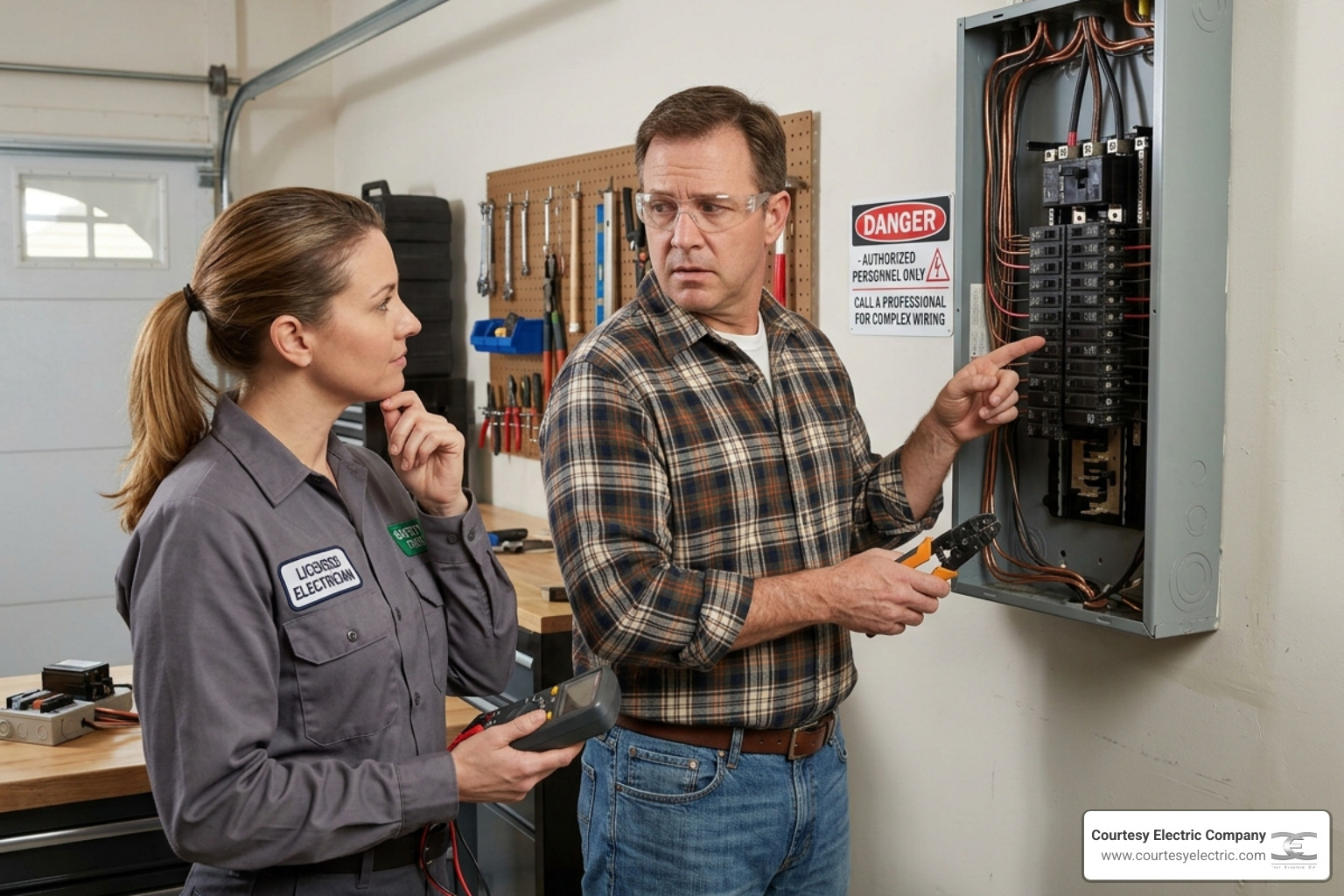
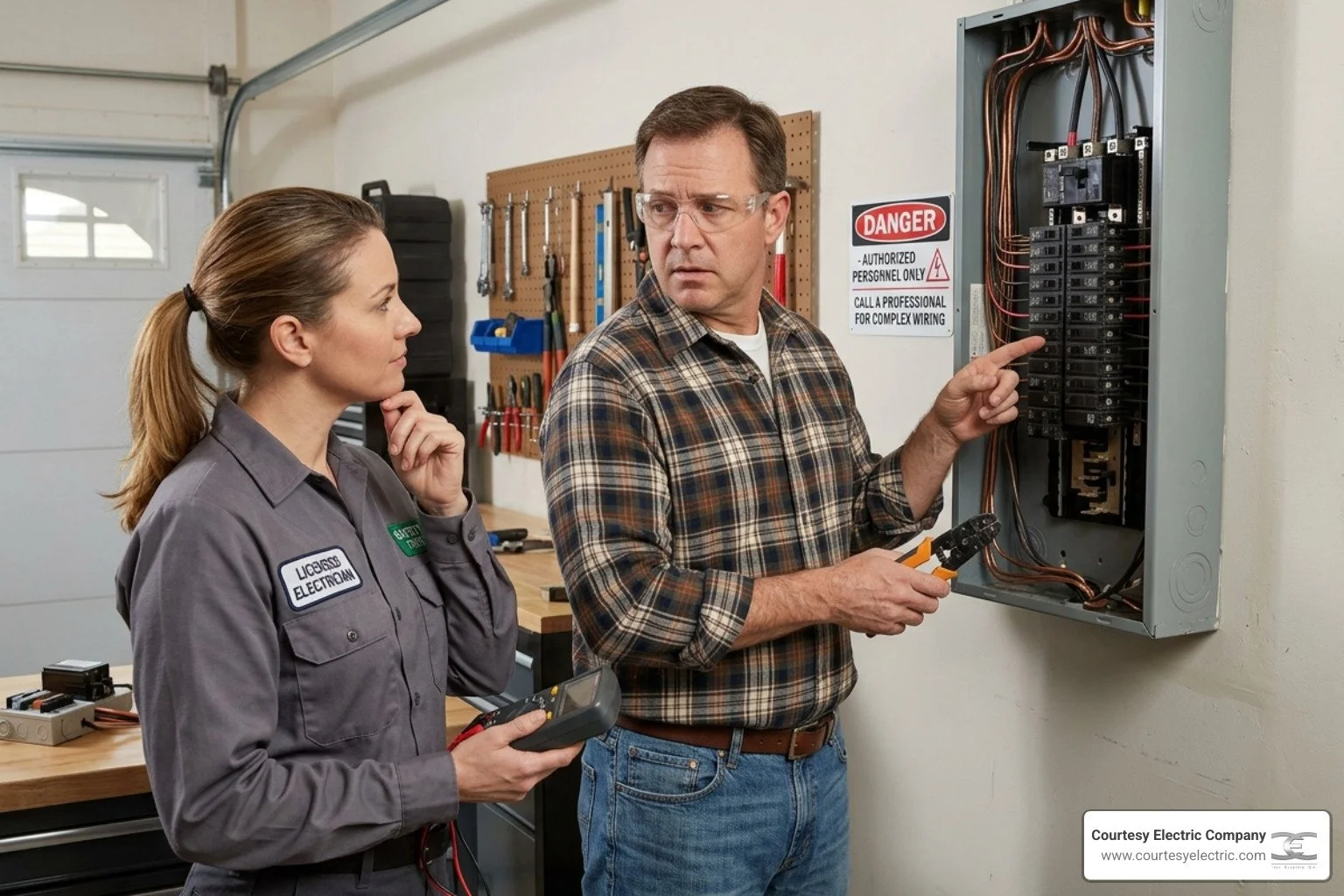
When to call an electrician vs DIY is one of the most important decisions a homeowner can make — and getting it wrong can mean a house fire, a failed inspection, or a denied insurance claim.
Here's a quick breakdown to help you decide:
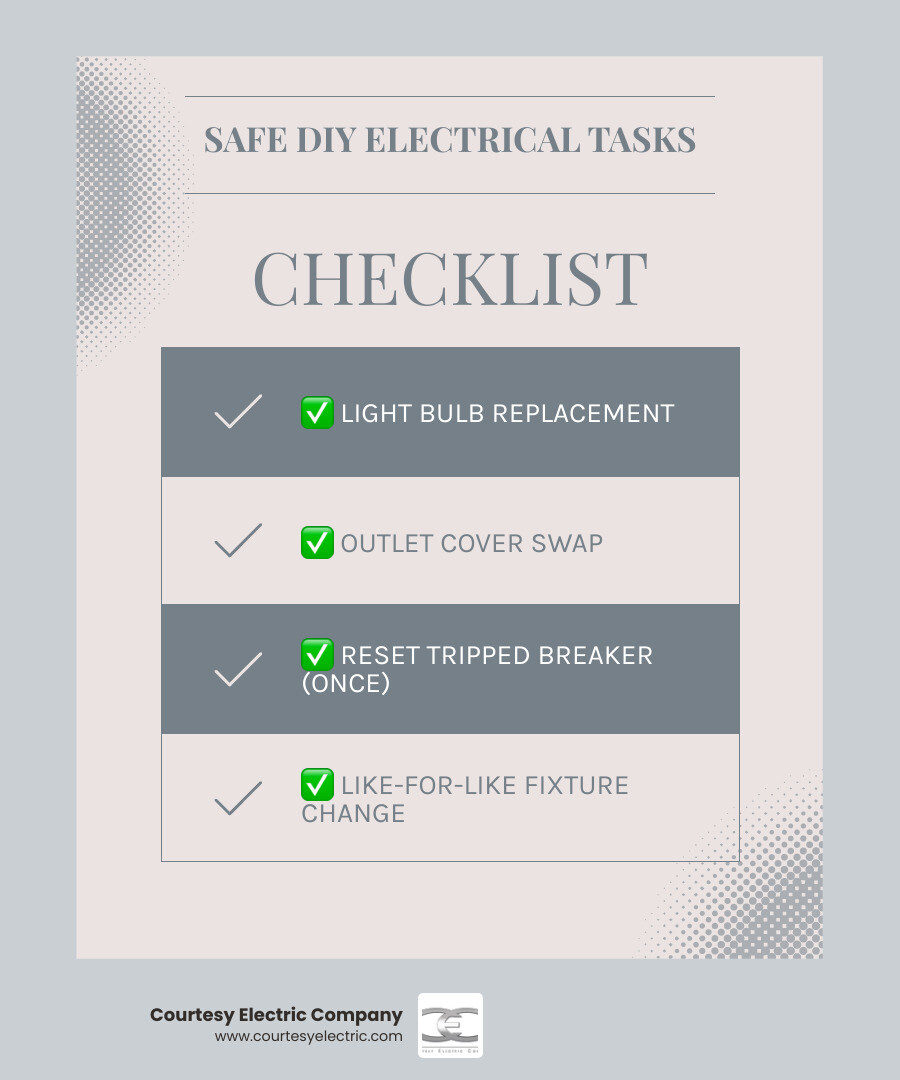
| Task | DIY Safe? |
|---|---|
| Replacing a light bulb | Yes |
| Swapping a decorative outlet cover | Yes |
| Resetting a tripped breaker (once) | Yes |
| Replacing a like-for-like light fixture | With caution |
| Installing a dimmer or USB outlet | With caution |
| Adding a new circuit | No — call a pro |
| Upgrading your electrical panel | No — call a pro |
| Installing an EV charger | No — call a pro |
| Whole-home rewiring | No — call a pro |
| Any work involving the main panel | No — call a pro |
The short answer: Stick to simple, like-for-like replacements that don't involve new wiring or the electrical panel. For anything beyond that, hire a licensed electrician.
Electrical failures cause over 50,000 home fires every year in the United States. Nearly 400 people die annually from home electrical fires, and improper DIY electrical work is a major contributing factor — responsible for roughly 500 deaths and $1.3 billion in property damage. Those aren't abstract numbers. They represent real homes, real families, and real mistakes that seemed small at the time.
The modern home runs on a complex web of wiring, breakers, and load-bearing circuits that are largely invisible until something goes wrong. And when something does go wrong with electricity, it rarely gives you a warning before it becomes dangerous. Unlike a leaky faucet or a squeaky door, a faulty wire connection can smolder behind a wall for weeks before igniting.
This guide is designed to help Colorado Front Range homeowners draw a clear, honest line between what's safe to handle yourself and what needs a licensed professional — no guesswork, no risk-taking.
I'm David Meyer, Vice President of Courtesy Electric Company, a Colorado electrical contractor with roots going back to 1976, and understanding when to call an electrician vs DIY has been central to everything I've learned working from the field up through the business side of this trade. Let's walk through exactly where that line is — so you can make confident, safe decisions about your home's electrical system.
Safe Home Projects: When to Call an Electrician vs DIY for Minor Tasks
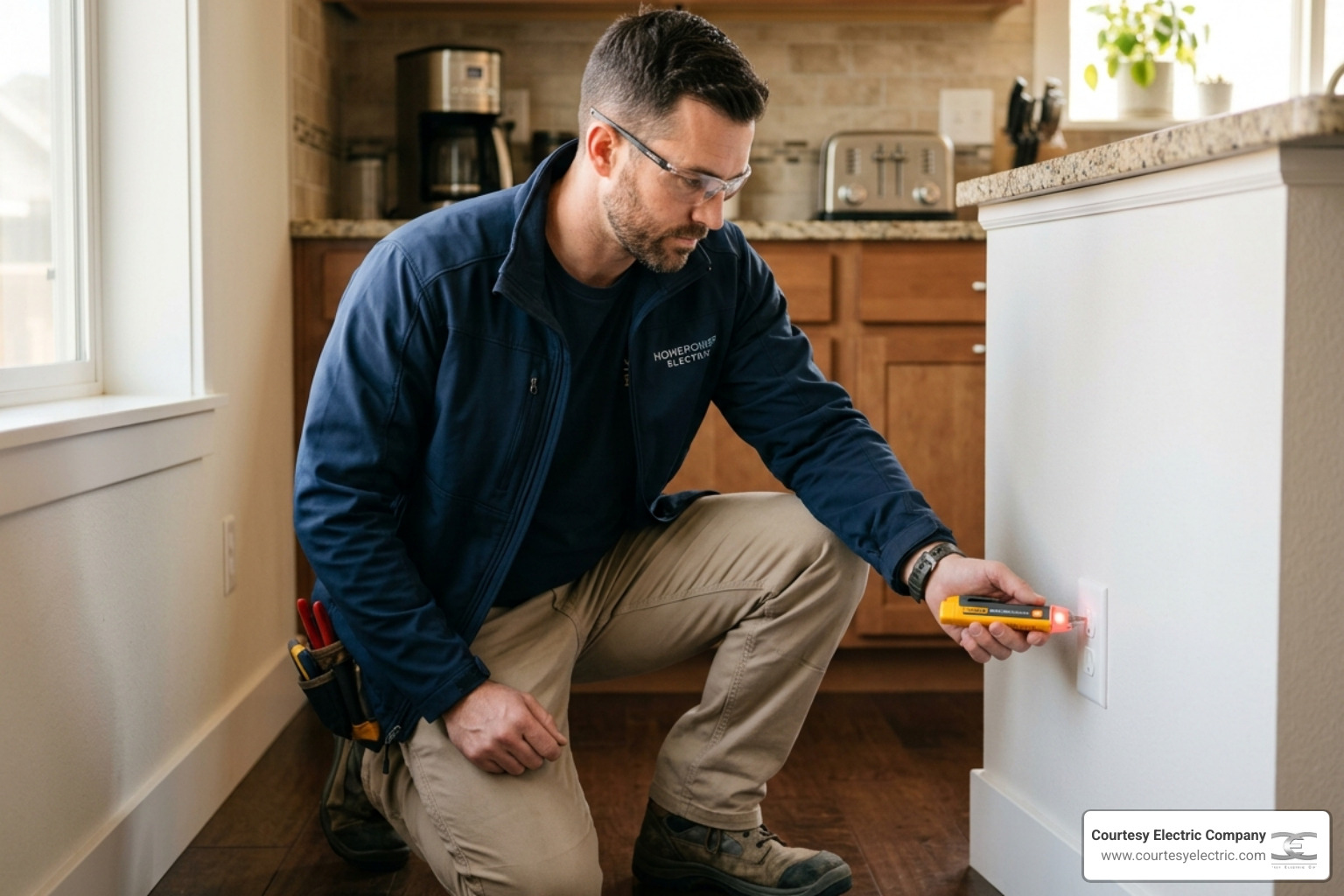
We all love the satisfaction of a "quick win" around the house. In April 2026, with smart devices becoming even more prevalent in Denver homes, the urge to DIY is stronger than ever. However, safety must always be your North Star. Before you even touch a screwdriver, you need a basic tool kit: a non-contact voltage tester, a pair of insulated pliers, and a reliable screwdriver.
The most important tool is the voltage tester. We cannot stress this enough: never assume the power is off just because you flipped a switch. Test every wire, every time.
There are several tasks that are perfectly safe for a homeowner who is comfortable with basic tools. Replacing a burnt-out light bulb or swapping a cracked decorative faceplate doesn't require a permit or a professional. Similarly, testing your smoke detector batteries or setting up a plug-in smart home hub is low-risk. If a breaker trips once, it’s usually safe to reset it—provided you know what caused the trip (like running a space heater and a vacuum on the same circuit).
If you're looking to enhance your home's ambiance, you might explore lighting control options that are battery-powered or plug-and-play. For more comprehensive electrical service, however, the boundary begins to shift.
Simple repairs where you might not need to call an electrician vs DIY
If you have a foundational understanding of how circuits work, some "swaps" are manageable. This includes changing a standard light switch for a dimmer switch or replacing an old outlet with a modern USB-integrated version. The key here is "like-for-like." You are not adding new wires; you are simply connecting existing wires to a new device.
Homeowners often tackle these minor upgrades when installing central vac systems or setting up surround sound systems that require low-voltage connections. As long as you aren't opening the main service panel or cutting into structural wiring, these aesthetic or functional upgrades can often be DIY projects. Just remember: if the wiring you find inside the wall looks frayed, scorched, or doesn't match the diagram you're following, stop immediately.
Identifying hazards and when to call an electrician vs DIY for troubleshooting
Troubleshooting is where DIY often becomes dangerous. If you're wondering when to call an electrician vs DIY, the answer is "the moment you smell something funny."
Keep an eye out for these red flags:
- Flickering Lights: This isn't just a nuisance; it often indicates a loose neutral wire or an overloaded circuit.
- Buzzing Sounds: Electricity should be silent. A hum or buzz from a wall or outlet is a sign of arcing—electricity jumping through the air—which is a leading cause of fires.
- Warm Outlets: If an outlet cover is warm to the touch, there is too much heat building up behind the wall.
- Persistent Breaker Trips: If a breaker trips a second time after you've reset it, the system is telling you there is a serious fault.
When it comes to home security, ensuring your system has a stable, professional power source is vital. For these and other services, professional intervention ensures that "small" problems don't turn into catastrophic failures.
The High Stakes of DIY: Permits, Insurance, and Code Compliance
In Colorado, and specifically across the Front Range, we adhere to strict building codes. These aren't just "suggestions" to make your life difficult; they are based on decades of fire safety data. The National Electrical Code (NEC) is updated regularly to reflect new technologies and safety findings.
One of the biggest risks of DIY electrical work isn't just a shock—it's the legal and financial fallout. Most significant electrical work requires a building permit. If you perform unpermitted work, you could face several issues:
- Insurance Claim Denials: If a fire starts due to DIY wiring, your insurance company may refuse to pay the claim because the work was not performed by a licensed professional or inspected by the city.
- Real Estate Complications: When you go to sell your home in Denver or Parker, a home inspector will likely flag non-professional work. You may be forced to tear it out and pay a pro to redo it at the last minute to save the sale.
- Liability: If unpermitted work causes injury to a guest or a future owner, you could be held personally liable.
Professional low voltage installations and high-voltage upgrades come with a paper trail—permits, inspections, and certificates—that protect your property value and your peace of mind.
| DIY Risks | Professional Benefits |
|---|---|
| Potential for fire/shock | Guaranteed safety and code compliance |
| Risk of insurance denial | Work is insured and warrantied |
| Failed home inspections | Passed inspections and proper permits |
| Hidden damage behind walls | Expert diagnostic tools (like thermal imaging) |
Complex Installations That Always Require a Licensed Pro
There are some projects that simply have no "DIY" version. These require a deep understanding of load calculations, wire degradation, and grounding systems. At Courtesy Electric Company, we specialize in these high-complexity electrical service needs.
- EV Charger Stations: Installing a Level 2 charger isn't as simple as plugging in a toaster. It requires a dedicated high-voltage circuit and often a significant increase in your home's electrical load.
- Main Panel Upgrades: Working inside the main breaker box is incredibly dangerous because the main bus bars remain "live" even when the main breaker is shut off. Whether you're moving to a SPAN smart panel or just increasing your amperage, this is a job for us.
- Whole-Home Rewiring: If you live in an older home in the Front Range with knob-and-tube or aluminum wiring, remediation is a massive undertaking that requires specialized techniques to prevent fire hazards.
- Dedicated Appliance Circuits: Adding a hot tub, a new double oven, or a heavy-duty workshop compressor requires calculating the "load" to ensure you don't melt your wires or trip your main breaker.
- Outdoor Wiring: Water and electricity are a lethal combination. Outdoor kitchens and landscape lighting require specific GFCI (Ground Fault Circuit Interrupter) and weather-rated components to prevent electrified soil or water features.
Our team provides comprehensive services that ensure these complex systems are balanced, grounded, and safe for decades to come.
Frequently Asked Questions about Electrical Safety
Do I need a permit for installing an EV charger in Denver?
Yes. In Denver and surrounding areas like Highlands Ranch and Aurora, installing an EV charger is considered a significant modification to your home's electrical system. A permit ensures that your panel can handle the extra load and that the wiring is sized correctly for the high current the charger will draw. A licensed electrician will handle the permit process and the subsequent safety inspection for you.
Can DIY electrical work void my home insurance coverage?
It absolutely can. Most homeowners' insurance policies have clauses requiring that all "mechanical" work (electrical, plumbing, HVAC) be performed by licensed professionals according to local codes. If a DIY project leads to a fire, the insurance company can argue that you increased the risk through negligence, leading to a total claim denial. Always keep documentation of professional work for your records.
What are the most common DIY electrical mistakes to avoid?
We see the same mistakes over and over when we're called in to fix a DIY project gone wrong:
- Reversed Polarity: Connecting the hot and neutral wires to the wrong terminals. This can make a device work, but it leaves it "energized" even when turned off, creating a major shock hazard.
- Improper Grounding: Skipping the ground wire or attaching it incorrectly, which removes your home's primary defense against surges.
- Incorrect Wire Gauge: Using a wire that is too thin for the amount of electricity (amperage) flowing through it. This causes the wire to overheat and can start a fire behind your drywall.
- Loose Connections: If a wire nut isn't tight, the connection can "arc," creating intense heat.
To learn more about how our team avoids these pitfalls through years of training, explore our background and mission.
Conclusion
Deciding when to call an electrician vs DIY doesn't have to be a gamble. While swapping a light bulb or a faceplate is a great way to stay involved in your home's upkeep, the "invisible" nature of electricity makes it one of the most dangerous areas for trial and error.
Since 1976, Courtesy Electric Company has been the trusted name for quality, integrity, and dependability across Denver and the Colorado Front Range. Whether you are in Parker, Black Forest, or downtown Denver, we are here to ensure your home is safe, modern, and up to code. We specialize in the future of home energy—from Generac and Cummins generators to SPAN smart panels and Franklin battery storage.
Don't leave your family's safety to a YouTube tutorial. We offer free estimates on all electrical installations, providing you with a professional roadmap for your next project.
Contact us for a professional electrical service consultation and let us give you the peace of mind that comes with knowing the job was done right the first time.


