
Why a Spring Electrical Safety Checklist Matters for Colorado Homes

A spring electrical safety checklist for colorado homes is one of the most important steps Front Range homeowners can take before storm season hits. Here is a quick overview of what to check this spring:
Spring Electrical Safety Checklist for Colorado Homes:
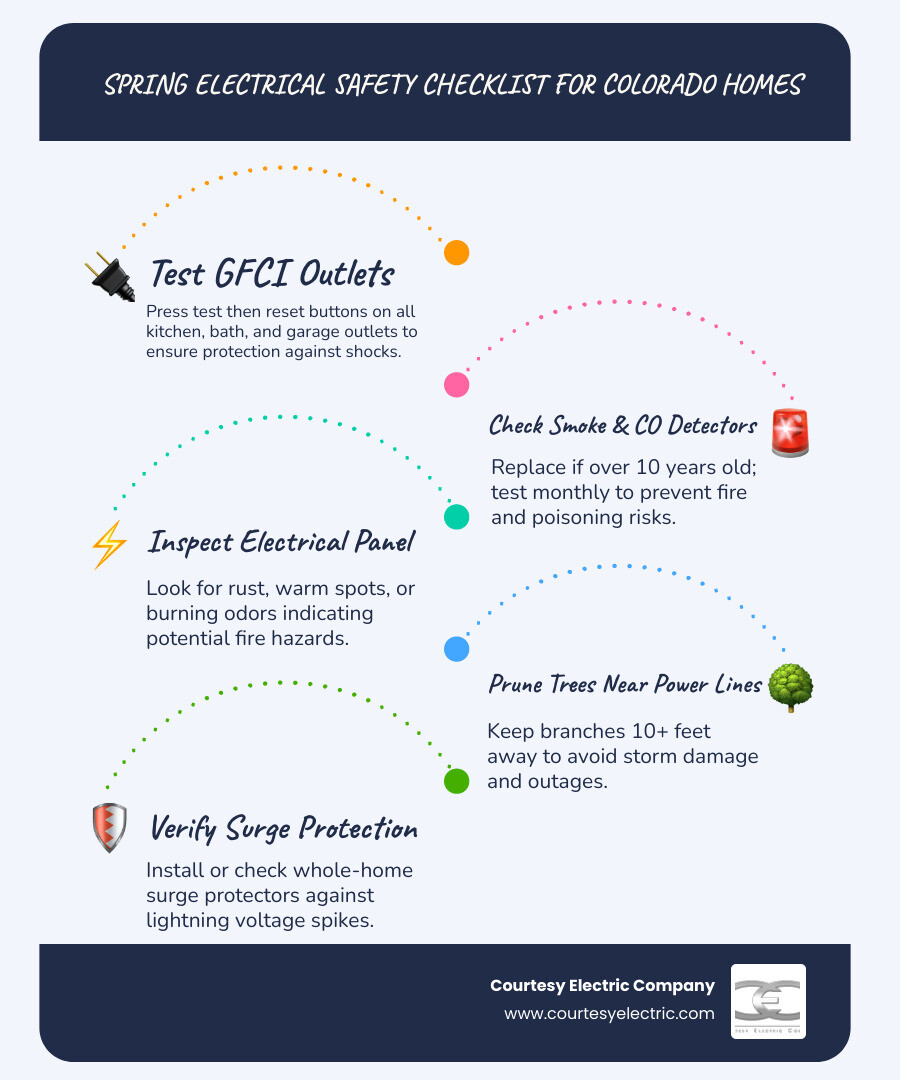
- Test all GFCI outlets (press test, then reset)
- Check smoke and carbon monoxide detectors — replace if older than 10 years
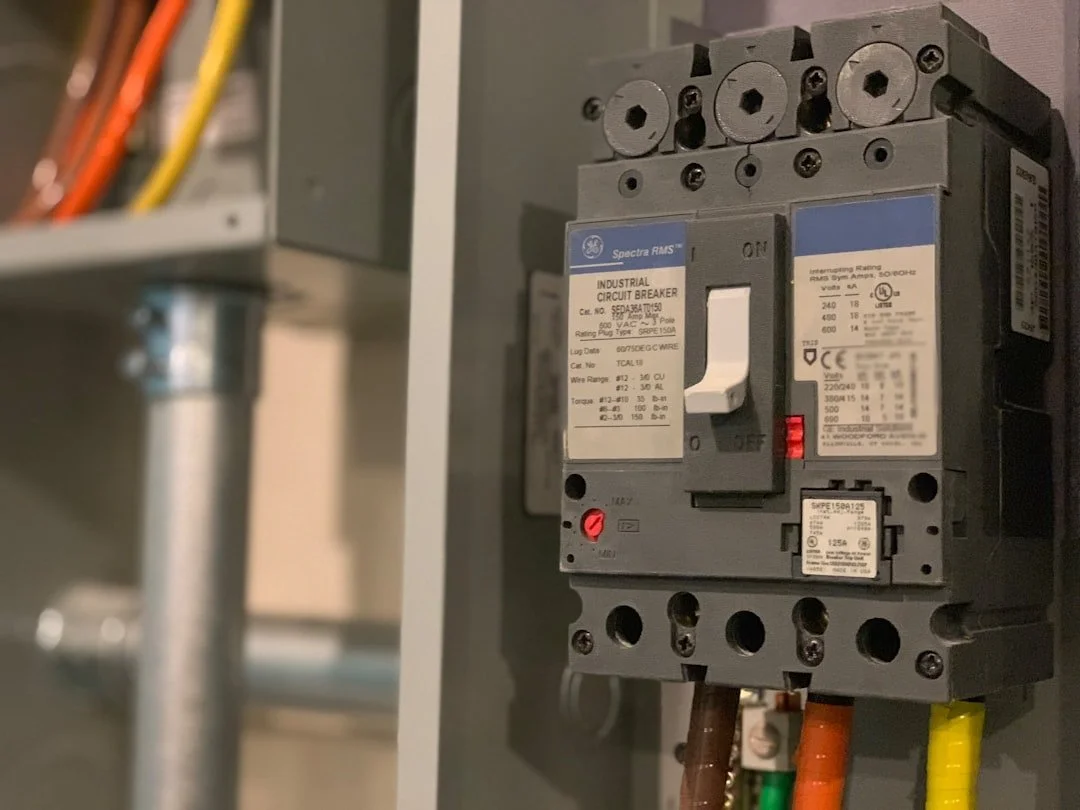
- Inspect your electrical panel for rust, warm spots, or burning smells
- Look over all extension cords and appliance cords for fraying or damage
- Install or verify whole-home surge protection
- Check outdoor outlets for weatherproof covers
- Prune tree branches at least 10 feet from power lines
- Inspect outdoor wiring and landscape lighting for winter damage
- Test your backup generator or battery system
- Schedule a professional inspection if your home has older wiring
Colorado's spring weather is unpredictable. One afternoon you have sunshine, and by evening a lightning storm is rolling across the Front Range. That combination of freeze-thaw cycles, heavy snowmelt, and powerful thunderstorms puts real stress on your home's electrical system — often in ways you can't see from the surface.
According to the NFPA, electrical failures and malfunctions were the second leading cause of U.S. home structure fires from 2012 to 2016, accounting for 13% of all incidents. Many of those fires could have been prevented with routine seasonal checks.
Spring is the right time to catch problems that built up over winter before summer storms make them worse.
I'm David Meyer, Vice President of Courtesy Electric — a Colorado electrical contractor with roots going back to 1976. Having worked across the Denver Front Range for years, I've seen how Colorado's seasonal swings create unique electrical hazards that a standard spring electrical safety checklist for colorado homes needs to specifically address. In the sections below, I'll walk you through exactly what to check, what to watch out for, and when to call in a pro.
Why Spring Weather Stresses Colorado Electrical Systems
In the Denver area and across the Front Range, our homes endure some of the most dramatic weather shifts in the country. As we move into April 2026, we have to consider how the past winter has impacted our Residential electrical infrastructure.
The Freeze-Thaw Cycle and Saturated Soil
Colorado is famous for its "yo-yo" weather. We might have a 60-degree day followed by a deep freeze. This constant expansion and contraction of the soil can actually shift your home's grounding rod or loosen the connections where power enters your house. When the spring snowmelt begins, the soil becomes saturated. Wet soil is highly conductive, which means any fault in your underground wiring or grounding system can become a major shock hazard.
Lightning and Voltage Spikes
As warmer air returns, so do the powerful thunderstorms that roll off the Rockies. Lightning doesn't even have to strike your home directly to cause damage; a strike nearby can send a massive voltage spike through utility lines. Without proper grounding and protection, these surges can fry sensitive electronics, from your smart fridge to your home office setup.
Essential spring electrical safety checklist for colorado homes
When we perform a professional Electrical Service, we look at the home as a complete system. For your DIY spring check, it helps to visualize the "path of power" from the street to your devices.

Storm Preparedness and Surge Protection
Most people think a power strip from a big-box store is enough. In reality, those offer very little protection against a significant Colorado lightning strike. We recommend whole-home surge protection installed directly at your main panel. This acts as a gateway, blocking surges before they ever reach your outlets.
Emergency Power Planning
With spring comes the risk of power outages from heavy, wet "tree-breaker" snow or high winds. Now is the time to:
- Test your generator: If you have a Generac or Cummins standby generator, run a test cycle. Ensure it has fresh fuel and no debris is blocking the exhaust.
- Check battery backups: Systems like Franklin battery storage should be checked for charge levels and firmware updates.
- Create a Storm Kit: Keep LED flashlights, fresh batteries, and a portable phone bank in a dedicated spot. Know how to manually open your electric garage door so you aren't trapped during an outage!
Indoor spring electrical safety checklist for colorado homes
Our Homeowners guide focuses on the high-traffic areas where moisture and electricity meet.
- GFCI Testing: Ground Fault Circuit Interrupters (those outlets with the "Test" and "Reset" buttons) are lifesavers in kitchens, bathrooms, and garages. Press the "Test" button monthly. If the "Reset" button doesn't pop out, the outlet is faulty and needs immediate replacement.
- Smoke and CO Detectors: Test every unit. If a detector is more than 10 years old, the internal sensors degrade—replace the entire unit, not just the battery.
- Water Heater Safety: Check your water heater temperature. It should be set to 120 degrees or less to prevent scalding and reduce the electrical load.
- Cord Inspection: Pull your furniture away from the walls. Check for "heat damage" or fraying on cords. Never run extension cords under rugs, as trapped heat can lead to a fire.
Outdoor spring electrical safety checklist for colorado homes
Winter is hard on exterior components. We've been About this business long enough to know that a single cracked outlet cover can lead to a short circuit during a rainstorm.
- The 10-Foot Rule: Inspect the area where power lines enter your home. Tree branches should be pruned back at least 10 feet. Warning: Never trim branches near power lines yourself; always hire a professional tree service.
- Weatherproof Covers: Check your outdoor "bubble covers." They should be intact and snap shut completely to keep out Colorado's driving rain and snow.
- 811 Digging Safety: Planning a new garden or fence this spring? Call 811 before you dig. Striking an underground power line is dangerous and incredibly expensive to repair.
- Landscape Lighting: Check for exposed wires that may have been uncovered by snowmelt or shifted soil.
Identifying Hidden Hazards in Older Front Range Properties
Many homes in Denver, Parker, and Highlands Ranch were built during eras with different electrical standards. Part of our Warranty and quality commitment is helping owners of older homes identify "invisible" risks.
Aluminum Wiring (Mid-1960s to 1970s)
If your home was built between 1965 and 1973, it might have aluminum branch-circuit wiring. Aluminum expands and contracts more than copper, which can cause connections to loosen over time, leading to overheating and fire risks.
Knob-and-Tube Risks
In very old Denver neighborhoods, you might still find knob-and-tube wiring. This system lacks a ground wire and relies on open air for cooling. If a previous owner added insulation over this wiring, it creates a massive fire hazard.
Modern Solutions: SPAN Smart Panels
One of the best ways to modernize an older home is by upgrading to a SPAN smart panel. These panels allow you to monitor every circuit in your home from your phone, giving you real-time alerts if a circuit is drawing too much power or behaving strangely.
When to Call a Professional for Electrical Maintenance
While a checklist is a great start, some things require a licensed expert. Our Services team recommends calling us immediately if you notice:
- Flickering Lights: This often indicates a loose neutral wire or an overloaded circuit.
- Burning Smells: An ozone or "fishy" smell near an outlet is a sign of electrical arcing.
- Warm Outlets or Switches: If a wall plate feels hot to the touch, there is a dangerous heat buildup behind the wall.
- Frequent Breaker Trips: If your AC or vacuum constantly trips the breaker, your panel may not be able to handle modern electrical loads.
We specialize in Generac and Cummins backup power and Franklin battery storage to ensure that even when the Colorado grid fails, your home stays bright and safe.
Frequently Asked Questions about Colorado Home Safety
| Feature | GFCI Protection | AFCI Protection |
|---|---|---|
| What it does | Protects people from shocks | Protects homes from fires |
| How it works | Detects moisture/ground faults | Detects dangerous arcing/sparks |
| Where it goes | Kitchens, Baths, Outdoors | Bedrooms, Living Areas |
| Testing | Monthly via "Test" button | Monthly via "Test" button |
How long do surge protectors last? Most "point-of-use" power strips only last 2–3 years. They have a limited amount of "joules" they can absorb. Once those are used up, they are just a regular extension cord with zero protection.
Why does my grounding system need maintenance? Colorado's dry, rocky soil can be poor for grounding. Over time, the copper rod can corrode or the connection can loosen due to the freeze-thaw cycles we mentioned earlier. A professional can test the "ohms" of your ground to ensure it’s actually working.
What is the 10-year rule? This applies to smoke detectors. Even if you change the batteries, the sensing chamber inside gets clogged with dust and pollutants over a decade. If the date on the back of the unit is from 2016 or earlier, it’s time for a new one.
Conclusion
At Courtesy Electric Company, we believe that safety is built on a foundation of quality and integrity. Since 1976, we have been the Denver area's trusted experts for everything from complex multi-family infrastructure to helping a homeowner install their first smart panel.
Don't let a spring storm catch you off guard. Taking the time to walk through this spring electrical safety checklist for colorado homes can save you from costly repairs and keep your family safe. If you find anything concerning during your inspection, or if you're ready to upgrade your home with a backup generator or battery system, we are here to help.
Schedule your professional electrical service today and let our experienced team give you the peace of mind you deserve this spring.


