
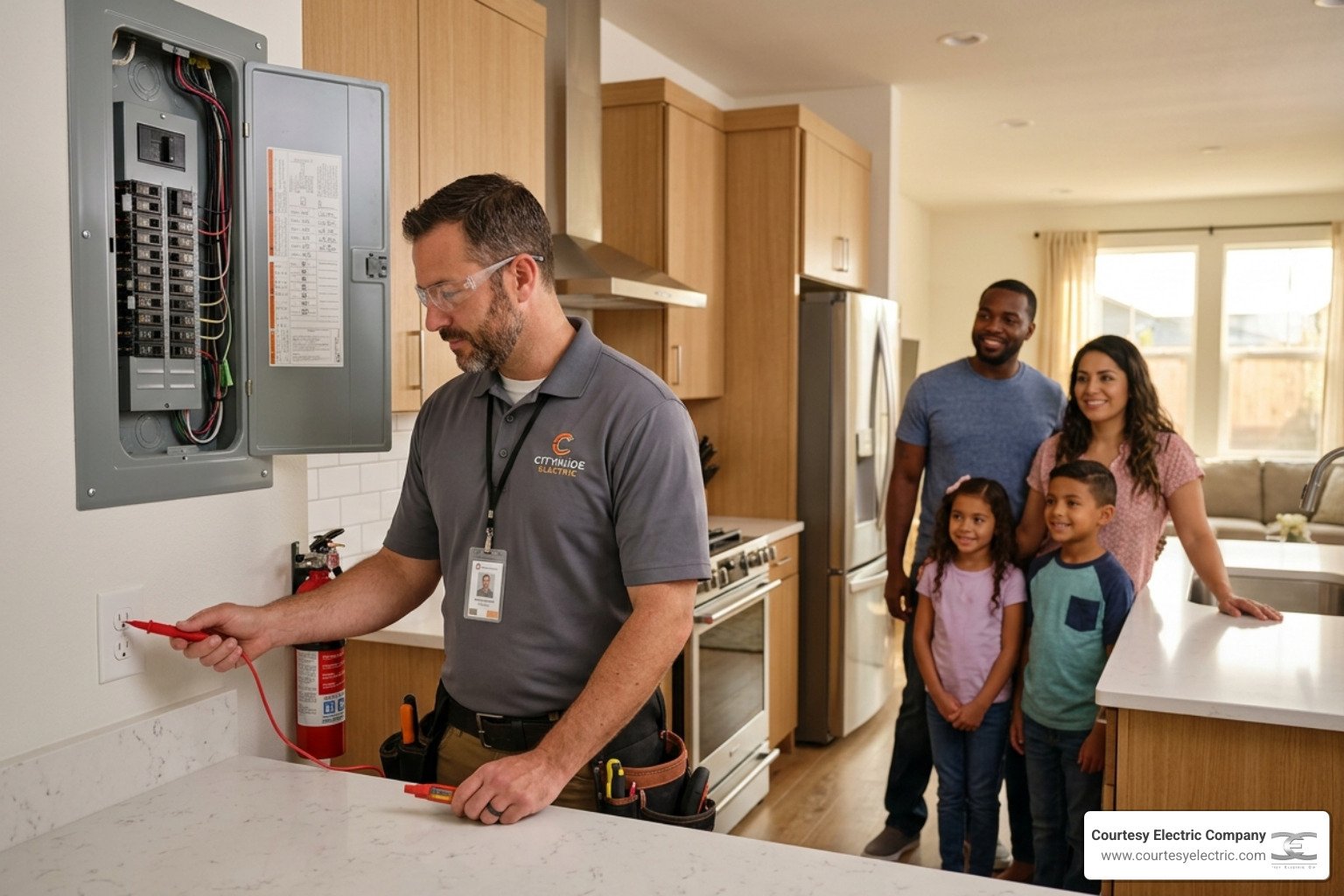
Electrical Fires Kill Hundreds of Americans Every Year — Here's What to Do About It
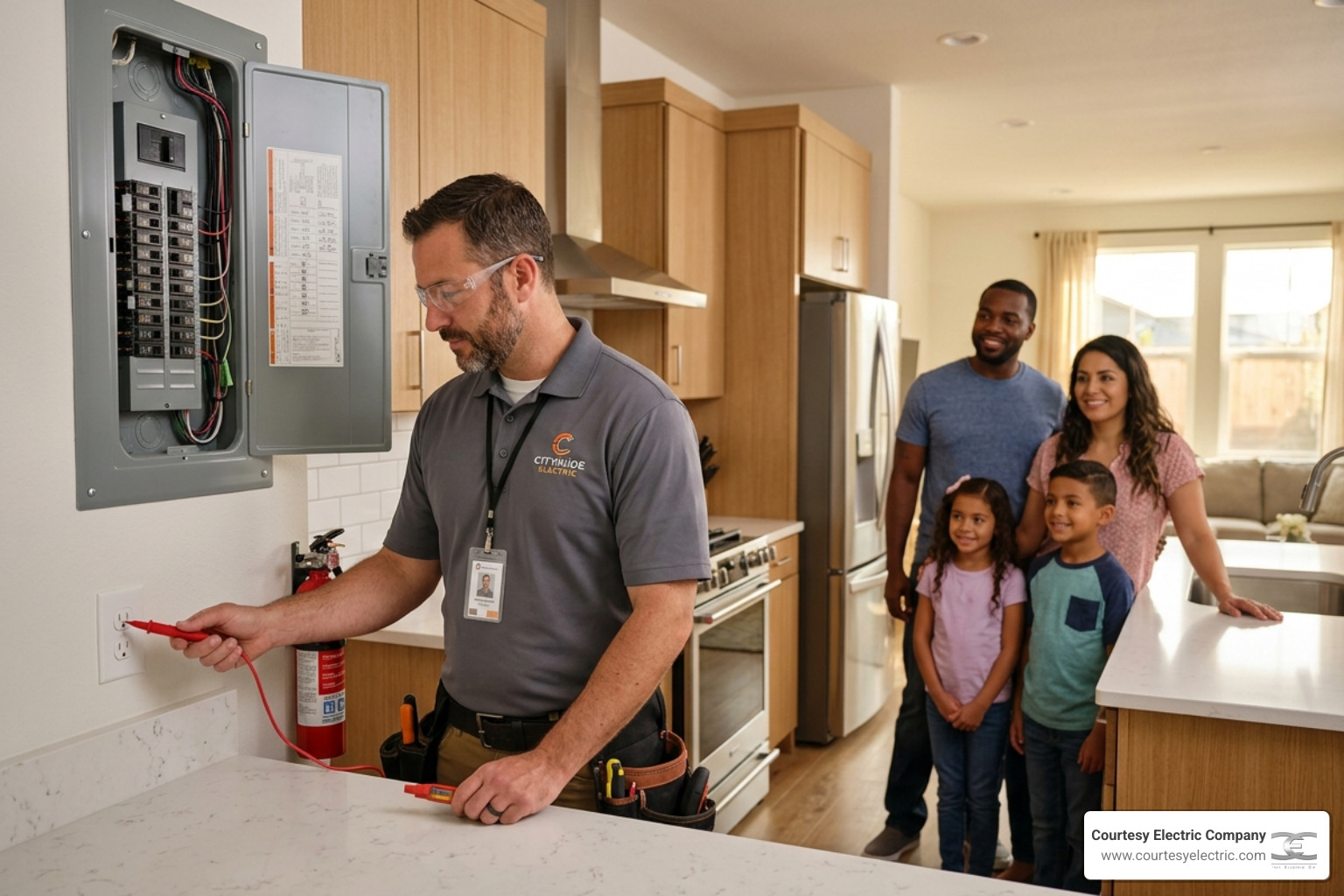
How to prevent electrical fires in your home is one of the most important safety questions you can ask as a homeowner. And the numbers make it clear why.
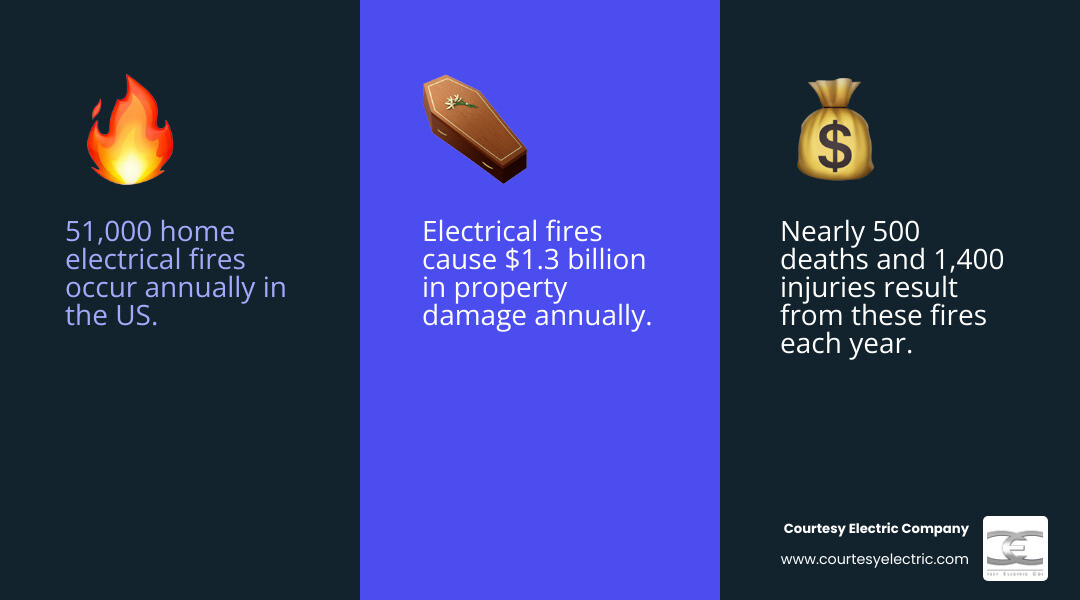
Every year, home electrical fires account for an estimated 51,000 fires, nearly 500 deaths, more than 1,400 injuries, and $1.3 billion in property damage across the United States. As of April 2026, these figures remain a serious and ongoing concern — especially in older homes across the Colorado Front Range where aging wiring struggles to keep up with modern electrical demands.
Here are the core steps to prevent electrical fires in your home:
- Watch for warning signs — flickering lights, buzzing outlets, burning odors, or tripped breakers
- Install AFCI and GFCI protection — these devices catch dangerous faults that standard breakers miss
- Test smoke detectors monthly — 65% of home fire deaths occur in homes without working smoke detectors
- Use appliances and cords correctly — plug major appliances directly into wall outlets and never overload circuits
- Have your electrical system professionally inspected — every 3 to 5 years, or sooner if your home is older
- Replace damaged cords and outdated wiring — frayed cords and aluminum wiring from the 1960s and 70s are serious hazards
- Keep space heaters 3 feet from flammables — and never plug them into extension cords
- Secure lithium-ion batteries properly — e-bikes, laptops, and other devices pose emerging fire risks
I'm David Meyer, Vice President of Courtesy Electric — a Colorado electrical contracting company with over 50 years of experience helping Front Range homeowners understand how to prevent electrical fires in your home through proper wiring, panel upgrades, and safety device installation. In the sections below, I'll walk you through every major risk area and exactly what you can do about each one.
How to prevent electrical fires in your home: Recognizing the Warning Signs
Most electrical fires don't happen out of the blue. Your home usually tries to tell you when something is wrong, but the messages can be subtle. Recognizing these red flags is the first step for homeowners who want to stay safe.
One of the most obvious signs is a scorched or discolored outlet. If you see brown or black marks around the plug-in slots, stop using that outlet immediately. This is a clear sign of overheating. Similarly, if an outlet or switch plate feels hot to the touch, or if you feel a tingling sensation when touching a residential appliance, you have a serious grounding or wiring issue.
Don't ignore your senses. Do you hear a buzzing, popping, or sizzling sound coming from your walls or outlets? That is often the sound of electricity "jumping" across a gap—a dangerous phenomenon known as arcing. Smells are equally telling. A persistent "plastic" or "rubbery" burning smell is a major warning. Interestingly, many people describe the smell of burning electrical insulation as "fishy." If your house smells like a seafood market and you haven't been cooking, call an electrician.
Frequent nuisances like flickering lights or circuit breakers that trip repeatedly are not just "old house quirks." They are signs that your system is overloaded or has a loose connection. When a breaker trips, it’s doing its job to prevent a fire, but if it happens often, the circuit is telling you it can't handle the load.
Identifying invisible hazards behind the walls
While scorched outlets are easy to see, many hazards are hidden. Arcing faults—where electricity strays from its intended path—are responsible for starting more than 28,000 home fires each year. These faults often occur behind walls due to loose connections, aged wire insulation, or even a nail driven into a wall in the wrong spot.
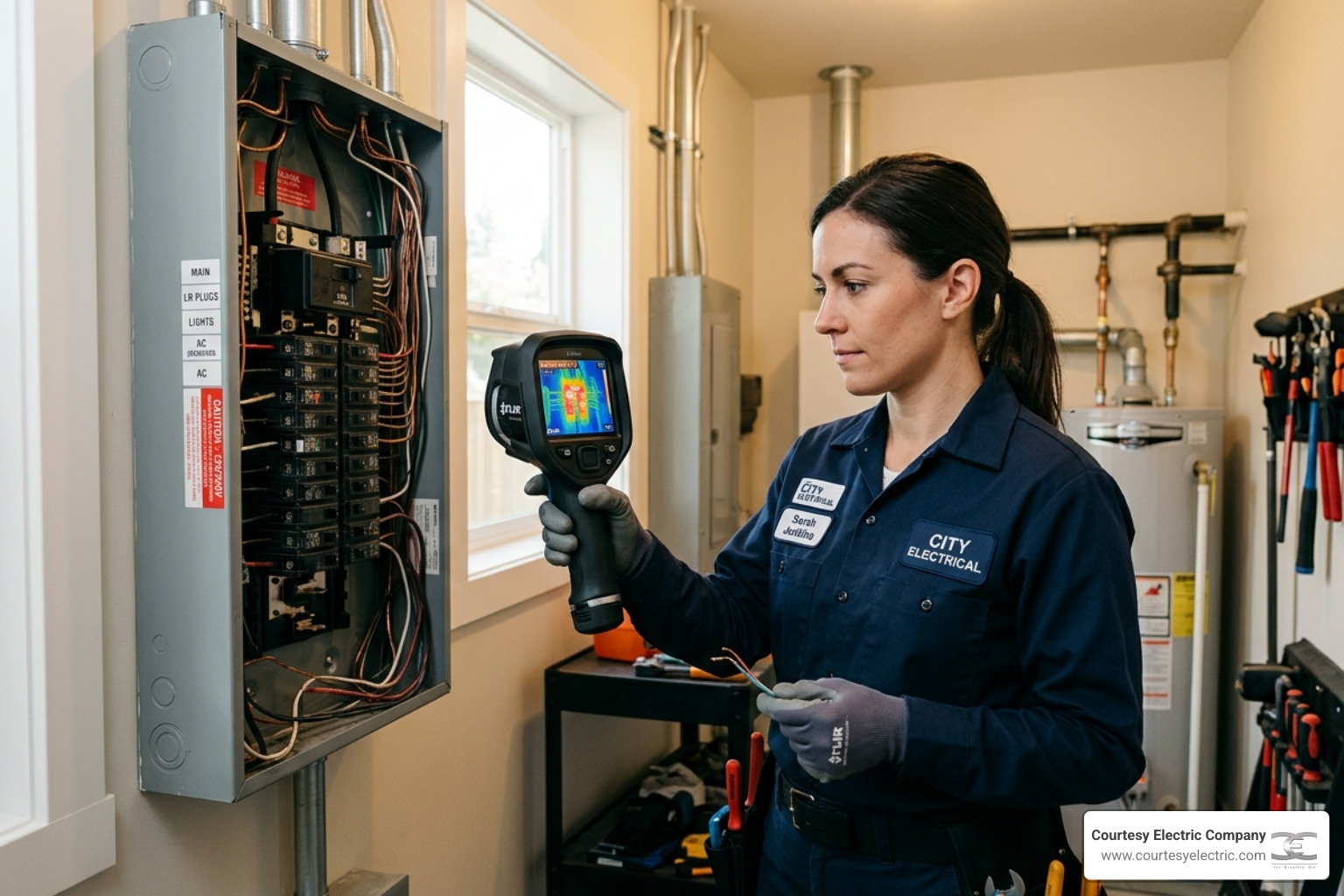
Our electrical service team often uses thermal imaging to find these "hot spots" that the naked eye can't see. These invisible hazards are why we emphasize that a circuit isn't safe just because the lights are on. Over time, the heat from a loose connection can degrade surrounding wood or insulation until it reaches its ignition point.
Essential Safety Devices for Modern Fire Prevention
Modern technology has given us incredible tools to stop fires before they start. If your home was built more than 20 years ago, you might be missing out on life-saving equipment.
| Device | Primary Function | Where to Install |
|---|---|---|
| AFCI (Arc-Fault Circuit Interrupter) | Detects dangerous arcing/sparking to prevent fires. | Bedrooms, living rooms, and most general living areas. |
| GFCI (Ground-Fault Circuit Interrupter) | Prevents electrocution by detecting "leaks" to ground. | Kitchens, bathrooms, garages, and outdoor outlets. |
| Smoke Detectors | Warns of smoke/fire presence. | Every level, inside every bedroom, and outside sleeping areas. |
| Surge Protectors | Protects electronics from voltage spikes. | At the main panel or at individual sensitive electronics. |
Smoke detectors are your last line of defense, yet 65% of home fire deaths occur in homes with no working smoke detectors. We recommend testing these monthly and replacing the entire unit every 10 years.
For your home, we also suggest whole-home surge protection. Unlike power strips, these are installed at the main panel and protect your entire electrical system—including major appliances—from external power surges. Plug-in surge protectors wear out and should generally be replaced every 3 to 5 years to remain effective.
Upgrading to modern technology to prevent electrical fires in your home
If you are curious about the best way to modernize your safety, look into AFCI breakers. While standard breakers protect against short circuits and overloads, they cannot see the low-level arcing that causes many fires. AFCI breakers are now required by code in most new residential constructions for a reason—they work.
Another simple but effective upgrade is the installation of tamper-resistant (TR) receptacles. These look like standard outlets but have internal shutters that prevent children from sticking hairpins or keys into the slots. Since electrical receptacles are involved in 5,300 fires every year, these are a "must-have" for families.
For those looking for the ultimate in safety and energy management, we specialize in SPAN panels. These smart electrical panels allow you to monitor every circuit in your home from your phone, letting you see exactly which appliances are drawing too much power or behaving strangely before a fire can start.
Safe Practices for Appliances and Power Distribution
How you interact with your appliances daily plays a huge role in how to prevent electrical fires in your home. Even the best wiring can't protect you from poor habits.
Major appliances—refrigerators, stoves, washers, and especially space heaters—should always be plugged directly into a wall outlet. Never use an extension cord or power strip for these high-draw items. Extension cords are not designed to handle that much current for long periods and can easily overheat.
Speaking of space heaters, they are a leading cause of home fires. Always follow the "3-foot rule": keep anything that can burn (curtains, rugs, bedding, furniture) at least three feet away from the heater. When you leave the room or go to sleep, turn the heater off and unplug it.
Clothes dryers are another hidden risk. Failure to clean the lint trap and the dryer ducting accounts for 31% of dryer fires. Make it a habit to clean the lint filter after every single load, and have your dryer vent professionally cleaned at least once a year. If you notice your clothes are taking longer to dry, that’s a sign of dangerous lint buildup.
Best practices to prevent electrical fires in your home with high-draw devices
Extension cords are for temporary use only. If you find yourself using one for more than 90 days, it’s time to schedule a permanent outlet installation. When using power strips, ensure they have internal overload protection. Never "daisy-chain" power strips (plugging one into another), as this creates a massive fire risk.
Modern life also brings new risks: lithium-ion batteries. Whether it's an e-bike, a laptop, or a cordless tool, these batteries store a lot of energy. Only use the manufacturer-provided charger, and never charge these devices on a bed or sofa where heat can't dissipate. If a battery looks swollen, smells, or gets excessively hot, contact a professional for disposal advice.
For Electric Vehicle (EV) owners in Denver and the Front Range, we recommend a dedicated circuit. Charging an EV puts a continuous, heavy load on your home's electrical system. A dedicated circuit ensures you aren't overloading existing wires that weren't designed for that level of demand.
Addressing Hidden Risks: Wiring, Pests, and Landscaping
If your home was built between the late 1960s and mid-1970s, you might have aluminum wiring. Aluminum expands and contracts more than copper, which can lead to loose connections and fires. You don't necessarily need to rewire the whole house, but you should have an electrician install "copper pigtails" or special connectors to make the system safe.
Pests are another often-overlooked factor. Mice, rats, and squirrels love to chew on the plastic insulation of wires in attics and crawlspaces. This leaves the bare wire exposed, which can easily spark a fire against wooden joists or insulation. During your next residential inspection, make sure your electrician checks these hard-to-reach areas.
Outside the home, landscaping can interfere with safety. Keep bushes and trees trimmed away from your outdoor electrical meter and any overhead power lines. If a branch falls on a line, it can send a surge into your home. Also, be wary of counterfeit electrical products. Only buy breakers, outlets, and cords that have a "UL" (Underwriters Laboratories) or "ETL" mark, signifying they have been tested for safety.
Professional inspections and emergency response
Knowing how to prevent electrical fires in your home also means knowing when you are out of your depth. DIY electrical work is one of the most common causes of fires we see. Unless you are changing a lightbulb or resetting a tripped breaker, it is usually safer to call a pro.
We recommend a professional electrical inspection every 3 to 5 years. For homeowners in older areas like Highlands Ranch or Parker, this is even more critical.
Finally, have an emergency plan. If an electrical fire does start:
- Don't use water. Water conducts electricity and can give you a fatal shock while spreading the fire.
- Use a Class C or Multi-purpose (ABC) fire extinguisher. These are designed for electrical fires.
- Turn off the power. If you can safely reach the main breaker, shut it off to stop the "fuel" for the fire.
- Get out and call 911.
Conclusion
At Courtesy Electric Company, we’ve been serving the Denver and Colorado Front Range since 1976. We’ve seen the devastation that a simple wiring mistake or an ignored warning sign can cause. Our mission is to provide the quality installations and electrical service needed to keep our community safe. Whether you need a panel upgrade to support a new EV charger or a full safety audit of your older home, we are here to help.
What is the most common cause of electrical fires?
The most common causes involve electrical distribution and lighting equipment. Specifically, arcing faults—where electricity sparks across damaged or loose wires—are a primary culprit. These often happen in hidden areas like inside walls or behind outlets in your home.
How often should I have my electrical system professionally inspected?
Most experts recommend a professional inspection every 3 to 5 years. However, you should schedule one immediately if your home is over 40 years old, if you've recently purchased the home, or if you’ve noticed any of the warning signs like flickering lights or burning smells.
What type of fire extinguisher is safe for electrical fires?
You must use a Class C fire extinguisher for electrical fires. Most home extinguishers are labeled "ABC," which means they are safe for ordinary combustibles (A), flammable liquids (B), and electrical equipment (C). Never use water on an electrical fire. If you have questions about your home's safety, please contact us today for a free estimate on safety upgrades.


