
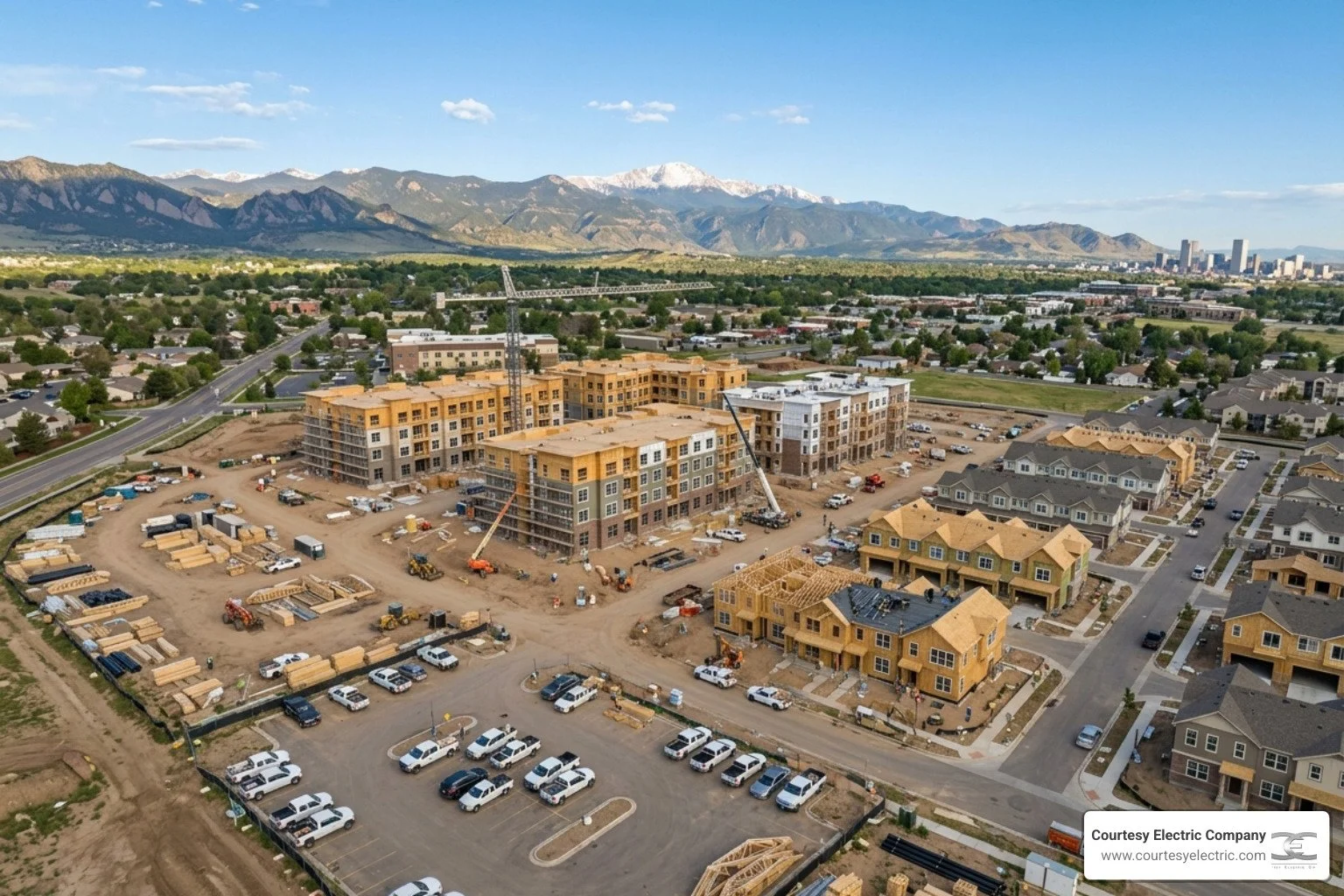
Why How Multi Family and Residential Expertise Sets Us Apart Matters More Than Ever in 2026
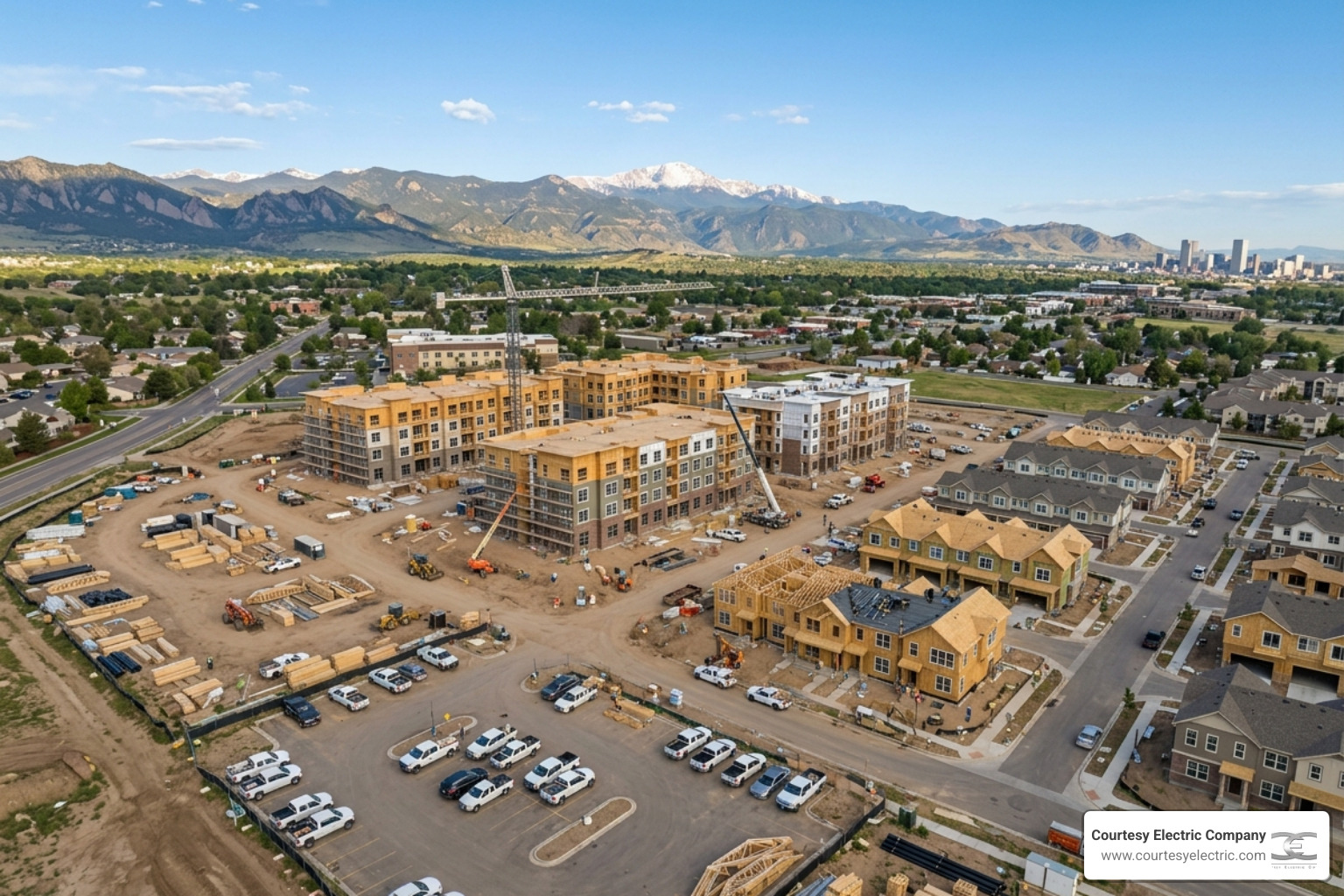
How multi family and residential expertise sets us apart comes down to one thing: understanding that not all housing is built — or wired — the same way.
Here is a quick breakdown of what that difference looks like in practice:
| Factor | General Electrical Contractor | Multi-Family & Residential Specialist |
|---|---|---|
| Infrastructure design | Basic load estimates | Full master planning for high-density systems |
| Project scope | Single unit focus | Entire building or development lifecycle |
| Regulatory knowledge | Standard code compliance | Fair Housing Act, ADA, HUD, EPA standards |
| Technology integration | Standard installs | Smart panels, EV charging, battery storage, microgrids |
| Risk management | Per-job basis | Portfolio-level vacancy and cash flow awareness |
| Community impact | Minimal involvement | Community engagement and local government collaboration |
Housing in Denver and across the Colorado Front Range is getting more complex. Urbanization is pushing demand for multi-family developments — from duplexes to large mixed-use towers — while homeowners are simultaneously asking for smarter, more resilient single-family systems. The US multifamily building market exceeded $110 billion in value in 2021 and has continued to climb. That scale brings serious infrastructure demands that a generalist simply is not equipped to meet.
The gap between a contractor who can wire a building and one who truly understands how multi-family and residential systems differ — in load balancing, shared utilities, code compliance, and long-term durability — is wider than most people realize.
I'm David Meyer, Vice President of Courtesy Electric, a Colorado electrical contractor with roots going back to 1976. Having worked both in the field and in leadership, I've seen how multi family and residential expertise sets us apart from contractors who treat every project the same. That hands-on foundation shapes everything we do — and it's what this article is about.
Defining the Landscape: Multi-Family vs. Single-Family Properties
To understand why specialized knowledge is vital, we first have to define the playground. In real estate, "residential" is a broad umbrella, but the electrical guts of a single-family home in Parker and a 50-unit apartment complex in Denver are worlds apart.
Multi-family housing is defined as any property with more than one household living in it simultaneously. This ranges from a simple duplex or triplex to garden apartments, high-rise condominiums, and massive student housing complexes. While a single-family home is a self-contained ecosystem, a multi-family building is a shared organism.
| Electrical Feature | Single-Family Home | Multi-Family Development |
|---|---|---|
| Utility Feed | Single lateral/service drop | High-voltage transformers & switchgear |
| Metering | One master meter | Complex individual bank metering |
| Load Balancing | Simple household demand | High-density diversity factors |
| Safety Systems | Standard smoke/CO detectors | Integrated fire alarms & emergency lighting |
| Common Areas | Private lighting/power | Shared hallways, elevators, & amenities |
The population density in multi-family units creates a unique set of challenges. You aren't just powering one kitchen; you're powering fifty. This requires a massive leap in scalability and a deep understanding of zoning requirements. When we look at our residential services, we see how individual homeowners prioritize comfort and tech. When we look at our Single Family Residential Portfolio, the focus is on bespoke, high-quality installations for a single client. But in multi-family, we are designing for hundreds of stakeholders at once.
How multi family and residential expertise sets us apart in infrastructure design
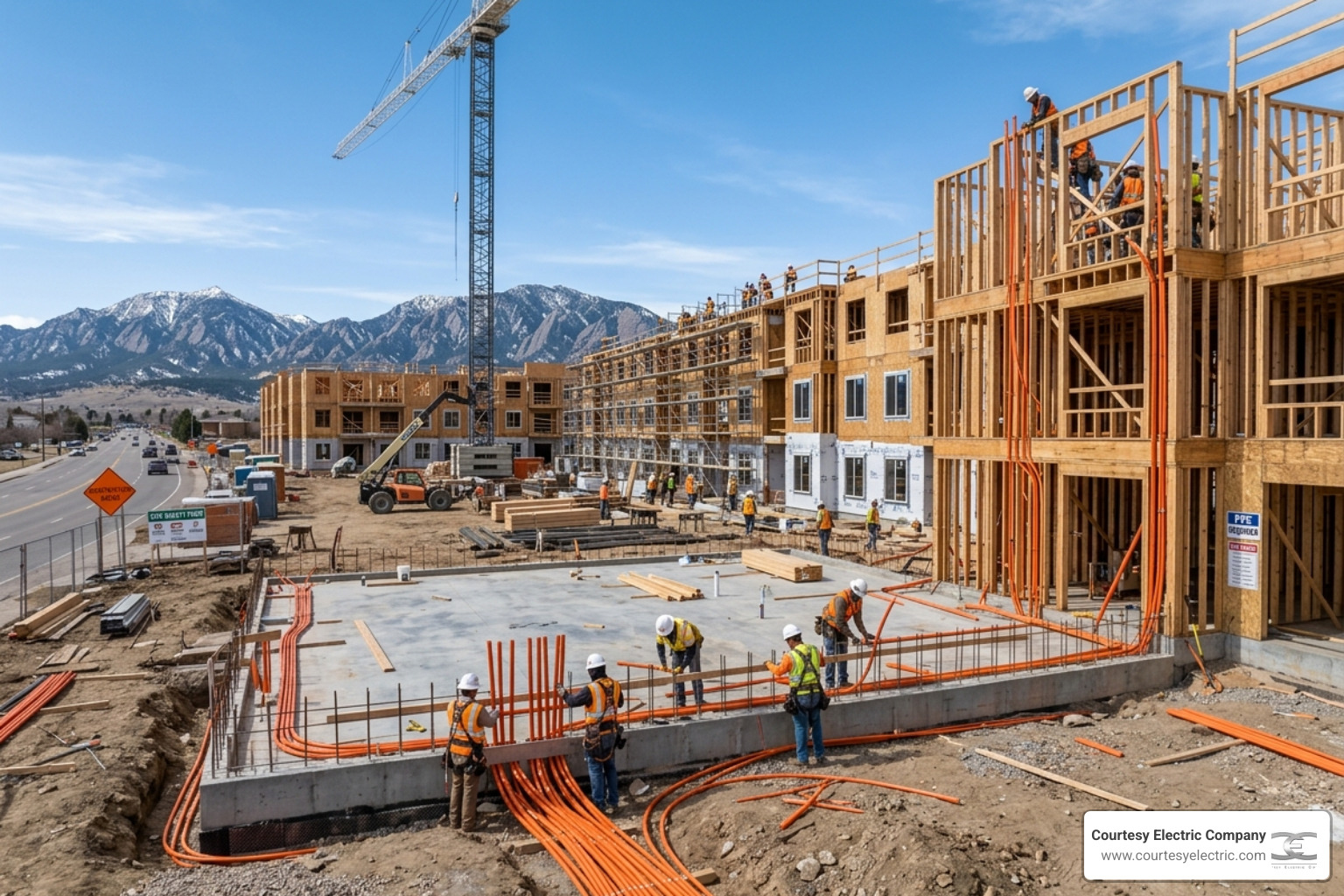
Infrastructure is where the "magic" happens—or where the disasters begin. For a multi-family project to succeed in 2026, the electrical master planning must be flawless from day one. We don't just look at the blueprints and start pulling wire. We engage in rigorous load calculations to ensure the local grid can handle the surge of a new development.
Our expertise in entitlements and master planning allows us to work alongside developers to ensure the site is viable. High-density wiring isn't just about more wire; it’s about efficient routing, heat dissipation in stacked units, and ensuring that a fault in Unit A doesn't leave Unit B through Z in the dark. You can see the results of this meticulous planning in our Multifamily Residential Portfolio, where we’ve successfully powered large-scale communities across the Front Range.
Unique technical requirements for diverse housing types
Different housing types demand different technical "personalities." A luxury condo high-rise in downtown Denver requires low-voltage integration for smart building access and high-speed data, while a suburban garden apartment might focus more on efficient outdoor lighting and centralized HVAC systems.
Centralized systems—where heating, cooling, or water heating is shared—require specialized control wiring that a standard residential electrician might never encounter. Furthermore, individual metering is a logistical hurdle; every tenant wants to pay only for what they use, requiring us to design complex meter banks that remain accessible for utility companies but secure from tampering. Above all, fire safety compliance is non-negotiable. In a multi-family setting, the electrical system is the backbone of the life-safety network, from smoke evacuation fans to emergency exit illumination. This is the core of what we do in multifamily electrical work: building for safety at scale.
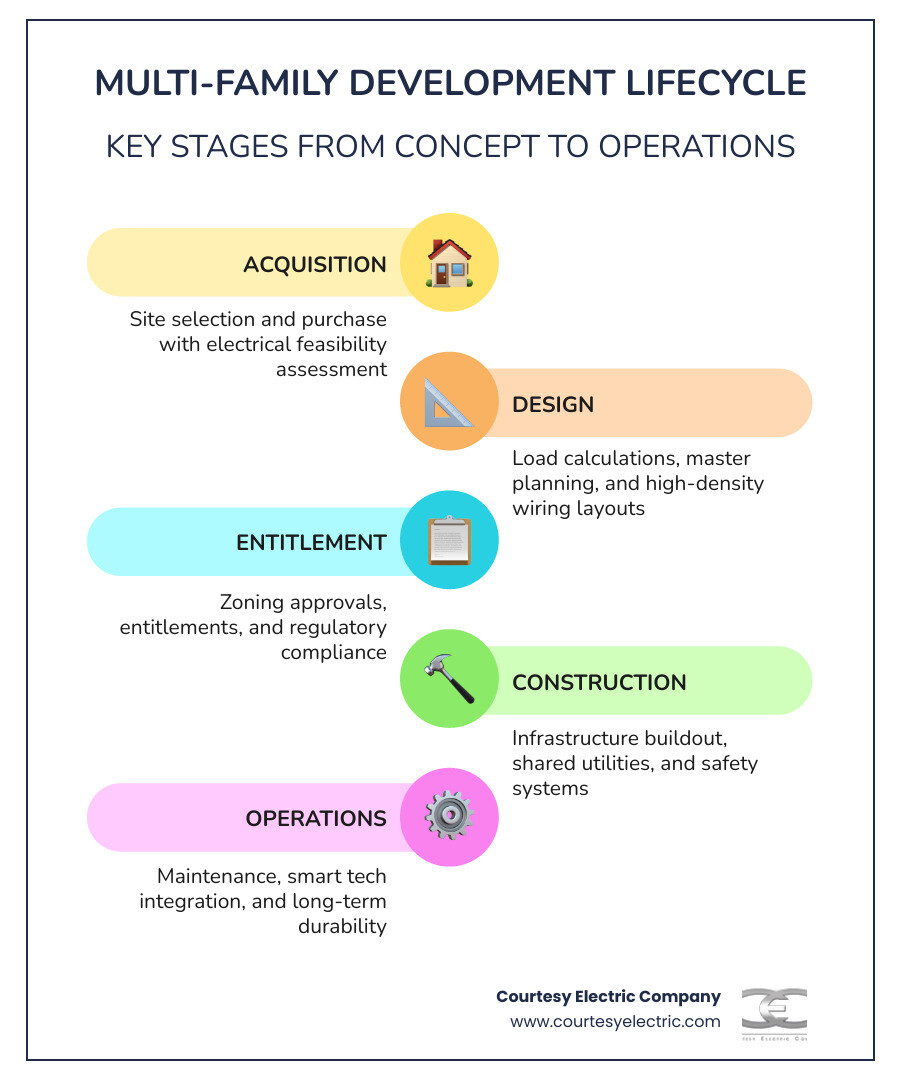
Navigating the Full Lifecycle of Multi-Family Development
Multi-family projects aren't just "built"; they are managed through a full lifecycle. Our team doesn't just show up for the "rough-in" and disappear. We understand the acquisition strategies of our partners—knowing that when an investor buys an underperforming asset, they need a contractor who can handle a full electrical "repositioning."
Repositioning often involves taking an older building with outdated, dangerous "Stab-Lok" panels or aluminum wiring and bringing it into the 21st century. This requires operational excellence. We have to perform these upgrades while residents are living there, which takes a level of coordination and respect that goes far beyond basic technical skill. Every electrician on our team is trained to handle these high-pressure, high-stakes environments where risk management is the top priority.
Strategic advantages of how multi family and residential expertise sets us apart
Why do developers choose us? Because we understand the business of real estate. Multi-family investing is prized for its cash flow stability and resilient nature. In 2026, with urbanization demand at an all-time high, a 100-unit building with two vacancies still operates at 98% occupancy. Compare that to a single-family rental where one vacancy equals a 100% loss of income.
Our team brings market insights that help developers secure commercial financing. Lenders want to see that a project has a "future-proof" electrical plan. By including EV charging stations and energy-efficient systems, we help mitigate the risk of future obsolescence. Our MultiFamily Electricians are experts at installing systems that increase the long-term value of the asset, making the property more attractive to institutional investors and residents alike.
Handling complex entitlements and community engagement
Before a single shovel hits the dirt, there is a mountain of paperwork and public meetings. Entitlements—the legal process of getting permission to build—can be a minefield. We assist our partners with site evaluations and value engineering. If a proposed design is too expensive to power, we find a smarter way to do it without sacrificing quality.
We also understand the importance of local government collaboration. In places like Highlands Ranch or Black Forest, community engagement is key. Residents want to know that a new development won't strain the local grid or create light pollution. We design systems that respect these local concerns, using dark-sky-compliant lighting and energy-saving technologies that prove the developer is a "good neighbor."
Innovation and Sustainability in Modern Housing Solutions
The year 2026 has brought a revolution in how we power our lives. It’s no longer just about keeping the lights on; it’s about energy independence. This is where our residential expertise truly shines. We are seeing a massive shift toward smart home technology that allows residents to monitor their usage in real-time.
We specialize in high-end solutions like SPAN panels, which replace the "dumb" breaker box of the past with a smart interface that can prioritize loads during a power outage. Combined with Franklin battery storage, a home or even a small multi-family unit can keep essential systems running indefinitely. For those who want the ultimate peace of mind, we are premier installers of Generac backup power and Cummins generators. These aren't just luxuries anymore; in the face of Colorado's unpredictable weather, they are essential infrastructure.
Solving complex challenges through how multi family and residential expertise sets us apart
The regulatory landscape of 2026 is dense. Between ADA (Americans with Disabilities Act) requirements for accessible switching and EPA regulations regarding energy consumption, there is zero room for error. We ensure that every multi-family project meets HUD standards for safety and habitability.
Our Residential team is specifically trained in the nuances of Fair Housing Act compliance. This means ensuring that electrical outlets, thermostats, and intercoms are at the correct height for all residents. We also focus heavily on energy efficiency. By using LED retrofitting, smart sensors, and high-efficiency transformers, we help property owners reduce their "Triple Net" expenses and improve their bottom line.
Integrating future-proof technology in Denver developments
If you are building in the Front Range today and you aren't thinking about EV charging, you are building a relic. We integrate EV charging stations into every multi-family design, from shared parking garages to individual townhome stalls. But it goes further than that. We are looking at:
- Microgrids: Allowing a community to generate and store its own power.
- Sustainable Materials: Using low-carbon conduits and recyclable wiring components.
- Real-time Data Analytics: Giving property managers the tools to see where energy is being wasted across a 200-unit portfolio.
- Smart-Grid Readiness: Ensuring the building can "talk" to Xcel Energy or local co-ops to shed load during peak times, saving everyone money.
Frequently Asked Questions about Specialized Housing Expertise
What defines multi-family housing compared to single-family units?
Multi-family housing refers to buildings designed to house multiple separate families or households. The key technical difference lies in the shared infrastructure. While a single-family home has its own dedicated utility connection and yard, multi-family units share walls, floors, roofs, and communal spaces like lobbies or gyms. From an electrical perspective, this means managing a massive "master" service that is then subdivided into individual metered units.
What are the key benefits of multi-family investing in 2026?
The biggest benefit is the economy of scale. It is significantly more efficient to maintain one roof and one electrical service for 20 units than it is for 20 separate houses. Furthermore, multi-family properties offer resilient cash flow; even with a few vacancies, the property remains profitable. In the current 2026 market, the high demand for urban living makes these properties "recession-resilient" assets that attract favorable commercial financing.
Why is specialized electrical expertise critical for multi-family projects?
Because the stakes are higher. If a single-family home has an electrical fault, one family is inconvenienced. If a 100-unit building has a major switchgear failure, 100 families are in the dark, elevators stop working, and fire pumps may fail. Specialized expertise ensures system redundancy, complex load balancing (so everyone can run their AC at 5:00 PM without blowing a fuse), and strict adherence to the life-safety codes that keep high-density communities safe.
Conclusion
At the end of the day, how multi family and residential expertise sets us apart is our commitment to the three pillars of our mission: Quality, Integrity, and Dependability. Whether we are wiring a custom home in Parker or a massive multi-family development in the heart of Denver, we bring the same level of Colorado-bred excellence to the job.
We aren't just contractors; we are partners in building the future of the Colorado Front Range. From the initial design and entitlements to the installation of cutting-edge SPAN panels and Franklin batteries, we provide the specialized knowledge that ensures your housing solution is safe, sustainable, and profitable.
If you are a developer looking for a partner who understands the lifecycle of an asset, or a homeowner looking to protect your family with a Generac standby generator, we are here to help. Learn more about our team and see why Courtesy Electric Company has been the trusted name in Colorado electrical infrastructure since 1976.


