
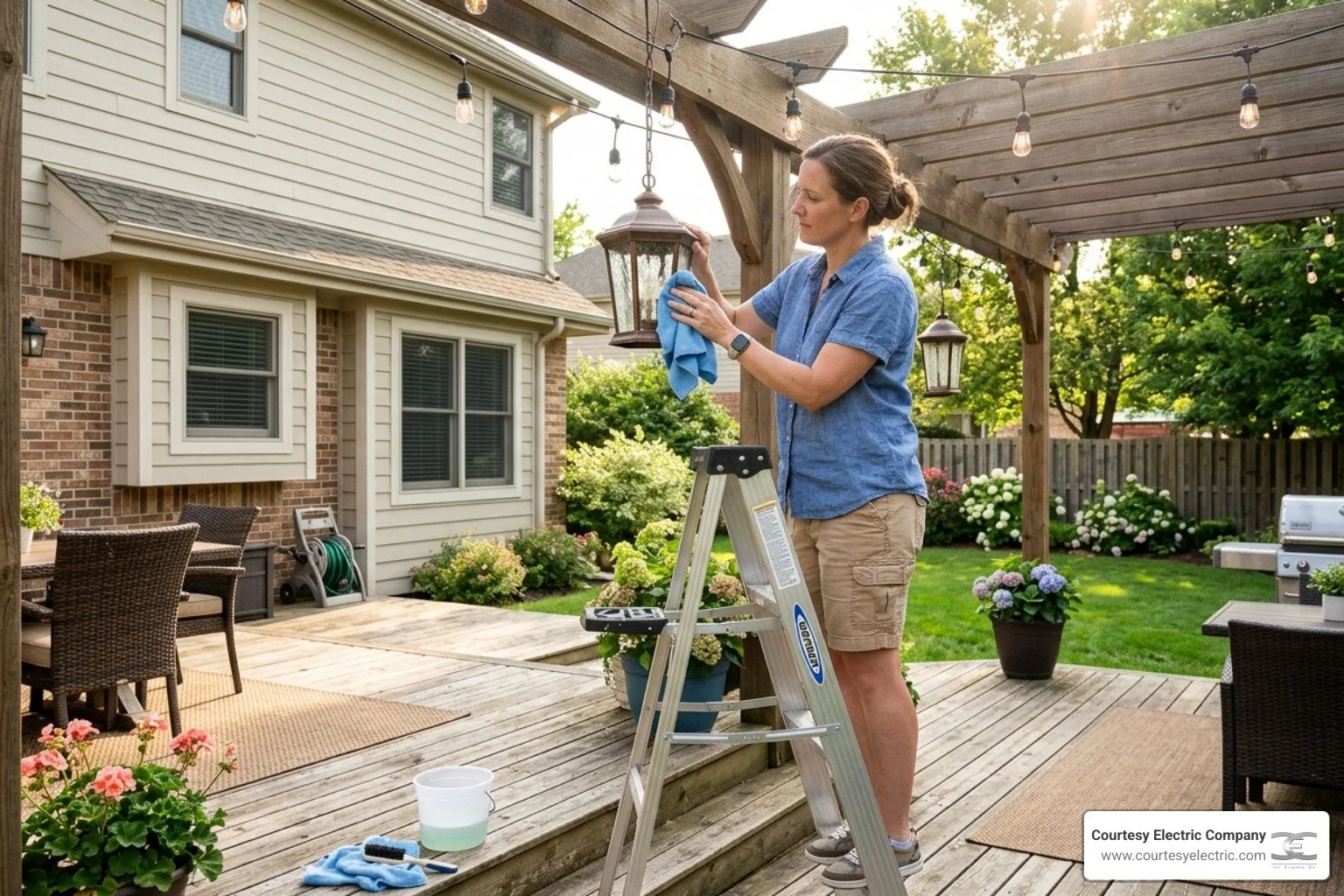
Why Every Colorado Homeowner Needs Summer Outdoor Lighting Maintenance Tips This Season
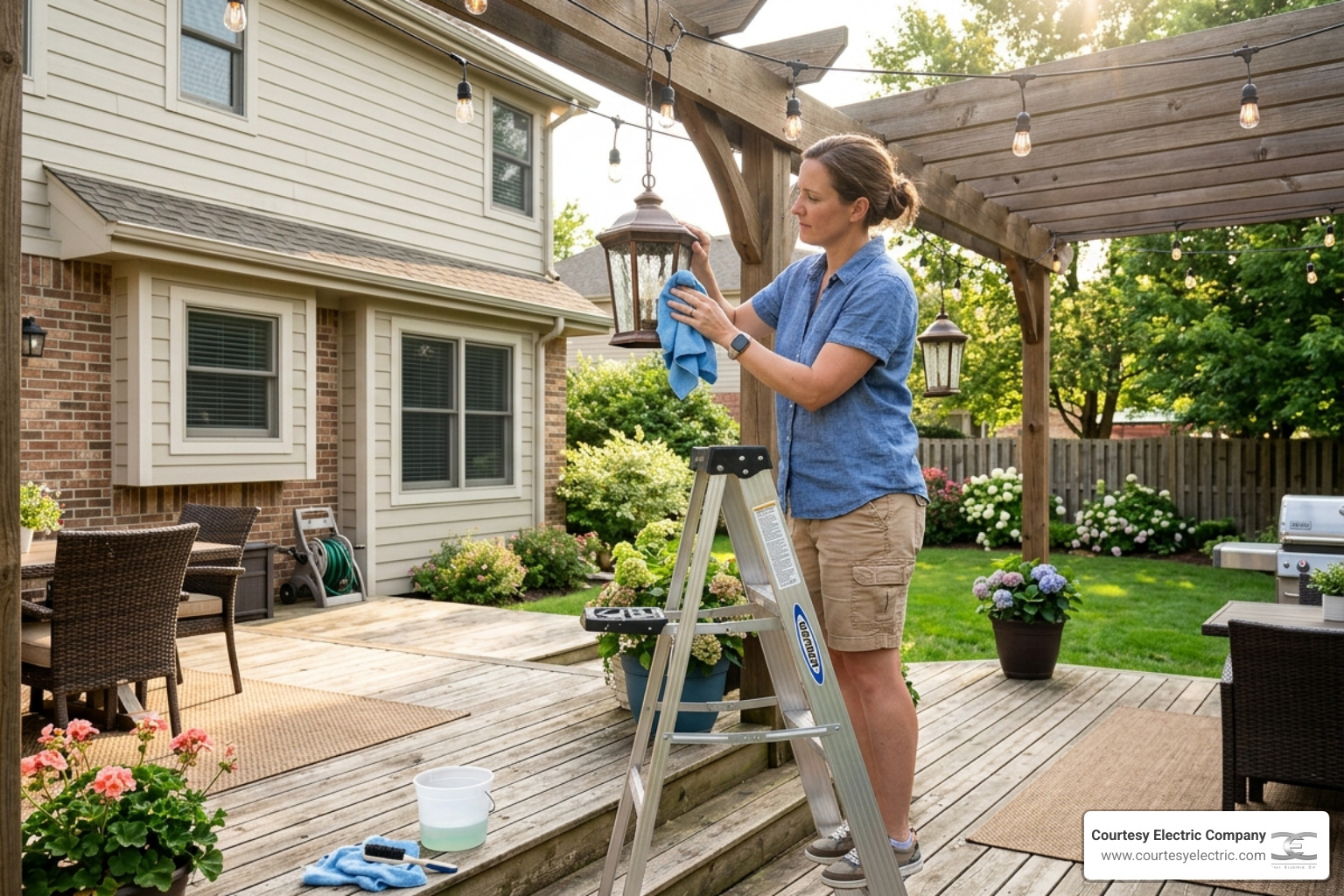
Summer outdoor lighting maintenance tips every Colorado Front Range homeowner should know:
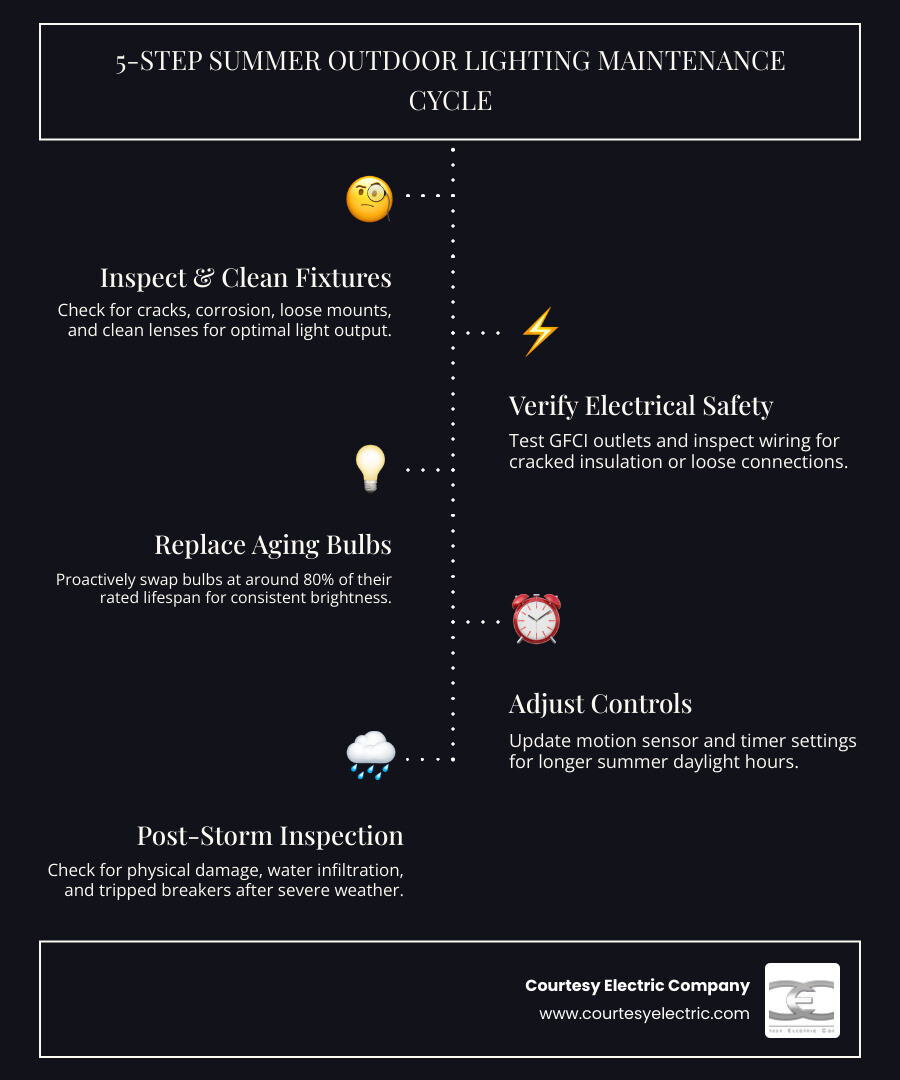
- Inspect fixtures for cracks, corrosion, and loose mounts before peak summer use
- Clean lenses and covers with a soft cloth, mild soap, and water (power off first)
- Test GFCI outlets using the test/reset button on each outdoor circuit
- Check wiring for cracked insulation, loose connections, or signs of overheating
- Replace aging bulbs proactively — ideally at around 80% of their rated lifespan
- Adjust motion sensors and timers for longer summer daylight hours
- Inspect after storms for water infiltration, tripped breakers, and physical damage
Summer in Colorado is prime time for backyard gatherings, evening entertaining, and showing off your home's curb appeal after dark. But while you're planning the next patio get-together, your outdoor lighting system is quietly taking a beating. Colorado's intense high-altitude sun bakes fixtures to temperatures exceeding 140°F during the day, then rapid nighttime cooling creates metal fatigue in electrical connections — a cycle that quietly degrades even well-installed systems. Add in summer thunderstorms, irrigation spray, pollen, and insects, and you have the perfect recipe for flickering lights, corroded wiring, and preventable electrical hazards.
The stakes are real. According to the National Fire Protection Association, electrical distribution and lighting equipment contributes to an average of 33,470 electrical fires every year in the United States. A little seasonal attention goes a long way toward keeping your home safe, your yard looking great, and your energy bills in check.
I'm David Meyer, Vice President of Courtesy Electric — a Colorado-based electrical contractor with roots going back to 1976 — and applying solid summer outdoor lighting maintenance tips is something our team helps Front Range homeowners with every season. Let's walk through exactly what you need to do to keep your outdoor lighting safe, bright, and efficient all summer long.
Why Summer Outdoor Lighting Maintenance Tips Are Essential for Colorado Homes
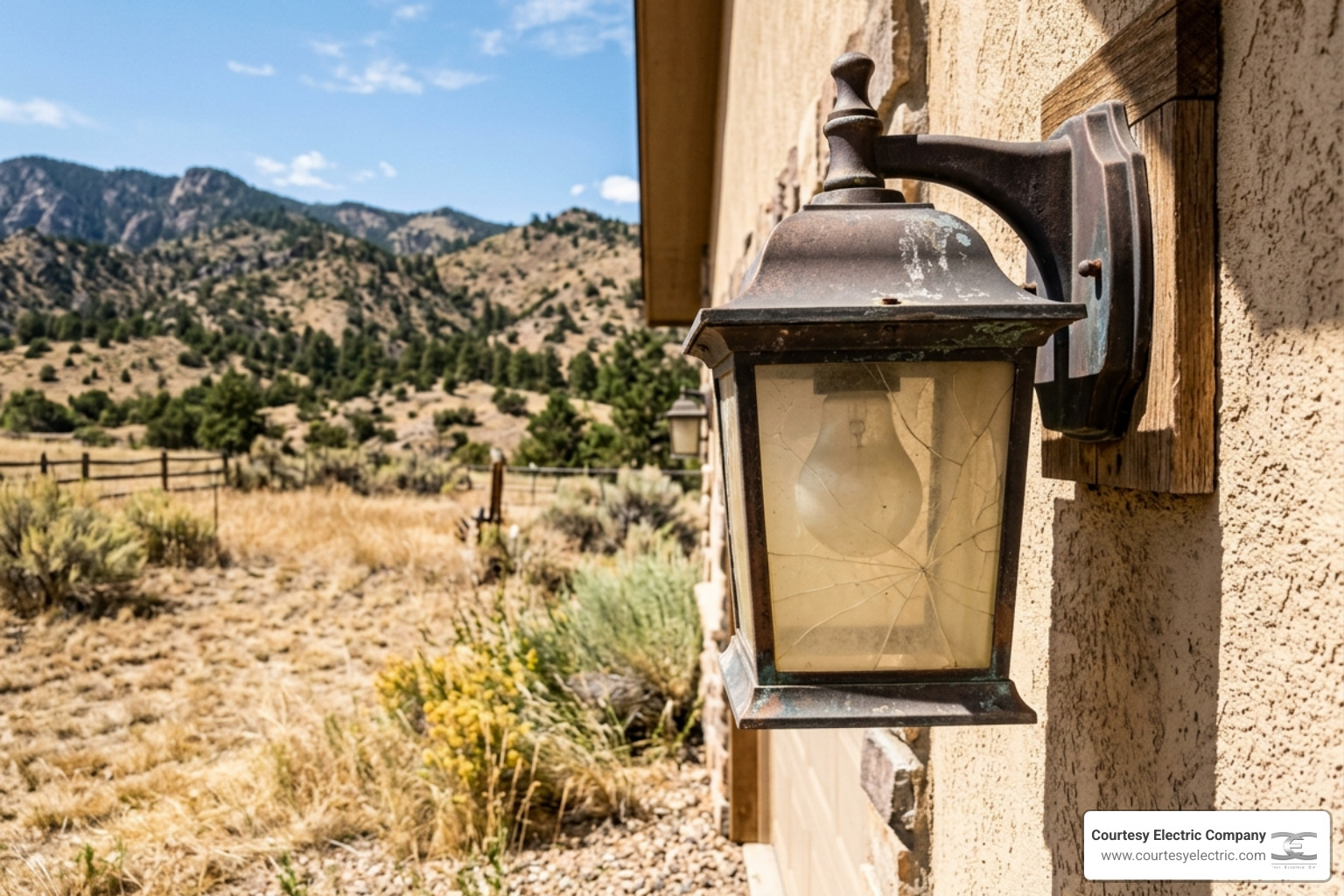
When we talk about summer outdoor lighting maintenance tips, we aren't just talking about making things look pretty. In the Denver area and across the Front Range, our climate presents unique challenges. The intense UV radiation at our elevation can cause plastic components to become brittle and crack in just a few seasons. Furthermore, summer weather can bake outdoor lighting fixtures to temperatures exceeding 140°F. When that heat is followed by rapid nighttime cooling, it creates a phenomenon known as metal fatigue. This constant expansion and contraction can loosen electrical connections over time, leading to arcing or failure.
Neglecting these systems doesn't just result in a dark yard; it can lead to serious safety risks. As mentioned, there are an average of 33,470 electrical fires each year caused by electrical distribution and lighting equipment. By following a consistent Landscape Lighting Maintenance Tips Fraser CO routine, you significantly reduce the risk of fire and electrical shock. Maintenance ensures that your investment in curb appeal also serves its primary purpose: keeping your family safe and your property secure.
Protecting Your System from Summer Hazards
Summer brings a specific set of hazards that our indoor lights never have to face. One of the most common issues we see at Courtesy Electric is "thermal shock." Imagine a landscape light that has been sitting in the 90-degree Denver sun all day, reaching internal temperatures well over 100 degrees. Suddenly, your irrigation system kicks on, spraying cold water directly onto the hot glass lens. This can cause the lens to shatter or the seals to fail.
Beyond water, we have to deal with pest intrusion. Spiders love the warmth of light fixtures, and their webs can trap heat and debris, while small insects can crawl into unsealed housings and cause short circuits. UV degradation is another silent killer, eating away at wire insulation and plastic stakes. If you live in areas like Fraser, you know that the transition from mountain spring to summer is quick, making Landscape Lighting in Fraser CO maintenance a high priority to catch winter damage before summer heat exacerbates it.
Step-by-Step Guide to Cleaning and Inspecting Fixtures

Cleaning your fixtures is the easiest way to immediately improve the look and performance of your system. Dirt, dust, and Colorado pollen can settle on lenses, reducing light output by as much as 30% without you even realizing it.
- Safety First: Always turn off the power at the breaker before you begin any cleaning or maintenance.
- Remove Debris: Clear away dried leaves, mulch, or grass clippings from around the base of the fixture. This improves airflow and prevents flammable materials from touching hot components.
- The Gentle Touch: Use a microfiber cloth and a bucket of water with a drop of mild dish soap. Avoid abrasive cleaners or scrub pads that can scratch the glass or metal finish.
- Lens Clarity: Wipe down the lens thoroughly. If you notice hard water spots from your sprinklers, a mixture of vinegar and water can help dissolve the mineral deposits.
- Fixture Alignment: Over time, soil shifts and pets (or kids) can knock lights out of place. While cleaning, check that your path lights are straight and your uplights are still hitting their targets. If you're unsure about the original design, check out a Landscape Lighting Installation Guide Fraser CO for tips on proper positioning.
Summer Outdoor Lighting Maintenance Tips for Fixture Longevity
To truly "summer-proof" your system, you need to go beyond a simple wipe-down. Inspect the interior of the fixtures if they are accessible. Look for insect nests or cocoons that might be blocking vents. Check for signs of corrosion, especially on the metal sockets where the bulbs sit.
One of our favorite professional summer outdoor lighting maintenance tips is the use of dielectric grease. Applying a small amount of this non-conductive grease to bulb bases and electrical connections can prevent moisture from causing corrosion. This is especially helpful in the humid microclimates created by lush summer landscaping. For those in Centennial, keeping up with these small details is key to following the Best Landscape Lighting Guide Centennial CO for long-term system health.
Critical Safety Checks for Wiring and Connections
This is the part of maintenance that saves lives. Because outdoor wiring is exposed to the elements, it requires a higher level of scrutiny than your indoor outlets.
- GFCI Testing: Your outdoor lights should be protected by Ground Fault Circuit Interrupter (GFCI) outlets or breakers. These devices are designed to shut off power instantly if they detect a leak of current (which could cause a shock). Press the "Test" button once a month; the "Reset" button should pop out. If it doesn't, the outlet is faulty and needs immediate replacement.
- Exposed Wires: Colorado's expansive soils and heavy rains can cause buried wires to surface. Inspect your flower beds and lawn for any exposed cables. These are trip hazards and are easily damaged by lawnmowers or weed whackers.
- Drip Loops: Ensure that any wire entering a fixture or a junction box has a "drip loop"—a small U-shaped dip in the wire before it enters the housing. This ensures that rainwater runs to the bottom of the loop and drips off, rather than running straight into the electrical connection.
- IP-Rated Seals: Check the rubber gaskets and seals on your fixtures. If they are cracked or brittle, they won't keep moisture out during a summer downpour. You can find more detailed safety specs in our Landscape Lighting Guide Winter Park CO.
Post-Storm Inspection Checklist
Summer storms in the Front Range can be intense, often bringing hail and heavy winds. After a significant weather event, perform a quick walk-around:
- Check for Water Infiltration: Look inside fixture lenses for condensation or standing water. If water got in, it means a seal has failed.
- Inspect for Physical Damage: Look for cracked lenses or bent poles caused by hail or falling branches.
- Reset Breakers: If your lights won't turn on, check your main electrical panel. A surge during a storm may have tripped a breaker.
- Surge Protection: If you find yourself resetting breakers often after storms, it might be time to discuss whole-home surge protection. For specialized help after a storm, you can reach out to the Best Landscape Lighting Services in Winter Park CO.
Upgrading for Efficiency and Performance
If you are still using old incandescent or halogen bulbs, summer is the perfect time to upgrade. Not only do these older bulbs use more energy, but they also burn much hotter, which contributes to the "baking" effect that damages your fixtures.
| Feature | Incandescent/Halogen | LED Technology |
|---|---|---|
| Energy Reduction | Baseline | Up to 80% Lower |
| Lifespan | 1,000 - 2,000 Hours | Up to 50,000 Hours |
| Heat Output | Very High | Very Low |
| Durability | Fragile glass/filament | Solid-state (Vibration resistant) |
| Maintenance Need | Frequent bulb changes | Minimal |
Replacing older bulbs with LEDs can drastically cut replacement costs and energy use. Quality low-voltage LEDs can last up to 50,000 hours with proper maintenance. Furthermore, many modern systems allow for smart controls, motion sensors, and timers that can be adjusted from your phone. This makes it easy to change your lighting schedule as the days get longer in June and July. If you are considering a full system refresh, consult a Landscape Lighting Installation Guide Fraser CO to see how modern tech fits into your existing layout.
Choosing the Right Summer Outdoor Lighting Maintenance Tips for Bulbs
When buying replacement bulbs or fixtures, pay attention to the ratings.
- Wet-Rated: These are designed for fixtures that are directly exposed to rain and snow.
- Damp-Rated: These are for covered areas like porches or under eaves where moisture is present in the air, but the fixture isn't directly rained on.
- Thermal Management: Look for bulbs with built-in heat sinks. These aluminum fins help dissipate heat, which is crucial during Colorado's 90-degree summer days.
Using the wrong bulb in an enclosed fixture is a common mistake. Most standard household LEDs are not rated for enclosed outdoor fixtures because they can't shed heat fast enough, leading to premature failure. Always match the voltage and wattage to your transformer's specifications to avoid overloading the circuit.
Frequently Asked Questions about Summer Lighting
How often should I clean my outdoor light fixtures?
We recommend a thorough cleaning and inspection every 3 to 6 months. However, in the Front Range, you should do a quick visual check after any major storm or if you notice a significant increase in pollen or dust. Seasonal adjustments are also necessary to ensure your timers match the shifting sunset times.
When should I call a professional electrician for maintenance?
While cleaning and bulb replacement are great DIY tasks, you should call us at Courtesy Electric if you encounter:
- Exposed or frayed wiring that you can't easily bury.
- GFCI outlets that won't reset or trip immediately after being reset.
- Flickering lights that persist even after a bulb change (this usually indicates a loose connection or transformer issue).
- Moisture trapped inside a "sealed" fixture.
- Any plans for system upgrades, such as adding new zones or moving to a smart panel like SPAN.
Can I use indoor LED bulbs in my outdoor fixtures?
Generally, no. Indoor LEDs are not built to handle the temperature extremes or the moisture levels found outdoors. Furthermore, they often lack the proper thermal management needed for enclosed outdoor housings. Using an indoor bulb outside can lead to a short circuit or even a fire hazard. Always look for bulbs specifically labeled for "Outdoor Use" or "Wet Locations."
Conclusion
Taking the time to follow these summer outdoor lighting maintenance tips will ensure your home stays beautiful and safe all season long. From the simple act of wiping down a lens to the critical task of testing your GFCI outlets, every bit of effort helps protect your investment.
At Courtesy Electric Company, we've been serving the Denver and Colorado Front Range community since 1976. We pride ourselves on quality, integrity, and dependability. Whether you need a simple repair, a full residential infrastructure design for a multi-family project, or the latest in smart home technology, we're here to help. We specialize in high-end installations including SPAN smart panels, Generac and Cummins standby generators, and Franklin battery storage systems to keep your home powered no matter what the Colorado weather throws at us.
Don't wait for a flickering light or a tripped breaker to tell you there's a problem. Contact us today for a free estimate on your next electrical project or to schedule a professional inspection of your outdoor lighting system. For more local insights, check out our Best Landscape Lighting Services in Winter Park CO or Contact Courtesy Electric Company for Professional Electrical Services to get started. Stay bright, Colorado!


