Why Summer Is the Toughest Season for Your Home's Electrical System in Colorado
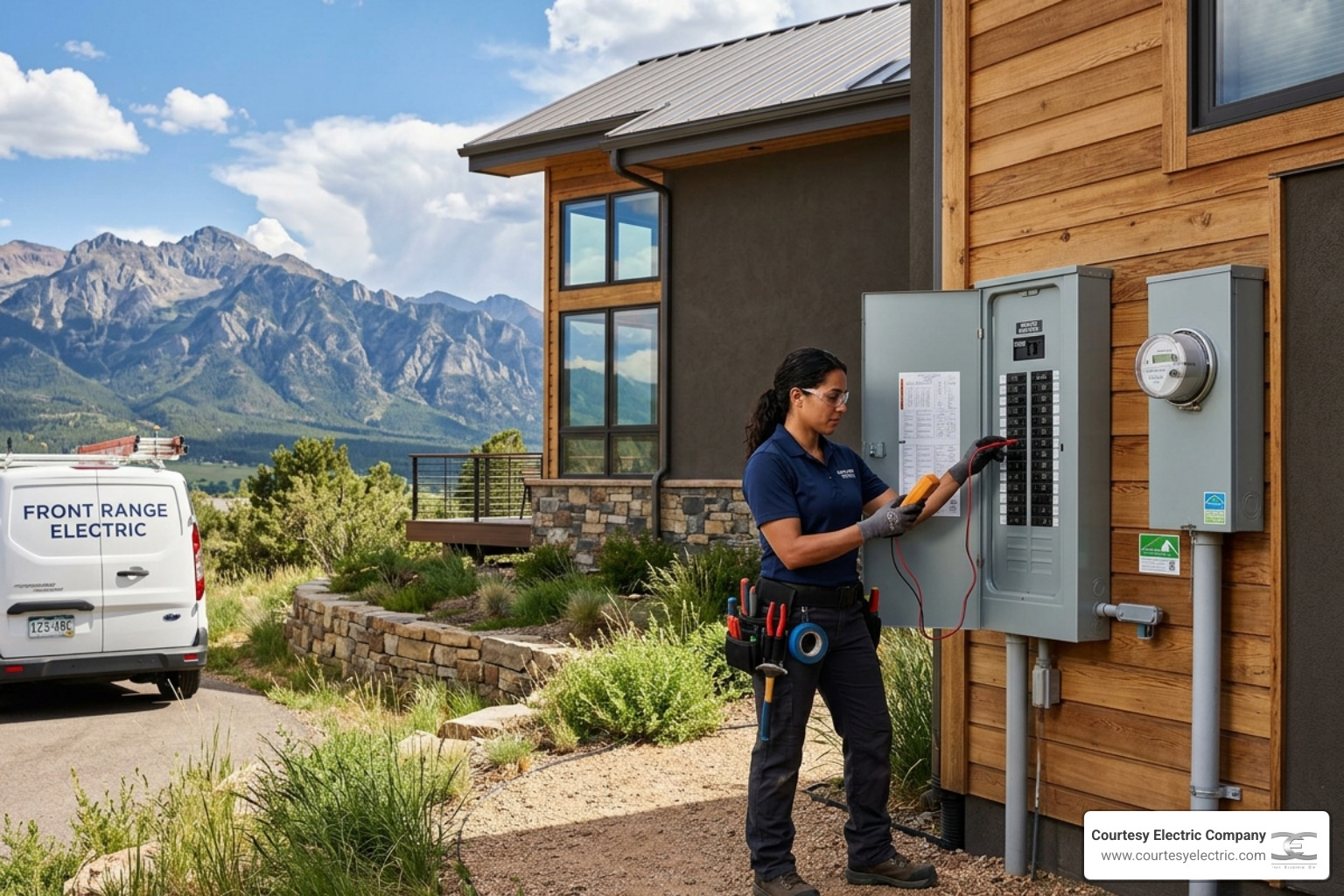
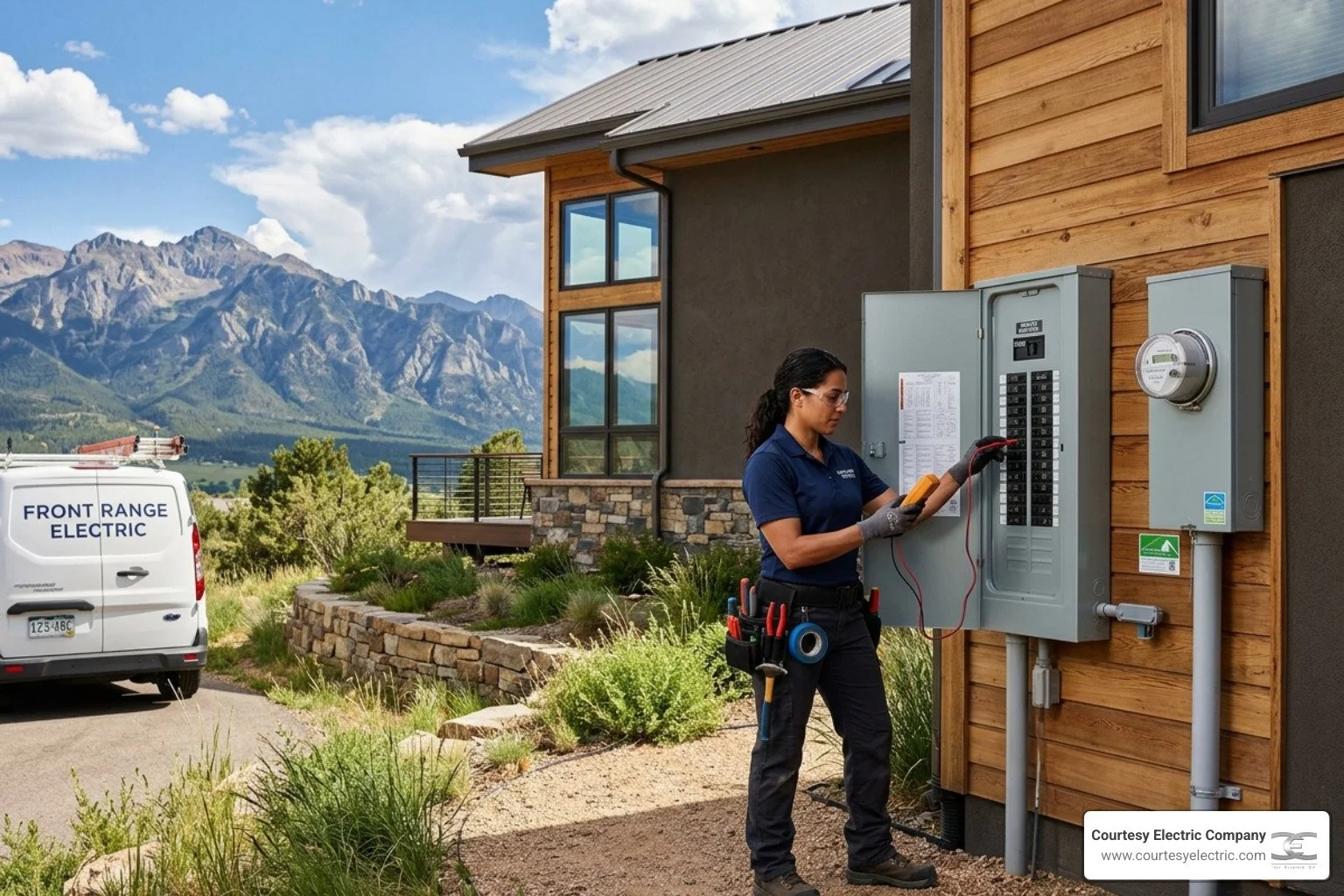
Summer electrical tips for Colorado homeowners are something every Front Range household should have on hand before temperatures start climbing. Colorado summers bring intense heat, afternoon thunderstorms, and surging energy demand — all at the same time. That combination puts real pressure on your home's wiring, circuits, and electrical panel.
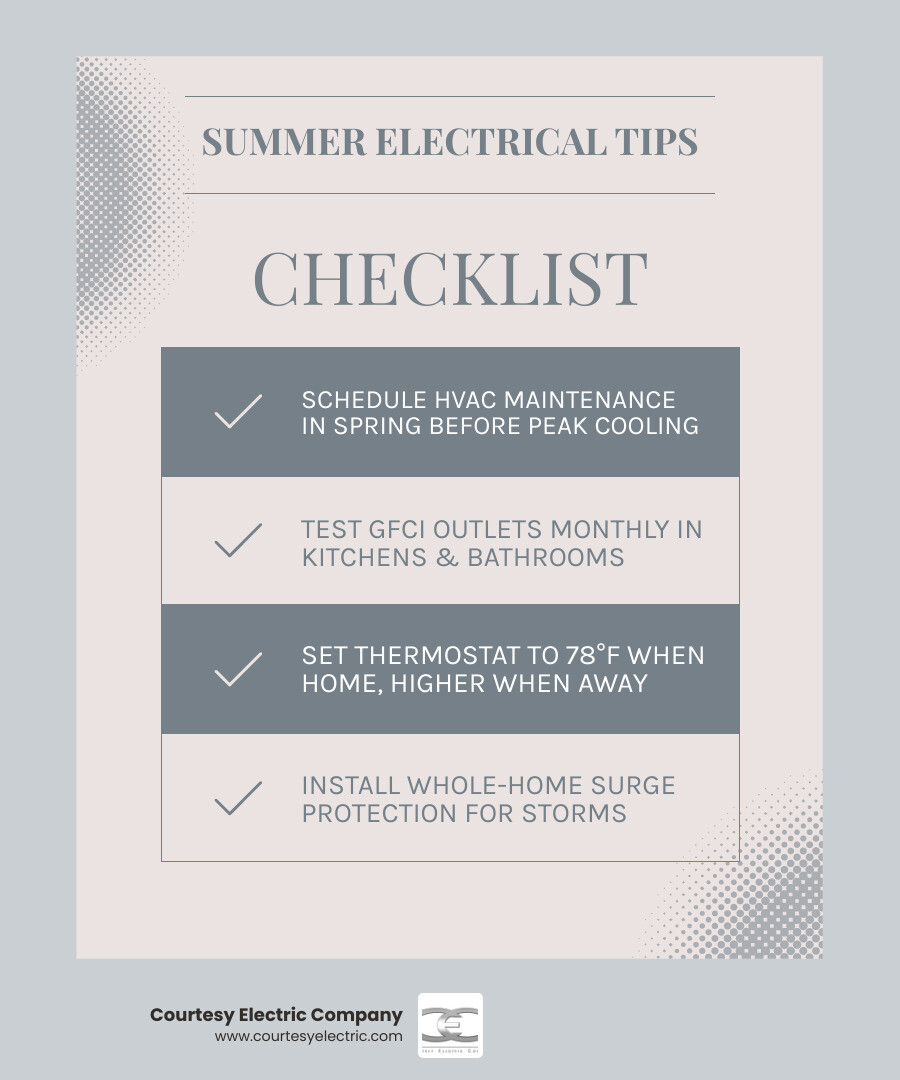
Here are the most important summer electrical tips to keep your Colorado home safe and efficient:
- Schedule HVAC maintenance in spring — before peak cooling season begins
- Watch for overload warning signs — tripped breakers, flickering lights, warm outlets, or burning smells
- Plug portable AC units directly into wall outlets — never into power strips or extension cords
- Set your thermostat to 78°F when home, higher when away, to reduce electrical load
- Test GFCI outlets monthly — especially in kitchens, bathrooms, garages, and outdoor areas
- Install whole-home surge protection to guard against Front Range lightning storms
- Inspect your electrical panel if it's more than 25 years old — older Colorado homes often have 60- or 100-amp panels that can't handle modern cooling loads
- Unplug unused appliances to eliminate phantom energy draw
- Change AC filters every 2–3 months to keep your system running efficiently
- Call a licensed electrician if you notice any persistent electrical issues before summer demand peaks
Air conditioning alone accounts for roughly 12% of total home energy use — and that number climbs sharply during Colorado's hottest months. Improving your electrical system and HVAC efficiency can cut summer cooling costs by as much as 20% to 50%, according to the U.S. Department of Energy. For Front Range homeowners dealing with older homes, frequent storms, and rising energy demands, those savings matter.
I'm David Meyer, Vice President of Courtesy Electric — a Colorado electrical contractor with roots going back to 1976. With decades of hands-on experience helping Front Range homeowners navigate everything from panel upgrades to battery storage systems, I've put together these summer electrical tips for Colorado homeowners to help you stay cool, safe, and in control all season long.
Preparing Your Home for the Heat: Summer Electrical Tips for Colorado Homeowners
As we move into April 2026, the Colorado Front Range is already preparing for the inevitable summer heatwaves. For many of us in Denver, Parker, or Highlands Ranch, the transition from heating to cooling happens fast. Preparing your home’s infrastructure is the best way to avoid a mid-July breakdown when every HVAC company in the state has a two-week waiting list.
The key to a stress-free summer is proactive Electrical Service. When your air conditioner kicks on, it draws a significant "inrush" of current. If your system is poorly maintained, that draw is even higher, putting unnecessary strain on your breakers and wiring.
Optimizing Your Cooling System
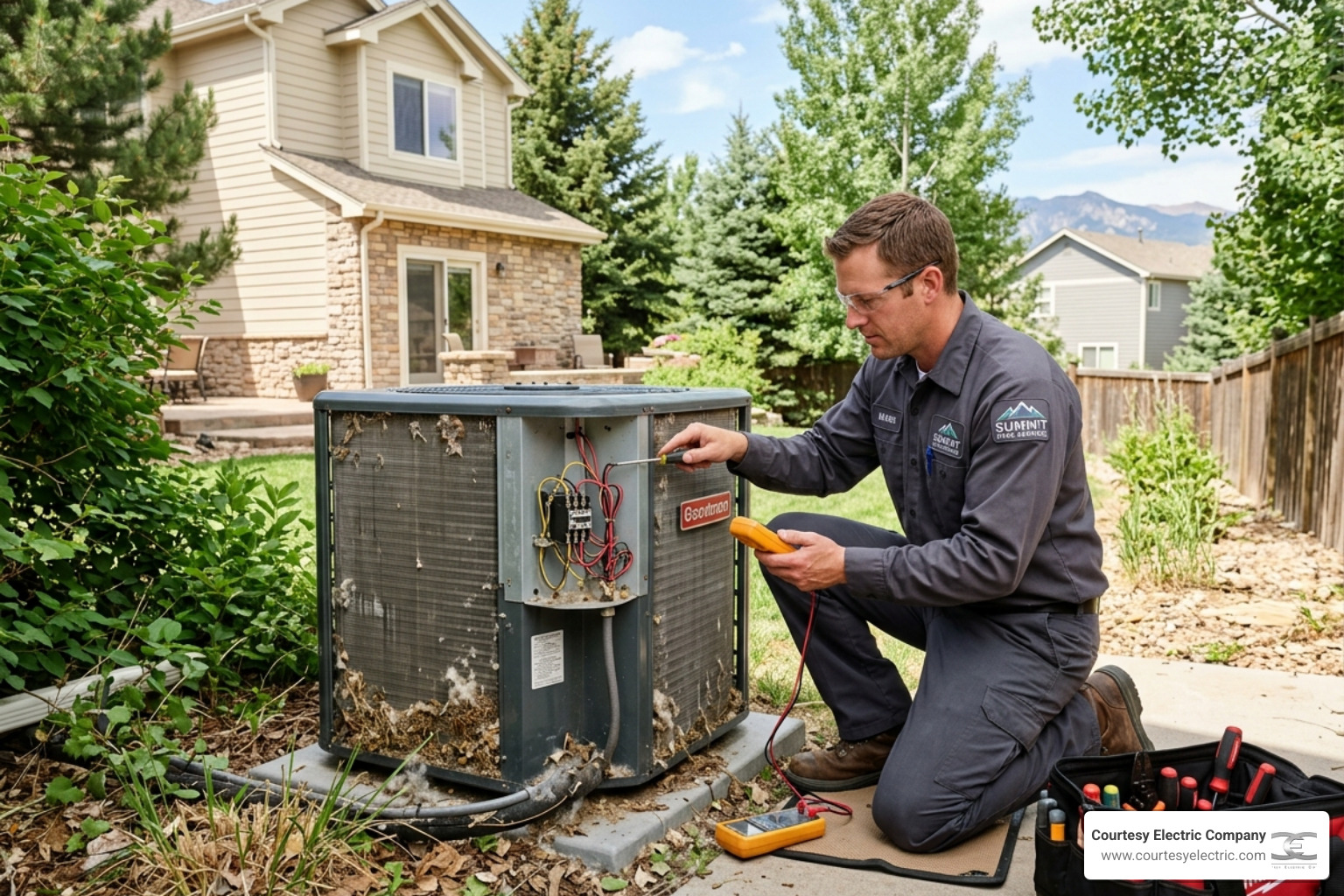
Your air conditioner is likely the largest electrical load in your home. To keep it from working harder than it needs to, start with the basics. Clear away any grass clippings, dead leaves, or "cottonwood fluff" that has accumulated around your outdoor condenser unit. This debris restricts airflow, forcing the motor to draw more power to achieve the same cooling effect.
Inside the home, ensure all vents are open and unobstructed. A common myth is that closing vents in unused rooms saves energy; in reality, it increases pressure within the ductwork and can actually cause the blower motor to work harder. Regular Residential maintenance, including checking for cracked or shifting vents, ensures that the cool air you’re paying for actually reaches your living space.
Smart Thermostats and Energy Management
In Colorado’s semi-arid climate, we can often take advantage of the "diurnal swing"—the big temperature drop at night. A smart thermostat or a well-programmed schedule can save you a fortune. We recommend setting your AC to 78°F when you are home. While that might sound high to some, using ceiling fans in conjunction with this setting can make the room feel 4 degrees cooler through the wind-chill effect.
Smart energy management also involves avoiding "peak demand" hours. Many Colorado utilities charge more for electricity in the late afternoon. By pre-cooling your home in the morning and using Lighting Control to dim lights or shut off unnecessary electronics during the 4:00 PM to 8:00 PM window, you can significantly lower your monthly bill.
Identifying and Preventing Electrical Overloads
An overloaded circuit is more than just an inconvenience; it’s a fire hazard. In the summer, we see a massive uptick in service calls related to tripped breakers. This usually happens because homeowners are running high-draw appliances—like the AC, a vacuum, and a microwave—on the same circuit simultaneously.
Why Older Colorado Homes Struggle with Modern Loads
Many homes in the older neighborhoods of Denver or Black Forest were built in an era when a 60-amp or 100-amp panel was plenty. Today, with electric vehicles, home offices, and high-efficiency central air, those panels are often pushed to their absolute limit.
If your lights flicker when the AC compressor starts, or if your panel is warm to the touch, it’s a sign that your Homeowners insurance might soon be a concern. Upgrading to a 200-amp service is a common necessity for modern life. During these upgrades, we also look at Low Volt wiring and grounding to ensure the whole system is cohesive and safe.
Safe Use of Portable AC Units: Summer Electrical Tips for Colorado Homeowners
Portable AC units are a lifesaver for older homes without central air or for third-floor bedrooms that stay too hot. However, they are "energy hogs." A single portable unit can draw 1,000 to 1,500 watts, which is nearly the entire capacity of a standard 15-amp household circuit.
To use them safely, follow these summer electrical tips for Colorado homeowners:
- Plug directly into the wall: Never use a power strip or an extension cord. These devices aren't rated for the sustained high current an AC unit requires and can melt or catch fire.
- Check the circuit: Avoid running a computer or a high-end Central Vac Systems on the same circuit as the portable AC.
- Ventilation: Ensure the exhaust hose is short and straight. A kinked hose makes the unit run longer and hotter, consuming more electricity.
Protecting Your Home from Front Range Summer Storms
If you’ve lived in Colorado for a single summer, you know the "afternoon boomers." These thunderstorms bring some of the highest lightning strike frequencies in the country to the Front Range. A strike doesn't even have to hit your house to cause damage; a strike nearby can send a massive voltage spike through the utility lines.
Storm Preparedness: Summer Electrical Tips for Colorado Homeowners
Standard power strips provide very little protection against a true Colorado lightning surge. We highly recommend installing a whole-home surge protector directly at your main panel. This device acts as a gateway, shunting excess voltage safely into the ground before it can reach your sensitive electronics.
This is especially critical if you have invested in high-end Home Security or expensive Surround Sound Systems. One millisecond of high voltage can fry the motherboards of every connected device in your home.
Maintaining GFCI Outlets for Summer Safety
Ground Fault Circuit Interrupter (GFCI) outlets are those outlets with the "Test" and "Reset" buttons. They are designed to shut off power instantly if they detect a leak of current—preventing lethal shocks. In summer, they are vital because we spend more time around water: pools, hot tubs, and using power tools on damp lawns.
You should Schedule a quick walk-through of your home once a month to test these. Simply press the "Test" button; the "Reset" button should pop out and power should cut off. If it doesn't, the internal mechanism has failed, and you are no longer protected from shocks. Ensure all outdoor outlets have weatherproof "in-use" covers that stay closed even when a cord is plugged in.
Advanced Energy Solutions and Resilience
In 2026, many Colorado homeowners are moving beyond basic safety and toward total energy independence. With the average household experiencing over 8 hours of power outages annually—often during severe summer storms—resilience has become a top priority.
Managing Outages with Standby Generators
When the grid goes down during a heatwave, a standby generator from Generac or Cummins can keep your AC running, your food cold, and your medical devices powered. Unlike portable generators, these are permanently installed and connected to your home's electrical system via an automatic transfer switch. They run on natural gas or liquid propane, meaning you don't have to worry about storing or pouring gasoline in the middle of a storm. Our Electrical Service team specializes in sizing these units to match your specific household needs.
Maximizing Efficiency with Smart Home Technology
For the ultimate in modern efficiency, we recommend the SPAN smart panel. Traditional panels are "dumb"—they just sit there. A SPAN panel allows you to see exactly how much energy every circuit in your house is using in real-time from your phone. You can turn off non-essential loads (like the water heater or dryer) during a power outage to stretch your battery life.
Speaking of batteries, the Franklin battery storage system is a game-changer for Residential customers. It stores excess energy (from the grid or solar) and deploys it when rates are high or during an outage. This kind of load balancing is the future of Colorado living, especially as our grid faces more pressure from extreme weather.
A Summer Electrical Safety Checklist for Colorado Homes
To help you keep track of everything, we've compiled this quick-reference checklist. Use it to audit your home before the July heat arrives.
| Feature | Passive Cooling (Low Cost) | Active Cooling (High Load) |
|---|---|---|
| Efficiency | High (uses almost no power) | Lower (requires significant current) |
| Methods | Blackout curtains, night ventilation | Central AC, Portable AC units |
| Electrical Impact | Reduces total home load | Increases risk of circuit overload |
| Best Practice | Use during morning/evening | Use with a smart thermostat at 78°F |
Your Summer Safety To-Do List:
- Ceiling Fans: Ensure they are rotating counter-clockwise to push cool air down.
- Smoke/CO Detectors: Test all alarms. High heat and humidity can sometimes trigger old, sensitive sensors.
- Outdoor Lighting: Check for frayed wires on landscape lighting caused by winter snow or pests.
- Extension Cords: Inspect any cords used for electric mowers or trimmers for cracks or exposed copper.
- Phantom Loads: Unplug the "vampire" electronics in your guest room or home theater that draw power even when turned off.
Frequently Asked Questions about Summer Electrical Safety
What are the main signs that my home's electrical system is overloaded?
The most common signs include circuit breakers that trip frequently, dimming or flickering lights when the AC turns on, buzzing sounds from outlets, and outlet covers that feel warm to the touch. If you smell a faint "fishy" or burning odor near your panel or an outlet, call us immediately—that is a sign of melting insulation.
How can I reduce energy consumption while staying cool in Colorado?
Utilize "nighttime ventilation" by opening windows once the sun goes down and the air cools. Close blackout curtains on south-facing windows during the day to prevent the "greenhouse effect." Finally, ensure your AC filters are clean; a dirty filter can increase energy use by 15% because the fan has to work so much harder to pull air through the dirt.
When is an electrical panel upgrade necessary for my older home?
If your home still has a 60-amp or 100-amp panel and you are adding central air, an EV charger, or a hot tub, an upgrade is almost certainly required. Additionally, if your panel is a brand like Federal Pacific or Zinsco (common in older Colorado homes), these are known safety risks and should be replaced regardless of their amperage.
Conclusion
At Courtesy Electric Company, we’ve been serving the Denver and Colorado Front Range community since 1976. We believe that every homeowner deserves a home that is not only comfortable but safe and efficient. Whether you need a simple GFCI replacement, a whole-home surge protector, or a high-tech SPAN panel and Franklin battery installation, our mission is to provide quality, integrity, and dependability.
Don't wait for the first 90-degree day to find out your system can't handle the heat. Contact us today for a free estimate on your summer upgrades. For more information on how we can help you stay powered through every season, visit our Electrical Service page. Stay cool, Colorado!


