
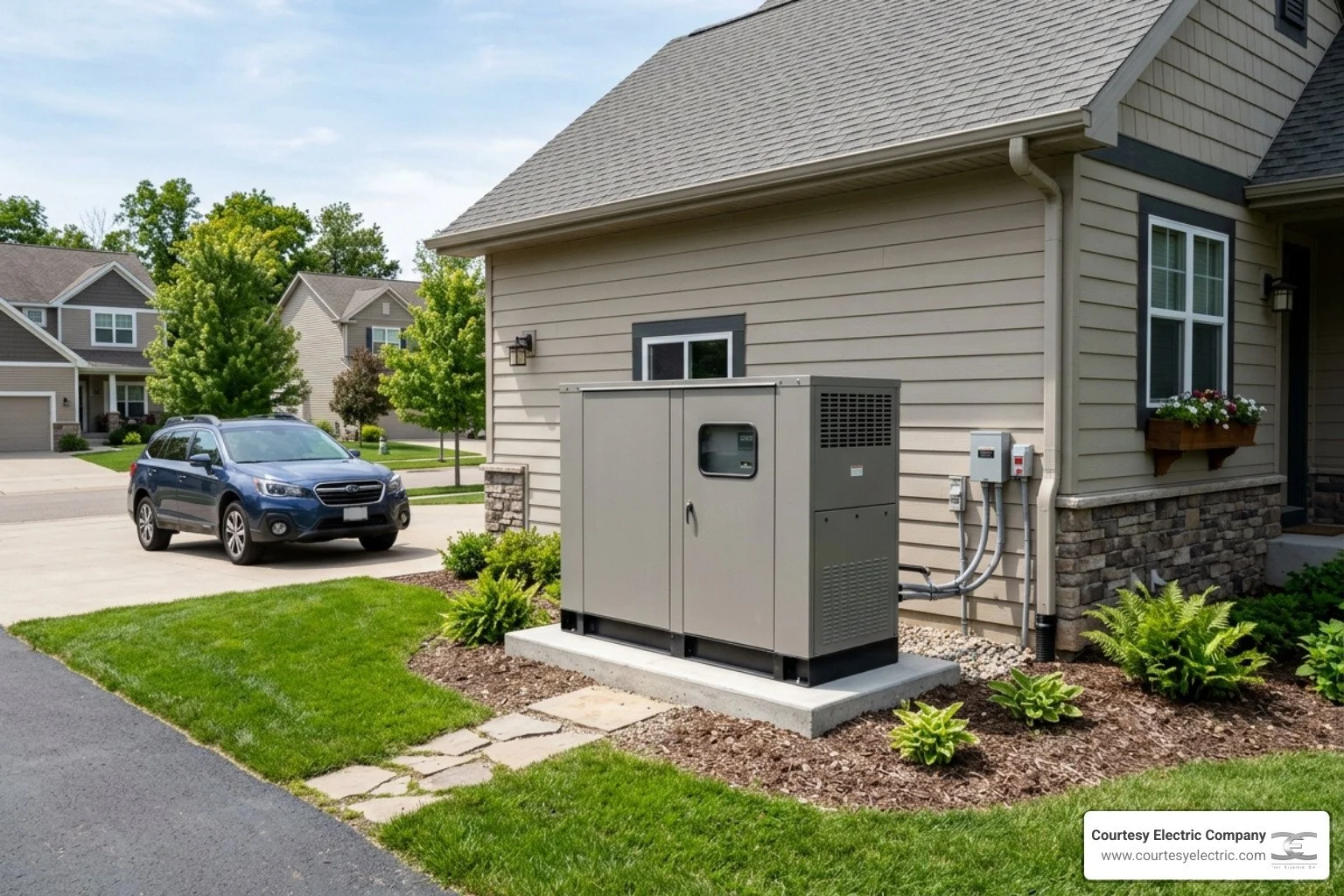
What Homeowners in Denver and the Colorado Front Range Need to Know About Generator Installation
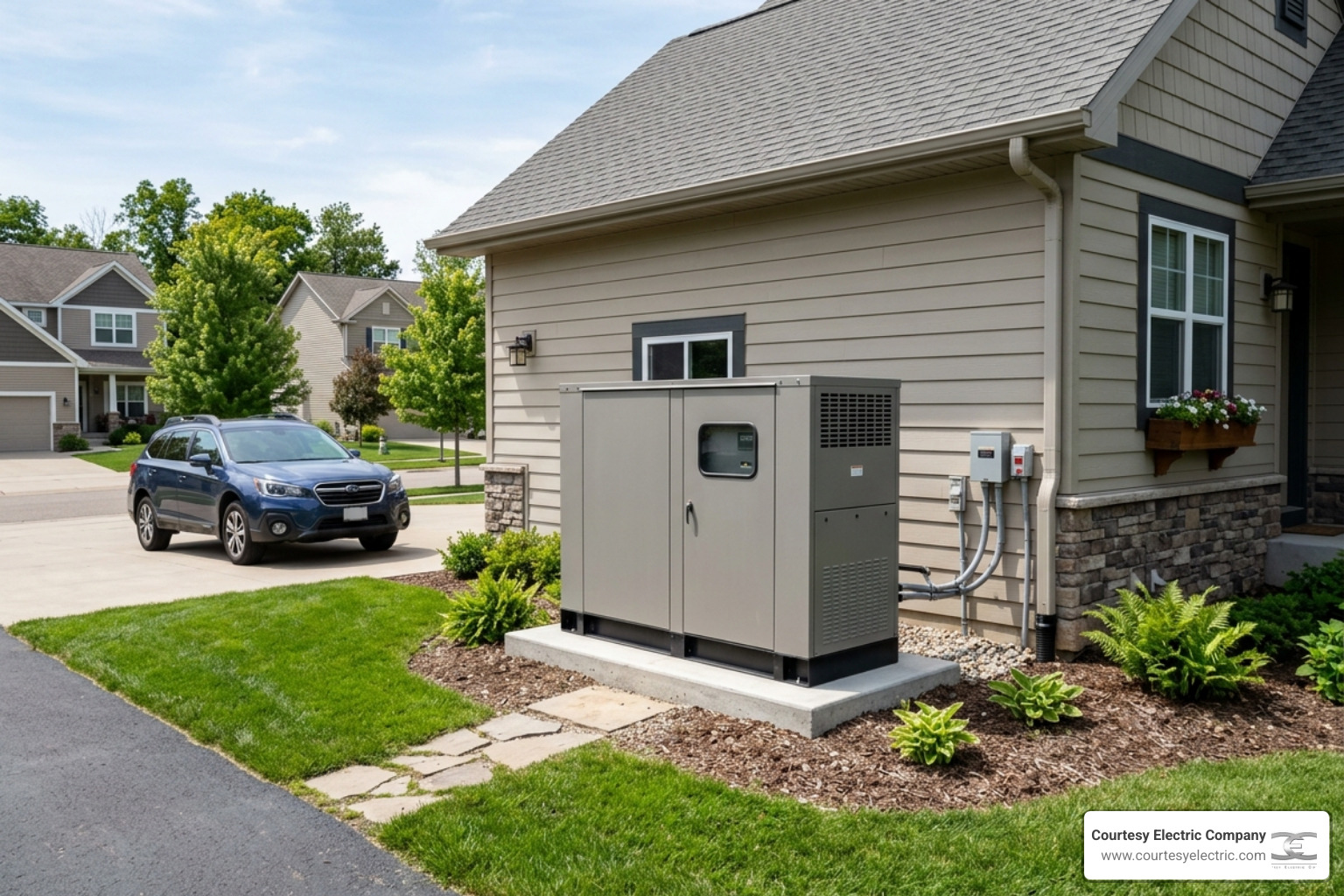
Generator installation what to expect is one of the most common questions Colorado homeowners ask before committing to a whole-home backup power system — and it's a smart question to ask before the next outage catches you off guard.
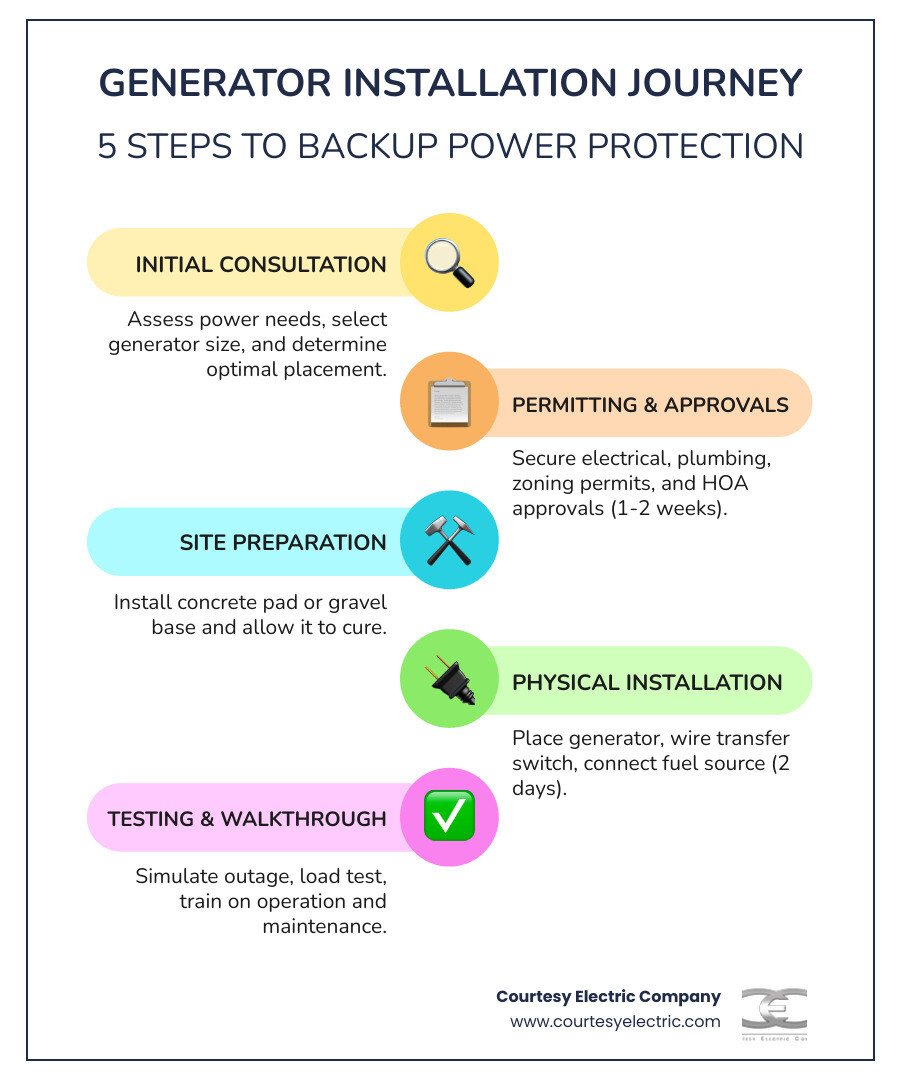
Here's a quick overview of what the process looks like from start to finish:
- Initial consultation - A professional assesses your home's power needs and selects the right generator size and placement location.
- Permitting and approvals - Electrical, plumbing, and zoning permits are pulled, along with any required HOA approvals. This typically takes one to two weeks.
- Site preparation - A concrete pad or gravel base is installed and allowed to cure before the generator arrives.
- Physical installation - The generator is placed, wired to your electrical panel via an automatic transfer switch, and connected to your fuel source. This takes roughly two days.
- Testing and walkthrough - The crew runs a simulated outage, confirms everything works, and walks you through how to operate and maintain the system.
The physical work takes about two days, but the full process — from your first call to final activation — typically runs four to six weeks when you factor in permitting, equipment lead times, and site prep.
Colorado winters don't wait, and neither does an aging power grid. Homeowners across the Front Range are increasingly turning to home standby generators to stay protected when storms knock out utility power for hours or even days at a stretch. Unlike a portable generator you have to drag out of the garage and manually connect, a standby system kicks on automatically — within seconds of an outage — whether you're home or not.
The installation itself is a multi-step project involving licensed electricians, gas connections, local building inspectors, and sometimes your utility company. It's not complicated when you have the right team, but it does require planning. Knowing what to expect at each stage helps you make smarter decisions, avoid unnecessary delays, and feel confident in your investment from day one.
I'm David Meyer, Vice President of Courtesy Electric, and I've spent years overseeing generator installations and backup energy systems across Denver and the Colorado Front Range — giving me direct insight into generator installation what to expect at every phase of the process. In this guide, I'll walk you through each step so you can move forward with clarity and confidence.
Understanding the Basics: Standby vs. Portable Systems
Before diving into the nuts and bolts of the installation, it is important to understand why homeowners in Parker, Highlands Ranch, and across Denver are moving away from portable units in favor of standby systems.
A portable generator is often what people think of first—a small unit on wheels that you pull out of the garage, fill with gasoline, and start with a pull-cord or button. While useful for camping or very short outages, they require you to be physically present, brave the weather to set them up, and constantly manage fuel levels.
In contrast, a home standby generator is a permanent installation. It sits outside your home, much like a central air conditioning unit, housed in a weather-resistant enclosure. The biggest difference is the "Automatic Transfer Switch" (ATS). This device acts as the brain of the system, constantly monitoring the utility grid. When the power drops, the ATS signals the generator to start and switches your home’s electrical load over to the generator—all within about 10 to 20 seconds.
Because these units are connected directly to your home's natural gas line or a large propane tank, there is no need to hunt for gas cans in the middle of a blizzard. It is truly a hands-free operation that protects your home even if you are away on vacation. For a deeper look at how these systems integrate into Colorado homes, check out our Generators Fraser CO Complete Guide.

Preparing Your Property: Generator Installation What to Expect During Site Selection
Choosing the right spot for your generator is not just about aesthetics; it is about safety and compliance with strict national and local codes. In April 2026, safety standards like NFPA 37 are more important than ever to ensure exhaust fumes stay out of your living space.
When we visit your property for a site assessment, we look for a location that meets several criteria:
- Clearance from the Home: NFPA code requires at least 1.5 feet of clearance between the generator and the house.
- Openings and Vents: The unit must be at least 5 feet away from windows, doors, and soffit vents to prevent carbon monoxide from entering the home.
- Property Lines: Most Denver-area municipalities require the unit to be 5 feet from property lines.
- Accessibility: We need enough room for our technicians to perform future maintenance comfortably.
The foundation is another critical factor. While some smaller units can sit on a bed of level pea gravel (usually at least four bags deep), we often recommend a professional concrete pad. Concrete provides a stable, long-term base that prevents the unit from settling or tilting over time due to Colorado's expansive soils and drainage patterns. To learn more about how we handle these specific local challenges, see our Best Generators Services in Fraser CO page.
Determining the Right Size for Your Home's Power Needs: Generator Installation What to Expect
One of the most vital parts of the planning phase is "sizing" the generator. This isn't about the physical dimensions of the machine, but its electrical capacity, measured in kilowatts (kW).
We perform a detailed electrical load calculation to determine how much power your home consumes. We don't just look at the total wattage; we account for "peak starting power." Appliances like air conditioners and well pumps require a massive surge of electricity just to get the motor spinning. If your generator is undersized, it might stall when the AC tries to kick on.
You have two main options:
- Essential Circuits: Powering just the basics—fridge, furnace, some lights, and your Wi-Fi.
- Whole-House Coverage: Sizing the unit to run everything at once, including high-draw items like electric ovens and multiple AC units.
Choosing the right kW capacity ensures your system runs efficiently without being overloaded. You can find more details on sizing options in our guide to Generators Installation in Fraser CO.
Navigating Local Codes: Generator Installation What to Expect During the Approval Process
You might think you can just buy a generator and hook it up, but in the Denver metro area, the paperwork is often the longest part of the journey. A professional installation requires multiple permits and approvals:
- Electrical Permits: To ensure the wiring to your main panel and transfer switch is safe and up to code.
- Plumbing/Gas Permits: To verify the fuel line connection is leak-free and properly pressured.
- Zoning Requirements: To confirm the placement doesn't violate local ordinances or noise bylaws.
- HOA Approvals: If you live in a managed community, your Homeowners Association likely has rules about where a generator can be placed and what it looks like.
We also coordinate with the gas utility. A standby generator is often the largest gas-consuming appliance in a home. In many cases, your existing gas meter may need to be "upsized" by the utility company to ensure there is enough flow to run the generator and your furnace simultaneously during a cold snap.
The Installation Timeline: From Consultation to Activation
While the actual "work" at your house happens quickly, the total project timeline is usually 4 to 6 weeks. Here is a realistic look at how that time is spent:
- Week 1: Initial consultation and site assessment. This is where we determine the kW size and the best location.
- Weeks 2-3: Permitting and equipment sourcing. We submit the plans to the city or county and wait for the green light. We also ensure your specific model (whether it’s a Generac or Cummins) is ready for delivery.
- Week 4-5: Site preparation. We install the concrete pad or gravel base so it is ready for the unit's arrival.
- Week 6: The big day. The physical installation and final inspections.
It is important to remember that delays can happen due to municipal permit backlogs or supply chain issues, but we keep you informed every step of the way. Regular maintenance after this process is key to keeping that investment running, which you can read about in our Generators Maintenance Guide Fraser CO.
Installation Day: Electrical and Fuel Connections
When installation day finally arrives, a team of licensed professionals will descend on your property. You can expect a fair amount of activity, but it is a well-coordinated process.
The first major task is installing the Automatic Transfer Switch (ATS). This is usually mounted next to your main electrical breaker panel. To do this safely, we will need to shut off your home's main power for a few hours. We recommend planning for this by keeping your refrigerator doors closed and ensuring your electronic devices are charged.
Next comes the fuel connection. Most homes in the Denver area use natural gas, which involves running a dedicated line from your gas meter to the generator. If you live in a more rural part of the Front Range or Black Forest without natural gas access, we will integrate the system with a large on-site propane tank.
Finally, we install a grounding rod—a non-negotiable safety step that protects the generator and your home’s sensitive electronics from electrical surges or lightning strikes.
| Feature | Natural Gas | Propane (LP) |
|---|---|---|
| Availability | Available via city utility lines | Requires on-site storage tank |
| Refueling | Continuous supply; never runs out | Requires monitoring tank levels |
| Convenience | Highest; no manual intervention | Needs scheduled deliveries |
| Reliability | High (lines are buried) | High (independent of utility) |
Final Testing and Homeowner Walkthrough
Once the last wire is tightened and the gas line is tested for leaks, we don't just pack up and leave. The final phase is the most exciting: the "Simulated Outage."
We will intentionally cut the utility power to your home to show you exactly how the system reacts. You’ll hear the generator engine roar to life, and within seconds, you’ll see the lights in your home flicker back on. This "load test" confirms that the generator can handle the electrical demands of your appliances without issue.
After the test, we perform a final walkthrough with you. We will show you:
- The Control Panel: How to read the status lights and what to do if an alert appears.
- The Weekly Self-Test: Most generators are programmed to run for about 10-12 minutes once a week (often at a low-noise setting) to keep the engine lubricated and the battery charged. We will help you pick a time that won't disturb your sleep!
- Documentation: We provide all manuals and help you with the warranty registration process.
Frequently Asked Questions About Generator Installation
Do I need to be home during the entire installation?
While you don't need to be there for every minute of the outdoor work, we do require you to be home for at least 1 to 2 hours. This is when we need access to your indoor electrical panel and when we perform the final walkthrough and training.
How long will my power be turned off during the process?
Typically, your power will be out for 2 to 4 hours on the second day of installation. This allows our electricians to safely install the transfer switch and connect it to your main breaker panel. We will always coordinate this window with you in advance.
What maintenance is required after the generator is installed?
Think of your generator like a car that sits in the driveway. It needs an annual professional "tune-up," which includes changing the oil and filters, checking the spark plugs, and testing the battery. Most manufacturers also recommend a "break-in" oil change after the first 25 to 30 hours of continuous use during a major outage.
Conclusion
At Courtesy Electric Company, we know that a home standby generator is more than just a piece of machinery—it is an investment in your family’s safety and comfort. Whether you are in the heart of Denver or the higher elevations of the Front Range, our goal is to make generator installation what to expect a transparent and stress-free experience.
From the initial load calculation to the moment your lights stay on during a blizzard, we take pride in providing quality, turnkey installations that you can depend on for decades. If you are ready to stop worrying about the next power outage, we are here to help.


