
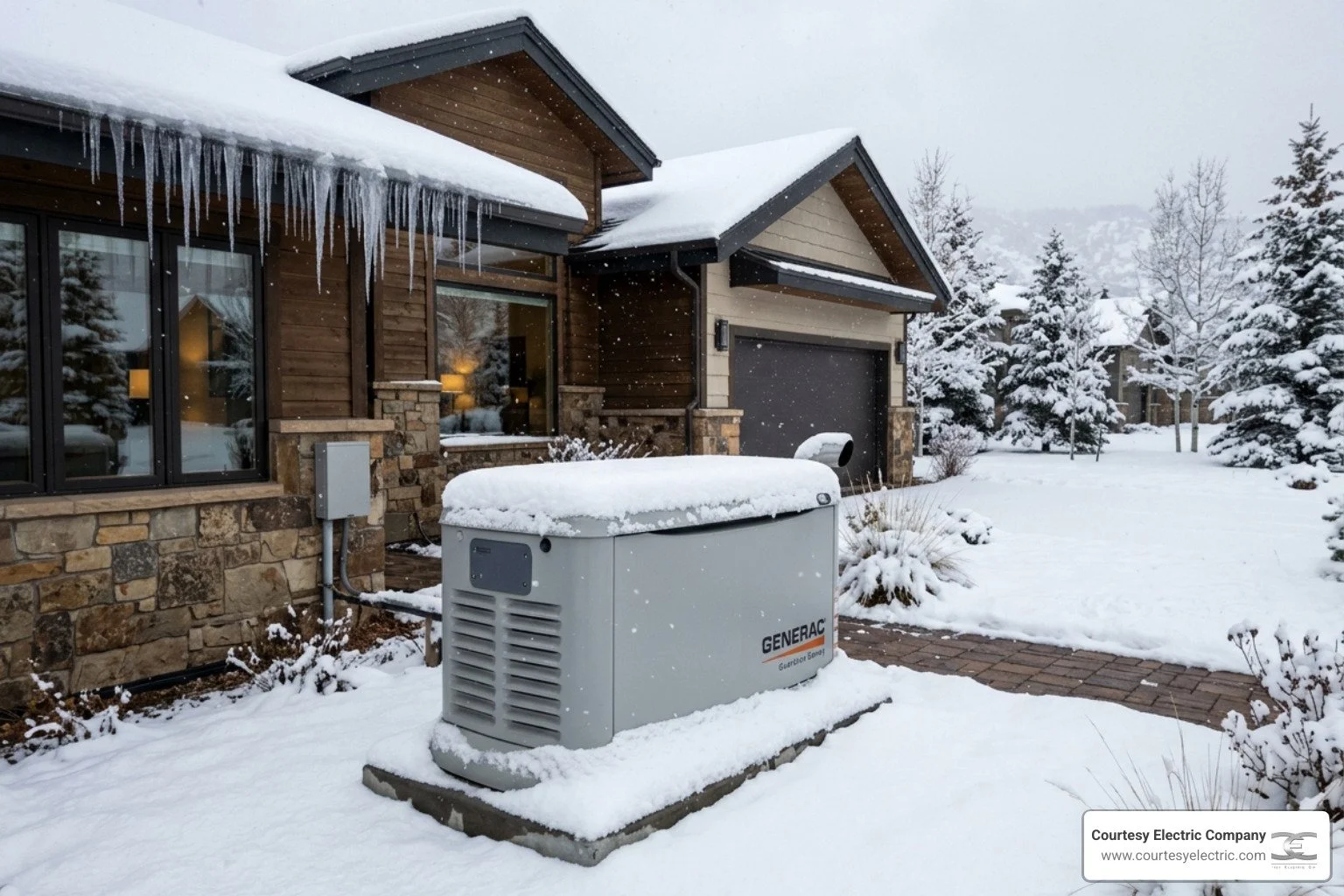
Why Generator Maintenance Before Colorado Storm Season Can't Wait
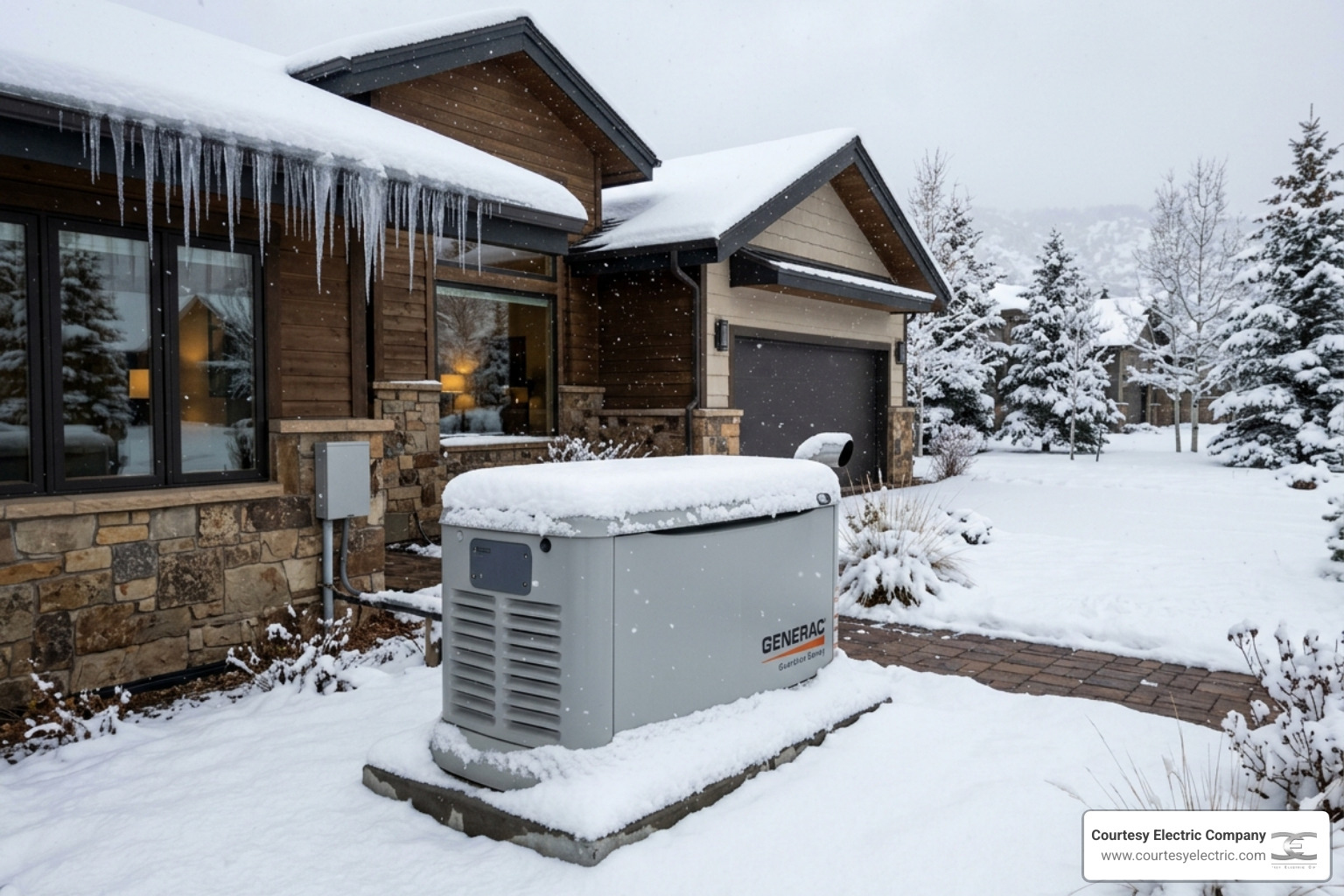
generator maintenance before colorado storm season is one of the most important steps Front Range homeowners can take to protect their families from unexpected power outages. Here's a quick overview of what it involves:
Quick-Answer Checklist: Generator Maintenance Before Colorado Storm Season
- Inspect battery terminals, fuel lines, and electrical connections for corrosion or damage
- Test battery voltage (should be 12.6V or above) and replace if older than three years
- Change oil and filters using a cold-weather synthetic like SAE 5W-30
- Check fuel quality and add stabilizer or anti-gel treatment as needed
- Test the auto-start and automatic transfer switch (ATS) function
- Run a full load test for at least 20–30 minutes to catch performance issues
- Clear the area around your generator of debris, snow, and vegetation
- Schedule a professional inspection before storm season peaks
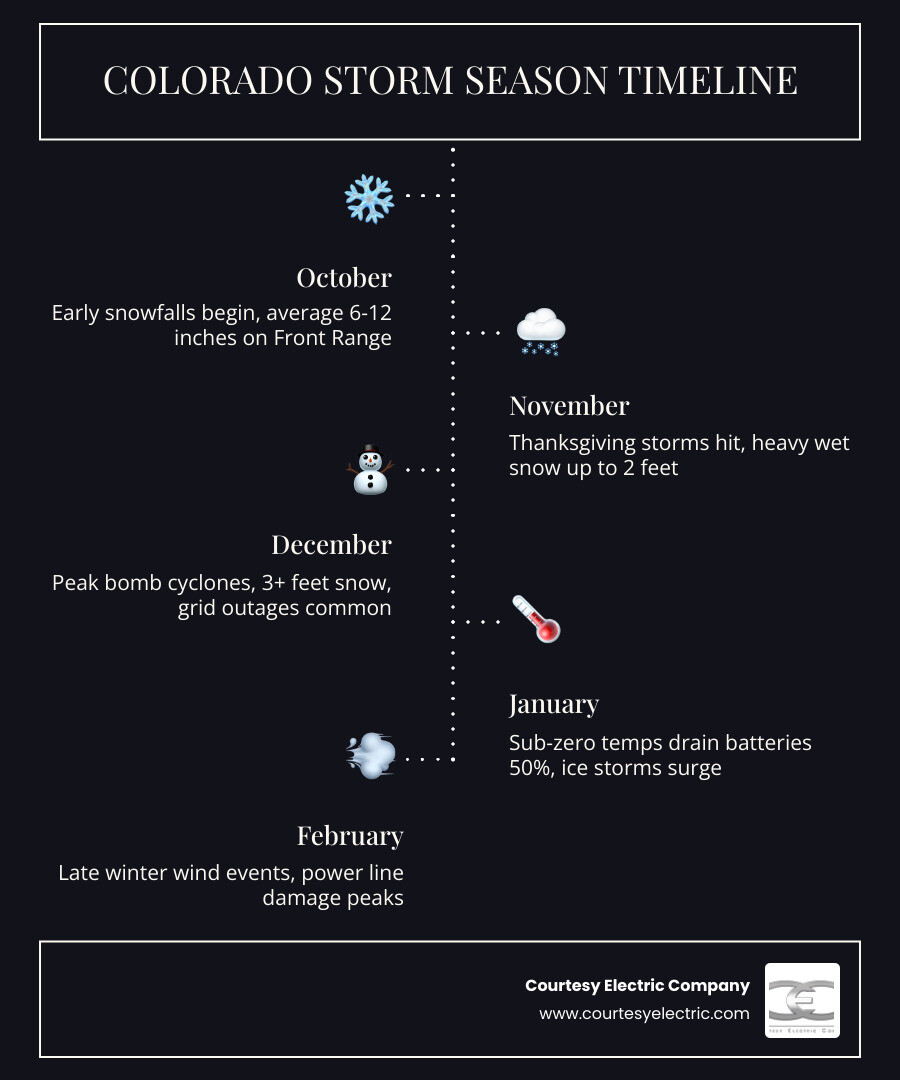
Colorado's storm season is unlike anywhere else in the country. The Front Range can swing from a sunny 60-degree afternoon to a full-on bomb cyclone overnight. Denver sits at roughly 5,280 feet above sea level — and many surrounding communities sit even higher. That thin air affects how your generator burns fuel, how well it cools itself, and how hard your battery has to work just to turn the engine over. Add in sub-zero wind chills, heavy wet snow, and sudden ice storms, and you have a recipe for generator failure at exactly the wrong moment.
The stakes are real. Cold weather alone can strip up to 50% of a battery's cranking power, and diesel generators can lose 2–3% of their rated output for every 1,000 feet of elevation. Without proper preparation, a generator that looks fine on paper can fail to start when the grid goes down and your home needs it most.
I'm David Meyer, Vice President of Courtesy Electric — a Colorado electrical contractor with roots going back to 1976 — and generator maintenance before Colorado storm season is something our team deals with hands-on every year across the Denver metro and Front Range. Understanding how altitude, cold, and Colorado's unique storm patterns stress backup power systems is central to what we do, and this guide covers everything you need to keep your generator ready when it matters most.
Why Generator Maintenance Before Colorado Storm Season is Critical
In the Front Range, we don't just get "storms"—we get weather events that test the structural integrity of our infrastructure. Whether it's a "Bomb Cyclone" dumping three feet of heavy, wet snow or a high-wind event that sends branches through power lines, our local grid is under constant pressure. When the grid fails, your generator is your only line of defense.
However, a generator is a complex machine that often sits idle for months. During those quiet periods, seals can dry out, fuel can degrade, and rodents looking for a warm home can chew through critical wiring. If you wait until the sky turns gray to check your system, you’re already too late. Proper generator maintenance before colorado storm season ensures that when the lights flicker and die, your backup system hums to life in seconds. For a deeper look at the specific units we often service, check out our Generators Fraser Co Complete Guide.
Navigating Altitude Derating and Thin Air
One of the most overlooked factors in Colorado generator performance is altitude. Most generators are designed and rated at sea level. As you move up into Denver, Parker, or Highlands Ranch, the air becomes thinner. This means there is less oxygen available for the combustion process.
For every 1,000 feet you rise above sea level, a diesel generator typically loses about 2% to 3% of its rated power. If you have a unit rated for 20kW at sea level, it might only be capable of producing 17kW in a mountain community. This "derating" affects the air-to-fuel ratio, often causing the engine to run "rich," which can lead to carbon buildup and reduced efficiency. During our inspections, we prioritize turbocharger health and air intake systems to ensure your engine is breathing as easily as possible in our high-altitude environment.
Combating 50% Battery Power Loss in Sub-Zero Temps
If your generator won't start, 90% of the time it’s a battery issue. Chemical reactions inside a battery slow down significantly as the temperature drops. By the time we hit sub-zero temperatures in the Black Forest or Denver, a battery can lose up to half of its cranking power.
We use conductance testing to measure the internal health of your battery, not just its resting voltage. A battery might show 12.6V on a multimeter but fail to provide the "oomph" needed to turn over a cold engine. We often recommend thermostatically controlled battery warmers or "battery blankets" for our Front Range clients. These ensure the battery stays at an optimal temperature, preventing the dreaded "click-click-click" when you need power the most. We also check for terminal corrosion, which acts as a barrier to electrical flow, and apply dielectric grease to keep connections clean.
Essential Steps for Pre-Storm Inspection and Testing
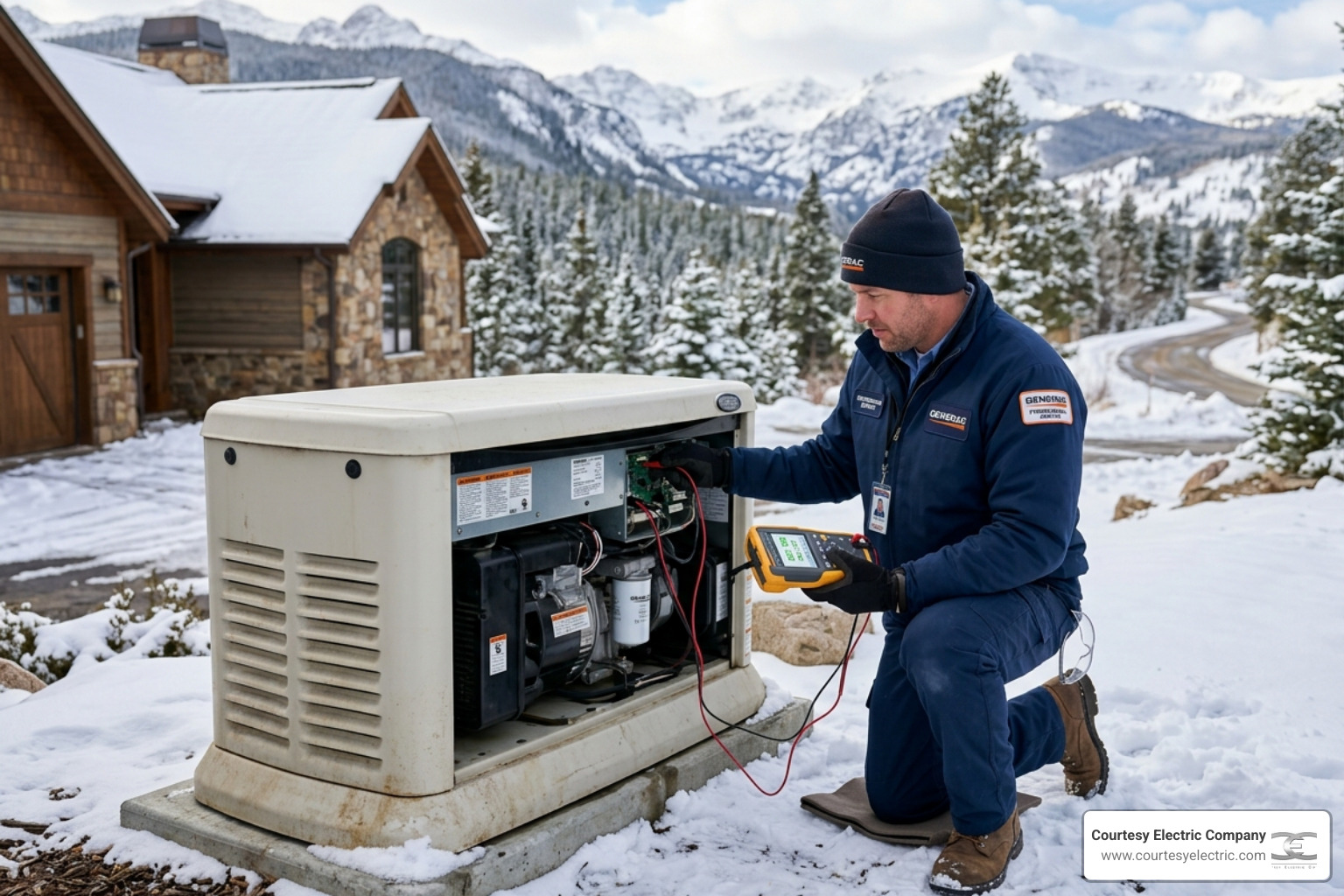
A thorough visual inspection is your first line of defense. We recommend homeowners walk around their units at least once a month, but especially as we approach the storm season. Look for "gifts" left by local wildlife; mice and squirrels love the insulated cabinets of a Generac or Cummins unit. They can shred insulation for nests and chew through control wires, leading to expensive repairs.
Check the enclosure integrity. Are the panels secure? Is there any rust or denting that could allow moisture to seep into the electrical components? Ensuring the housing is weather-tight is a simple but vital part of generator maintenance before colorado storm season. For more DIY tips, see our Generators Maintenance Guide Fraser Co.
Professional Generator Maintenance before Colorado Storm Season: When to Call an Expert
While homeowners can handle basic cleaning and visual checks, there are components that require a professional touch. At Courtesy Electric, our technicians carry factory certifications that allow us to dive deep into the system's brain.
Complex diagnostics, such as checking the Automatic Transfer Switch (ATS) or recalibrating the voltage regulator, should never be a DIY project. The ATS is the gatekeeper between the utility grid and your generator; if it fails, your generator might run, but your house will stay dark. We specialize in high-level service and are recognized as one of the Best Generators Services In Fraser Co. We ensure that every electrical connection is torqued to spec and that the firmware is updated to prevent software-related glitches during a storm.
Testing Auto-Start and Full Load Performance
"Exercising" your generator is not just about letting it idle for five minutes. A true test involves a simulated outage. We recommend performing a full load test where the generator actually takes over the electrical load of the house.
During this 20-to-30-minute cycle, we monitor:
- Voltage Stability: Does the power stay consistent as the AC or well pump kicks on?
- Frequency (Hz): Is the engine running at the correct RPM to maintain 60Hz?
- Unusual Vibrations: Are there rattles or shakes that suggest loose mounting bolts or internal wear?
- Exhaust Color: Is the exhaust clear, or is there blue/black smoke indicating oil or fuel issues?
Advanced Maintenance: Oil, Filters, and Cooling Systems
In Colorado’s variable climate, the fluids in your generator are its lifeblood. Standard motor oil can become thick and sluggish—almost like molasses—when temperatures dip below zero. This makes it incredibly difficult for the starter to spin the engine.
| Feature | Standard Motor Oil | Synthetic SAE 5W-30 |
|---|---|---|
| Cold Start Flow | Poor (Thickens) | Excellent (Stays Fluid) |
| High Temp Protection | Moderate | Superior |
| Viscosity at 0°F | High Resistance | Low Resistance |
| Recommended for CO | No | Yes |
We exclusively recommend synthetic SAE 5W-30 for our Denver and Front Range customers. The "5W" rating ensures the oil flows quickly at 5 degrees, protecting the engine the second it fires up. We also check the spark plug gap and inspect air filters for any restriction caused by summer dust or wildfire smoke. If you're considering a new system, our Generators Installation In Fraser Co page details how we set these systems up for long-term success.
Preventing Wet Stacking in Colorado Generators
Wet stacking is a common issue for diesel generators that aren't run hard enough. It occurs when unburnt fuel accumulates in the exhaust system because the engine hasn't reached its optimal operating temperature. This leads to carbon buildup, "soupy" black exhaust, and can eventually become a fire hazard.
To prevent this, we perform annual load bank testing. We use a machine to apply a 80% to 100% load on the generator, forcing it to run hot and burn off those deposits. It’s essentially a "workout" for your generator that keeps the exhaust manifold healthy and the engine internals clean.
Fuel System Integrity and Gelling Prevention
For our diesel customers, "gelling" is a major concern. In extreme cold, the paraffin wax in diesel fuel can crystallize, clogging filters and stalling the engine. We treat all diesel systems with specialized anti-gel additives and monitor the "cloud point" of the fuel.
For those with propane or natural gas units, we check for line leaks and ensure the regulators haven't been compromised by ice or debris. We also drain water separators. Condensation is common in Colorado due to our massive temperature swings; if that water freezes in a fuel line, your generator is going nowhere.
Safety and Compliance for Front Range Homeowners
Safety is our top priority at Courtesy Electric. Every year, we hear tragic stories of carbon monoxide (CO) poisoning related to improper generator use. A generator should never be operated in a garage, basement, or near an open window. Even with the garage door open, CO can linger and seep into the living spaces. We ensure all our installations meet strict clearance requirements—typically at least 20 feet from doors, windows, and vents.
Beyond physical safety, there is regulatory compliance. The Colorado Department of Public Health and Environment (CDPHE) has specific rules for larger units, including Air Pollutant Emission Notices (APEN) reporting. While most residential units are exempt from heavy reporting, we maintain digital action logs for all our clients to ensure that if an inspector ever knocks, you have the maintenance records to prove your system is clean and compliant.
Frequently Asked Questions about Generator Maintenance before Colorado Storm Season
How often should I schedule professional maintenance in Colorado?
We recommend a tiered approach for the Front Range:
- Quarterly (PM1): A basic "check-up" to inspect batteries, fluids, and clear debris.
- Annually (PM2): A deep dive including an oil change, filter replacement, and a full load bank test.
- Every 3 Years (PM3): A comprehensive service that includes cooling system flushes, belt replacements, and valve adjustments.
What are the signs my generator needs immediate repair?
Don't ignore the warning signs! Call us if you notice:
- Fuel Odors: This could indicate a leak in the lines or a tank issue.
- Inconsistent Starting: If it takes more than two "cranks" to fire up, the battery or starter is failing.
- Excessive Smoke: Black, blue, or heavy white smoke all indicate different internal engine problems.
- Warning Lights: Modern Generac and Cummins units have "Common Alarm" lights; if it’s glowing red or yellow, it needs attention.
What cold-weather accessories are recommended for Denver homes?
To ensure 100% reliability, we recommend:
- Thermostatically Controlled Block Heaters: These keep the engine block warm, ensuring the oil stays fluid and the metal components don't "cold-seize."
- Battery Blankets: Essential for maintaining cranking power in sub-zero temps.
- Crankcase Heaters: These specifically target the oil pan to keep the lubricant at the perfect viscosity.
- Breathable Covers: Protect the unit from ice buildup while still allowing moisture to escape, preventing rust.
Conclusion
At Courtesy Electric Company, we’ve spent decades building a reputation for quality, integrity, and dependability. We aren't just contractors; we’re your neighbors in Denver, Parker, and across the Front Range. We know exactly what a Colorado winter can throw at a home, and we know that a well-maintained generator is the difference between a cozy evening by the fire and a cold, dark, and potentially dangerous night.
Whether you need a new Generac or Cummins installation, a Franklin battery storage system to complement your solar, or just a reliable partner for your generator maintenance before colorado storm season, we are here to help. We offer free estimates and a team of experts who treat your home’s safety as their own.
Don't wait for the next bomb cyclone to find out your backup power isn't ready. For the Best Generators Services In Fraser Co and the surrounding areas, trust the experts who have been powering Colorado since 1976.
Schedule your 2026 pre-storm inspection today and give your family the peace of mind they deserve.


