
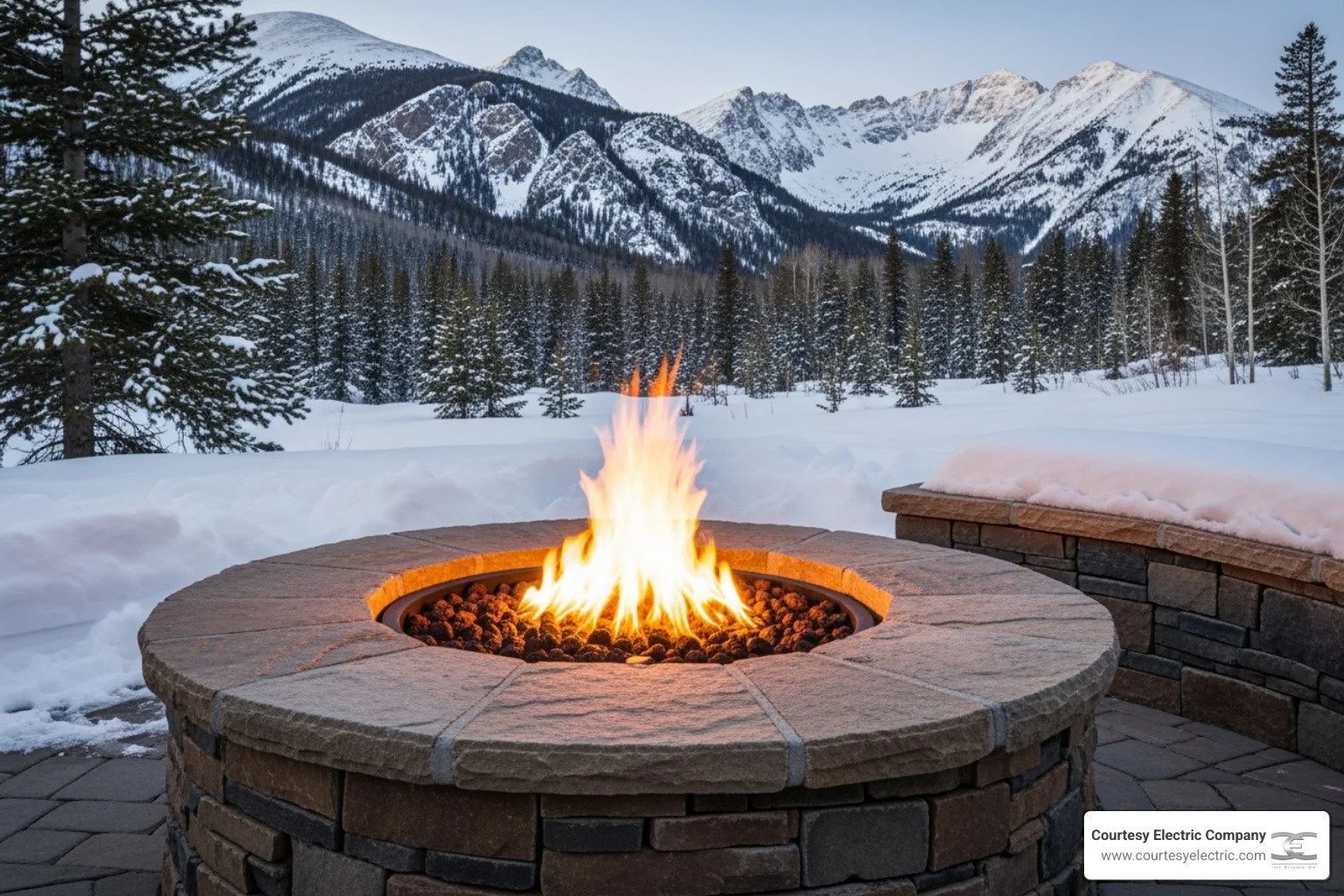
Why Fire Features Maintenance Matters in Granby's High-Altitude Climate
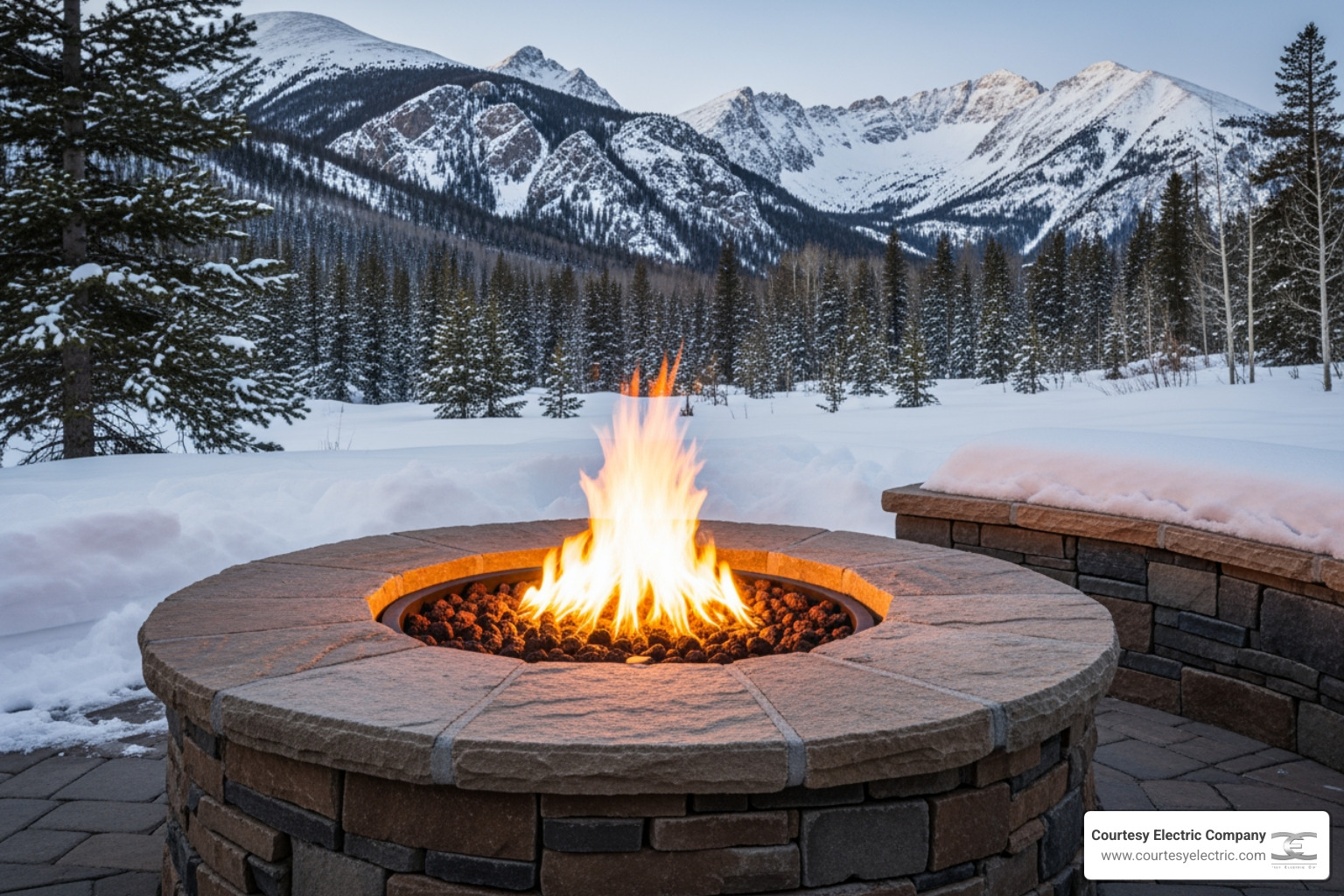
Fire features maintenance in Granby, CO isn't just about comfort—it's about safety in one of Colorado's most demanding environments. At 8,000 feet elevation, where brutal winters and extreme temperature swings are the norm, your fireplaces, wood stoves, and outdoor fire pits face unique challenges. Creosote builds up faster in cold flue systems. Carbon monoxide risks increase when combustion isn't optimized for thin air. And with Grand County's wildfire mitigation requirements, neglecting your fire features can put your entire property at risk.
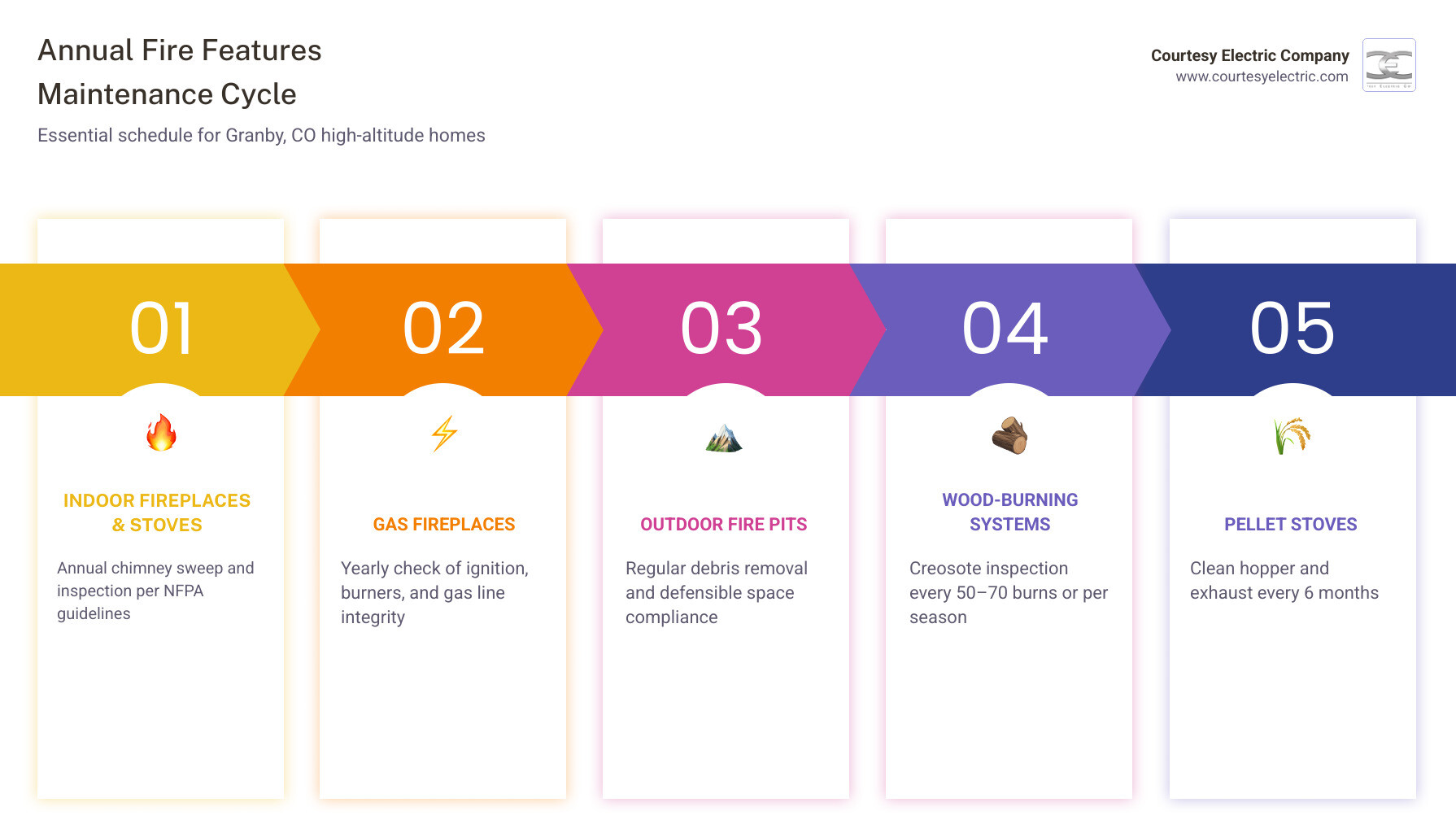
Quick Guide to Fire Features Maintenance in Granby:
- Indoor fireplaces & stoves: Annual chimney sweep and inspection (NFPA recommendation)
- Gas fireplaces: Yearly maintenance of ignition systems, burners, and gas line integrity
- Outdoor fire pits: Regular debris removal, burner cleaning, and compliance with defensible space zones
- Wood-burning systems: Check for creosote buildup every 50–70 burns or once per season
- Pellet stoves: Clean hopper and exhaust system every 6 months
- Emergency signs: Unusual odors, slow drafting, visible cracks, or pilot light failures require immediate professional attention
Whether you're dealing with a gas fireplace that won't ignite or preparing your outdoor fire pit for summer gatherings, proper maintenance keeps your family safe and your systems running efficiently through Granby's harsh seasons.
For reliable electrical solutions that support your home's comfort systems—including backup power during winter outages—explore our electrical services. Need help with fire feature installations or repairs? Contact Courtesy Electric Company for expert service.
I'm David Meyer, Vice President of Courtesy Electric, and over my career working across Colorado's high country, I've seen how critical proper fire features maintenance in Granby, CO is for both safety and system longevity. Our team has powered countless homes through brutal winters, and we understand how electrical systems integrate with modern fire features to keep your home safe and comfortable year-round.
Why fire features maintenance in Granby, co is critical
In the high-altitude environment of Granby, oxygen is thinner. This affects how fire burns, whether it’s in a wood-burning stove or a gas fireplace. When combustion isn't "perfect," you get byproducts that range from annoying to deadly.
Creosote is perhaps the most notorious villain in this story. It is a highly flammable, tar-like byproduct of burning wood. In our cold climate, the smoke cools quickly as it rises through the chimney, causing creosote to condense on the flue walls. If left unchecked, this buildup can ignite, leading to a chimney fire that can spread to the rest of your home.
Then there is the silent threat: carbon monoxide (CO). High-altitude homes are often tightly sealed to keep out the winter chill. If your fireplace or stove isn't drafting correctly due to a blockage or structural damage, CO can back up into your living space. Regular maintenance ensures that your ventilation is clear and your system is operating at peak efficiency.
Structural integrity is also a major concern. The "freeze-thaw" cycle in Grand County is intense. Moisture can penetrate masonry, freeze, and then expand, causing bricks to pop (spalling) or mortar to crumble. Without annual checks, a small crack can turn into a major structural failure by the time spring arrives. For homeowners looking to ensure their home systems remain resilient during these harsh cycles, integrating robust solutions like battery storage in Granby, CO can provide the necessary backup for safety sensors and electronic igniters.
Common issues with fire features maintenance in Granby, co
When we talk about fire features maintenance in Granby, co, we often see a recurring list of "usual suspects."
- Gas Leaks: Even small leaks in a gas fireplace or outdoor fire pit can lead to catastrophic results. These are often caused by worn-out valves or shifting ground that puts stress on gas lines.
- Animal Nests: During the off-season, birds, squirrels, and even raccoons find chimneys to be cozy homes. These nests create total blockages that prevent smoke and gases from escaping.
- Spalling Bricks: This is the physical peeling or crumbling of the masonry surface caused by moisture penetration.
- Stage 3 Creosote: This is the most dangerous form of creosote. It looks like a hard, shiny glaze. It is incredibly difficult to remove and acts like fuel waiting for a spark.
- Cracked Flue Tiles: The lining of your chimney (the flue) is designed to contain the heat and gases. If these tiles crack, heat can reach the flammable wooden framing of your house.
Seasonal schedules for fire features maintenance in Granby, co
Timing is everything in the Rockies. You don't want to realize your fireplace is broken during the first October blizzard. We recommend a proactive schedule:
| System Type | Recommended Frequency | Key Maintenance Tasks |
|---|---|---|
| Wood-Burning | Annually (Min) | Full chimney sweep, flue inspection, ash removal, cap check. |
| Gas Fireplace | Annually | Burner cleaning, pilot light check, CO testing, glass cleaning. |
| Pellet Stove | Every 6 Months | Hopper cleaning, exhaust venting check, motor lubrication. |
| Outdoor Pit | Seasonally | Burner orifice cleaning, debris removal, cover inspection. |
Essential steps for indoor fireplace and stove upkeep
The heart of indoor maintenance is the chimney sweep process. A professional cleaning usually takes between 45 minutes and 1.5 hours, depending on the level of buildup. The process involves using specialized brushes and high-powered vacuums to remove soot and creosote from the flue and smoke chamber.
The smoke chamber is the area just above the firebox. It’s shaped like an inverted funnel and is a prime spot for creosote to hide. Ensuring this area is smooth and clean improves the "draft," which is the airflow that pulls smoke up and out.
We also emphasize the importance of using seasoned firewood. Wood with a moisture content over 20% burns "dirty," creating significantly more creosote. In Granby, it’s best to let your wood dry for at least a year before burning it.
Maintaining gas and pellet systems
Gas and pellet systems are often touted as "low maintenance," but in Granby’s climate, that’s a bit of a myth. Pellet stoves are mechanical; they have augers that move the pellets and fans that circulate air. These components need to be cleaned of "clinkers" (hardened ash) and dust to prevent motor burnout.
Gas fireplaces rely on precise ignition systems. Over time, the thermopile and thermocouple (the sensors that tell the gas to turn on or off) can become covered in carbon soot. This leads to the frustrating "pilot light won't stay lit" scenario. Cleaning the burner orifices is also vital to ensure an even, safe flame. For those with high-tech homes, keeping these electronic components powered is essential, which is why we often refer clients to our Winter Park, CO battery storage guide to ensure their home remains functional during grid fluctuations.
Signs your indoor fire feature needs immediate repair
If you notice any of the following, stop using your fire feature and call a professional immediately:
- Soot buildup on the walls or ceiling: This indicates a major drafting problem.
- Unusual Odors: A "dirty locker room" smell usually means creosote, while a "rotten egg" smell indicates a gas leak.
- Slow Drafting: If smoke enters the room instead of going up the chimney, you have a blockage.
- Visible Cracks: Any crack in the firebox or masonry is a gateway for fire to reach your walls.
- Pilot Light Failure: If the pilot light won't stay lit or has a yellow, flickering flame (it should be blue), the burner system is failing.
Protecting outdoor fire pits and wildfire mitigation
In Grand County, outdoor fire features come with a serious responsibility: wildfire mitigation. Our landscape is beautiful but vulnerable. Fire features maintenance in Granby, co must include a focus on the area around the fire pit.
Creating "defensible space" is a requirement for many homeowners. This involves Zone 1 clearing—removing all flammable vegetation and debris within 30 feet of your home or fire feature. This reduces the chance of a stray ember igniting a wildfire.
Grand County regulations and safety guidelines
Grand County Natural Resources and the Grand Fire Protection District have strict rules to keep us safe. For example, open burning of slash piles (yard debris) is only allowed during "burn season," which typically requires 3 to 6 inches of snow on the ground.
If you are planning an outdoor fire, you must check if a burn permit is required. Generally, any fire larger than 3 feet in diameter needs a permit. Furthermore, understanding your property's vulnerability is key; we highly recommend reviewing the wildland fire mitigation guidelines for Grand County to ensure your outdoor fire setup doesn't become a hazard.
DIY maintenance tips for outdoor systems
While major repairs should be left to pros, there are several things you can do to keep your outdoor fire pit in top shape:
- Gutter Cleaning: Embers from a fire pit can travel over a mile. If your gutters are full of dry pine needles, your house is at risk.
- Burner Cover Usage: When not in use, keep your gas fire pit covered. This prevents spiders from spinning webs in the burner orifices, which is a leading cause of uneven flames.
- Debris Removal: Regularly clear out leaves and needles from inside the fire pit.
- Stone Sealing: If you have a stone fire pit, applying a sealant can help prevent the moisture penetration that leads to spalling.
For more information on protecting your land, the Granby Field Office of the Colorado State Forest Service offers excellent resources on education and mitigation.
Integrating electrical safety and backup power
Modern fire features are more than just "logs and matches." Many rely on electronic igniters, blowers, and smart home controls. This is where electrical safety becomes a core part of fire features maintenance in Granby, co.
If your home loses power during a blizzard, your gas fireplace blower won't work, and your pellet stove auger will stop. This is why we specialize in installing and maintaining backup power systems. We recommend a 6-month service interval for backup generators to ensure they are ready to kick in the moment the grid fails.
Whether you are looking to integrate your fire features into a centralized control system or want to ensure your home theater in Granby, CO doesn't lose power while you're cozying up by the fire, our team at Courtesy Electric can help bridge the gap between fire safety and electrical reliability.
Frequently Asked Questions about Granby Fire Features
How often should I schedule a chimney sweep in Granby?
The National Fire Protection Association (NFPA) recommends an annual inspection and cleaning. However, if you use your fireplace as a primary heat source during the long Granby winter, you may need a mid-season sweep. A good rule of thumb is to have it cleaned every 50 to 70 burns to prevent Stage 3 creosote buildup.
What are the signs of a gas leak in my fire pit?
The most obvious sign is a "rotten egg" smell (mercaptan added to natural gas). You might also hear a hissing sound near the valves. In outdoor settings, look for patches of dead vegetation near the gas line, as leaking gas can starve plants of oxygen. If you suspect a leak, turn off the main gas supply and call for service immediately.
Do I need a permit for outdoor burning in Grand County?
Yes, if the pile is larger than 3 feet in diameter or 2 feet in height. For recreational fire pits that are professionally installed and contained, you generally do not need a permit, but you must always follow local fire bans. During the winter, "burn season" for slash piles only opens when there is significant snow cover. You can check the latest status at the Grand Fire Protection District No. 1 website.
Conclusion
At Courtesy Electric Company, we believe that a home in Granby should be a sanctuary of warmth and safety. Proper fire features maintenance in Granby, co is the foundation of that comfort. From the chimney cap on your roof to the electrical sensors in your gas fireplace, every component plays a role in protecting your family.
We are proud to serve the Colorado Front Range and mountain communities with a safety-first approach. Whether you need a generator to keep your fire feature blowers running during a storm or expert electrical installation for a new smart home system, we are here to help.
Don't wait for the first snow to fly to think about your fireplace. Ensure your home is ready for the high-country winter today. For more info about our electrical services or to schedule a consultation, reach out to us. We’ll help you keep the fire burning safely all season long.


