Why Every Winter Park Homeowner Needs a Fire Feature Maintenance Plan
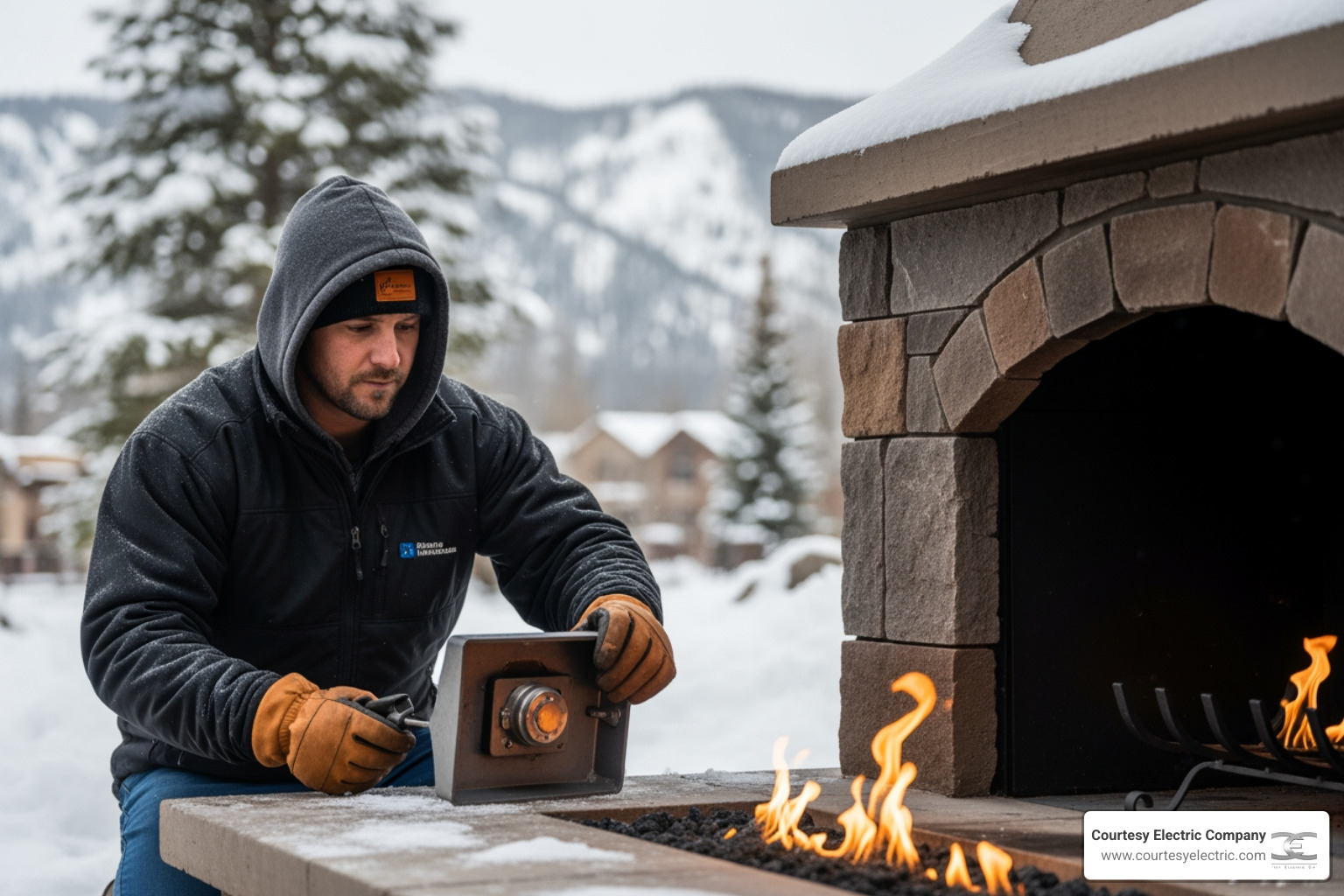
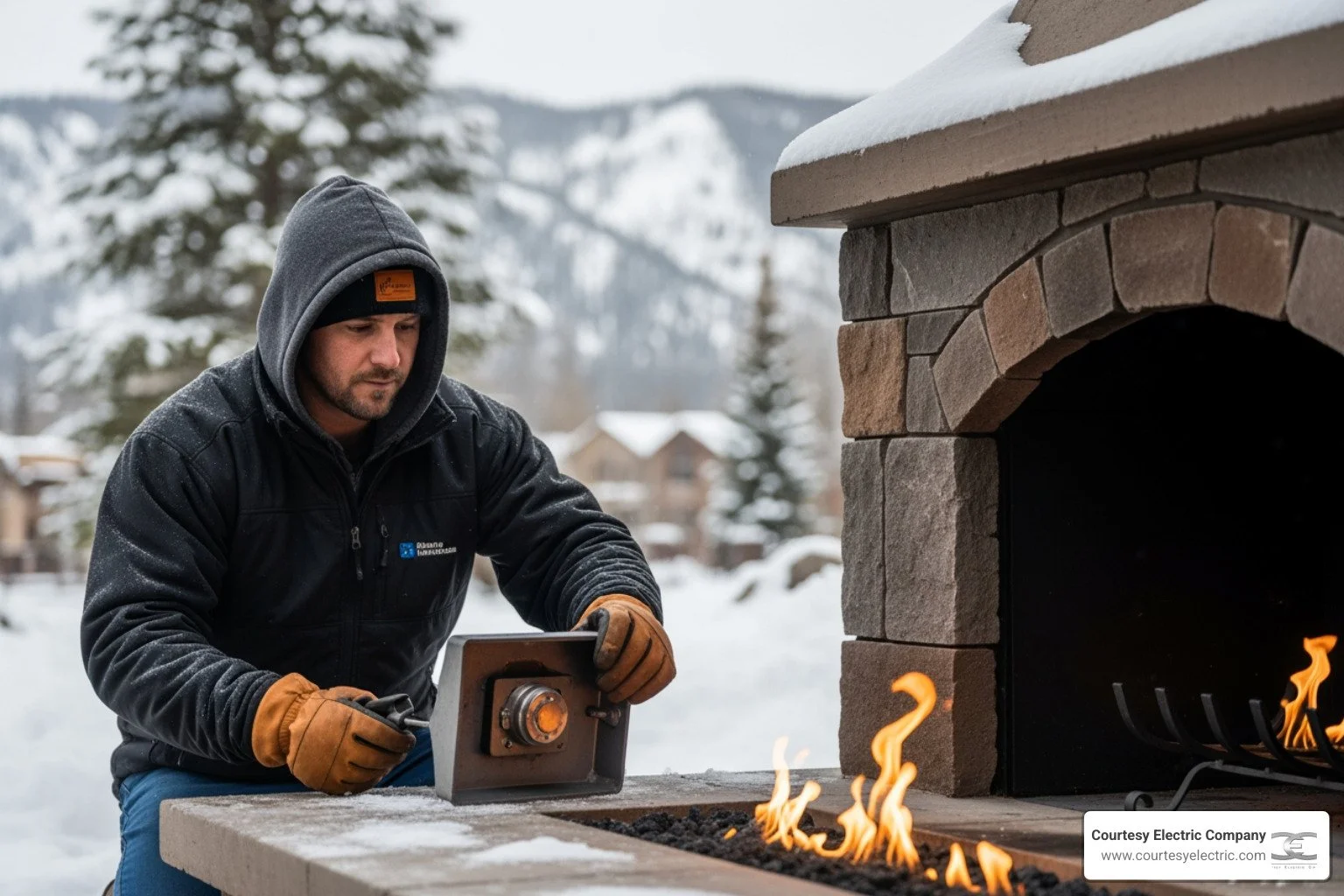
Fire features maintenance in Winter Park, CO is one of the most important — and most overlooked — responsibilities that comes with owning an outdoor living space in the Colorado Rockies.
Here's a quick overview of what proper fire feature maintenance involves:
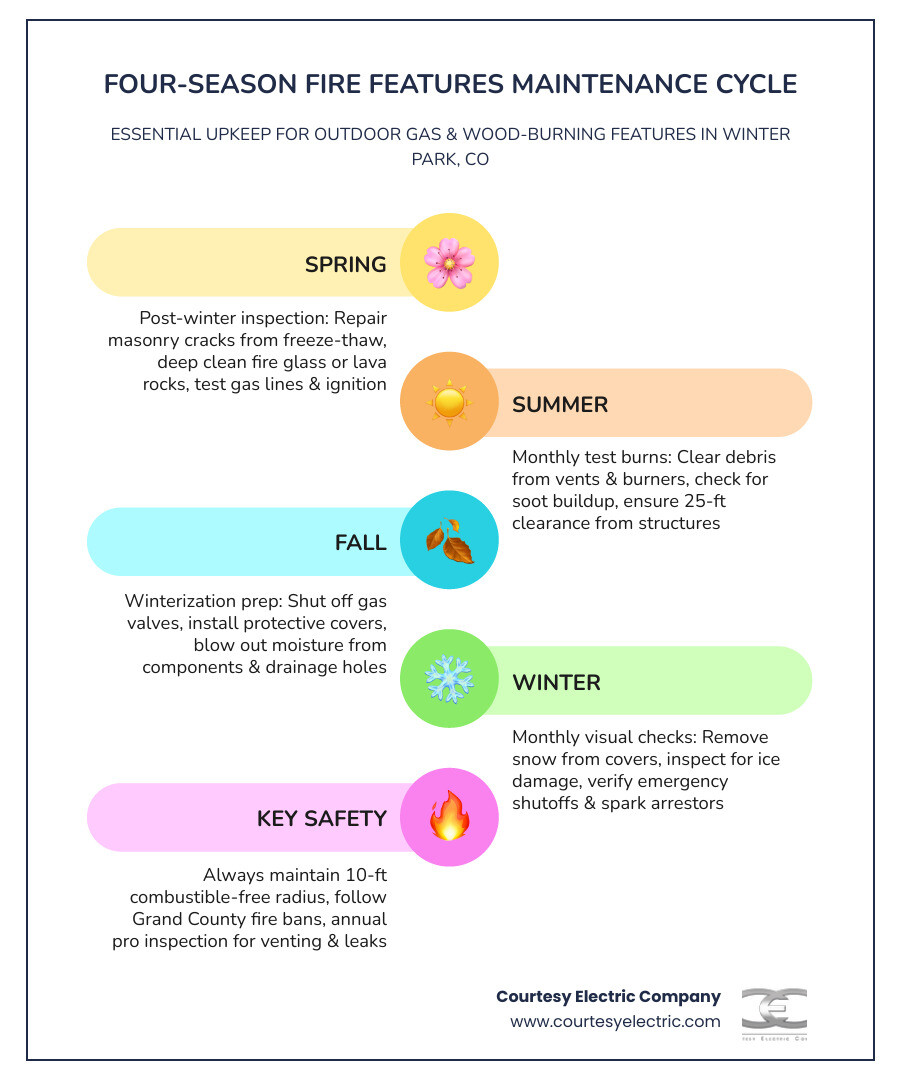
- Winterize before the first freeze - Shut off gas supply valves, clear debris from burners and media, and cover all outdoor units
- Inspect ignition systems - Check thermocouples, pilot orifices, and electronic ignition components for buildup or damage
- Clean burners and media annually - Remove soot from fire glass or lava rock using soapy water and a soft brush
- Check for structural damage - Look for masonry cracks, gas line wear, and corrosion after each winter season
- Know local fire regulations - Follow Town of Winter Park and Grand County rules, including fire bans and open-fire restrictions
- Schedule a professional inspection yearly - Have a certified technician check gas connections, venting, and electrical components
Winter Park sits at over 9,000 feet in the heart of the Rockies, where temperatures swing hard, snow loads are heavy, and wildfire risk from the surrounding Arapaho National Forest is real. A fire feature that runs without issue in September can develop cracked masonry, frozen gas lines, or a failed ignition system by the time spring arrives — all from one brutal winter season. Whether you have a gas fire pit, a wood-burning outdoor fireplace, or a fire table, staying on top of maintenance isn't just about performance. It's about keeping your home, your family, and your community safe.
I'm David Meyer, Vice President of Courtesy Electric Company, and with decades of hands-on experience in residential electrical systems across Colorado — including the electrical components that power modern fire features — I understand exactly what fire features maintenance in Winter Park, CO demands from both a safety and infrastructure standpoint. Let's walk through everything you need to know to keep your fire feature running safely, all year long.
Why Fire Features Maintenance in Winter Park, CO is Critical
Living in Winter Park means embracing one of the most beautiful, yet punishing, climates in the country. Our high-altitude environment presents unique challenges that homeowners in lower elevations simply don't face. When we talk about fire features maintenance in Winter Park, CO, we are primarily battling the "freeze-thaw cycle."
In the mountains, snow melts during the sunny afternoon and seeps into the porous surfaces of stone, brick, and mortar. When temperatures plummet after sunset, that water freezes and expands. Over time, this creates spiderweb cracks in your masonry that can eventually lead to structural failure or "sinking" if the ground beneath becomes oversaturated.
Beyond aesthetics, maintenance is a critical safety issue. Winter Park is nestled against the Arapaho National Forest. Statistics show that approximately 45% of all wildfires are caused by human carelessness, often involving poorly maintained or improperly used open fires. Debris buildup, such as pine needles or dry leaves, can easily ignite if your fire feature isn't kept clear.
Furthermore, moisture intrusion can wreak havoc on the internal components of gas fire tables and fireplaces. Moisture leads to corrosion of the burner ports and can damage the sensitive electronic ignition systems we often see in modern luxury homes. Just as we recommend generator maintenance in nearby Fraser to ensure your backup power is ready for a blizzard, your fire feature needs a similar level of "readiness" to prevent gas leaks or ignition failures when you want to use it most.
Essential Winterization for Gas and Wood-Burning Features
Winterization is the process of putting your fire feature "to bed" for the harshest months. For most residents, this happens in late October or early November. The goal is to keep moisture and ice away from the "guts" of the system.
For gas features, the first step is always safety. Locate your gas shutoff valve—usually found near the unit or at the main house connection—and turn it to the "off" position. If your unit features an electronic ignition, you should also head to your electrical panel and flip the dedicated circuit breaker. This prevents any accidental activation and protects the control module from power surges during winter storms.
Wood-burning features require a different approach. You must ensure the firebox is completely clear of ash and half-burnt logs. Ash is acidic; when mixed with melting snow, it creates a paste that can eat away at metal grates and stain stone hearths.
Maintenance Comparison: Wood-Burning vs. Gas
| Feature | Maintenance Need | Frequency | Why It Matters |
|---|---|---|---|
| Gas/Propane | Clear Burner Ports | Annual | Prevents uneven flames and soot |
| Gas/Propane | Inspect Thermocouple | Seasonal | Ensures flame stays lit safely |
| Wood-Burning | Ash Removal | After every use | Prevents masonry corrosion |
| Wood-Burning | Creosote Check | Annual | Prevents dangerous chimney fires |
| Both | Protective Covering | Constant (Winter) | Prevents ice damage and debris |
One of the most effective tools in your arsenal is a heavy-duty, waterproof vinyl cover. Unlike simple metal lids, a fitted vinyl cover creates a moisture barrier that keeps snow from sitting directly on the burner or in the drainage holes. If water freezes inside a drainage hole, it can crack the fire pan, leading to expensive repairs in the spring.
Step-by-Step Gas Fire Features Maintenance in Winter Park, CO
If you own a gas fire pit or table, follow this checklist to ensure it survives the sub-zero nights:
- Clear the Debris: Remove any pine needles, leaves, or "duff" that has settled into the burner area.
- Wash the Media: If your fire glass or lava rocks look dull or sooty, remove them and wash them in a bucket of mild soapy water. Rinse and let them dry completely before putting them back. Wet lava rock can actually "pop" or explode when heated!
- Clean the Burner: Use a soft brush or compressed air to clear the burner ports. Spiders love the smell of gas and often spin webs inside the orifices, which can block gas flow.
- Inspect the Ignition: Check the "blow out box" (the small metal housing for the pilot light). Ensure the pilot orifice is clear. If you notice a buildup of carbon on the thermocouple (the little metal rod), gently wipe it clean with a soft cloth.
- Moisture Removal: Ensure the drainage holes in the bottom of the fire pan are clear. Standing water is the enemy of gas components.
At Courtesy Electric Company, we see many homeowners integrating these features into their larger smart home systems. Because these systems involve both gas and electricity, ensuring the wiring remains dry and intact is a core part of our residential electrical services.
Wood-Burning Safety and Upkeep
For those who prefer the crackle of real wood, maintenance is about fire prevention and masonry health.
- The Rule of 3's: Ensure your fire stays within the manageable limit of 3 feet in diameter and 3 feet in height.
- The Buffer Zone: Maintain an 18-inch buffer of noncombustible material (like rock or gravel) around the fire ring.
- Masonry Health: Inspect the interior of the firebox for "spalling"—where the surface of the brick starts to flake off. This is a sign of water damage and needs to be addressed before the next fire.
- Spark Arrestors: In the Arapaho National Forest area, a spark arrestor (a mesh screen) is often required to prevent embers from floating into dry brush. Ensure the mesh is 1/8 inch or smaller and free of holes.
Navigating Local Regulations and Fire Bans
Understanding fire features maintenance in Winter Park, CO also means understanding the law. The Town of Winter Park and Grand County have strict Open Fire Management Plans due to our high wildfire risk.
Generally, "open fires" are prohibited without a specific permit (usually reserved for large agricultural burns on 50+ acres). However, "contained" fires are usually permitted. This includes:
- Gas-powered fire pits and tables.
- Wood-burning fire pits that are fully enclosed with a screen.
- Outdoor fireplaces with a chimney and spark arrestor.
During "Stage 1" or "Stage 2" fire bans, wood-burning features are typically the first to be restricted. Natural gas and propane features are often still allowed because they can be turned off instantly and don't produce flying embers. This makes gas features a much more reliable investment for year-round use in our area.
Regardless of the fuel type, your fire feature must be at least 25 feet away from any structure (including your house, deck, or shed) and have a 10-foot radius clear of all combustible materials like tall grass or overhanging branches. Keeping your fire feature "ready" involves keeping this 10-foot perimeter clean as part of your regular yard maintenance. For those relying on gas features during winter storms, it's also worth reading our guide to backup power during outages to ensure your ignition systems remain functional when the grid goes down.
Professional Inspections and Troubleshooting
While many maintenance tasks are DIY-friendly, some things require a professional eye. We recommend a professional inspection at least once a year, preferably in the spring or fall.
A professional technician will check for:
- Gas Leaks: Using specialized "sniffers" to ensure all connections are airtight.
- Component Wear: Checking the integrity of the gas flex line and the control valve.
- Venting Blockages: Ensuring that chimneys or air vents haven't become home to birds or squirrels over the winter.
- Voltage Checks: For electronic ignition systems, ensuring the transformer is delivering the correct voltage to the igniter.
If you are considering upgrading your outdoor space, we can help ensure the electrical infrastructure is up to code. You can discover our installation expertise and see how we handle complex outdoor wiring in the Fraser and Winter Park areas.
When to Call for Professional Fire Features Maintenance in Winter Park, CO
You should stop using your fire feature and call a professional if you notice:
- The smell of gas when the unit is off.
- A "lazy," yellow, or sooty flame on a gas unit (this indicates a lack of oxygen or a blocked burner).
- The pilot light frequently blows out or won't stay lit.
- Visible cracks in the main gas line or charred wiring.
- Major structural cracks in a masonry fireplace that go all the way through the stone.
Professional maintenance isn't just about safety; it’s often a requirement to keep your manufacturer’s warranty valid. Many high-end brands require proof of annual service to cover replacement parts. At Courtesy Electric Company, we take pride in our commitment to quality, ensuring every electrical connection in your outdoor oasis is mountain-ready.
Frequently Asked Questions
Can I use my gas fireplace during a power outage?
It depends on your ignition system. If your fireplace has a "standing pilot" (a small flame that stays lit all the time), it will usually work without electricity. However, many modern, energy-efficient fire features use an "electronic ignition" that requires a spark to light. Some of these units come with a battery backup pack. If yours doesn't, you won't be able to light it during an outage. If you’re concerned about staying warm during a winter blackout, contact us for electrical support to discuss backup power options.
How often should I clean my fire pit media?
In Winter Park, we recommend a deep clean once a year. Over time, dust, pollen, and carbon (soot) build up on your lava rocks or fire glass. This buildup doesn't just look bad; it can actually restrict airflow, leading to a "smothered" flame that produces more soot. A quick wash in the spring ensures your fire looks brilliant all summer long.
Are protective covers really necessary in Colorado?
Absolutely. In a climate where we can get 300+ inches of snow a year, a cover is the single best investment you can make. It protects the burner from ice damage, prevents the UV rays at 9,000 feet from fading your stone or finish, and keeps the internal components dry. Without a cover, the lifespan of an outdoor fire feature in Winter Park is often cut in half.
Conclusion
A fire feature is the heart of a Colorado home, providing a place to gather after a day on the slopes or a hike in the woods. But in our environment, these features require respect and regular care. By following a consistent plan for fire features maintenance in Winter Park, CO, you protect your investment and your community.
From ensuring your gas lines are safe to managing the complex electrical systems that power modern fire tables, Courtesy Electric Company is here to help. We specialize in high-quality residential electrical infrastructure, smart home technology, and safety inspections across the Denver and Colorado Front Range areas.
Ready to ensure your home’s electrical and fire systems are up to the challenge of a Rocky Mountain winter? Schedule your service today and let us help you keep the fire burning safely.


