

Why Electrical Safety Tips Every Homeowner Should Know Can Save Lives — and Your Home

Electrical safety tips every homeowner should know can mean the difference between a safe home and a devastating fire or injury. According to the U.S. Consumer Product Safety Commission, roughly 31,000 home electrical fires occur every year — and the majority happen while families are asleep, between midnight and 6:00 a.m.
Here are the core electrical safety tips every homeowner should prioritize:
- Schedule annual electrical inspections with a licensed electrician
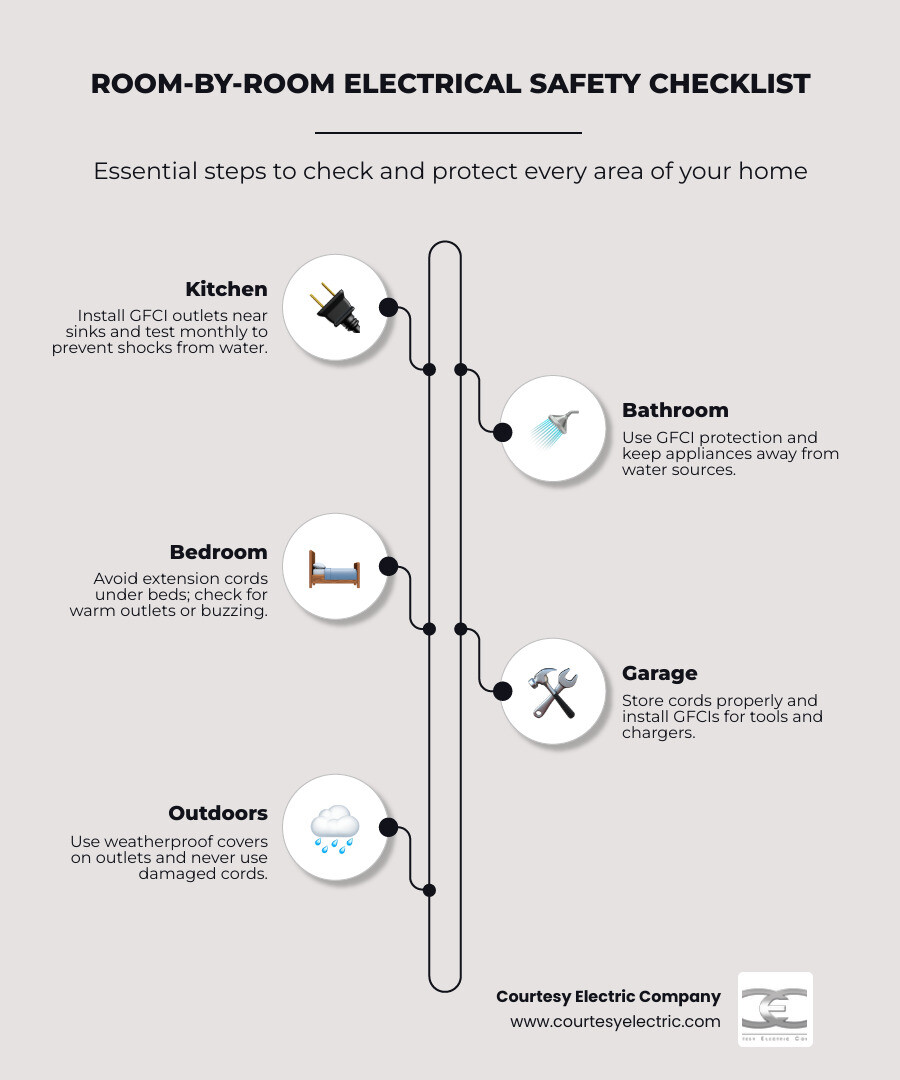
- Install GFCI outlets in kitchens, bathrooms, garages, and outdoor areas
- Never overload outlets or power strips with high-wattage appliances
- Replace frayed or damaged cords immediately — don't tape or ignore them
- Use extension cords temporarily only — never as permanent wiring
- Install AFCI breakers to protect against dangerous arc faults
- Know where your main breaker is and how to shut off power quickly
- Test GFCI outlets monthly and smoke detectors regularly
- Unplug appliances when not in use, especially overnight
- Call a licensed electrician for anything beyond basic tasks like changing a bulb
Electricity powers everything we rely on daily — but faulty wiring, overloaded circuits, and ignored warning signs quietly put homes at risk. The National Fire Protection Association reports that damaged or faulty wiring alone accounts for 69% of all electrical fires. That's a staggering number, and most of those fires were preventable.
Whether your Colorado Front Range home is decades old or newly built, electrical hazards don't announce themselves. They build slowly — behind walls, inside panels, and under rugs — until something goes wrong.
I'm David Meyer, Vice President of Courtesy Electric, a Colorado electrical contracting company with roots going back to 1976, and I've seen how the right knowledge and the right habits keep families safe — because electrical safety tips every homeowner should know aren't just good advice, they're essential protection for your home and everyone in it. In this guide, I'll walk you through the most important steps you can take right now, room by room and system by system.
Identifying Hazards and Electrical Safety Tips Every Homeowner Should Know
Identifying potential electrical hazards is the first step toward a safer home. Many homeowners assume that if the lights turn on, everything is fine. However, research shows that faulty or damaged wiring and related equipment cause 69 percent of electrical fires. These issues often hide behind your drywall or inside your Electrical Service panel.

How do you know if your home is trying to tell you something? You have to look for the "silent" warning signs. One of the most common indicators is flickering or dimming lights, which often suggests a circuit is being overloaded or that there is a loose connection somewhere in the system.
Other red flags include:
- Persistent Burning Odors: If you smell something like burning plastic or ozone near an outlet or the breaker box, shut off the power immediately. This is a sign of arcing or melting insulation.
- Buzzing or Sizzling Sounds: Electricity should be silent. If you hear a hum or a pop coming from a switch or outlet, it’s a sign of a loose wire or a failing component.
- Warm Outlets or Switches: If a wall plate feels hot to the touch, it indicates that the electrical load is too high or the wiring is deteriorating.
- Tripped Breakers: While breakers are designed to trip to prevent fires, frequent tripping means your system is struggling to keep up with your modern power demands.
- Pest Damage: In the Denver area, squirrels and mice are notorious for nesting in attics and chewing on wire insulation. Exposed copper is a massive fire risk.
If you notice any of these signs, don't wait for "someday" to fix them. These are immediate indicators that your home's infrastructure needs professional attention to prevent a spark from becoming a disaster.
How Can I Prevent Shocks in My Denver Kitchen or Bathroom?
Water and electricity are a lethal combination. In areas like kitchens, bathrooms, and laundry rooms, the risk of electrical shock increases significantly. This is where Ground Fault Circuit Interrupters (GFCIs) become your best friend.
A GFCI is a specialized outlet designed to protect people from electrocution. It works by monitoring the flow of electricity; if it detects an imbalance as small as 1/2000 of an amp, it shuts off the power in a fraction of a second. This is fast enough to prevent a deadly shock if, for example, a hair dryer falls into a filled sink.
For Homeowners in the Front Range, ensuring GFCIs are installed in all "wet zones" is a non-negotiable safety standard. This includes:
- Kitchens: All outlets serving countertop areas.
- Bathrooms: Every single outlet must be GFCI-protected.
- Garages and Basements: These areas often have damp concrete floors that can ground a person, increasing shock risk.
- Outdoor Areas: Exterior outlets must not only be GFCIs but should also have weatherproof "in-use" covers to keep moisture out even when something is plugged in.
Electrical safety tips every homeowner should know for wet zones
To keep your family safe around water sources, follow these specific practices:
- The Monthly Test: GFCIs can fail internally while still providing power. Every month, press the "Test" button to ensure the power cuts out, then press "Reset." If it doesn't trip, the outlet is faulty and must be replaced.
- Dry Hands Only: Never touch a switch, plug, or appliance with wet hands.
- Unplug Small Appliances: When you aren't using the toaster, blender, or curling iron, unplug it. If an appliance falls into water while plugged in, it can still be live even if it's turned off.
- Keep Distance: Keep all electrical devices at least three feet away from tubs, sinks, and showers.
Are My Extension Cords and Outlets Creating a Fire Risk?
Extension cords are one of the most misused items in modern homes. The National Fire Protection Association estimates that roughly 3,300 home fires originate in extension cords each year, resulting in 50 deaths and hundreds of injuries.
The most important thing to remember is that extension cords are for temporary use only. They are not designed to be a permanent extension of your home's wiring. When used long-term, the insulation can degrade, and the cord can overheat.
Avoid "daisy-chaining," which is the dangerous practice of plugging one power strip or extension cord into another. This creates excessive heat and can easily melt the plastic casing, leading to a fire. If you find yourself relying on power strips for Low Volt electronics or daily appliances, it’s a sign that your home needs more permanent outlets installed.
| Feature | Extension Cords | Permanent Wiring |
|---|---|---|
| Intended Use | Temporary (holidays, projects) | Permanent (daily power) |
| Durability | Vulnerable to foot traffic/crushing | Protected behind walls/conduit |
| Safety | High trip and fire hazard | Lowest risk when installed to code |
| Capacity | Limited by wire gauge (AWG) | Sized for specific circuit loads |
Electrical safety tips every homeowner should know for childproofing outlets
If you have young children or pets, standard outlets pose a significant risk. Curious toddlers often try to insert metal objects like keys or paperclips into the slots.
To prevent these accidents, we recommend:
- Tamper-Resistant Receptacles (TRRs): These are modern outlets with built-in shutters that only open when equal pressure is applied to both sides (like when you plug in a cord). They are much safer than plastic "plugs" that kids can easily pull out and choke on.
- Cord Management: Keep cords tucked away behind furniture so they aren't a "pull" temptation for kids or a "chew toy" for pets.
- Education: Teach children from a young age that outlets are "hot" and only for adults to use.
- Safe Storage: Store unused appliances and their cords in high cabinets where little hands can't reach them.
When Should I Schedule a Professional Electrical Inspection in the Front Range?
As we move through April 2026, it's important to realize that many homes in the Denver area were built during eras with different electrical standards. An annual electrical inspection is the best way to catch aging components before they fail.
If your home was built between the late 1960s and mid-1970s, it might have aluminum wiring. Aluminum expands and contracts more than copper, which can lead to loose connections and fires. A professional can check these connections and "pigtail" them with copper to ensure safety.
Another critical safety component is the Arc-Fault Circuit Interrupter (AFCI). While GFCIs protect against shocks, AFCIs protect against fires. They detect dangerous "arcing"—invisible sparks that occur when a wire is damaged or pinched—and shut off the circuit before a fire can start. Arc faults cause a whopping 30,000 home fires throughout the U.S. each year. Modern codes require AFCIs in most living areas, and upgrading your panel to include them is a smart move for any homeowner.
At Courtesy Electric, we pride ourselves on Quality, Integrity & Dependability. When you Schedule an inspection, we look at everything from your grounding system to the health of your breakers. Plus, our work is backed by a solid Warranty, giving you peace of mind that your home is in expert hands.
Frequently Asked Questions about Home Electrical Safety
What DIY electrical tasks are safe for homeowners?
Most electrical work should be left to the pros, but there are a few things you can safely handle:
- Changing Light Bulbs: Always match the wattage to the fixture's rating. If a fixture is unmarked, use a 60-watt bulb or an LED equivalent to avoid overheating.
- Resetting Breakers: If a circuit trips, you can flip it back to the "on" position once. If it trips again immediately, stop and call an expert.
- Testing GFCIs: As mentioned, you should test your GFCIs monthly using the built-in buttons.
- Dusting: Keeping your exhaust fans and the area around your electrical panel clean and free of dust can prevent overheating.
For anything involving opening the panel, adding new circuits, or troubleshooting a dead outlet, please Contact a licensed electrician.
How do I create a home electrical emergency plan?
Every second counts during an electrical emergency. Here is how to prepare:
- Locate the Main Breaker: Ensure every adult in the home knows how to find the main service panel and flip the large "Main" switch to kill all power to the house.
- Keep It Accessible: Never block your electrical panel with boxes, shelves, or furniture. You need to reach it instantly in the dark.
- Fire Extinguishers: Keep a Class C (or A-B-C) fire extinguisher on every floor. Class C is specifically designed for electrical fires because the chemicals are non-conductive. Never use water on an electrical fire!
- Emergency Contacts: Keep our number and local emergency services saved in your phone. If you see smoke or fire from an outlet, evacuate and call 911 first. Integrating Home Security systems with smoke and heat detectors can also provide an early warning.
What appliances should never be plugged into extension cords?
High-wattage "heat-producing" or "cooling" appliances draw a massive amount of current and should always be plugged directly into a wall outlet. These include:
- Space Heaters: These are a leading cause of winter fires when plugged into thin extension cords.
- Refrigerators and Freezers: The compressor kick-start can easily overheat a power strip.
- Air Conditioners: Window units require a dedicated, high-capacity circuit.
- Microwaves and Toasters: These draw significant power in short bursts that can degrade temporary cords.
Conclusion
Your home’s electrical system is the heartbeat of your daily life, but it requires respect and regular maintenance. By following these electrical safety tips every homeowner should know, you are taking active steps to protect your property and your loved ones from preventable hazards.
From the initial infrastructure design to the latest in smart home technology, Courtesy Electric Company is dedicated to providing the Denver and Colorado Front Range community with the highest standard of Electrical Service. Whether you need a simple safety inspection, an electrical panel upgrade, or a robust backup power solution like a Generac generator or Franklin battery storage, we are here to help.
Don't wait for a flicker or a smell of smoke to take action. Take a walk through your home today, check your cords, test your GFCIs, and give us a call for a professional evaluation. Let’s keep your Colorado home bright, powered, and—most importantly—safe.


