
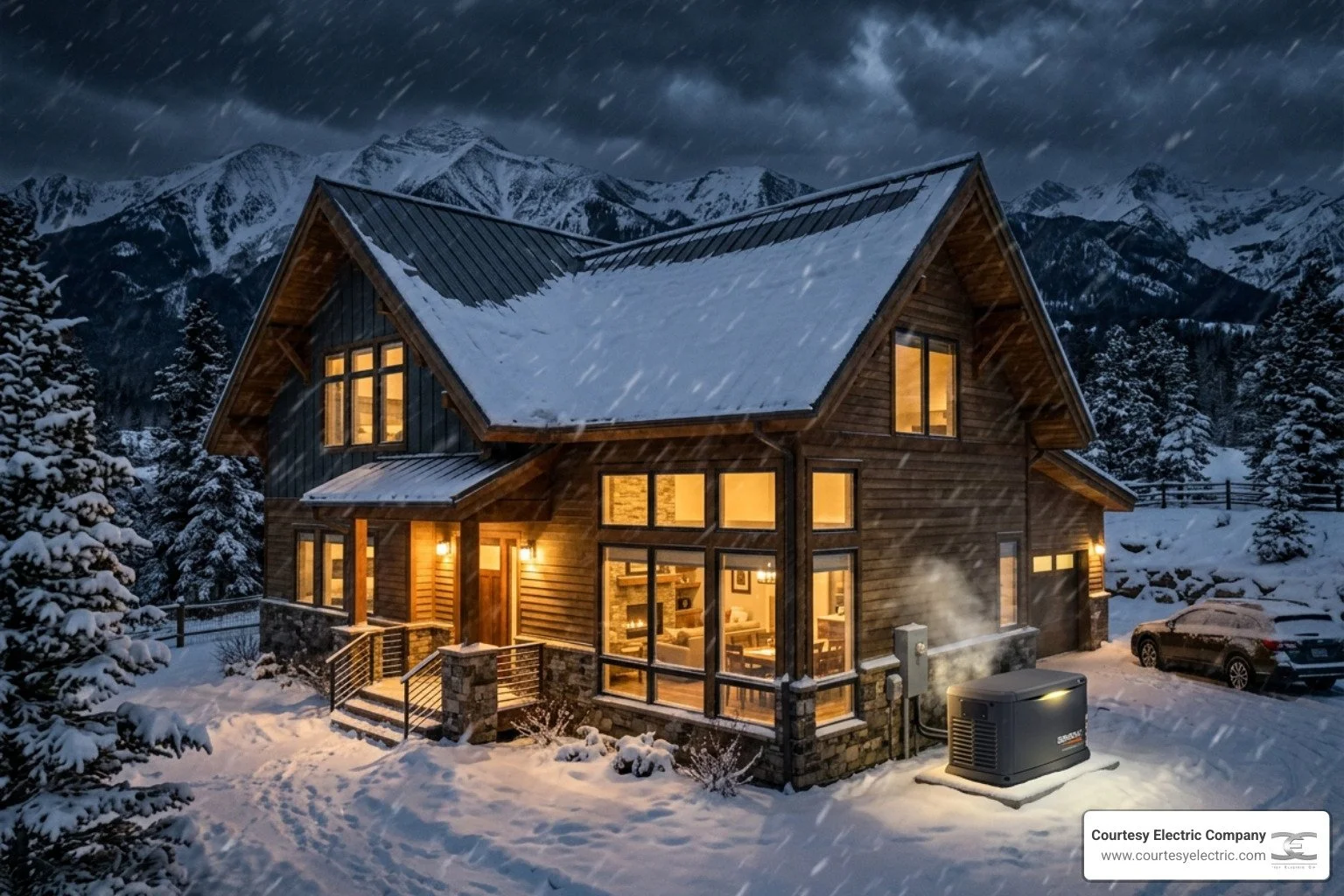
Critical Whole Home Generator Benefits for Colorado Homeowners
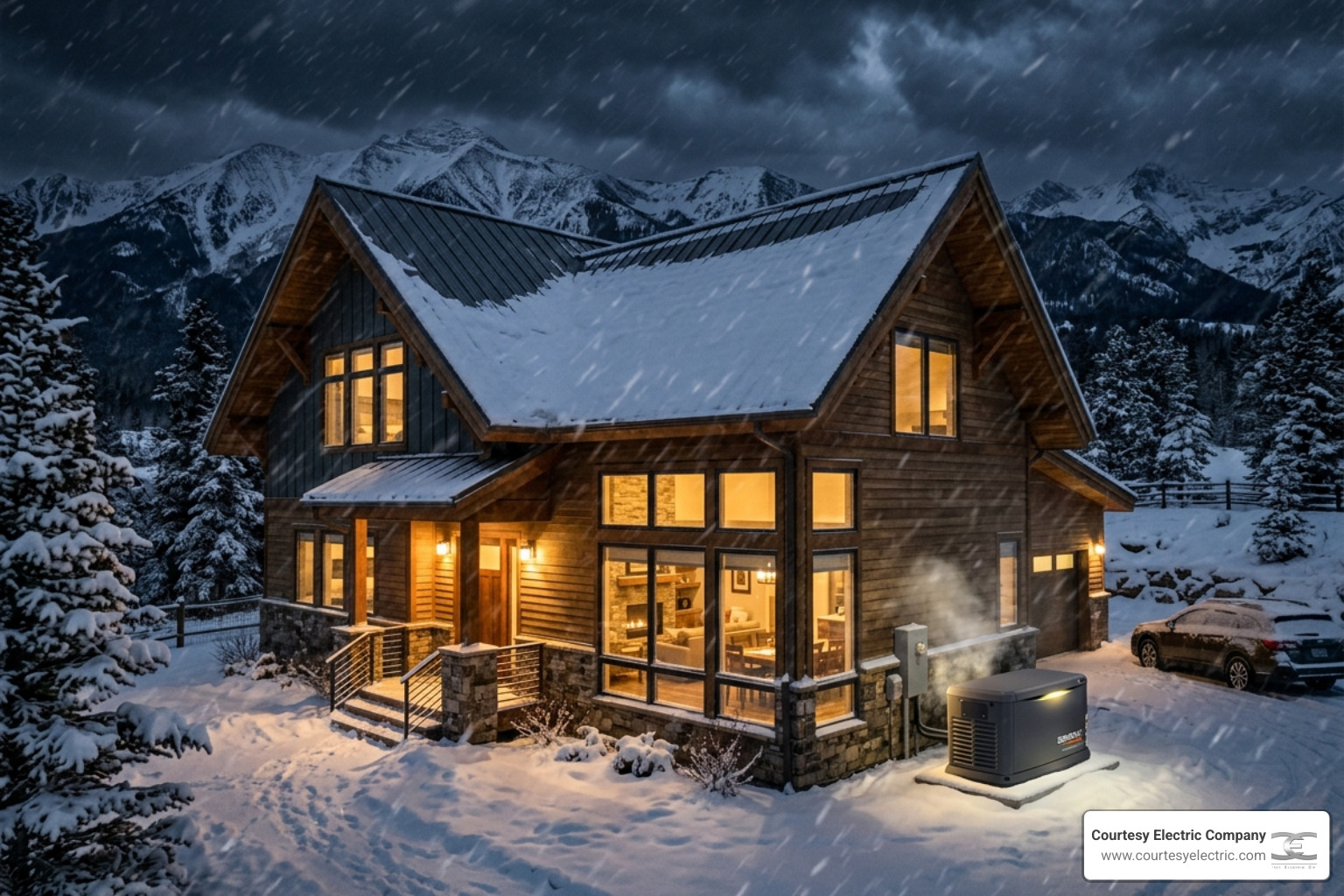
#
Whole home generator benefits for Colorado homeowners are more relevant than ever as Front Range weather grows increasingly unpredictable and grid outages become a when-not-if reality.
Here's a quick summary of the key benefits:
| Benefit | What It Means for You |
|---|---|
| Automatic power restoration | Power returns in 10–30 seconds — no action needed |
| Whole-home coverage | Runs HVAC, refrigerator, lights, and critical systems simultaneously |
| Property protection | Keeps sump pumps and furnaces running to prevent flooding and frozen pipes |
| Food and appliance safety | Eliminates spoilage risk during multi-day outages |
| Medical and security systems | Powers oxygen concentrators, CPAP machines, alarms, and cameras |
| Home value increase | Adds measurable resale value to your property |
| Long lifespan | 20–30 years of reliable backup power with proper maintenance |
Colorado's Front Range is no stranger to punishment. Spring blizzards drop heavy, wet snow onto power lines. Summer thunderstorms bring lightning and high winds that topple trees onto infrastructure. Winter cold snaps push the electrical grid to its limits. And at elevation — where much of Colorado sits — the risks compound fast.
Losing power here isn't just uncomfortable. It can mean burst pipes, a flooded basement, spoiled food, or a medical device going dark. Fewer than 6% of American homes currently have a standby generator, which means most homeowners are one bad storm away from a serious problem.
A whole home standby generator changes that equation completely.
I'm David Meyer, Vice President of Courtesy Electric, a Colorado electrical contractor with roots going back to 1976 — and helping Front Range homeowners understand whole home generator benefits for Colorado homeowners is one of the things I'm most passionate about. In the sections below, I'll walk you through everything you need to know to make a confident, informed decision.
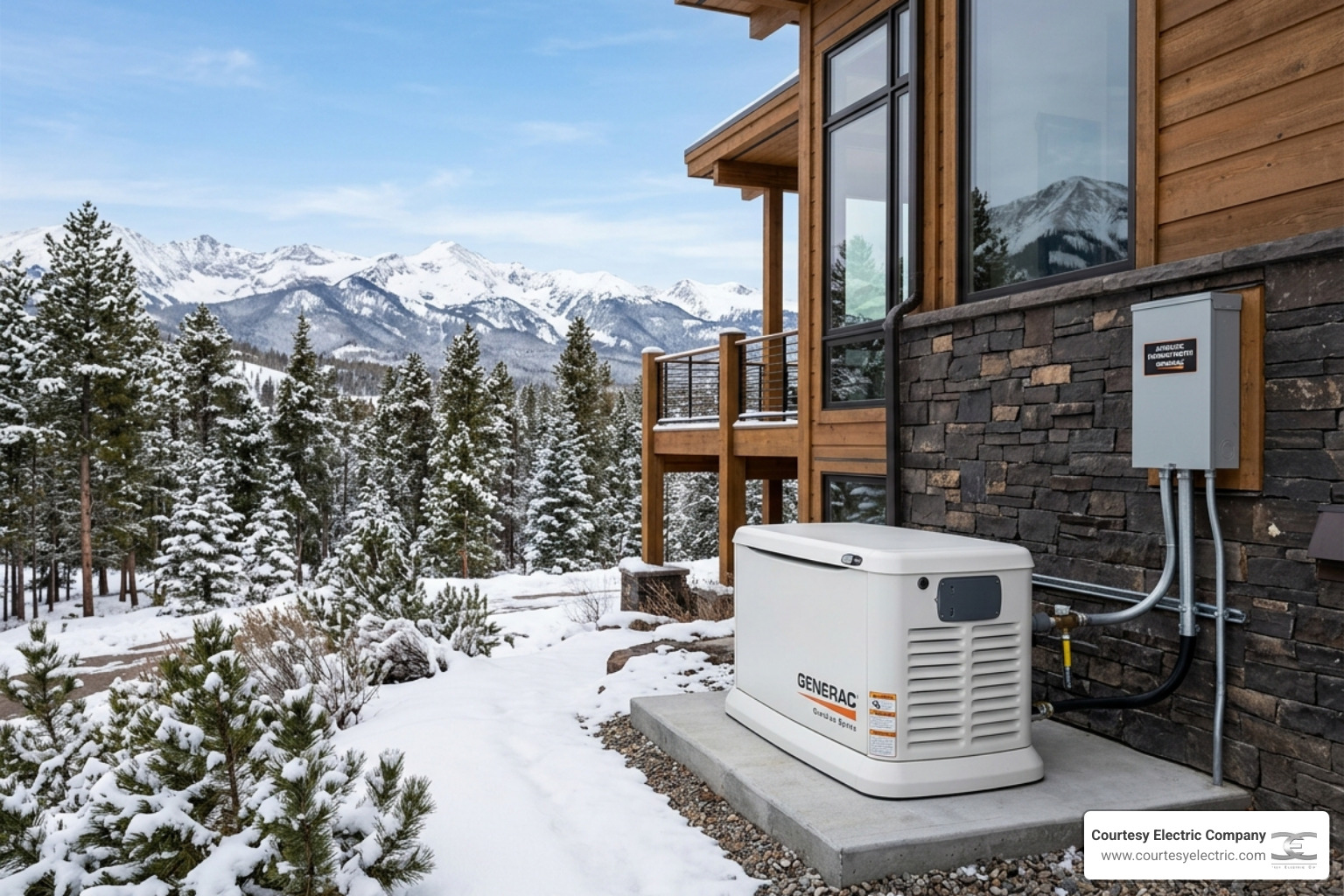
When we talk about the whole home generator benefits for Colorado homeowners, we aren't just talking about keeping the lights on so you can finish a book. We are talking about maintaining the entire ecosystem of your home. In an era where many of us work from home or rely on high-tech security, a power outage is a massive disruption to both safety and productivity.
One of the most immediate benefits is the preservation of your home's security perimeter. When the grid goes down, many security cameras, smart locks, and alarm systems rely on battery backups that may only last a few hours. A standby generator ensures your home remains a fortress, keeping your family safe even when the neighborhood is dark.
For families relying on medical equipment, such as oxygen concentrators or CPAP machines, the benefit shifts from "convenience" to "necessity." We often see homeowners in Denver and Parker install these systems specifically to ensure that life-saving devices never skip a beat. Furthermore, the financial protection offered by food preservation cannot be overlooked. A refrigerator only stays cold for about four hours without power; a full freezer might last 48. During a multi-day outage following a spring blizzard, you could easily lose hundreds of dollars in groceries. For a more in-depth look at how these systems integrate with your lifestyle, check out our Generators Fraser CO Complete Guide.
Protecting Your Property from Frozen Pipes and Flooding
In Colorado, the greatest threats to your property often happen in the dark. During a winter power outage, your furnace fan stops. Without heat circulating, pipes in exterior walls can freeze and burst in a matter of hours, leading to tens of thousands of dollars in water damage.
Similarly, our spring seasons often bring heavy rain alongside rapid snowmelt. If your sump pump loses power during a torrential downpour, your basement could flood before you even realize the power is out. A standby generator acts as an insurance policy against these disasters. By keeping the furnace running and the sump pump active, you avoid the catastrophic costs of remediation. To see how we handle these specific setups, visit our page on Generators Installation in Fraser CO.
Maintaining Comfort During Extreme Front Range Temperatures
The Colorado Front Range is famous for its temperature swings. We can go from a 90-degree summer afternoon to a freezing night in a heartbeat. During summer heatwaves, the strain on the electrical grid often leads to brownouts or localized failures. For elderly residents or those with heat sensitivity, losing air conditioning isn't just a nuisance—it’s a health risk.
The whole home generator benefits for Colorado homeowners include the ability to run high-load appliances like central AC units and electric heating elements. Unlike portable units that struggle to power a single window AC, a properly sized standby generator keeps your entire HVAC system operational, ensuring your home remains a sanctuary regardless of the thermometer outside.
How High Altitude and Fuel Choice Affect Performance
Living at 5,000 feet or higher changes the "math" of power generation. Because the air is thinner in places like Highlands Ranch and Black Forest, internal combustion engines have less oxygen to work with. This leads to what we call "altitude derating."
| Fuel Type | Pros | Cons | Reliability in CO |
|---|---|---|---|
| Natural Gas | Unlimited supply; no refueling needed; cleaner burning. | Dependent on underground utility lines. | High (Front Range Urban/Suburban) |
| Propane | Reliable in rural areas; high energy density; long shelf life. | Requires on-site tank; needs monitoring/refills. | High (Mountain/Rural) |
In Colorado, engines typically lose about 3% to 4% of their rated power for every 1,000 feet above sea level. This means a generator rated for 20 kW at sea level might only produce 14–15 kW at a high-elevation home in the foothills. We take this into account during every consultation to ensure your system isn't underpowered when you need it most.
Sizing Your System for the Colorado Climate
Choosing the right size is the most critical step in the process. For the average Colorado home, we typically recommend a generator in the 20–25 kW range. This capacity allows you to power the "big three": the HVAC system, the kitchen (fridge/stove), and the water heater, while still having enough overhead for lights and Wi-Fi.
If you have a larger home with multiple AC units or a luxury kitchen, you might need to move up to a 30 kW+ unit. Conversely, smaller homes focusing only on essential circuits might find a 10–14 kW unit sufficient. We perform detailed load calculations to ensure that the whole home generator benefits for Colorado homeowners are fully realized without paying for capacity you’ll never use.
Standby Generators vs. Portable and Battery Solutions
Many homeowners ask us if they can just get by with a portable gasoline generator. While portables are cheaper upfront, they come with significant drawbacks. You have to drag them out in the snow, fumble with frozen pull-cords, and run dangerous extension cords through cracked windows. Most importantly, you have to store and pour large amounts of gasoline—a major fire hazard and a massive chore during a blizzard.
Battery backup systems, like the Franklin battery storage solutions we install, are fantastic for short-term outages and "peak shaving" to save on energy bills. However, for the multi-day outages we sometimes see in Colorado, a generator is often the superior choice because it can run as long as there is fuel (natural gas or propane). For a comparison of how these services fit into your home plan, see our Best Generators Services in Fraser CO.
The Advantage of Automatic Power Restoration
The "magic" of a standby generator lies in the Automatic Transfer Switch (ATS). This device monitors the grid 24/7. When it detects a power failure, it disconnects your home from the utility line (to prevent "back-feeding," which can kill utility workers) and starts the generator.
The entire process usually takes between 10 and 30 seconds. You don't have to be home, and you don't have to lift a finger. This seamless transition is why standby units are the gold standard for Colorado residents who travel or have second homes in the mountains.
Essential Maintenance for Long-Term Reliability
A standby generator is an investment designed to last 20 to 30 years, but only if it’s cared for. Think of it like a car that sits in the garage; it needs periodic "exercise" and check-ups to ensure the oil hasn't degraded and the battery is still holding a charge.
Standard maintenance includes:
- Annual Oil and Filter Changes: Crucial after extended runs.
- Battery Testing: Cold Colorado winters are tough on lead-acid batteries.
- Spark Plug and Air Filter Replacement: Ensures the engine runs efficiently at high altitudes.
- System Testing: Most units are programmed to "self-test" weekly for 15 minutes.
Consistent upkeep ensures that when the sky turns gray and the wind starts howling, your generator is ready to perform. For a detailed checklist, refer to our Generators Maintenance Guide Fraser CO.
Frequently Asked Questions about Colorado Backup Power
How long can a whole home generator run continuously?
If connected to a natural gas line, a standby generator can technically run indefinitely, though it should be shut down every 24–48 hours for a quick oil check during very long outages. Propane-powered units are limited by the size of your tank; a standard 500-gallon tank can usually power a home for a week or more depending on the load.
Do I need a permit for generator installation in Denver?
Yes. In Denver and surrounding municipalities, you need both electrical and mechanical (gas) permits. This ensures the unit is safely distanced from windows (to prevent carbon monoxide entry) and that the wiring meets the National Electrical Code. As a licensed contractor, we handle all the permitting and inspections for our clients.
How does altitude affect my generator's power output?
As mentioned, the 3–4% loss per 1,000 feet is a hard rule of physics for internal combustion engines. If you live in a high-altitude area like Black Forest, we simply "upsize" the engine capacity to compensate for the thinner air, ensuring you still get the effective kilowatts your home requires.
Conclusion
Investing in a standby generator is about more than just avoiding the dark; it’s about protecting your biggest investment—your home—and ensuring your family’s lifestyle remains uninterrupted. Whether it's preventing a flooded basement in Denver or keeping the heat on during a Highlands Ranch blizzard, the whole home generator benefits for Colorado homeowners provide a level of peace of mind that is truly priceless.
At Courtesy Electric Company, we’ve been the Front Range’s trusted electrical partner for decades. From installing top-tier Generac and Cummins generators to integrating smart SPAN panels and Franklin battery storage, we have the expertise to build a resilient power plan tailored to your home.
Ready to secure your home against the next big storm? Request a free estimate for your Colorado home today and let us help you find the perfect backup solution.


