
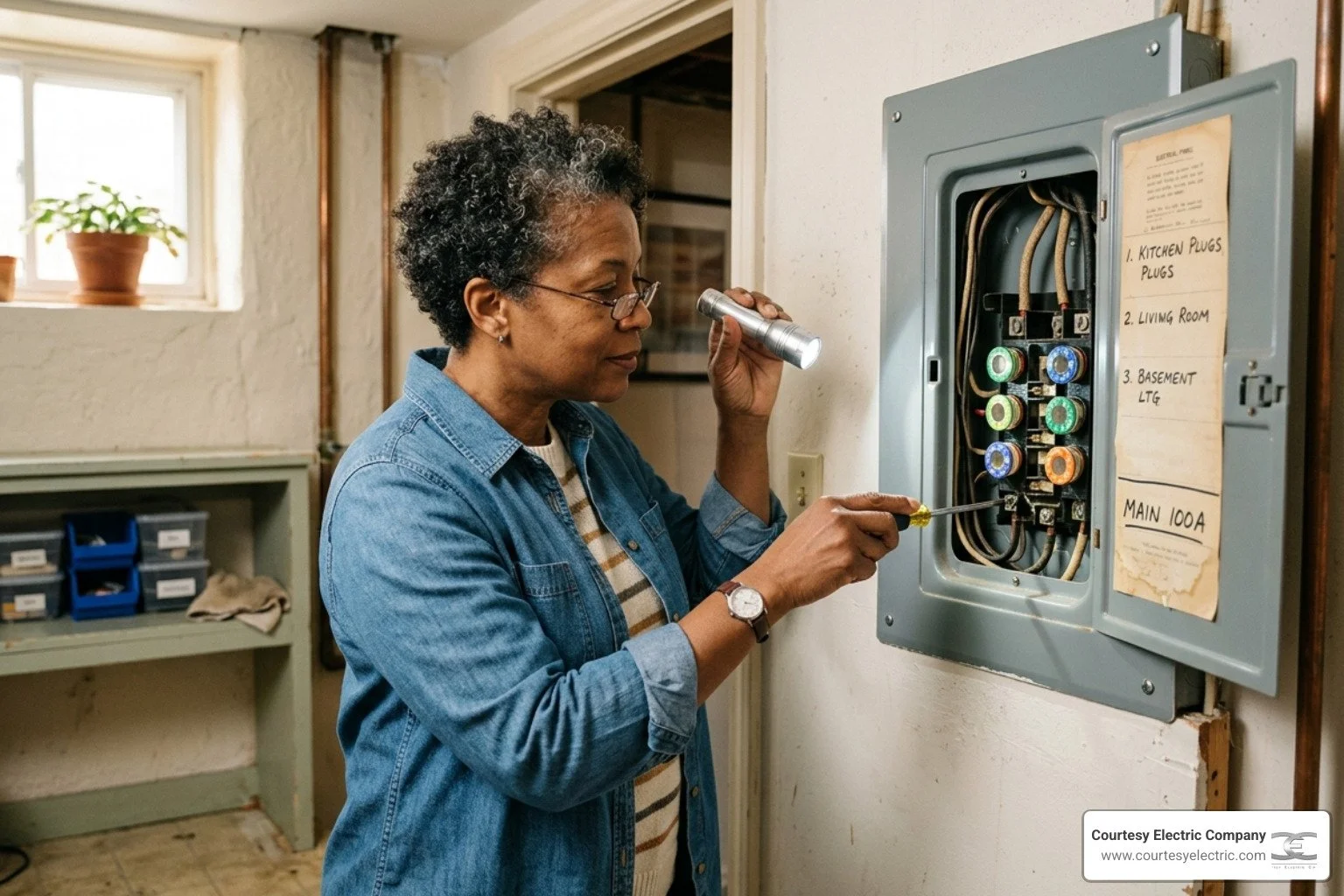
Is Your Older Home Hiding a Fire Hazard? Start Here
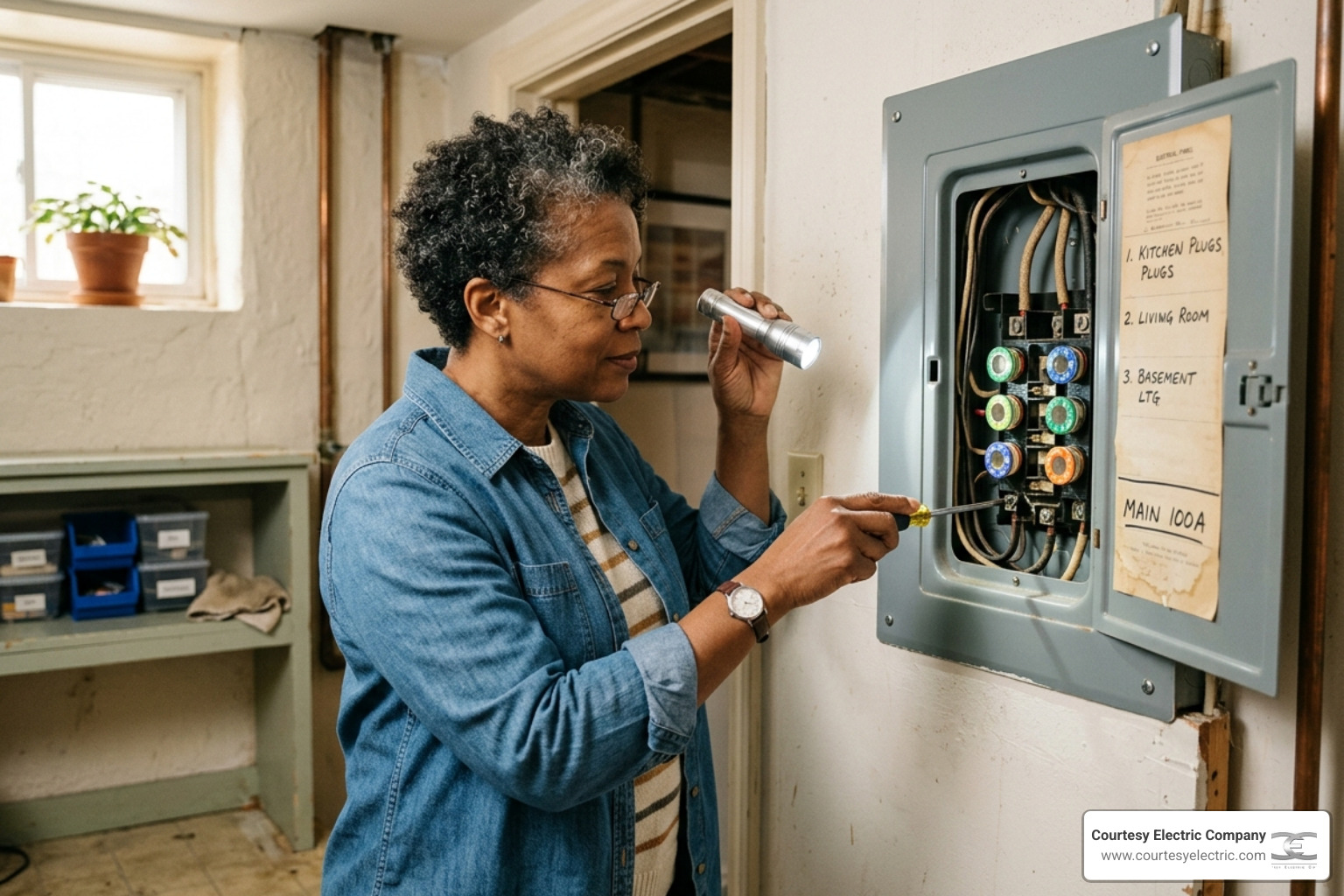
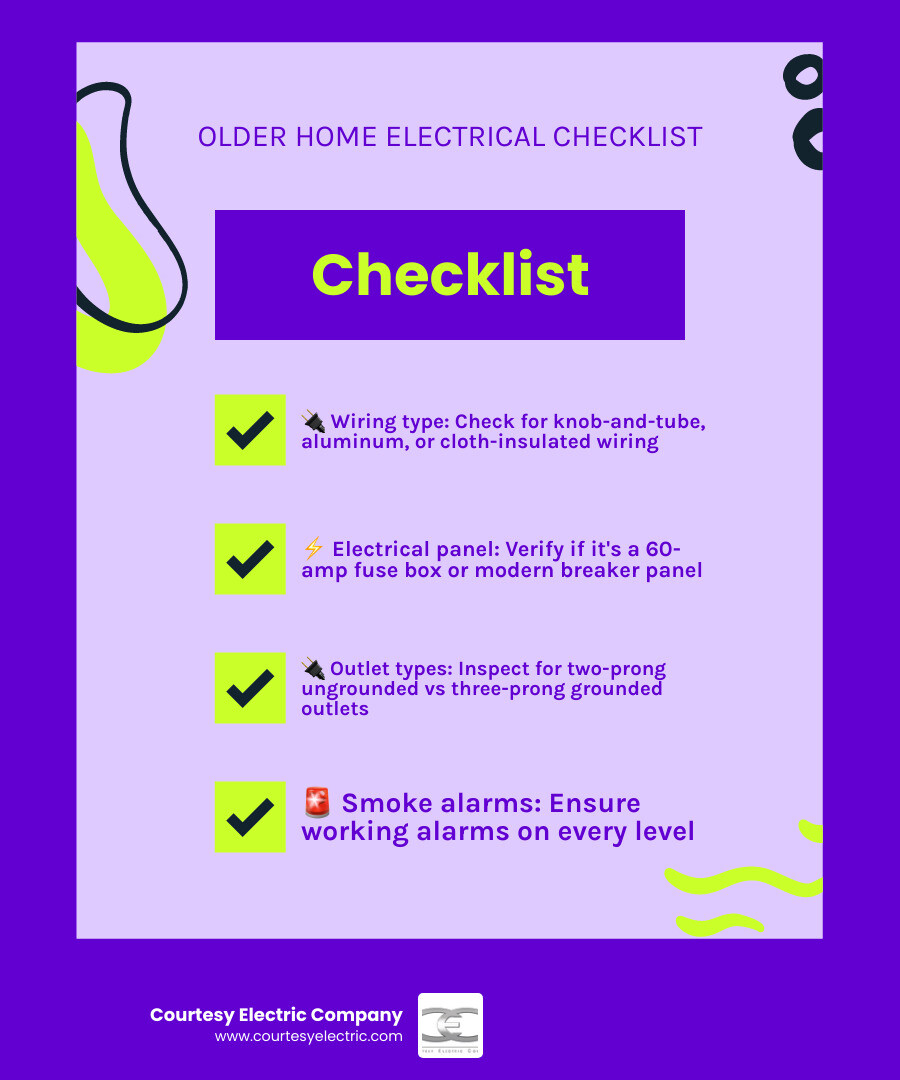
An electrical safety checklist for older homes is the fastest way to find out if your house is quietly putting your family at risk. Homes built decades ago were never designed to handle today's electrical demands — and that gap can be deadly.
Here are the most critical items to check right now:
- Wiring type — Do you have knob-and-tube, aluminum, or cloth-insulated wiring?
- Electrical panel — Is it a fuse box rated for only 60 amps, or a modern breaker panel?
- Outlet types — Are your outlets two-prong (ungrounded) or three-prong?
- GFCI protection — Are GFCI outlets installed in kitchens, bathrooms, and outdoor areas?
- AFCI breakers — Does your panel have arc-fault protection to detect hidden wiring faults?
- Cord and appliance condition — Are any cords frayed, pinched, or running under rugs?
- Smoke alarms — Are working alarms installed on every level of the home?
- Outlet and switch condition — Do any feel warm, buzz, or show burn marks?
- Breaker behavior — Do breakers trip frequently or fail to reset?
- Outdoor and garage safety — Are outdoor outlets GFCI-protected and rated for exterior use?
Electrical malfunctions are the fourth leading cause of house fires, according to FEMA — and older homes are disproportionately at risk. According to the National Fire Protection Association, three out of five home fire deaths happen in homes without working smoke alarms. If your home is more than 40 years old, the wiring inside your walls may have been designed for a world without microwaves, EV chargers, or smart home systems. That mismatch between old infrastructure and modern demand is exactly where fires start.
I'm David Meyer, Vice President of Courtesy Electric — a Colorado electrical contracting company with roots going back to 1976. I've spent years helping Front Range homeowners navigate the hidden risks of aging electrical systems, and putting together a practical electrical safety checklist for older homes is one of the most important first steps any homeowner can take. In the sections below, I'll walk you through everything you need to know, room by room.
Identifying Outdated Wiring in Older Homes
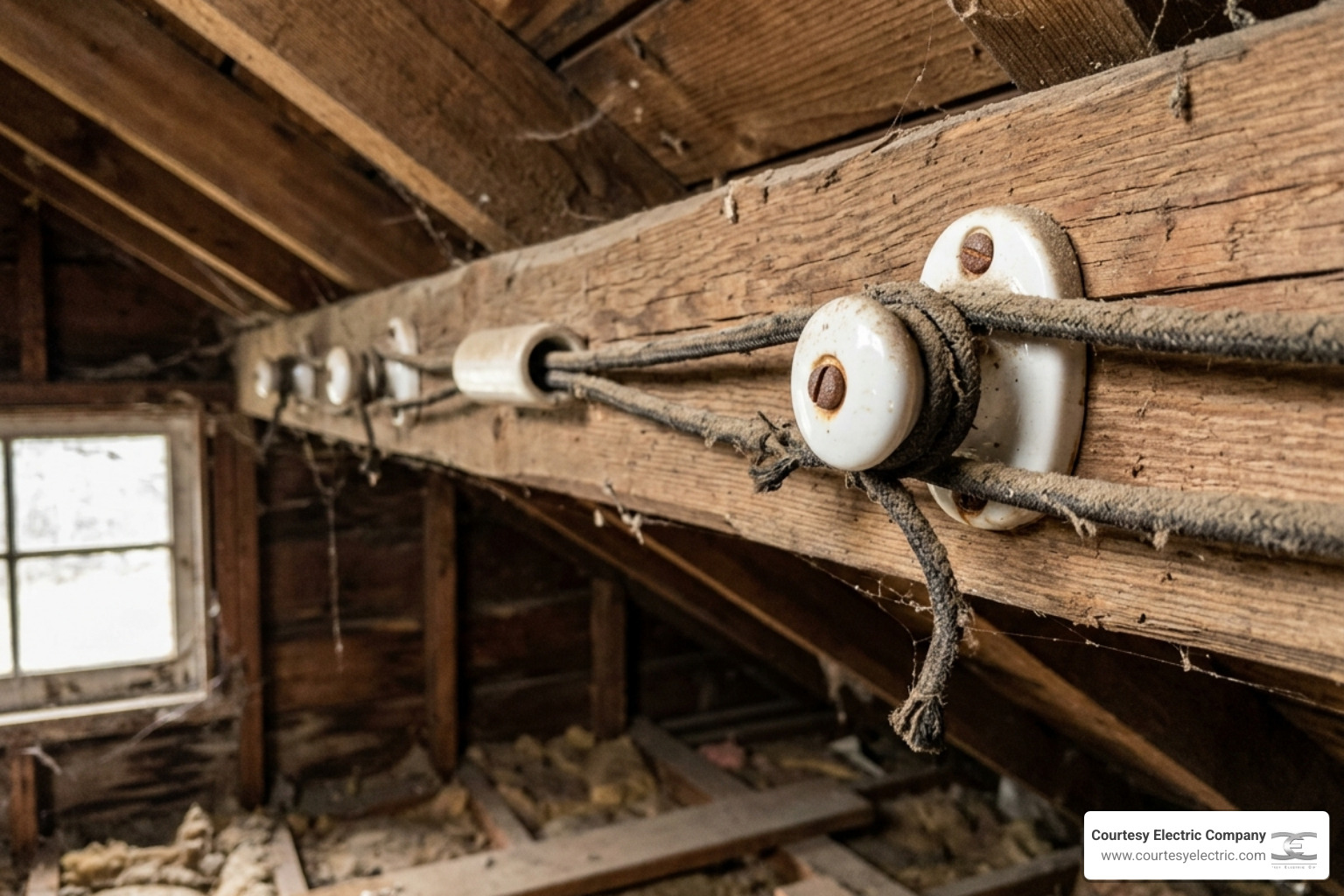
If your home was built before 1950, there is a high probability that it contains knob-and-tube wiring. This system uses porcelain "knobs" to support wires and "tubes" to protect them as they pass through wood framing. While it was the standard in the early 20th century, it is now considered a significant risk. Why? Because knob-and-tube wiring lacks a ground wire, meaning there is no safe path for excess electricity to travel if a fault occurs. Furthermore, these wires were designed to be air-cooled; if a previous owner added insulation to the attic or walls, they may have inadvertently created a fire hazard by trapping heat around the wires.
Homes built in the 1960s and early 1970s often feature aluminum wiring. During this era, copper prices spiked, and builders turned to aluminum as a cheaper alternative. However, aluminum expands and contracts more than copper when heated. This movement causes connections at outlets and switches to loosen over time, leading to "arcing"—sparks that can ignite surrounding wood or insulation.
Finally, keep an eye out for cloth-insulated wiring. Common in mid-century homes, this insulation becomes brittle and flakes off over time, leaving live metal wires exposed inside your walls. If you spot wires that look like they are wrapped in a woven fabric rather than smooth plastic, you are likely looking at a system that has reached the end of its safe lifespan. For more information on how we handle these legacy systems, explore our residential services.
The Ultimate Electrical Safety Checklist for Older Homes
Safety isn't just about what’s behind the walls; it’s about how your home behaves daily. When we perform an electrical safety checklist for older homes, we look for the "silent" warning signs that indicate a system is under duress.
Start by walking through your home and checking for these red flags:
- Flickering or Dimming Lights: This often happens when a high-draw appliance (like a refrigerator or AC unit) kicks on, signaling that your circuits are overloaded.
- Warm-to-the-Touch Outlets: If a wall plate feels hot, there is likely a loose connection or damaged wiring behind it.
- Persistent Burning Odors: A faint smell of ozone or burning plastic near an outlet is an emergency. Turn off the breaker immediately.
- Buzzing or Sizzling: Loose wires vibrate at the 60Hz frequency of our power grid, creating a literal "buzz."
- Loose Plug Fit: If a plug falls out of an outlet easily, the internal contacts are worn out, which can cause overheating.
If you notice any of these signs, it is time to seek professional electrical service to prevent a small issue from becoming a catastrophe.
Room-by-Room Electrical Safety Checklist for Older Homes
To make your inspection manageable, take it one room at a time:
The Kitchen
- Are countertop appliances like toasters and coffee makers unplugged when not in use?
- Are all outlets within six feet of the sink GFCI-protected?
- Are large appliances (refrigerator, dishwasher) on dedicated circuits?
The Bathrooms
- Are all outlets GFCI-protected?
- Are hair dryers and curling irons kept away from water and unplugged after use?
- Are portable heaters used in the bathroom? (Hint: They shouldn't be, unless they are wall-mounted and rated for wet areas).
The Bedrooms
- Are electric blankets in good condition with no frayed cords?
- Are lamps positioned at least one foot away from curtains or bedding?
- Are you using the correct wattage bulbs? Using a 100W bulb in a 60W fixture can melt the socket.
The Basement, Garage, and Exterior
- Is the fuse box or breaker panel clearly labeled?
- Are power tools used with heavy-duty extension cords that are not frayed?
- Do outdoor outlets have weatherproof covers?
Essential Maintenance: Testing Your Electrical Safety Checklist for Older Homes
A checklist is only effective if it's used regularly. The U.S. Consumer Product Safety Commission (CPSC) recommends a thorough electrical inspection every six months. A great way to remember this is to do it whenever you change your clocks for Daylight Saving Time.
| Device | Testing Frequency | How to Test |
|---|---|---|
| GFCI Outlets | Monthly | Press the "Test" button (power should cut); press "Reset" to restore. |
| AFCI Breakers | Monthly | Open the panel and press the "Test" button on the breaker. |
| Smoke Alarms | Monthly | Press the test button; replace batteries annually. |
| Circuit Breakers | Yearly | Switch them off and on three times to ensure the internal mechanisms don't stick. |
Upgrading Beyond Two-Prong Outlets and Fuse Boxes
One of the most common sights in older Denver homes is the two-prong outlet. These outlets are a significant safety concern because they lack a ground wire. Without a ground, a surge or a short circuit has no place to go—except through your expensive electronics or, worse, through you.
Many homeowners rely on 3-prong adapters (the little gray "cheater" plugs) to plug in modern devices. This is a dangerous practice. Unless that little green tab on the adapter is properly secured to a grounded screw, you have no surge protection. In fact, many insurance companies will refuse to cover a home that hasn't been upgraded to at least 100-amp service, as older 60-amp fuse boxes simply can't handle the load of modern living.
Upgrading to a 200-amp service is the modern standard, especially if you plan on adding an EV charger or a hot tub. This ensures your home meets current safety codes and remains insurable. To learn more about how these upgrades protect your investment, visit our section for homeowners.
When to Call a Professional for Your Denver Home
While a DIY electrical safety checklist for older homes is a great starting point, some things require a licensed expert. If you are dealing with a panel that is over 25 years old, or if you still have a fuse box, it’s time for a professional evaluation.
At Courtesy Electric Company, we specialize in bringing historic Front Range homes into the 21st century. This includes installing SPAN smart panels, which allow you to monitor your energy usage in real-time from your phone. For those worried about Colorado’s unpredictable weather, we provide Generac and Cummins standby generators and Franklin battery storage solutions. These systems ensure that even if the grid goes down during a spring blizzard, your home stays warm and safe.
Our team is deeply familiar with the specific electrical codes in Denver, Highlands Ranch, and across the Front Range. We pride ourselves on the quality and integrity of our work, which you can read about on our about page.
Frequently Asked Questions about Older Home Electrical Safety
How often should I have my older home's electrical system inspected?
If your home is over 40 years old, the CPSC recommends a professional inspection every 3 to 5 years. However, you should perform your own visual walkthrough using an electrical safety checklist for older homes every six months. If you’ve just moved into a historic property, an immediate inspection is vital to identify hidden hazards like knob-and-tube wiring. Contact us to schedule a professional assessment.
Are two-prong to three-prong adapters safe for permanent use?
No. These adapters are intended for temporary use only. They do not provide a true ground unless the house is specifically wired for it, which is rare in homes with two-prong outlets. Using them permanently increases the risk of fire and can destroy sensitive electronics during a power surge.
Why do my breakers trip when I use the microwave and toaster?
This is a classic sign of a "circuit overload." In older homes, multiple outlets in the kitchen are often tied to a single 15-amp circuit. Modern appliances draw a lot of power; when used simultaneously, they exceed the circuit's capacity. The solution is usually to install a dedicated circuit for high-draw appliances or to upgrade your panel capacity.
Conclusion
Living in a historic Denver or Front Range home is a point of pride for many of us. Preserving that charm shouldn't mean compromising on safety. By using this electrical safety checklist for older homes, you can identify potential fire traps before they become emergencies.
Whether you need a simple outlet upgrade or a full panel retrofit with modern smart technology, Courtesy Electric Company is here to help. Since 1976, we have built our reputation on quality, integrity, and dependability. Don't let your home's aging wiring remain a mystery.
Schedule your electrical safety inspection today and give your family the peace of mind they deserve.


