Why Battery Storage Maintenance in Winter Park, CO Matters More Than You Think
Battery storage maintenance in Winter Park, CO is essential for keeping your home powered through cold snaps and heavy snow. Winter Park's high-altitude climate—with temperatures regularly dropping below freezing—puts unique stress on battery systems that can reduce performance, shorten lifespan, and even cause permanent damage if not properly managed.
Quick Answer: Essential Winter Maintenance Steps
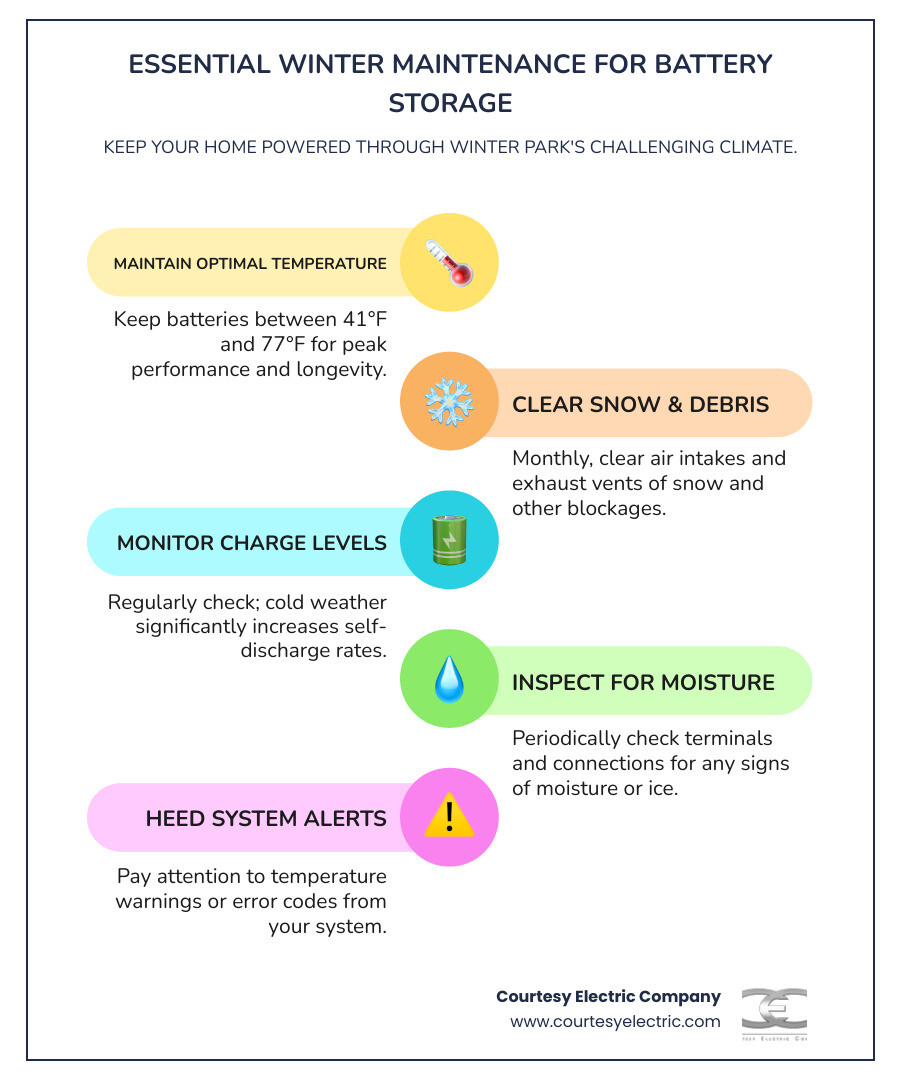
- Keep batteries between 41°F and 77°F for optimal performance
- Clear snow and debris from air intakes and exhaust vents monthly
- Check charge levels regularly—cold weather increases self-discharge rates
- Inspect for moisture around terminals and connections
- Monitor system alerts for temperature warnings or error codes
Winter Park sits at over 9,000 feet elevation, where temperatures can plunge well below zero and snow accumulates from October through May. According to Colorado climate data, the Front Range receives an average of 56.5 inches of snow annually, and these conditions can significantly impact battery storage performance. Cold temperatures slow the chemical reactions inside batteries, reducing available capacity by 10-30% depending on the severity. Batteries stored below 40°F experience impaired performance, and subzero conditions below -15°F can crack battery casings and cause substantial charge loss.
Learn more about residential electrical services or schedule a maintenance check today.
I'm David Meyer, Vice President of Courtesy Electric, and I've spent years working on cutting-edge battery wall and backup energy systems across Colorado's challenging climate. Through hands-on experience with battery storage maintenance in Winter Park, CO, I've seen how proper winter care protects both your investment and your energy independence.
Essential Steps for Battery Storage Maintenance in Winter Park, CO
When the snow starts piling up in Grand County, your battery storage system becomes your home’s lifeline. At Courtesy Electric Company, we’ve found that a proactive approach to residential maintenance is the difference between a cozy home during a blackout and a cold, dark night.
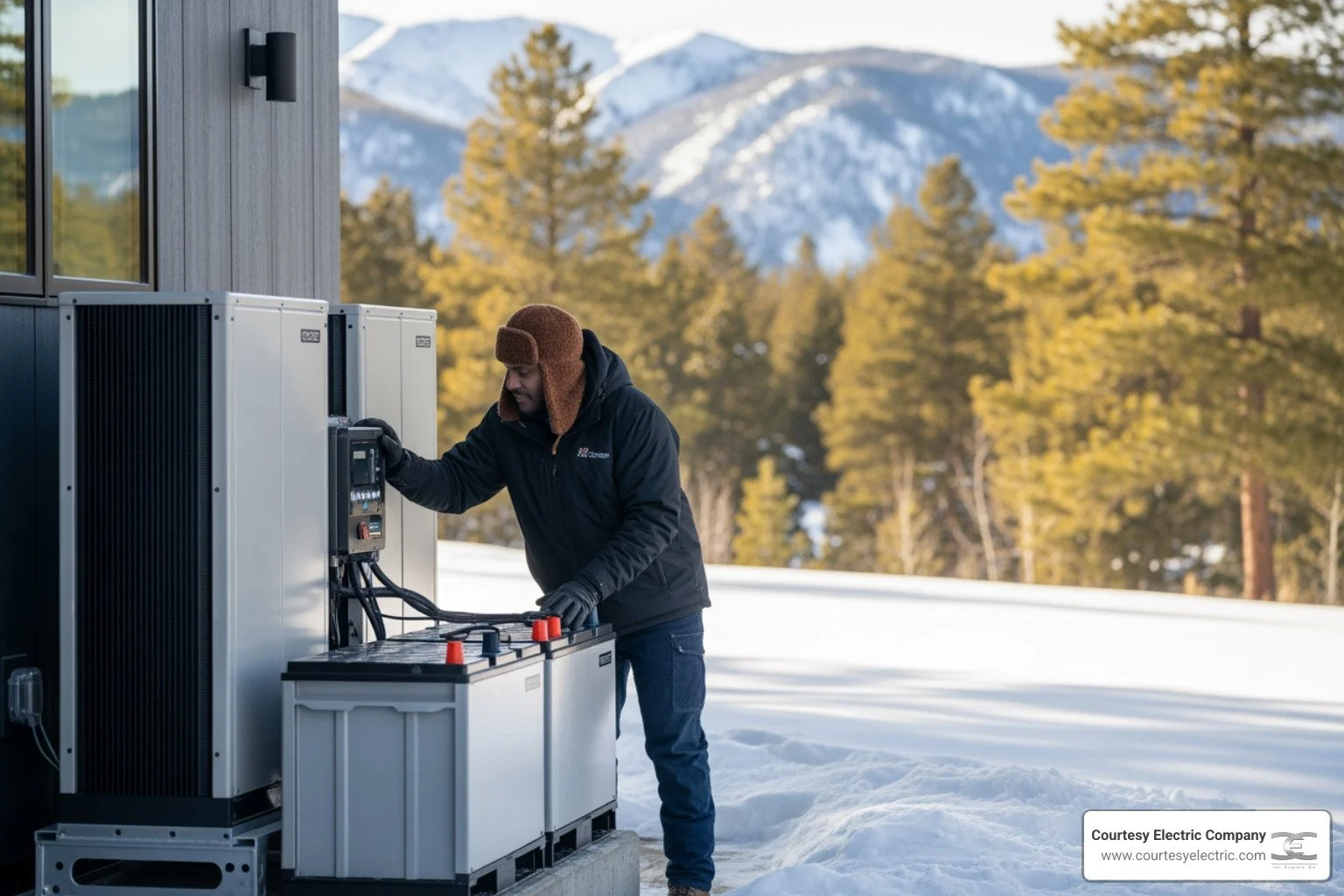
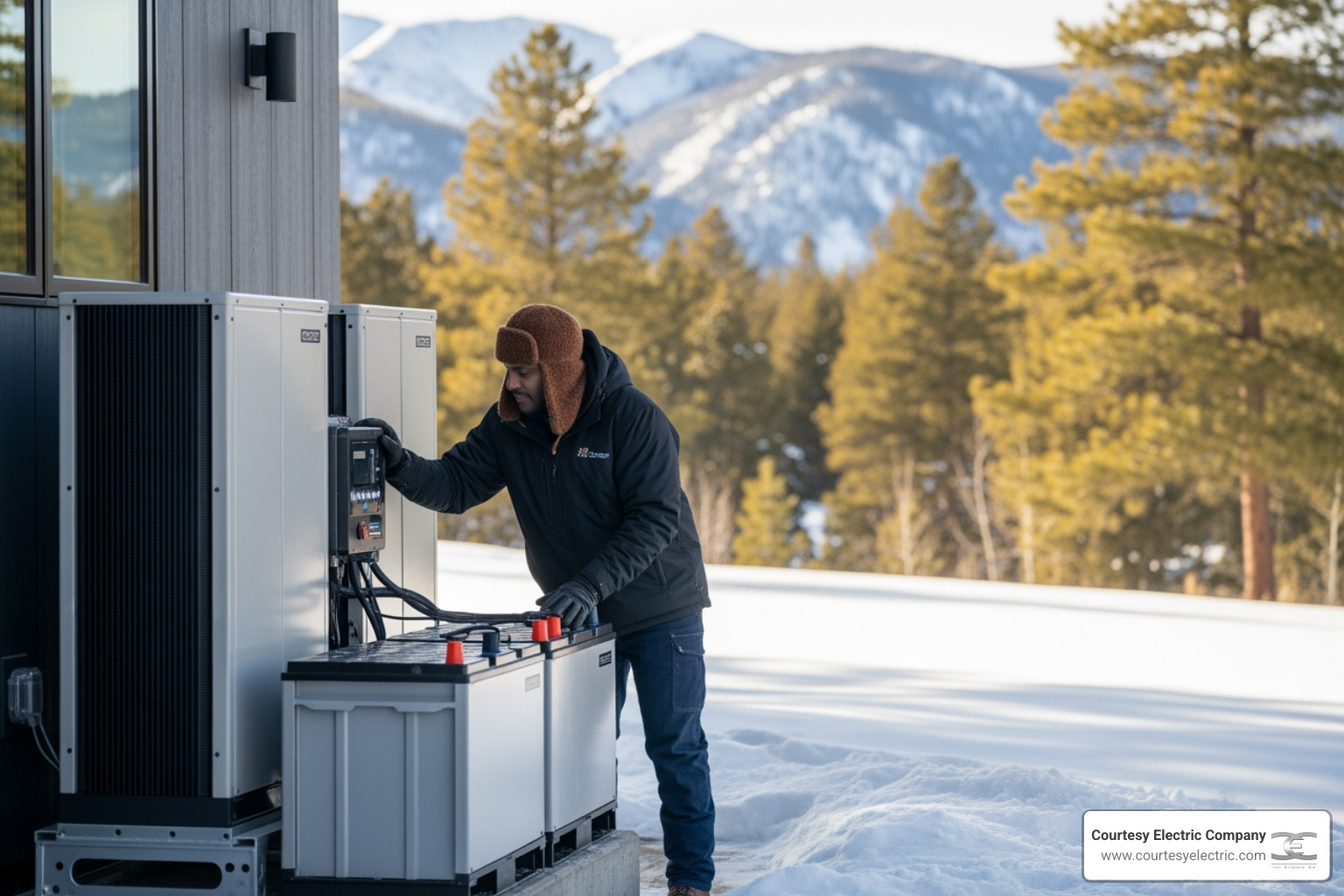
The first step in battery storage maintenance in Winter Park, CO is ensuring your system is physically protected. Whether you have a Tesla Powerwall, a FranklinWH system, or a Generac PWRcell, the hardware needs to be kept dry and unobstructed. Snow is a master at finding its way into tight spaces, and as it melts and refreezes, it can cause expansion damage to electrical conduits and housing.
Winterization Toolkit
Before the first major storm hits, we recommend gathering a few basic tools:
- Soft-bristled brush: For clearing snow from unit casings without scratching the finish.
- Voltmeter: To manually check charge levels if your app-based monitoring goes offline.
- Microfiber cloths: For wiping down terminals and removing moisture.
- Non-conductive lubricant: To protect exposed metal connections from oxidation.
Terminal cleaning is a critical,, part of winter prep. Cold air is often dry, but the transition from snowy outdoor air to a heated garage can create condensation. This moisture leads to corrosion on battery terminals, which increases electrical resistance and forces your system to work harder, generating unnecessary heat and wasting energy.
If you aren't comfortable opening your system's access panels, it’s best to schedule a professional inspection to ensure all internal connections are torqued to manufacturer specifications.
Best Practices for Battery Storage Maintenance in Winter Park, CO
To get the most out of your investment, you need to respect the chemistry inside the box. Most modern lithium-ion and LiFePO4 (Lithium Iron Phosphate) batteries have a "sweet spot" for operation.
- Temperature Regulation: The ideal storage range is between 41°F and 77°F. In Winter Park, this almost always means your battery should be installed in a conditioned space like a basement or an insulated garage. If your system is in an unheated area, consider adding specialized battery blankets or ensuring the room is properly insulated.
- Ventilation Requirements: While we want to keep the batteries warm, we cannot suffocate them. Systems like the Powerwall 3 or FranklinWH require specific airflow to manage internal heat during heavy discharge cycles. Ensure that your insulation efforts don't block the air intake or exhaust ports.
- Firmware Updates: Manufacturers frequently release software updates designed specifically to improve cold-weather charging algorithms. Ensure your system is connected to your home Wi-Fi so it can download these "winter mode" updates automatically.
- Charging Habits: In the winter, try to keep your battery's state of charge (SoC) higher than you would in the summer. A battery at 10% charge is much more vulnerable to freezing damage than one at 90%.
If you’re unsure if your current setup meets these environmental standards, you should contact our team for a site evaluation.
Signs You Need Professional Battery Storage Maintenance in Winter Park, CO
How do you know if the Colorado cold is winning the battle against your backup system? Keep an eye out for these red flags:
- Rapid Discharge: If your battery is losing 20% of its charge overnight while under a minimal load, the cold may be causing excessive internal resistance.
- Error Codes: Most modern systems will display specific codes for "Low Temperature Charging Fault" or "Internal Resistance High." Don't ignore these; they are designed to prevent permanent cell damage.
- Physical Casing Damage: Check for cracks in the ABS plastic or metal housing. Subzero temperatures (below -15°F) can cause materials to become brittle and fail under the weight of snow or internal pressure.
- Ice Buildup: If you see ice forming directly on the battery unit or its cooling fins, your thermal management system may have failed.
- Moisture and Corrosion: Use a flashlight to look for "white fuzz" or greenish buildup around wires. This is a sign that snow melt is getting where it shouldn't.
For homeowners in the Front Range, these issues can often be covered under warranty, provided you have maintained the system according to the manufacturer’s guidelines.
Understanding the Impact of Colorado’s Cold on Energy Storage
To master battery storage maintenance in Winter Park, CO, you have to understand the science of the "Cold Soak." When a battery sits in a freezing environment, the liquid or gel electrolyte inside becomes more viscous (thicker). This slows down the movement of ions between the anode and the cathode.
Battery Performance: 77°F vs. 0°F
| Feature | Performance at 77°F (Ideal) | Performance at 0°F (Winter Park Peak) |
|---|---|---|
| Available Capacity | 100% | 60% - 70% |
| Charging Speed | High / Normal | Very Low / Restricted |
| Internal Resistance | Minimal | High |
| Self-Discharge Rate | 2-3% per month | 5-10% per month (if BMS is active) |
| Risk of Damage | None | High (if charging while frozen) |
One of the most dangerous phenomena in cold-weather battery care is "lithium plating." If you attempt to fast-charge a lithium battery when its internal temperature is below 24°F, the lithium ions can't move into the anode fast enough. Instead, they coat the surface of the anode in a metallic form. This can lead to internal short circuits, permanent capacity loss, and in extreme cases, a fire hazard.
This is why high-quality systems like Battle Born or Tesla have built-in protections that won't allow a charge if the internal temperature is too low. However, relying on these protections daily can shorten the overall lifespan of the system. Proactive battery storage maintenance in Winter Park, CO involves keeping the system warm enough that these emergency shut-offs never have to engage.
How to Prepare Your Battery System for Heavy Snowfall
Winter Park is famous for its "Champagne Powder," but that light, fluffy snow can be a heavy burden for your electrical infrastructure. When a big storm is forecasted for the Front Range or the mountains, your preparation should start outside.
Air Intake and Exhaust Clearance Most home battery systems use active cooling (fans). If snow drifts block the intake or exhaust vents, the system can overheat—yes, even in the winter! When the battery works hard to power your heaters during an outage, it generates internal heat. If that heat can't escape because of a snowbank, the system will throttle its power output or shut down entirely.
Structural Protection If your battery is mounted on an exterior wall, ensure it has a "snow roof" or protective overhang. The weight of several feet of snow sliding off a roof can easily shear a battery unit right off the wall or crush the electrical-service conduits.
Backup Power Readiness Check your solar panels. While we focus on the battery, in Winter Park, an average of 56.5 inches of snow falls annually. If your panels are covered in snow, your battery won't recharge. Use a soft roof rake to gently clear your panels so they can provide the "trickle charge" your battery needs to stay healthy through the winter.
Frequently Asked Questions
What is the ideal temperature for home battery storage?
The "Goldilocks" zone for most residential batteries is between 41°F and 77°F. While many units are rated to operate down to -4°F, they do so at significantly reduced efficiency. If the internal temperature drops below 40°F, you will notice "de-rating," where the system limits how much power you can pull from it to protect the cells. This is why we almost always recommend indoor or insulated garage installations for our Winter Park clients.
Can snow accumulation damage my battery system?
Yes, in three ways: weight, moisture, and airflow. Heavy snow can physically damage the mounting brackets or conduits. As snow melts, it can introduce moisture into the electronics, leading to short circuits. Finally, snow drifts can block essential cooling vents, causing the system to trigger a high-temperature shutdown even in sub-zero weather. Regular clearing is a must.
How does subzero weather affect battery lifespan?
Extreme cold is a silent killer for batteries. Beyond the immediate loss of capacity, subzero temperatures (specifically below -15°F) can cause the ABS plastic casing of some batteries to crack. Furthermore, if a battery is left completely discharged in subzero weather, the electrolyte can freeze, leading to internal structural failure of the cells. Keeping your battery at least 50% charged during extreme cold snaps provides a "thermal mass" that helps prevent freezing.
Conclusion
Living in Winter Park means embracing the cold, but your battery storage system doesn't have to suffer for it. By following these steps for battery storage maintenance in Winter Park, CO, you ensure that your home remains a sanctuary of warmth and light, no matter what the Colorado sky throws at you.
From monitoring your state of charge to ensuring your vents are clear of snow, these small habits protect a significant investment in your home's resilience. At Courtesy Electric Company, we pride ourselves on our local expertise. We understand the Front Range weather patterns because we live and work here too.
Don't wait for the next blizzard to find out if your backup system is up to the task. Whether you need a routine winter check-up, a firmware update, or a complete system winterization, we are here to help.
Contact Courtesy Electric Company today for professional battery storage maintenance in Winter Park, CO and keep your energy independence "frozen-proof" all season long.


