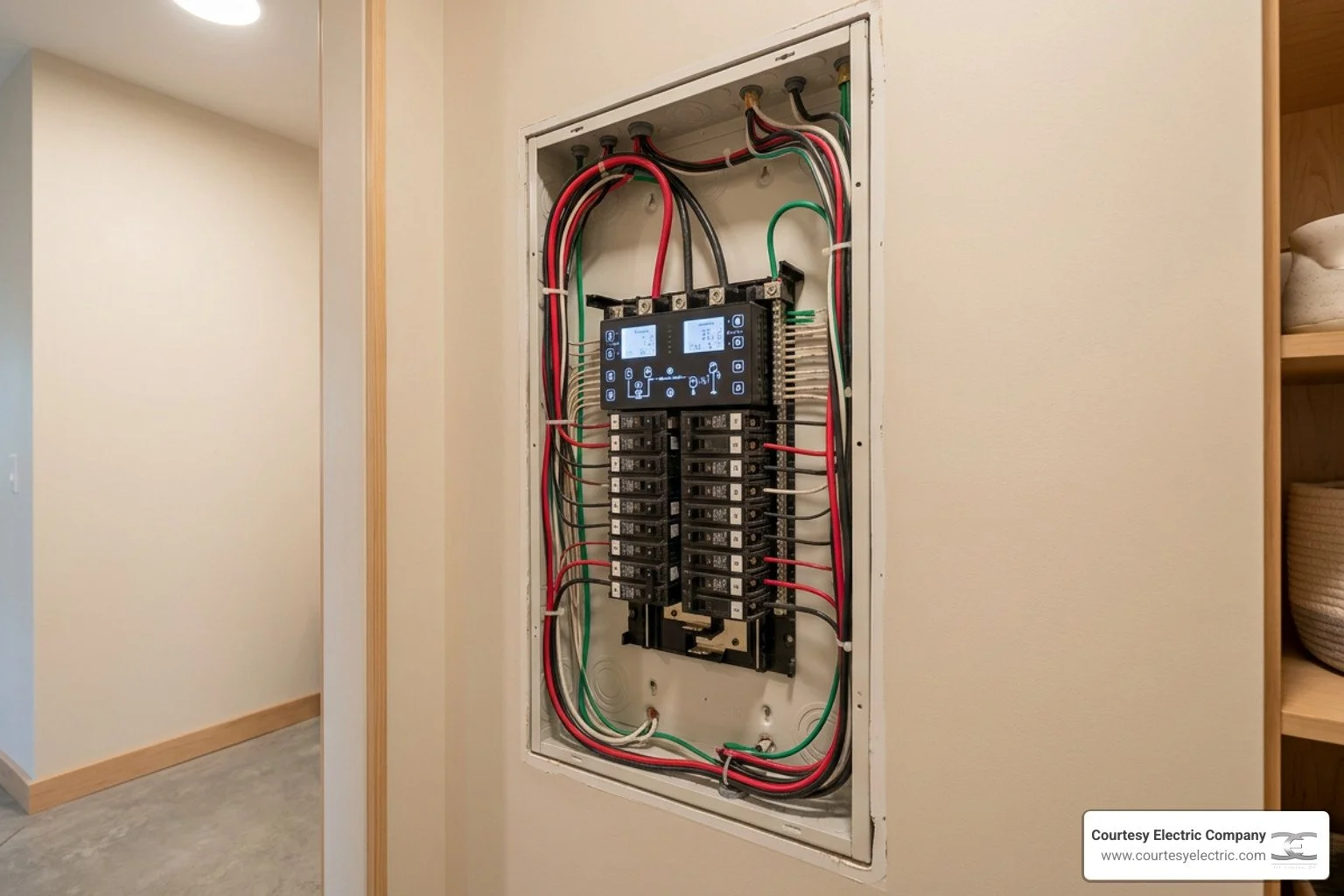
Understanding How EV Chargers Heat Pumps and Batteries Change Your Panel Needs
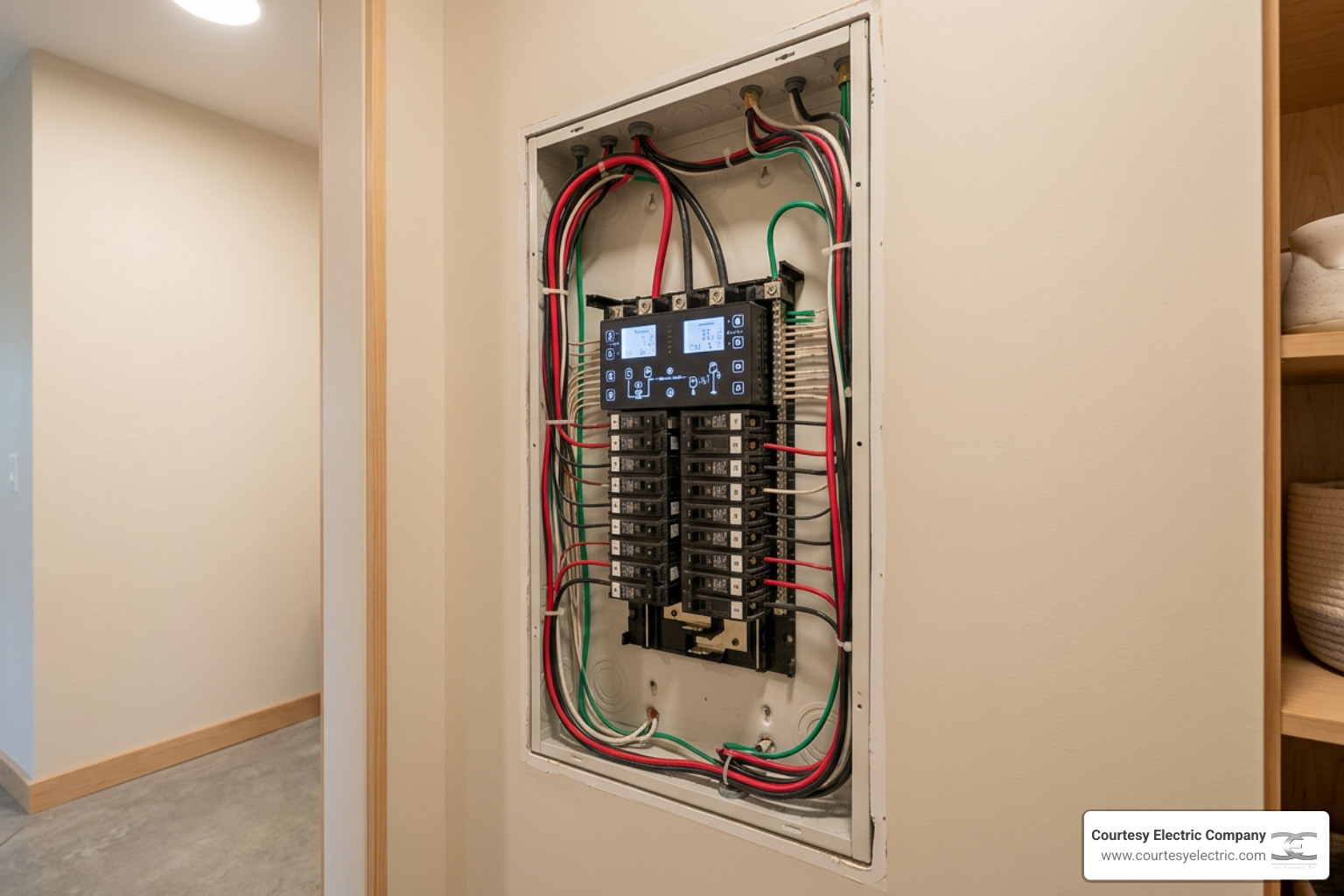
How EV chargers, heat pumps, and batteries change your panel needs is one of the most important questions Colorado homeowners are facing right now — and the answer isn't always simple. Here's a quick overview before we dive in:
Quick Answer: How Each Technology Affects Your Electrical Panel
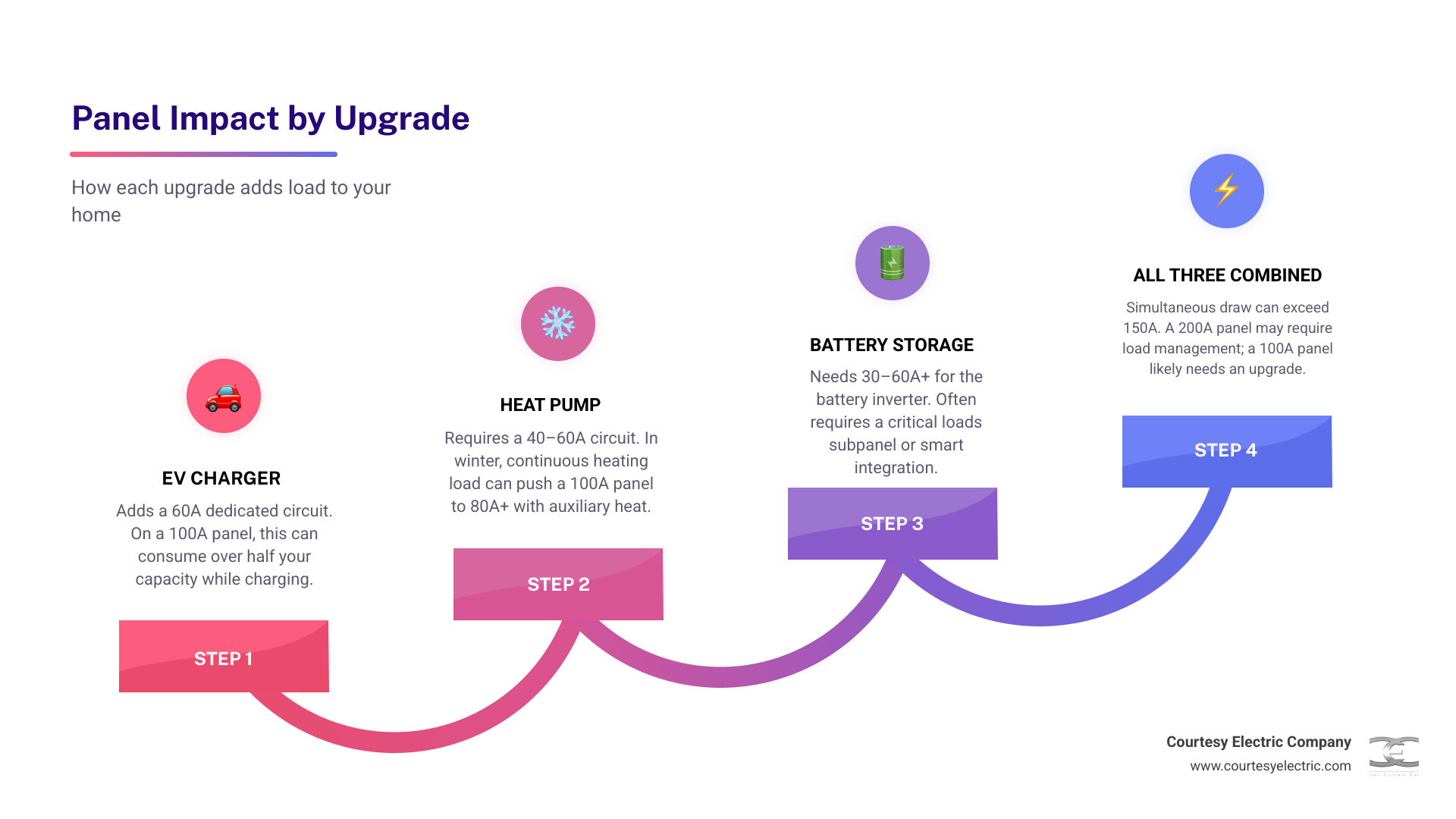
| Upgrade | Typical Dedicated Circuit Needed | Key Panel Impact |
|---|---|---|
| Level 2 EV Charger (48A) | 60A dedicated circuit | Requires open breaker slot + capacity headroom |
| Heat Pump (central) | 40-60A dedicated circuit | Adds significant continuous load, especially in winter |
| Home Battery Storage | 30-60A+ depending on system | Requires critical load subpanel or smart panel integration |
| All three combined | 150A+ simultaneous draw possible | May push a 100A or 200A panel to its limits without load management |
- About 20% of homes need some kind of electrical upgrade before installing an EV charger alone
- Most homes use less than 80A at any one time — even on a 100A panel — but adding multiple high-draw devices changes that math fast
- Smart load management can often help a 200A panel handle what would otherwise require a 400A service upgrade
- A 100A panel may struggle without smart workarounds; a 60A panel will almost certainly need a full upgrade
The core issue is this: your electrical panel was sized for the home you had, not the home you're building toward. When you add a Level 2 EV charger, a heat pump, and a battery backup system — even in stages — your panel has to handle loads it was never designed for. And if you install these upgrades in the wrong order, or without a clear electrical plan, you can end up paying for the same work twice.
I'm David Meyer, Vice President of Courtesy Electric, a Colorado-based electrical contractor with roots going back to 1976, and I've seen how understanding how EV chargers, heat pumps, and batteries change your panel needs before you buy equipment can save homeowners thousands of dollars and months of frustration. Let's walk through exactly what you need to know so you can electrify your home the smart way.
To understand why your panel feels the squeeze when you start adding modern clean energy upgrades, it helps to think of your electrical system as a highway. Your main service panel is the toll booth, and every appliance in your home is a car trying to get through.
Historically, home electrical panels in Denver and across the Front Range were sized based on a simple set of assumptions. Builders assumed you would run a refrigerator, a clothes dryer, some lights, and maybe a central air conditioner. Because you rarely ran everything at the exact same moment, the total electrical load was highly diversified.
But home electrification is fundamentally changing the traffic patterns on that highway. When we add high-draw devices like a Level 2 EV charger, a central heat pump, and home battery storage, we are introducing massive, sustained electrical demands.
The concept of simultaneous draw is where many homeowners run into trouble. If your family is cooking on an electric range, running the clothes dryer, heating the home with a heat pump, and charging an EV at the same time, your peak demand spikes dramatically. To determine if your current setup can handle this, read our detailed guide on Does Your Electrical Panel Support an EV Charger.
How EV Chargers Heat Pumps and Batteries Change Your Panel Needs for Space vs. Capacity
When we evaluate a home's readiness for electrification in communities like Parker or Highlands Ranch, we look at two entirely different constraints: panel space and panel capacity.
- Panel Space (Breaker Slots): This is a physical limitation. Do you have empty physical slots in your metal panel box to snap in a new, double-pole 240-volt circuit breaker? If your panel is completely full of breakers, you have a physical space problem.
- Panel Capacity (Amperage): This is an electrical limitation. Your home's main service is rated for a specific maximum amperage—typically 100 amps, 150 amps, or 200 amps. This rating is determined by the size of the wires coming from the utility company (like Xcel Energy) and the rating of your main breaker.
You can easily have plenty of physical breaker slots but zero remaining electrical capacity. Conversely, you can have a high-capacity 200-amp panel that is completely out of physical space. Understanding these differences is the first step in learning How to Future-Proof Your Home Electrical System.
The Impact of Continuous Loads and the NEC 80% Rule
Why does a single EV charger or heat pump place such a heavy burden on your panel? It comes down to how the National Electrical Code (NEC) defines a continuous load.
A continuous load is any electrical load where the maximum current is expected to continue for three hours or more. Unlike a microwave or toaster that runs for a few minutes, an EV charger will pull maximum current for hours at a time. The same is true for a heat pump keeping your home warm during a freezing night in the Black Forest.
Under the NEC 80% rule, a circuit breaker can only be loaded to 80% of its maximum rating for continuous loads. This safety margin prevents breakers from overheating. For example:
- A 48-amp Level 2 EV charger requires a dedicated 60-amp circuit breaker ($48\text{A} \div 0.80 = 60\text{A}$).
- A 32-amp charger requires a dedicated 40-amp circuit breaker.
This means you cannot simply add up the face-value amps of your appliances; you must factor in this 25% safety buffer for continuous loads. To see how these rules apply to different charging setups, explore our comparison of Level 1 vs Level 2 EV Charger for Home Use.
Evaluating Your Current Electrical Panel Capacity
Before you buy an EV or sign a contract for a heat pump, you need to establish your electrical baseline.
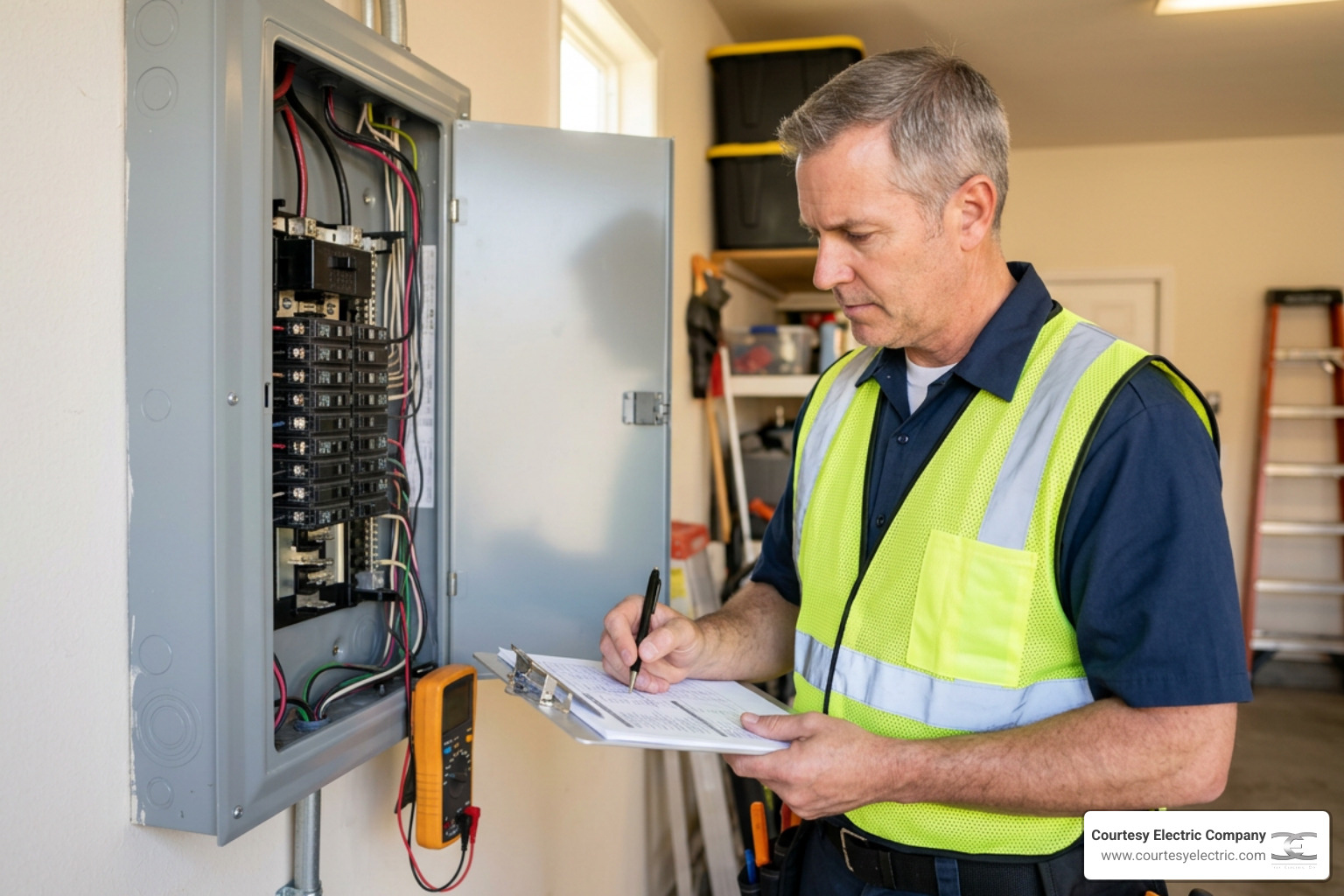
A proper evaluation involves three steps:
- Identify the Main Breaker: Open your panel door and look for the single largest switch, usually located at the very top or bottom. It will have a number stamped on it (e.g., 100, 150, or 200). This tells you your total service capacity.
- Perform a Physical Inspection: Look for open slots, but also keep an eye out for warning signs. If you see rusted metal, scorched plastic, or feel warmth radiating from the panel, your panel may be outdated or unsafe.
- Conduct a Formal Load Calculation: This is a mathematical assessment of your home's square footage and existing appliances to determine how much capacity is actually left.
Because of the safety risks and complexity involved, you should have a professional evaluate your system. Find out more about How Often Should You Have Your Electrical System Inspected to keep your home safe.
Here is how standard household appliances compare to major clean energy upgrades:
| Appliance | Typical Amperage | Voltage | Continuous Load? |
|---|---|---|---|
| Refrigerator | 15A | 120V | No |
| Electric Clothes Dryer | 30A | 240V | No |
| Central Air Conditioner | 30A - 40A | 240V | No |
| Level 2 EV Charger (48A) | 60A (circuit size) | 240V | Yes |
| Central Heat Pump | 40A - 60A (circuit size) | 240V | Yes |
| Home Battery Storage | 30A - 60A (circuit size) | 240V | Yes |
How EV Chargers Heat Pumps and Batteries Change Your Panel Needs During Peak Winter Heating
In Colorado, winter changes everything. If you are planning a heat pump retrofit, you have to plan for our coldest nights.
While modern cold-climate heat pumps are incredibly efficient, they sometimes rely on auxiliary electric resistance heat strips (often called "heat strips" or "emergency heat") when outdoor temperatures plummet far below freezing. These backup heat strips draw massive amounts of electricity—often requiring an additional 40 to 60 amps of dedicated panel capacity on top of the heat pump compressor itself.
If your EV charger is trying to charge your vehicle at 48 amps while your heat pump is running its auxiliary heat strips on a January night, an unmanaged 100-amp or even 200-amp panel can easily overload and trip the main breaker. This is why seasonal peak demand must be factored into your load planning. To learn how to balance these unique seasonal loads, check out the Energy Management Options for Colorado Homes.
Smart Alternatives to Avoid a Full Panel Upgrade
Many homeowners assume that adding an EV charger and a heat pump automatically requires a traditional panel upgrade. Fortunately, modern technology offers several clever, code-compliant ways to bypass a full service replacement.
These alternatives focus on amperage avoidance—using smart hardware to manage how and when your home consumes power so you never exceed your existing panel's limits. To compare these paths, read our analysis of Smart Energy Management vs Traditional Panel.
Dynamic Load Balancing and Smart Panels
The most advanced alternative is a smart electrical panel, such as a SPAN panel. Unlike a traditional "dumb" panel that simply trips a breaker when too much current flows, a smart panel dynamically monitors and manages your electrical circuits in real time.
With dynamic sequencing and load shedding, a smart panel can run a complex home on a 200-amp service that would normally require a 400-amp upgrade. For example, if you are running your electric range and dryer simultaneously, the smart panel can automatically pause or throttle down your EV charger for a few minutes. Once the high-demand appliances turn off, the panel resumes full-power EV charging. You won't even notice the interruption, and your main service line is never overloaded. Discover How Energy Management Reduces Your Electric Bill using these smart technologies.
Circuit Sharing and Lower-Amperage Charging Options
If you only need to manage two high-draw appliances, a physical smart circuit splitter is a highly effective, lower-cost alternative.
A smart splitter allows two appliances—like an electric clothes dryer and an EV charger—to share a single 240-volt circuit. The splitter gives priority to one appliance (usually the dryer). When you turn the dryer on, the splitter automatically pauses power to the EV charger. When the dryer cycle finishes, power seamlessly switches back to the vehicle.
Additionally, many homeowners overestimate how much charging speed they actually need. Opting for a lower-amperage charger (such as a 24-amp or 30-amp charger on a 40-amp circuit) can still easily restore more than 150 miles of range overnight. This simple adjustment can keep your total load within your existing panel's capacity. For help choosing the right charging speed, read our guide on How to Choose the Right Home EV Charger.
The Best Order of Operations for Home Electrification
One of the most common mistakes we see is homeowners buying appliances one at a time without a master plan. They install solar, then run out of physical breaker space for an EV charger, and later realize they have to rip out and rewire their system to add a battery.
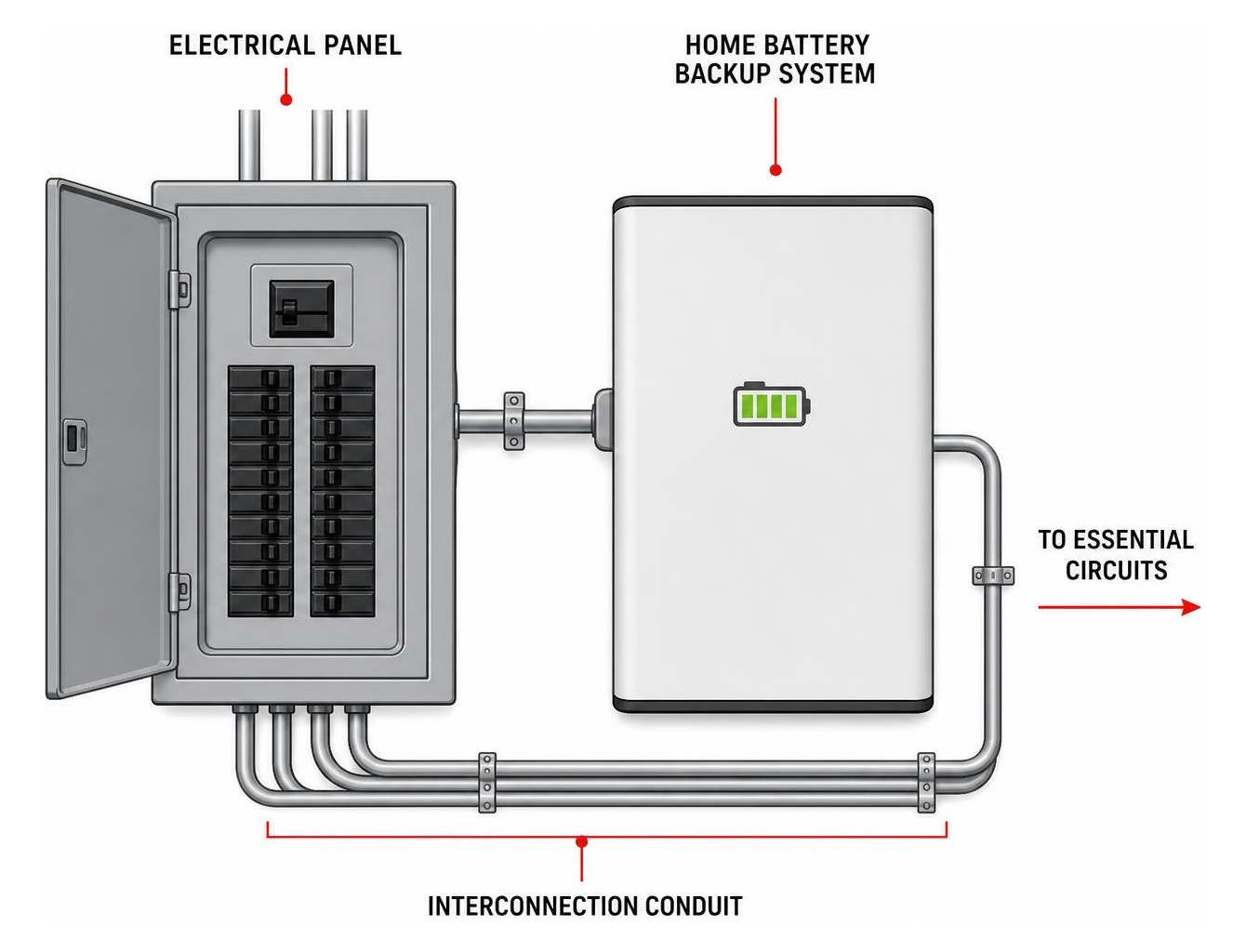
To avoid expensive rework, we recommend creating a "one-page electrical roadmap" and following this order of operations:
- Perform a Comprehensive Load Calculation First: Assess your panel's current capacity and plan for all anticipated electrical upgrades over the next three to five years.
- Address Infrastructure and Panel Needs: Upgrade your panel, add a subpanel, or install a smart panel like SPAN before purchasing major appliances.
- Install Solar and Battery Storage: Plan your battery integration early so you can organize your critical load circuits from the start.
- Add EV Charging and Heat Pumps: Integrate these high-draw appliances into your pre-planned, managed electrical system.
By establishing your electrical foundation first, you ensure that every subsequent upgrade integrates seamlessly. To plan your system step-by-step, review our Home Battery Storage Complete Guide.
Integrating Battery Storage and Critical Load Panels
Adding a home battery backup system, like Franklin Battery Storage, changes how your electrical panel operates. During a utility outage, a battery cannot power your entire home indefinitely; instead, it needs to isolate and power your most important appliances.
Traditionally, this requires installing a physical critical loads subpanel. An electrician physically moves your essential circuits—such as your refrigerator, select lights, heating controls, and well pump—from your main panel into this dedicated subpanel.
However, if you install a smart panel like SPAN, you can bypass the physical subpanel entirely. The smart panel allows you to dynamically choose and change your critical backup loads directly from an app on your phone during an outage. Understanding How Does a Home Battery Backup System Work is essential for designing a resilient home backup system.
Frequently Asked Questions About Panel Upgrades
Navigating home electrification can raise a lot of questions. Here are some of the most common questions we hear from homeowners across the Denver metro area. If you are evaluating your overall backup strategy, you can also learn more about whether Is Home Battery Storage Worth It in Colorado.
Do I need a panel upgrade to switch to a heat pump if I already have central AC?
In many cases, no. If your home is already equipped with a standard central air conditioner, you already have a dedicated 240-volt circuit running to your outdoor condenser unit. Because a heat pump uses the exact same refrigeration cycle to both cool and heat your home, we can often utilize your existing AC circuit and breaker to install a heat pump retrofit without adding any new electrical load to your panel.
However, if your new heat pump requires auxiliary electric backup heat strips to handle extreme winter temperatures, those heat strips will require their own dedicated high-amperage circuit. We can help you evaluate your specific heating requirements and existing panel capacity to find the safest, most efficient path forward. Explore our Residential services to see how we handle these retrofits.
How do home batteries and solar panels interact with my main panel?
Rooftop solar and home battery systems do not behave like traditional, power-consuming appliances. Instead, they feed power back into your electrical system. Because of this, they are subject to strict safety rules, such as the NEC 120% rule.
This rule dictates that the combined power input from your utility main breaker and your solar inverter cannot exceed 120% of your panel's busbar rating. If your solar system produces more power than this limit allows, it can trigger a mandatory panel upgrade—even if your home's actual power consumption hasn't changed. Properly designing your system's wiring pathways is critical to avoiding these unexpected code violations. Learn more about How Generators and Batteries Can Work Together to optimize your home's power distribution.
What incentives are available in Colorado for electrical panel upgrades?
There are several excellent incentives available to help offset the cost of panel upgrades and smart energy management installations in Colorado:
- Federal Tax Credits (Section 25C): Homeowners can claim a 30% tax credit for qualified electrical panel upgrades, up to a maximum credit cap, when completed in conjunction with installing a heat pump or heat pump water heater.
- Utility Rebates: Major local utilities, including Xcel Energy, offer specific rebates for EV-ready wiring, panel upgrades, and smart load-management devices.
- State and Local Programs: Various Colorado municipalities offer additional localized rebates and permit fee waivers for home electrification projects.
Because these programs can be stacked, planning your upgrades together can significantly reduce your out-of-pocket expenses. Check out our comprehensive guide on Colorado EV Charger Rebates and Incentives for the latest details on active programs.
Conclusion
Understanding how EV chargers, heat pumps, and batteries change your panel needs is the key to a successful, headache-free home electrification journey. Whether you have an older home in Black Forest that needs a creative load-management solution, or you are looking to install a state-of-the-art SPAN smart panel and Franklin battery storage system in Highlands Ranch, taking a holistic, planned approach will save you time, money, and hassle.
At Courtesy Electric Company, we've spent decades helping Denver and Front Range homeowners navigate their electrical needs with quality, integrity, and dependability. We handle everything from complete system design to professional installation, ensuring your home is safe, efficient, and ready for the future.
Ready to take the next step? Contact us today to request a free estimate on your panel upgrade, smart panel installation, or home backup system. Let's design an electrical system that works for you. Learn more about our complete range of services at Electrical Service.


