
Your Home's Electrical System Needs Regular Inspections — Here's How Often

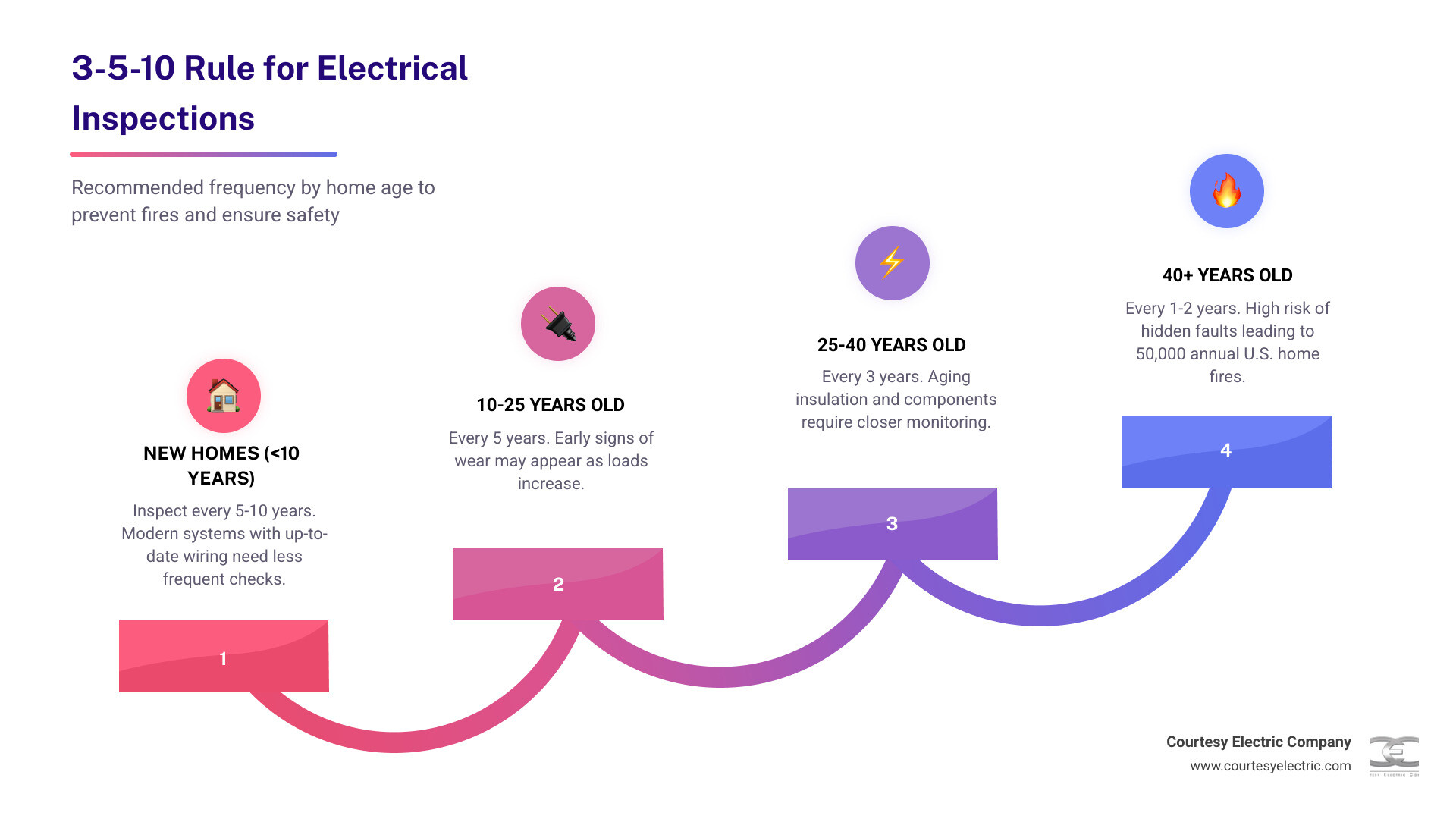
How often should you have your electrical system inspected depends primarily on the age of your home. Here is a quick-reference guide:
| Home Type | Recommended Inspection Frequency |
|---|---|
| New home (under 10 years old) | Every 5-10 years |
| Home 10-25 years old | Every 5 years |
| Home 25-40 years old | Every 3 years |
| Home 40+ years old | Every 1-2 years |
| Rental property | Every 1-3 years |
| High-humidity or coastal area | Every 2 years |
Most homes fall somewhere in the 3-to-5-year range as a general rule of thumb.
Behind every wall and ceiling in your home, miles of wiring silently power your lights, appliances, and devices. When that system is working, it is easy to assume everything is fine. But electrical malfunctions cause over 50,000 home fires in the U.S. every year, according to the Electrical Safety Foundation International — and most of those fires start with problems that were invisible long before they became dangerous. Regular inspections are the only reliable way to catch those hidden hazards early.
For Colorado Front Range homeowners especially, an aging electrical system struggling to keep up with modern demands — think EV chargers, smart home tech, and high-draw appliances — is a real and growing concern. The good news is that a consistent inspection schedule is straightforward once you know what drives the timeline.
I'm David Meyer, Vice President of Courtesy Electric, a Colorado electrical contracting company with roots going back to 1976, and understanding how often should you have your electrical system inspected is one of the most practical questions I help homeowners answer every day. With decades of hands-on experience across the Front Range, I will walk you through everything you need to know to keep your home safe and your system up to code.
Determining How Often Should You Have Your Electrical System Inspected

When it comes to home maintenance, we often think about the roof, the HVAC system, or the gutters. However, the electrical system is the "central nervous system" of your home. If it fails, everything else stops. For most modern homes in the Denver area, a standard Electrical Service visit every 3 to 5 years is the sweet spot for catching minor issues before they become major hazards.
As we move into May 2026, the demand on our home grids has never been higher. We are plugging in more devices, installing high-speed chargers, and running powerful appliances that older homes weren't designed to handle. This increased load accelerates wear and tear on your panel and wiring.
Home Age Milestones
The age of your property is the biggest factor in your schedule.
- 20-year-old homes: By the time a home hits the two-decade mark, insulation on wiring can begin to degrade, and connections at outlets may loosen. A check-up every 3 to 5 years is essential here.
- 40-year-old homes: Homes built in the mid-1980s or earlier are entering a high-risk category. These systems often feature outdated technology or wiring types that have a lifespan of roughly 40 years. For these aging structures, annual or biennial inspections are highly recommended to monitor for deteriorating infrastructure.
For more details on managing your home's unique needs, visit our Homeowners Electrical Resources.
How often should you have your electrical system inspected in a new home?
If you’ve recently moved into a new construction home in Highlands Ranch or Parker, you might think you’re off the hook for a decade. While it’s true that new homes meet the most recent National Electrical Code (NEC) standards, we still recommend a preventative check-up every 5 years.
While a full-scale professional benchmark is typically set at the 10-year mark for new builds, a 5-year "wellness check" can identify "infant mortality" issues in components or settling-related movement that might have pinched a wire. Our Residential Electrical Services team often finds that early detection in a new home can prevent expensive out-of-warranty repairs later.
How often should you have your electrical system inspected if you live in a high-humidity area?
While Colorado is known for its dry climate, certain areas—like homes near large bodies of water or those with high-performance whole-home humidification systems—can experience environmental corrosion. Humidity is a silent enemy of electrical connections, leading to oxidation and poor conductivity.
In environments where moisture is a constant factor, we suggest an inspection cycle as frequent as every 2 years. This ensures that your Spring Electrical Safety and Storm Preparation includes a look at your outdoor panels and crawlspace wiring, where moisture tends to do the most damage.
Red Flags and Environmental Factors Requiring Urgent Attention
Sometimes, the calendar doesn't matter. Your home has a way of telling you when it’s time to call a professional. If you notice any of these "red flags," you should schedule an inspection immediately, regardless of when your last one was.
- Flickering or Dimming Lights: This often indicates a loose connection or an overloaded circuit.
- Burning Smells: If you smell "burning plastic" or a fishy odor near an outlet or the panel, shut off the power and call us immediately. This is a sign of active arcing or overheating.
- Tripped Breakers: A breaker that trips once might be a fluke; a breaker that trips repeatedly is a warning that the circuit is drawing too much power or has a "short."
- Buzzing Noises: Electricity should be silent. Humming or crackling sounds from switches or the panel suggest loose wires.
- Hot Switches or Outlets: If a wall plate feels warm to the touch, it’s a major fire risk.
Following these Electrical Fire Prevention Tips for Homeowners can save lives. Furthermore, living in the Colorado Front Range means dealing with intense spring storms. Power surges from lightning or grid fluctuations during a blizzard can damage sensitive electronics and weaken your surge protection. If your home has been hit by a major storm or a nearby lightning strike, a safety check is a must.
Essential Scenarios for a Professional Electrical Audit
Beyond age and warning signs, there are specific life events that should trigger a call to your electrician.
Real Estate Transactions
Whether you are buying or selling a home in Denver or Black Forest, a standard home inspection is rarely enough. Most general home inspectors are not permitted to open the main electrical panel to check for internal overheating or "double-tapped" breakers. A dedicated professional audit ensures the property is safe before you sign the closing papers.
Major Renovations
Planning a kitchen remodel or finishing your basement? Any time you open up walls, you should have the existing wiring evaluated. It’s also the perfect time to ensure your system can handle the new load. How Outdated Wiring Increases Fire Risk becomes a bigger issue when you add modern, high-draw appliances to an old circuit.
New High-Load Appliances
Installing a Level 2 EV charger, a hot tub, or a tankless water heater? These require significant power. We perform load calculations to ensure your current panel can handle the demand without causing a fire hazard.
Rental Property Regulations
If you are a landlord, your liability is much higher. To protect your tenants and your investment, rental properties should be inspected every 1 to 3 years or at every tenant turnover. This ensures you stay compliant with local housing codes and reduces the risk of insurance claims. Learn more about our Residential Electrical Services for property managers.
What Happens During a Professional Safety Evaluation?
Many homeowners wonder what we actually do during an inspection. It is much more than just looking at the lights.
| Feature | Homeowner Visual Check | Professional Safety Inspection |
|---|---|---|
| Outlets & Switches | Check for physical damage | Tension testing and thermal imaging |
| Electrical Panel | Look for tripped breakers | Torque testing, checking for heat/arcing |
| Grounding | Check for 3-prong outlets | Testing grounding electrode system integrity |
| Safety Devices | Press "Test" on GFCIs | Trip-time testing and AFCI verification |
| Wiring | Look for exposed wires | Assessment of insulation and load capacity |
During a professional evaluation, we follow an Electrical Safety Checklist for Older Homes that covers:
- Panel Examination: We check for signs of corrosion, overheating, and proper labeling.
- GFCI and AFCI Testing: We ensure Ground Fault and Arc Fault Circuit Interrupters are protecting you from shocks and fires.
- Grounding and Bonding: We verify that your system has a safe path for excess electricity to travel into the earth.
- NEC Compliance: We ensure your home meets the latest safety standards, which are updated every three years.
- Smoke and CO Detectors: We verify that your life-safety devices are properly integrated into your electrical system.
Frequently Asked Questions about Electrical Inspections
What is the difference between a visual check and a professional inspection?
A DIY visual check is great for spotting cracked outlet covers or frayed cords, but it cannot see behind the walls. We use technical diagnostic tools like thermal imaging cameras to find "hot spots" that haven't started smoking yet. We also verify grounding integrity and internal panel conditions that are dangerous for an untrained person to touch. Our Homeowners Electrical Resources can help you understand these technical differences.
How long does a typical electrical inspection take?
For a standard single-family home in the Front Range, a thorough inspection usually takes between 1 and 2 hours. Larger homes or those with complex systems (like integrated solar or backup generators) may take longer. Afterward, you receive a detailed report documenting the safety of your system.
Can a home fail an electrical inspection?
Yes. A "fail" simply means we found code violations or safety hazards that need to be addressed. Common issues include ungrounded outlets, overloaded panels, or lack of proper AFCI protection in bedrooms. Addressing these is often a requirement for maintaining your home insurance coverage and is a key part of understanding How Outdated Wiring Increases Fire Risk.
Conclusion
Understanding how often should you have your electrical system inspected is the first step toward a safer, more reliable home. Whether you live in a brand-new build in Aurora or a historic property in Denver, sticking to the 3-to-5-year rule—and adjusting for the age of your home—is a small investment that pays off in fire prevention and property value protection.
At Courtesy Electric Company, we have been serving the Colorado Front Range since 1976. We pride ourselves on quality, integrity, and dependability. From smart panel upgrades like SPAN to installing Generac standby generators, we are here to ensure your home stays powered and protected.
Don't wait for a flickering light or a tripped breaker to tell you there’s a problem. Schedule your professional Electrical Service today and get a free estimate on your next upgrade. Let us help you keep the lights on safely.


