Recognizing the Signs Your Denver Home Needs an Electrical Upgrade
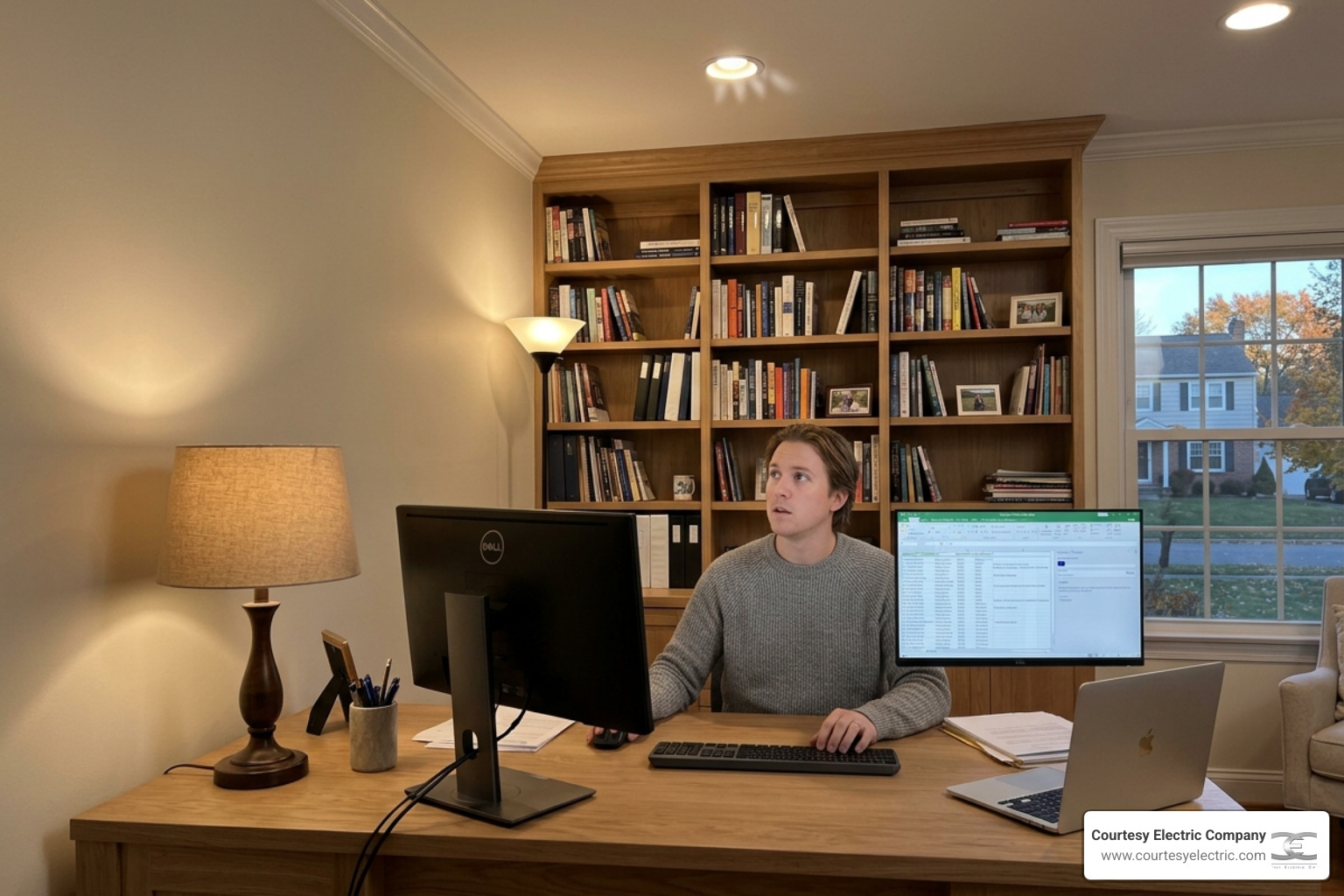
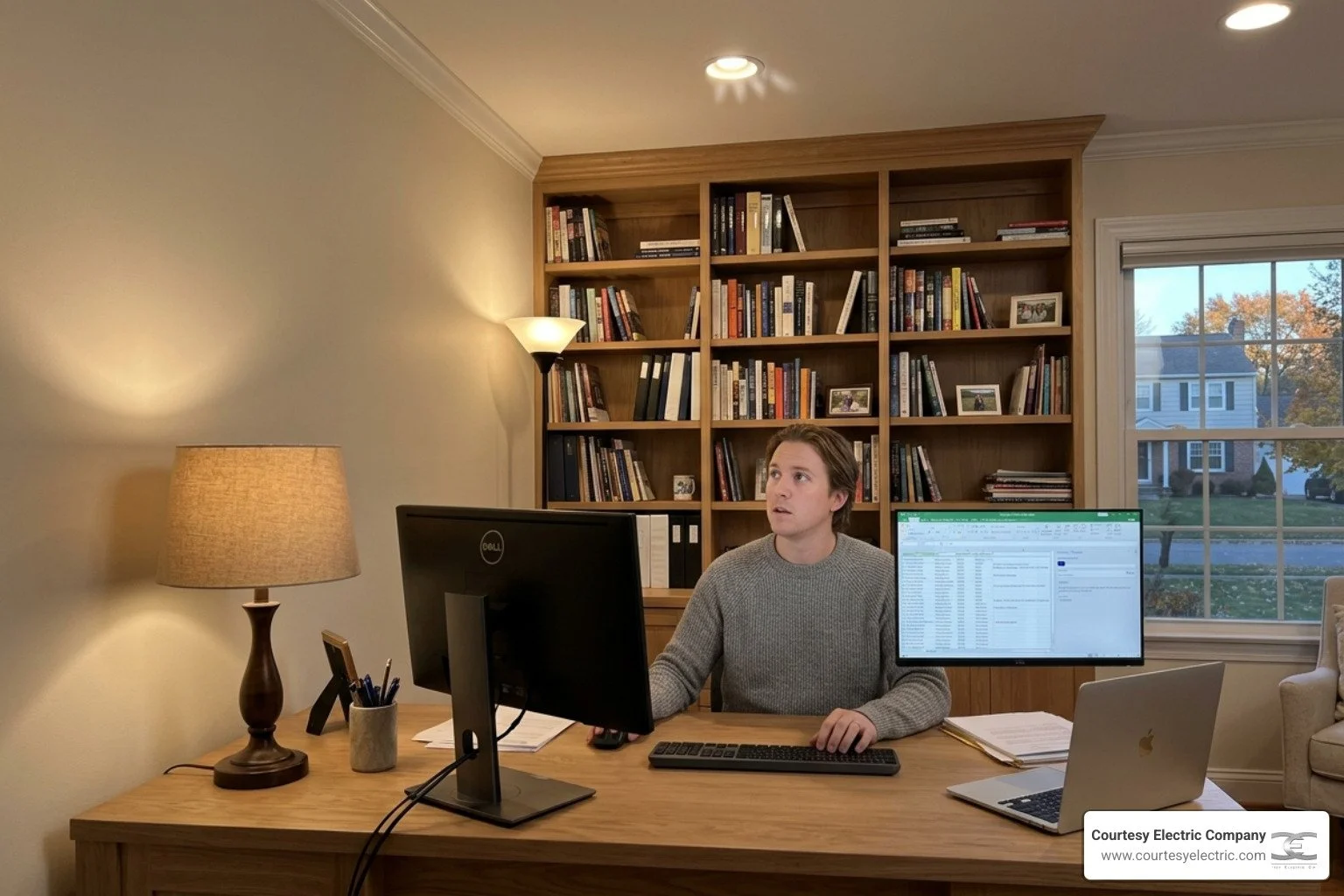
Before we dive into the "how," we have to look at the "why." Many homes in the Denver metro area and across the Front Range were built during eras when a 60-amp or 100-amp service was considered plenty. In 2026, those legacy systems are often gasping for air. As of this year, the average household manages over 21 connected devices, ranging from smart refrigerators to high-performance home office setups. This digital density places a massive strain on infrastructure designed for a simpler time.
How do you know if your home is crying out for help? The signs are usually staring you in the face. If your lights flicker when the air conditioner kicks on, or if you find yourself constantly trekking to the garage to flip a tripped breaker, your system is overloaded. Physical warning signs are even more urgent: if an outlet feels warm to the touch or you notice a faint burning smell, you are dealing with a serious hazard that requires immediate attention.
We often talk to homeowners about how outdated wiring increases fire risk, especially in older neighborhoods where aluminum wiring was common in the late '60s and '70s. Aluminum is more prone to expansion and contraction, which can lead to loose connections and overheating. We recommend every homeowner go through an electrical safety checklist for older homes to identify these "invisible" threats. Beyond just capacity, modernizing is about protection; incorporating electrical fire prevention tips for homeowners starts with ensuring your infrastructure can actually handle the heat of 21st-century life. Ignoring these signs doesn't just lead to inconvenience; it compromises the safety of your entire household.
The Foundation: How to Future Proof Your Home Electrical System with Panel Upgrades
If the wiring is the "veins" of your home, the electrical panel is the heart. To truly understand how to future proof your home electrical system, you have to start here. The panel dictates how much energy your home can safely draw from the grid and how that energy is distributed to your various appliances and devices.
While 100-amp service used to be the gold standard, it is now the bare minimum. For most modern homes, a 200-amp service is the new baseline. However, if you are planning on multiple electric vehicles, a high-end woodshop, or a fully electrified kitchen with induction ranges and heat pumps, we often suggest a 400-amp service. This provides the "headroom" necessary so you never have to worry about which appliance you can run at the same time, even during peak usage hours.
Upgrading your electrical service isn't just about raw power; it’s about intelligence. At Courtesy Electric, we specialize in SPAN smart panels. Unlike traditional "dumb" panels that just sit there, a SPAN panel allows for digital load management. You can see exactly where your energy is going in real-time through an app. This is crucial for how to manage electrical demand during hot weather in Colorado, allowing you to prioritize cooling or EV charging when the grid is most stressed.
Benefits of Upgrading to a Smart Electrical Panel
- Real-Time Monitoring: Identify energy hogs instantly and adjust your habits to save energy.
- Remote Circuit Control: Turn off the oven or the lights from your phone, providing peace of mind when you are away.
- Optimized Battery Storage: Automatically sheds non-essential loads during an outage to make your backup power last longer.
- Enhanced Safety: Modern panels include AFCI (Arc Fault Circuit Interrupter) and GFCI (Ground Fault Circuit Interrupter) protection to prevent fires and shocks.
- Future Scalability: Easily integrate solar, wind, or battery storage without needing a complete panel overhaul later.
Smart Home Infrastructure and High-Speed Data Integration
A future-proofed home isn't just powerful; it’s connected. Many people rely solely on Wi-Fi, but as the number of IoT (Internet of Things) devices grows, wireless signals become congested and "fickle." In a modern Denver home, everything from your doorbell to your refrigerator needs a stable connection to function correctly.
For a truly stable home, you need a hardwired backbone. This falls under low volt wiring. By installing a structured media panel—a centralized hub for all your data cables—you create a "brain" for your home. This supports everything from lighting control to security cameras. Plus, using how to reduce your summer electric bill with smart technology becomes much easier when your smart thermostats and sensors have a rock-solid connection. We recommend a star pattern layout for wiring, ensuring each device has a direct line to the hub to prevent signal degradation.
One of our favorite "cheat codes" for future-proofing is the use of conduits or "smurf tubes." These are flexible plastic pipes run inside your walls during a renovation or build. We also ensure a 6-inch power separation between high-voltage and low-voltage lines to prevent electromagnetic interference. If a new type of cable is invented ten years from now, we can simply pull it through the existing conduit without ever touching your drywall.
Wiring for a Future Proof Home Electrical System
To stay ahead of the curve, we recommend:
- Cat6a Cabling: This is the current industry standard, capable of handling 10,000 Mbps (10 Gbps) speeds, ensuring your 8K streaming and gaming never lag.
- Fiber Optic Readiness: Running fiber to key areas prepares you for the next generation of ultra-high-speed internet.
- WAP Placement: Pre-wiring for Wireless Access Points in the ceiling ensures whole-home Wi-Fi coverage without dead zones.
- Sensor Wiring: Running 18/2 or 22/4 gauge wire for smart sensors and motorized shades ensures they have reliable power and communication.
EV Charging, Renewable Energy, and Backup Resilience
The transition to electric vehicles is no longer a "maybe"—it’s a "when." Installing a Level 2 EV charger is one of the most significant upgrades you can make. While a standard Level 1 charger (using a regular 120V outlet) only adds about 4 miles of range per hour, a Level 2 charger on a dedicated 240V circuit can add 20–30 miles per hour, making it practical for daily commuting across the Front Range.
Level 1 vs. Level 2 EV Charging Performance
| Feature | Level 1 (Standard Outlet) | Level 2 (Dedicated 240V) |
|---|---|---|
| Voltage | 120V | 240V |
| Range Per Hour | ~4 miles | 20–30 miles |
| Charging Time | 20+ hours (Full) | 4–8 hours (Full) |
| Installation | None (Plug & Play) | Requires Professional Circuit |
Beyond charging, you need to think about what happens when the grid goes down. We’ve seen an increase in extreme weather across the Front Range, making whole home generator benefits for colorado homeowners more apparent than ever. Whether you want to know how does a standby generator work (it kicks on automatically using natural gas or liquid propane) or you prefer a silent battery solution, resilience is key. We specialize in installing industry-leading Generac and Cummins standby generators to ensure your home remains powered during winter storms or summer grid strain.
Sustainable Energy in a Future Proof Home Electrical System
For those looking toward a greener future, we specialize in Franklin battery storage. This system pairs perfectly with solar panels, allowing you to store energy during the day and use it at night or during an outage. Our battery storage guide centennial co and battery storage installation guide centennial co offer deep dives into how these systems integrate with your home.
Future-proofing also means preparing for bi-directional charging, where your electric vehicle can actually power your home during an emergency. By setting up "solar-ready" infrastructure and critical loads panels now, you avoid massive logistical hurdles later. This holistic approach ensures your home is not just a consumer of energy, but a resilient, self-sustaining ecosystem.
Frequently Asked Questions about Modernizing Home Electrics
Why is retrofitting more expensive than pre-wiring?
It’s often referred to as the "drywall tax." Installing a single wire during the framing stage might take ten minutes because the studs are exposed. Doing it after the walls are finished involves precision cutting, fishing wires through tight, insulated spaces, and then the subsequent patching and painting. This is why retrofitting often involves an investment of time and resources that is three to five times greater than pre-wiring. Using conduits during any renovation is a smart way to avoid this future expense.
What is structured wiring and why does it matter?
Structured wiring is a centralized system where all your data, phone, and coaxial cables meet in one media panel. Instead of "daisy-chaining" wires from room to room (which causes signal loss and interference), every outlet has a dedicated "home run" to the hub. This increases your home’s resale value and ensures your network can scale as you add more smart devices, providing the bandwidth needed for 2026 technology.
How many amps does a modern home actually need?
While a 100-amp panel can technically run a basic home, it will struggle the moment you add an EV charger, an electric heat pump, or an induction cooktop. A 200-amp panel is the recommended standard for 2026 to handle modern appliance loads. If you have a large home, plan on "full electrification" (no gas appliances), or want to run multiple high-draw systems simultaneously, 400-amp service is the gold standard to ensure you never hit a capacity ceiling.
Conclusion
Future-proofing your home isn't just about buying the latest gadgets; it’s about building a foundation that can support them for decades to come. At Courtesy Electric Company, we’ve been helping Colorado families navigate these technological shifts for nearly 50 years. We understand how deep experience translates to better electrical solutions—it means we’ve seen the evolution of power from the simple fuse boxes of the '70s to the sophisticated smart panels of today.
There are many benefits of choosing a company with nearly 50 years of experience, including our unwavering commitment to integrity, safety, and our robust warranty. Whether you are in Denver, Highlands Ranch, Parker, or Black Forest, we are here to help you build a safer, smarter, and more resilient home. Our team is dedicated to ensuring your infrastructure is ready for whatever the next 30 years of innovation may bring.
Ready to take the first step toward a more reliable home? Schedule your electrical service or a free estimate with us today, and let's make sure your home is ready for the future.


