
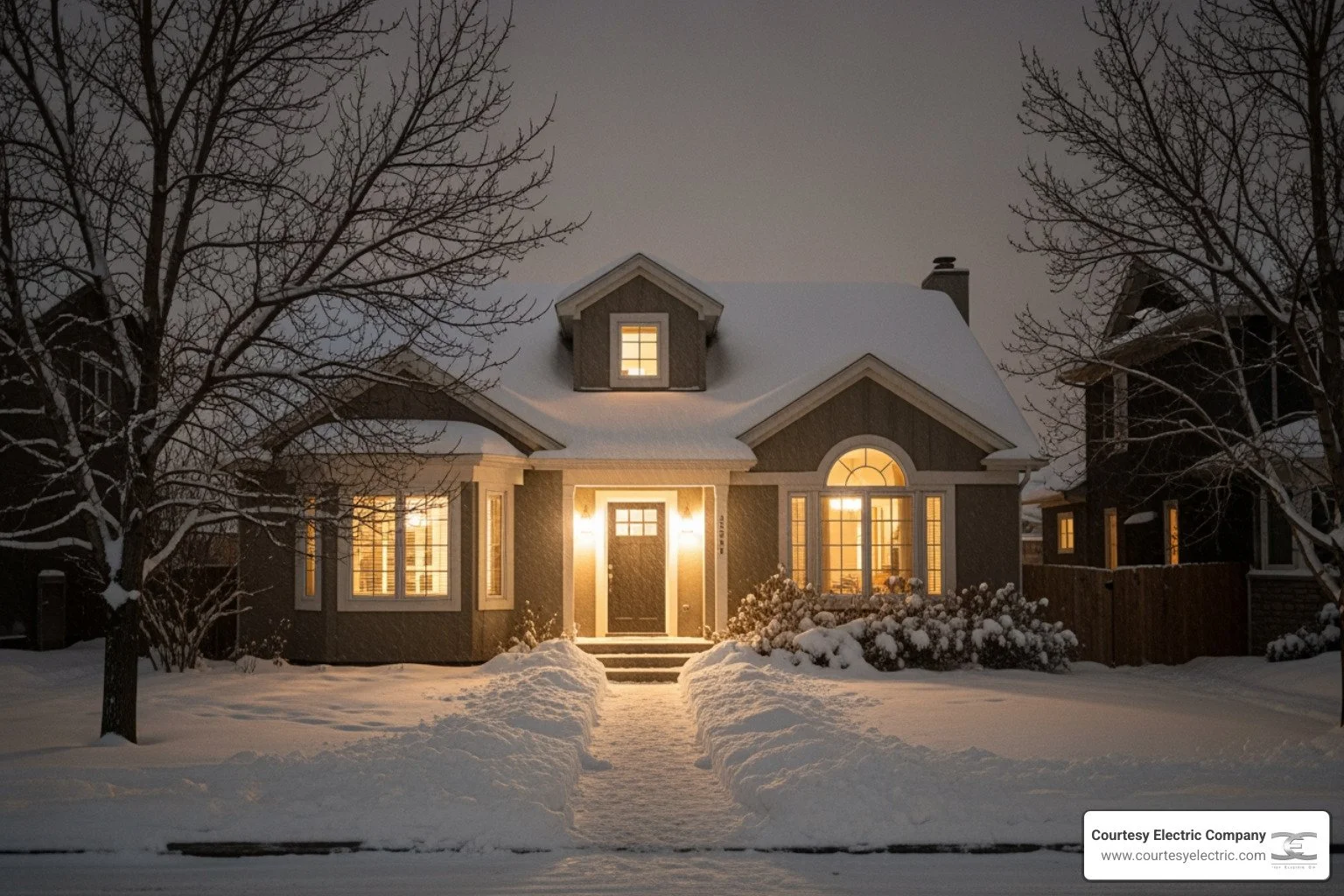
Why Generator Benefits During Colorado Winter Power Outages Matter More Than Ever
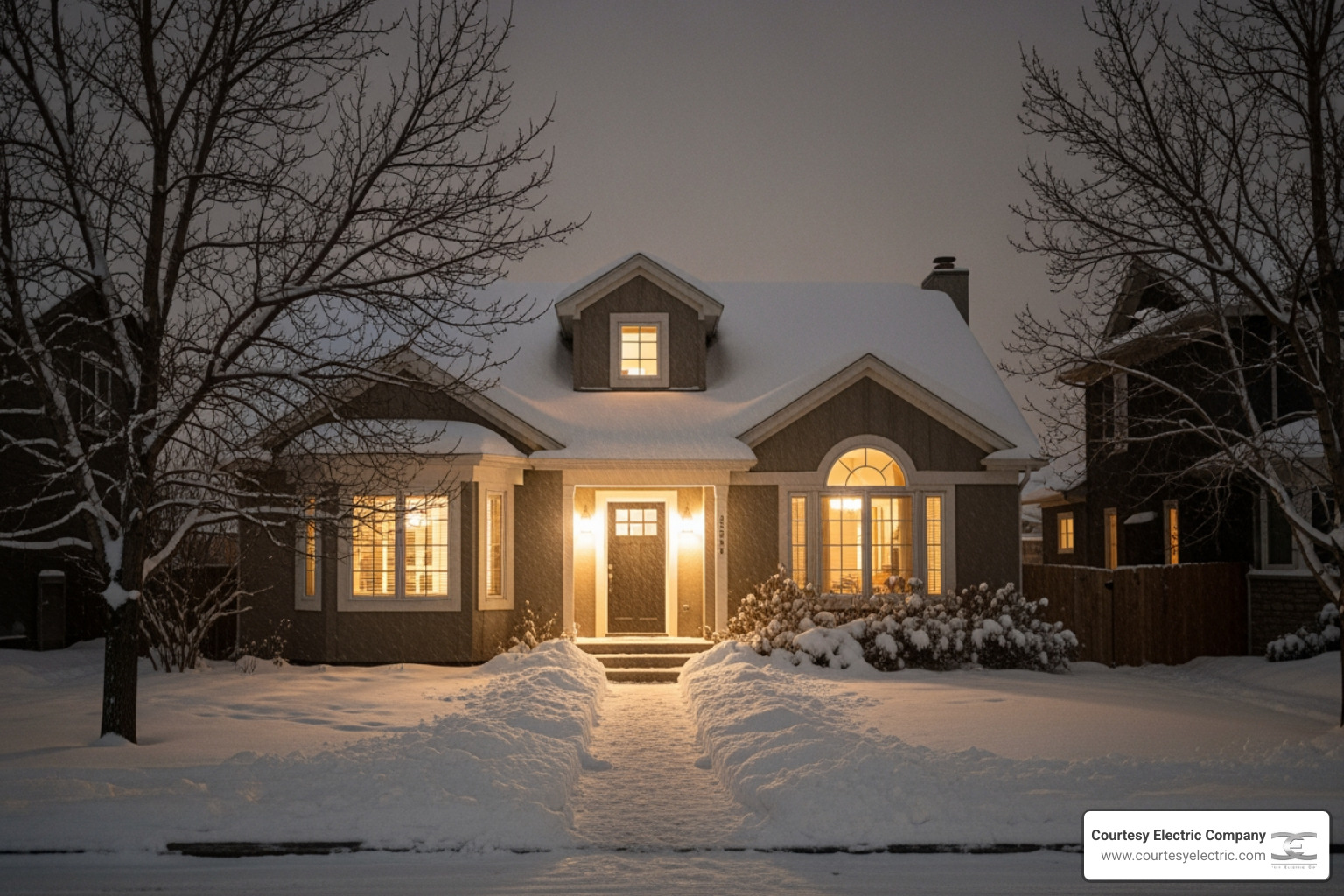
Understanding the generator benefits during Colorado winter power outages can mean the difference between a safe, warm home and a dangerous, costly emergency. Here's a quick summary:
| Benefit | What It Protects |
|---|---|
| Automatic power restoration (10-30 sec) | HVAC, lights, and appliances |
| Frozen pipe prevention | Plumbing and structural integrity |
| Food and medication safety | Refrigerator and freezer contents |
| Medical device continuity | Oxygen concentrators, CPAP machines |
| Sump pump operation | Basement flooding prevention |
| Home security systems | Locks, cameras, and alarms |
| Peace of mind | Family safety during multi-day storms |
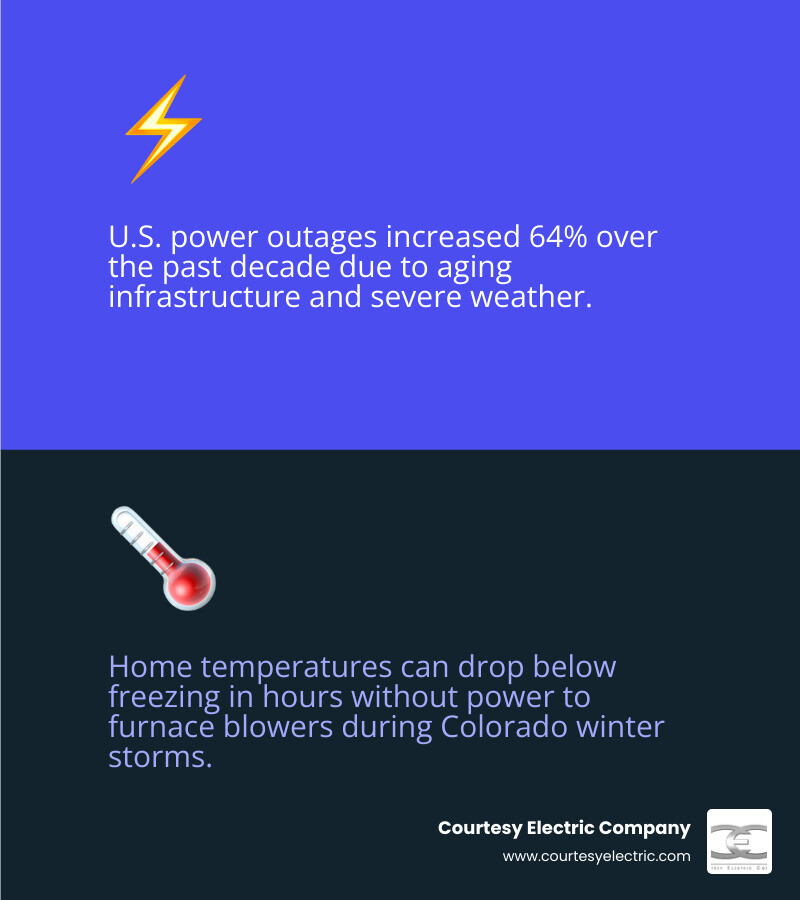
Colorado winters look beautiful on a postcard. But behind those snow-capped scenes is a real and growing threat to your home. The Denver Front Range sees sudden blizzards, ice storms, and deep freezes that can knock out power for hours — or days. Major outages across the U.S. have increased by 64% over the past decade, driven by aging grid infrastructure and more severe weather. And with fewer than 6% of American homes currently equipped with a standby generator, most households are one bad storm away from a serious problem.
When the grid goes down in sub-zero temperatures, the consequences stack up fast. Your furnace stops. Pipes begin to freeze. Food spoils within hours. For anyone relying on medical equipment at home, the stakes are even higher.
I'm David Meyer, Vice President of Courtesy Electric Company, and I've spent years helping Colorado Front Range homeowners understand the real-world generator benefits during Colorado winter power outages — from protecting plumbing at high elevations to keeping critical systems running through multi-day storms. In the sections ahead, I'll walk you through everything you need to know to make a confident, informed decision.
Why Generator Benefits During Colorado Winter Power Outages Are Essential for Home Safety
In the Denver metro area and throughout the Front Range, we are no strangers to the "Deep Freeze." When a winter storm rolls in, the primary concern isn't just the lack of light—it’s the loss of heat. Most modern gas furnaces still require electricity to run the blower motor, ignition system, and thermostat. Without power, your home’s temperature can plummet in a matter of hours.
One of the most significant whole home generator benefits for colorado homeowners is the prevention of frozen and burst pipes. When indoor temperatures drop below freezing, the water in your plumbing expands, leading to cracks that can cause catastrophic water damage once the thaw begins. Repairing burst pipes and the resulting mold or structural damage can cost tens of thousands of dollars—far exceeding the investment in a reliable backup power system.
Beyond plumbing, a standby generator protects your health and resources. A standard refrigerator only stays cold for about four hours without power, and a full freezer lasts roughly 48 hours. During the multi-day blizzards we often see in Parker or Highlands Ranch, this leads to hundreds of dollars in food spoilage. For residents relying on medical devices like oxygen concentrators or CPAP machines, or those with sump pumps that prevent basement flooding during heavy snowmelt, a generator isn't a luxury; it’s a critical piece of safety equipment.
Standby vs. Portable: Choosing the Right Protection for the Front Range
When considering generator benefits during Colorado winter power outages, many homeowners wonder if a portable unit is enough. While portable generators are great for camping or short-term use, they present significant challenges during a Rocky Mountain winter.
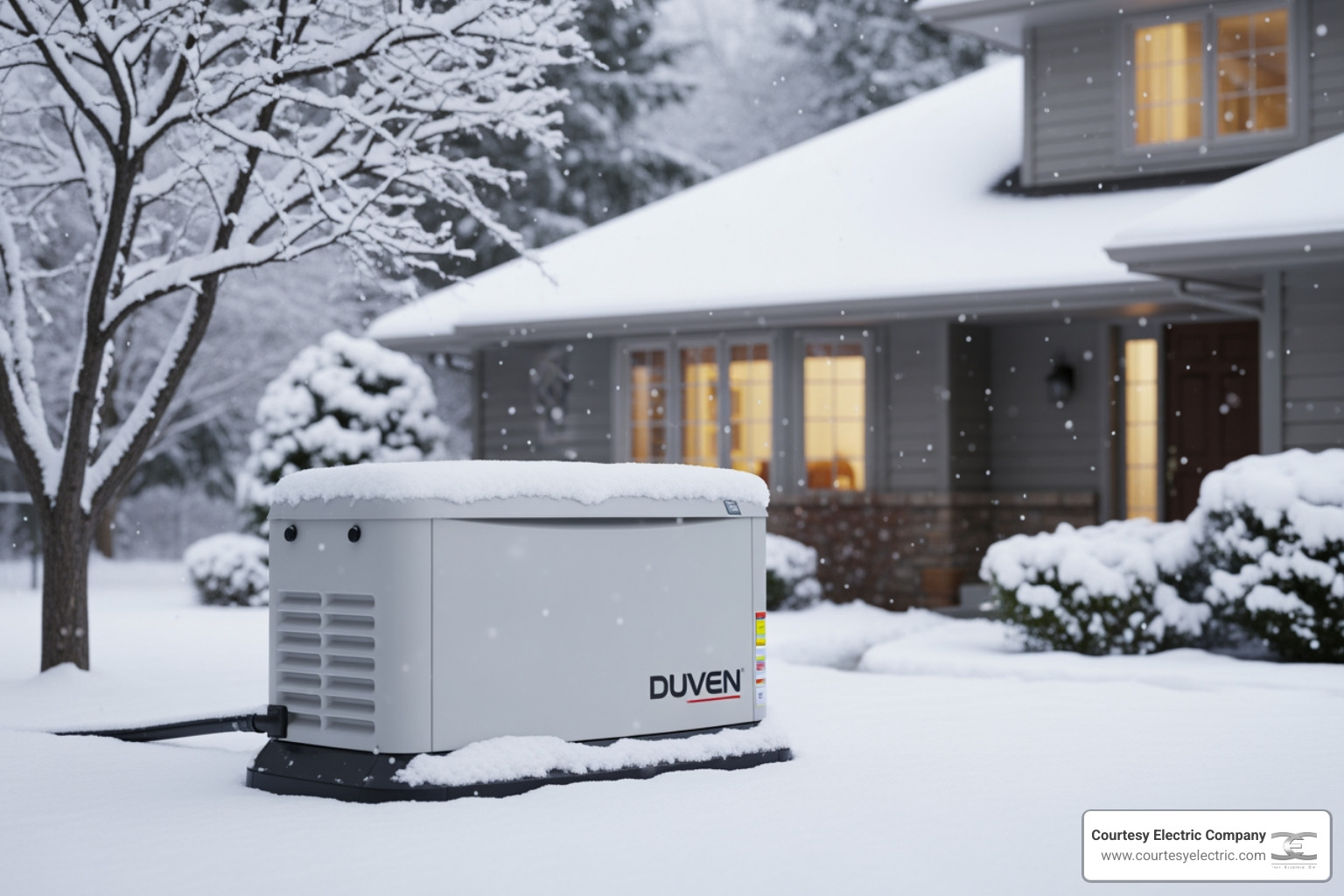
A standby generator is a permanent installation, similar to an AC unit, that connects directly to your home’s electrical panel via an Automatic Transfer Switch (ATS). This "brain" of the system monitors the utility grid 24/7. When it detects a failure, it automatically starts the generator and switches your home’s power source in 10 to 30 seconds—even if you aren't home.
Portable units, by contrast, require you to go outside in the middle of a blizzard, clear snow, find your fuel, and manually pull-start an engine that might be stubborn in sub-zero temperatures. Furthermore, portable units carry a high risk of carbon monoxide poisoning if not placed perfectly, and they require constant refueling with gasoline, which can degrade or thicken in the cold.
To understand the mechanics deeper, you can explore how does a standby generator work to see how the ATS manages your load.
Standby vs. Portable Comparison for Colorado Winters
| Feature | Standby Generator | Portable Generator |
|---|---|---|
| Activation | Automatic (10-30 seconds) | Manual (must be set up in storm) |
| Fuel Source | Natural Gas or Large Propane Tank | Gasoline (requires manual refills) |
| Power Output | Whole-home (HVAC, Sump Pump, etc.) | Limited (usually a few appliances) |
| Cold Weather | Built-in heaters & self-tests | Difficult to start in freezing temps |
| Safety | Permanent, outdoor, professional | Risk of CO2 and extension cord trips |
Overcoming the "Altitude Tax" and Extreme Cold on Performance
Living in the Mile High City or the surrounding foothills comes with a unique challenge we call the "Altitude Tax." Combustion engines—like the ones inside a generator—rely on a specific mix of fuel and oxygen. Because the air is thinner at 5,280 feet and higher, engines lose approximately 3% to 4% of their rated power for every 1,000 feet of elevation.
This means a 20 kW generator rated at sea level will only produce about 14 to 15 kW at a high-elevation Colorado home. If you live in the Black Forest or the foothills, this derating is even more dramatic. When we design systems for our clients, we don't just look at your square footage; we calculate the "altitude-adjusted" load to ensure your generator doesn't stall when your HVAC kicks on.
For more details on high-altitude performance, our generators fraser co complete guide provides a deep dive into how mountain geography dictates equipment choice.
Understanding generator benefits during colorado winter power outages at high elevations
At high altitudes, engine efficiency is everything. Beyond just sizing up the engine, we also have to consider how extreme cold affects the unit's ability to start. We often recommend cold-weather kits, which include battery warmers and oil heaters, to ensure the engine turns over instantly even when it's -10°F outside. If you are looking for the best generators services in fraser co or the higher-elevation areas of the Front Range, ensuring your installer understands these mechanical nuances is vital.
Installation and Maintenance: Ensuring Reliability Before the Storm Hits
A standby generator is a sophisticated piece of machinery that integrates with your home’s natural gas line and electrical infrastructure. Because of this, professional installation is a must. In Denver and surrounding counties, specific permits are required to ensure the installation meets both electrical and mechanical codes.
During the process, we perform detailed load calculations. We look at "starting wattage"—the surge of power needed to get a motor running—versus "running wattage." We also ensure the unit meets local setback rules, which generally require the generator to be at least five feet away from windows and doors to prevent exhaust from entering the home. You can learn more about the step-by-step process in our guide on generator installation what to expect.
For those in more remote or high-snowfall areas, we also offer specialized generators installation in fraser co to account for unique terrain and weather patterns.
Maximizing generator benefits during colorado winter power outages through routine service
A generator is like a car that sits in the garage for months but must win a race the moment you turn the key. To ensure it’s ready, routine maintenance is non-negotiable. Standby units are designed to run "self-tests" weekly for about 15 minutes, but they still require human intervention for long-term health.
Key maintenance tasks include:
- Oil and Filter Changes: Typically required every 100-200 hours of run time or at least once a year.
- Battery Testing: Cold weather is the number one killer of batteries. We check the charge and "cranking amps" to ensure it has the juice to start.
- Spark Plug Replacement: Keeps the ignition crisp and reliable.
- Enclosure Inspection: Checking for rodent nests or debris that could block airflow.
Check out our generator maintenance tips for homeowners for a DIY checklist, and remember that how proper maintenance extends generator life can mean the difference between a 10-year lifespan and a 30-year one.
Preparing for the 2026 winter storm season
As we move into 2026, the demand for backup power continues to rise. We recommend scheduling your pre-storm inspections in October or November. During the winter, your primary job as a homeowner is "clearance." After a heavy snowfall, ensure the intake and exhaust vents of the generator enclosure are clear of snow drifts. Our generator maintenance before colorado storm season guide and our generators maintenance guide fraser co offer specific tips for keeping your unit breathing during a blizzard.
Frequently Asked Questions about Colorado Winter Backup Power
How long can a standby generator run during a multi-day blizzard?
If your generator is fueled by natural gas, it can theoretically run indefinitely, provided the utility lines remain intact. If you use propane, a standard 500-gallon tank can typically power a home for a week or more, depending on the electrical load. The only physical limit is the oil level; most manufacturers recommend checking the oil and potentially topping it off every 24 to 48 hours of continuous operation.
Does a standby generator increase home resale value in Colorado?
Absolutely. In the Colorado real estate market, a standby generator is seen as a high-value, permanent home improvement. Estimates suggest they can increase home resale value by 3% to 5%. More importantly, it provides a "peace of mind" factor that makes your home stand out to buyers who are worried about grid instability or live in areas prone to preemptive utility shutoffs.
How quickly does a standby generator restore power during an outage?
The transition is nearly seamless. Once the Automatic Transfer Switch detects a loss of utility power, it signals the generator to start. Once the generator reaches the correct speed and voltage—usually within 10 to 30 seconds—the switch disconnects the utility line and connects the generator. Your lights might flicker for a moment, but your HVAC and refrigerators will be back online before the house even begins to cool down.
Conclusion
At the end of the day, the generator benefits during Colorado winter power outages boil down to one thing: control. You can’t control the weather, and you can’t control the aging power grid, but you can control how those factors affect your family’s safety and comfort.
From preventing the nightmare of burst pipes to ensuring that life-saving medical equipment never loses power, a standby generator is an investment in your home’s resilience. At Courtesy Electric Company, we’ve been serving the Denver and Front Range community since 1976. We pride ourselves on quality, integrity, and the dependability you need when the wind starts to howl and the lights go out.
Don't wait for the next blizzard to realize you're unprepared. Contact us for professional electrical services and request your free estimate today. Let us help you find the perfect Generac or Cummins solution tailored to your home’s specific needs and elevation. Stay warm, stay safe, and keep the lights on with Courtesy Electric.


