
Why Electrical Fire Prevention Tips for Homeowners Could Save Your Life and Home

Electrical fire prevention tips for homeowners are one of the most important things you can learn as a homeowner — and one of the most overlooked. While most people think about smoke alarms and escape routes, the real danger often starts silently inside your walls, outlets, and wiring long before any smoke appears.
Here is a quick overview of the most essential steps to prevent electrical fires at home:
- Don't overload outlets or circuits — use surge protectors and spread devices across multiple outlets
- Inspect cords and plugs regularly — replace anything frayed, cracked, or discolored immediately
- Never run cords under rugs or furniture — trapped heat builds up and damages insulation
- Install AFCI and GFCI protection — these devices catch dangerous faults before they ignite
- Test smoke alarms monthly and replace them every 10 years
- Keep space heaters at least 3 feet from anything flammable and never leave them unattended
- Schedule professional electrical inspections — especially if your home is more than 20 years old
- Call a licensed electrician any time you notice flickering lights, burning smells, buzzing sounds, or frequently tripping breakers
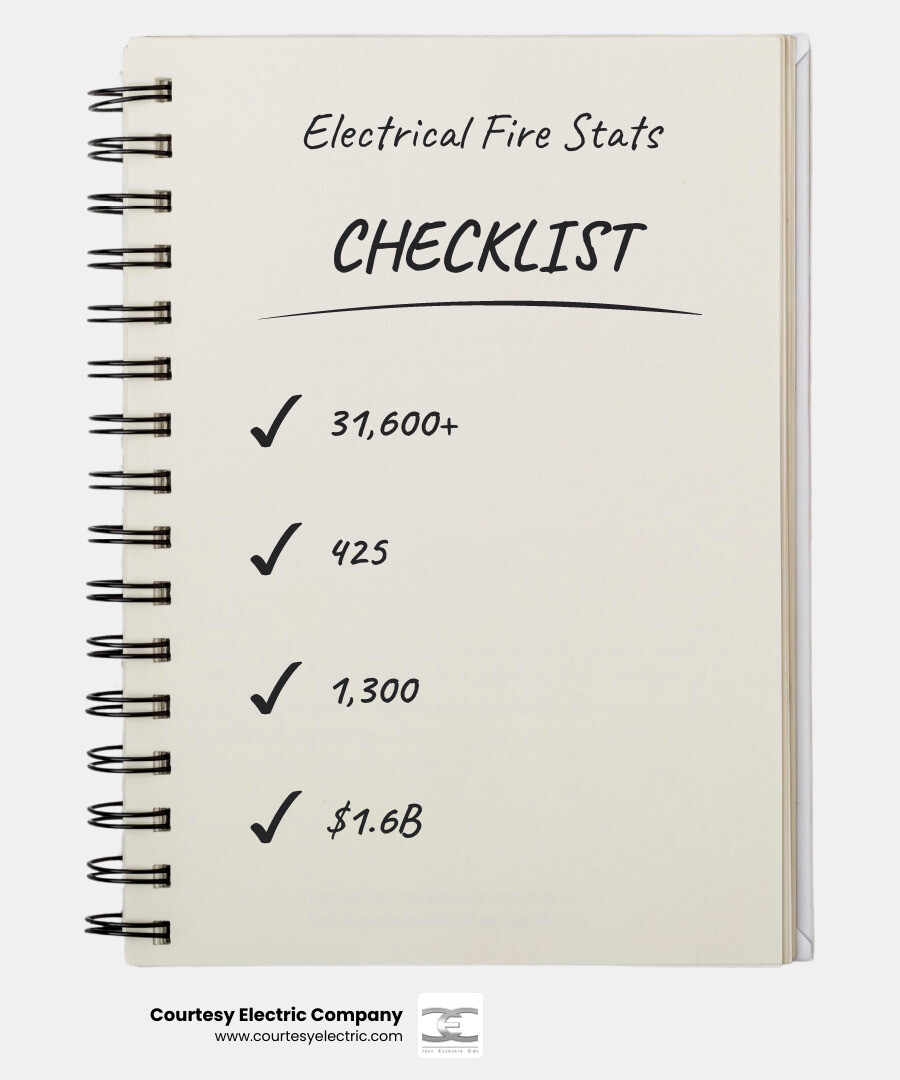
The numbers behind electrical fires are sobering. Between 2019 and 2023, electrical distribution and lighting equipment alone was linked to an average of over 31,600 home structure fires every year in the United States, causing around 425 deaths, nearly 1,300 injuries, and an estimated $1.6 billion in property damage annually. In Colorado and across the Front Range, older homes and modern energy demands create a combination that puts many households at higher risk than homeowners realize.
I'm David Meyer, Vice President of Courtesy Electric — a Colorado electrical contractor with roots going back to 1976 — and over the decades I've seen how the right electrical fire prevention tips for homeowners can make the difference between a close call and a catastrophe. In this guide, I'll walk you through everything you need to know to protect your home, your family, and your peace of mind.
Identifying Common Causes and Warning Signs of Electrical Hazards
Understanding how these fires start is the first step toward prevention. In our experience serving the Denver area, most homeowners are surprised to learn that electrical distribution equipment ranks first in direct property damage among all home fire causes. Whether it's a loose connection behind a bedroom wall or a kitchen outlet pushed to its limit, the risks are often invisible until it's too late.
According to data from 2019–2023, electrical wiring equipment was involved in 4% of all home fires but accounted for 6% of deaths. Even more startling, while cords and plugs were involved in only 1% of fires, they were responsible for 6% of fire-related deaths. This tells us that when electrical fires do happen, they are often more lethal than other types of household fires.
Common culprits include:
- Faulty or Aging Wiring: Over time, insulation can become brittle, or connections can loosen.
- Overloaded Circuits: Plugging too many high-wattage devices into a single outlet or circuit.
- Damaged Cords: Frayed or pinched wires that arc and create intense heat.
- Outdated Panels: Older breaker boxes that fail to trip when a circuit is overloaded.
If you are noticing issues in your home, it's time to take action. You can find More info about residential services on our dedicated service page.
Recognizing the signs of potential electrical fire hazards
Your home will often try to tell you when something is wrong. We recommend using all your senses to perform a regular "safety sweep" of your living spaces.
- Touch: Feel your outlet covers and switch plates. They should never be hot to the touch. If they are, it indicates a dangerous heat buildup behind the wall. Similarly, if you feel a "tingling" sensation when touching an appliance, stop using it immediately.
- Smell: A persistent smell of burning plastic, rubber, or even a "fishy" odor is a classic sign of electrical components overheating and melting.
- Sight: Look for discolored or charred outlets (brown or black marks). Watch for flickering or dimming lights, which often suggest a circuit is struggling to handle the load.
- Sound: Listen for sizzling, buzzing, or popping sounds coming from your walls or fixtures. These are the sounds of electricity "arcing" or jumping across a gap—a major fire hazard.
Why older homes in Denver need special attention
Many beautiful homes in the Denver and Colorado Front Range were built decades ago. While they have character, their electrical systems weren't designed for the "digital age." In 1980, a home might have had a TV, a fridge, and a few lamps. Today, we have high-powered gaming PCs, EV chargers, air fryers, and smart home hubs.
Older infrastructure often relies on 60-amp or 100-amp service, which is frequently inadequate for modern energy demands. Furthermore, homes built between the late 1960s and mid-1970s may have aluminum wiring. Aluminum is more prone to expanding and contracting, which can lead to loose connections and fires. We generally recommend a professional inspection every 3–5 years for older homes, or immediately if you've recently moved in. You can find More info for homeowners regarding how we help local residents stay current.

Essential Electrical Fire Prevention Tips for Homeowners
Prevention is about habit as much as it is about hardware. Simple changes in how you use your home's power can drastically reduce your risk profile.
Best practices for using extension cords and power strips safely
Extension cords are meant to be a temporary bridge, not a permanent solution. One of the most common mistakes we see in the Front Range is "daisy-chaining"—plugging one power strip into another. This creates excessive heat and can easily overwhelm the original wall outlet.
- Check the Rating: Ensure your cord is rated for the device you are plugging in. A heavy-duty appliance like a space heater or a treadmill requires a thick, heavy-duty cord.
- Don't Hide Cords: Never run cords under rugs, carpets, or furniture. Walking over a cord under a rug damages the internal wires, and the rug traps heat that would otherwise dissipate, creating a perfect environment for a fire.
- Inspect Regularly: Before plugging anything in, run your hand down the cord. If you feel nicks, cracks, or frayed sections, throw it away. Never try to "fix" a damaged cord with electrical tape.
- The 3-Foot Rule: Keep cords away from water and heat sources. If you find yourself relying on extension cords for months at a time, it's a sign you need more permanent outlets installed.
Maintaining appliances to reduce fire risks
Appliances are the workhorses of the home, but they require maintenance to stay safe.
- The Dryer Danger: Clothes dryers are a leading cause of home fires. Lint is highly flammable. You must clean the lint filter after every single load and have your dryer vents professionally cleaned at least once a year to prevent buildup in the ductwork.
- Unplug Small Devices: Toasters, coffee makers, and hair straighteners still draw "phantom" power when plugged in. If a component fails while you're at work, it could start a fire. Making it a habit to unplug these when not in use is a great electrical fire prevention tip for homeowners.
- Wattage Matching: Always check the maximum wattage rating on light fixtures. Installing a 100-watt bulb in a fixture rated for 60 watts can melt the socket and wiring.
For those concerned about the longevity and safety of their installations, More info about our warranty can provide peace of mind. You can also find More info about electrical service to see how we maintain these systems.
Upgrading Your Home with AFCI and GFCI Protection
Modern electrical codes are designed with layers of protection. If your home hasn't been updated in the last decade, you might be missing two of the most important life-saving technologies: AFCIs and GFCIs.
- GFCI (Ground Fault Circuit Interrupter): These are designed to protect people from electric shock. They monitor the flow of electricity and shut off the power in as little as 1/40th of a second if they detect a "leak" (ground fault), which often happens near water.
- AFCI (Arc Fault Circuit Interrupter): While GFCIs protect people, AFCIs protect the structure. They detect dangerous "arcing"—the sparking that happens when a wire is damaged or a connection is loose. Standard breakers won't always trip during an arc, but an AFCI will, stopping a fire before it starts.
How to check if your AFCI and GFCI outlets are working
Having these devices installed is only half the battle; you must ensure they actually work.
- Look for the "Test" Button: Both GFCI outlets and AFCI breakers have a small "Test" and "Reset" button.
- The Monthly Test: Once a month, press the "Test" button. You should hear a click, and the power to that outlet (or circuit) should cut off.
- Reset: Press the "Reset" button to restore power. If the device doesn't trip when tested, or won't stay reset, it's defective and needs immediate replacement by a professional.
We take pride in our work across the region; you can see examples of these modern safety standards in our Single family residential portfolio.
The role of smart panels in electrical fire prevention tips for homeowners
As we move toward 2026, technology is giving homeowners even more control. We specialize in the installation of SPAN smart panels. Unlike traditional "dumb" breaker boxes, a smart panel provides real-time monitoring of every circuit in your home through an app.
If a circuit is drawing an unusual amount of power or showing signs of a fault, you get a proactive alert on your phone. This allows you to shut off the specific circuit remotely, potentially preventing a fire while you're away from home. It's the ultimate upgrade for safety-conscious homeowners in the Front Range.
Creating a Comprehensive Home Safety Plan
Even with the best prevention, you must be prepared for an emergency. A fire can become life-threatening in less than two minutes.
Testing and replacing smoke alarms for maximum safety
Smoke alarms are your first line of defense, especially since many electrical fires start at night while you're asleep.
- Placement: Install alarms on every level of your home, inside every bedroom, and outside all sleeping areas. For maximum safety, alarms should be placed roughly every 21 feet.
- The 10-Year Rule: Smoke alarms don't last forever. The sensors degrade over time. If your alarm is more than 10 years old (check the date on the back), replace it immediately.
- Dual-Sensor Technology: We recommend alarms that use both ionization (best for flaming fires) and photoelectric (best for smoldering fires) sensors.
- Maintenance: Vacuum your smoke alarms once a year to remove dust that can cause false alarms or slow response times.
Professional electrical fire prevention tips for homeowners in Colorado
In the Colorado Front Range, our winters can be brutal. This leads to a 30% increase in electrical fires during December, January, and February due to heating equipment.
- Space Heater Safety: If you use a portable heater, it must be plugged directly into a wall outlet—never a power strip. Keep it at least 3 feet away from bedding, curtains, and furniture. Look for models with an automatic "tip-over" shut-off switch.
- EV Charging: As more Denver residents switch to electric vehicles, the strain on home grids increases. Always use a dedicated circuit for your EV charger to prevent overheating your home's main infrastructure.
- Pest Control: Squirrels and mice love to nest in attics and chew on wire insulation. If you hear scratching in your walls, call pest control and then have an electrician check for wire damage.
For integrated safety, More info about home security can show you how we tie these systems together. If you have concerns, please Contact us for more information.
Frequently Asked Questions about Residential Fire Safety
What are the most common causes of electrical fires in homes?
The most frequent causes include faulty or aging wiring, overloaded circuits and outlets, and the misuse of extension cords. High-draw appliances like space heaters, dryers, and lighting fixtures with incorrect bulb wattages also contribute significantly to the 51,000 annual electrical fires reported nationally.
How often should I have my home's electrical system inspected?
As a general rule, a professional inspection every 10 years is recommended for newer homes. however, if your home is over 20 years old, you should move that to every 3–5 years. You should also request an inspection immediately if you notice warning signs like flickering lights, burning smells, or if you are planning a major renovation or adding high-power appliances like an EV charger or a hot tub.
Can an unused outlet cause a fire?
Yes. Even if nothing is plugged into an outlet, it is still part of a live circuit. If the wiring behind the outlet is loose, or if moisture has entered the wall, an "arc" can occur. Dust buildup inside an old outlet can also act as fuel if a spark occurs. If an outlet looks discolored or feels warm even when empty, it needs to be replaced.
Conclusion
As we move through April 2026, the technology available to protect our homes has never been better, but it still relies on the vigilance of the homeowner. By following these electrical fire prevention tips for homeowners, you aren't just protecting property; you're protecting your family.
At Courtesy Electric Company, we've spent nearly 50 years ensuring the safety of homes across Denver, Parker, Highlands Ranch, and the entire Front Range. Whether you need a simple safety inspection, an AFCI/GFCI upgrade, or the installation of a cutting-edge SPAN smart panel, we are here to help with quality, integrity, and dependability.
Don't wait for a spark to tell you there's a problem. Schedule an electrical safety inspection with our expert team today and ensure your home's electrical system is ready for the demands of modern life.


