
Why Spring Electrical Safety and Storm Preparation Matters for Front Range Homeowners

Spring electrical safety and storm preparation is essential for Colorado homeowners — spring storms on the Front Range bring lightning, high winds, flooding, and sudden power outages that can seriously damage your home's electrical system.
Here's a quick overview of what you need to do before storm season hits:
- Install whole-home surge protection to guard against voltage spikes from lightning and grid fluctuations
- Schedule a professional electrical inspection to catch outdated wiring, loose connections, or panel issues
- Test GFCI outlets in kitchens, bathrooms, garages, and outdoor areas
- Unplug non-essential electronics before a major storm arrives
- Have a backup power plan — whether a standby generator or battery storage system
- Know your downed power line protocol — stay at least 10 feet away and call 911 immediately
- Build an emergency kit with flashlights, batteries, water, food, and a portable phone charger
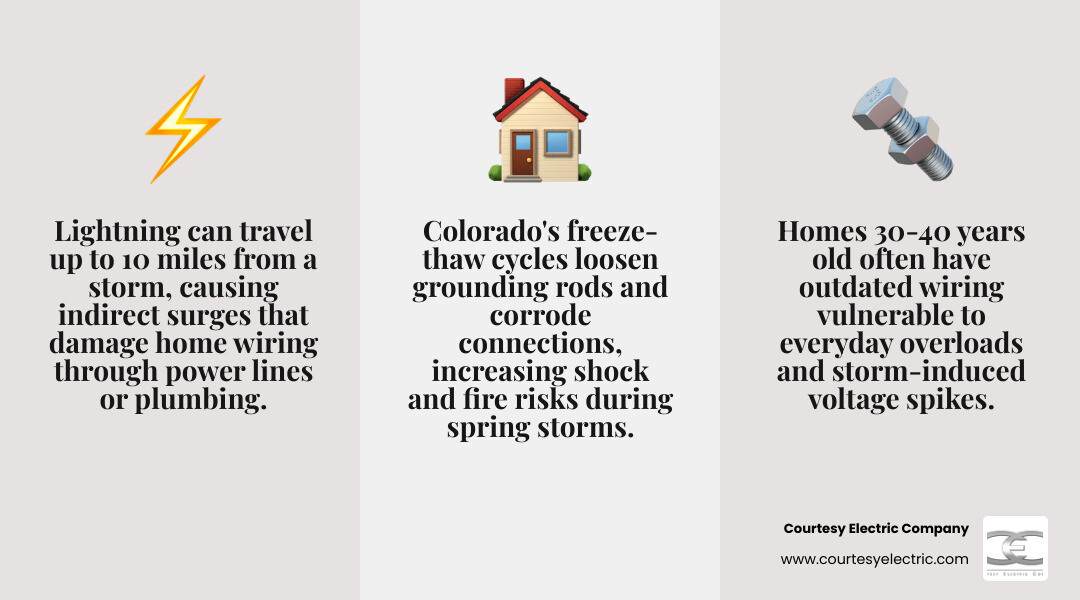
Spring storms can strike fast, and your electrical system is often the first thing to take the hit. Lightning can travel up to ten miles from a storm, meaning you don't need a direct strike to suffer serious surge damage. Standard outlets carry up to 169 volts under normal conditions — but a single lightning event or grid fluctuation can push thousands of extra volts through your wiring in a fraction of a second. Homes 30 to 40 years old or older may already have wiring that struggles under everyday demand, let alone a major storm. Add in Colorado's freeze-thaw cycles, which can loosen grounding rods and corrode connections over winter, and the risk picture becomes clear.
I'm David Meyer, Vice President of Courtesy Electric, a Colorado-based electrical contractor with roots going back to 1976 — and spring electrical safety and storm preparation is something our team deals with every year across the Front Range. In this guide, I'll walk you through everything you need to know to protect your home before, during, and after storm season.
Why Spring Storms Threaten Your Home’s Electrical System
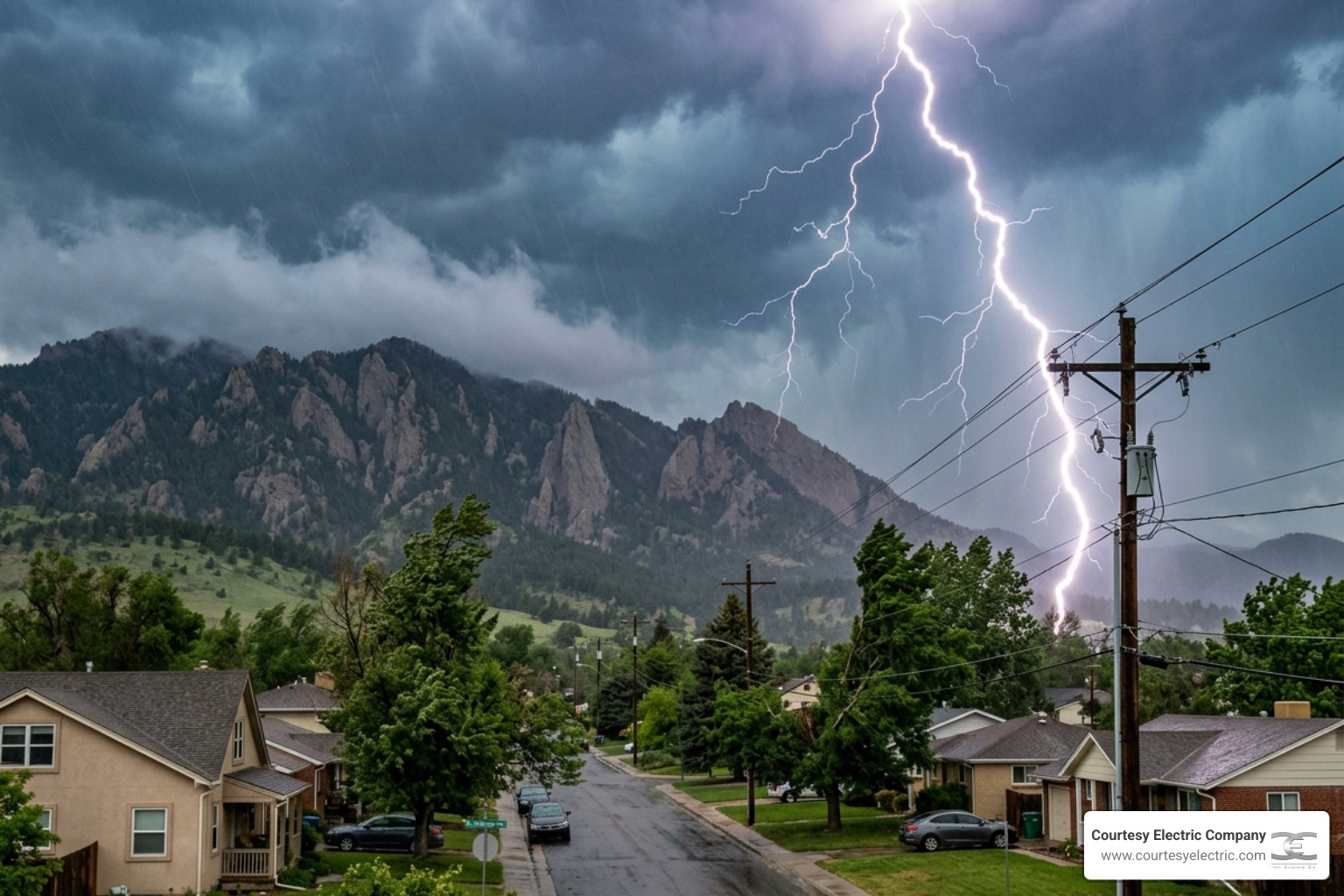
As we move into April 2026, the familiar rumble of afternoon thunderstorms is returning to the Front Range. While we all love the rain for our gardens, these storms pose a triple threat to your home: lightning, wind, and water.
Lightning is the most obvious offender. Even if it doesn't hit your roof directly, a strike to a nearby transformer or power line can send a massive voltage spike into your home. These spikes don't just "fry" devices; they can cause incremental damage to the insulation inside your walls, leading to fire hazards later.
In the Denver area, our unique soil conditions and intense freeze-thaw cycles play a hidden role in spring electrical safety and storm preparation. Over the winter, the ground expands and contracts, which can actually loosen your home's grounding rod or cause connections to corrode. If your grounding system isn't solid, that excess electricity from a surge has nowhere to go but through your expensive appliances.
Furthermore, if your home was built in the 1980s or earlier, your wiring might not be rated for the sheer number of electronics we use today. When a storm causes the grid to fluctuate, these older systems are the first to fail. Beyond just the lights going out, a compromised electrical system can also impact your home security systems, leaving your property vulnerable during a blackout.
Essential Spring Electrical Safety and Storm Preparation Steps
Preparation is the difference between a minor inconvenience and a five-figure repair bill. We recommend a proactive "hardening" of your home’s electrical infrastructure.
The most effective tool in your arsenal is whole-home surge protection. Unlike those cheap power strips from the big-box store, a professional surge protector is installed directly into your main electrical panel. It acts as a gateway, shunting massive voltage spikes safely into the ground before they ever reach your living room.
During a electrical service visit, we also look for "invisible" storm risks. This includes:
- Checking the service mast: High spring winds can pull the power entry point away from your house.
- Tightening connections: Vibrations and temperature swings can loosen wires in your panel, creating heat and fire risks.
- SPAN Smart Panels: For homeowners looking for the ultimate in resilience, we often recommend upgrading to a SPAN panel. These allow you to manage your home's circuits from your phone, which is incredibly helpful when you're trying to conserve battery or generator power during a long outage.
The Role of GFCIs in Spring Electrical Safety and Storm Preparation
Ground-Fault Circuit Interrupters (GFCIs) are those outlets with the "test" and "reset" buttons. They are designed to shut off power in as little as 1/40th of a second if they detect electricity flowing through water or a person.
Spring is the time to test every GFCI in your home. With heavy rains and potential basement seepage, these devices are your primary defense against lethal shocks. You should have them in:
- Kitchens and bathrooms
- Garages and basements
- All outdoor receptacles
To test them, simply press the "test" button; the "reset" button should pop out, cutting power to the outlet. If it doesn't, the internal mechanism has failed, and you need a replacement immediately.
Protecting Sensitive Electronics During Spring Electrical Safety and Storm Preparation
Even with whole-home protection, it’s smart to be cautious with your most sensitive gear. Computers, high-end gaming consoles, and smart home hubs are incredibly vulnerable to "dirty power"—the small fluctuations that happen just before the power goes out or right when it comes back on.
If a severe storm is forecasted for the Front Range, we suggest unplugging non-essential electronics. This physically breaks the path for a surge to travel. Additionally, try to avoid running high-powered appliances like the dishwasher or dryer during a heavy thunderstorm. This reduces the total load on your system, making it less likely that a minor grid hiccup will trip your main breaker.
Reliable Backup Power Solutions for the Front Range
When the wind knocks a tree onto a line in Parker or Highlands Ranch, you don't want to be left in the dark. We specialize in two main types of backup power: standby generators and battery storage.
| Feature | Portable Generator | Standby Generator (Generac/Cummins) | Battery Storage (Franklin) |
|---|---|---|---|
| Activation | Manual setup/Pull start | Automatic (within seconds) | Instantaneous |
| Fuel Source | Gasoline/Propane | Natural Gas/Propane | Stored Electricity/Solar |
| Maintenance | High (fuel storage/oil) | Professional annual service | Minimal |
| Noise Level | Very High | Moderate | Silent |
For a deeper dive into these options, check out our generators fraser co complete guide or learn about battery storage in granby co for high-altitude resilience.
Safe Generator Usage During Spring Electrical Safety and Storm Preparation
If you choose a generator, safety is paramount. Portable generators are useful, but they are the leading cause of carbon monoxide (CO) poisoning during outages. Never run a generator inside a garage, basement, or even near an open window. The "20-foot rule" is standard: keep the unit at least 20 feet away from the house with the exhaust pointing away.
For permanent standby units, we ensure they are installed with a proper transfer switch. This prevents "backfeeding," a dangerous situation where your generator sends electricity back into the utility lines, which can be fatal for line workers trying to restore power. If you're looking for the best generators services in fraser co, our team handles the entire process from gas line coordination to final electrical testing.
Integrating Battery Storage for Seamless Transitions
Battery systems like Franklin battery storage are becoming the gold standard for Denver homeowners. They are silent, require no fuel, and provide a seamless transition when the grid fails. Because they integrate with your home's energy management system, you can prioritize keeping your refrigerator and home security active while automatically turning off non-essential loads. We are proud to be among the best local battery storage companies granby co and across the Front Range.
Navigating Hazards During and After the Storm
The danger doesn't end when the rain stops. In fact, the post-storm period can be the most hazardous.
- Downed Power Lines: Always assume a downed line is live. Stay at least 10 feet away—though 30 feet is safer—and keep others back. Do not drive over them, as the wire can become tangled in your vehicle.
- Flooded Areas: If your basement has standing water, do not enter it. If the water has reached the level of your outlets or your electrical panel, the water itself could be energized. Call us or your utility company to have the power disconnected before you step into that water.
- Storm Kits: Every home should have a kit that is easily accessible. Include LED flashlights (avoid candles due to fire risk), fresh batteries, a portable power bank for phones, and a battery-powered weather radio.
If you've experienced a power outage and are ready to prevent the next one, our team specializes in generators installation in fraser co and throughout the Denver metro area.
Frequently Asked Questions about Spring Storm Safety
Can lightning damage my home without a direct hit?
Absolutely. Lightning can travel through the ground, through your home's plumbing pipes, or through the cable and phone lines entering your house. This is why we emphasize whole-home surge protection—it guards every entry point, not just the roof.
What should I do if my basement floods near electrical outlets?
Safety first: stay out of the water. If you can safely reach your main breaker panel without stepping in water, turn off the power to the basement circuits. If the panel is in the flooded area, call a professional immediately. Once the water is gone, all outlets and appliances that were submerged must be inspected by an electrician before being used again.
When is it necessary to call a professional electrician after a storm?
You should call us if you notice:
- Flickering lights: This often indicates a loose neutral wire or a damaged service entrance.
- Buzzing sounds: This can be a sign of an arc fault or a breaker failing to trip.
- Burning smells: This is an emergency; turn off your main power and call us immediately.
- Tripped breakers that won't reset: The breaker is doing its job by protecting you from a short circuit caused by moisture or damage.
Conclusion
As we look ahead through April 2026, don't let the beauty of a Colorado spring distract you from the power of our storms. Spring electrical safety and storm preparation is about more than just avoiding a dark house; it's about protecting your family and your biggest investment.
At Courtesy Electric Company, we've been the trusted Denver residential electrical experts for nearly 50 years. Whether you need a simple safety inspection, a SPAN smart panel upgrade, or a full Generac standby generator installation, we are here to help. We provide free estimates for all our electrical-service offerings across the Front Range, from Parker to Black Forest.
Stay safe, stay prepared, and give us a call before the next clouds roll over the mountains.


