Why Choosing the Right Home EV Charger Matters for Colorado Homeowners

Knowing how to choose the right home EV charger can save you from costly mistakes — like buying a charger your electrical panel can't support, or one that's too slow for your daily commute. Here's a quick overview of the key steps:
- Check your electrical panel — Confirm you have enough capacity for a Level 2 (240V) charger before you buy anything.
- Match amperage to your driving needs — A 32-amp charger adds about 25 miles of range per hour; a 48-amp unit adds roughly 37 miles per hour.
- Pick the right connector — Most non-Tesla EVs use J1772; newer vehicles may use NACS. Adapters can bridge the gap.
- Decide: hardwired or plug-in — Hardwired is more reliable; plug-in (NEMA 14-50) offers flexibility. Above 48 amps, hardwired is required.
- Look for smart features — Wi-Fi scheduling lets you charge during off-peak hours and can reduce your electricity bill.
- Check for rebates — A federal tax credit covers 30% of charger costs, and Colorado utilities offer additional incentives.
- Hire a licensed electrician — A new 240V circuit, a breaker installation, or a hardwired charger all require a licensed pro and typically a permit.
Most daily EV drivers need a Level 2 charger — and according to a Consumer Reports survey, 88% of EV owners with 2022 or newer vehicles already use one. The good news: with the right planning, most homes don't require an expensive electrical panel upgrade to get there.
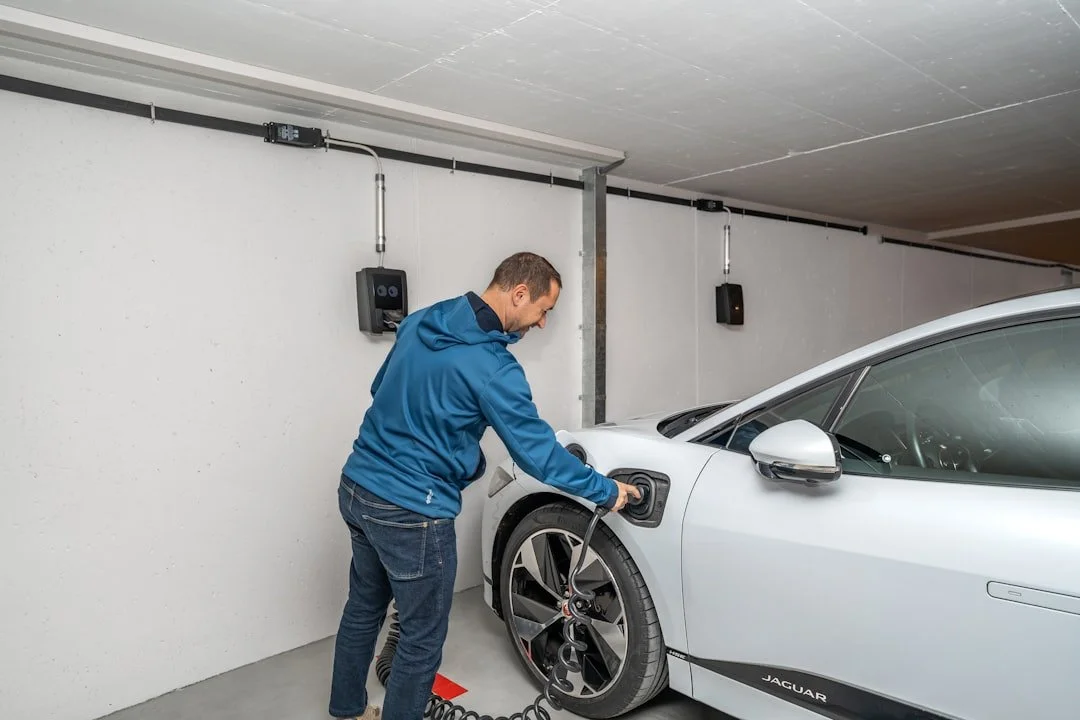
Going electric is one of the best decisions a Colorado homeowner can make for energy independence and long-term savings. But pulling into your garage after a long day on the Front Range and plugging in your vehicle should be simple — and it will be, once you've matched the right charger to your home, your car, and your daily routine. The challenge is that the options can feel overwhelming fast: Level 1 versus Level 2, hardwired versus plug-in, 32 amps versus 48 amps, J1772 versus NACS. Each choice has real consequences for your charging speed, your electrical system, and your wallet. This guide breaks it all down in plain language so you can move forward with confidence.
I'm David Meyer, Vice President of Courtesy Electric — a Colorado electrical contracting company that's been installing residential electrical systems across the Denver Front Range since 1976, and one that now regularly helps homeowners navigate how to choose the right home EV charger as part of our smart energy and panel upgrade services. In the sections that follow, we'll walk you through everything you need to know, from assessing your panel to picking the right connector for your vehicle.
Understanding EV Charging Levels: Level 1 vs. Level 2
Before diving into specific hardware features, it is vital to understand the basic categories of electric vehicle supply equipment (EVSE). In residential settings, you will generally choose between Level 1 and Level 2 charging. Level 3 (also known as DC Fast Charging) is reserved for commercial and public locations because its extreme power requirements far exceed standard residential electrical infrastructure.
Making the wrong assumption about your charging level can result in a car that is never fully charged when you need to head out for your morning commute. To help you plan your ideal home setup, take a look at our comprehensive EV Charger Installation Guide for Homeowners.
| Feature | Level 1 Charging | Level 2 Charging |
|---|---|---|
| Voltage | 120 Volts (AC) | 208–240 Volts (AC) |
| Amperage | 12–16 Amps | 16–50+ Amps |
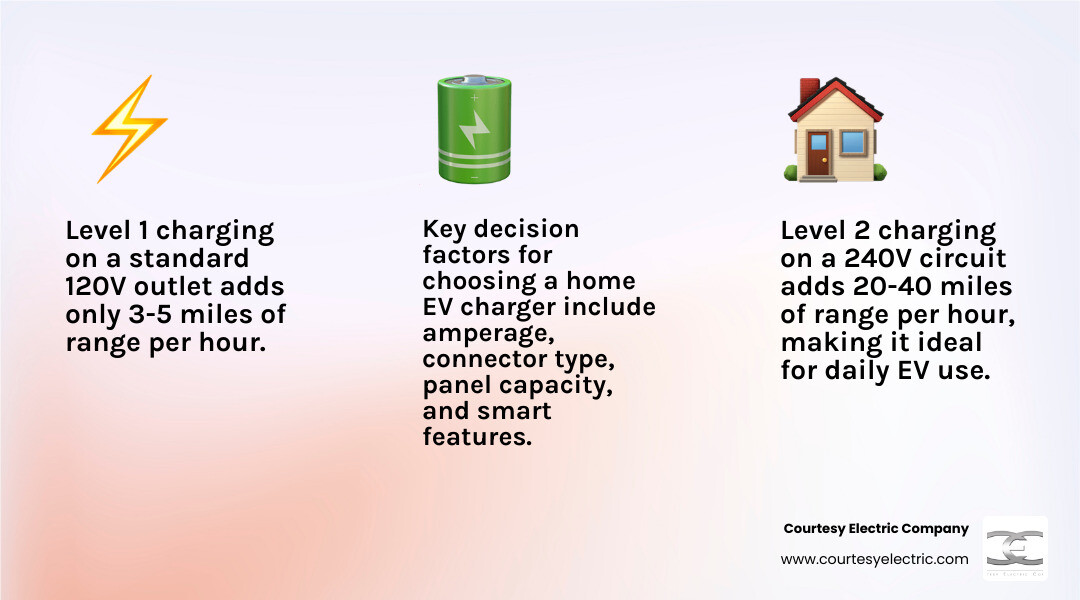
| Range Added Per Hour | 3 to 5 miles | 20 to 40 miles |
| Ideal Use Case | Emergency backup, plug-in hybrids, low daily mileage | Daily commutes, full battery electric vehicles (BEVs) |
| Installation Requirement | Standard household outlet | Dedicated double-pole circuit installed by an electrician |
Level 1 Charging Basics
Every electric vehicle ships with a portable Level 1 charging cord that plugs directly into a standard 120-volt household outlet. While highly convenient because it requires no special electrical work, Level 1 charging is incredibly slow.
Operating at roughly 1.4 kW, a Level 1 setup only adds about 3 to 5 miles of range per hour of charging. If you drive a plug-in hybrid (PHEV) with a small battery, this might suffice. However, if you drive a fully electric vehicle with a large battery pack, fully replenishing your range can easily take 40 to 60 hours. For most daily drivers, Level 1 is best kept as an emergency backup option.
Why Level 2 is the Best Choice for Denver Homeowners
Upgrading to a Level 2 charging system is the industry standard for dedicated home charging. Level 2 chargers operate on a 240-volt circuit—the same voltage used by heavy-duty household appliances like electric clothes dryers, water heaters, and central air conditioners.
By utilizing 240 volts, a Level 2 charger can deliver significantly more power, adding 20 to 40 miles of range per hour. This speed allows almost any electric vehicle to go from empty to a full charge overnight.
For homeowners living in Denver, Parker, Highlands Ranch, or Black Forest, Level 2 charging is particularly beneficial during our cold Colorado winters. Freezing temperatures naturally reduce battery efficiency and slow down charging speeds. Having the extra thermal management and higher power output of a Level 2 system ensures your vehicle is pre-conditioned and fully charged, even on the coldest winter mornings.
How to Choose the Right Home EV Charger: Assessing Your Home's Electrical Capacity
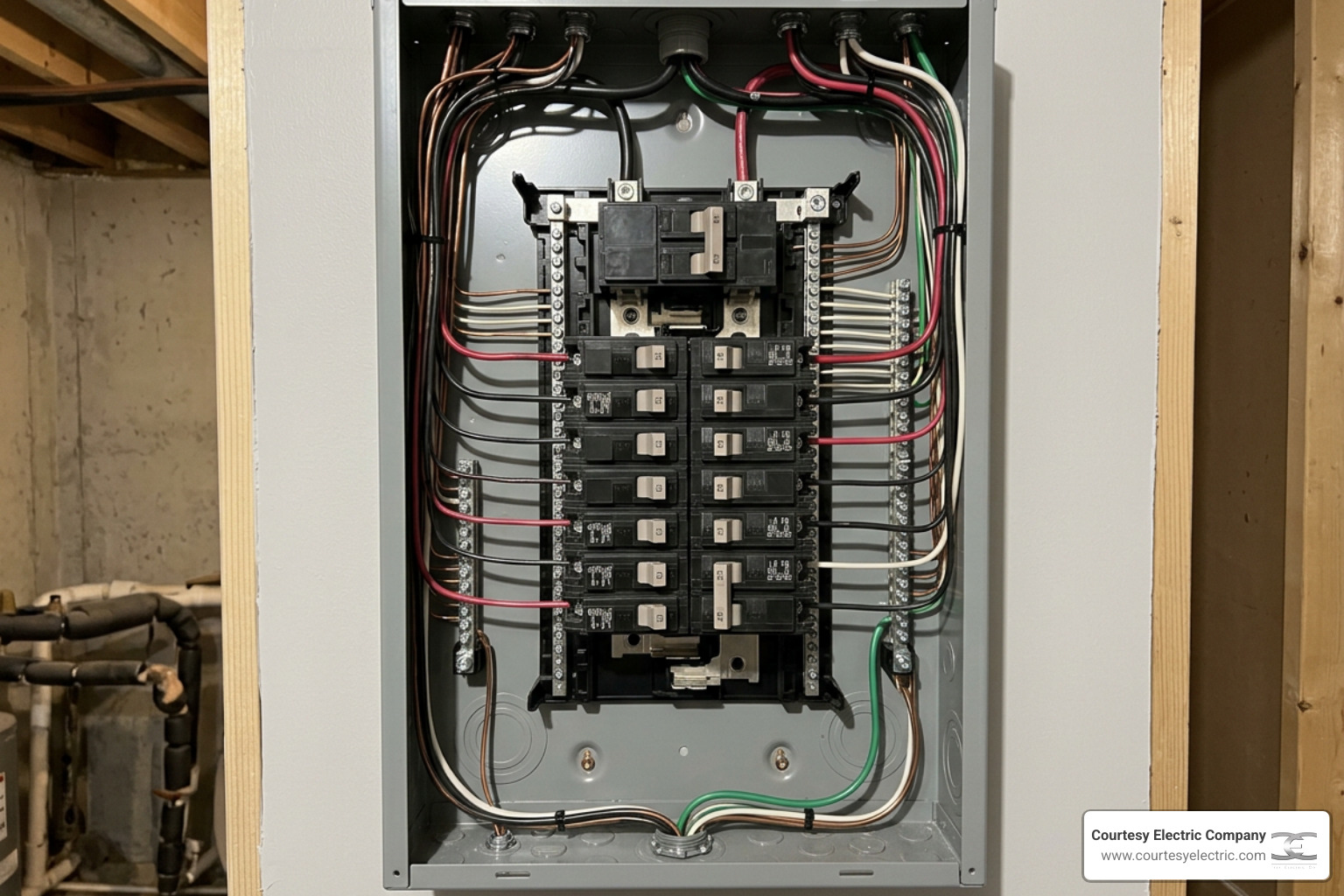
Your home's electrical panel is the heart of your charging setup. Before you purchase a charger, you must determine if your electrical system can handle the continuous load of an EV. Adding a high-draw appliance without verifying your panel’s capacity can lead to tripped breakers, overloaded circuits, or worse. To understand how your home's current setup measures up, read our expert guide on Does Your Electrical Panel Support an EV Charger.
Determining Amperage and Charging Speed
When deciding how to choose the right home EV charger, selecting the proper amperage is crucial. Level 2 chargers are commonly available in 32-amp, 40-amp, and 48-amp configurations.
To determine what your home can support, you must apply the National Electrical Code (NEC) "125% rule." Because EV charging is a continuous load (meaning it draws maximum power for several hours straight), the safety circuit breaker must be rated for 125% of the charger’s output.
- A 32-amp charger requires a 40-amp breaker and adds roughly 25 miles of range per hour.
- A 40-amp charger requires a 50-amp breaker and adds roughly 30 miles of range per hour.
- A 48-amp charger requires a 60-amp breaker and adds roughly 37 miles of range per hour.
If your home has a standard 200-amp electrical panel, you likely have the capacity to install a 40-amp or 48-amp charger without major changes. However, if you live in an older home with a 100-amp or 125-amp service panel, adding a heavy continuous load can push your system to its absolute limits.
Managing Electrical Demand and Avoiding Upgrades
If your electrical panel is nearly full, you do not always have to invest in a costly, complete electrical service upgrade. Modern smart energy management systems, smart panels (such as SPAN), and load-sharing devices can help you bypass these upgrades entirely. These technologies monitor your home's real-time energy consumption. If you turn on high-draw appliances like your electric oven or clothes dryer, the system will temporarily dial back the power sent to your EV charger, ramping it back up once the other appliances turn off.
To explore how these systems work in detail, check out our resource on Energy Management Options for Colorado Homes. Managing your home's overall electrical draw is especially critical during peak periods, as detailed in our guide on How to Manage Electrical Demand During Hot Weather.
Key Technical Specifications and Installation Decisions
Once you understand your panel's capacity, you will need to make a few key structural decisions regarding how the charger is mounted, wired, and connected to your vehicle.
Hardwired vs. Plug-In Options
Level 2 chargers are installed in one of two ways: hardwired directly into your electrical system, or plugged into a heavy-duty 240-volt outlet (typically a NEMA 14-50 receptacle).
- Plug-In Chargers (NEMA 14-50): These offer excellent portability. If you move, or if the charger ever needs service, you can simply unplug the unit and take it with you. However, plug-in chargers are strictly limited to a maximum of 40 amps of output (on a 50-amp breaker) by electrical code. Furthermore, plug-in setups require an industrial-grade outlet designed to handle continuous high-amperage draw, as cheap builder-grade outlets can overheat and melt over time.
- Hardwired Chargers: This method connects the charger directly to your home's electrical wiring with no plug or outlet in between. Hardwiring is highly recommended for maximum reliability and safety. It eliminates a common point of electrical failure (the plug-receptacle connection) and is the only way to utilize charging speeds above 40 amps (such as a 48-amp charger on a 60-amp breaker). Additionally, hardwired connections are far superior for outdoor installations, as they are completely sealed against moisture, snow, and extreme Colorado temperature swings.
Connector Types and Future-Proofing
The physical plug that connects the charger to your car is another critical consideration. Historically, North American EVs utilized two primary standards:
- SAE J1772 (J-Plug): The long-term standard for almost all non-Tesla electric vehicles.
- NACS (North American Charging Standard): Developed by Tesla, this connector has quickly become the industry-wide standard. Nearly all major automakers have transitioned to NACS for their newer models.
Fortunately, connector compatibility is easy to manage. High-quality adapters are widely available, allowing a J1772 charger to power a NACS vehicle and vice versa. When choosing a charger, consider your household's future needs. If you plan to own multiple brands of EVs or want to ensure your home is fully future-proofed for guests and future vehicle purchases, look for dual-standard chargers or units that feature integrated, safety-certified adapters.
Smart Features, Incentives, and Professional Installation in Colorado
Investing in a "smart" EV charger that connects to your home's Wi-Fi network unlocks powerful tools to track your energy consumption and lower your utility bills. While basic, non-connected chargers will charge your vehicle perfectly fine, smart chargers pay for themselves over time by allowing you to control exactly when and how your vehicle draws power.
To see how home automation can optimize your entire household's power footprint, read our article on How to Track and Control Energy Use Room by Room. You can also learn about the broader advantages of these integrations in our guide on Energy Management System Benefits for Homeowners.
Smart Features to Look For
- Wi-Fi Connectivity & Mobile App Control: Start, stop, and monitor charging sessions directly from your phone.
- Real-Time Energy Tracking: See exactly how many kilowatt-hours (kWh) your vehicle is consuming.
- Over-the-Air Software Updates: Ensures your charger receives safety and performance updates automatically.
- Dual-Vehicle Power Sharing: Allows two smart chargers to share a single circuit safely.
- Solar Integration: Program your charger to only charge your vehicle when your home's solar panels are producing surplus energy.
Smart Scheduling for Time-of-Use Rates
Many Colorado utility companies, including those serving the Denver Front Range, utilize Time-of-Use (TOU) rate plans. Under these plans, electricity is significantly more expensive during peak afternoon and early evening hours, and much cheaper late at night or early in the morning.
By using a smart charger's scheduling feature, you can plug your car in when you get home from work but delay the actual charging session until off-peak hours begin. This simple automation can dramatically lower your monthly electric bill.
To learn more about optimizing your home's energy consumption, check out How Energy Management Reduces Your Electric Bill. You can also discover additional ways to keep your energy bills low during high-demand seasons in How to Reduce Your Summer Electric Bill with Smart Technology.
Navigating Colorado EV Charger Rebates and Incentives
Installing an EV charger is highly supported by both federal and local programs, which can offset a significant portion of your equipment and installation expenses.
- Federal Tax Credit: Under the Section 30C tax credit, eligible residential households in non-urban or low-income census tracts can claim a federal tax credit covering 30% of the cost of purchasing and installing a home EV charger.
- Utility Rebates: Local Colorado utilities regularly offer substantial rebates for customers who install qualified smart chargers. Many of these programs require you to install a Wi-Fi-enabled charger so you can enroll in voluntary peak-demand management programs.
To make sure you do not leave any money on the table, review the current local opportunities in our articles on Colorado EV Charger Incentive Programs and Colorado EV Charger Rebates and Incentives.
Frequently Asked Questions About EV Charging
What is the first step in how to choose the right home ev charger for my vehicle?
The very first step is checking your vehicle’s onboard charger capacity. Every EV has an internal onboard charger that converts the alternating current (AC) from your home into the direct current (DC) stored in the battery. If your vehicle’s onboard charger is capped at 7.4 kW, buying a high-output 11.5 kW (48-amp) charger will not charge your car any faster, as the vehicle will limit the intake. Match your charger’s output to your vehicle’s maximum acceptance rate to avoid paying for speed capacity your current car cannot use.
How do I know how to choose the right home ev charger based on my daily mileage?
To choose the right charger based on your driving habits, calculate your average daily commute. If you drive less than 30 to 40 miles per day, a standard 32-amp Level 2 charger is more than sufficient. A 32-amp charger can easily replenish that daily range in under two hours. However, if you have a long daily commute across the Front Range, drive a large electric truck or SUV with a massive battery pack, or frequently travel for work, a faster 40-amp or 48-amp hardwired charger will give you the peace of mind that your vehicle can fully recover from empty in a short overnight window.
Do I need to upgrade my electrical panel to support a Level 2 charger?
Not necessarily. While many homeowners assume they need an expensive service panel upgrade, about 80% of homes have sufficient capacity if they use smart load calculations or load-management devices. A licensed electrician must perform an official National Electrical Code load calculation to assess your home's peak electrical demand. If your panel is indeed at its limit, installing a smart panel, a smart circuit splitter, or an energy management system is often a highly reliable and far more cost-effective alternative to a full panel upgrade.
Conclusion
Selecting and installing the right home EV charger is one of the most impactful steps you can take toward a seamless, stress-free electric driving experience. By matching your daily driving needs to your home's electrical capacity, choosing between hardwired and plug-in configurations, and taking advantage of smart scheduling and local Colorado rebates, you can enjoy fast, safe, and highly cost-effective charging right from your garage or driveway.
At Courtesy Electric Company, we have spent decades providing top-tier residential electrical services across Denver and the Colorado Front Range. Whether you need a comprehensive electrical panel assessment, a smart SPAN panel upgrade, or a professional Level 2 charger installation, our experienced team is here to help you power your home and vehicle safely. Contact us today for a free estimate on your installation.
Ready to upgrade your home’s electrical system for fast, reliable EV charging? Explore our Residential Electrical Services and schedule your free installation estimate today!


