Why Energy Management Options for Colorado Homes Matter More Than Ever

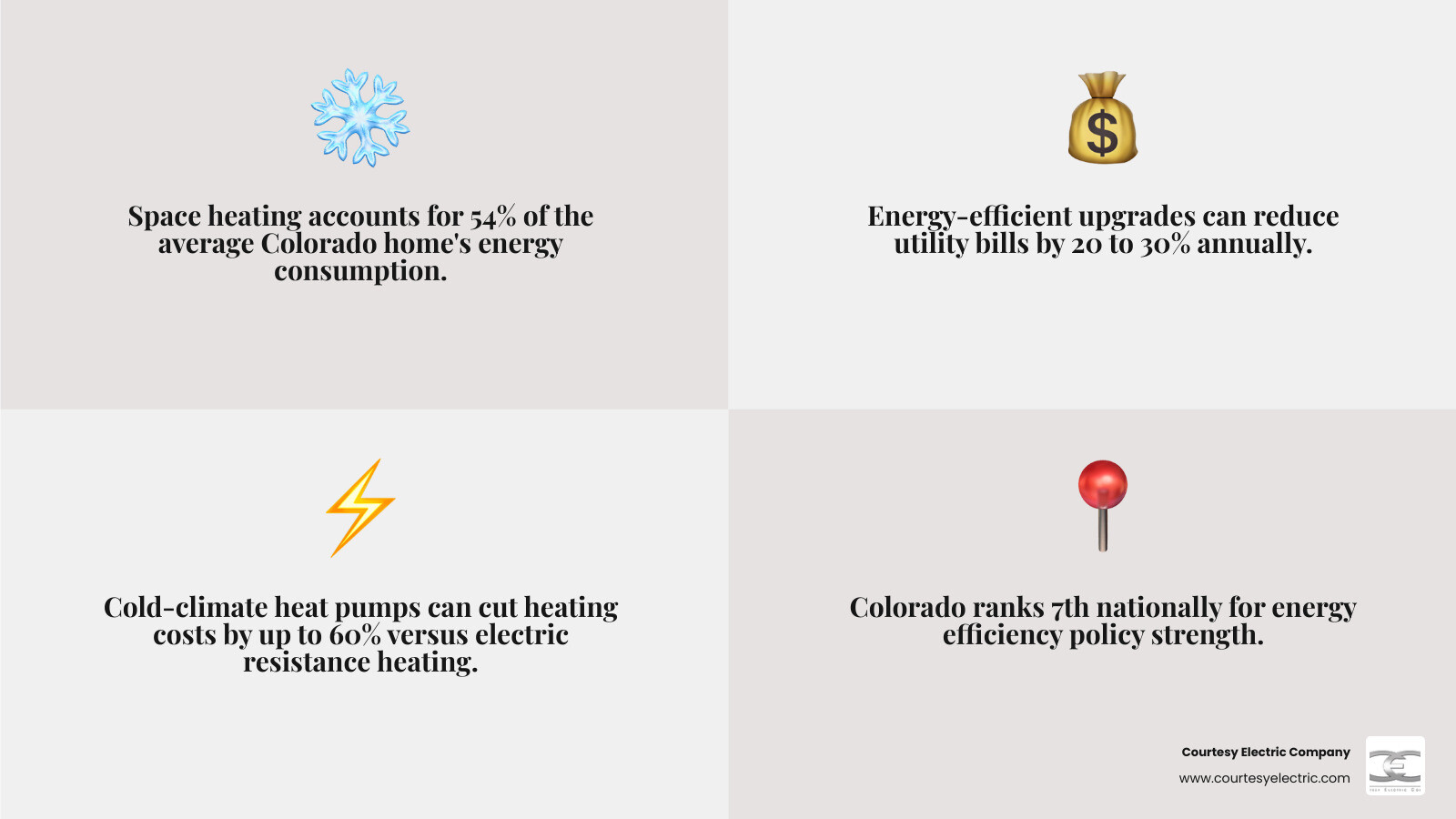
Energy management options for Colorado homes have never been more important — or more accessible. With space heating alone accounting for 54% of the average Colorado home's energy use, and utility bills rising year over year, Front Range homeowners are under real pressure to find smarter ways to power and protect their homes.
The good news: a growing stack of state programs, utility rebates, and advanced electrical technologies now makes it possible to cut energy costs significantly — often by 20 to 30% annually — while also building resilience against Colorado's unpredictable weather and grid outages.
Here is a quick overview of the main energy management options available to Colorado homeowners:
| Option | What It Does | Key Benefit |
|---|---|---|
| Weatherization (insulation + air sealing) | Reduces heat loss and air infiltration | Lowers heating and cooling costs year-round |
| Cold-climate heat pumps | Efficient electric heating and cooling | Up to 60% reduction in heating costs vs. electric resistance |
| Smart thermostats | Automates temperature scheduling | Reduces heating and cooling costs by up to 15% |
| ENERGY STAR appliances | Replaces inefficient appliances | Lowers utility bills by up to 30% |
| LED lighting | Replaces incandescent bulbs | Uses 75% less energy, lasts 25x longer |
| Heat pump water heaters | Efficient electric water heating | 25–35% less energy than traditional water heaters |
| Battery storage systems | Stores energy for backup or off-peak use | Provides power resilience and grid independence |
| SPAN smart panels | Monitors and manages home electrical load | Real-time energy visibility and control |
| Home standby generators | Whole-home backup power | Protection from outages during severe weather |
| State and utility rebates (HEAR/HER) | Financial incentives for upgrades | Up to $14,000 back on qualifying improvements |
Colorado also ranks 7th in the nation for energy efficiency policy, meaning residents have access to one of the strongest combinations of state programs, utility incentives, and building standards in the country.
I'm David Meyer, Vice President of Courtesy Electric — a Colorado electrical contractor with roots going back to 1976 — and my work with battery storage systems, smart panel installations, and electrical infrastructure across the Front Range gives me a practical, ground-level perspective on energy management options for Colorado homes. In this guide, I'll walk you through everything from rebate programs to advanced backup power solutions so you can make confident, informed decisions for your home.
Understanding Your Energy Management Options for Colorado Homes
To make the most of the energy management options for Colorado homes, we first have to understand where our home energy goes. In the Rocky Mountain region, our electricity and gas usage patterns are heavily dictated by extreme seasonal shifts. While our summers demand more cooling power, space heating remains the single largest driver of residential energy consumption, making up over half of our annual utility usage.
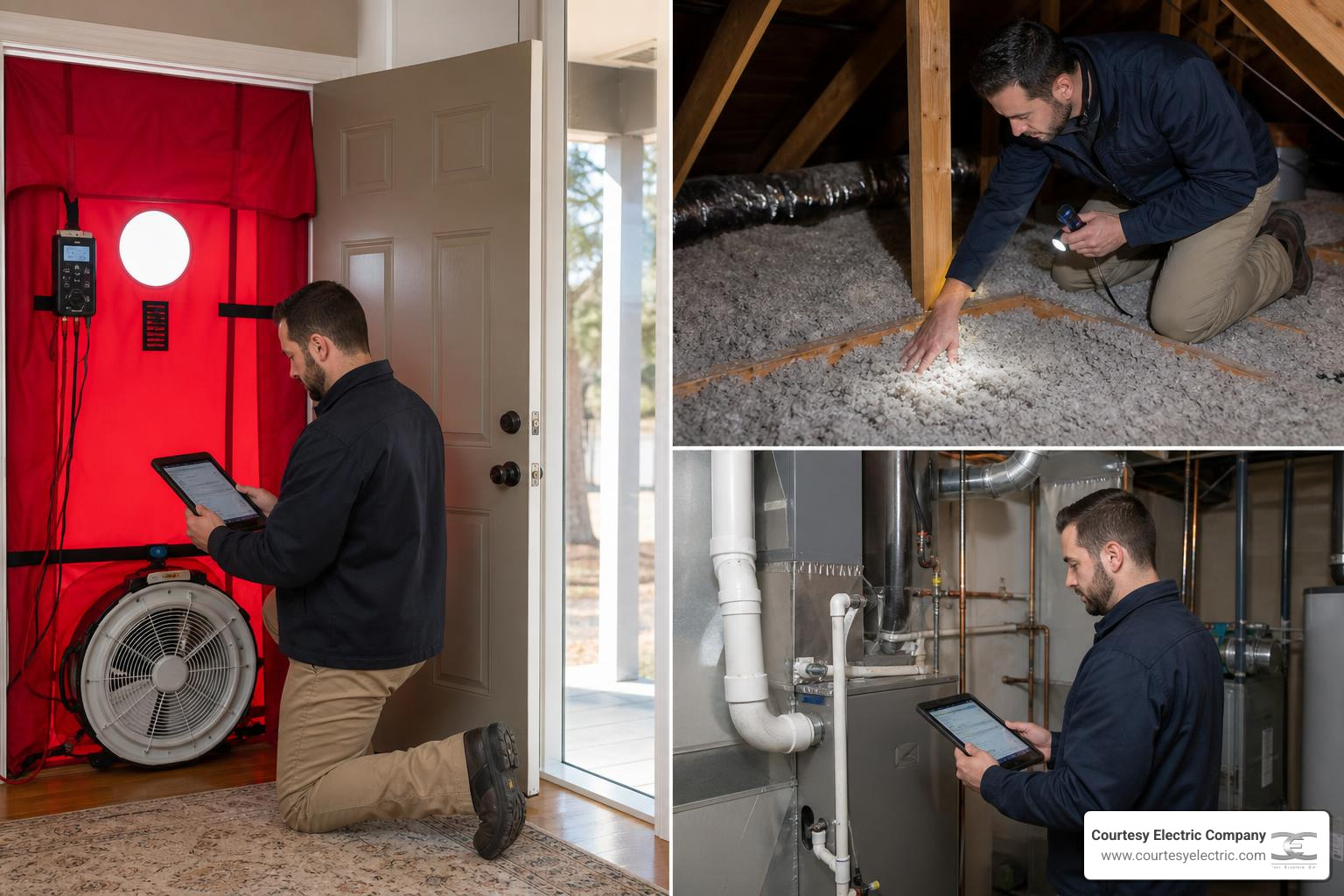
To pinpoint exactly where your home is losing power, we always recommend starting with a professional home energy audit. A certified auditor will perform a blower door test to measure air leakage, inspect your insulation levels, and assess the efficiency of your HVAC and electrical systems. Knowing where your home wastes energy allows you to target your upgrades for the fastest return on investment.
Modernizing your home’s infrastructure is about more than just sealing drafts; it is about taking control of your entire electrical system. Implementing a centralized management strategy offers massive benefits, which you can explore in detail in our guide on Energy Management System Benefits for Homeowners.
Optimizing Heating and Cooling Efficiency in the Rocky Mountain Climate
In places like Denver, Parker, Highlands Ranch, and Black Forest, winter temperatures regularly plummet below freezing, while summers can bring intense, high-altitude heat. This makes optimizing your heating and cooling efficiency a top priority.
Historically, homeowners worried that electric heat pumps couldn't handle Colorado’s coldest winter nights. However, modern cold-climate heat pumps are designed specifically for mountain climates, operating efficiently at temperatures as low as -5°F or lower. For homes transitioning from older electric resistance heating, a cold-climate heat pump can reduce annual heating costs by up to 60%.
To make sure your new heating and cooling systems perform at their peak, you must pair them with proper weatherization. This includes:
- Air Sealing: Sealing gaps around windows, doors, and baseboards to prevent drafts.
- Insulation Upgrades: Ensuring your attic insulation meets an R-value of R-49 to R-60. Insulating crawlspaces and exterior walls helps maintain a stable indoor temperature, reducing the workload on your HVAC system.
Smart Technology and Energy Management Options for Colorado Homes
Integrating smart home technology is one of the easiest, most cost-effective ways to reduce your daily energy consumption. You do not need to overhaul your entire house overnight; starting with small, high-impact devices can make an immediate difference on your monthly utility bills.
- Smart Thermostats: These devices learn your daily schedule and automatically adjust temperatures when you are asleep or away, which can reduce your heating and cooling costs by up to 15%.
- LED Lighting: Upgrading to LED bulbs is a quick win. LEDs consume about 75% less energy than old incandescent bulbs and last up to 25 times longer.
- ENERGY STAR Certified Appliances: When it is time to replace your refrigerator, clothes dryer, or dishwasher, choosing ENERGY STAR certified models can lower your appliance-related utility costs by roughly 30%.
Maximizing these technologies is especially helpful during our hot Colorado summers, when cooling demands peak. For practical tips on using automation to keep your home cool, check out our article on How to Reduce Your Summer Electric Bill with Smart Technology.
Colorado Home Energy Rebate Programs: HEAR vs. HER
Navigating state-level incentives can feel overwhelming, but understanding the difference between Colorado's two primary programs — the Home Electrification and Appliance Rebates (HEAR) and the Home Energy Efficiency Rebates (HER) — is key to maximizing your savings. Both programs are funded by the federal Inflation Reduction Act and administered by the Colorado Energy Office.
The HEAR program focuses on point-of-sale discounts for high-efficiency electric appliances and electrical upgrades. It is specifically structured to support low- to moderate-income households. Eligibility is determined by your Area Median Income (AMI):
- Households earning below 80% of their local AMI qualify for rebates covering up to 100% of qualified project costs.
- Households earning between 80% and 150% of their local AMI qualify for rebates covering up to 50% of qualified project costs.
The HER program (historically referred to as the HOMES program) focuses on whole-home energy performance. Instead of rewarding specific appliance purchases, HER provides rebates based on the measured or modeled energy savings achieved by a suite of upgrades (such as combining insulation, air sealing, and HVAC improvements).
Importantly, homeowners cannot combine (or "double-dip") HEAR and HER rebates for the same single upgrade; you must choose the path that offers the best financial advantage for your project. Because these upgrades often require modernizing your electrical panel and circuits, you can read more about aligning these programs with your electrical system in our guide on Colorado Energy Rebates for Electrical Upgrades.
Here is a quick comparison of how these two programs operate in 2026:
| Feature | HEAR Program | HER Program |
|---|---|---|
| Primary Focus | Individual appliance electrification & electrical readiness | Whole-home energy savings performance (measured or modeled) |
| Maximum Rebate | Up to $14,000 total per household | Up to $8,000 (depending on achieved energy savings and income) |
| Income Thresholds | Tiered incentives up to 150% AMI | Open to all income levels, but higher incentives for <80% AMI |
| How It's Delivered | Point-of-sale discount through registered contractors | Post-project rebate or contractor discount based on energy savings |
| Best For | Replacing a specific furnace, water heater, or upgrading a panel | Multi-measure projects (e.g., doing insulation, air sealing, and HVAC together) |
Step-by-Step Guide to Accessing State Energy Rebates
To ensure you qualify for these valuable state rebates, it is critical to follow the official application process. Taking steps out of order — such as purchasing equipment before verifying eligibility — can disqualify your project.
- Verify Your Income Eligibility: Use the Colorado Energy Office online portal to check your household income against your local county's Area Median Income (AMI) thresholds.
- Schedule a Home Energy Assessment: A professional home energy audit or assessment is required to establish a baseline and identify recommended improvements.
- Work with Registered Contractors: Both HEAR and HER programs require you to work with state-approved, registered contractors. These contractors are vetted by the program and will handle the rebate paperwork on your behalf, passing the rebate directly to you as an upfront discount on your project proposal.
- Review and Sign the Project Proposal: Your registered contractor will design a rebate-informed project proposal detailing the eligible upgrades, the estimated energy savings, and the upfront rebate discounts.
- Permitting and Professional Installation: Once approved, your contractor will pull the necessary municipal permits and complete the installation to current building codes.
Eligible Upgrades and Maximum Rebate Caps
The HEAR program offers substantial financial support to help Colorado homeowners transition to high-efficiency electric systems. These rebates can be stacked up to a total household limit of $14,000.
- Heat Pump HVAC Systems: Up to $8,000
- Electrical Panel Upgrades: Up to $4,000
- Electrical Wiring Improvements: Up to $2,500
- Heat Pump Water Heaters: Up to $1,750
- Insulation, Air Sealing, and Ventilation: Up to $1,600
- ENERGY STAR Electric Stoves/Cooktops: Up to $840
These rebate caps make it highly advantageous to bundle your projects. For example, if you want to install a cold-climate heat pump but your home's older electrical panel cannot handle the load, you can combine the HVAC rebate with the electrical panel and wiring rebates to modernize your entire electrical infrastructure at a fraction of the standard cost.
Advanced Infrastructure: Solar, Battery Storage, and Smart Panels
As Front Range homeowners adopt electric vehicles, heat pumps, and electric water heaters, our home electrical systems face unprecedented demands. To truly master your home's energy management, you need an electrical infrastructure that is as smart as the appliances it powers.
Integrating solar panels with advanced battery storage systems (such as Franklin Battery Storage) allows you to capture clean energy during the day and use it when utility rates are highest or during a power grid failure.
To tie all of these systems together, we recommend installing a SPAN smart electrical panel. Unlike a traditional, passive circuit breaker panel, a SPAN panel gives you complete digital control over every circuit in your home through an intuitive smartphone app. You can monitor exactly how much power your home is consuming in real-time, prioritize essential circuits during an outage, and seamlessly integrate your solar and battery storage.
Investing in these advanced infrastructure upgrades also makes you eligible for significant federal incentives. You can learn how to maximize these benefits in our article on Federal Tax Credits for Battery Storage and SPAN Panels.
Integrating Smart Panels as Core Energy Management Options for Colorado Homes
A smart panel does more than just display your electricity usage; it acts as an active traffic controller for your home's electrical demand. During hot summer afternoons on the Front Range, the local electrical grid experiences peak demand, which often leads to higher time-of-use utility rates.
With a SPAN panel, you can establish automated load management rules. For instance, you can program the panel to temporarily pause non-essential loads — like your EV charger or electric dryer — when your home's total demand spikes or when energy prices are at their highest. This active load shedding keeps your home running smoothly without overloading your electrical service or blowing your monthly budget. To learn more about navigating these high-demand periods, read our expert advice on How to Manage Electrical Demand During Hot Weather.
Whole-Home Power Backup and Resiliency
Front Range weather is notoriously unpredictable. From heavy spring snowstorms in Parker and Highlands Ranch to high-wind events and wildfire risks in Black Forest, power outages are an unfortunate reality for Colorado families.
Building a resilient home means having a dependable backup power strategy. We specialize in helping homeowners design the perfect resiliency setup for their specific needs:
- Home Standby Generators: Powered by natural gas or liquid propane, whole-home standby generators (from leading brands like Generac and Cummins) provide continuous, high-capacity power to your entire home within seconds of a grid failure. They are ideal for managing heavy, long-term loads during extended winter outages.
- Battery Backup Systems: Utilizing advanced battery storage, like Franklin Battery Storage, offers silent, instantaneous backup power. When paired with solar panels, battery systems can keep your essential household circuits running indefinitely by recharging during daylight hours.
Frequently Asked Questions About Colorado Home Energy Management
What is the difference between the HEAR and HER rebate programs?
The primary difference lies in how the rebates are calculated and applied. The HEAR program offers direct, point-of-sale discounts for specific, qualified electric appliances and electrical upgrades (like panels and wiring) and is restricted to low-to-moderate-income households (below 150% AMI). The HER program is open to all income levels and provides rebates based on the overall, verified energy savings achieved by a combination of whole-home upgrades (such as weatherization paired with HVAC improvements).
How do smart thermostats and LED lighting reduce monthly utility bills?
Smart thermostats reduce utility bills by automatically lowering your heating or cooling when you are asleep or away, preventing wasted energy on an empty house. LED lighting uses up to 75% less electricity than traditional incandescent bulbs and releases virtually no heat, keeping your home cooler in the summer and lowering your lighting-related electricity costs.
Can I stack local utility rebates with federal tax credits?
Yes! In many cases, you can stack local utility rebates (such as those offered by Xcel Energy or Colorado Springs Utilities) with state rebate programs and federal tax credits (like the Energy Efficient Home Improvement Credit). However, you must ensure that all equipment meets the specific technical standards required by each individual incentive program.
Take Control of Your Home's Energy Future
From high-efficiency heat pumps and smart thermostats to advanced battery storage and SPAN smart panels, there are more energy management options for Colorado homes than ever before. Taking advantage of these upgrades not only lowers your monthly utility bills but also ensures your family is protected against rising energy rates and unexpected power outages.
At Courtesy Electric Company, we have been serving Denver and the Colorado Front Range since 1976. As a local, family-owned electrical contractor, we specialize in helping homeowners modernize their electrical systems with quality installations, including SPAN panels, Franklin battery storage, and Generac or Cummins home standby generators.
If you are ready to upgrade your home’s electrical infrastructure and make the most of Colorado’s energy rebates, we are here to help with professional advice and free estimates on all new installations.
Schedule a consultation with Courtesy Electric Company today to design a customized energy management plan for your home.


