What Are the Federal Tax Credits for Battery Storage and SPAN Panels?
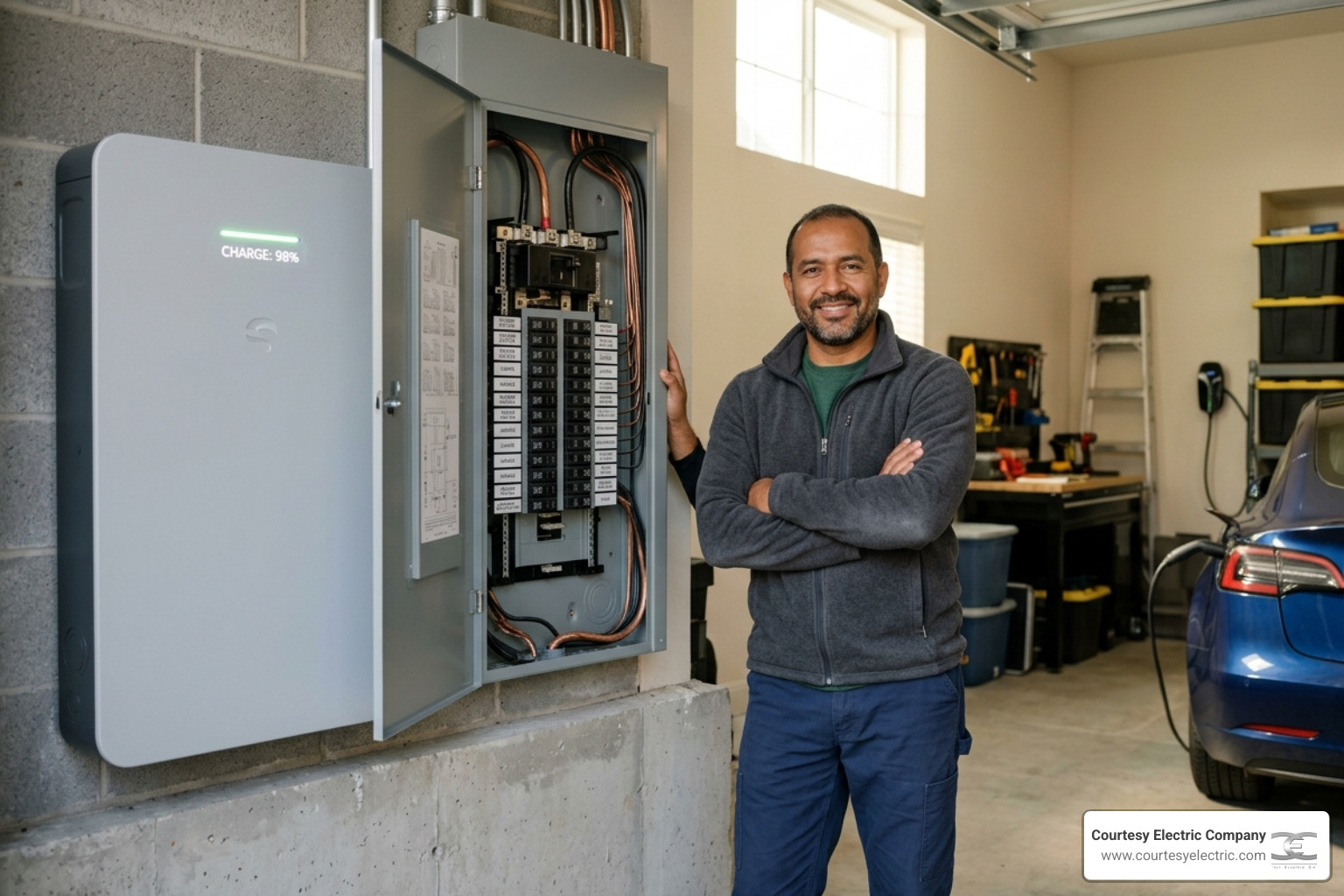
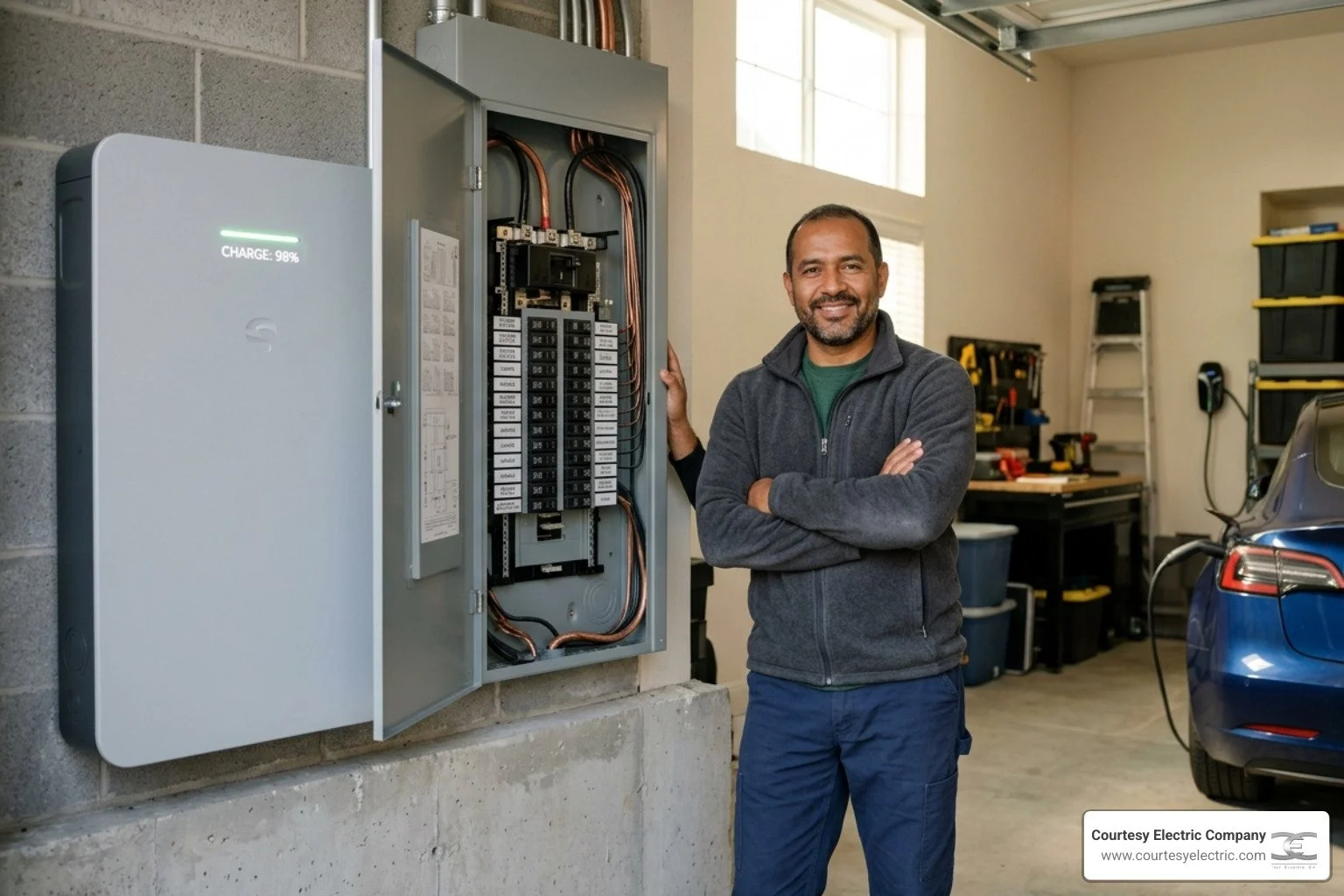
Federal tax credits for battery storage and SPAN panels are real, substantial savings available to homeowners right now — and most people don't know they qualify. Here's a quick breakdown:
| System | Tax Credit Program | Credit Amount | Cap |
|---|---|---|---|
| Battery Storage (≥3 kWh) | Residential Clean Energy Credit (§25D) | 30% of cost | No dollar cap |
| SPAN Panel (as Upgraded Load Center) | Energy Efficient Home Improvement Credit (§25C) | 30% of cost | $600 max |
| SPAN Panel (low/moderate income) | High-Efficiency Electric Home Rebate Act (HEEHRA) | Up to $6,500 | Program limits apply |
If you've been thinking about adding a home battery system or upgrading to a smart panel like SPAN, the federal government is currently offering significant financial incentives to help cover the cost. The Inflation Reduction Act expanded and extended these credits, making 2026 one of the best years to invest in residential electrification. Whether you're looking to cut your tax bill, increase your energy independence, or protect your Colorado Front Range home from outages, understanding how these credits work is the first step.
I'm David Meyer, Vice President of Courtesy Electric — a Colorado electrical contractor with roots going back to 1976 — and my team works hands-on with battery storage and SPAN panel installations every day, helping homeowners across the Front Range navigate federal tax credits for battery storage and SPAN panels to maximize their savings. In the sections below, I'll walk you through exactly what qualifies, how much you can claim, and how to make the most of these programs.
Understanding Federal Tax Credits for Battery Storage and SPAN Panels
When we talk about saving money on home energy upgrades in 2026, we are primarily looking at two distinct parts of the tax code: Section 25D and Section 25C. These were significantly bolstered by the Inflation Reduction Act to encourage homeowners to move away from fossil fuels and toward a more resilient, electric-first lifestyle.
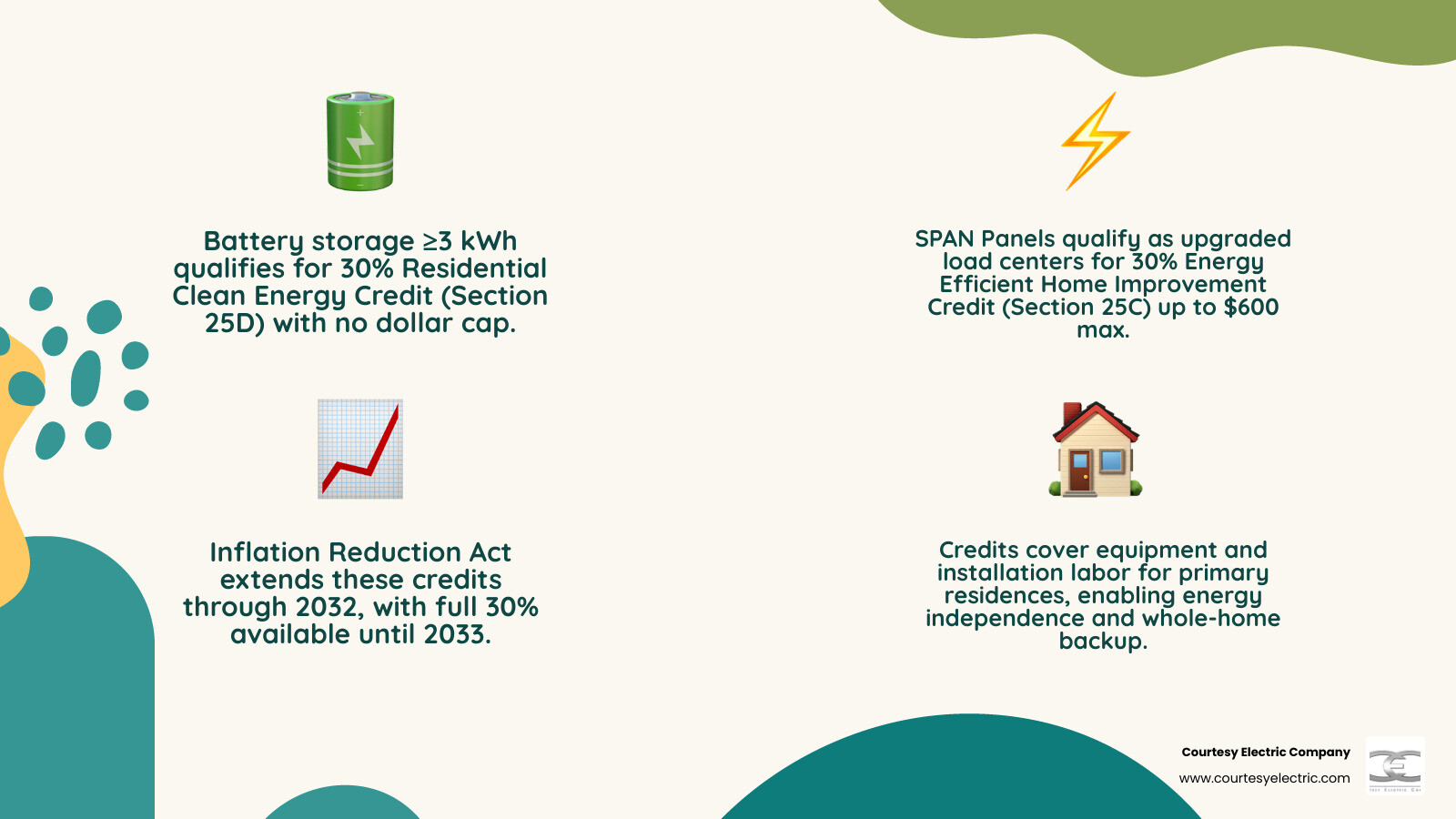
The Residential Clean Energy Credit (Section 25D) is the "big" one for battery storage. It offers a 30% tax credit on the total cost of the system. What makes this particularly exciting is that there is no annual or lifetime dollar limit on this credit. If you install a massive battery array to achieve total energy independence, the federal government still stands ready to cover 30% of that investment through your tax return.
On the other side, we have the Energy Efficient Home Improvement Credit (Section 25C). This covers things like your electrical panel. If you are upgrading your home's "brain" to a SPAN smart panel to handle new electric loads—like a heat pump or an EV charger—you can claim 30% of those costs up to a specific cap. For more details on how these systems function in our local climate, check out our Battery Storage Guide Centennial CO.
Qualifying for the Federal Tax Credits for Battery Storage and SPAN Panels
To claim these credits, the IRS has established clear ground rules. First, the equipment must be installed in a home located in the United States that you use as a residence. This includes your primary home and, in many cases, a second home or vacation property, provided you don't rent it out for the majority of the year.
For the battery storage credit, the system must be new—used equipment does not qualify. It also has to be "placed in service" during the tax year, meaning the installation is complete and the system is ready for use. If you're planning a project, our Battery Storage Installation Guide Centennial CO can help you understand the timeline from consultation to "flipping the switch."
Eligible Technology and Capacity Requirements
Not every battery you buy at a big-box store qualifies for a 30% tax credit. The IRS specifies that qualified battery storage technology must have a capacity of not less than 3 kilowatt hours (kWh). This is a relatively low bar for modern home backup systems—most high-quality lithium-ion batteries we install, like Franklin battery storage, far exceed this minimum.
The technology must be stationary storage; portable power stations that you might take camping generally do not qualify unless they are integrated into the home's electrical system. For residents in high-altitude areas, our Winter Park CO Battery Storage Guide provides specific insights into how temperature and elevation affect these eligible technologies.
Maximizing Savings with SPAN Smart Panels and Battery Integration
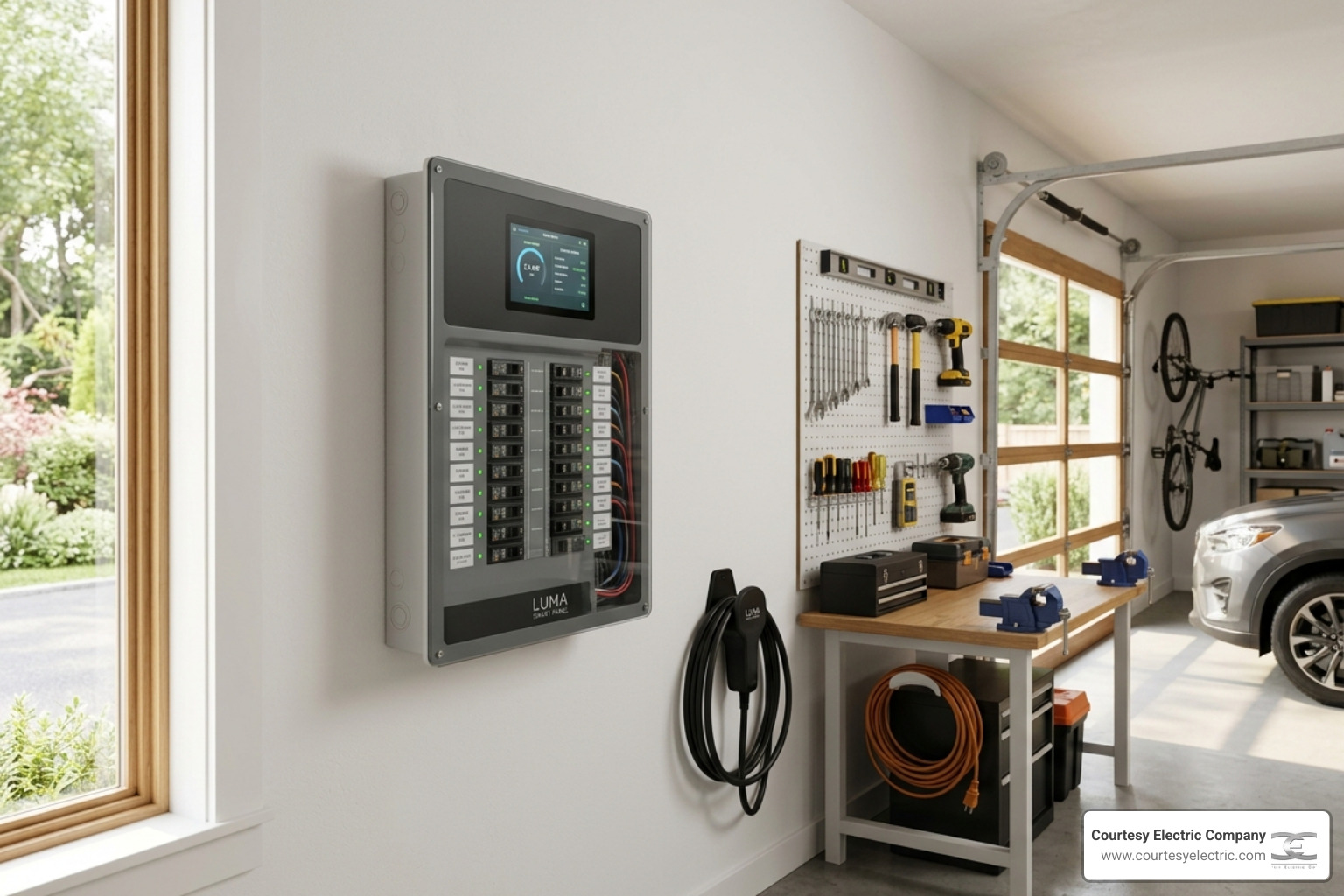
If a home battery is the "fuel tank" of your backup system, the SPAN smart panel is the "engine control unit." Traditional electrical panels are "dumb"—they just sit there and trip a breaker if things get too hot. A SPAN panel, however, allows you to monitor and control every circuit in your home from an app.
When we pair a SPAN panel with battery storage, the synergy is incredible. In an outage, the SPAN panel can automatically turn off non-essential loads (like the dishwasher or the guest room AC) to ensure your battery power lasts as long as possible. In fact, using a SPAN panel can increase your effective battery backup duration by up to 40%. For tips on how to set this up effectively, see our Battery Storage Installation Fraser CO Tips.
How SPAN Panels Qualify Under the Energy Efficient Home Improvement Credit
Under Section 25C, the SPAN panel is classified as an "Upgraded Load Center." To qualify for the 30% credit (capped at $600), the panel must be installed in conjunction with a qualified energy-efficient improvement. For example, if you are installing a heat pump or a battery system and your old panel can't handle the load, the upgrade to a SPAN panel qualifies.
The IRS requires that the panelboard or sub-panelboard have a capacity of 200 amps or greater and be installed according to the National Electrical Code (NEC). When looking for the Best Local Battery Storage Companies Granby CO, ensure they understand these technical requirements to protect your tax eligibility.
Strategic Pairing: Federal Tax Credits for Battery Storage and SPAN Panels
The smartest way to approach federal tax credits for battery storage and SPAN panels is to view them as a package deal. Because the battery storage credit (Section 25D) has no dollar cap, and the panel upgrade (Section 25C) has an annual cap, we often help homeowners strategize their installations.
If you install solar, a battery, and a SPAN panel together, you are creating a "whole-home" solution that maximizes your energy independence. While the panel upgrade is capped at $600 annually, you can combine it with other efficiency upgrades in the same year—such as heat pumps—to reach a higher aggregate annual limit of $3,200. We’ve seen many residents in the mountains find this especially beneficial; read more in our guide on Battery Storage in Granby CO.
Eligibility and Filing Requirements for Homeowners
Claiming your credit isn't as scary as it sounds, but it does require some paperwork. You will primarily use IRS Form 5695 (Residential Energy Credits) when you file your federal income tax return.
One of the best pieces of news for homeowners is that "qualified expenses" include more than just the hardware. You can include:
- The cost of the equipment (Battery, SPAN panel, etc.)
- Labor costs for onsite preparation and assembly
- Original installation costs
- Piping or wiring to connect the system to the home
If your tax credit is larger than the amount of tax you owe for the year (your tax liability), the Residential Clean Energy Credit (25D) allows for a carryforward. This means you can apply the remaining credit to your taxes in future years. For a deep dive into these rules, check out our Battery Storage Fraser CO Complete Guide.
Documentation and Compliance for Tax Filings
To stay on the right side of the IRS, keep a "paper trail" of your project. This should include:
- Manufacturer’s Certification: A statement from the manufacturer (like SPAN or Franklin) certifying that the product qualifies for the credit.
- Detailed Invoices: Receipts that clearly break down equipment costs versus labor.
- Installation Dates: The credit is claimed for the tax year the system was "placed in service."
Regular maintenance is also key to ensuring your system performs as expected so you can actually reap the energy savings the credit was designed to promote. See our tips on Battery Storage Maintenance in Winter Park CO.
Impact of Rebates and State Incentives
In Colorado, we have several layers of incentives. However, you need to be careful with how they interact. Generally, if you receive a rebate from a public utility (like Xcel Energy), you must subtract that rebate amount from your total project cost before calculating your 30% federal tax credit.
For low-to-moderate-income households, the High-Efficiency Electric Home Rebate Act (HEEHRA) can provide even larger point-of-sale rebates—up to $6,500 for an upgraded load center like a SPAN panel. These rebates are separate from the tax credits and are often managed at the state level. For more on local Colorado programs, refer to our Battery Storage Maintenance Guide Granby CO.
Frequently Asked Questions about Energy Credits
Can I claim the credit for a second home in Colorado?
Yes! The Residential Clean Energy Credit (Section 25D) applies to both your principal residence and any second home you use as a residence in the U.S. However, if you use the property primarily as a rental, you generally cannot claim the credit. Fuel cell technology is an exception—it can only be claimed for your primary residence. For those with mountain cabins, this makes battery storage a great choice; learn more in our Generators Fraser CO Complete Guide.
Does the credit cover labor and installation costs?
Absolutely. The IRS allows you to include expenditures for labor costs "properly allocable to the onsite preparation, assembly, or original installation" of the property. This includes the wiring and piping needed to integrate your SPAN panel and battery. This is a significant part of the total investment, so having it covered by the 30% credit is a huge win. For installation specifics, see Generators Installation in Fraser CO.
What are the annual limits for electrical panel upgrades?
Under the Energy Efficient Home Improvement Credit (Section 25C), there is an annual aggregate limit of $3,200. However, this is split into categories. Most envelope improvements (windows, doors) and electrical panels are capped at a combined $1,200 per year (with the panel itself capped at $600). The remaining $2,000 of the limit is reserved for heat pumps and heat pump water heaters. If you're planning a massive upgrade, it sometimes makes sense to spread the work over two tax years to maximize your credits. For ongoing system health, check out our Generators Maintenance Guide Fraser CO.
Conclusion
Navigating federal tax credits for battery storage and SPAN panels is one of the most effective ways to upgrade your home’s value and resilience while the government picks up a significant portion of the tab. In 2026, the combination of a 30% uncapped credit for battery storage and the targeted credits for smart panels like SPAN makes this the "golden era" for home electrification in Colorado.
At Courtesy Electric Company, we’ve been serving the Denver and Front Range communities for nearly 50 years. We specialize in the high-tech installations that qualify for these credits, from Franklin battery storage to SPAN smart panels. We aren't just electricians; we are your partners in building a smarter, more efficient home.
Ready to see how much you can save? We offer free estimates on all electrical installations throughout the Colorado Front Range. Whether you're in Denver, Parker, Highlands Ranch, or the Black Forest, we're here to help you power your life with quality, integrity, and dependability.
Best Generators Services in Fraser CO More info about electrical services


