
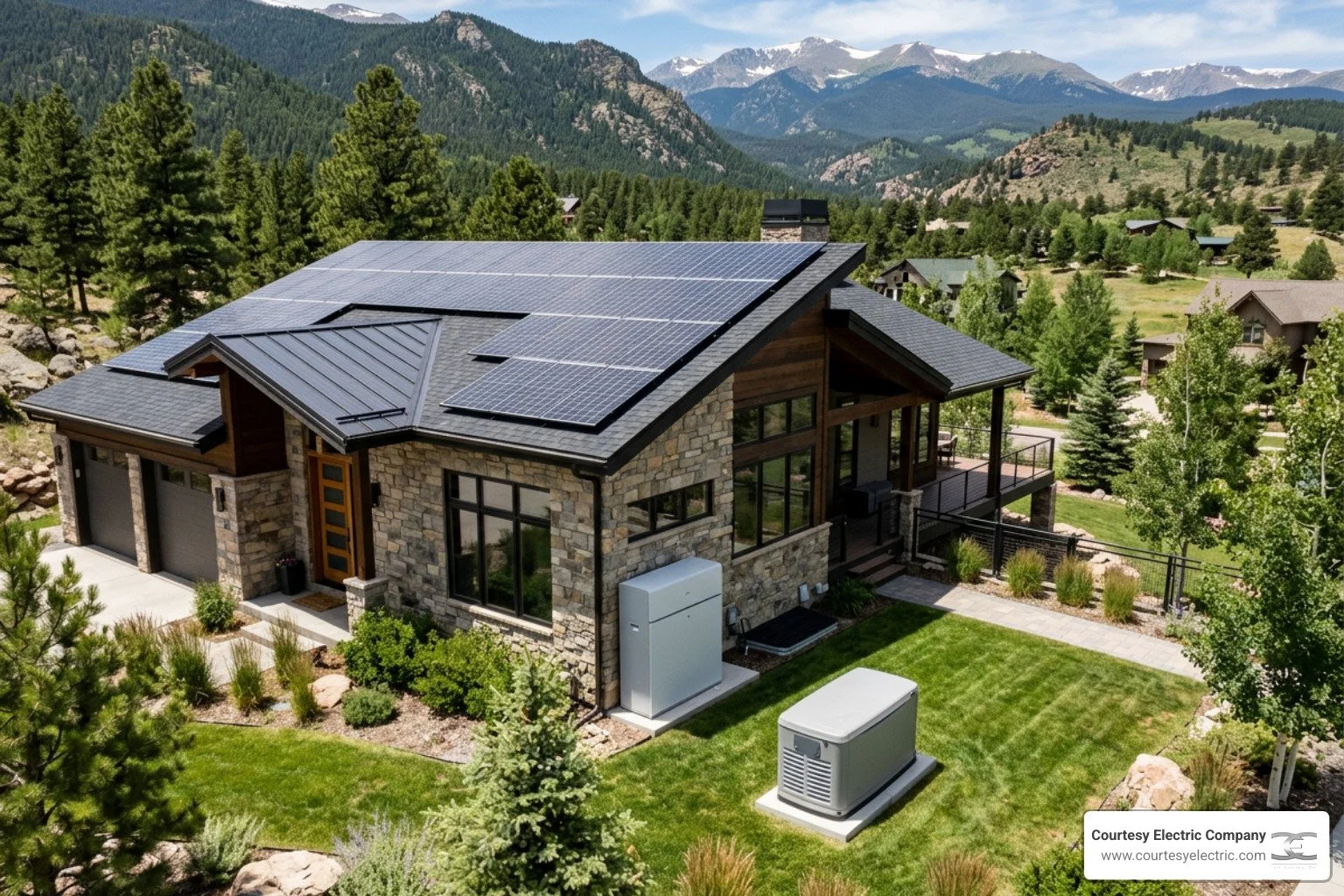
Why Understanding How Generators and Batteries Can Work Together Could Change How You Power Your Home
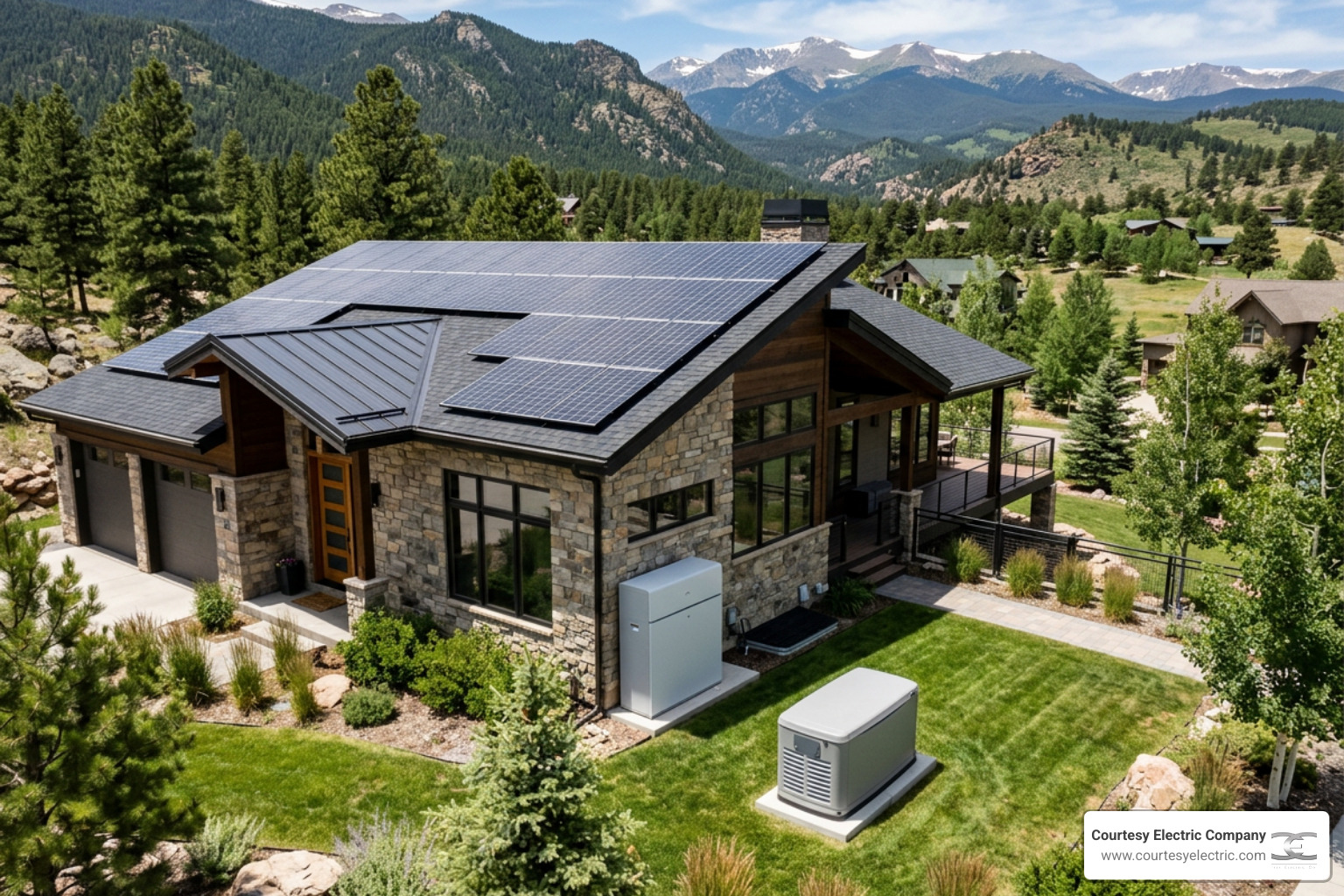
How generators and batteries can work together is one of the most important questions a homeowner can ask when planning for reliable backup power — and the answer is simpler than most people expect.
Here's a quick summary:
- Batteries respond instantly when the grid goes down, keeping your lights and critical appliances on without any interruption
- The generator stays off during short outages, saving fuel and reducing engine wear
- When the battery runs low, the generator automatically starts, recharges the battery, and continues powering your home
- Solar panels (if installed) can recharge the battery during the day, reducing how long the generator needs to run
- The result: continuous power through outages of any length, with less fuel, less noise, and less wear on your equipment
This layered approach — battery first, generator as backup — is what makes hybrid systems so effective. Instead of choosing between a battery that might run out after a few hours or a generator that burns fuel from minute one, you get the strengths of both working in sequence.
Power outages are becoming longer and more disruptive across the country, and Colorado's Front Range is no exception. Severe winter storms, high winds, and wildfire-related grid events can leave homes without power for hours or even days. A single battery system may not be enough for a prolonged outage. A generator alone runs on fuel and starts making noise the moment the grid drops. But when the two work together, homeowners get seamless, efficient, and long-lasting backup power that neither solution can deliver on its own.
One real-world test illustrates this perfectly. A hybrid system running on battery alone powered a full suite of critical home loads — lighting, refrigerator, furnace, home office, and more — for over seven hours before the generator ever needed to start. When the battery finally reached its low-voltage threshold, the generator kicked on automatically, served the load, and recharged the battery simultaneously. No interruption. No manual switching. No wasted fuel during the easy part of the outage.
I'm David Meyer, Vice President of Courtesy Electric, and over my career in Colorado's electrical contracting industry I've worked hands-on with both standby generator installations and modern battery storage systems — giving me a ground-level understanding of how generators and batteries can work together to protect homes from outages of any duration. In the sections below, we'll walk through exactly how these systems integrate, what components make it possible, and how to choose the right setup for your home.
The Synergy of Hybrid Power: How Generators and Batteries Can Work Together

When we look at the landscape of residential backup power along the Colorado Front Range, we often see homeowners viewing standby generators and home batteries as rival technologies. But the truth is, these two systems are far more powerful when they join forces. By combining a home battery storage system with a standby generator, we create a hybrid power plant right in your utility room.
This hybrid approach solves the inherent limitations of both systems. While batteries offer quiet, instantaneous backup power, their capacity is finite. On the other hand, generators provide virtually bottomless backup as long as fuel is available, but they require regular maintenance, emit carbon emissions, and make noise. When we combine them, the battery acts as the primary shield against short-term grid drops, while the generator serves as the heavyweight reserve for prolonged outages. For a deeper look at your options in our region, check out our guide on Choosing the Right Backup Power for Colorado.
Optimizing System Efficiency and Lifespan
One of the greatest engineering advantages of pairing a generator with a battery system is the dramatic reduction in engine wear and fuel consumption. To understand why this happens, we have to look at how generators handle electrical loads.
Standby generators are designed to run most efficiently when they are operating under a moderate to heavy electrical load—typically between 50% and 80% of their rated capacity. When a generator runs at a very light load (for example, when it is only powering a few LED lights and a refrigerator overnight), it suffers from a condition known as "wet stacking." This is when unburned fuel accumulates in the exhaust system, leading to carbon buildup, reduced efficiency, and premature engine wear.
By integrating a battery system like Franklin Battery Storage, the generator no longer has to run continuously to support minor, low-draw loads. Instead, the battery quietly powers the home during these low-demand periods. When the battery's charge drops to a predetermined level, the generator starts up automatically. Because it is tasked with both powering the home and rapidly recharging the battery bank, the generator operates at its optimal load point. This highly efficient running state can extend your generator's engine life by 20% to 30% and cut your overall fuel consumption by up to 50%. To learn more about the mechanics of these machines, read our detailed article on How Does a Standby Generator Work.
Understanding How Generators and Batteries Can Work Together During an Outage
So, what actually happens when a severe winter storm knocks out the power grid in Denver or Parker? In a hybrid system, the transition between utility power, battery reserves, and generator capacity is entirely automatic and completely seamless.
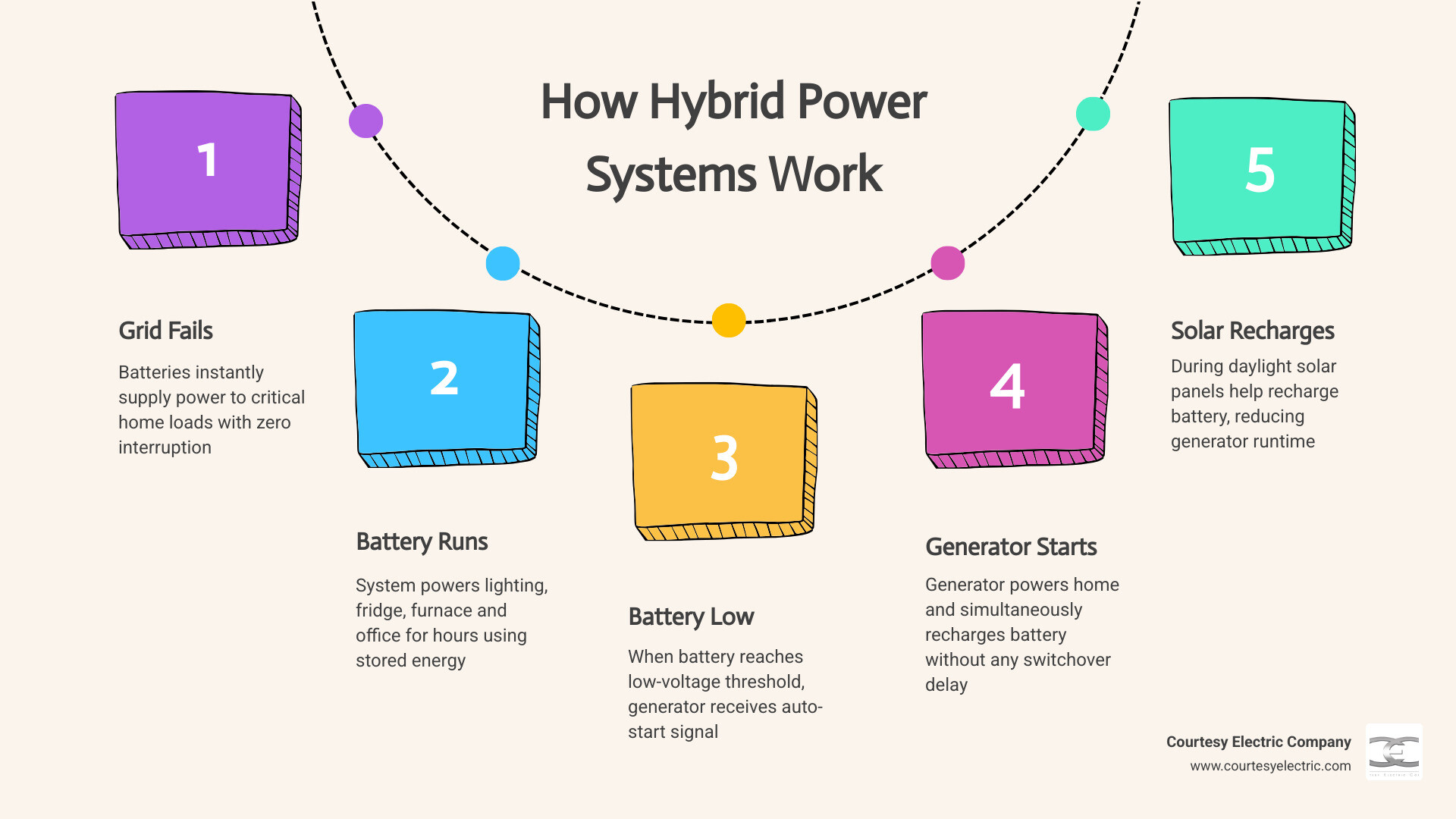
Here is the step-by-step sequence of how the system manages a power outage:
- The Grid Fails: The moment utility power drops, the battery system detects the failure and takes over the home's electrical load in less than a second (often in milliseconds). Your lights won't even flicker, and sensitive electronics like computers and routers won't reboot.
- Battery-Only Operation: For the first several hours of the outage, the battery quietly powers your critical loads. If you have solar panels, they will continue to generate power and keep the battery charged during the day.
- Low-Voltage Trigger: If the outage persists and the battery's State of Charge (SoC) drops to a set threshold (typically 20%), the system sends a signal to the generator.
- Generator Activation: The standby generator automatically starts up. Once it warms up and stabilizes, the system routes generator power to run your home's appliances while simultaneously sending excess power to recharge the batteries.
- System Reset: Once the batteries are fully charged, the generator automatically shuts off, and the home transitions back to quiet battery power. This cycle repeats until utility power is restored.
This intelligent coordination ensures that you never experience a gap in coverage. For an in-depth comparison of these individual systems, read our analysis on Battery Storage vs Generator: Which is Better for Backup.
Key Components of an Integrated Hybrid Energy System
Building a reliable hybrid energy system requires specialized hardware that can manage multiple power sources safely and efficiently. We cannot simply wire a generator directly into a battery bank; we need an intelligent infrastructure to coordinate the flow of electricity.
The heart of this setup is a hybrid inverter, which acts as the traffic controller for your home's power. It manages the incoming alternating current (AC) from the grid and the generator, converts it to direct current (DC) to charge the batteries, and converts it back to AC to power your home. Alongside the inverter, we install transfer switches and smart panels to isolate electrical currents and manage loads dynamically. To understand how these storage systems function at a foundational level, check out our Home Battery Storage Complete Guide.
Automatic vs. Manual Transfer Switches
A transfer switch is a mandatory safety device required by the National Electrical Code (NEC) for any standby power installation. Its primary job is to prevent "back-feeding," which occurs when electricity from your generator or battery flows backward into the utility lines. This poses a fatal hazard to utility linemen working to restore power.
When integrating a generator with a battery system, you have two primary options:
- Automatic Transfer Switches (ATS): An ATS constantly monitors the incoming utility power. When it detects a grid failure, it instantly isolates your home from the grid and connects it to your backup system. In a hybrid setup, the ATS works in tandem with the battery gateway to manage the handoff between the battery and the generator without any human intervention.
- Manual Transfer Switches (MTS): An MTS requires you to physically go to the electrical panel and flip a heavy-duty switch to transfer your home's electrical load to the backup system. While reliable, an MTS cannot provide the seamless, hands-free automation that makes hybrid systems so convenient, especially during freezing winter storms when you want to avoid going outside to start a generator.
For a modern, fully automated hybrid system, we highly recommend an ATS paired with a smart panel like SPAN. This combination allows us to program specific circuits to shed automatically if the system detects that both the battery and generator are reaching their capacity limits.
Managing Battery Charging and Low-Voltage Triggers
In a hybrid system, protecting the battery's health is paramount. Lithium iron phosphate (LFP) batteries, such as those used in Franklin Battery Storage systems, are highly durable but must be kept within safe operating parameters.
To manage this, we program an Automatic Generator Start (AGS) trigger based on the battery's State of Charge (SoC). For example, we can configure the system so that if the battery drops to 20% capacity, the generator is ordered to start.
If your home has solar panels, the system uses a sophisticated charge controller to prioritize solar power for recharging. On a sunny winter day in Highlands Ranch, your solar array will do the heavy lifting of recharging the batteries. The generator will only step in if the weather is heavily overcast, if snow is covering your solar panels, or if your nighttime energy usage drains the battery below the safe threshold. This multi-layered defense guarantees that your batteries are never deeply discharged, which preserves their overall lifespan.
Comparing Standalone Systems vs. Hybrid Setups
To help you visualize how these systems compare, we have put together a breakdown of the differences between standalone battery backups, standalone generators, and fully integrated hybrid setups.
| Feature | Battery-Only Backup | Standby Generator-Only | Integrated Hybrid Setup |
|---|---|---|---|
| Outage Duration | Short-term (8 to 24 hours depending on capacity) | Indefinite (as long as fuel is available) | Indefinite (highly optimized fuel usage) |
| Switchover Time | Milliseconds (seamless) | 10 to 30 seconds (brief interruption) | Milliseconds (seamless) |
| Fuel Dependence | None (recharges via solar or grid) | High (requires natural gas, propane, or diesel) | Low to Moderate (optimized fuel consumption) |
| Maintenance | Virtually none | Moderate (annual oil changes, filter checks) | Low (reduced generator runtime equals less maintenance) |
| Noise Levels | Completely silent | Moderate (65 to 75 dB during operation) | Silent most of the time (generator runs only when needed) |
| Daily Utility | High (supports Time-of-Use rate arbitrage) | Low (sits idle until an outage occurs) | High (uses battery daily, generator for emergencies) |
For a deeper dive into how these two technologies stack up individually, read our comparison article, Generator or Battery for Power Outages: Is a Generator or Battery Better for Power Outages.
Deciding on the Best Configuration for Your Home
Choosing the right setup is not a one-size-fits-all decision. When we consult with homeowners in Denver, Parker, and the surrounding areas, we evaluate several key factors to design the perfect system:
- Space Constraints: Standby generators require proper exterior clearance from windows and doors to comply with local fire codes and carbon monoxide safety guidelines. Batteries are more compact and can be mounted on garage walls or basement utility rooms, making them ideal for properties with limited outdoor space.
- Energy Goals: If your goal is complete carbon reduction and daily savings on your utility bills, a battery paired with solar is the clear winner. Batteries allow you to participate in Time-of-Use (TOU) rate arbitrage—storing cheap power at night and using it during expensive peak hours. Standby generators, conversely, only provide value during an actual power outage.
- Winter Performance: Extreme cold can impact both systems. Standby generators require cold-weather kits (battery warmers and oil heaters) to ensure they start reliably in sub-zero temperatures. Home batteries perform best when installed in a tempered space like a garage.
- Outage Frequency and Duration: If you live in a rural area like Black Forest where outages can last for several days, a hybrid system is the gold standard. It provides the quiet, seamless backup of a battery for short disruptions, with the heavy-duty endurance of a generator for extended emergencies.
To explore the long-term financial and performance differences between these options, check out our Standby Generator vs Battery Backup Cost Comparison and our guide on Whole Home Generator Benefits for Colorado Homeowners.
Real-World Scenarios of How Generators and Batteries Can Work Together
Let's look at a practical scenario to see how this plays out during a classic Colorado blizzard. Imagine a heavy winter storm dumps two feet of wet snow across the Front Range, causing widespread power grid failures that last for three days.
In a battery-only home, you would have to carefully ration your power. Running heavy loads like a well pump, electric heaters, or a clothes dryer would deplete your battery within a few hours. Because the solar panels are covered in thick snow, you cannot rely on the sun to recharge them.
In a generator-only home, your standby unit would start up within 30 seconds of the outage. It would run continuously for 72 hours straight. This constant operation would burn through a significant amount of propane or natural gas, create a continuous hum in the neighborhood, and require you to check the oil level every 24 hours of continuous runtime.
In a hybrid home, the experience is completely different:
- Day 1 (Night): The grid goes down at 11:00 PM. The home immediately transitions to battery power. The house remains completely silent as you sleep, and the furnace fan continues to run.
- Day 2 (Morning): The battery is at 25% capacity. The system automatically triggers the generator. It runs for three hours at its most efficient load point, powering the home and rapidly recharging the battery bank to 100%.
- Day 2 (Afternoon): The generator shuts off. The home runs quietly on battery power for the next eight hours.
- Day 3: You brush the snow off your solar panels. The solar array now handles the daytime loads and charges the battery. The generator never needs to turn on today.
This real-world flexibility is why hybrid systems are becoming the preferred choice for homeowners seeking true energy resilience. For more localized insights on battery storage, take a look at our Battery Storage Guide Centennial Co.
Frequently Asked Questions About Hybrid Power Systems
Can a standby generator charge my home battery backup system?
Yes, but only if the system is designed with a compatible hybrid inverter or battery gateway. Advanced systems, like Franklin Battery Storage, can accept an auxiliary AC input from a standby generator. The inverter manages this input, ensuring the generator's power is clean and stable enough to charge the batteries safely while simultaneously running your home's electrical loads.
Do I need solar panels to make a generator and battery system work?
No, solar panels are not required. While solar panels provide a fantastic, free source of energy to recharge your batteries during the day, your hybrid system can function perfectly without them. In a solar-free setup, the battery will charge directly from the utility grid under normal conditions. During an outage, the standby generator will handle all the battery recharging duties.
How does a hybrid system prevent back-feeding the grid?
Hybrid systems use an automatic transfer switch (ATS) or an integrated battery gateway to physically and electrically isolate your home's electrical system from the utility grid during an outage. This isolation is a strict requirement of the National Electrical Code (NEC) and ensures that no power from your battery or generator can back-feed into the grid, keeping utility repair crews safe.
Conclusion
Integrating a standby generator with a home battery storage system is the ultimate way to achieve complete energy security and peace of mind. By allowing these two distinct technologies to work together, you eliminate the limitations of each while maximizing their strengths. You get the quiet, instantaneous protection of a battery for everyday grid blips, combined with the rugged, long-term endurance of a generator for severe multi-day emergencies.
Designing and installing these complex, high-voltage hybrid systems is not a do-it-yourself project. It requires precise load calculations, proper permitting, and expert electrical integration to ensure safe and reliable operation.
At Courtesy Electric Company, we have been serving Denver and the Colorado Front Range since 1976. Our factory-trained, licensed electricians specialize in installing top-tier backup power solutions, including Generac and Cummins standby generators, Franklin Battery Storage systems, and SPAN smart panels. We are committed to delivering quality, integrity, and dependability on every project.
If you are ready to explore how generators and batteries can work together to protect your home, contact us today to schedule a free estimate on your custom backup power installation. We look forward to helping you take control of your energy future.


