
Is a Generator or Battery Better for Power Outages? Here's What Denver Homeowners Need to Know
Is a generator or battery better for power outages depends on three key factors: how long your outages last, how much power you need, and whether you want everyday energy benefits beyond emergency backup.
Quick Answer:
| Your Situation | Best Choice |
|---|---|
| Short outages (under 12 hours) | Battery backup |
| Multi-day outages with heavy loads | Standby generator |
| Solar panels already installed | Battery backup |
| Rural property with well pump or central AC | Standby generator |
| Noise restrictions or urban neighborhood | Battery backup |
| Frequent outages + daily energy savings | Battery + solar |
| Long outages without solar access | Standby generator |
Power outages across the U.S. are getting worse — not just more frequent, but longer. From 2023 to 2024, outage durations grew by 38%. In 2024 alone, NOAA recorded 27 separate weather disasters each causing over $1 billion in damage. Here in Colorado, winter storms, wildfires, and aging grid infrastructure mean Front Range homeowners face a real and growing risk of being left in the dark — sometimes for days at a time.
When that happens, you have two main options: a home battery backup system or a standby generator. Both will keep your lights on and your refrigerator running. But they work very differently, cost differently over time, and suit different types of homeowners.
This guide breaks down exactly how each system works, what it costs, and which one makes the most sense for your home and your situation — so you can make a confident, informed decision.
I'm David Meyer, Vice President of Courtesy Electric Company, a Colorado electrical contractor with roots going back to 1976 — and answering the question of is a generator or battery better for power outages is something I help Denver-area homeowners navigate every day. Let's walk through everything you need to know.
Understanding Home Backup Systems in 2026
As we move through 2026, the American power grid is showing its age. Much of our national infrastructure dates back to the 1960s and 70s, making it increasingly vulnerable to the "billion-dollar disasters" that are now becoming common. In 2024, the U.S. saw a record 27 disasters, from hurricanes to winter storms, that caused massive economic disruption. For us in the Denver area, these aren't just statistics; they are the heavy snowfalls and high-wind events that knock out transformers and leave neighborhoods in the dark.
When considering is a generator or battery better for power outages, it is important to understand that the goal has shifted from simple convenience to true energy security. Modern homes are more "electric" than ever, with many residents relying on stable power for medical devices, home offices, and even EV charging. Preparing your home requires more than just a flashlight; it requires a proactive approach to Spring Electrical Safety and Storm Preparation to ensure your family remains safe when the grid fails.
Deciding if a generator or battery better for power outages during long-term grid failure
The choice often hinges on how long you expect the lights to be out. If you live in an urban part of Denver where the utility company usually restores power within a few hours, a battery system is often the winner. However, if you are in a more remote part of the Front Range where restoration timelines can stretch into days or weeks, a generator’s ability to run indefinitely (as long as it has fuel) becomes a critical advantage.
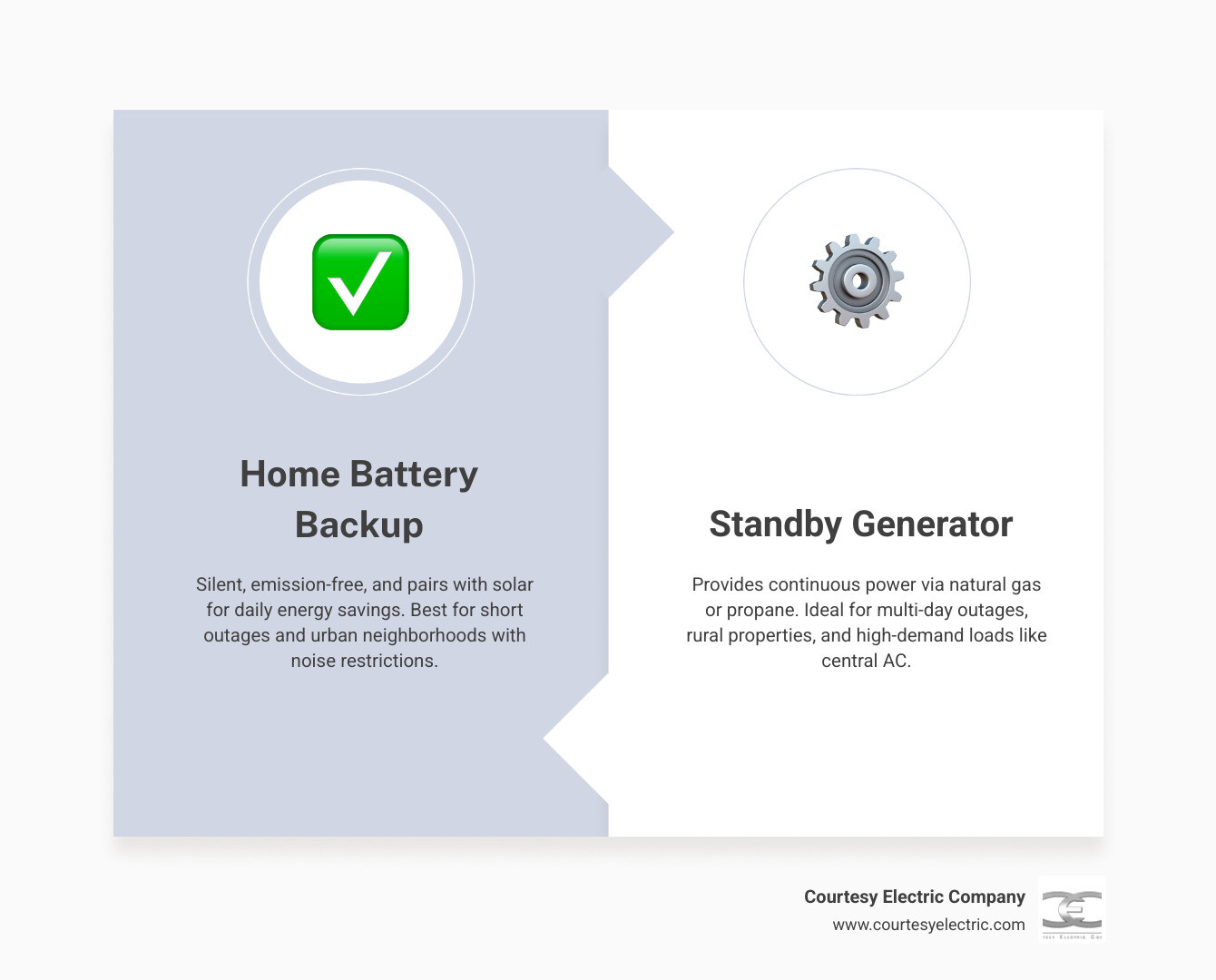
The Benefits of Home Battery Backup Systems
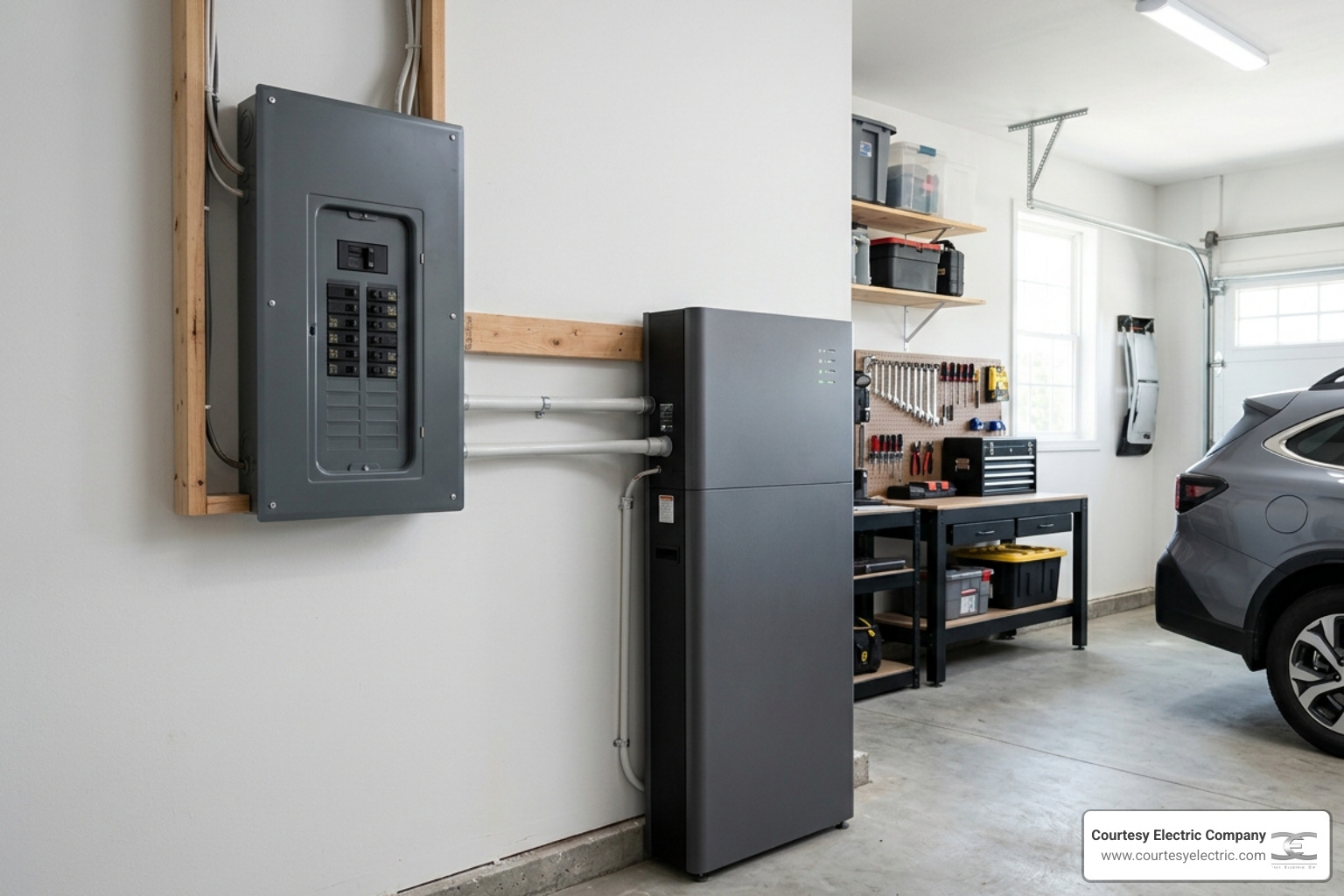
Home battery systems, such as the Franklin battery storage units we install, represent the cutting edge of energy management. These systems store electricity from the grid or solar panels and discharge it the moment a blackout is detected. Because they use Lithium Iron Phosphate (LFP) technology, they are safe, long-lasting, and operate in total silence.
One of the biggest advantages of a battery is the "seamless" experience. While a generator takes 10 to 30 seconds to kick on, a battery transfers power in under 20 milliseconds. Your clocks won't even blink, and your Wi-Fi won't reset. For many, this silent reliability makes the battery the "future" of home energy. You can learn more about how these systems integrate into local homes in our Battery Storage Guide Centennial CO.
Is a generator or battery better for power outages when prioritizing daily energy savings?
Batteries provide value 365 days a year, not just during emergencies. This is where they truly outshine generators. Through "Time-of-Use" (TOU) arbitrage, a battery can charge when electricity is cheap (usually late at night) and discharge to power your home when rates are high (typically 4 PM to 9 PM).
By "peak shaving" in this way, homeowners can see significant reductions in their monthly utility bills. Furthermore, the federal government currently offers a 30% tax credit for residential battery systems through 2032, making the long-term financial picture much more attractive.
Why Homeowners Choose Standby Generators
Despite the rise of battery tech, the traditional standby generator remains the heavyweight champion for long-duration outages. These units are permanently installed outside your home and connected directly to your natural gas or liquid propane line. When the power goes out, the internal combustion engine starts up automatically.
The primary reason to choose a generator is "unlimited" runtime. While a battery is limited by its stored kilowatt-hours, a generator will keep running as long as the natural gas is flowing. To understand the mechanics behind this reliability, you can read about How Does a Standby Generator Work.
Comparing performance for high-demand appliances
If you need to run a central AC unit, a well pump, or an electric oven during a multi-day outage, a generator is often the more practical choice. High-demand appliances require a massive "surge" of power to start up. Generators, especially those equipped with G-Force engines like the Generac and Cummins models we provide, are specifically designed to handle these heavy loads. For many, the Whole-Home Generator Benefits for Colorado Homeowners make it the go-to solution for total peace of mind.
Is a generator or battery better for power outages in Denver?
In the Colorado Front Range, our climate plays a huge role in this decision. High altitude can affect engine efficiency, and our sub-zero winter temperatures can be hard on both batteries and engines.
| Feature | Standby Generator | Home Battery (e.g., Franklin) |
|---|---|---|
| Runtime | Unlimited (w/ fuel) | 8–12 hours (w/o solar) |
| Noise Level | 65–75 dB (like a lawnmower) | Silent |
| Maintenance | Annual oil/filter changes | Minimal |
| Emissions | Carbon Monoxide/CO2 | Zero |
| Transfer Time | 10–30 seconds | < 20 milliseconds |
| Lifespan | 20–30 years | 10–15 years |
When planning your setup, knowing Generator Installation What to Expect can help you prepare your property for the necessary concrete pads and gas lines.
Maintenance and longevity in the Front Range
Generators require regular "exercise" to keep their seals lubricated and engines ready. In Denver winters, we often recommend battery warmers and crankcase heaters to ensure the unit starts in the middle of a blizzard. On the other hand, batteries are low-maintenance but do have a shorter overall lifespan (typically 10–15 years) compared to a well-maintained generator which can last up to 30 years.
Maximizing Resilience with Solar and Smart Panels
The real "magic" happens when you pair these systems with modern smart home technology. We specialize in installing SPAN smart panels, which allow you to see exactly where your energy is going in real-time. During an outage, a smart panel can automatically "shed" non-essential loads (like your dishwasher or dryer) to prioritize your refrigerator and medical equipment, significantly extending your battery life.
If you have solar panels, a battery becomes even more powerful through "grid islanding." This allows your solar panels to keep charging your battery even when the utility grid is down. For a deep dive into this setup, check out our Battery Storage Fraser CO Complete Guide.
The hybrid approach for total independence
For homeowners who want the absolute best of both worlds, a hybrid approach is the ultimate solution. In this scenario, a battery handles short "flickers" and provides daily energy savings, while a standby generator sits in reserve for the massive multi-day storms. This combination offers seamless power transfer, unlimited runtime, and the highest level of energy independence available in 2026.
Frequently Asked Questions about Home Backup Power
Can a battery backup power my entire home?
It depends on the capacity. A single 13.5 kWh battery is typically designed to power "critical loads" like your fridge, lights, and Wi-Fi. To power a whole home, including central AC and heavy appliances, you would likely need multiple battery units or a smart panel to manage the load.
How long can a standby generator run continuously?
A standby generator can run for days or even weeks, provided it has a continuous fuel supply. However, most manufacturers recommend a short cool-down period every 24 hours to check oil levels and ensure the engine isn't overstressed during extended use.
Are there tax credits available for backup systems?
Yes! The Residential Clean Energy Credit allows you to claim 30% of the cost of a battery backup system (3 kWh or larger) on your federal taxes. Currently, standby generators do not qualify for this specific federal tax credit, though they remain a highly valued investment for home resale value.
Conclusion
Choosing whether a is a generator or battery better for power outages isn't about finding a "perfect" system, but finding the one that fits your lifestyle and your home's specific needs. Whether you want the silent, eco-friendly efficiency of a Franklin battery or the raw, dependable power of a Generac or Cummins generator, our team at Courtesy Electric Company is here to help.
We’ve been serving the Denver and Colorado Front Range areas for decades, providing quality Electrical Service with integrity and dependability. From Parker to Highlands Ranch and up through the Black Forest, we are your local experts in energy resilience.
Ready to protect your home? Contact us today for a free estimate on your backup power installation. We’ll help you design a system that keeps your family safe, comfortable, and powered up—no matter what the Colorado weather throws your way.


