How to Make the Right Generator Brand Comparison for Homeowners
When it comes to a generator brand comparison for homeowners, the right choice depends on your home size, how often your power goes out, and whether you want automatic whole-home backup or a simpler portable solution. Here's a quick look at how the leading options stack up:
| Brand | Best For | Generator Type | Key Strength |
|---|---|---|---|
| Generac | Whole-home standby | Standby | Largest dealer network, smart monitoring |
| Cummins | Durability-focused buyers | Standby | Quiet operation, cold-weather performance |
| Kohler | Premium quiet backup | Standby | Low noise, heavy AC load handling |
| Champion | Budget-conscious buyers | Portable/Standby | Dual-fuel flexibility, long warranty |
| Honda | Sensitive electronics, portability | Inverter | Quietest portable (48–57 dB), proven reliability |
| Briggs & Stratton | Value + safety | Portable/Standby | CO shutoff, strong motor-starting capacity |
Power outages in Colorado are not just an inconvenience — they're a real safety concern. From Nor'easters burying the Front Range to summer thunderstorms knocking out grid power for hours, Denver-area homeowners know how vulnerable a home can be without backup power. According to U.S. energy data, Americans experienced an average of 5.5 hours without power in 2022 — and in storm-prone regions, that number climbs much higher.
Choosing the wrong generator — or the wrong brand — can mean the difference between your family staying warm and safe or scrambling in the dark. But with so many brands, fuel types, sizes, and technologies on the market, it's easy to feel overwhelmed before you even get started.
I'm David Meyer, Vice President of Courtesy Electric, a Colorado electrical contractor with roots going back to 1976. Through decades of generator installations across the Denver Front Range — from standby systems to modern battery backup solutions — I've seen every type of home power challenge there is, and I've put together this generator brand comparison for homeowners to cut through the noise and help you make a confident, informed decision.
Understanding Different Types of Home Power Systems
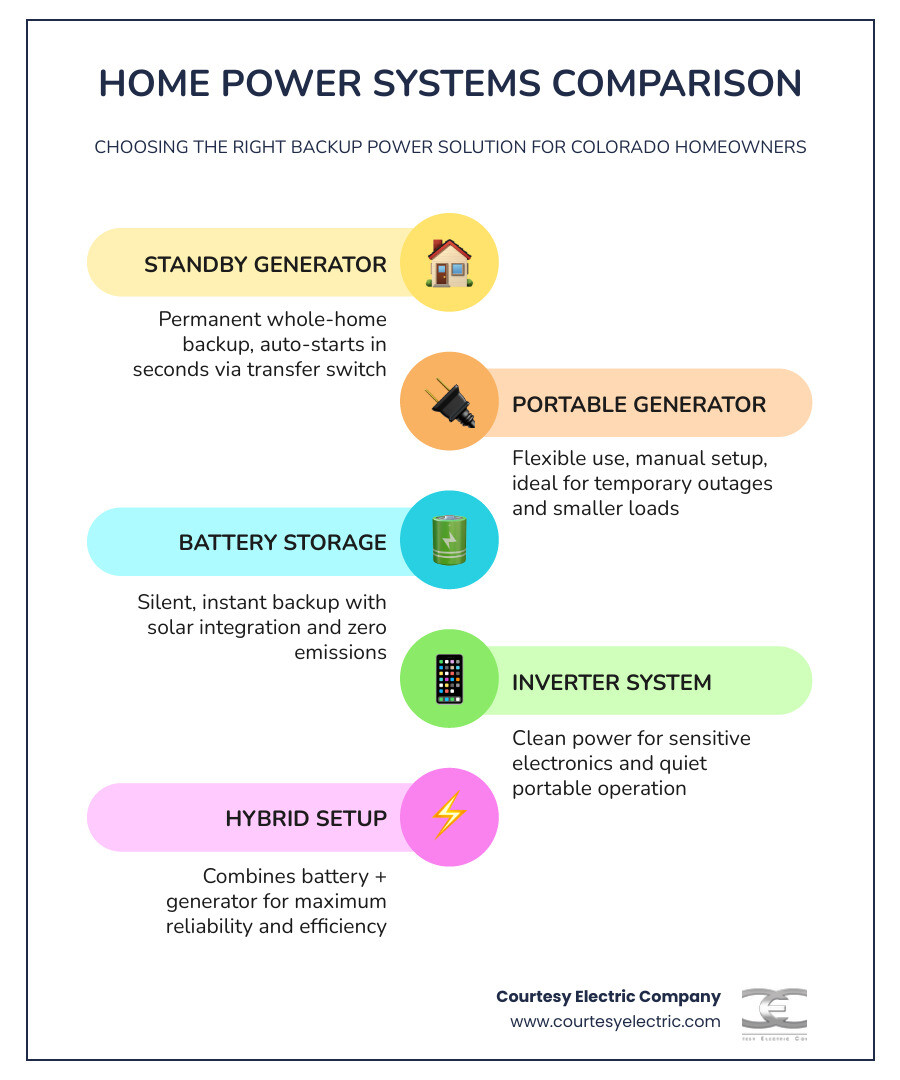
Before we dive into the brand battle, we need to talk about the "how" of home power. Not every backup system works the same way, and choosing the right category is just as important as choosing the right brand.
Standby Generators
These are the gold standard for Colorado homes. A standby generator is permanently installed outside your home, similar to an air conditioning unit. It connects directly to your home’s electrical panel and is fueled by your existing natural gas or liquid propane lines. The magic happens via an automatic transfer switch (ATS), which detects a power failure and starts the generator within seconds—even if you aren't home. This is the ultimate "set it and forget it" solution.
Battery Storage Systems
As we move further into 2026, many of our neighbors in Highlands Ranch and Parker are looking toward battery storage, such as the Franklin Battery Storage system. Unlike gas-powered units, these are silent and can be installed indoors or in a garage. They pair beautifully with solar panels, storing energy during the day to power your home at night or during an outage. They are maintenance-free and offer a seamless transition to backup power.
Portable and Inverter Generators
If you only need to keep the lights on and the fridge running, a portable unit might be the right fit. Standard portables are often loud and run on gasoline, requiring you to manually drag them out and plug them in. Inverter generators are a "smarter" version of portables; they use inverter technology to provide "clean" power, which is safer for sensitive electronics like your laptop or high-end smart TV.
For a deeper dive into the specifics of local requirements, check out our Generators Fraser Co Complete Guide. If you're curious about the internal mechanics, we’ve also detailed How Does a Standby Generator Work to help demystify the process.

Key Factors in a Generator Brand Comparison for Homeowners
When we perform a generator brand comparison for homeowners, we look at several technical metrics that impact your daily life.
- Fuel Types: Natural gas is the most convenient because it never runs out. However, in more rural areas like Black Forest, liquid propane (LP) is common. Some portable brands like Champion and Westinghouse offer dual-fuel or even tri-fuel options, allowing you to switch between gasoline and propane depending on what’s available during a storm.
- Noise Levels: This is a big one for suburban neighborhoods. Most standby units run between 65 and 69 decibels (dB), which is about the volume of a normal conversation. Honda’s inverter units are legendary for their quietness, often operating as low as 48 dB—quieter than a coffeemaker.
- Precision Power: Look for "Total Harmonic Distortion" (THD). Standby units from Generac and Cummins typically offer less than 5% THD, which is considered "clean" and safe for the microchips in your modern appliances.
Before the installation begins, it’s helpful to know the logistics. We’ve outlined Generator Installation What to Expect to help you prepare your property.
Sizing Your System Using a Generator Brand Comparison for Homeowners
The most common mistake we see is "under-sizing." A typical American home needs about 5,000 watts just to cover the basics—fridge, some lights, and a sump pump. However, if you want to run your central air conditioning, electric oven, or well pump, you’ll likely need a standby unit in the 14kW to 26kW range.
To get your sizing right, we calculate:
- Running Watts: The continuous power needed to keep an appliance going.
- Starting (Surge) Watts: The extra "kick" of power needed to start a motor, like the one in your refrigerator or HVAC compressor. These can be 3 to 7 times higher than the running watts!
Safety and Smart Features in a Generator Brand Comparison for Homeowners
Modern generators are smarter than ever. Here are the features we recommend looking for:
- Automatic Transfer Switch (ATS): Essential for standby units to prevent "backfeeding" into the utility lines, which can be deadly for line workers.
- CO Shutoff: A life-saving feature on portable units that shuts the engine down if carbon monoxide levels get too high.
- Mobile Monitoring: Brands like Generac (Mobile Link) and Cummins (Cummins Connect) allow you to check your generator’s status from your phone. You’ll get alerts if the unit needs an oil change or if it successfully started during a storm while you were at work.
Keeping an eye on these features is part of being a prepared homeowner. If your system isn't acting right, you should be aware of the Signs Your Generator Needs Professional Attention.
Leading Solutions for Colorado Front Range Homes
In the Denver area, we have specific environmental challenges. High altitude can "derate" a generator’s power output, and our freezing winters mean your generator needs to be ready to start in sub-zero temperatures.
Generac: The Market Leader
Generac owns about 70% of the home standby market for a reason. Their Guardian series is incredibly reliable and features a vast service network. If you need a part in Parker or Highlands Ranch, it’s usually available immediately. Their units are also very user-friendly, with intuitive digital controllers.
Cummins: The Heavy-Duty Choice
Cummins is known for commercial-grade durability. Their QuietConnect series is often preferred by homeowners who want the quietest possible standby unit. One major advantage for Colorado is their cold-weather performance; many Cummins units are rated to start at temperatures as low as -40°F.
Modern Alternatives: Franklin and SPAN
For those looking for the "Home of the Future," we often recommend pairing a Franklin Battery Storage system with a SPAN smart panel. SPAN replaces your traditional electrical panel and allows you to control every circuit in your home from an app. During an outage, you can manually turn off the guest bedroom power to save battery life for your refrigerator.
The rewards of these systems are significant. We’ve seen many Whole Home Generator Benefits for Colorado Homeowners, ranging from prevented basement floods to keeping medical equipment running. For those in specific mountain communities, we also specialize in Generators Installation in Fraser Co.
Maintaining Your Power Investment for Longevity
A generator is an engine, just like the one in your car. If it sits for months without attention, it might not start when you need it most. Standby units typically last 20 to 30 years (or about 3,000 to 5,000 hours of runtime) if they are properly maintained.
Our maintenance recommendations include:
- Annual Inspections: We check the battery health, spark plugs, and clear out any debris or "critter nests" that might have formed in the enclosure.
- Oil and Filter Changes: These should happen every 100 to 200 hours of use, or at least once a year.
- Self-Test Cycles: Most standby units are programmed to run for 5-12 minutes once a week at low speed to keep the parts lubricated.
Colorado's climate is tough on machinery. We recommend Generator Maintenance Before Colorado Storm Season to ensure you aren't caught off guard. Knowing How Often Should You Service Your Standby Generator is key, and don't forget Spring Generator Maintenance After Winter to clear out the salt and dust from the snowy months.
Frequently Asked Questions about Home Generators
How do I calculate the right generator size for my home?
We start by making a list of your "must-have" appliances. A refrigerator usually takes about 600-1,200 watts to start, while a sump pump might need 1,500 watts. If you add a window AC (1,000W) or a space heater (1,500W), you quickly reach 5,000 watts. For a whole-home experience, we perform a professional load calculation that accounts for your HVAC’s "Locked Rotor Amps" (LRA) to ensure the generator can handle the massive surge when the AC kicks on. Finding the Best Generators Services in Fraser Co can help you get this calculation right.
Do I need a transfer switch or an interlock kit?
Yes, you absolutely need one or the other. An Automatic Transfer Switch (ATS) is used with standby generators to switch power automatically. A Manual Interlock Kit is a more affordable option for portable generators; it’s a mechanical device installed on your panel that ensures you can’t turn on the generator breaker while the main utility breaker is still on. Both are required by code in Colorado to prevent dangerous backfeeding.
How often should my standby generator be serviced?
At a minimum, you should have a professional service once a year. However, if we have a particularly bad storm season where the generator runs for several days straight, you may need an oil change sooner. Following Generator Maintenance Tips for Homeowners and understanding How Proper Maintenance Extends Generator Life will protect your investment for decades.
Conclusion
Making a generator brand comparison for homeowners doesn't have to be a solo mission. Whether you are leaning toward the tried-and-true reliability of a Generac standby unit, the quiet power of a Cummins, or the cutting-edge technology of Franklin battery storage and SPAN panels, the most important factor is a safe, professional installation.
At Courtesy Electric Company, we’ve been serving the Denver Front Range for nearly 50 years. We pride ourselves on integrity, dependability, and high-quality workmanship. We don't just sell you a piece of equipment; we design a backup solution that fits your specific lifestyle and home needs.
If you're ready to protect your home from the next Colorado storm, we’re here to help. For More info about electrical services or to schedule your free estimate, reach out to our team today. Let’s make sure the next time the grid goes down, your home stays bright and warm.


