
Why Spring Generator Maintenance After Winter Matters for Colorado Homeowners
Spring generator maintenance after winter is one of the most important steps you can take to keep your backup power system ready when Colorado's unpredictable storm season hits. Here's a quick overview of what it involves:
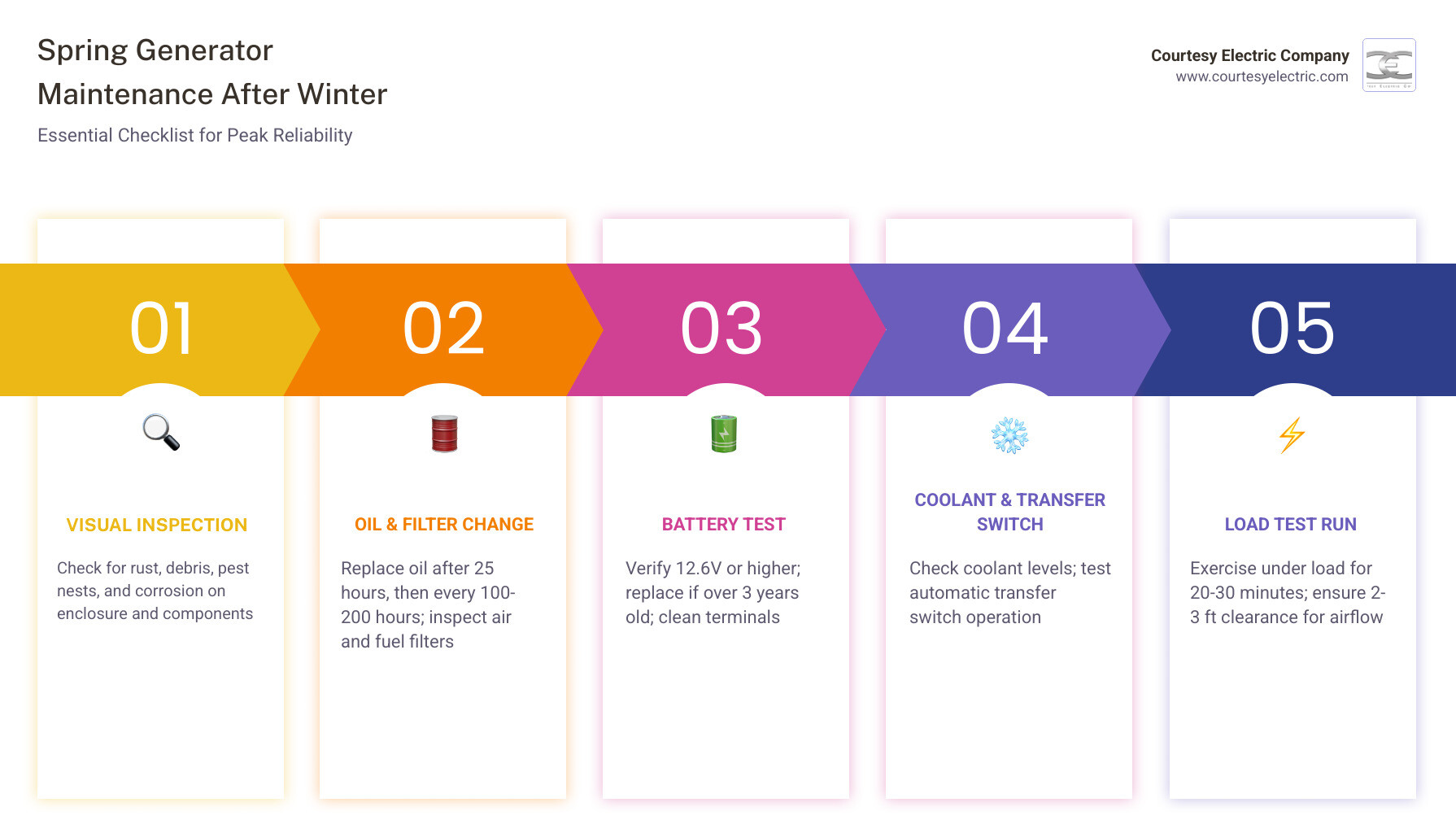
Spring Generator Maintenance After Winter — Quick Checklist:
- Perform a visual inspection for rust, debris, pest nests, and corrosion
- Change the oil and filters (first change after 25 hours, then every 100-200 service hours)
- Test the battery voltage (should read 12.6V or higher; replace if older than 3 years)
- Inspect and clean or replace air and fuel filters
- Check coolant levels to prevent overheating
- Test the transfer switch to confirm automatic operation
- Run the generator under load for at least 20-30 minutes
- Clear at least 2-3 feet of space around the unit for safe airflow
Winter in Colorado is tough on generators. Freezing temperatures, moisture, and months of heavy use — or long periods of sitting idle — leave wear you can't always see. Batteries weaken. Fuel degrades. Pests find their way into enclosures. And by the time spring storms roll through the Front Range, it's too late to find out your generator isn't ready.
The good news? Most springtime generator failures are completely preventable with routine maintenance. Whether your unit ran hard all winter or sat untouched since fall, a thorough spring checkup gets it back to full reliability before you need it most.
I'm David Meyer, Vice President of Courtesy Electric, a Colorado electrical contractor with roots going back to 1976. Through decades of installing and servicing backup power systems across the Denver Front Range, I've seen how a little attention in spring — the right spring generator maintenance after winter — can be the difference between a system that performs and one that fails at the worst possible moment.
Why Spring Generator Maintenance After Winter is Essential
As we move into April 2026, the transition from the freezing Colorado winter to the volatile spring storm season is the perfect time to evaluate your backup power system. In regions like Parker, Highlands Ranch, and the Black Forest, winter weather often means one of two things for a generator: it either worked overtime during heavy snowstorms or sat dormant in sub-zero temperatures. Both scenarios demand a spring tune-up.
Extreme cold can cause metal components to contract, potentially leading to loose connections or brittle seals. Furthermore, moisture accumulation from melting snow and ice can lead to internal corrosion or electrical shorts. We also see a significant "pest factor" in the spring. Mice and large insects often seek refuge inside warm generator enclosures during the winter, chewing through wiring or building nests that block critical airflow.
Neglecting these issues doesn't just risk a breakdown during a spring thunderstorm; it shortens the overall lifespan of your investment. A well-maintained standby generator can last 15 to 20 years, but only if it is cared for seasonally. For a deeper look at what these systems entail, check out our Generators Fraser CO Complete Guide.
Comprehensive Visual Inspection and Debris Clearance
Before you ever turn the key or flip a switch, the first step of spring generator maintenance after winter is a thorough visual walkthrough. You are looking for any signs of external damage or environmental interference that occurred while you were hunkered down for the winter.
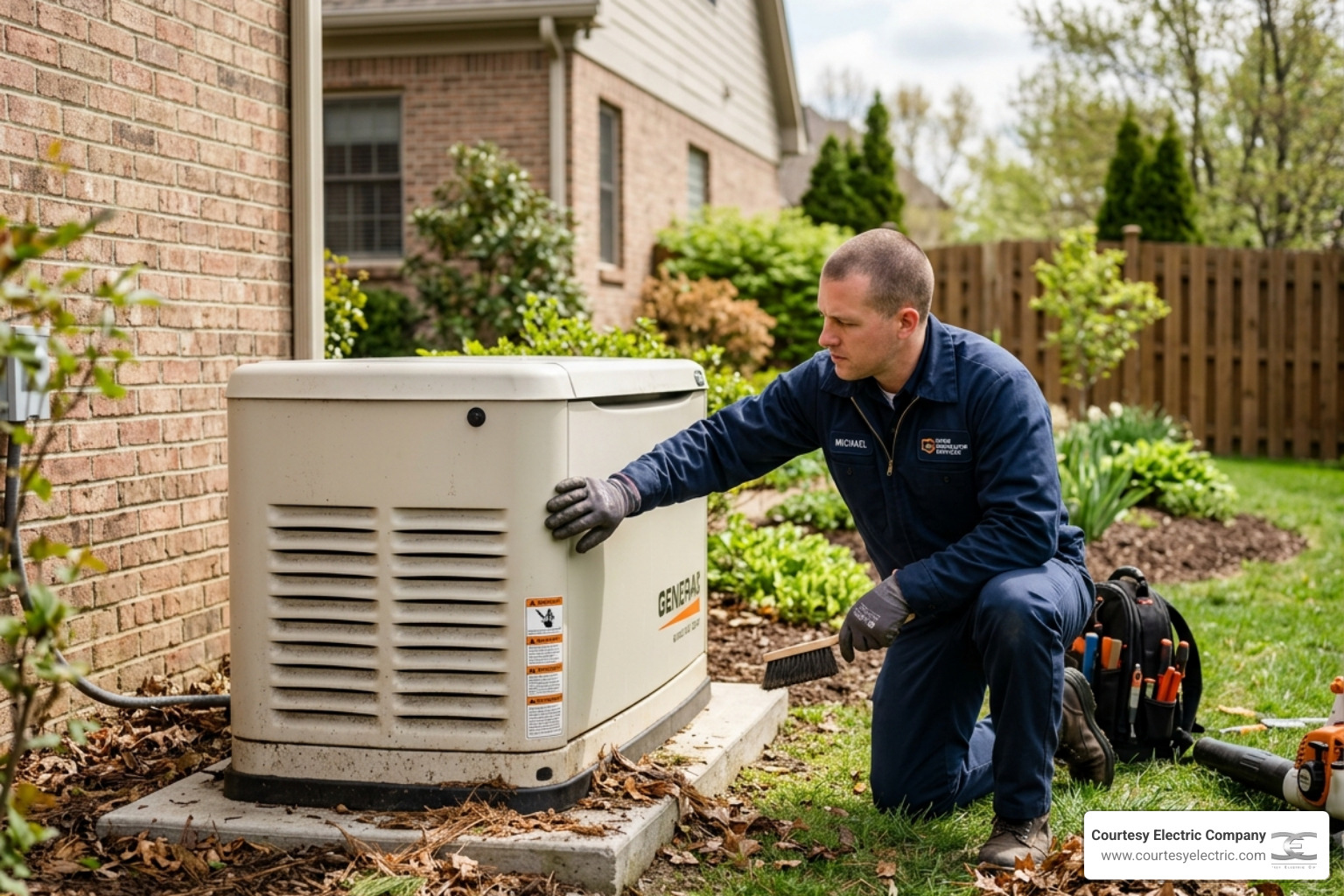
One of the most common issues we find in the Front Range is the buildup of debris. Wind-blown leaves, pine needles, and trash can accumulate around the base of the unit. We recommend maintaining at least two to three feet of clearance around the entire generator. This isn't just for aesthetics; your generator requires massive amounts of airflow to stay cool. If the vents are blocked, the engine can overheat within minutes of starting.
During your inspection, keep an eye out for:
- Pest Nests: Look inside the intake and exhaust ports for signs of rodents.
- Enclosure Rust: Check for "bubbling" paint or rust spots that could compromise the weather-tight seal of the unit.
- Loose Hardware: Winter vibrations can loosen bolts on the chassis or enclosure.
- Fluid Leaks: Look for puddles of oil or coolant on the concrete pad.
If you are considering a new system or need to see how a proper setup looks, visit our page on Generators Installation in Fraser CO.
Essential Fluid and Filter Care for Spring
Think of your generator like a car that sits in the garage for months but must be ready to win a race at a moment's notice. The fluids are the lifeblood of the machine. During spring generator maintenance after winter, checking and changing these fluids is non-negotiable.
Oil is particularly susceptible to the changing seasons. In the winter, you might have used a thinner oil to help with cold starts. As temperatures rise in Colorado, you need an oil that maintains its viscosity under heat. Generally, the first oil change should occur after the first 25 hours of operation (the "break-in" period) and then every 100-200 service hours after that. Even if you didn't hit those hours, oil should be changed annually because it can accumulate moisture and acids over time.
| Feature | Winter Oil (e.g., 5W-30) | Summer/Spring Oil (e.g., 15W-40) |
|---|---|---|
| Viscosity | Lower (Thinner) | Higher (Thicker) |
| Cold Start | Excellent | Average |
| Heat Protection | Lower | Higher |
| Best Use | Sub-zero Temps | 40°F to 100°F+ |
Don't forget the filters. A clogged air filter forces the engine to work harder, burning more fuel and increasing wear. Similarly, the oil filter should always be replaced whenever you change the oil to ensure no contaminants are recirculated through the engine.
Optimizing your spring generator maintenance after winter with fresh oil
For our Colorado clients, we often recommend switching to high-quality synthetic oil during the spring service. Synthetic oils provide superior lubrication and are better at resisting the "sludge" that forms when a generator runs in humid spring conditions. Fresh oil also helps remove any microscopic metal particles that may have shaved off during heavy winter runs. For more technical details on fluid specs, see our Generators Maintenance Guide Fraser CO.
Battery and Electrical System Testing
If your generator won't start, the battery is the culprit nine times out of ten. Cold weather is a notorious battery killer; it saps the chemical energy required to provide that initial surge of amperage.
During your spring generator maintenance after winter, use a multimeter to check the battery voltage. A healthy 12V battery should read approximately 12.6 volts or higher when the unit is off. If it’s reading below 12V, it might not have the "oomph" needed to turn the engine over during a storm. We recommend replacing batteries every three years regardless of how they "look," as their internal capacity degrades over time.
You should also inspect the electrical connections. Look for a white, powdery substance on the battery terminals—this is corrosion. It acts as an insulator, preventing electricity from flowing. Cleaning this off with a wire brush and applying a bit of protective grease can prevent a "no-start" situation.
Finally, check for any software updates if you have a modern Generac or Cummins smart-connected unit. Manufacturers often release firmware updates that improve fuel efficiency or diagnostic capabilities. For expert help with these technical checks, explore the Best Generators Services in Fraser CO.
Testing the battery during spring generator maintenance after winter
It is important to remember that voltage isn't everything. A battery might show 12.6V but fail under the "load" of starting the engine. If your generator sounds "sluggish" when trying to crank, the battery is likely failing its amperage test. Ensuring cold-start reliability is the primary goal of spring battery care.
Fuel System Integrity and Load Testing
For those with diesel or gasoline portable generators, fuel is a major concern. Gasoline begins to degrade in as little as 30 days, forming a gummy residue that can clog your carburetor. If you left untreated fuel in your tank all winter, it's time to drain it and replace it with fresh fuel and a stabilizer.
For diesel owners, spring is the time for a "blood transplant." Winter-grade diesel is designed not to "gel" in the cold, but it has lower energy content. Switching to a summer-grade diesel (like 0#) as temperatures rise ensures your engine runs efficiently and stays cool.
The final, and perhaps most important, step is the exercise cycle. We recommend starting your generator and running it under load for about 20 to 30 minutes once a month.
- Why under load? Running a generator with no "work" to do (no-load) doesn't allow the engine to reach its full operating temperature. This can lead to "wet stacking" in diesel engines or moisture buildup in gas engines.
- The Load Test: Turn on a few heavy appliances (like your AC or a heater) while the generator is running to ensure it can actually handle the electrical demand.
Fuel System Checklist:
- Inspect fuel lines for cracks or leaks.
- Check the fuel gauge for accuracy.
- Replace the fuel filter if it hasn't been changed in the last year.
- Ensure the fuel cap vent is clear of debris.
- Add a high-quality fuel stabilizer to fresh fuel.
Frequently Asked Questions about Spring Generator Care
How often should I change the oil in my generator?
For most residential standby units, we recommend an oil change once a year or every 100-200 hours of use. However, if you live in a particularly dusty area of the Front Range or if the generator ran for several days straight during a winter outage, you should change it sooner.
Why won't my generator start after sitting all winter?
The most common reasons are a dead battery, stale fuel, or a clogged air filter. In Colorado, we also frequently find that mice have chewed through the spark plug wires or that the "low oil" sensor is preventing the engine from firing because the oil level dropped slightly.
Is it necessary to run my generator if there are no outages?
Yes! Think of it like an athlete. If they don't practice, they won't be ready for the game. Running the generator monthly (exercising) keeps the seals lubricated, ensures the battery stays charged via the internal alternator, and helps you catch small issues before they become expensive repairs.
Conclusion
At Courtesy Electric Company, we’ve been serving the Denver and Colorado Front Range communities since 1976. We know that a generator is more than just a piece of machinery; it’s peace of mind for your family. By following these steps for spring generator maintenance after winter, you ensure that when the Colorado clouds turn dark and the power goes out, your home remains a bright, warm, and safe haven.
Don't wait for the first "big one" of the spring season to find out your backup system is down. Whether you need a professional 81-point inspection, a battery replacement, or a brand-new Generac or Cummins installation, our team is here to help with quality, integrity, and dependability.
Ready to ensure your home is protected? Contact us today for a free estimate on our Electrical Services and let us help you stay powered up all year long.


