
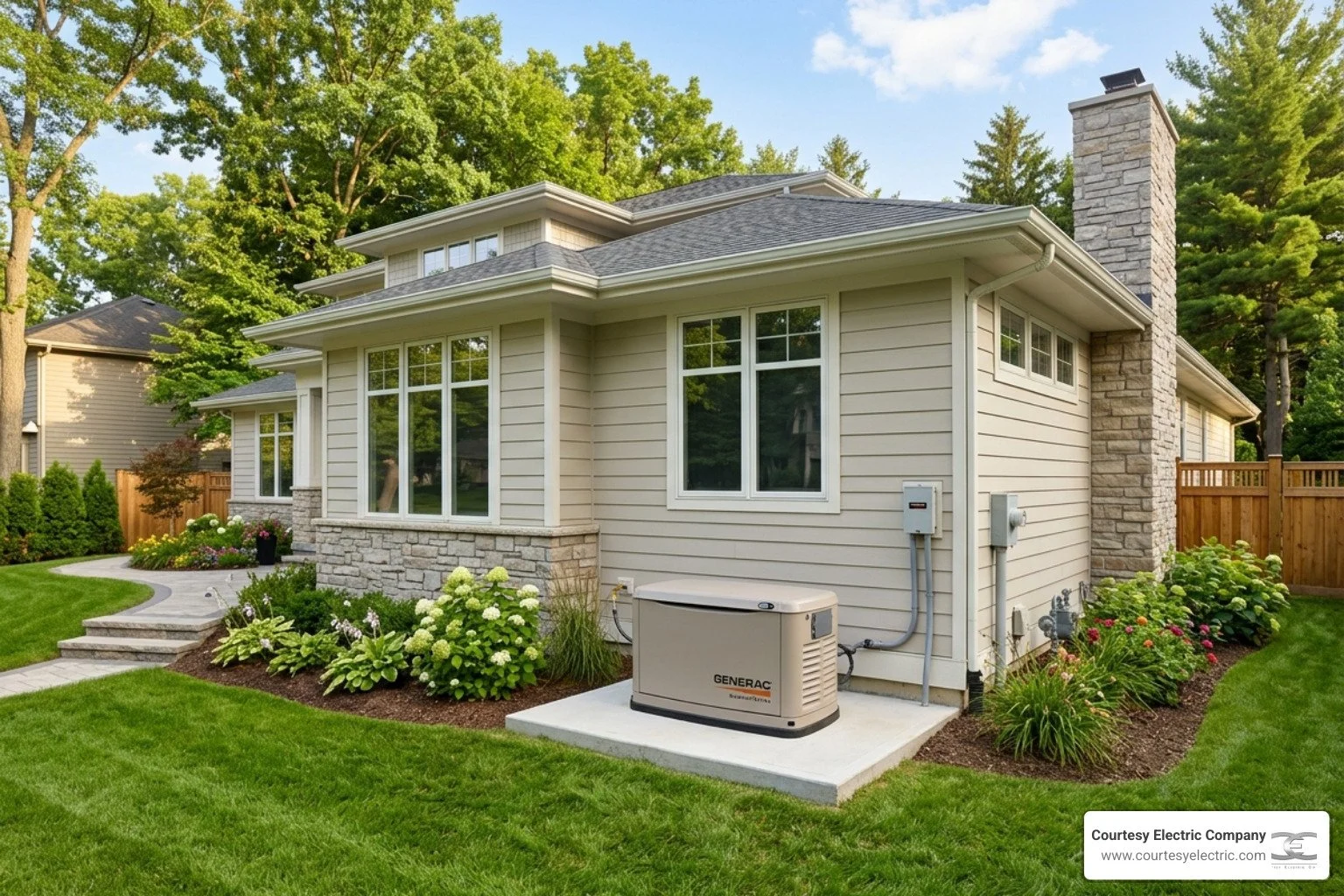
Why Knowing How Often Should You Service Your Standby Generator Could Save You in a Storm
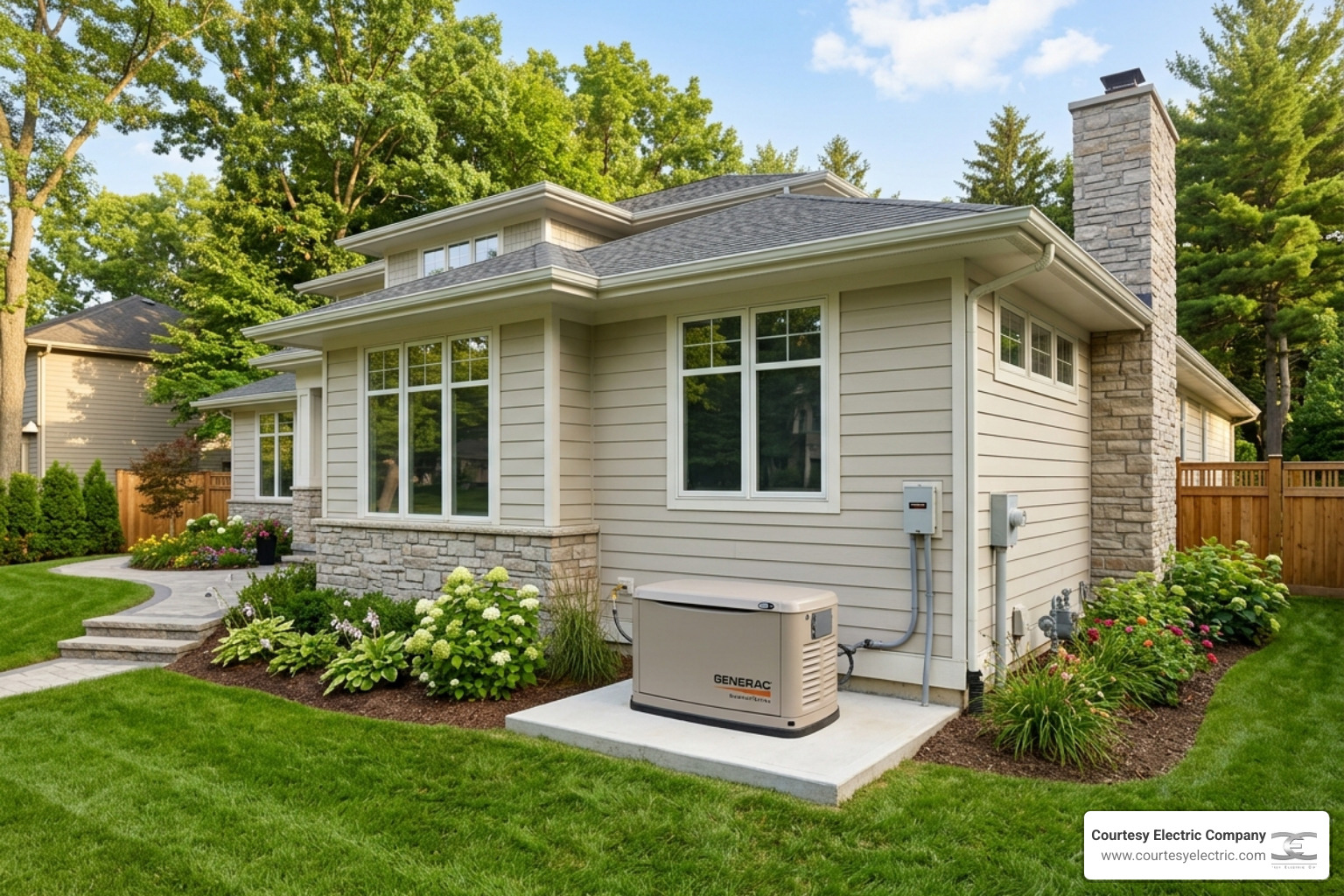
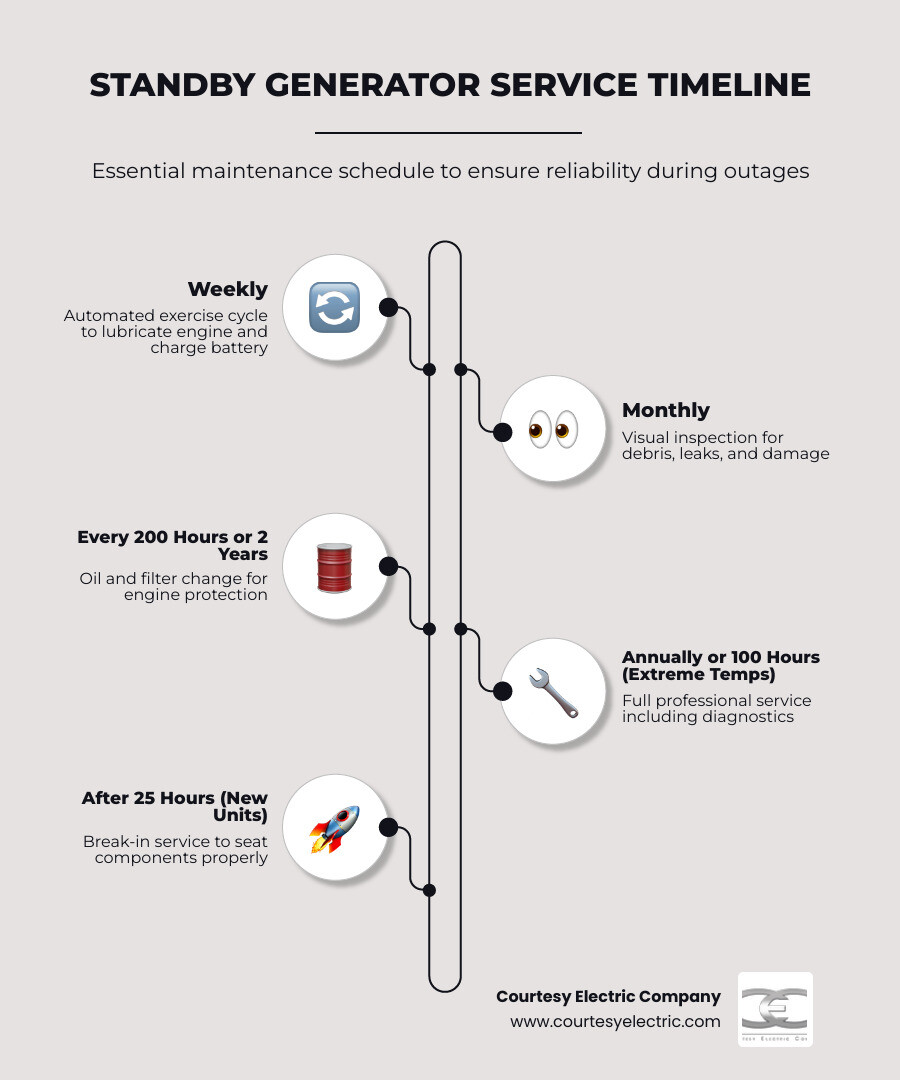
How often should you service your standby generator depends on a combination of time and usage — here is a quick-reference breakdown:
| Maintenance Type | Frequency |
|---|---|
| Visual inspection | Monthly |
| Exercise cycle check | Weekly (automated) |
| Oil & filter change | Every 200 hours or every 2 years |
| Oil change (extreme temps) | Every 100 hours or annually |
| Break-in service (new unit) | After first 25 hours of run time |
| Full professional service | At least once per year |
| Post-outage service | After any 24+ hours of continuous run |
Most homeowners don't think about their standby generator until the power goes out. That's by design — these systems are built to sit quietly outside your home and kick on automatically within seconds of an outage. But that "set it and forget it" convenience can create a false sense of security. A generator that hasn't been properly maintained is far more likely to fail exactly when you need it most. In fact, research shows that poorly maintained generators have a 63% higher failure rate during emergency situations compared to well-serviced units.
For homeowners across the Colorado Front Range, where winter storms, high winds, and unpredictable weather can knock out power for days at a time, that risk isn't just an inconvenience — it's a real safety concern.
I'm David Meyer, Vice President of Courtesy Electric, a Colorado electrical contractor with roots going back to 1976. After decades of installing and servicing backup power systems across Denver and the Front Range, I've seen how a missed oil change or a neglected battery can turn a reliable generator into an expensive paperweight — and I'll walk you through exactly what it takes to keep yours ready when it counts.
I'm worried about my power failing during a storm. How often should you service your standby generator in Denver?
Living in Denver, Parker, or Highlands Ranch means dealing with a climate that can be tough on mechanical equipment. When people ask us how often should you service your standby generator, our baseline answer is at least once a year for a comprehensive professional tune-up. However, this is just the minimum requirement for a unit that mostly sits in standby mode.
Think of your generator like a car that you only drive during emergencies. Even if it stays in the garage, the oil degrades over time, seals can dry out, and the battery can lose its charge. In Colorado, we have the added challenge of rapid temperature swings that can cause condensation inside the enclosure, leading to rust or electrical issues if not caught early.
While a standby unit is much more robust than a portable one, the maintenance needs differ significantly. Standby units are permanent fixtures connected to your home’s fuel line (natural gas or propane), while portables require manual refueling and more frequent spark plug changes. To help you visualize the difference, we’ve put together this comparison:
| Feature | Standby Generator Service | Portable Generator Service |
|---|---|---|
| Primary Service Interval | Annual or every 200 hours | Annual or every 100 hours |
| Oil Change Frequency | 200 hours (or 2 years) | 50–100 hours |
| Air Filter | Inspect annually; replace as needed | Clean/replace every 200 hours |
| Fuel System | Checked during annual pro visit | Requires stabilizer for storage |
| Testing | Automated weekly "exercise" | Manual startup required monthly |
For a deep dive into keeping your system peak-ready, check out our Generators Maintenance Guide Fraser, CO.
Understanding how often should you service your standby generator based on run hours
While the calendar is a good guide, the "hour meter" is the ultimate authority. Every standby generator has a controller that tracks exactly how many hours the engine has run.
- The Break-In Period: If we just installed your new Generac or Cummins unit, it needs a "break-in" service after its first 25 hours of run time. This is critical because new engines often shed tiny bits of metal as the parts seat themselves. Changing the oil and filter early prevents these particles from causing internal damage.
- The 200-Hour Rule: Most manufacturers recommend a full oil and filter change every 200 hours of operation. During a major Colorado blizzard, your generator might run for 48 or 72 hours straight. If you have a few of these outages in a year, you’ll hit that 200-hour mark much faster than someone whose power only blips for five minutes.
- Continuous Use Maintenance: If you find yourself in a "continuous use" scenario (running for more than 24 hours), we recommend shutting the unit down for about 30 minutes every day. This allows the engine to cool slightly so you can safely check the oil level. Running an engine low on oil for days on end is the fastest way to kill a generator.
Environmental factors: how often should you service your standby generator in the Colorado Front Range?
Our geography plays a huge role in how we maintain equipment. In Denver and the surrounding Front Range, we aren't just dealing with "normal" conditions.
- Altitude Adjustments: At 5,280 feet (and higher in places like Black Forest or Fraser), the air is thinner. This affects the fuel-to-air ratio. Our team ensures your generator is properly "derated" or adjusted for altitude so it doesn't run too rich, which can soot up spark plugs and reduce efficiency.
- Extreme Cold and Snow: In April 2026, we’ve already seen how unpredictable spring snow can be. Deep snow can block the intake and exhaust louvers on your generator's enclosure. If the engine can’t "breathe," it will overheat or shut down. Part of your winter maintenance should involve clearing a three-foot path around the unit.
- Dust and Debris: Our dry Colorado air is often filled with dust and pollen. This can clog air filters much faster than in humid climates. If you live in a particularly dusty area, we might recommend checking that air filter every six months instead of once a year.
For more local insights, see our Generators Fraser, CO Complete Guide.
Key Maintenance Tasks for Your Home Backup System
When we arrive for a scheduled service visit, we follow a rigorous checklist to ensure every component of your backup system is healthy. It’s not just about turning a wrench; it’s about precision.
- Oil and Filter Change: We use high-quality synthetic 5W-20 oil, which is specifically designed to handle the wide temperature ranges we see in Colorado. Synthetic oil flows better in sub-zero temperatures, ensuring your engine is lubricated the second it starts up in a winter storm.
- Air Filter Replacement: A dirty air filter starves the engine of oxygen, leading to poor performance and higher fuel consumption. We replace these annually or more often if the environment is harsh.
- Spark Plug Inspection: We check for cracks in the porcelain and ensure the "gap" is set correctly. Fouled spark plugs are a common reason for a generator "hunting" (revving up and down) or failing to start.
- Battery Testing: This is the big one. The most common reason for generator failure is a dead battery. Standby generators use the battery to start the engine and to power the control board. We test the voltage and the "cold cranking amps" (CCA). If a battery is more than three years old, we generally recommend proactive replacement.
- Enclosure and Pest Prevention: You’d be surprised how much mice and wasps love a warm generator enclosure. We clear out nests and inspect wiring for any signs of chewing. We also touch up any chipped paint to prevent the Colorado salt and moisture from causing rust.
If you’re just starting your journey toward backup power, you can learn more about the setup process in our guide to Generators Installation in Fraser, CO.
Professional Service vs. Homeowner Maintenance
We often get asked if homeowners can do their own maintenance. The answer is: some of it! We actually encourage our customers in Denver and Parker to be proactive.
What you can (and should) do:
- Visual Inspection: Once a month, take a walk out to the unit. Is the status light green? Are there any puddles of oil or coolant?
- Debris Removal: Keep the area clear. Remove weeds, leaves, and snow. Ensure there’s at least three feet of clearance around the entire unit.
- Monitor the Exercise Cycle: Most generators are programmed to run for 5–12 minutes once a week. This "exercise" circulates oil and charges the battery. If you don't hear it run at its scheduled time, give us a call.
What we do: While checking the oil level is simple, tasks like checking valve clearances or testing the Automatic Transfer Switch (ATS) require specialized tools and electrical expertise. Our team at Courtesy Electric handles the complex "guts" of the system so you don't have to worry about safety risks.
For those looking for the gold standard in care, explore the Best Generators Services in Fraser, CO.
Tasks requiring a certified technician
There are certain parts of your generator that are definitely not DIY-friendly.
- Valve Clearance Adjustments: After the first 25 hours and then every few hundred hours, the engine's valves need to be checked and adjusted. If they are too tight or too loose, the engine will lose power or eventually suffer a catastrophic failure.
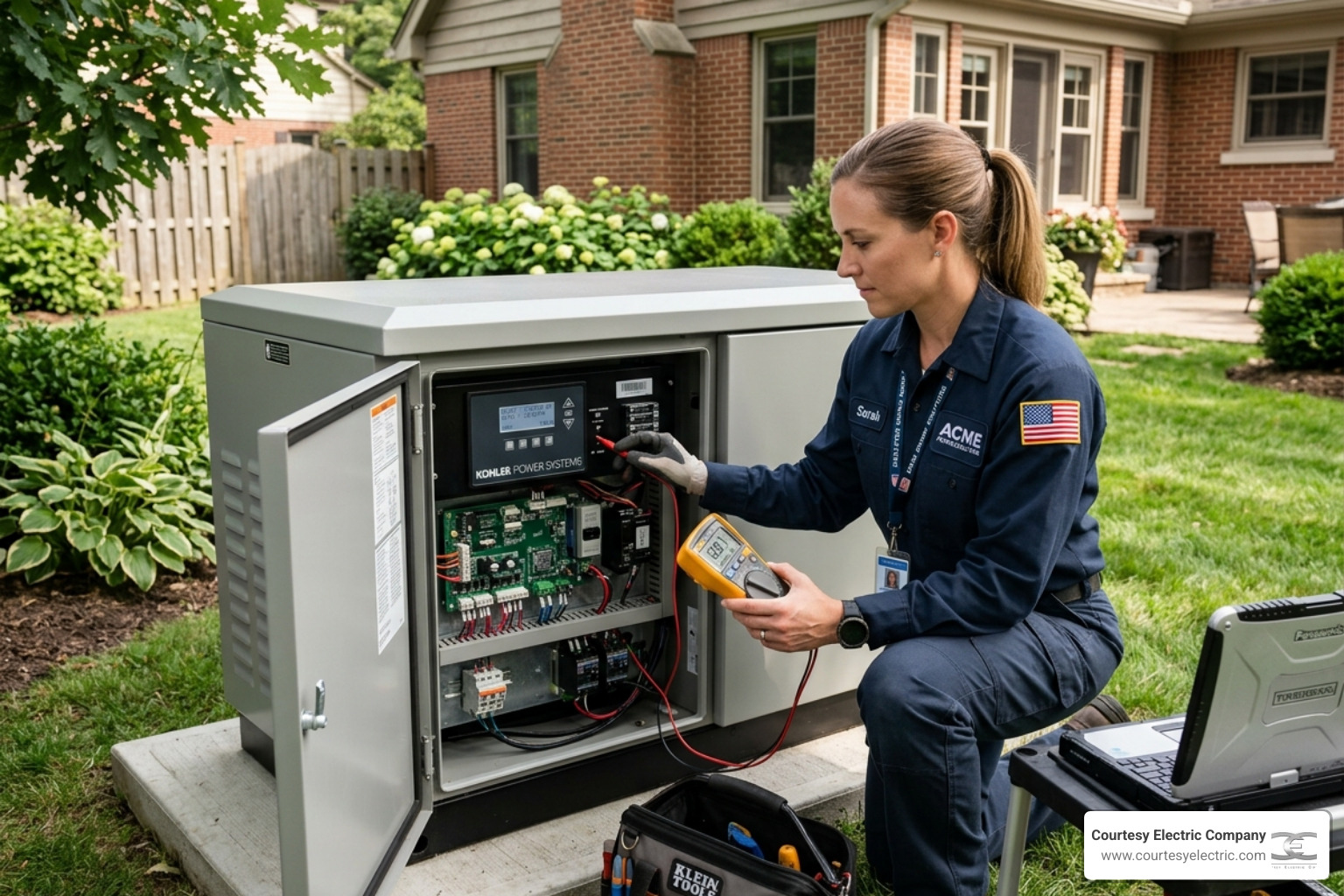
- Electrical Diagnostics: We use meters to verify that the generator is producing the correct voltage and frequency (60Hz). If these are off, it can damage sensitive electronics in your home like computers and smart TVs.
- Transfer Switch Testing: We simulate a power outage to ensure the ATS correctly disconnects your home from the grid and connects it to the generator. This is vital for "anti-backfeeding" safety, which protects utility workers.
- Firmware Updates: Modern Generac and Cummins units have controllers that are essentially computers. We update the firmware to fix bugs and improve efficiency, much like an update for your smartphone.
Maintaining your manufacturer warranty
If you have a Generac or Cummins standby generator, maintaining your warranty is non-negotiable. Most manufacturers require documented proof of regular maintenance performed by an authorized dealer to honor warranty claims.
We keep meticulous service logs for every customer. If a part fails three years from now, having a record that we changed the oil and checked the battery annually ensures the manufacturer will cover the repair. Skipping service doesn't just risk a breakdown; it risks a massive repair bill that could have been covered for free.
Warning Signs Your Generator Needs Immediate Attention
Even if you’re following the schedule for how often should you service your standby generator, things can happen. Keep an eye (and ear) out for these red flags:
- The Yellow or Red Light: Most units have a status light visible from the outside. Green is good. Yellow means "maintenance due" or a minor alert. Red means the unit has shut down and will not run during an outage.
- Unusual Noises: If you hear banging, screeching, or excessive vibration during the weekly exercise, something is loose or worn.
- Fluid Leaks: Any puddle under the unit is a bad sign. It could be oil, or in the case of larger liquid-cooled units, it could be coolant.
- Starting Delays: If the engine cranks for a long time before starting, your battery is likely dying or your spark plugs are fouled.
- Strong Fuel Smells: If you smell natural gas or propane near the unit, shut it down and call us immediately. This could indicate a leak in the supply line.
Frequently Asked Questions about Generator Maintenance
How long do standby generators last with proper care?
With diligent maintenance, a high-quality standby generator can last 20 to 25 years. However, we often see neglected units fail after just 7 to 10 years. We generally recommend evaluating the reliability of major components around the 15-year mark. Just like an old car, even if it runs, you want to be sure it will start every single time.
Should I run my generator if there isn't an outage?
You don't need to manually start it, as the automated weekly exercise cycle handles this for you. This cycle is vital for lubricating engine seals and keeping the battery charged. We usually set this for a time when you’re home so you can verify it’s running, but not so early that it wakes the neighbors!
What is the most common cause of generator failure?
By far, it is battery failure. Because the generator sits outside in the Colorado cold, the battery works harder than a car battery. We’ve seen perfectly maintained engines fail to start simply because a $150 battery was four years old and had a dead cell. Regular testing and proactive replacement are the best ways to avoid this.
Conclusion: Reliability and Peace of Mind in the Front Range
Your standby generator is more than just a piece of machinery; it’s an insurance policy for your home’s safety and comfort. Whether it’s keeping the pipes from freezing during a January cold snap or ensuring your food doesn't spoil during a summer windstorm, the reliability of that system rests entirely on how well it’s maintained.
Knowing how often should you service your standby generator is the first step. The second step is partnering with a team that understands the specific needs of Colorado homeowners. At Courtesy Electric, we’ve spent fifty years ensuring our neighbors across Denver and the Front Range never have to sit in the dark.
Don't wait for the clouds to turn gray to wonder if your backup power is ready. Protect your home with professional electrical services and schedule your annual generator "physical" today. We’ll handle the dirty work so you can enjoy the peace of mind that comes with being truly prepared.


