
Standby Generator vs Battery Backup Cost Comparison: What Colorado Homeowners Need to Know
When weighing a standby generator vs battery backup cost comparison, most homeowners want a fast, clear answer before diving into the details. Here's a quick look at how the two systems stack up:
| Factor | Standby Generator | Battery Backup |
|---|---|---|
| Upfront installed cost | Lower | Higher |
| Ongoing fuel costs | Yes (gas/propane) | None |
| Maintenance required | Annual service needed | Minimal |
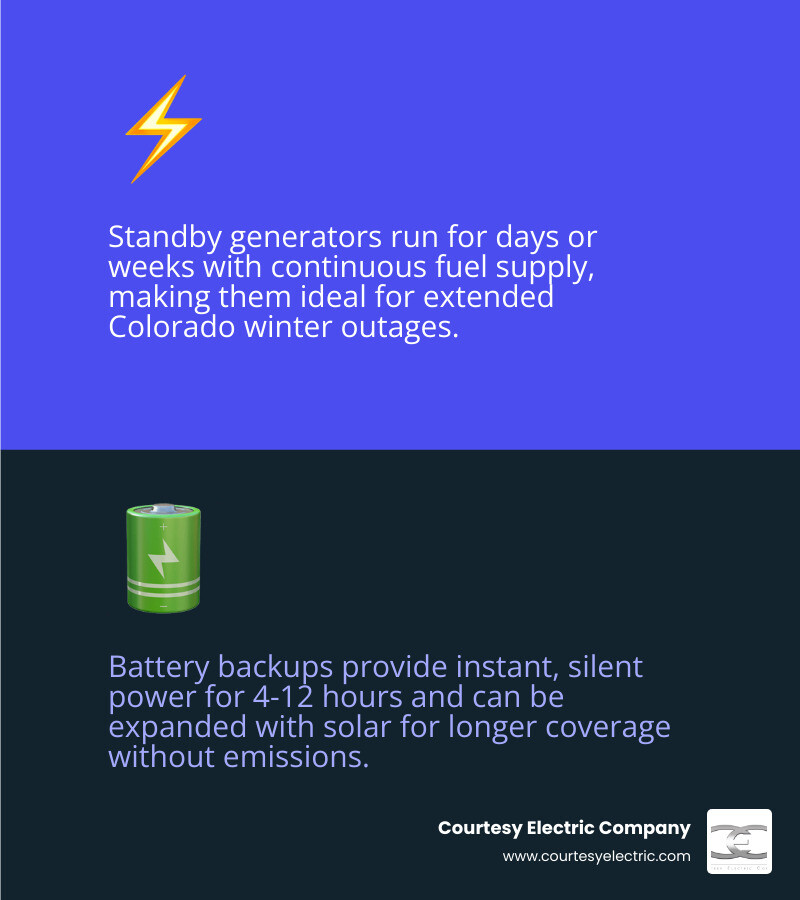
| Runtime during outage | Days to weeks (with fuel) | Hours (expandable with solar) |
| Noise and emissions | Produces both | Silent, zero emissions |
| Best for | Long, multi-day outages | Short outages, solar pairing, daily savings |
| Lifespan | 15-25 years | 10-15 years |
| Tax credits/rebates | Generally not eligible | Federal 30% tax credit available |
Power outages in the U.S. are lasting longer than ever. According to U.S. Census Bureau data, outage duration rose 38% from 2023 to 2024 alone. For homeowners along Colorado's Front Range, where winter storms, high winds, and grid stress are real seasonal threats, choosing the right backup power system isn't just a convenience question — it's a financial and safety decision.
Both standby generators and battery backup systems can keep your home running when the grid goes down. But they work in fundamentally different ways, carry different price tags, and serve different needs. A generator creates power from fuel on demand. A battery stores power from the grid or solar panels and releases it when needed. Getting the right fit depends on understanding not just what each system costs to install, but what it costs to own and operate over its full lifetime.
I'm David Meyer, Vice President of Courtesy Electric, a Colorado electrical contractor with roots going back to 1976 — and I've spent years helping Front Range homeowners navigate exactly this standby generator vs battery backup cost comparison to find the right solution for their home and budget. In the sections ahead, we'll break down every major cost factor so you can make a confident, informed decision.
Core Technologies, Performance, and the Hybrid Approach
To truly understand how a standby generator vs battery backup cost comparison works, we have to look under the hood of both technologies.
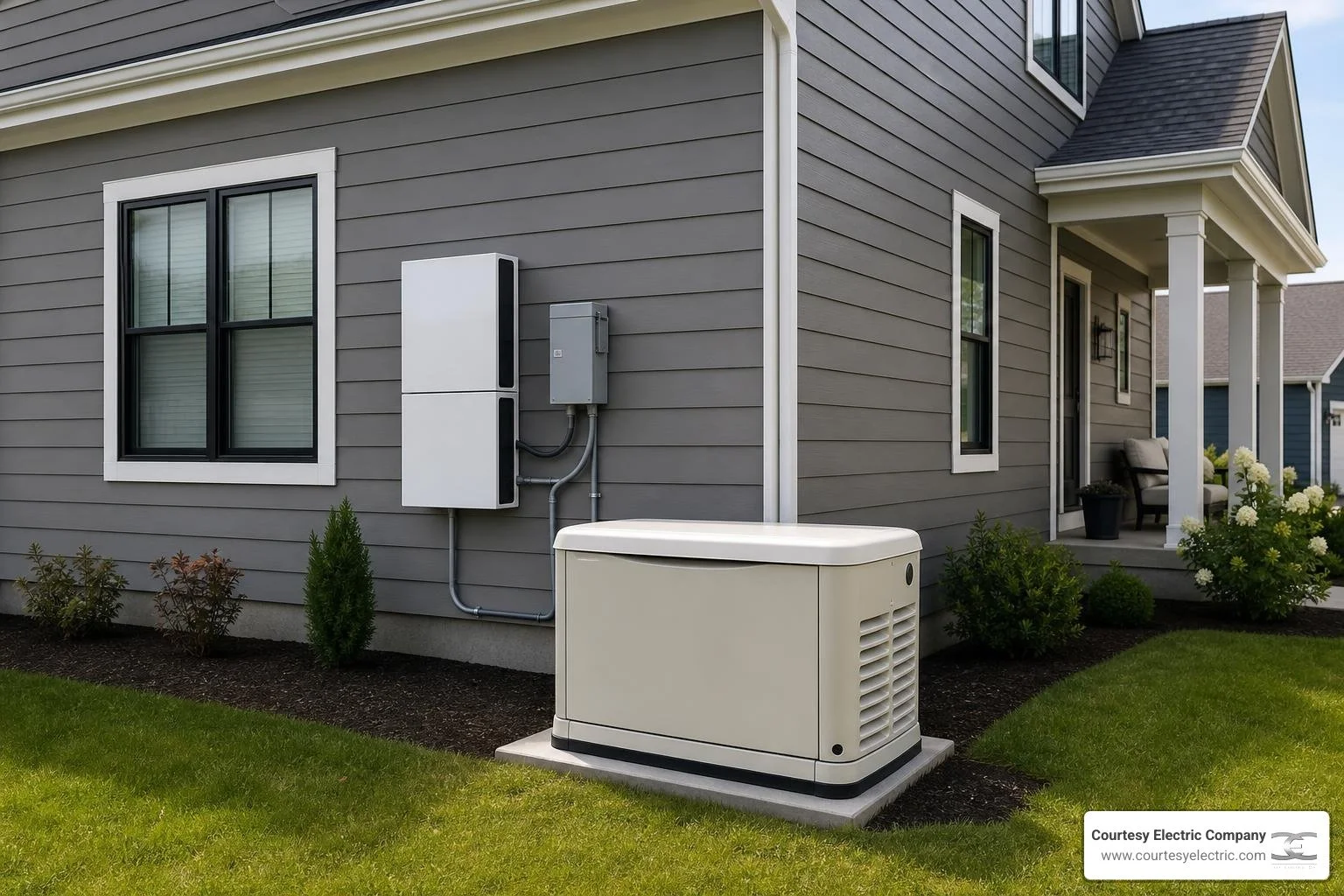
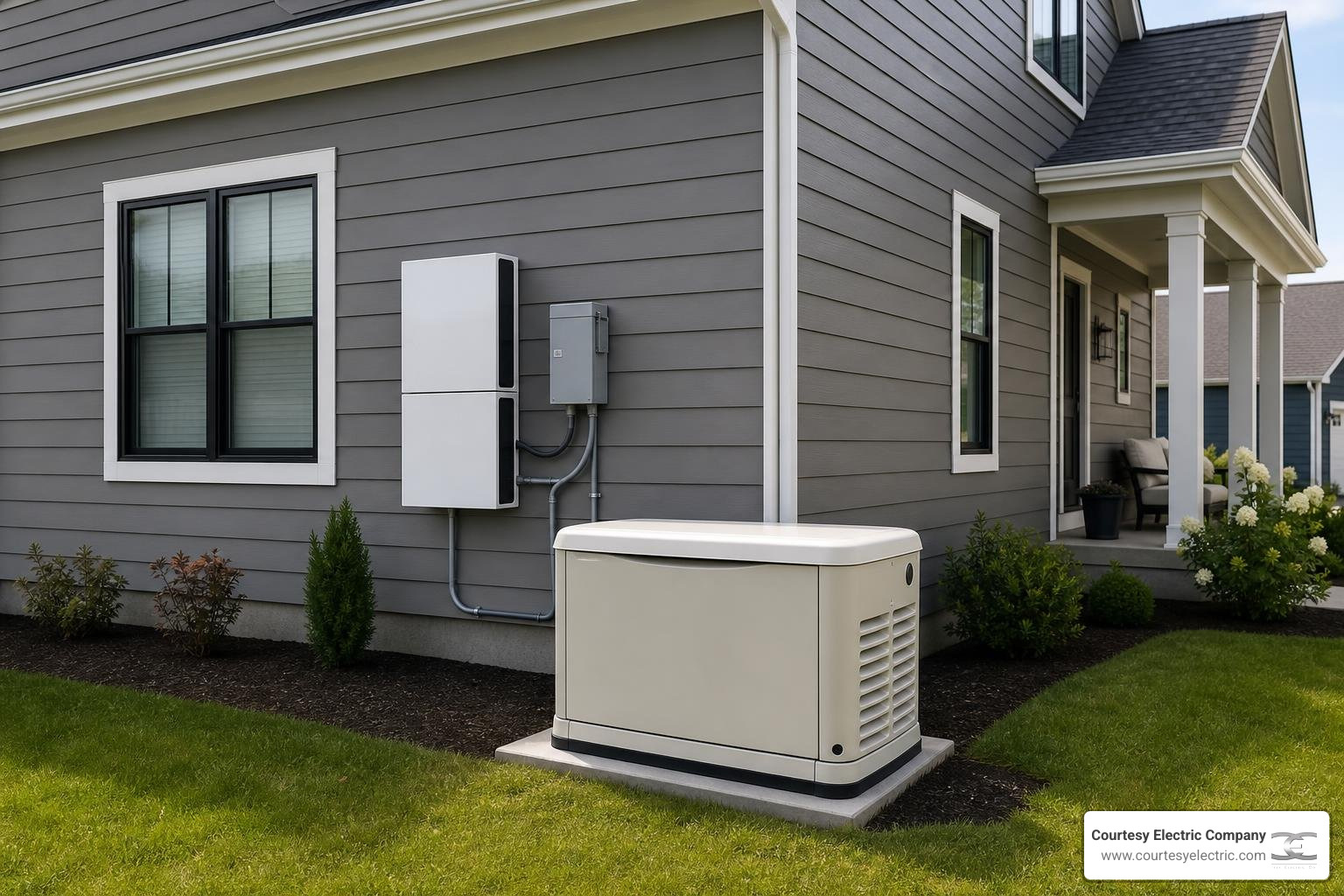
A home standby generator is an engine-driven system connected directly to your home’s electrical panel. When the power goes out, an automatic transfer switch (ATS) detects the loss of utility power, starts the generator engine, and shifts your home’s electrical load to the generator. This process typically takes about 10 to 30 seconds. Generators run on fuel—most commonly natural gas from a utility line or liquid propane from an on-site tank.
On the other side of the ring, a home battery storage system works as an electrochemical reservoir. It is charged either by the utility grid when rates are low or by a residential solar system during the day. When a blackout occurs, the battery system engages instantly—often in less than a fraction of a second. This seamless transition means your computers, Wi-Fi routers, and clocks won't even flicker.
Each system brings unique performance characteristics to your Colorado home:
- Noise Levels: Standby generators are mechanical engines. While modern enclosures have made them significantly quieter than portable units, they still produce sound levels comparable to a running central air conditioning unit. Battery backups, conversely, are completely silent.
- Carbon Emissions: Generators burn fossil fuels, emitting carbon dioxide and requiring proper outdoor placement to prevent carbon monoxide buildup. Batteries produce zero local emissions, making them the cleaner choice for environmentally conscious homeowners.
- Winter Performance: Colorado winters are famous for heavy snow and sub-zero temperatures. Batteries can experience a temporary reduction in capacity when exposed to extreme cold, which is why we recommend installing them in climate-controlled spaces like garages. Standby generators handle the cold exceptionally well, provided they are equipped with cold-weather starting kits.
If you are trying to decide which technology matches your lifestyle, our guide on Generator or Battery for Power Outages: Is a Generator or Battery Better for Power Outages? outlines these differences in deeper detail.
For many homeowners along the Front Range, the conversation naturally leads to the benefits of a standby generator. You can read more about these advantages in our article on Whole Home Generator Benefits for Colorado Homeowners. However, if you are leaning toward a modern, silent storage solution, our Battery Storage Guide Centennial Co explains how storage technology works in our local climate. That location matters; cold-weather maintenance is essential, as detailed in our guide on Battery Storage Maintenance in Winter Park Co.

The Hybrid Approach: The Best of Both Worlds
You don't always have to choose just one. A hybrid setup combines a battery storage system with a standby generator. In this configuration, the battery handles daily energy management and short-duration outages. If a major storm hits and the battery drains, the standby generator automatically kicks in to power the home and recharge the battery. This reduces generator run hours, saves fuel, minimizes noise, and ensures indefinite runtime.
Standby Generator vs Battery Backup Cost Comparison: Upfront Investment and Installation
When comparing the upfront financial commitment of these two systems, the initial investment and the complexity of the installation play massive roles.
A standby generator generally represents a lower upfront equipment investment compared to a whole-home battery backup system. However, the installation of a standby generator is highly mechanical. It requires pouring a solid concrete pad, securing local permits, running dedicated fuel lines (natural gas or liquid propane), and installing an automatic transfer switch next to your main electrical panel. If your home does not already have an active natural gas line or a sufficiently sized propane tank, the cost to run these utility lines can add substantial complexity to the project.
A battery backup system involves a more significant upfront equipment investment. The installation is highly electrical rather than mechanical. It requires mounting the battery units—such as a Franklin WH system—on a wall, integrating them with an automatic smart switch, and configuring the system to communicate with your home's electrical panel.
To make a battery system highly efficient, we often pair it with a smart electrical panel, such as a SPAN panel. Instead of physical critical-load subpanels that permanently limit what you can power during an outage, a smart panel allows you to dynamically choose which appliances to back up directly from a smartphone app. If you want to run your refrigerator and well pump first, and then switch to your washing machine later, a smart panel makes it possible.
If you are planning to install a battery system, it is vital to work with certified professionals who understand local code requirements. You can learn more about this process in our Battery Storage Installation Guide Centennial Co.
Here is a side-by-side comparison of the typical installation requirements for both systems:
| Installation Requirement | Standby Generator | Battery Backup |
|---|---|---|
| Permitting & Inspections | Electrical and plumbing/gas permits required | Electrical and utility interconnection permits required |
| Site Prep | Concrete pad poured outdoors; strict setback rules | Wall-mounting space in a garage or utility room |
| Fuel Connection | Connection to natural gas line or propane tank | Connection to main electrical panel (and solar, if applicable) |
| Electrical Upgrades | Automatic Transfer Switch (ATS) installation | Smart switch, subpanel, or smart panel (like SPAN) integration |
| Labor Profile | Requires both licensed electricians and gas plumbers | Requires specialized, certified electricians |
Long-Term Financial Analysis: Operating, Maintenance, and Incentives
While the upfront installation is a major piece of the puzzle, the long-term financial analysis is where the standby generator vs battery backup cost comparison gets interesting.
A standby generator is a pure utility asset—it sits idle until an outage occurs. When it does run, it consumes fuel continuously. If you experience a multi-day power outage, the ongoing fuel consumption of natural gas or propane can add up quickly. Additionally, generators require routine mechanical upkeep, much like a car.
A battery backup system, however, can provide daily financial value even when the grid is functioning perfectly. If your utility provider uses Time-of-Use (TOU) rate structures—where electricity is highly expensive during peak afternoon and evening hours—your battery can perform "peak-shaving." It charges up when electricity is cheap (or free from your solar panels) and discharges to power your home when utility rates spike. This daily rate arbitrage can offset a portion of your monthly energy bills.
Furthermore, battery systems qualify for significant financial incentives that generators do not. Under the federal government’s energy programs, residential battery storage installations and smart electrical panels (like SPAN panels) are eligible for a 30% Federal Tax Credit. This credit directly reduces your federal tax liability, significantly lowering the net cost of your investment.
Additionally, local Colorado utility companies and state programs frequently offer rebates for energy efficiency and electrical upgrades, making battery systems even more financially attractive. You can explore these opportunities in our guides on Federal Tax Credits for Battery Storage and Span Panels and Colorado Energy Rebates for Electrical Upgrades. For a deeper dive into the specific advantages of premium battery systems, read about the Franklin Battery Storage Benefits Explained.
Fuel and Maintenance Factors in Standby Generator vs Battery Backup Cost Comparison
To keep a standby generator running reliably, you must commit to its maintenance schedule. Like any combustion engine, a generator requires regular oil changes, spark plug replacements, battery health checks, and filter upgrades.
Most manufacturers recommend a professional service inspection at least once a year, as well as immediate maintenance after any extended continuous run during a blackout. Generators also perform automatic weekly "exercise" cycles to keep their parts lubricated and test their internal systems, which consumes a small amount of fuel over the course of the year.
For detailed advice on keeping your generator in peak condition, check out our articles on How Often Should You Service Your Standby Generator and Generator Maintenance Tips for Homeowners. If you own a Generac system, we have also broken down the requirements in our Generac Generator Maintenance Schedule Explained.
In contrast, battery backup systems have no moving parts. They require virtually zero active maintenance. The internal software manages cell balancing, temperature regulation, and system diagnostics automatically.
Lifespan and Value Retention in Standby Generator vs Battery Backup Cost Comparison
A well-maintained standby generator has an impressive operational lifespan, often lasting between 15 and 25 years. Because it only runs during outages and brief weekly exercises, the actual mechanical wear accumulates slowly over decades. However, achieving this longevity depends entirely on consistent maintenance. If a generator is neglected, its lifespan drops dramatically.
To understand how to protect your investment, read How Proper Maintenance Extends Generator Life and learn the Signs Your Generator Needs Professional Attention.
Home battery backup systems typically carry warranties guaranteeing performance for 10 to 15 years. Over time, the lithium-ion or lithium iron phosphate (LiFePO4) cells inside the battery will gradually degrade, slowly losing a percentage of their maximum storage capacity. While they do not require oil changes or mechanical tune-ups, they will eventually need to be replaced sooner than a meticulously maintained generator. Keeping them in moderate temperatures helps extend their life, as outlined in our Battery Storage Maintenance Guide Granby Co.
Frequently Asked Questions About Home Backup Power
Choosing the right backup power system for your home often brings up a few common questions. Here are the answers to the most frequent inquiries we receive from Colorado homeowners.
Which system is better for short versus extended power outages?
For short outages lasting anywhere from a few minutes to several hours, a battery backup system is superior. It reacts instantly, runs silently, and handles brief interruptions without consuming fuel or making noise.
However, for extended outages that last several days or even weeks—such as those caused by severe winter blizzards or major grid damage—a standby generator is the clear winner. As long as you have a continuous supply of natural gas or a large propane tank, a generator can run indefinitely to keep your entire home, including heavy loads like heating and air conditioning, fully powered.
Can batteries and generators be used together in Colorado?
Yes! Combining both systems into a hybrid setup is an excellent option for Colorado homes. In this configuration, your battery backup handles the daily heavy lifting, quick outages, and time-of-use rate management. If an extended winter storm knocks out the grid for days and drains your battery, your standby generator will automatically start up to power your home and recharge the battery. This hybrid approach gives you the ultimate peace of mind.
Do home batteries require regular maintenance like generators?
No. Home batteries are solid-state electronics with no moving parts, meaning they do not require oil changes, fuel filters, spark plugs, or manual run tests. The system's internal management software handles all operations automatically. Your only real task is keeping the area around the battery clean and ensuring the unit is kept within its recommended operating temperature range.
Conclusion
Determining the winner of a standby generator vs battery backup cost comparison ultimately depends on your home’s specific needs, your budget, and your long-term energy goals.
If your primary goal is securing reliable, multi-day backup power for heavy appliances during severe Colorado storms at a lower upfront cost, a standby generator from trusted brands like Generac or Cummins is an incredibly dependable choice. If you prefer a silent, eco-friendly solution that integrates with solar panels, avoids fossil fuels, qualifies for major tax credits, and actively lowers your daily utility bills, a premium battery storage system like Franklin Battery Storage paired with a SPAN smart panel is an outstanding investment.
At Courtesy Electric Company, we have been serving homeowners across Denver, the Colorado Front Range, Parker, Highlands Ranch, and Black Forest since 1976. We specialize in both generator and battery storage installations, and we are proud to offer direct partnerships with top manufacturers to deliver the highest quality systems.
If you're ready to protect your home from the next power outage, we are here to help. Contact us today for More info about electrical services and to schedule your free estimate.


