
Your Whole Home Generator Is Only as Reliable as Its Last Service
How often do whole home generators need maintenance is one of the most important questions you can ask as a homeowner — and the short answer is: more often than most people think.
Here's a quick breakdown:
| Maintenance Type | Frequency |
|---|---|
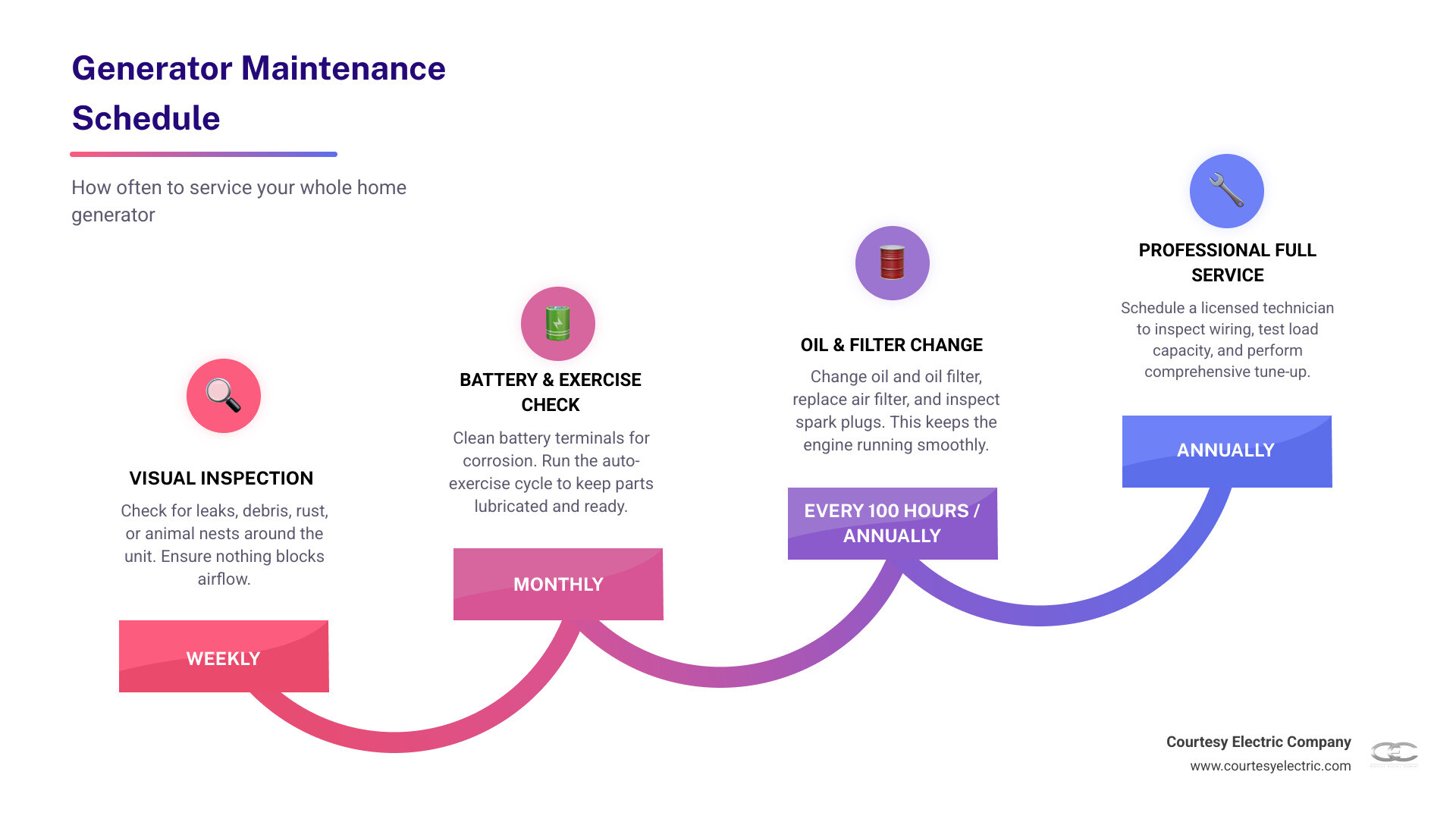
| Visual inspection (leaks, debris, rust) | Weekly |
| Battery terminal check and cleaning | Monthly |
| Exercise cycle (auto-run test) | Weekly or monthly |
| Oil and oil filter change | Every 100 hours of runtime, or annually |
| Air filter replacement | Annually or every 100 hours |
| Spark plug inspection/replacement | Every 100 hours of runtime |
| Professional full-service visit | Once a year, or every 100–200 hours of runtime |
Most standby generators sit quietly in your yard for months at a time, which makes it easy to forget they exist — until a Colorado storm knocks out the grid and you need that machine to start without hesitation. The problem is, a generator that isn't regularly maintained is a generator that's likely to let you down at exactly the wrong moment. Neglect builds up slowly: a corroded battery terminal here, a dirty air filter there, and before long you've got a machine that won't fire up when your family needs it most.
I'm David Meyer, Vice President of Courtesy Electric, a Colorado electrical contractor with roots going back to 1976, and understanding how often whole home generators need maintenance is something I deal with directly through our backup power installation and service work across Denver and the Front Range. Let's walk through everything you need to know to keep your generator ready when it counts.
How Often Do Whole Home Generators Need Maintenance?
Determining how often your generator needs a tune-up is not a one-size-fits-all answer. It operates on two distinct clocks: a calendar schedule and a runtime schedule.
Even if we experience a mild year in Denver with zero power outages, your standby generator still requires attention. Standby units are mechanical engines, much like the one in your car. When an engine sits idle for months, seals can dry out, battery charges can deplete, and moisture can accumulate in the engine block. This is why understanding how often should you service your standby generator is essential for protecting your investment.
At a bare minimum, a professional technician should perform a comprehensive service on your whole home generator once a year. However, if our unpredictable Colorado weather forces your generator to run frequently, you will need to schedule service based on operating hours rather than the calendar.
Hourly vs. Calendar Schedules: How Often Do Whole Home Generators Need Maintenance in a Typical Year?
For most homeowners in communities like Highlands Ranch or Parker, a typical year consists of the generator remaining in "standby" mode, occasionally running its weekly self-exercise cycle. In this standard scenario, your primary maintenance milestone is the annual professional service.
However, when the generator is actively running to power your home, the clock shifts to operating hours. The standard maintenance intervals for key components are:
- Every 50 to 60 Hours of Use: The engine oil should be checked and, depending on the manufacturer and environmental conditions, changed to maintain engine reliability.
- Every 100 Hours of Use: Change the engine oil and the oil filter. Clean or replace the air filter, and inspect the spark plugs for wear or cracks.
- Every 200 Hours of Use: Replace the spark plugs, conduct a full cooling system inspection, and check the valve clearances.
For a detailed look at how these intervals apply to the most common systems in Colorado, you can read our generac generator maintenance schedule explained guide.
How Often Do Whole Home Generators Need Maintenance During Extended Outages?
When a severe winter blizzard hits the Black Forest or a heavy spring storm downs power lines along the Front Range, your generator transitions from a backup safety net to your primary utility provider. During these extended outages, the maintenance schedule accelerates dramatically.
If your generator is running continuously for 24 hours or more, you must treat it like a car on a cross-country road trip. You should shut the unit down safely once a day to check the oil level. Running an engine continuously under load consumes oil, and letting the oil level drop too low can cause catastrophic engine failure.
Additionally, if the outage lasts several days, you may easily surpass the 50-hour or 100-hour runtime thresholds. This means you will need to perform an oil and filter change right in the middle of the outage to keep the system running smoothly. For practical steps on how to handle these situations safely, check out our generator maintenance tips for homeowners.
Essential Standby Generator Maintenance Tasks
To ensure your standby generator remains in peak operating condition, several critical tasks must be performed regularly. Neglecting these core responsibilities can lead to sudden engine failure and can even void your manufacturer's warranty.
Here are the essential maintenance tasks that keep your generator healthy:
- Oil and Oil Filter Replacement: Just like your vehicle, your generator relies on clean oil to lubricate moving parts, reduce friction, and dissipate heat. Always replace the oil filter concurrently with an oil change to prevent clean oil from being immediately contaminated by debris left in an old filter.
- Air Filter Maintenance: Your generator's engine needs to breathe. Dirty air filters restrict airflow, preventing the engine from drawing the required amount of clean air to combustion efficiently. Air filters should be inspected regularly and replaced annually.
- Spark Plug Service: Spark plugs should be checked for carbon buildup, proper gapping, and structural cracks. Replacing them every 100 to 200 hours of runtime ensures clean ignition and smooth engine operation.
- Battery Inspection and Cleaning: Battery failure is the single most common reason a generator fails to start during an outage. Corrosion on battery connections blocks the electrical current needed to crank the engine. Clean the terminals monthly and replace the battery entirely every 3 to 5 years.
To help you prepare your system for the changing seasons, we have put together a guide on spring generator maintenance after winter to address cold-weather wear and tear.
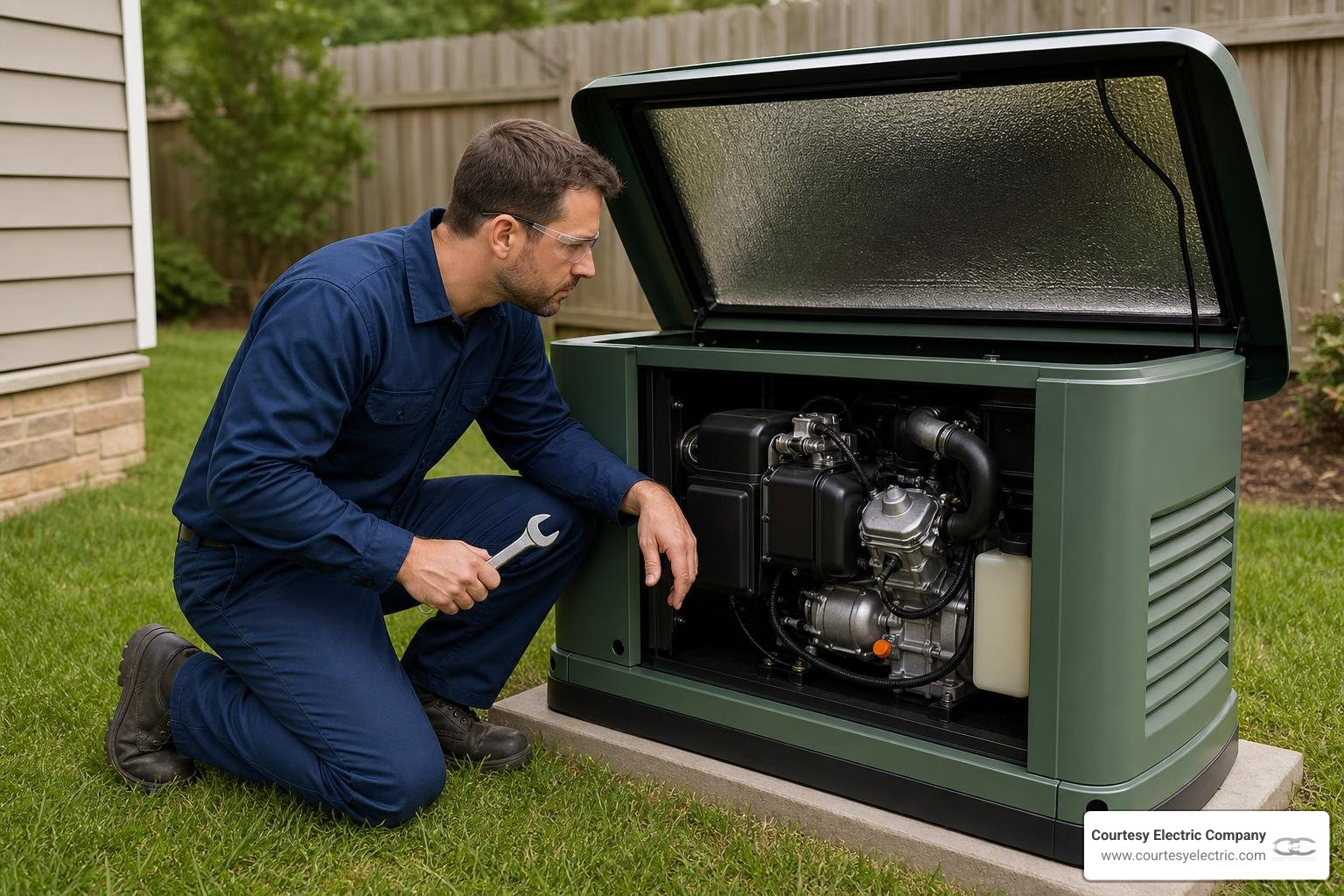
While some basic tasks are easy to handle yourself, complex electrical and mechanical diagnostics require professional expertise. If you notice any unusual vibrations, strange noises, or fluid leaks, you should look for the signs your generator needs professional attention right away. Taking action early is the best way to learn how to extend the life of your standby generator.
| Maintenance Task | DIY Friendly? | Requires Professional? | Why It Matters |
|---|---|---|---|
| Visual Inspection & Debris Clearing | Yes | No | Keeps intake vents clear of snow, leaves, and pests. |
| Battery Terminal Cleaning | Yes | No | Prevents corrosion from blocking the starter motor's power. |
| Oil & Filter Changes | Yes (with tools) | Yes | Essential for engine lubrication and cooling. |
| Spark Plug Replacement | Yes (with tools) | Yes | Ensures reliable ignition and prevents engine misfires. |
| Transfer Switch Inspection | No | Yes | High-voltage component; critical for safe power transfer. |
| Electrical Load Testing | No | Yes | Verifies the generator can handle your home's full power load. |
How Fuel Type and Colorado Climate Affect Your Service Schedule
The fuel your generator runs on—and the unique climate of the Colorado Front Range—plays a massive role in how often your system needs maintenance.
Standby generators typically run on natural gas (NG) or liquid propane (LP), while some larger residential or commercial units use diesel. Natural gas and propane burn very cleanly, which means they produce less carbon buildup in the engine compared to gasoline or diesel. However, they still require regular oil and filter changes because the engine oil breaks down over time due to heat and engine stress.
Our Colorado climate introduces specific challenges that homeowners in other parts of the country don't have to worry about:
- Freezing Temperatures: Winter temperatures in Denver, Parker, and the Black Forest can drop well below freezing. Cold weather makes engine oil thick and sluggish, which puts extra strain on the starter battery. Installing a cold-weather kit—which includes a thermostatically controlled battery warmer and oil heater—is highly recommended for our region.
- High Altitude: The thin air of the Front Range affects the air-to-fuel ratio in combustion engines. Generators installed at high altitudes often need to be properly configured or "derated" by a professional to ensure they run efficiently without running too rich, which can clog spark plugs and exhaust systems.
- Heavy Snowfall: Snow and ice can quickly accumulate around your generator's outer enclosure, blocking the air intake and exhaust vents. If the engine cannot draw in fresh air or expel exhaust gases, it will overheat and shut down automatically.
To ensure your system is ready for our rapid weather shifts, we recommend reviewing our guide on generator maintenance before colorado storm season.
Frequently Asked Questions About Standby Generator Lifespan
How long does a well-maintained home generator typically last?
A well-maintained standby generator commonly lasts 20 to 30 years. Because these units are designed for emergency backup use rather than continuous daily operation, they accumulate run hours slowly. In terms of overall engine life, you can expect a quality generator to provide between 1,500 and 3,000 hours of operating service. To learn more about maximizing the return on your investment, explore our standby generator lifespan guide 2026.
What are the most common reasons a generator fails to start?
The absolute most common reason a standby generator fails to start is a dead or weak starter battery. Over time, the battery loses its ability to hold a charge, especially during cold Colorado winters.
For portable generators, the most common culprit is stale fuel and a clogged carburetor. Gasoline starts to degrade in as little as 30 days, leaving behind a gummy residue that blocks fuel flow. While standby generators running on natural gas or propane don't suffer from stale fuel, they can still fail to start due to blocked fuel lines, corroded electrical connections, or neglected spark plugs. If your system is aging and showing frequent starting issues, it might be time to read about when should you replace your generator.
How does proper maintenance affect the generator warranty?
Skipping your scheduled maintenance doesn't just risk a power failure—it can also void your manufacturer's warranty. Leading brands require documented proof of regular maintenance to honor warranty claims. If a major engine component fails and you cannot produce a maintenance log showing that the oil, filters, and spark plugs were serviced at the required intervals, the manufacturer may deny your claim.
Keeping a detailed service log is the easiest way to protect your warranty and ensure your system remains covered. For more details on the connection between routine upkeep and financial protection, see how proper maintenance extends generator life.
Conclusion
Your whole home generator is a major investment designed to protect your family, your comfort, and your property during unexpected power outages. But remember: a generator is only as reliable as its last service. By keeping up with weekly visual checks, monthly battery cleanings, and scheduling a professional annual service, you can rest easy knowing your home will stay bright and warm when the grid goes dark.
At Courtesy Electric Company, we have been serving homeowners across Denver, Parker, Highlands Ranch, the Black Forest, and the wider Colorado Front Range since 1976. We specialize in high-quality standby generator installations, smart home panel upgrades, and complete residential electrical services.
Whether you need to set up an annual maintenance plan for your generator or you are looking to upgrade your home's electrical system, our experienced team is here to help with honest advice and professional workmanship.
Ready to ensure your backup power system is prepared for whatever Colorado weather throws our way? More info about electrical services is just a click away. Contact us today to schedule your maintenance visit or request a free estimate on a new installation!


