Is It Time? How to Know When Should You Replace Your Generator
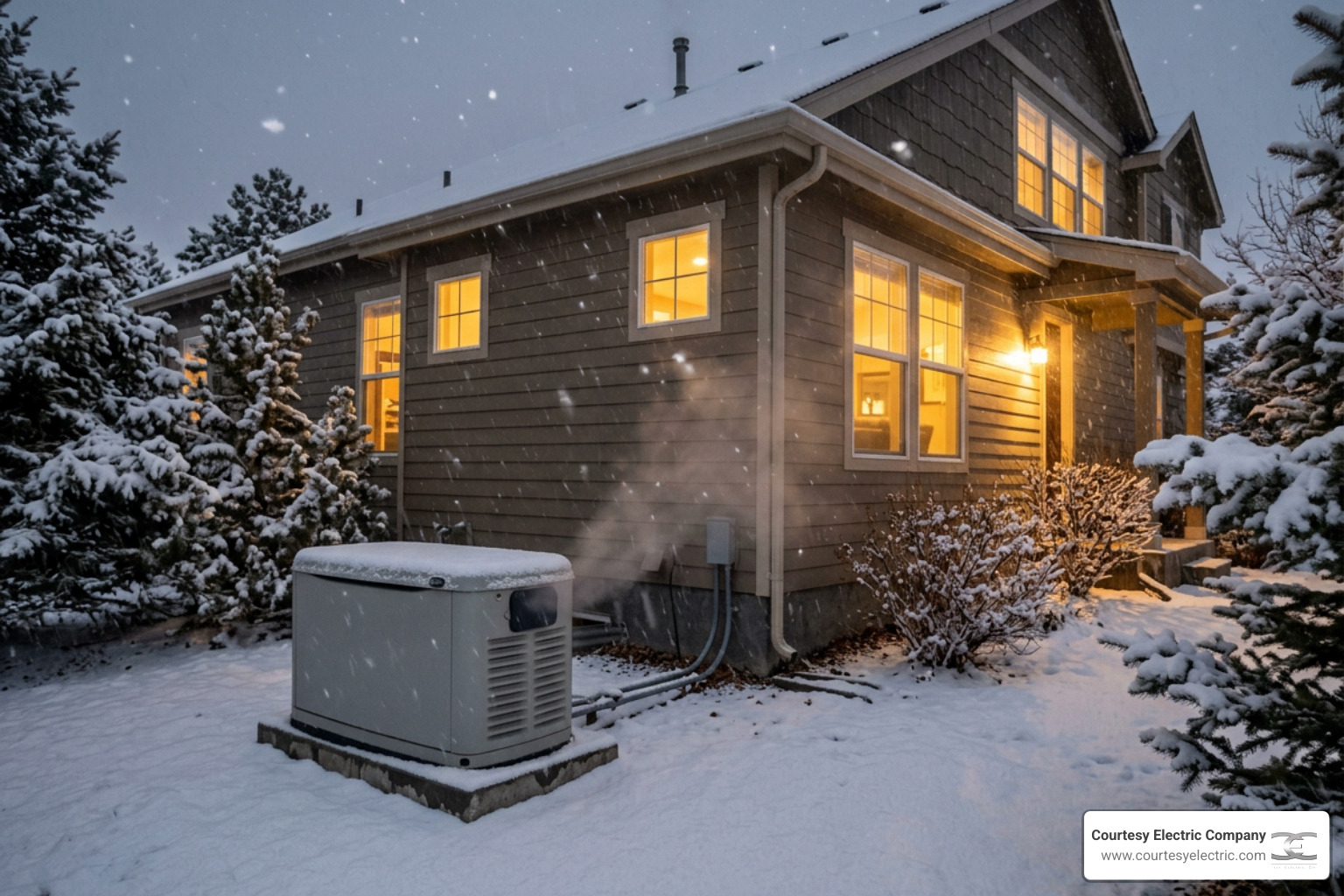
Knowing when should you replace your generator could be the difference between staying safe and comfortable during a Colorado Front Range power outage — and being left in the dark when it matters most.
Here are the clearest signs it's time to replace your generator:
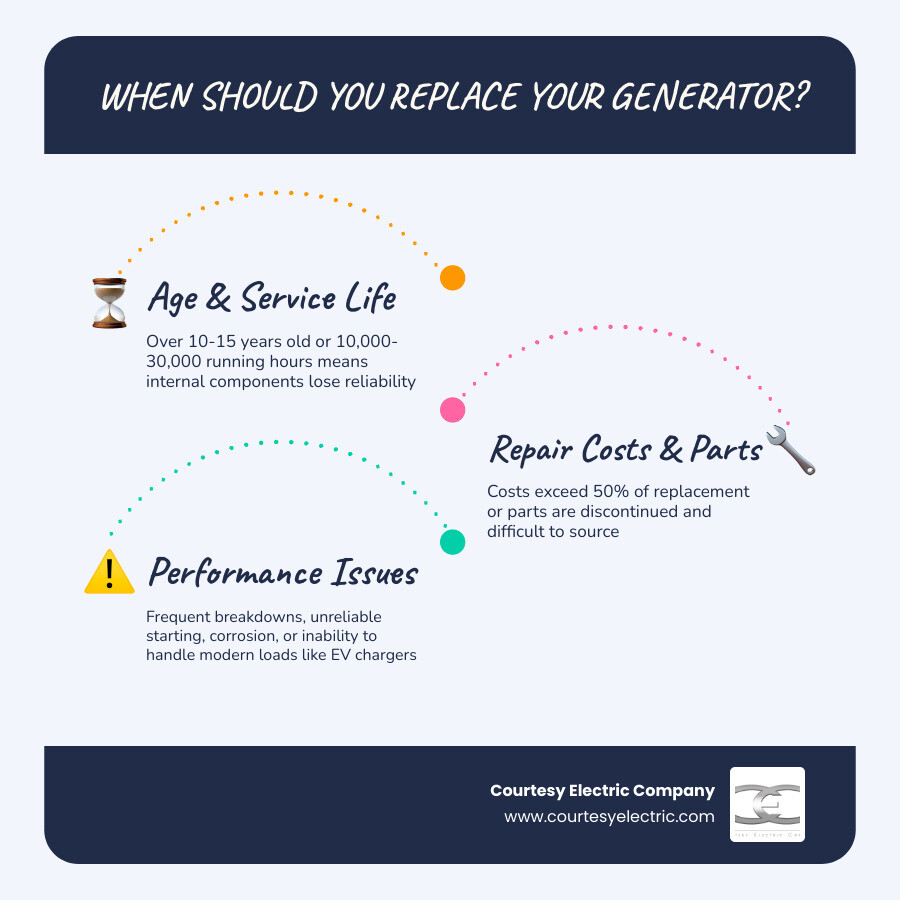
- Age over 10-15 years — Even with low running hours, internal components lose reliability over time
- Repair costs exceed 50% of replacement cost — At this point, replacement is almost always the smarter financial choice
- Frequent or recurring breakdowns — More than two service calls in a single year is a strong warning sign
- Parts are no longer available — Discontinued models become increasingly difficult and expensive to maintain
- Your power needs have grown — Added EV chargers, home offices, HVAC upgrades, or new appliances can outgrow an older unit
- Visible corrosion, rust, or water damage — Physical deterioration often runs deeper than it looks
- Unreliable starting or inconsistent power output — A generator that won't start dependably is no longer doing its job
- Incompatibility with modern electrical loads — Older units can struggle with today's electronics and energy-efficient devices
Colorado winters don't give you a second chance. If your generator is showing any of these signs, it's worth a professional look before the next outage hits.
I'm David Meyer, Vice President of Courtesy Electric — a Colorado electrical contractor with roots going back to 1976 — and over the years I've helped countless Front Range homeowners think through exactly when should you replace your generator versus when a repair still makes sense. In the sections ahead, I'll walk you through the key factors that drive that decision clearly and practically.
When Should You Replace Your Generator?

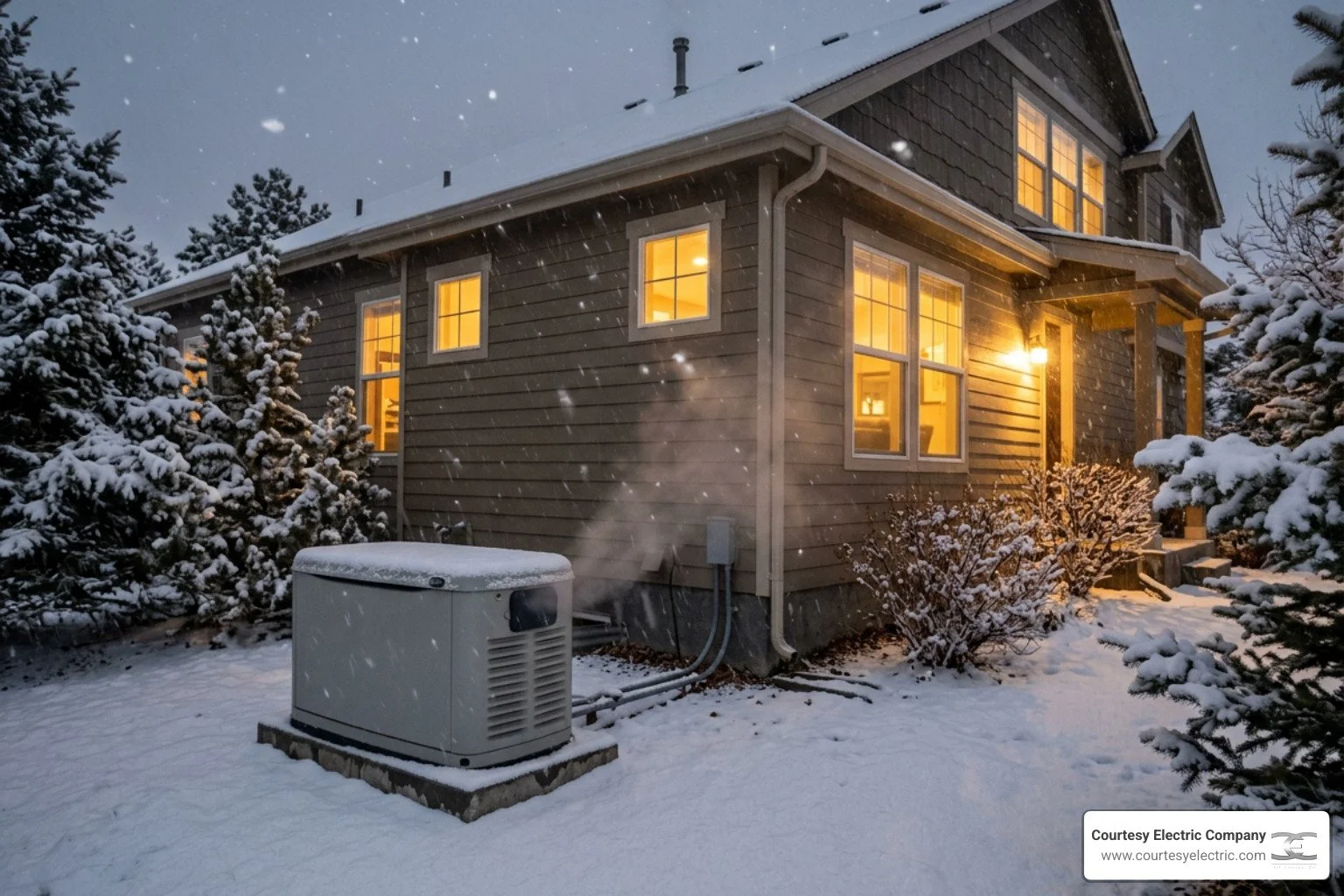
Determining the "end of serviceable life" for a backup power system requires looking past the outer metal enclosure. While a standby generator might look perfectly fine sitting on its concrete pad, the internal components are constantly subjected to extreme temperature swings, moisture, and mechanical wear.
At Courtesy Electric, we define the end of a generator's serviceable life using three core criteria:
- The Manufacturer Support Threshold: When the Original Equipment Manufacturer (OEM) officially stops producing replacement parts or supporting the model.
- The 50% Financial Rule: When a single repair bill or the cumulative repair costs over a 12-month period exceed half the cost of purchasing a brand-new, modern system.
- The Reliability Factor: When the system can no longer be trusted to start automatically and run continuously during an emergency.
If your generator fails on any of these fronts, continuing to pour money into repairs is simply delaying the inevitable. To help you spot these issues early, we have compiled a guide on Signs Your Generator Needs Professional Attention to keep you ahead of potential failures.
Understanding When Should You Replace Your Generator Based on Age
One of the most common misconceptions we encounter in the Denver metro area and across the Front Range is that a generator with low running hours is guaranteed to be reliable. Homeowners will often say, "It's twelve years old, but it has only run for 50 hours!"
While it is true that standby generators have an average operational life expectancy of 10,000 to 30,000 running hours (which theoretically translates to 25 to 40 years of light emergency use), the calendar age of the unit is often a far more accurate indicator of reliability.
Over a 10-to-15-year period, critical non-metal components degrade regardless of whether the engine is running:
- Rubber Hoses and Belts: Dry rot, crack, and weaken under Colorado's dry, high-altitude air.
- Electrical Wiring Insulation: Becomes brittle and susceptible to cracking, which can cause short circuits.
- Gaskets and Seals: Shrink and dry out, leading to slow oil, coolant, or fuel leaks.
- Control Boards: Sensitive electronic circuitry is subject to thermal expansion and contraction, eventually causing solder joints to fail.
Just like a classic car that has sat in a garage for a decade, a standby generator that has reached the 10-to-15-year benchmark requires increasingly frequent attention. For a deeper dive into how calendar age and operational hours balance out, read our Standby Generator Lifespan Guide 2026.
How Evolving Household Power Needs Dictate When Should You Replace Your Generator
Your home's electrical profile is not static. Since your original backup power system was sized and installed, your household's energy demands have likely changed significantly.
If you have completed any of the following upgrades in your Parker, Highlands Ranch, or Denver home, your current generator may now be severely undersized:
- Electric Vehicle (EV) Chargers: Adding a Level 2 EV charger introduces a massive, continuous electrical load.
- Home Additions or Renovations: Adding square footage, finishing a basement, or building a detached home office.
- High-Draw Appliances: Installing a hot tub, upgrading to a larger central air conditioning system, or switching to an electric heat pump.
- Smart Home Technology: Evolving your home with advanced automation systems that require stable, continuous power.
When a generator is forced to operate under a load that exceeds its rated capacity, it will either stall, overheat, or shut down automatically to protect its internal circuitry. Operating an undersized generator also leads to "wet stacking" (in diesel units) or excessive carbon buildup, which rapidly shortens the engine's lifespan.
If your lifestyle has evolved, it might be time to evaluate whether a new standby generator or an integrated home battery system is the right fit. You can learn more about how these modern options stack up in our guide on Generator or Battery for Power Outages Is a Generator or Battery Better for Power Outages.
Key Indicators of Generator Decline and Failure
When a generator begins to fail, it rarely does so in complete silence. It will typically leave a trail of warning signs that indicate its internal systems are struggling.
- Unreliable Starting: If your unit struggles to turn over during its weekly self-test cycle, or if it requires multiple manual attempts to start, the starter motor, fuel delivery system, or compression levels are failing.
- Power Fluctuations: If your home's lights flicker like a disco, or if your appliances turn off and on while running on generator power, the voltage regulator is failing to supply a clean, steady stream of electricity.
- Visible Corrosion and Leaks: Puddles of oil, coolant, or fuel beneath the enclosure indicate failing seals. Meanwhile, rust on the frame or internal compartments can compromise structural integrity and electrical grounding.
- Excessive Noise and Vibration: A generator that sounds like a heavy metal band auditioning in your backyard is likely suffering from worn engine bearings, misaligned rotors, or broken engine mounts.
In places like Black Forest and the higher-elevation areas of the Front Range, these physical symptoms are often accelerated by our unique climate. To understand how our local environment plays a role, take a look at How Colorado Weather Affects Generator Lifespan.
Frequent Breakdowns and Sourcing Obsolete Parts
If you find yourself calling a technician out to your property more than twice a year for unrelated mechanical or electrical failures, your generator has entered a cycle of decline.
One of the most frustrating aspects of maintaining an older generator (especially units built over 15 years ago) is the sheer difficulty of sourcing replacement parts. Manufacturers naturally phase out support for legacy models to focus on newer, cleaner, and more efficient technology.
When a critical component like a control board, alternator, or major engine part fails on a discontinued model, you are left with very few options. Technicians are forced to hunt for expensive, refurbished parts online, leading to extended downtime. Waiting weeks for a hard-to-find part to arrive during the peak of winter or summer storm season is a risk most Colorado homeowners simply cannot afford.
Incompatibility with Modern Electrical Demands
The nature of the electrical loads in our homes has fundamentally changed over the last few decades. Up until the mid-1990s, household electrical demands were primarily "linear loads"—things like incandescent light bulbs, basic heating elements, and simple electric motors.
Today, our homes are filled with "sensitive electronics" and "reactive loads," including:
- Computers, servers, and home office networks
- LED lighting systems
- Smart televisions and home theater equipment
- High-efficiency HVAC systems with variable-speed inverter compressors
These modern devices introduce harmonics and complex reactive power demands back into your electrical system. Generators manufactured prior to the mid-90s—and even many lower-end portable units—were not engineered to handle these modern loads. They lack the precise voltage and frequency regulation required to protect sensitive microprocessors. Running modern electronics on an outdated generator can cause the generator's engine to overheat, create voltage instability, and potentially fry your home's most expensive devices.
The Role of Maintenance in Extending Equipment Life
There is no getting around it: regular maintenance is the single most important factor in determining how long your generator will last. A standby generator is an engine-driven power plant that sits idle for the vast majority of its life, yet it is expected to start instantly and run at full capacity within seconds of a utility outage.
To ensure it can perform this feat, a rigorous maintenance routine is essential. This includes:
- Weekly or Bi-weekly Self-Test Cycles: Allowing the engine to run for 10-12 minutes to circulate oil, charge the battery, and clear out moisture.
- Biannual Professional Inspections: Checking fuel lines, replacing oil and air filters, testing coolant levels, and verifying battery health.
- Enclosure Maintenance: Keeping the air vents clear of snow, dry leaves, pine needles, and dust.
We have detailed the exact steps to maximize your system's longevity in our guides on How Proper Maintenance Extends Generator Life and How Often Should You Service Your Standby Generator.
When Maintenance is No Longer Enough
While routine care can easily add 5 to 10 years of reliable operation to your backup power system, there comes a point where maintenance can no longer compensate for fundamental mechanical wear.
If the piston rings inside the engine have worn thin, or if the alternator windings have begun to lose their insulation resistance, no amount of fresh oil, new filters, or spark plug replacements will restore the unit's dependability.
Signs that your generator has transitioned from needing simple maintenance to requiring a complete replacement include:
- Persistent "low oil pressure" or "high temperature" faults that occur even after sensors and fluids are replaced.
- Blue smoke in the exhaust, indicating the engine is burning oil.
- Black smoke or heavy soot buildup, indicating incomplete combustion and severe engine wear.
For homeowners looking to perform basic checks themselves before calling in the pros, our Generator Maintenance Tips for Homeowners is an excellent resource. Additionally, if you are preparing your home for seasonal weather shifts, refer to our checklist on Generator Maintenance Before Colorado Storm Season.
Benefits of Upgrading to a Modern Standby Generator
If you are holding onto an aging generator out of habit, you might be surprised by how far standby power technology has advanced over the last decade. Upgrading to a modern system brings immediate improvements in safety, convenience, and performance.
| Feature / Capability | Older Legacy Generators (10+ Years Old) | Modern Standby Generator Systems |
|---|---|---|
| Operational Noise Levels | Can be incredibly loud, easily disrupting neighbors | Engineered to be as quiet as a standard central A/C unit |
| Fuel Efficiency | High fuel consumption; prone to wasting fuel under light loads | Advanced fuel management and variable-speed operation |
| Power Quality | Higher Total Harmonic Distortion (THD); risky for electronics | Clean, stable power (under 5% THD) safe for sensitive devices |
| Monitoring & Diagnostics | Requires checking physical gauges on the unit | Mobile app integration with real-time status and remote alerts |
| Load Management | Static sizing; can easily overload if too many appliances kick on | Smart load shedding to automatically balance household power |
Modern systems also feature advanced emissions controls, meaning they burn much cleaner and produce far less carbon monoxide than older models. When you are ready to explore your options, we compare the leading manufacturers in our guide: Which Home Generator Brand Is Better for Colorado.
Frequently Asked Questions About Generator Replacement
How many years does a standby generator typically last?
With proper maintenance, high-quality standby generators typically last between 20 and 30 years, or roughly 3,000 to 5,000 hours of run time. However, most professional installers and manufacturers recommend evaluating the system for replacement between the 10-to-15-year mark. Even if the engine has low hours, the electrical and rubber components lose reliability over time, which can compromise automatic startup during an outage.
Can I upgrade my existing generator to a larger size?
Yes, you can absolutely upgrade to a larger capacity unit. When doing so, our team will evaluate your existing automatic transfer switch (ATS) and electrical subpanels to ensure they are compatible with the higher power output. In many cases, we can repurpose some of the original wiring and concrete pad infrastructure, which helps streamline the installation process.
What should I expect during a professional generator assessment?
During an in-person assessment, a certified technician will:
- Perform an electrical load analysis of your home to determine your exact power requirements.
- Inspect the physical condition of your current generator, transfer switch, and gas line connections.
- Verify that the unit's placement complies with current local building codes, clearance requirements, and HOA guidelines.
- Discuss your backup power goals (e.g., powering the entire home vs. critical loads only) and provide a clear, tailored recommendation.
Conclusion
At the end of the day, a home standby generator is an investment in safety and peace of mind. If your current system is leaving you anxious about whether it will perform when the power grid fails, it has lost its primary value.
At Courtesy Electric Company, we have been serving homeowners throughout Denver, Parker, Highlands Ranch, Black Forest, and the wider Colorado Front Range since 1976. As local experts in backup power, smart home technology, and complete electrical infrastructure, we specialize in helping you find the perfect power solution for your home. Whether you are looking to upgrade to a modern, high-efficiency generator from top brands like Generac or Cummins, or you want to explore advanced options like SPAN smart panels and Franklin battery storage, our team is here to help.
Don't wait for the next major Colorado storm to find out if your generator is up to the task. Contact us today to schedule your professional, in-person evaluation. Visit our Courtesy Electric Company Electrical Services page to get started with a free installation estimate.


