Your Cheat Sheet to Battery Storage Tax Credits and Incentives Available Right Now

The battery storage tax credits and incentives available to homeowners have changed significantly heading into 2026 — and knowing where you stand can mean thousands of dollars in savings. Here's a quick snapshot of what's currently on the table:
Federal Credits (2026)
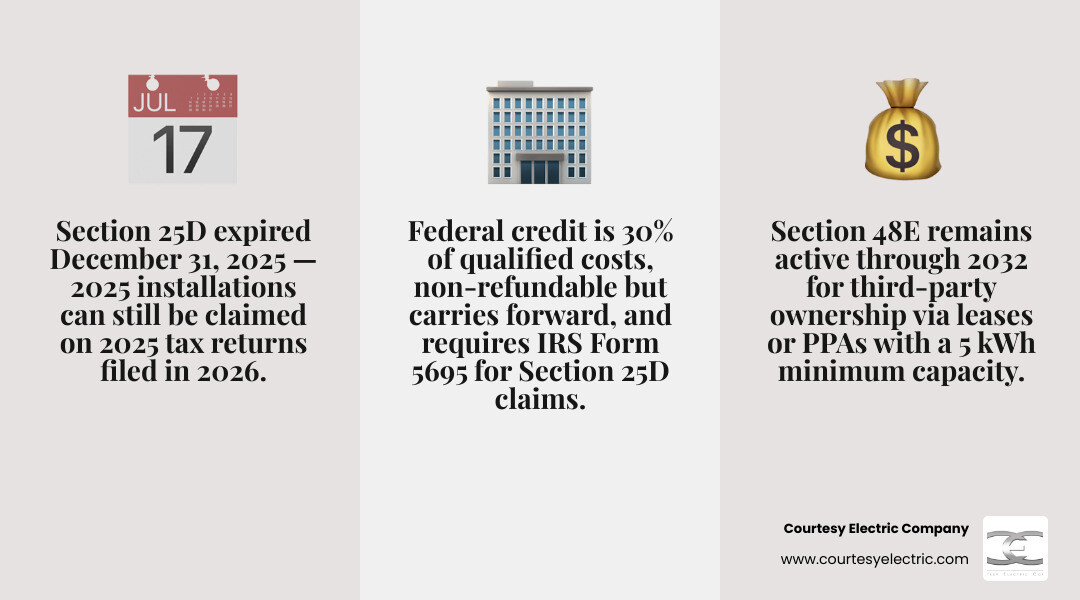
- Section 25D (Residential Clean Energy Credit): Expired December 31, 2025. If you installed a qualifying battery system in 2025, you can still claim the 30% credit when you file your 2025 tax return in 2026.
- Section 48E (Commercial Investment Tax Credit): Still active. Homeowners using a lease or power purchase agreement (PPA) can access this credit indirectly through their third-party system owner — available through 2032.
Key Federal Eligibility Rules
- Minimum battery capacity: 3 kWh (residential), 5 kWh (commercial/48E)
- Credit is non-refundable but unused amounts carry forward
- File IRS Form 5695 to claim the Section 25D credit
State and Utility Incentives (Still Active in 2026)
- Colorado: 10% state tax credit plus utility rebates through Xcel Energy
- California: SGIP rebates up to $1,000/kWh for qualifying households
- Connecticut: Up to $16,000 per residential installation
- New York: NYSERDA rebates for grid-connected systems
- Vermont: Green Mountain Power rebates for qualifying customers
The landscape shifted fast. The Inflation Reduction Act of 2022 opened the door wide for battery storage incentives — and now, just a few years later, the rules have already changed for residential buyers making a direct purchase. That said, meaningful incentives still exist at the federal, state, and utility level, and stacking them correctly can still make a real difference in your overall investment.
I'm David Meyer, Vice President of Courtesy Electric and a hands-on specialist in battery storage systems and advanced electrical infrastructure across the Colorado Front Range — including navigating the battery storage tax credits and incentives available to our customers. Whether you're planning a new installation or trying to claim a credit from a 2025 install, the sections below walk you through everything you need to know.
Understanding the Federal Battery Storage Tax Credits and Incentives Available in 2026
When navigating the federal tax landscape for home energy, it helps to think of the government as a very particular accountant. They want to reward you for making green choices, but they have written a massive rulebook on exactly how you can claim those rewards. For years, the primary pathway for residential energy storage was Section 25D of the Internal Revenue Code.
However, as we move through 2026, the federal approach to residential energy storage has split into two very distinct pathways. Depending on how you acquire your system, you will find yourself looking at either the legacy Section 25D rules (for retroactively claiming recent installations) or the commercial Section 48E rules (for third-party owned systems).
Understanding these pathways is essential to maximizing your savings. To learn more about how these tax structures align with modern electrical upgrades, check out our guide on Federal Tax Credits for Battery Storage and Span Panels.
The Expiration of Section 25D for Homeowners
Let’s address the elephant in the room: the direct-purchase federal tax credit under Section 25D, known as the Residential Clean Energy Credit, officially terminated for new systems placed in service after December 31, 2025. This means if you purchase a battery storage system outright in 2026, you can no longer claim the 30% federal tax credit under this specific section.
For homeowners who managed to purchase, install, and fully commission their battery storage systems before the December 31, 2025 deadline, there is good news. You can still claim the 30% credit on your federal tax return during the 2026 tax filing season.
Because this credit is non-refundable, it can only reduce your active tax liability to zero. However, if your credit is larger than the taxes you owe for the year, the IRS allows you to carry the remaining balance forward to future tax years.
The Third-Party Ownership Pathway Under Section 48E
Just because Section 25D has expired for direct cash purchases does not mean federal incentives are completely out of reach. In 2026, the primary pathway to securing federal battery storage incentives is through third-party ownership (TPO) models, such as solar-plus-storage leases or Power Purchase Agreements (PPAs).
Under a TPO arrangement, a solar or energy developer owns the battery storage system installed at your home. Because the system is owned by a business, it qualifies for the Section 48E Commercial Investment Tax Credit (ITC), which remains fully active through 2032.
The developer claims the 30% federal credit (plus any applicable bonus adders) and passes those financial savings directly to you in the form of lower monthly lease payments or reduced electricity rates. To understand how these systems operate once they are up and running, you can read about How Does a Home Battery Backup System Work.
Eligibility Requirements and How the 30% Credit is Calculated
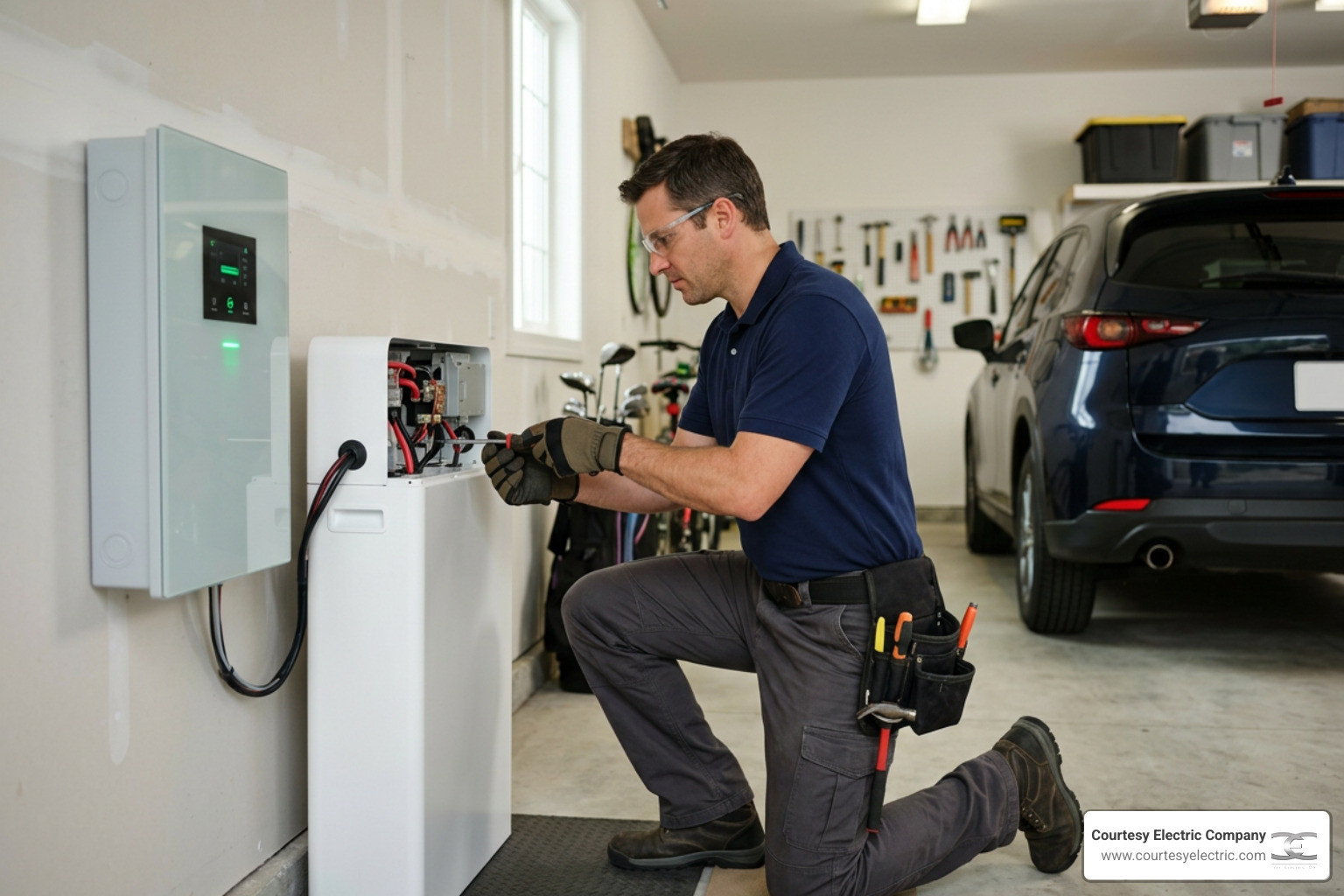
To qualify for any federal battery incentive, your storage system must meet strict technical standards. The IRS does not hand out credits for small, portable backup batteries you might take on a camping trip. The equipment must be permanently installed and integrated into your home's electrical infrastructure.
The primary technical threshold comes down to capacity:
- Residential Systems (Legacy Section 25D / TPO): The battery storage system must have a capacity of at least 3 kilowatt-hours (kWh) to qualify.
- Commercial Systems (Section 48E): For commercial applications or standalone utility-scale projects, the minimum capacity threshold is 5 kWh.
To visualize how these two pathways compare, review the breakdown below:
| Feature | Legacy Section 25D (Direct Purchase) | Section 48E (Third-Party Lease/PPA) |
|---|---|---|
| System Owner | Homeowner | Third-Party Developer |
| Installation Deadline | Must be installed by Dec 31, 2025 | Active through 2032 |
| Minimum Capacity | 3 kWh | 5 kWh |
| Credit Rate | 30% | 30% base (can increase with adders) |
| Filing Form | IRS Form 5695 | Filed by commercial owner |
What Costs are Included in the 30% Calculation?
When calculating the total basis for your 30% tax credit, the eligible expenses go far beyond the physical battery unit itself. The federal government allows you to include a wide range of associated installation costs, including:
- The cost of the battery storage equipment and housing.
- Onsite labor costs for preparation, assembly, and physical installation.
- Connecting piping, wiring, and system integration components.
- Permitting and utility interconnection fees.
Additionally, if your home's main electrical panel requires an upgrade to safely handle the new battery system, those costs can often be included in the credit basis. This is especially true when installing smart energy management systems that help balance your home's electrical loads. For a deeper look at how these advanced panels compare to older infrastructure, see our article on Smart Energy Management vs Traditional Panel.
Key Limitations of the Federal Battery Storage Tax Credits and Incentives Available
While the federal credit is incredibly valuable, it does come with a few notable strings attached:
- Non-Refundability: The credit can reduce your tax liability to zero, but the IRS will not send you a refund check for any excess credit amount. Fortunately, you can carry the unused portion forward to the next year.
- Utility Subsidies and Rebates: If your local utility company provides an upfront rebate or discount on your battery storage system, you must subtract that incentive from your total project cost before calculating your 30% federal tax credit. For example, if your system installation costs a certain amount and your utility gives you an upfront rebate, your federal credit is calculated using the remaining balance.
State-Level Rebates and Local Utility Incentives
As federal direct-purchase tax credits transition, state-level programs and local utility rebates have stepped up to play an even larger role in making home energy storage affordable. Depending on where you live, these local incentives can dramatically lower your upfront expenses.
Many states have established aggressive clean energy goals, leading to localized rebate structures that work alongside federal incentives. To explore the broader picture of how local upgrades are incentivized, read our guide on Colorado Energy Rebates for Electrical Upgrades.
Colorado Battery Storage Incentives and Wildfire Mitigation
Here in Colorado, the state has taken a proactive approach to grid resilience, particularly in areas prone to extreme weather and wildfires. Colorado offers a 10% state tax credit for qualified residential battery storage systems.
Furthermore, local utilities like Xcel Energy offer robust rebate programs. For homeowners living in designated high wildfire risk areas — or those who rely on electricity for critical medical equipment — Xcel Energy provides enhanced rebates of up to $10,000 to offset the cost of backup power installations. For standard residential customers, rebates of up to $5,000 are available for qualifying battery systems.
These programs are designed to integrate seamlessly with smart home technology, allowing you to manage your energy consumption dynamically. To learn more about your local options, check out our guide on Energy Management Options for Colorado Homes.
California SGIP and Other State Programs
While our team focuses on serving Colorado, looking at other state programs helps illustrate the national push toward battery storage:
- California's Self-Generation Incentive Program (SGIP): This program has set aside over $500 million for energy storage technology. Under the Equity Resiliency category, rebates can reach up to $1,000/kWh, which can cover up to 100% of the equipment costs for medically vulnerable or high-risk households.
- Connecticut & New York: Connecticut offers up to $16,000 per residential installation through its Energy Storage Solutions program, while New York provides direct NYSERDA rebates for grid-connected systems up to 25 kWh.
Supply Chain Rules: FEOC and Domestic Content Requirements
In 2026, qualifying for energy tax credits is no longer just about what you install — it is also about where the components were made. The federal government has introduced strict supply chain rules designed to boost domestic manufacturing and reduce reliance on overseas production.
These regulations can impact both third-party developers claiming Section 48E credits and manufacturers trying to keep their equipment compliant.
Navigating Foreign Entity of Concern Restrictions in 2026
The Foreign Entity of Concern (FEOC) rules are designed to restrict tax credit eligibility for clean energy projects that source critical minerals or components from countries like China, Russia, Iran, or North Korea.
For battery storage projects beginning construction in 2026, the regulations dictate that at least 55% of the manufactured component costs must come from non-FEOC sources. This threshold is scheduled to step up annually, reaching 75% by 2030. If a system fails to meet these strict supply chain metrics, it could lose its eligibility for federal tax incentives entirely.
How Domestic Content Affects Commercial Battery Storage Tax Credits and Incentives Available
For developers utilizing the Section 48E commercial credit pathway, meeting "Domestic Content" requirements can unlock valuable bonus adders. If a project uses a certified percentage of steel, iron, and manufactured products produced in the United States, the base 30% credit can be increased by an additional 2 to 10 percentage points.
This domestic manufacturing push is driving major battery brands to establish production lines right here in the U.S., ensuring their systems remain highly competitive. To see how optimizing your system's hardware and software can lead to long-term financial benefits, read about How Energy Management Reduces Your Electric Bill.
Frequently Asked Questions About Battery Storage Incentives
Can I claim the federal tax credit for a battery installed in 2025 on my 2026 tax return?
Yes. If your qualifying battery storage system was fully installed and placed in service between January 1, 2025, and December 31, 2025, you are eligible to claim the 30% Section 25D credit. You will file IRS Form 5695 (Residential Energy Credits) alongside your federal tax return during the 2026 tax filing season. If the credit exceeds your total tax liability for the year, the remaining balance can be carried forward to offset your taxes in 2027 and beyond.
Does adding a battery backup system require separate electrical permits?
Yes, in almost all Colorado jurisdictions, installing a battery storage system requires separate building and electrical permits. Local authorities enforce strict safety standards, including compliance with NFPA 855 fire codes, which regulate the placement and spacing of residential energy storage systems.
These permitting requirements ensure your system is installed safely in designated areas (like garages or utility rooms) and is properly isolated from living spaces. If you are trying to decide between a battery and a traditional generator for emergency backup, you can compare the two options in our analysis of Battery Storage vs Generator Which is Better for Backup.
How do battery storage credits interact with solar or geothermal incentives?
Battery storage incentives are designed to stack harmoniously with other clean energy tax credits. If you install a solar PV array or a geothermal heat pump alongside your battery system, you can claim the respective credits for each technology.
Under the rules active for 2025 installations, you can calculate the 30% credit for your solar panels and the 30% credit for your battery storage system on the same IRS Form 5695. This stacking capability allows you to maximize your overall return on investment when executing a complete home energy upgrade.
Conclusion
The world of battery storage tax credits and incentives available in 2026 may be more complex than in years past, but the financial and practical benefits of energy independence remain incredibly strong. By combining state-level tax credits, utility rebates from providers like Xcel Energy, and creative third-party ownership pathways, Front Range homeowners can still secure a highly resilient backup system.
At Courtesy Electric Company, we have spent decades helping homeowners across Denver, Parker, Highlands Ranch, and Black Forest navigate complex electrical upgrades. From advanced Franklin battery storage systems to seamless SPAN smart panel retrofits, our team provides the design, permitting, and installation expertise needed to ensure your project is fully compliant and optimized for maximum savings.
Ready to protect your home from grid outages and take control of your energy future? Contact us today to schedule your free estimate and find the best electrical service and backup power solutions for your home.


