Why Knowing the Signs Your Home Is Due for an Electrical Inspection Could Save Your Life
The signs your home is due for an electrical inspection are easy to overlook — a light flickers here, a breaker trips there — until a small problem quietly grows into a serious hazard. Electrical failures cause roughly 47,700 home fires in the U.S. every year, resulting in 418 deaths, 1,570 injuries, and $1.4 billion in property damage. Many of those fires start long before any visible warning appears.
Here are the most common signs your home needs an electrical inspection:
- Breakers that trip frequently or repeatedly reset on the same circuit
- Lights that flicker or dim when appliances turn on
- Outlets or switch plates that feel warm to the touch
- Burning smells or scorch marks near outlets or the panel
- Buzzing, humming, or crackling sounds from walls or outlets
- Mild electrical shocks when touching switches or plugging in devices
- Two-prong (ungrounded) outlets throughout the home
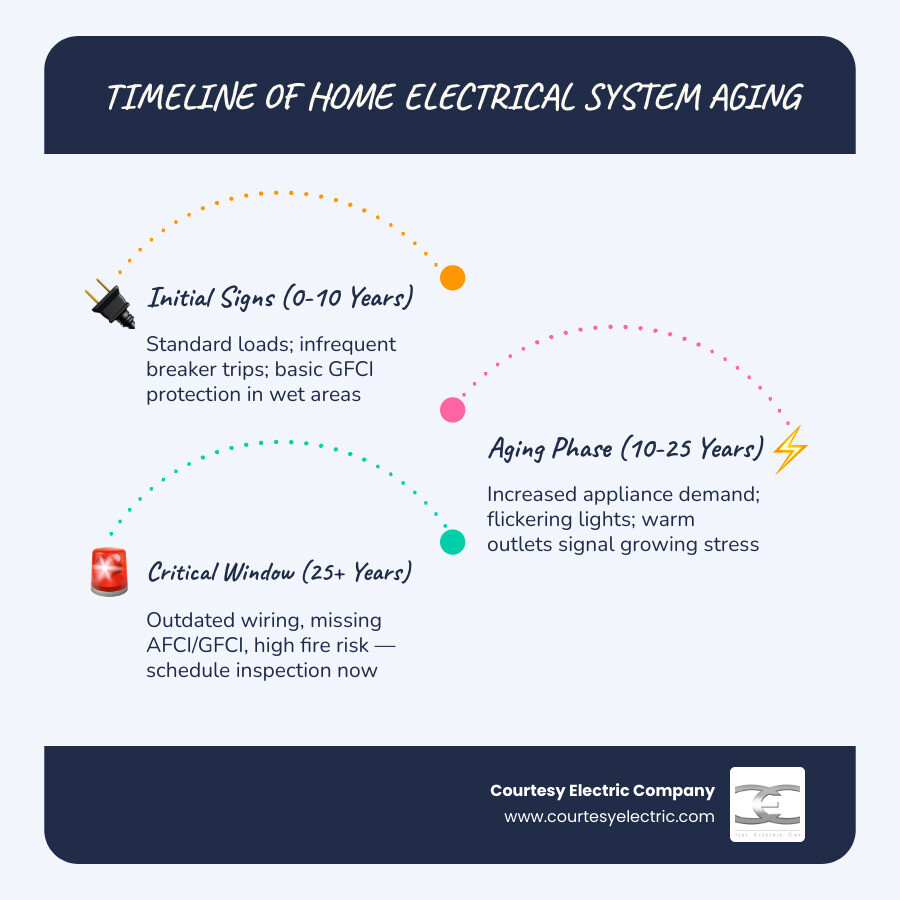
- A home that is 25 years old or older and has never been inspected
- Recent renovations, storm damage, or the addition of high-load appliances like an EV charger
For most homes, an inspection every 3 to 5 years is the baseline. Homes over 25 years old should be inspected every 2 to 3 years, and homes over 40 years old may need annual checks — especially if the wiring has never been updated.
Behind the walls of many Colorado Front Range homes, aging wiring, undersized panels, and missing safety devices are working against systems that were never designed to handle today's electrical loads. The problem is not just age — it is the growing gap between what older systems were built for and what modern households actually demand.
I'm David Meyer, Vice President of Courtesy Electric, a Colorado electrical contractor with roots going back to 1976, and I've seen how easy it is to miss the early signs your home is due for an electrical inspection — and how costly that delay can become. In the sections below, I'll walk you through every warning sign worth knowing.
Critical Signs Your Home Is Due for an Electrical Inspection

When it comes to your home's electrical system, silence is golden. Most of the time, electricity flows quietly and invisibly behind your drywall. When your system begins to struggle, however, it will almost always drop subtle clues. Learning How to Spot Electrical Problems Before They Become Dangerous is one of the most proactive steps you can take as a homeowner in Denver, Parker, or Highlands Ranch.
Ignoring these indicators doesn't make them go away; instead, it allows minor connection issues to degrade into major safety hazards. Below, we break down the most critical warning signs that demand a closer look from a professional.
Frequent Breaker Trips and Overloaded Panels
A circuit breaker is designed to be a safety valve. Its primary job is to cut off the flow of electricity when a circuit draws more current than it can safely handle, protecting your home from severe overloads. If you find yourself frequently walking to your breaker panel in the garage or basement to flip a switch back on, your system is trying to tell you something.
Repeated trips typically point to one of three issues:
- Circuit Overload: You have too many high-draw modern appliances (like air fryers, space heaters, or vacuum cleaners) running on a single circuit.
- Short Circuits: A hot wire is touching a neutral wire somewhere in your walls or inside an appliance, creating a dangerous spike in current.
- Ground Faults: A hot wire has made contact with a ground wire or a grounded portion of the junction box.
Resetting a breaker over and over without addressing the root cause is incredibly dangerous. It weakens the breaker mechanism itself and subjects the wiring inside your walls to repeated thermal stress. To keep your household safe, review the Ultimate Electrical Fire Safety Checklist Home and have a professional evaluate whether your panel needs to be upgraded or if new, dedicated circuits need to be run.
Flickering Lights and Signs Your Home Is Due for an Electrical Inspection
Do your dining room lights dim every time your refrigerator cycles on, or do the bathroom lights flicker when you turn on a hair dryer? While many homeowners brush this off as a harmless quirk of an older home, it is actually a classic sign of a significant voltage drop.
When a high-draw appliance starts up, it requires a brief surge of electrical current. If your home's wiring is undersized, outdated, or shares too many loads, that surge steals power from your lighting circuits. Even worse, flickering can indicate loose connections at your outlets, switches, or inside the main panel. Loose connections create resistance, which generates immense heat and can lead to electrical arcing. Understanding these Electrical Safety Tips Every Homeowner Should Know will help you recognize that a flickering light bulb is rarely just a bad bulb—it is often a symptom of an overburdened electrical system.
Warm Outlets, Buzzing Sounds, and Signs Your Home Is Due for an Electrical Inspection
Under normal operating conditions, your outlets, switches, and electrical panel should remain completely cool to the touch and operate in total silence. If you plug in a device and notice the outlet faceplate feels warm, or if you hear a faint buzzing, sizzling, or crackling sound, you are dealing with an electrical emergency.
These physical symptoms are usually caused by:
- Electrical Arcing: Electricity jumping across gaps in loose or damaged wiring. Arcing can reach temperatures exceeding 10,000 degrees Fahrenheit, easily melting wire insulation and igniting nearby wood framing or drywall paper.
- Backstabbed Receptacles: A common but unreliable wiring method where wires are pushed into the back of an outlet rather than secured around terminal screws. Over time, these push-in connections loosen and create high-resistance hot spots.
- Corroded or Loose Terminals: Common in older homes, especially those exposed to moisture or shifting temperatures.
If you smell a strange, chemical, or "fishy" odor near your outlets, this is the smell of melting plastic and wire insulation. You must act immediately. Turn off the power at the main breaker and read up on How to Prevent Electrical Fires in Your Home while you wait for a licensed professional to inspect the damage.
How Often Should You Schedule a Professional Electrical Assessment?
Just like your car requires routine oil changes to prevent engine failure, your home's electrical system requires periodic maintenance to ensure it remains safe and efficient. Many homeowners assume that if the lights turn on, everything is fine. However, wires degrade, connections loosen due to thermal expansion, and safety codes evolve to address newly discovered hazards.
Determining How Often Should You Have Your Electrical System Inspected depends largely on the age of your property, its renovation history, and how heavily you utilize your electrical system.
Standard Inspection Timelines vs. Older Properties
While a standard, modern home should be professionally evaluated every 3 to 5 years, older properties require much tighter schedules. As insulation materials dry out and crack, the risk of short circuits and fires increases exponentially.
| Home Age | Recommended Inspection Frequency | Primary Areas of Concern |
|---|---|---|
| Under 25 Years | Every 3 to 5 Years | Overloaded circuits, loose connections from home settling, checking GFCI/AFCI functionality. |
| 25 to 40 Years | Every 2 to 3 Years | Degrading wire insulation, outdated panels, lack of sufficient receptacle outlets leading to extension cord overuse. |
| Over 40 Years | Annually | Outdated wiring types (knob-and-tube or aluminum), obsolete breaker panels, complete lack of grounded circuits. |
If you live in an older home, it is vital to consult an Electrical Safety Checklist for Older Homes. Properties built in the Denver area or the broader Front Range during the mid-20th century often contain unique wiring challenges.
For example, homes built between 1965 and 1973 were frequently wired with aluminum rather than copper due to high copper prices. Aluminum wiring is 55 times more likely to reach fire hazard conditions at wire connections compared to copper. This is because aluminum expands and contracts significantly more when heated, a phenomenon known as "cold creep" that quickly loosens terminal connections. An annual inspection ensures these connections are checked, pigtailed with copper, or slated for a full home rewiring before they fail.
Immediate Triggers and Risks of Outdated Wiring
While routine inspections keep your home safe over the long term, certain events or upgrades should trigger an immediate, unscheduled call to a licensed electrician. Failing to inspect your system after major changes or natural disasters can expose your family to sudden failures, appliance damage, or catastrophic fires. Understanding Spring Electrical Safety and Storm Preparation is particularly important for Colorado residents, where rapid weather transitions are common.
Post-Storm Hazards and Adding High-Load Appliances
The Colorado Front Range is famous for its dramatic weather, from winter blizzards to intense spring thunderstorms. Lightning strikes—even indirect ones occurring half a mile away—can send thousands of volts of surge power traveling through utility lines directly into your home. This massive electrical surge can destroy sensitive electronics, compromise your main panel, and damage safety devices like Ground Fault Circuit Interrupters (GFCIs) and Arc Fault Circuit Interrupters (AFCIs).
Similarly, physical storm damage like falling branches or localized flooding can compromise outdoor wiring, underground feeds, or basement electrical systems. If your area has experienced severe weather, check out the Spring Electrical Safety Checklist Colorado Guide to identify hidden vulnerabilities.
Another major trigger for an immediate inspection is adding high-load appliances to your home. Modern upgrades like:
- Level 2 Electric Vehicle (EV) chargers
- Standby generators (such as Generac or Cummins units)
- Central air conditioning systems
- Franklin battery storage systems
- Hot tubs or swim spas
These additions can easily overwhelm an older 100-amp electrical service. Before installing any high-draw equipment, an electrician must perform a detailed load calculation to ensure your panel has the physical space and electrical capacity to handle the new demand without overheating.
Outdated Wiring and Missing Safety Protections
Living in a home with outdated wiring or missing safety devices is a quiet but serious gamble. Modern building codes require two primary layers of advanced safety protection:
- GFCI (Ground Fault Circuit Interrupter) Outlets: These monitor the balance of current between the hot and neutral wires. If they detect an imbalance (which indicates electricity is escaping, potentially through a person), they cut power in milliseconds to prevent severe shocks. They are mandatory in wet areas like kitchens, bathrooms, basements, and outdoors.
- AFCI (Arc Fault Circuit Interrupter) Breakers: These detect the specific electrical signature of sparking or arcing behind your walls and shut down the circuit before a fire can ignite.
Many older homes completely lack these protections, relying instead on ungrounded two-prong outlets. Some homeowners try to bypass this by using three-prong adapters, but these do not provide a path to ground and actually increase shock risks.
Additionally, outdated wiring can severely affect your homeowners insurance. Many insurance carriers in Colorado will charge higher premiums, refuse to renew policies, or deny coverage entirely if a home contains active knob-and-tube wiring, aluminum branch circuits, or obsolete electrical panels (such as Federal Pacific or Zinsco brands, which have notoriously high failure rates). Reviewing Electrical Fire Prevention Tips for Homeowners will help you understand how bringing your home up to modern standards protects both your family and your financial investments.
What to Expect During a Professional Electrical Inspection
A professional electrical inspection is not a quick glance at your outlets. It is a highly structured, technical diagnostic process designed to uncover hidden defects that standard home inspectors routinely miss. While a general home inspector might test a few outlets and make sure your lights turn on, a licensed electrician dives deep into code compliance, load balance, and material integrity.
When choosing When to Call an Electrician vs DIY, safety should always come first. Opening a live electrical panel or handling testing equipment without proper training carries lethal shock risks.
Here is what a comprehensive, professional electrical inspection typically includes:
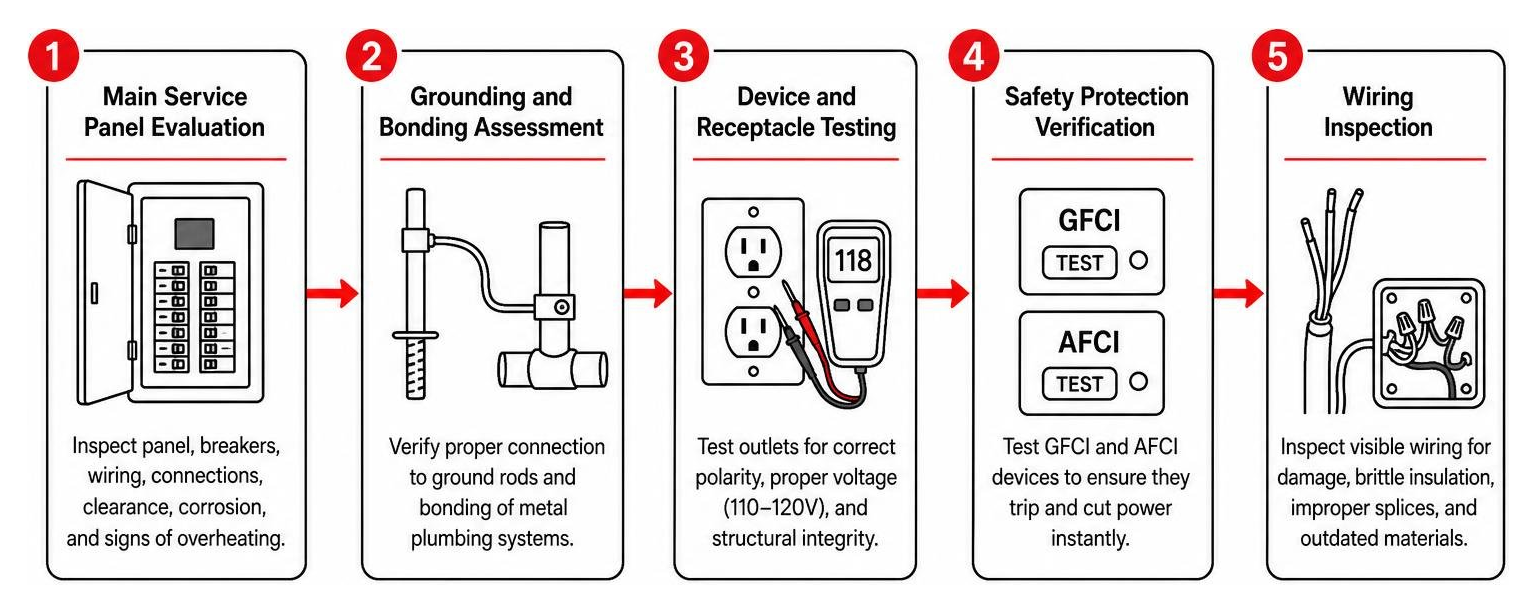
- Main Service Panel Evaluation: The electrician will remove the panel cover to check for proper wire sizing, correct breaker ratings, signs of corrosion, overheating, or double-tapping (where two wires are forced into a single breaker terminal). They will also verify adequate clearance around the panel.
- Grounding and Bonding Assessment: Verifying that your electrical system is safely connected to the earth via grounding rods and that your metal plumbing pipes are properly bonded.
- Device and Receptacle Testing: Testing outlets throughout the home for correct polarity, proper voltage levels (should register between 110-120 volts), and structural integrity.
- Safety Protection Verification: Actively testing all GFCI and AFCI devices to ensure they trip and cut power instantly when a fault is simulated.
- Wiring Inspection: Checking visible wiring in crawlspaces, attics, or unfinished basements for brittle insulation, improper splices outside of junction boxes, or outdated materials like cloth-wrapped wire.
- Safety Device Check: Verifying the presence, location, and expiration dates of smoke and carbon monoxide detectors.
At the end of the inspection, you will receive a detailed report outlining any code violations, safety hazards, and recommendations for upgrades, allowing you to prioritize repairs based on urgency.
Frequently Asked Questions About Home Electrical Safety
How does a dedicated electrical inspection differ from a standard home inspection?
A standard home inspection is a general, non-invasive overview of a property's condition, usually performed during a real estate transaction. The inspector will check if a representative number of outlets work, look for physical damage to the panel exterior, and test basic light switches. They do not perform detailed load calculations, trace circuits, or open junction boxes.
A dedicated electrical inspection is performed by a licensed electrician who specializes entirely in electrical infrastructure. They will remove the panel dead-front cover, measure voltage drops, inspect wire connections, check for proper wire gauges matching breaker sizes, and evaluate the entire system against current National Electrical Code (NEC) safety standards.
Can minor electrical issues affect my homeowners insurance policy?
Yes, absolutely. Insurance companies are in the business of assessing risk, and faulty electrical systems are a leading cause of property damage. If your home has minor but unresolved issues—like flickering lights, warm outlets, or a panel that has been flagged as obsolete—your insurance carrier may raise your premiums.
If your home contains uncorrected major hazards like active knob-and-tube wiring, aluminum branch wiring, or ungrounded systems, many carriers will refuse to write a policy altogether. If an electrical fire occurs and an investigation reveals the fire was caused by pre-existing, neglected wiring issues that you were aware of, your claim could potentially be denied.
How do I differentiate between a minor issue and a serious electrical hazard?
While no electrical issue should be completely ignored, some require immediate emergency intervention.
- Minor / Non-Urgent Issues: A single outlet that doesn't work, a light bulb that burns out slightly too quickly, or a loose outlet cover plate. These should be scheduled for repair during normal business hours.
- Serious / Immediate Hazards: A burning smell (often smelling like hot plastic or fish), outlets or switches that are hot to the touch, visible sparks when plugging in devices, buzzing or sizzling sounds from your walls, or receiving a mild shock when touching an appliance.
If you experience any of these immediate hazards, do not wait. Turn off the corresponding breaker or shut down the main power panel entirely, and contact an emergency electrician immediately.
Conclusion
Your home's electrical system is its quiet engine, powering everything from your morning coffee maker to your home office and backup systems. Recognizing the signs your home is due for an electrical inspection is the key to preventing minor wiring quirks from turning into dangerous, costly emergencies. Whether you are dealing with frequent breaker trips, flickering lights, or simply live in an older home that has not been evaluated in years, being proactive is always the safest choice.
At Courtesy Electric Company, we have been serving homeowners across Denver and the Colorado Front Range—including Parker, Highlands Ranch, and Black Forest—since 1976. We specialize in keeping your home safe, modern, and resilient. From updating outdated electrical panels to installing cutting-edge SPAN smart panels, Franklin battery storage, and reliable Generac or Cummins standby generators, our experienced team is here to help.
Don't wait for a warning sign to turn into a hazard. Contact us today for a free estimate on your next electrical installation or to schedule a comprehensive safety inspection. More info about Denver residential electrical services is just a click away—let's keep your home running safely and efficiently.


