
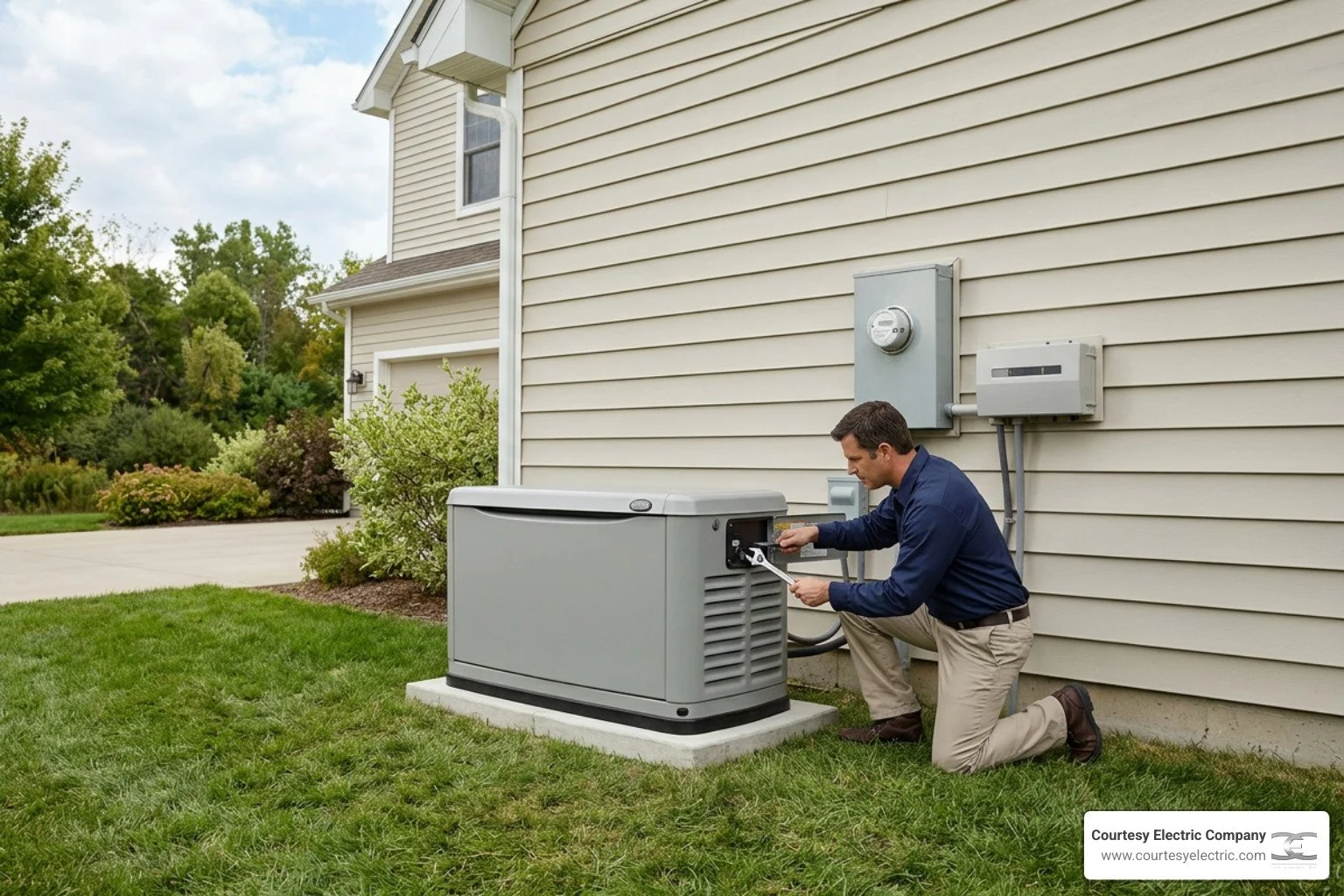
Your Standby Generator Can Last 20–30 Years — If You Treat It Right
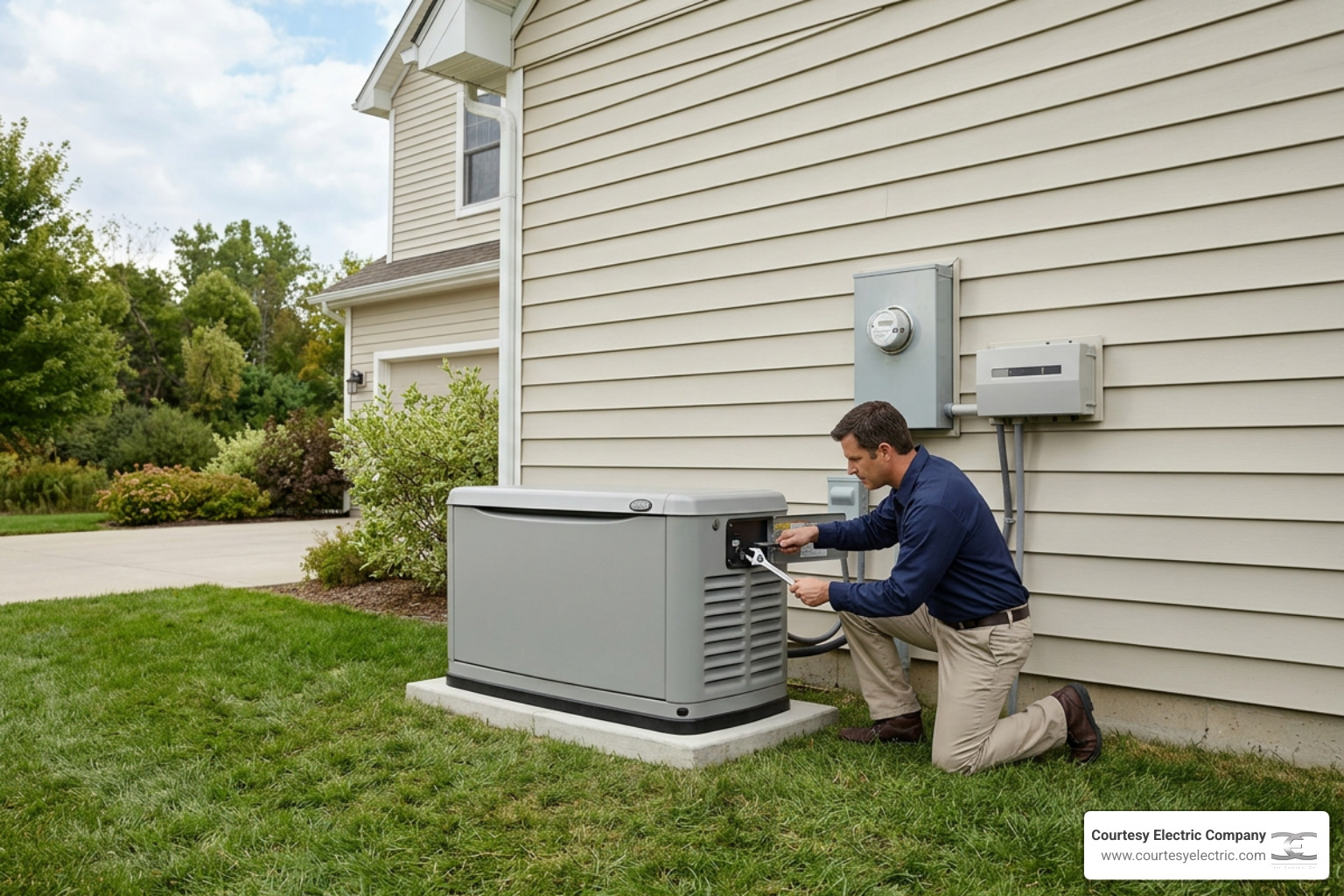
Knowing how to extend the life of your standby generator starts with a handful of consistent habits that most homeowners overlook until something goes wrong.
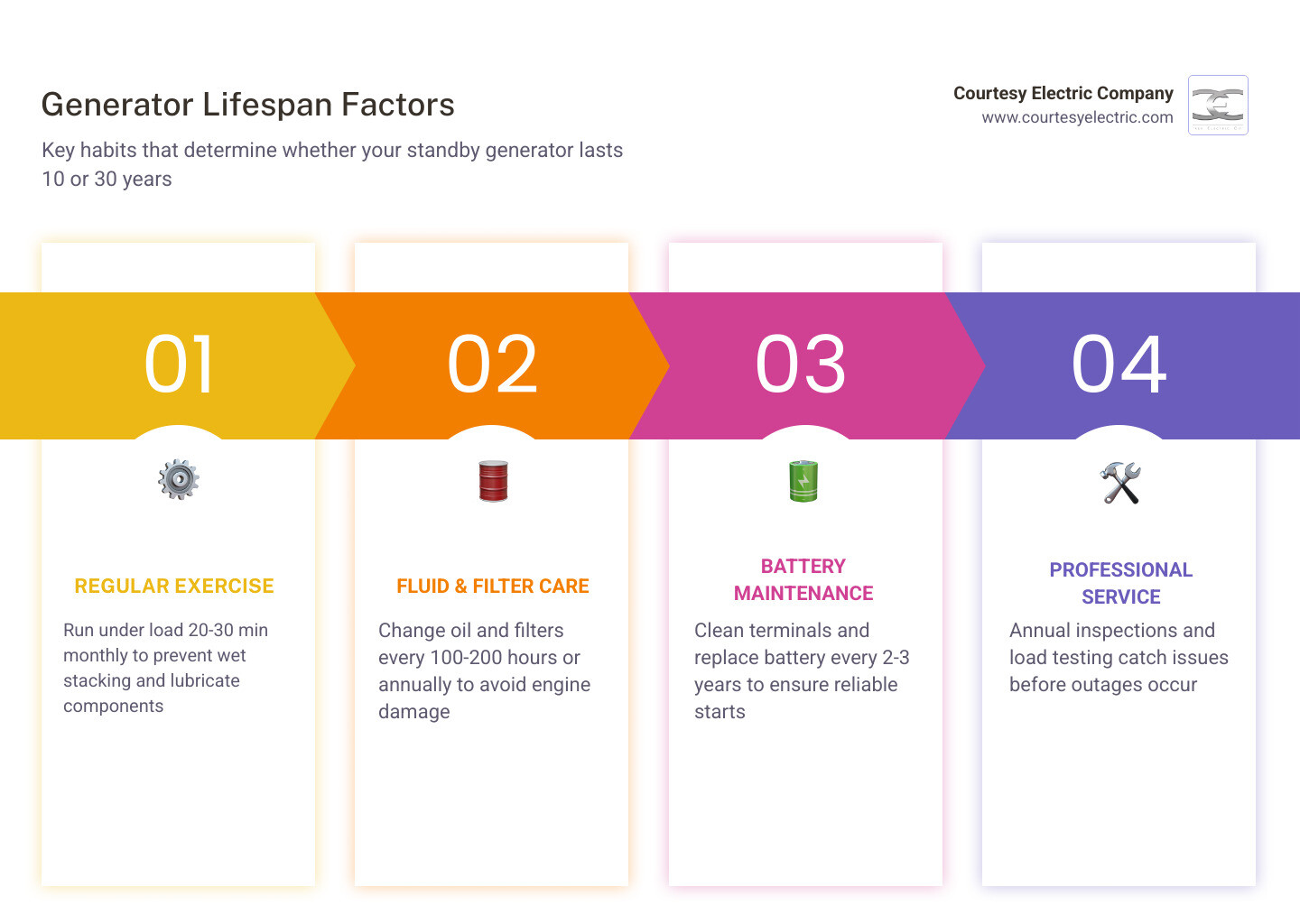
Here are the five most important steps:
- Run it regularly under load — at least 20–30 minutes per month to prevent wet stacking and keep engine components lubricated
- Change oil and filters on schedule — every 100–200 operating hours or annually, whichever comes first
- Maintain the starting battery — clean terminals regularly and replace the battery every 2–3 years
- Keep the unit clean and clear — remove debris, check for rodent nesting, and maintain proper airflow clearance around the enclosure
- Schedule annual professional service — including load bank testing and transfer switch verification
That's the short version. The details below will show you exactly how to do each one — and why skipping any of them puts your investment at risk.
A standby generator is one of the most dependable things you can install in a Colorado home. It sits quietly outside, ready to restore power within seconds of an outage — automatically, without you lifting a finger. But here's the part most homeowners don't think about until it's too late: that same generator is slowly degrading every single day it sits idle, whether it runs or not. Oil breaks down. Batteries discharge. Moisture creeps in. Fuel degrades. And when a winter storm finally knocks out power across the Front Range, a neglected generator is far more likely to let you down than a well-maintained one. Research backs this up — poorly maintained generators have a 63% higher failure rate during actual emergencies. The difference between a generator that lasts 10 years and one that lasts 30 often comes down to nothing more than consistent, simple care.
I'm David Meyer, Vice President of Courtesy Electric Company, and I've spent my career working hands-on with standby generator installations and backup power systems across Colorado — giving me a front-row seat to what separates generators that run reliably for decades from those that fail when they're needed most. Everything in this guide on how to extend the life of your standby generator comes from that real-world experience.
Understanding Standby Generator Lifespan and How It Works
To understand how to keep your standby generator running for decades, we first have to look at what it actually does and how it behaves when the power grid fails.
A standby generator is a permanently installed backup power system connected directly to your home's electrical panel. It operates in tandem with an automatic transfer switch (ATS). The moment utility power drops out—whether due to a summer lightning storm in Highlands Ranch or a heavy winter ice storm in Parker—the ATS senses the voltage loss. Within seconds, it disconnects your home from the utility grid, signals the generator engine to start, and transfers your home’s electrical load to the generator. When utility power is restored, the process reverses automatically, and the generator safely shuts down.
Because these units are built with heavy-duty, commercial-grade engines, their operational life is measured in two distinct ways: engine hours and calendar years.
- Engine Hours: Most residential air-cooled standby generators are engineered to run for 10,000 to 15,000 engine hours. Larger, liquid-cooled commercial-grade units can easily last 20,000 to 30,000 engine hours.
- Calendar Years: Since the average home standby generator only runs for 25 to 100 hours per year (combining routine self-tests and actual emergency outages), most units will never hit their maximum engine hour limit. Instead, they are retired due to physical age, corrosion, and component degradation.
With proper care and diligent maintenance, a high-quality standby generator can run reliably for 20 to 30 years. On the other hand, a neglected unit can suffer catastrophic engine failure or electrical breakdown in as few as 5 to 7 years.
To explore these lifespan dynamics in greater detail, you can read our comprehensive Standby Generator Lifespan Guide 2026. To understand the direct relationship between ongoing maintenance and mechanical longevity, check out our guide on How Proper Maintenance Extends Generator Life.
The Complete Guide on How to Extend the Life of Your Standby Generator
Preventative maintenance is the single most effective tool you have to protect your investment. Think of your standby generator like a car that sits in the garage for months at a time. If you never change the oil, never check the battery, and never start the engine, you shouldn't be surprised when it refuses to start during a critical moment.
By establishing a structured maintenance routine, you can prevent minor wear and tear from turning into expensive, system-wide failures. For an overview of what you can handle yourself, see our Generator Maintenance Tips for Homeowners.
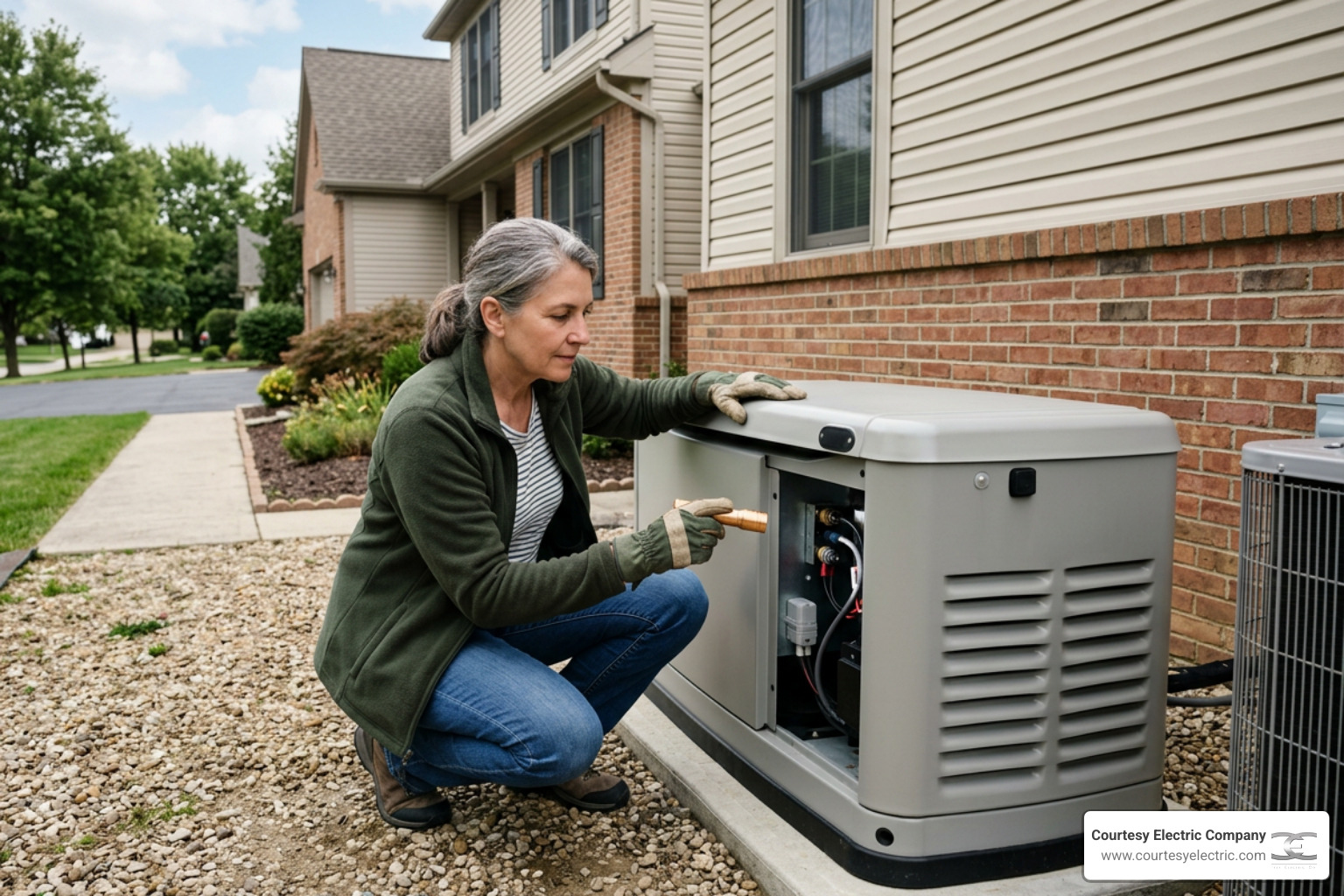
Below, we break down the five essential steps to maximize your generator’s lifespan.
Step 1: Establish a Routine Exercise Schedule
A generator that sits completely idle is a generator in slow decline. Moisture accumulates inside the engine block, rubber gaskets dry out and crack, and electrical contacts oxidize. To prevent this, standby generators feature an automatic "exercise" mode.
During a weekly exercise cycle, the generator automatically starts and runs for 10 to 15 minutes. This short run distributes lubricating oil throughout the engine, keeps seals moist, and runs basic self-diagnostics. However, these weekly self-tests typically run with no electrical load, meaning the generator is not actually producing or delivering power to your home.
While weekly unloaded runs are great for lubrication, they don't get the engine hot enough to burn off internal moisture and combustion byproducts. That’s why you must run your generator under load for 20 to 30 minutes at least once a month.
When a diesel or gas engine runs without a sufficient load, it can suffer from a condition known as wet stacking. This occurs when unburned fuel and carbon deposits accumulate in the exhaust system, leading to reduced efficiency, heavy smoke, and premature engine wear. Running the unit under a moderate electrical load (such as turning on a few household appliances during a monthly test) ensures the engine reaches its optimal operating temperature, keeping the combustion chambers clean.
Step 2: Perform Regular Fluid and Filter Changes
Engine oil is the lifeblood of your generator. It reduces friction, carries heat away from critical internal components, and prevents corrosion. Over time, engine oil degrades and loses its viscosity—even if the generator hasn't run during an actual power outage. Moisture from temperature swings can mix with the oil, creating an acidic sludge that damages engine bearings.
You should change the oil and replace the oil filter every 100 to 200 operating hours, or at least once a year. If you live in a dusty area or experience an extended multi-day outage where the generator runs continuously, you will need to change the oil much more frequently—often every 50 to 100 hours of continuous runtime. Always use high-quality synthetic oil recommended by the manufacturer, as synthetic blends offer superior protection during extreme cold-weather starts.
To help you visualize these differences, here is a quick comparison of maintenance requirements:
| Maintenance Task | Standby Generator (Typical) | Portable Generator (Typical) |
|---|---|---|
| Engine Lifespan | 15 to 30 years (10k–30k hours) | 5 to 10 years (1k–3k hours) |
| Oil Change Interval | Every 100–200 hours or annually | Every 50–100 hours or seasonally |
| Air Filter Replacement | Annually or every 200 hours | Every 50 hours or more in dusty conditions |
| Spark Plug Replacement | Every 2 to 3 years | Annually or every 100 hours |
| Fuel Type | Natural Gas, Liquid Propane, Diesel | Gasoline, Diesel |
For a deeper dive into manufacturer-specific requirements, take a look at our Generac Generator Maintenance Schedule Explained.
Step 3: Maintain the Starting Battery Proactively
It is a well-known industry fact: battery failure is the single most common reason standby generators fail to start during an emergency.
Your generator relies on a 12V lead-acid or AGM starting battery to crank the engine. Because the generator sits idle most of the time, it uses an internal trickle charger or battery maintainer to keep the battery charged. However, constant charging combined with hot summer days and freezing winter nights can degrade the battery quickly.
To prevent sudden starting failures, follow these battery care steps:
- Clean the Terminals: Inspect the battery monthly for white, powdery corrosion. Clean the terminals with a wire brush and a baking soda-water solution, then apply a protective terminal spray.
- Monitor Voltage: A healthy standby generator battery should read between 13.1 and 13.3 volts DC. If the voltage drops below 12.4V after charging, the battery is struggling to hold a charge.
- Understand Cold Weather Impacts: Battery capacity drops by 20% at freezing temperatures (32°F) and by 50% at 0°F. A weak battery might start your generator fine in July but fail completely in January.
- Proactive Replacement: Do not wait for the battery to die. Replace your generator's starting battery every 2 to 3 years regardless of its apparent condition.
Step 4: Keep the Unit Clean and Clear of Debris
The exterior enclosure of your generator protects sensitive mechanical and electrical components from the elements. However, wind, rain, and snow can pack debris against the unit, blocking intake and exhaust vents. Proper airflow is critical; if the cooling vents are obstructed, the engine can quickly overheat and shut down.
- Clear the Perimeter: Maintain at least 5 feet of open clearance around the entire generator enclosure. Keep bushes, weeds, and tree branches trimmed back.
- Check for Rodent Nesting: The warm, protected interior of a generator enclosure is highly attractive to mice, rats, and wasps. Rodents love to chew through electrical wiring, which can cause short circuits and ruin digital control boards. Inspect the interior monthly for nesting materials.
- Snow Removal: During Colorado winters, heavy snow drifts can block the air intake vents. Always shovel a clear path to your generator and brush away accumulated snow from the enclosure.
For specific tips on transitioning your backup system from winter to spring, read our guide on Spring Generator Maintenance After Winter.
Step 5: Schedule Professional Inspections and Load Testing
While monthly visual checks and basic cleaning are easy for homeowners to manage, complex electrical and mechanical diagnostics require professional expertise.
An annual professional service visit goes far beyond a simple oil change. A certified technician will inspect the automatic transfer switch, verify voltage and frequency outputs, check valve clearances, and perform a load bank test. A load bank test artificially subjects the generator to its maximum power rating to verify that the engine and alternator can handle your home's full electrical demand without overheating or dropping voltage.
Regular professional checks ensure your system complies with safety standards and keeps your manufacturer warranty valid. To prepare your system before extreme weather arrives, review our checklist for Generator Maintenance Before Colorado Storm Season. If you live in the high country, our Generators Maintenance Guide Fraser Co offers tailored advice for mountain climates.
Key Factors That Impact Standby Generator Longevity
A generator's lifespan isn't determined solely by how often you change the oil. Several external variables dictate how well the unit holds up over time.
How Fuel Type and Quality Affect Lifespan
The fuel source you choose has a major impact on engine wear and fuel system maintenance:
- Natural Gas (NG) and Liquid Propane (LP): Gaseous fuel models generally experience less engine wear than gasoline or diesel models. Because NG and LP are delivered as dry gases, they do not wash lubricating oil off the cylinder walls, nor do they leave behind heavy carbon deposits. Furthermore, gaseous fuels do not degrade or clog fuel lines over time, making them highly reliable for long-term standby use.
- Diesel Fuel: Diesel engines are incredibly durable and can last for tens of thousands of hours, but diesel fuel itself is highly unstable. If left sitting in a storage tank, diesel begins to oxidize and form gums and varnishes within 6 to 12 months. It is also prone to microbial growth (algae) and water contamination. If you own a diesel standby generator, you must use fuel stabilizers, perform regular fuel testing, and schedule annual fuel polishing to remove contaminants.
The Role of Professional Installation and Environment
Where and how your generator is installed plays a major role in its ultimate lifespan. A generator must be installed on a level, concrete pad or a certified gravel base to prevent engine vibration from damaging internal parts. Proper clearance from windows, doors, and building air intakes is also critical to prevent dangerous carbon monoxide gas from entering your home.
Additionally, Colorado's Front Range presents unique environmental challenges. High elevation, low humidity, intense UV exposure, and wild temperature swings from summer heat to sub-zero winter temperatures can stress mechanical systems. Installing a cold-weather kit—which includes thermostatically controlled battery warmers and oil heaters—is essential for ensuring reliable starting when the temperature drops.
To learn more about the setup process, read our detailed article on Generator Installation What to Expect.
Signs Your Backup Power System Needs Professional Attention
Even with a meticulous maintenance routine, mechanical parts eventually wear out. Catching small warning signs early can save you from a complete system failure during an outage.
Contact a professional technician immediately if you notice any of the following:
- Hard Starting: If the engine cranks for more than 3 to 5 seconds before firing, or if it stalls shortly after starting, there is an issue with the fuel delivery system, spark plugs, or battery.
- Voltage Drift: If your household lights flicker or appliances behave strangely while running on generator power, the alternator may be suffering from voltage or frequency drift.
- Unusual Noises or Vibrations: Squealing belts, metal-on-metal rattling, or excessive engine vibration indicate worn bearings, loose mounting bolts, or internal engine wear.
- Excessive Oil Consumption: If you need to add oil between scheduled oil changes, the engine may have worn piston rings or failing gaskets.
- Warning Lights or Fault Codes: Modern digital controllers display specific error codes. Never ignore a warning light on your generator's control panel.
For a complete list of warning signs, read our article on Signs Your Generator Needs Professional Attention.
When to Repair vs. Replace Your Generator
When facing a major repair bill, use the 50-percent rule: if the cost of repairing your current generator exceeds 50% of the cost of purchasing and installing a new unit, replacement is usually the smarter financial decision.
Additionally, if your generator is more than 20 to 25 years old and requires frequent repairs, finding replacement parts will become increasingly difficult. Upgrading to a modern, energy-efficient system will provide better reliability, cleaner power output for sensitive electronics, and a fresh manufacturer warranty.
Frequently Asked Questions About Generator Longevity
How often should you perform maintenance to extend the life of your standby generator?
At a minimum, you should perform a basic visual inspection and check fluid levels once a month. Schedule a comprehensive professional service visit once a year or every 200 operating hours. If your generator runs continuously during an extended power outage, check the oil level every 24 hours and change the oil and filters every 50 to 100 runtime hours.
For more details on setting up a schedule, see our guide on How Often Should You Service Your Standby Generator.
What is the most critical step in how to extend the life of your standby generator?
The most critical step is proactive battery maintenance. Because a standby generator cannot start without a strong electrical charge, a dead or weak starting battery renders the entire system useless. By keeping the battery terminals clean, using a smart trickle charger, and replacing the battery every 2 to 3 years, you eliminate the most common cause of generator failure.
How long can a well-maintained standby generator last in Colorado?
In Colorado's dry, semi-arid climate, a well-maintained standby generator can easily last 20 to 30 years. However, because Front Range winters can be severe, you must protect the unit by installing cold-weather starting kits (battery warmers and oil heaters), keeping the enclosure clear of heavy snow drifts, and ensuring rodents do not nest inside the cabinet during the colder months.
Conclusion
Your standby generator is a significant investment that provides invaluable peace of mind when extreme weather strikes. By taking a proactive approach—running monthly loaded tests, changing fluids on schedule, maintaining the battery, and keeping the enclosure clean—you can easily extend the life of your unit for decades.
At Courtesy Electric Company, we have been serving homeowners across Denver and the Colorado Front Range since 1976. We specialize in the professional installation, maintenance, and repair of top-tier backup power systems, including Generac and Cummins standby generators, Franklin battery storage, and SPAN smart electrical panels. Whether you are in Parker, Highlands Ranch, or Black Forest, our experienced team is here to ensure your home remains safe, warm, and powered through any storm.
Ready to protect your investment with professional care? More info about backup power services is just a click away—contact us today to schedule your annual routine maintenance or request a free estimate on a new standby generator system.


