Why Your Home Needs More Electrical Capacity Than Ever
Why your home needs more electrical capacity than ever comes down to one simple fact: the average American household now runs appliances and devices that simply did not exist when most homes were wired.
Here is why modern homes are outgrowing their electrical systems:
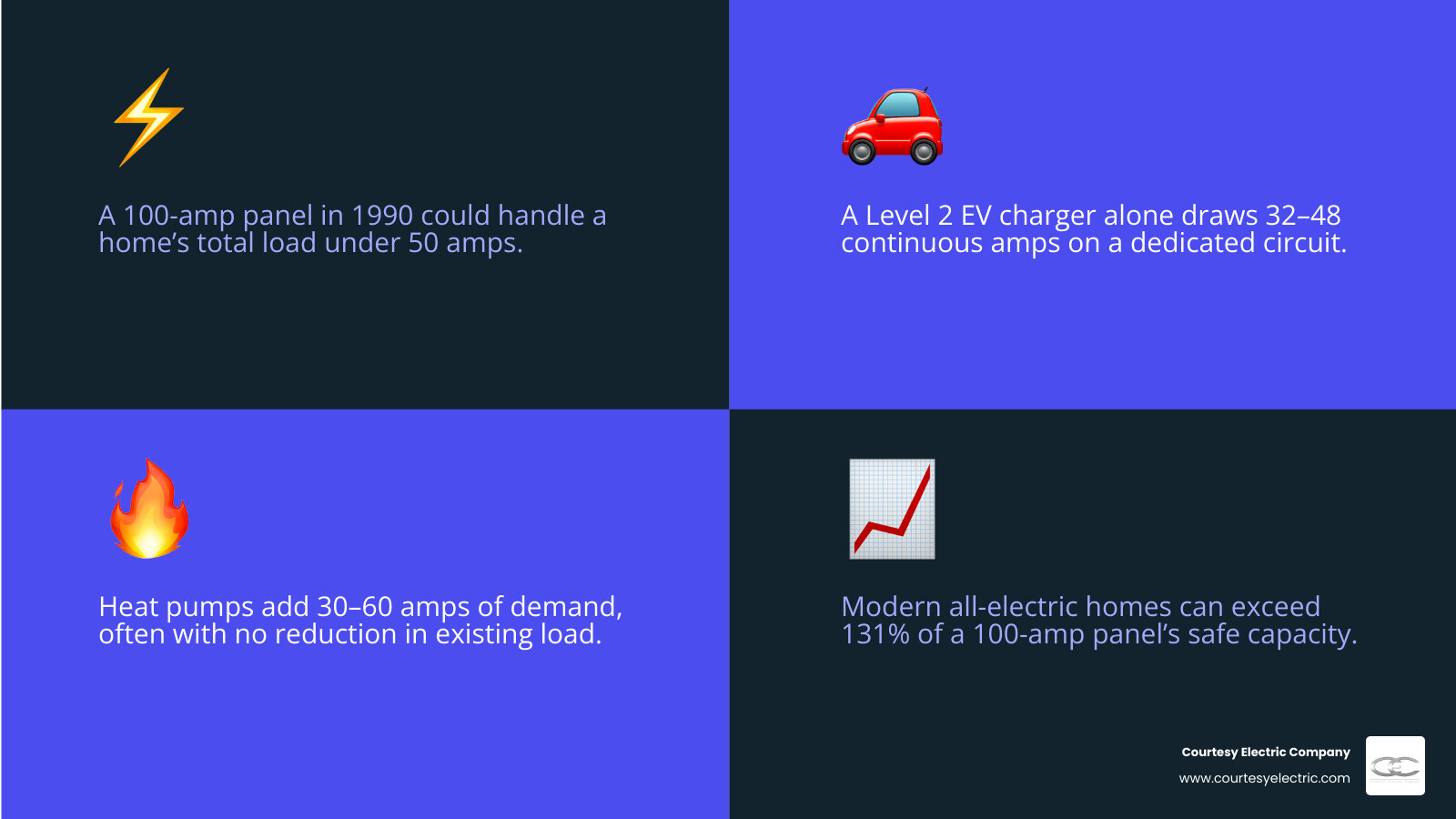
- EV chargers draw 32-48 amps continuously on a dedicated circuit
- Heat pumps add 30-60 amps of demand while removing little to no existing electrical load
- Induction ranges pull up to 50 amps, replacing gas appliances that used almost no electricity
- Hot tubs require a dedicated 40-amp circuit
- Home offices, multiple screens, and smart devices layer constant background loads on top of everything else
A 100-amp panel was perfectly adequate in 1990 for a refrigerator, a furnace fan, a television, and a window air conditioner. In July 2026, that same panel may be asked to power an EV charger, a heat pump, an induction range, a hot tub, and a home office simultaneously — a combined demand that can hit 131% of its safe limit.
That gap between what your panel was built for and what your household actually needs is exactly what this guide is designed to help you understand and solve.
I'm David Meyer, Vice President of Courtesy Electric, and after decades of hands-on work upgrading electrical systems across Denver and the Colorado Front Range, I have seen why your home needs more electrical capacity than ever — and what it actually takes to keep pace with modern demands safely and affordably. In the sections ahead, I will walk you through how to assess your current system, calculate your real load, and choose the right path forward.
Why Your Home Needs More Electrical Capacity Than Ever
For decades, a 100-amp electrical panel was the gold standard for residential properties. It easily managed a household's baseline needs, which typically consisted of lighting, a few kitchen appliances, a television, and a standard HVAC blower motor. However, as we transition deeper into a fully electrified era, that baseline is no longer sufficient.
The shift from fossil fuels to clean electricity has fundamentally altered how our homes consume power. By swapping out gas furnaces for high-efficiency electric heat pumps and trading traditional gas stoves for high-performance induction cooktops, we are shifting massive energy demands onto our home's electrical backbone.
Unlike older appliances that cycled on and off briefly, modern electrical assets often represent continuous loads. A continuous load is defined by the National Electrical Code (NEC) as a load where the maximum current is expected to continue for three hours or more. When you plug in an electric vehicle, it draws a heavy, uninterrupted stream of power for several hours straight. This steady draw places continuous thermal and electrical strain on your panel.
Understanding How Electrification Is Changing Home Electrical Needs is the first step toward avoiding unexpected system failures. To keep your household running smoothly without overloaded circuits, learning How to Future-Proof Your Home Electrical System is essential.
The Generational Gap: Why Your Home Needs More Electrical Capacity Than Ever
Consider a typical home built in 1994 along the Colorado Front Range. At that time, residential electrical systems were designed for a world of incandescent light bulbs, corded landline phones, and perhaps a single desktop computer shared by the entire family. The daily electrical load was highly predictable and relatively low.
Today, that same home in Denver, Parker, or Highlands Ranch is operating in a completely different reality. We now live in multi-screen households where multiple family members work from home. Home offices require dedicated setups with multiple monitors, high-speed network routers, and localized climate control.
When you add smart home systems, home theater setups, and continuous charging for laptops, tablets, and phones, the background idle load of a modern home can easily surpass the peak electrical demand of a 1990s household. This massive generational gap is a primary driver behind Future-Proofing Your Electrical for Smart Home Technology.
High-Draw Appliances Driving the Shift
While smart gadgets and computers add to the background noise, the true capacity killers are large, high-draw appliances. Installing just one or two of these modern luxuries can instantly push an older 100-amp panel past its physical limits.
- Level 2 EV Chargers: Charging an electric vehicle at home is incredibly convenient, but a Level 2 charger typically requires a dedicated 240-volt circuit drawing 32 to 48 amps continuously. Adding this single device can consume nearly half of a 100-amp panel's entire capacity.
- Heat Pumps: Replacing a gas furnace with an electric heat pump is a fantastic way to improve efficiency, but it adds 30 to 60 amps of demand to your panel while removing virtually zero existing electrical load.
- Induction Ranges: Highly responsive and safe, an induction stove can pull up to 50 amps when running at peak capacity.
- Hot Tubs: A popular addition for relaxing after a day in the Rockies, a standard residential hot tub requires a dedicated 40-amp to 50-amp circuit to run its heaters and pumps simultaneously.
Before bringing any of these upgrades home, it is critical to evaluate if your system is prepared. Learn more by reading Does Your Electrical Panel Support an EV Charger and discover How to Choose the Right Home EV Charger to match your home's available capacity.
The Hidden Risks of an Overloaded Electrical Panel
When a home's electrical demand exceeds its capacity, the risks are rarely sudden or dramatic at first. Instead, they manifest as slow, silent, and potentially dangerous issues.
The most common sign of an overloaded system is nuisance tripping, where circuit breakers frequently shut off power to prevent overheating. While a tripping breaker means the safety system is doing its job, relying on it as a daily regulator is highly dangerous.
Over time, running an electrical panel near its maximum capacity causes silent degradation. Constant heavy loads generate heat within the panel, which can degrade internal components, weaken breaker spring tension, and make plastic parts brittle. If a breaker's internal spring loses tension, it may fail to trip during a future overload, creating a severe fire hazard.
Regular maintenance and professional evaluations are crucial to keeping your home safe. Understanding How an Electrical Inspection Prevents Problems can save you from catastrophic failures, and recognizing the Signs Your Home Is Due for an Electrical Inspection will help you catch hazards before they escalate.
The Misleading Nature of 'Adequate' in Home Inspections
When buying or selling a home in the Denver area, you will often see the word "adequate" used in home inspection reports to describe the electrical system. It is vital to understand that "adequate" is transaction language, not a technical guarantee of modern usability.
An inspector's "adequate" rating simply means the electrical panel met the minimum safety and capacity standards of the year the home was built. It does not mean the panel has the capacity to support your modern lifestyle, an EV charger, or a basement remodel. Relying on an outdated standard can leave you with a system that struggles to power your daily life safely. To keep your system aligned with actual usage, it is helpful to know How Often Should You Have Your Electrical System Inspected.
Rising Utility Rates and System Inefficiency
As of July 2026, electricity costs across the United States have continued their steady climb. Recent data from the U.S. Energy Information Administration (EIA) shows that the all-sector average retail electricity price rose significantly over the past year, compounding the financial impact of home energy use.
When an electrical system is overloaded or operating near its maximum threshold, it becomes highly inefficient. High resistance in strained circuits leads to heat loss. This means you are paying for electricity that is literally dissipating into the air as wasted heat inside your walls and panel.
By upgrading your capacity or utilizing smart energy management, you can eliminate these costly inefficiencies. Discover How Energy Management Reduces Your Electric Bill and explore practical strategies on How to Reduce Your Summer Electric Bill with Smart Technology.
How to Calculate Your Home's Total Electrical Load
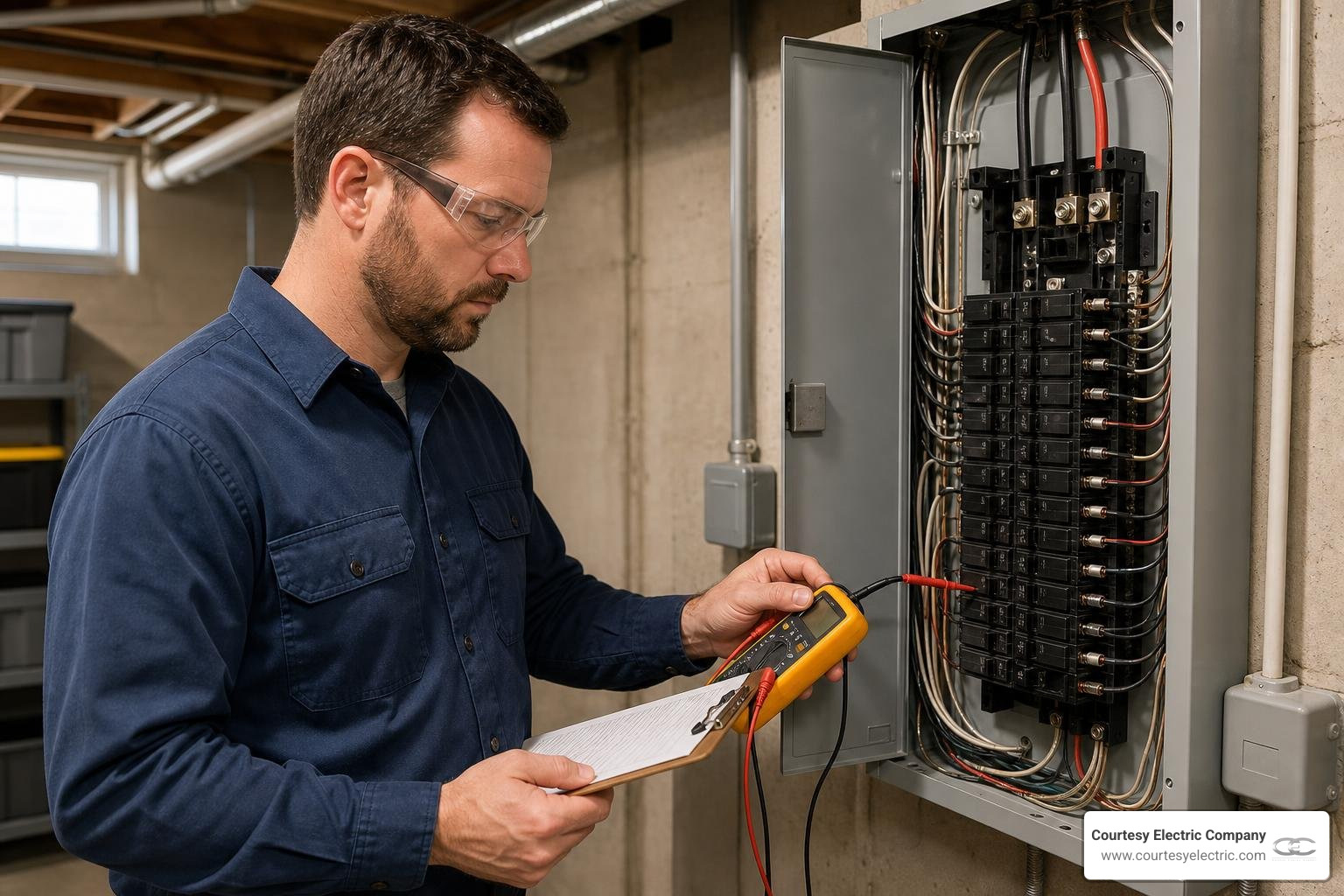
Before making any major changes to your electrical system, you must determine your home's actual load. Professional electricians do this using the National Electrical Code (NEC) Article 220 guidelines.
The calculation involves converting volt-amperes (VA)—the standard unit for electrical power capacity—into amperes (amps), which represents the electrical current flowing into your home. The basic formula is:
$$\text{Amps} = \frac{\text{Volt-Amperes (VA)}}{\text{Volts (typically 240V for residential service)}}$$
There are two primary ways to calculate this: the Standard Calculation Method and the Optional Calculation Method. Many electricians prefer the Optional Method (NEC Article 220 Part IV) for existing homes because it applies realistic diversity factors, recognizing that you are highly unlikely to run every single appliance in your home at the exact same second.
Step-by-Step NEC Article 220 Load Calculation
To perform a proper load calculation, a professional electrician follows a structured sequence:
- General Lighting and Receptacles: Multiply the total finished square footage of the home by 3 VA.
- Small Appliance and Laundry Circuits: Add 1,500 VA for each small appliance branch circuit (minimum of two for the kitchen) and another 1,500 VA for the laundry circuit.
- Apply Demand Factors: For the general load calculated in steps 1 and 2, the standard method takes the first 3,000 VA at 100%, and the remaining portion is calculated at a reduced percentage (typically 35%). The optional method simplifies this by taking the first 10,000 VA of all combined loads at 100% and the remaining load at 40%.
- Fixed Appliances: Add the nameplate rating of all fixed appliances, such as the dishwasher, water heater, and garbage disposal.
- Heating vs. Cooling: Calculate both the heating and air conditioning loads. Since you will not run your furnace and your air conditioner at the same time, only include the larger of the two numbers in your final calculation.
Real-World Load Scenarios: Why Your Home Needs More Electrical Capacity Than Ever
To see these calculations in action, let us look at two common home profiles in the Front Range region:
- The All-Electric Family Home (2,400 sq. ft.): Imagine a home in Parker equipped with an electric heat pump, electric range, electric clothes dryer, water heater, and a single Level 2 EV charger. The total connected load is approximately 55 kVA. When run through the NEC load calculation, this home requires a minimum of a 200-amp service to operate safely.
- The Luxury Home (3,500 sq. ft.): Consider a larger property in Black Forest featuring two HVAC zones, an electric range, a pool pump, a hot tub, a workshop sub-panel, and two EV chargers. The total connected load climbs to approximately 95 kVA. This setup easily exceeds the limits of a 200-amp service, requiring either a 400-amp service upgrade or a smart load management system.
In a typical older home with a 100-amp panel, adding an EV charger, a hot tub, and an induction stove can easily push the calculated load to 131 amps. This puts the system 31% over its safe capacity limit, leading to frequent trips and safety hazards. Managing your power demands becomes even more critical during extreme weather; learn How to Manage Electrical Demand During Hot Weather to protect your home.
Upgrading Your Panel vs. Smart Load Management
When your load calculation reveals that your home has outgrown its capacity, you have two primary paths forward: a traditional physical service upgrade or installing a smart energy management system.
Traditionally, the solution was straightforward: upgrade from a 100-amp panel to a 200-amp or 400-amp service. This process involves replacing your physical panel cabinet, upgrading the outdoor utility service mast, and coordinating with your local utility provider (such as Xcel Energy or CORE Electric Cooperative) to run heavier-gauge service wires. While this provides a robust, high-capacity foundation, it can sometimes involve significant utility delays or complex excavation if your service lines are underground.
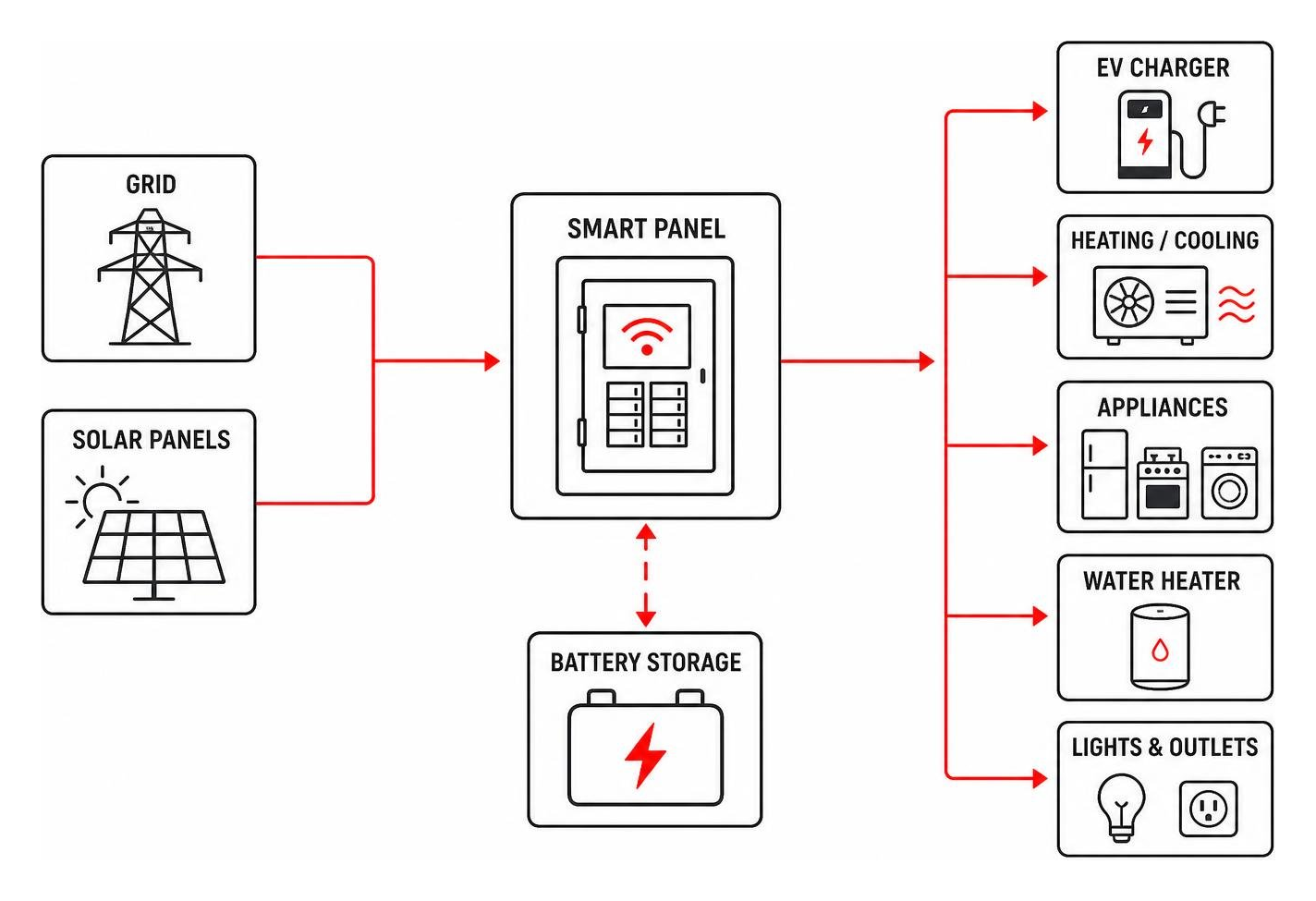
Today, smart panels like the SPAN panel and intelligent load management devices like the DCC-9 offer a highly effective alternative. Instead of simply accepting more raw power from the grid, smart systems dynamically monitor and manage how your home uses its existing capacity.
| Feature | Traditional Panel Upgrade | Smart Energy Management (e.g., SPAN Panel) |
|---|---|---|
| Primary Approach | Increases total physical electrical capacity (amps) | Dynamically manages and prioritizes existing capacity |
| Grid Coordination | Requires coordinate utility shutoffs and line upgrades | Minimizes or eliminates the need for utility-side upgrades |
| Control Level | Standard manual circuit breakers | Digital, app-based control with real-time monitoring |
| Future-Proofing | Adds raw headroom for future physical circuits | Optimizes circuit sharing, solar, and battery storage |
| Load Shedding | None (breakers simply trip when overloaded) | Automatic, non-disruptive throttling of low-priority loads |
Can You Electrify Without a Full Panel Upgrade?
Yes! For many homes, full electrification is entirely possible without a costly physical service upgrade. By choosing highly efficient, power-smart appliances and utilizing smart circuit-sharing devices, you can maximize your existing panel's footprint.
For example, a DCC-9 or similar energy management device can monitor your main panel's real-time consumption. If you are charging your EV and suddenly turn on your electric oven and clothes dryer, the load manager will temporarily pause or throttle the EV charger. Once the kitchen and laundry cycles complete, the system automatically restores full power to your vehicle.
This smart orchestration allows you to live a modern, electrified lifestyle without overloading your system. To weigh your options, take a closer look at Smart Energy Management vs Traditional Panel and explore the extensive Energy Management System Benefits for Homeowners.
Tracking and Controlling Energy Room by Room
Modern smart panels and whole-home energy monitors (like the Emporia Vue or Sense) give you unprecedented visibility into your household's electrical behavior. Rather than waiting for your utility bill at the end of the month, you can track exactly how many watts your refrigerator, entertainment system, or basement heater is drawing in real time.
This granular control allows you to identify energy hogs, schedule high-draw appliances for off-peak hours, and keep your total household demand safely below your panel's physical limits. Discover the advantages of this technology in our guide on How to Track and Control Energy Use Room by Room.
Frequently Asked Questions about Home Electrical Capacity
We receive many questions from Front Range homeowners looking to modernize their properties. Here are some of the most common inquiries regarding home electrical capacity:
Can I run a Level 2 EV charger on a 100-amp panel?
It depends entirely on your home's other electrical loads. If your home uses gas for heating, hot water, and cooking, you may have enough remaining capacity to support a Level 2 EV charger. However, if your home is already mostly electric, adding a continuous 32-amp to 48-amp EV load will likely overload a 100-amp panel. In these situations, using a smart load management device like a DCC-9 is an excellent way to safely add a charger without a full service upgrade.
What is the difference between the NEC Standard and Optional calculation methods?
The Standard Method is a conservative calculation that applies strict demand factors and assumes a higher likelihood of simultaneous appliance use. The Optional Method (allowed under NEC Article 220 Part IV for existing single-family homes) applies a more realistic diversity factor. It calculates the first 10,000 VA of load at 100% and everything else at 40%, which often results in a lower, more accurate reflection of real-world daily power usage.
How do smart panels like SPAN help avoid utility service upgrades?
Smart panels like SPAN replace your traditional breaker box with an intelligent, software-controlled system. If your home's total demand approaches your panel's physical limit, the SPAN panel automatically sheds or throttles lower-priority circuits (like an EV charger or a guest room heater) to protect your main service. This dynamic load shedding ensures your system never exceeds its safe threshold, allowing you to add new electric appliances without needing a larger service line from the utility company.
Conclusion
Ensuring your home has adequate electrical capacity is no longer just about convenience—it is about safety, efficiency, and preparing your property for the future. Whether you are adding an EV charger in Denver, installing a heat pump in Highlands Ranch, or building out a workshop in Black Forest, having a robust electrical backbone is essential.
At Courtesy Electric Company, we have been serving homeowners across Denver and the Colorado Front Range since 1976. Our experienced team specializes in providing top-tier Electrical Service and modern Residential solutions. From traditional panel upgrades to cutting-edge SPAN smart panels, Franklin battery storage systems, and Generac or Cummins standby generators, we have the expertise to design and install the perfect power plan for your home.
If you are ready to evaluate your home's electrical capacity and explore your options, we are here to help. Contact us today to schedule a free estimate on your next installation, and let us help you power your future safely and reliably.


