
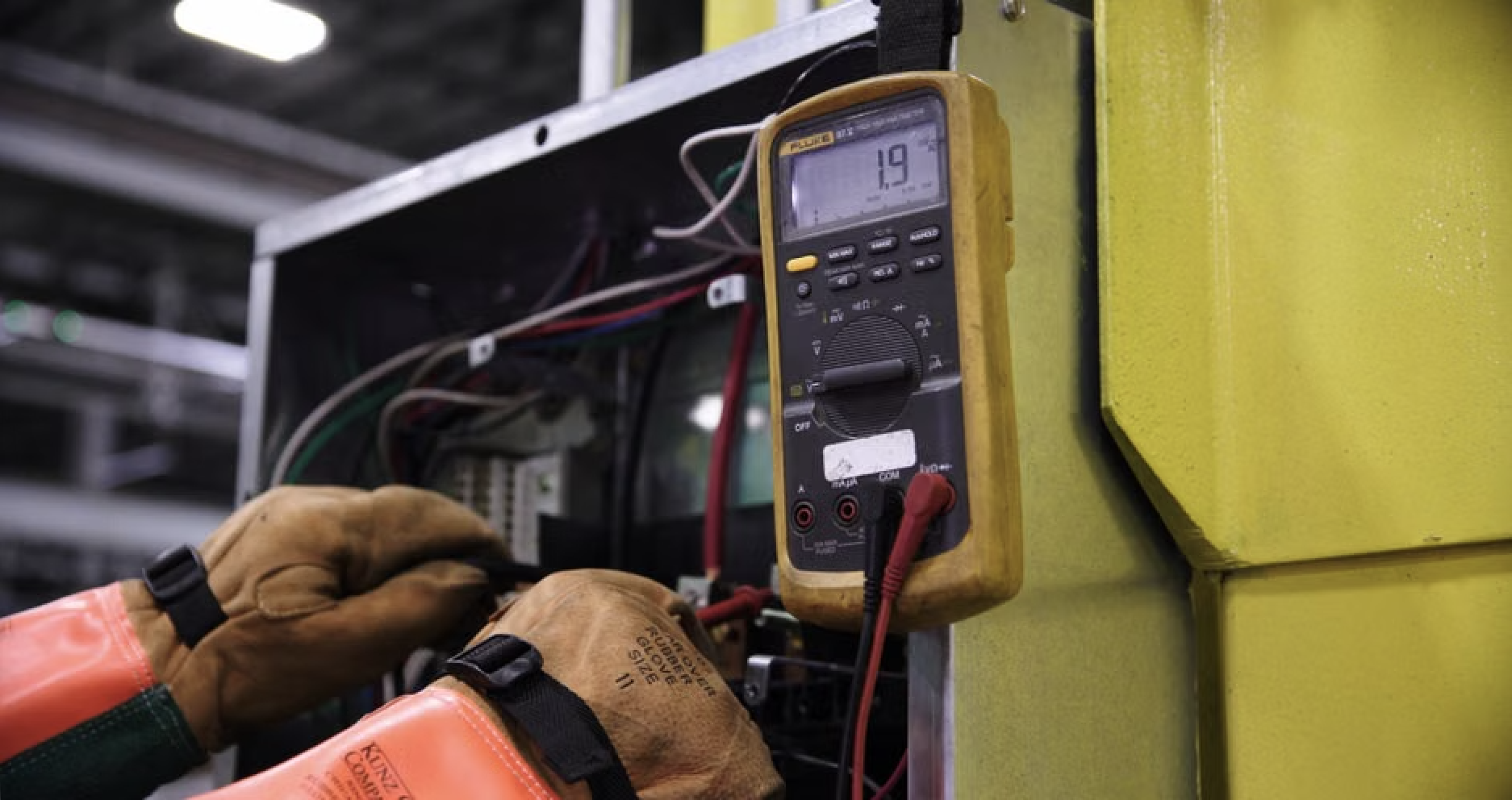
Why Understanding How an Electrical Inspection Prevents Problems Could Save Your Home

How an electrical inspection prevents problems is something every Colorado Front Range homeowner should understand — because most electrical hazards give no warning before they cause a fire, a shock, or a costly system failure.
Here is a quick breakdown of how a professional electrical inspection keeps your home safe:
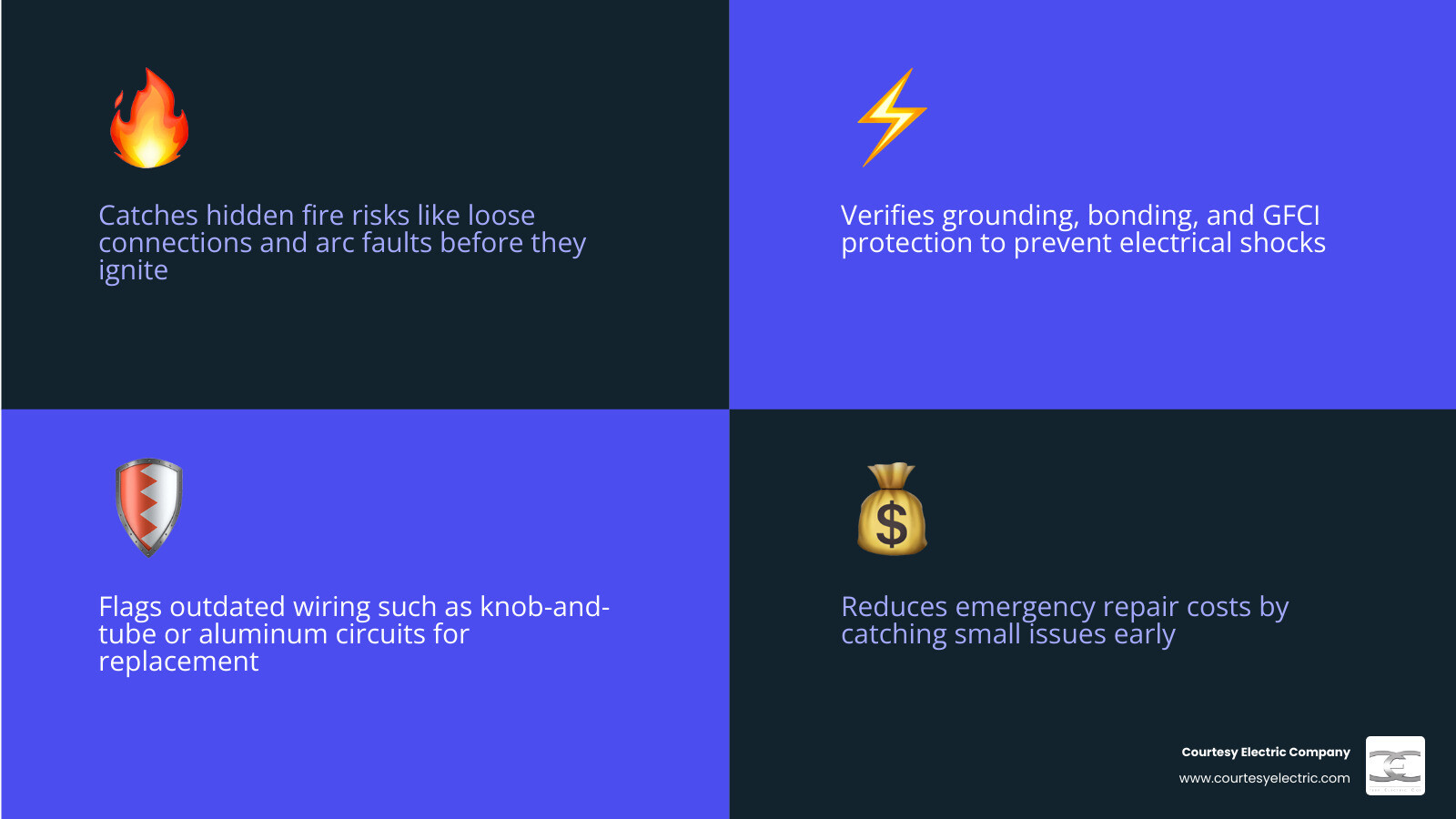
- Catches hidden fire risks — Loose connections, arc faults, and degraded wiring behind walls are identified before they ignite
- Prevents electrical shock hazards — Inspectors verify proper grounding, bonding, and GFCI protection throughout the home
- Protects appliances and electronics — Overloaded circuits and voltage irregularities are flagged before they damage expensive equipment
- Flags outdated or dangerous components — Knob-and-tube wiring, aluminum branch circuits, and faulty panels are identified for replacement
- Ensures code compliance — Issues that could affect your insurance coverage, home sale, or permit approvals are documented and prioritized
- Reduces emergency repair costs — Catching small problems early costs far less than responding to failures; emergency electrical repairs typically run two to three times more than scheduled service
The stakes are real. Electrical failures cause an average of 31,647 home fires in the U.S. every year, resulting in 425 deaths, 1,279 injuries, and $1.6 billion in property damage. That is not a risk worth ignoring.
For homeowners in Denver and across the Colorado Front Range, older housing stock, rapid smart-home adoption, and increasing electrical loads from EV chargers and backup energy systems make proactive inspections more important than ever.
I'm David Meyer, Vice President of Courtesy Electric — a Colorado electrical contractor with roots going back to 1976. In my years working in the field and leading this company, I've seen how an electrical inspection prevents problems that homeowners never saw coming, from overloaded panels in older Denver homes to hidden wiring hazards uncovered just before a renovation. In the sections below, I'll walk you through everything you need to know.
What is a Home Electrical Inspection and What Does It Cover?
A home electrical inspection is not a quick glance at your breaker box or a simple check to see if your lights turn on. It is a highly structured, comprehensive diagnostic assessment of your home’s entire electrical infrastructure. When a licensed electrician steps into your home for a dedicated electrical inspection, they are evaluating how power enters your home, how it is distributed, and whether the safety devices designed to protect you will actually function when called upon.
While a general home inspector might look for surface-level issues during a real estate transaction, a dedicated electrical inspection dives much deeper. It utilizes advanced diagnostic tools to test circuits under load, measure ground resistance, and evaluate the physical integrity of components hidden behind your outlet covers and service panels.
During a professional inspection, we systematically evaluate several core areas of your home's system:
- The Main Service Panel and Meter: We check the incoming service lines, verify the main breaker capacity, and inspect the physical condition of the busbars, breakers, and connections.
- The Wiring Network: We identify the types of wiring used in your home (such as modern copper, vintage aluminum, or historical knob-and-tube) and evaluate the condition of its insulation.
- Outlets, Switches, and Fixtures: We test individual receptacles for correct polarity, secure wiring connections, physical wear, and proper voltage levels.
- Grounding and Bonding: We verify that your system has a secure, low-resistance path to the earth to safely redirect fault currents.
- Life Safety Devices: We test Ground Fault Circuit Interrupters (GFCIs), Arc Fault Circuit Interrupters (AFCIs), and smoke/carbon monoxide detectors to ensure they meet modern safety standards.
Understanding the components of your electrical system is key to keeping your household safe. For more foundational safety habits, take a look at our Electrical Safety Tips Every Homeowner Should Know.
Evaluating Panel Capacity and Modern Upgrades
Your electrical panel is the brain of your home's electrical system. It is responsible for distributing power to individual circuits and cutting off power if a circuit draws more current than it can safely handle. However, many homes across the Colorado Front Range — from classic bungalows in Denver to older estates in Parker and Highlands Ranch — are operating with panels that were never designed for modern electrical demands.
Decades ago, a 60-amp or 100-amp panel was more than enough to power a home’s lights, a refrigerator, and a television. Today, we plug in multiple computers, run high-efficiency central air conditioners, charge electric vehicles (EVs), and install smart home technology. When your power demands exceed your panel's capacity, you experience frequent breaker trips, voltage drops, and accelerated wear on your electrical infrastructure.
During an inspection, we calculate your home's actual electrical load and compare it to your panel's rated capacity. If your system is running near its limit, we discuss options for modern panel upgrades. One of the most significant advancements in this space is the SPAN smart panel. Unlike traditional panels, a SPAN panel allows you to monitor and manage your home’s energy consumption in real time through an app. It gives you the power to prioritize critical circuits during an outage, optimize solar and battery storage systems, and safely manage high-load appliances without requiring a massive utility service upgrade.
Inspecting Wiring and Grounding Systems
If the electrical panel is the brain of your system, the wiring is the circulatory system. Over time, wiring can degrade due to heat, physical stress, or simply age. During an inspection, identifying the specific type and condition of your wiring is a top priority.
One of the most critical hazards we look for is outdated wiring materials:
- Aluminum Wiring (1965–1973): Homes built or renovated during this window often contain single-strand aluminum branch circuit wiring. Aluminum expands and contracts at a different rate than copper when heated by electrical current. This cycle causes connection points at outlets and switches to loosen over time, creating high-resistance connections that generate intense heat. In fact, homes with aluminum wiring are 55 times more likely to have wire connections reach fire-hazard conditions than homes wired with copper.
- Knob-and-Tube Wiring: Common in homes built before the 1940s, this system lacks a ground conductor. Over time, the rubberized cloth insulation surrounding knob-and-tube wires becomes brittle and flakes away, leaving bare, energized conductors exposed in wall cavities and attics.
Additionally, we evaluate your grounding and bonding systems. Grounding provides a safe, low-resistance path for excess electricity to travel back to the earth in the event of a short circuit or surge. Without proper grounding, that excess electricity will search for the path of least resistance — which could be your expensive smart home devices, your appliances, or even your body. We inspect the grounding electrode conductors, check the connections to your grounding rods or metal water pipes, and verify that your system is fully bonded to protect your household from severe shocks.
To learn more about evaluating older systems, check out our Electrical Safety Checklist for Older Homes.
How an Electrical Inspection Prevents Problems and Hazards
The primary reason to schedule an electrical inspection is simple: it finds the invisible dangers before they turn into emergencies. Electricity is incredibly quiet. A wire can be slowly smoldering behind a drywall sheet in your living room, or a breaker can be failing to trip under an overload, without displaying any obvious symptoms. By the time you smell smoke or see sparks, the hazard has already escalated.
A professional inspection acts as a shield against these hidden threats. By identifying minor defects early, we can prevent catastrophic fires, life-threatening electrical shocks, and destructive power surges. To make sure your home is fully protected, you can cross-reference your system with our Ultimate Electrical Fire Safety Checklist Home.
Identifying Hidden Fire Risks Behind Walls
Electrical fires are particularly destructive because they often start inside wall cavities, giving them time to grow undetected before smoke alarms are triggered. The leading causes of these fires are loose connection points, overloaded circuits, and arc faults.
When electrical connections loosen — whether due to improper installation, thermal expansion, or physical vibration — they create electrical resistance. As current forces its way through this point of resistance, it generates extreme heat. Over time, this heat degrades the surrounding wire insulation and can eventually ignite nearby wood framing or drywall paper.
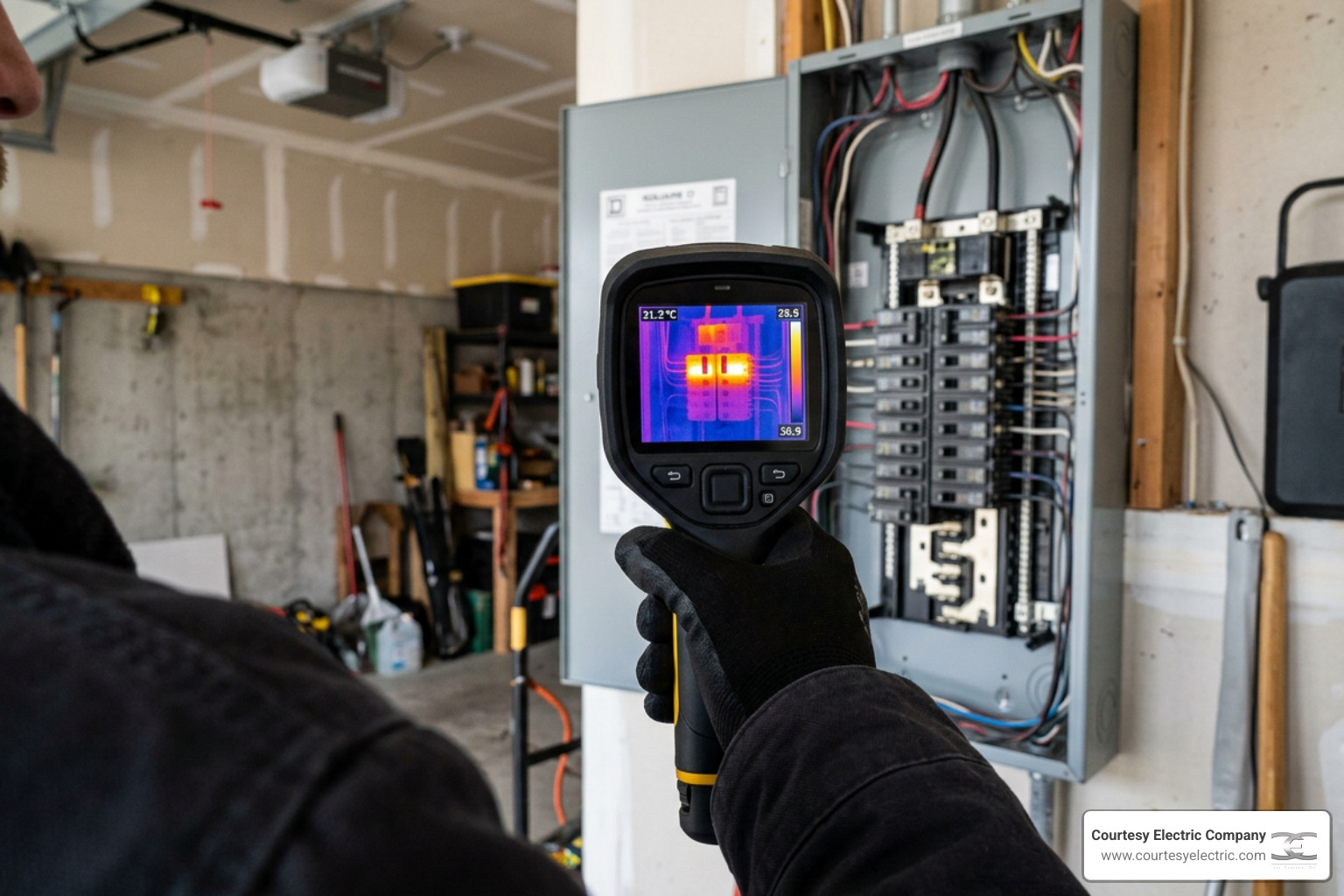
To catch these invisible threats, we utilize thermal imaging cameras during our inspections. These specialized diagnostic tools allow us to visually scan your electrical panel, junction boxes, and outlets under load. If a connection is loose or a circuit is overloaded, it will show up on our screen as a bright, glowing hot spot, long before it produces a burning smell or physical scorch marks.
We also verify the presence and proper operation of Arc Fault Circuit Interrupters (AFCIs). Unlike standard breakers that only trip during a direct short circuit or overload, AFCI breakers detect unintended electrical arcing — the sparking that occurs when a wire is damaged, pinched, or loose. These devices are highly effective at preventing fires before they can start.
Preventing Costly Appliance Damage and Outages
While life safety is always our primary concern, an electrical inspection also protects your bank account by safeguarding your high-value appliances and electronics. Modern homes are packed with sensitive microprocessors. Your smart refrigerator, home theater system, computer network, and even your HVAC system can be easily ruined by voltage irregularities and power surges.
Power surges can originate from outside the home due to utility switching or lightning strikes, but they also occur internally when high-load appliances like air conditioners or heat pumps kick on and off. These minor, frequent voltage spikes gradually degrade the delicate circuitry of your electronics, leading to premature equipment failure.
During an inspection, we evaluate your home’s surge protection systems. We often recommend installing a whole-house surge protective device directly at your main electrical panel to intercept high-voltage spikes before they can enter your branch circuits.
Additionally, we assess how your system integrates with modern power backup systems. If you have a standby generator (such as a Generac or Cummins unit) or a battery storage system (like Franklin Battery Storage), we test the automatic transfer switches and electrical connections. This ensures that when a severe Colorado storm rolls through the Front Range and knocks out the utility grid, your backup power system will seamlessly and safely take over without risking damage to your home’s electronics.
How Often Should You Have Your Electrical System Inspected?
Many homeowners only think about calling an electrician when something goes wrong. However, waiting for a failure is a reactive approach that can put your family at risk and result in expensive emergency repairs. To keep your home safe and efficient, we recommend scheduling inspections on a regular cycle based on your home's age and specific life events.
| Home Age / Condition | Recommended Inspection Frequency | Key Areas of Focus |
|---|---|---|
| Newer Homes (Under 10 years old) | Every 5 years | Code compliance, checking for loose connections from settling, testing GFCI/AFCI devices. |
| Mid-Aged Homes (10 to 25 years old) | Every 3 to 5 years | Panel wear and tear, checking capacity for modern appliances, testing grounding systems. |
| Older Homes (Over 25 years old) | Every 2 to 3 years | Identifying outdated wiring (aluminum, knob-and-tube), inspecting vintage panels, testing insulation. |
| After Major Renovations or Additions | Immediately upon completion | Verifying load distribution, ensuring new circuits are code-compliant, testing new safety devices. |
| After Severe Weather / Major Storms | As needed (immediate visual check) | Checking outdoor junction boxes, evaluating service entrance cables, inspecting standby generator connections. |
As seasons change, the demands on your electrical system change too. For a localized guide on preparing your home for seasonal shifts, check out our Spring Electrical Safety Checklist Colorado Guide.
Warning Signs That Require an Immediate Inspection
While the table above outlines a standard preventive maintenance schedule, your home may tell you when it needs attention sooner. If you experience any of the following warning signs, you should schedule a professional electrical inspection immediately:
- Flickering or Dimming Lights: If your lights flicker or momentarily dim when your refrigerator, air conditioner, or microwave kicks on, it is a classic sign of an overloaded circuit or a loose connection at your main panel.
- Warm or Discolored Outlets: Outlets or light switches should never feel warm to the touch. If an outlet cover is warm, discolored, or showing scorch marks, stop using it immediately and call us. This indicates dangerous heat buildup behind the wall.
- Unexplained Burning Smells: A persistent fishy, plastic, or ozone-like odor near outlets, switches, or your breaker box is a major red flag. It means wire insulation or plastic components are actively melting.
- Frequently Tripping Breakers: If a specific circuit breaker trips repeatedly, do not simply reset it and ignore the issue. The breaker is doing its job to protect you from an overload, a short circuit, or a ground fault that needs to be diagnosed.
- Buzzing or Crackling Sounds: Electricity should operate silently. If you hear buzzing, clicking, or crackling noises coming from your walls, switches, or panel, it is a sign of dangerous electrical arcing.
If you are noticing any of these red flags, do not wait. Learn more about identifying these symptoms early by reading How to Spot Electrical Problems Before They Become Dangerous.
The Long-Term Financial and Real Estate Benefits of Proactive Inspections
Investing in a proactive electrical inspection is not just a safety measure; it is also a smart financial decision. Many homeowners view inspections as an added expense, but when you compare the nominal cost of an inspection to the thousands of dollars required to replace a fried electrical panel, restore fire-damaged property, or perform emergency repairs, the financial benefits are clear.
Emergency electrical repairs are notoriously expensive because they require rapid dispatch, troubleshooting under pressure, and sometimes temporary fixes to keep your home habitable before permanent repairs can be made. By identifying and resolving minor issues — like replacing a single weak breaker or tightening a loose neutral wire — you avoid the massive expense of a catastrophic system failure.
Furthermore, proactive inspections pay off when it comes to your home's real estate value and insurance coverage:
- Home Value and Resale Potential: When you put your home on the market in competitive Front Range communities like Highlands Ranch or Parker, a documented history of professional electrical inspections is an incredible selling point. It gives prospective buyers peace of mind, speeds up the closing process, and prevents buyers from using minor electrical issues to negotiate a lower purchase price during negotiations.
- Insurance Compliance: Insurance companies are becoming increasingly strict about home safety. Many insurers now require proof of an electrical inspection before issuing or renewing policies on homes over a certain age. Identifying and replacing recognized hazards like Federal Pacific Electric (FPE) or Zinsco panels can prevent your policy from being canceled and can sometimes even lower your premiums.
- Avoiding DIY Pitfalls: We often uncover unpermitted or amateur DIY electrical work during inspections. Correcting these issues ensures your home remains safe and fully compliant with local building codes.
If you are trying to decide whether to tackle an electrical project yourself or hire a professional, take a look at our guide on When to Call an Electrician vs DIY.
Frequently Asked Questions About Electrical Inspections
We hear many of the same questions from homeowners across the Denver metro area who are looking to better understand the inspection process. Here are some of the most common queries we receive.
How an electrical inspection prevents problems in older homes?
Older homes have a unique charm, but their electrical systems were built for a different era. An electrical inspection prevents problems in older homes by identifying outdated materials that no longer meet modern safety standards.
Specifically, we look for cloth-insulated wiring, knob-and-tube systems, and single-strand aluminum branch circuits, all of which pose significant fire risks. We also evaluate aging electrical panels. Many older homes still feature panels from manufacturers like Federal Pacific Electric or Zinsco, which have documented failure rates where breakers fail to trip during an overload. By identifying these hazards, we can plan for safe panel upgrades and system modernizations before a failure occurs.
How an electrical inspection prevents problems during home renovations?
Before you tear down walls or add a new room to your Colorado home, an electrical inspection is essential. It prevents problems during renovations by evaluating your existing system's load capacity to ensure it can handle the additional demand of your new space.
If you plan to add a hot tub, a home theater, or an EV charging station, we verify whether your current panel has the physical space and electrical capacity to support it. An inspection also ensures that all new wiring, outlet placements, and safety devices comply with the latest National Electrical Code (NEC) standards, helping you pass municipal inspections and secure necessary building permits without costly delays.
What should I expect during a professional electrical inspection?
When we perform an electrical inspection, you can expect a highly professional, non-invasive process that typically takes between one to three hours, depending on the size and complexity of your home.
First, we conduct a thorough visual check of all accessible components, including your main service panel, meter, grounding connections, and a representative sample of outlets and switches. Next, we use specialized diagnostic instruments to test circuit loading, verify proper grounding path resistance, and check GFCI/AFCI functionality. We also use thermal imaging cameras to scan for hidden hot spots behind your walls and inside your panel.
Once our testing is complete, we provide you with a detailed, easy-to-understand written report. This report documents our findings, highlights any immediate safety hazards or code violations, and provides prioritized recommendations for any necessary repairs or upgrades.
Conclusion
At the end of the day, your home’s electrical system is something you shouldn't have to worry about. It should work quietly and safely in the background, powering your daily life without putting your family or your property at risk.
By understanding how an electrical inspection prevents problems, you can take control of your home’s safety and efficiency. Rather than waiting for a breaker to fail, an outlet to spark, or a power outage to catch you unprepared, a proactive inspection allows you to identify and resolve minor issues before they turn into expensive, stressful emergencies.
Since 1976, Courtesy Electric Company has been helping homeowners across Denver, Parker, Highlands Ranch, Black Forest, and the wider Colorado Front Range keep their homes safe and modern. Whether you live in a historic home that needs its vintage wiring evaluated, or you are looking to upgrade to a SPAN smart panel, install a Generac or Cummins standby generator, or add a Franklin battery storage system, our team of licensed professionals is here to help.
Don't wait for an electrical warning sign to turn into an emergency. Schedule your professional electrical service today and let us give you the clarity, safety, and peace of mind you deserve.


