Why Older Panels Can't Support Today's Appliances — And What It Means for Your Home
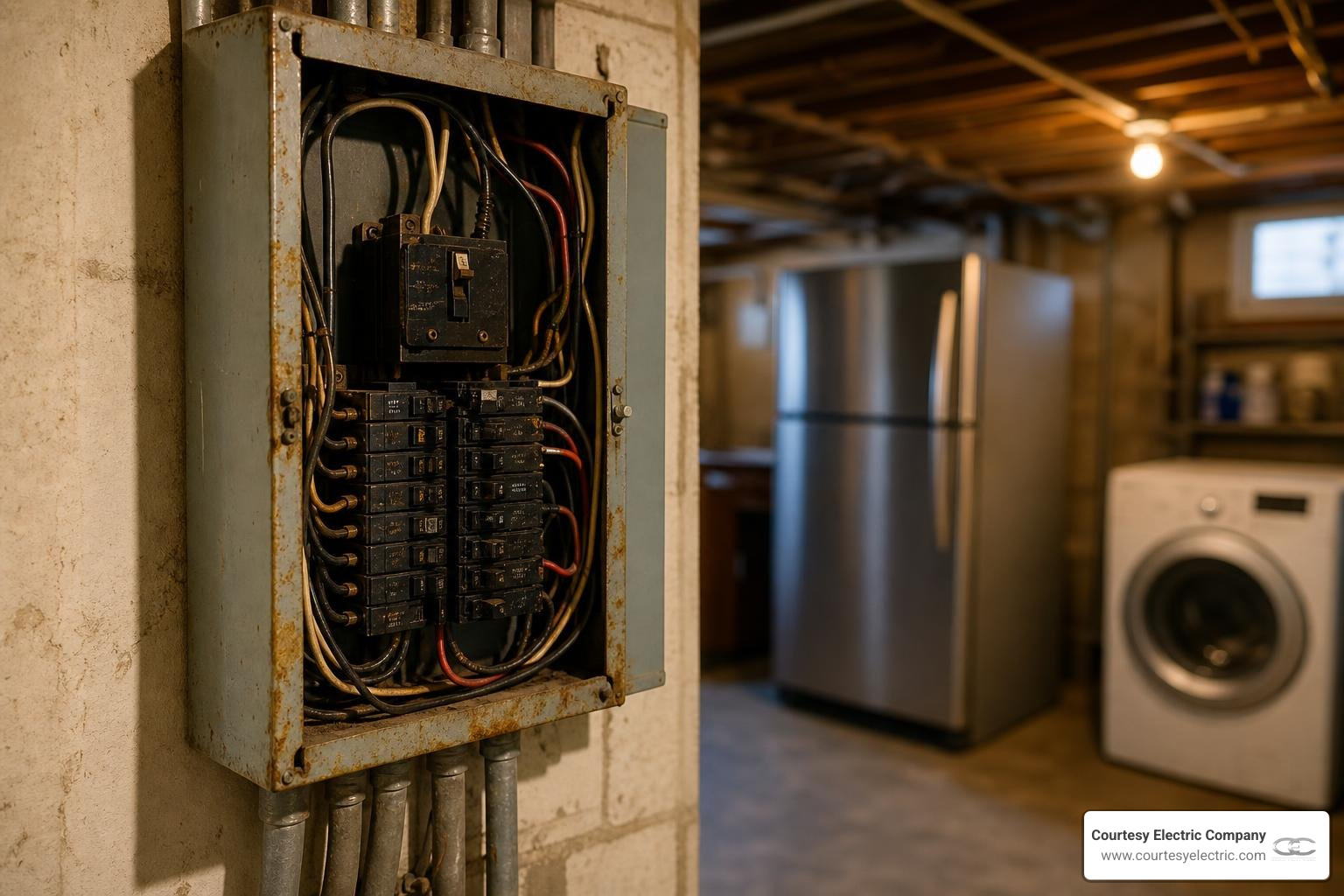
Why older panels can't support today's appliances comes down to one simple reality: the electrical infrastructure built into most homes from the 1970s through the 1990s was designed for a world that no longer exists.
Here is the short answer:
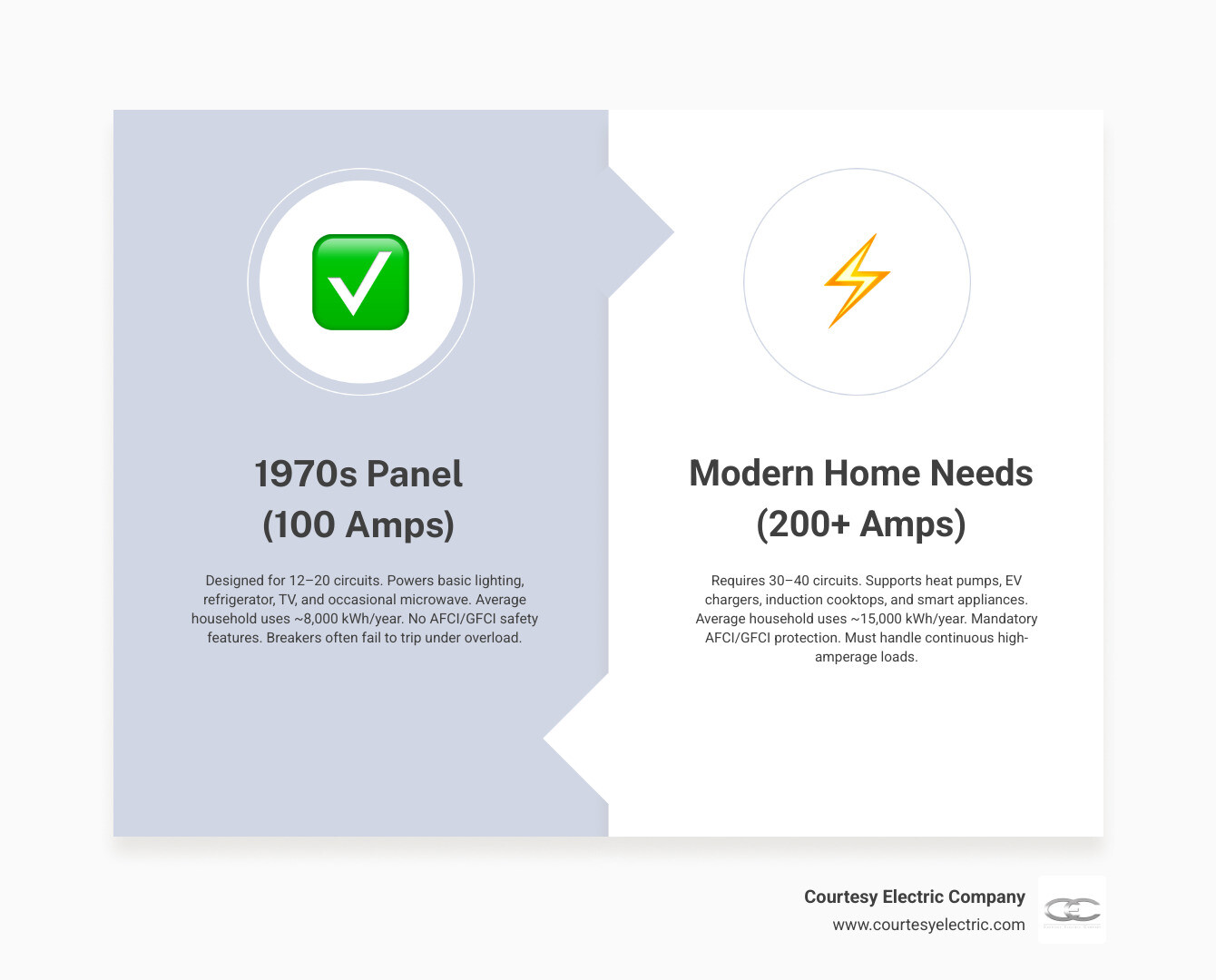
- Limited amperage: Most older panels provide only 100 amps of service. Modern homes routinely need 200 amps or more.
- Too few circuits: A 1970s panel typically supports 12 to 20 circuits. Today's homes need 30 to 40 or more.
- No safety features: Older panels lack arc-fault (AFCI) and ground-fault (GFCI) protection that modern electrical codes require.
- Outdated design: Some older panel brands have documented failures where breakers do not trip during an overload — a direct fire hazard.
- Modern appliances draw far more power: Heat pumps, EV chargers, induction cooktops, and smart appliances place continuous, high-amperage demands that older panels were never built to handle.
- Electricity use has nearly doubled: The average U.S. household uses close to twice the electricity it did in the 1970s, but millions of homes still run on the same panels installed back then.
If your home was built before 1990 and the electrical panel has never been upgraded, there is a real chance your system is already being pushed beyond what it was designed to do — especially if you have added any modern appliances, a home office, or are considering an EV charger or heat pump.
The gap between what older panels were built for and what today's homes actually demand is not a minor inconvenience. It is a safety issue, a financial risk, and for many Front Range homeowners, a barrier to the modern, efficient home they want to live in.
I'm David Meyer, Vice President of Courtesy Electric, a Colorado electrical contractor with roots going back to 1976 — and over the course of my career, I've seen how the question of why older panels can't support today's appliances becomes urgent the moment a homeowner tries to add a heat pump, charge an EV, or run a modern kitchen. In the sections below, I'll walk you through exactly what's happening inside that gray metal box on your wall — and what you can do about it.
The Core Mismatch: Why Older Panels Can’t Support Today’s Appliances
To understand why older electrical systems struggle so much today, we have to look at how much our homes have changed. Thirty or forty years ago, a home’s electrical system had a relatively simple job. It needed to power some lightbulbs, a television, a refrigerator, and perhaps a microwave or a vacuum cleaner.
Most homes built in the 1970s, 1980s, and even early 1990s were outfitted with 100-amp electrical panels. At the time, this was considered generous. Today, however, a 100-amp panel is the electrical equivalent of trying to run a marathon while breathing through a straw.
| Feature | 1970s–1990s Electrical Panels | Modern 2020s Electrical Panels |
|---|---|---|
| Standard Amperage | 100 Amps (sometimes 60 Amps in older homes) | 200 Amps to 400 Amps |
| Circuit Capacity | 12 to 20 circuits | 30 to 40+ circuits |
| Average Home Energy Support | 5,000 to 10,000 kWh per year | Over 20,000 kWh per year |
| Safety Mechanisms | Standard thermal breakers | AFCI, GFCI, and whole-home surge protection |
| Smart Home & EV Readiness | None (requires creative retrofitting) | Fully integrated / Smart-ready (e.g., SPAN panels) |
As we shift toward cleaner, more efficient technologies, How Electrification Is Changing Home Electrical Needs becomes a central theme of modern homeownership. When you transition from gas appliances to electric heat pumps, induction stoves, and electric vehicles, your home’s electrical infrastructure must bear the entire energy load.
A 100-amp panel in a typical Parker or Highlands Ranch home is often already operating at 75% capacity during normal, everyday use—such as running a load of laundry while cooking dinner. If you try to add a single high-draw appliance to that mix, you will instantly exceed the panel’s safety threshold, causing the main breaker to trip and plunge your home into darkness.
The Evolution of Household Power Demands
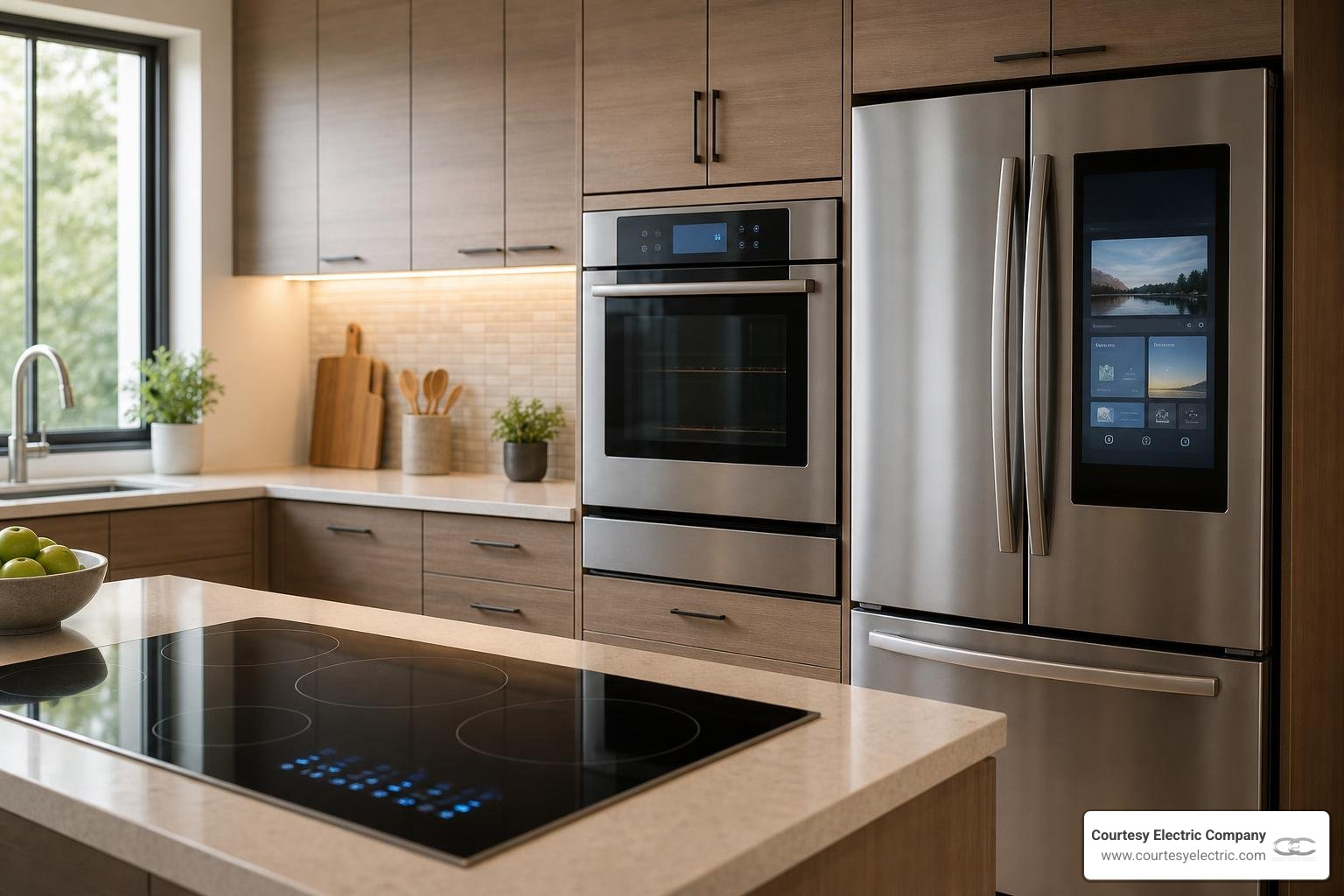
Modern appliances are fundamentally different from their predecessors. Vintage appliances were mechanical workhorses. They were heavy, loud, and inefficient, but they had one advantage: they were incredibly resilient to minor power fluctuations. They didn't care if the voltage dropped slightly when the compressor kicked on; they just kept chugging along.
Today’s appliances are highly sophisticated computers masquerading as household tools. Your refrigerator, washing machine, and dishwasher are packed with delicate electronic control boards, digital sensors, and Wi-Fi modules. This technology makes them incredibly energy-efficient, but it also makes them highly sensitive to "dirty" power and voltage fluctuations.
When an older panel is pushed to its limits, it struggles to maintain a stable, consistent voltage. These minor power dips and surges can slowly degrade and fry the sensitive control boards inside your high-end appliances, leading to premature appliance failure. If you want to protect your investments, learning How to Future-Proof Your Home Electrical System is the best first step.
Why Older Panels Can’t Support Today’s Appliances in the Kitchen
The kitchen has undergone a massive transformation over the last few decades. In the 1980s, a kitchen might have had a single circuit shared among several outlets. Today, a modern kitchen is a high-power hub.
Consider modern refrigerators. While they are more energy-efficient overall, they are also much larger, featuring built-in ice makers, dual compressors, and touchscreens. They require their own dedicated circuits to operate safely without interference.
Furthermore, the rise of high-performance induction cooktops has changed the game. Induction cooking is incredibly fast and precise, but it demands a massive, dedicated 240-volt circuit. If you attempt to install a modern induction range in a kitchen wired to 1970s standards, the physical mismatch is immediately apparent. Older kitchen alcoves often lack the ventilation clearance required for modern high-tech units, and the existing wiring simply cannot deliver the continuous amperage these units demand.
Why Older Panels Can’t Support Today’s Appliances Like Heat Pumps and EV Chargers
If kitchen renovations stretch older panels to their limits, green energy upgrades will break them entirely.
Take heat pumps, for example. Transitioning to a high-efficiency heat pump is an excellent way to heat and cool your home in the Colorado Front Range. However, a modern heat pump requires a dedicated 240-volt circuit capable of handling a 40-amp load. If your home is still running on a 100-amp panel, you cannot safely add this 40-amp circuit. Without a panel upgrade, that expensive new heat pump becomes a "stranded asset"—a very expensive piece of equipment sitting outside your home that you cannot legally or safely turn on.
The same problem applies to electric vehicles. To get a reasonable charging speed at home, you need a Level 2 charger. This requires a dedicated 240-volt circuit delivering between 30 and 50 amps. If you are wondering, Does Your Electrical Panel Support an EV Charger, the answer for almost any unmodified 1970s or 1980s home is a definitive no. Adding an EV charger to an outdated 100-amp service will overload the system almost every time the vehicle is plugged in.
Warning Signs and Safety Risks of an Overburdened Panel
An overloaded electrical panel rarely fails silently. It will usually send out several warning signs that it is struggling to keep up with your household's energy demands. Ignoring these signs can lead to damaged appliances, frequent power interruptions, and in the worst-case scenarios, electrical fires.
Homeowners should keep a close eye out for these common warning signs:
- Flickering or dimming lights: If your lights flicker or momentarily dim when your refrigerator compressor kicks on or when you start the microwave, your panel is struggling to distribute power.
- Buzzing or humming sounds: A healthy breaker box should be completely silent. A faint buzzing or humming sound coming from the panel is a warning sign of active electrical arcing or a breaker failing to trip.
- Warm breakers: If you touch the plastic switches inside your breaker box and they feel warm or hot to the touch, the system is overloaded and generating dangerous excess heat.
- Frequently tripped breakers: If you have to make regular trips to the garage or basement to reset a breaker because you dared to run the vacuum and the hair dryer at the same time, your system is telling you it has reached its limit.
Recognizing these issues early is critical. If you notice any of these red flags, check out the Signs Your Home Is Due for an Electrical Inspection to understand your next steps, and learn How Often Should You Have Your Electrical System Inspected to maintain a safe home environment.
Fire Hazards and Outdated Brands
Beyond the daily inconvenience of tripped breakers, running modern appliances on an outdated panel poses a severe safety hazard. Overloaded wires generate intense heat. Over time, this heat degrades the protective plastic insulation surrounding the wires inside your walls. Once that insulation crumbles, bare wires can touch, leading to electrical arcing and devastating house fires.
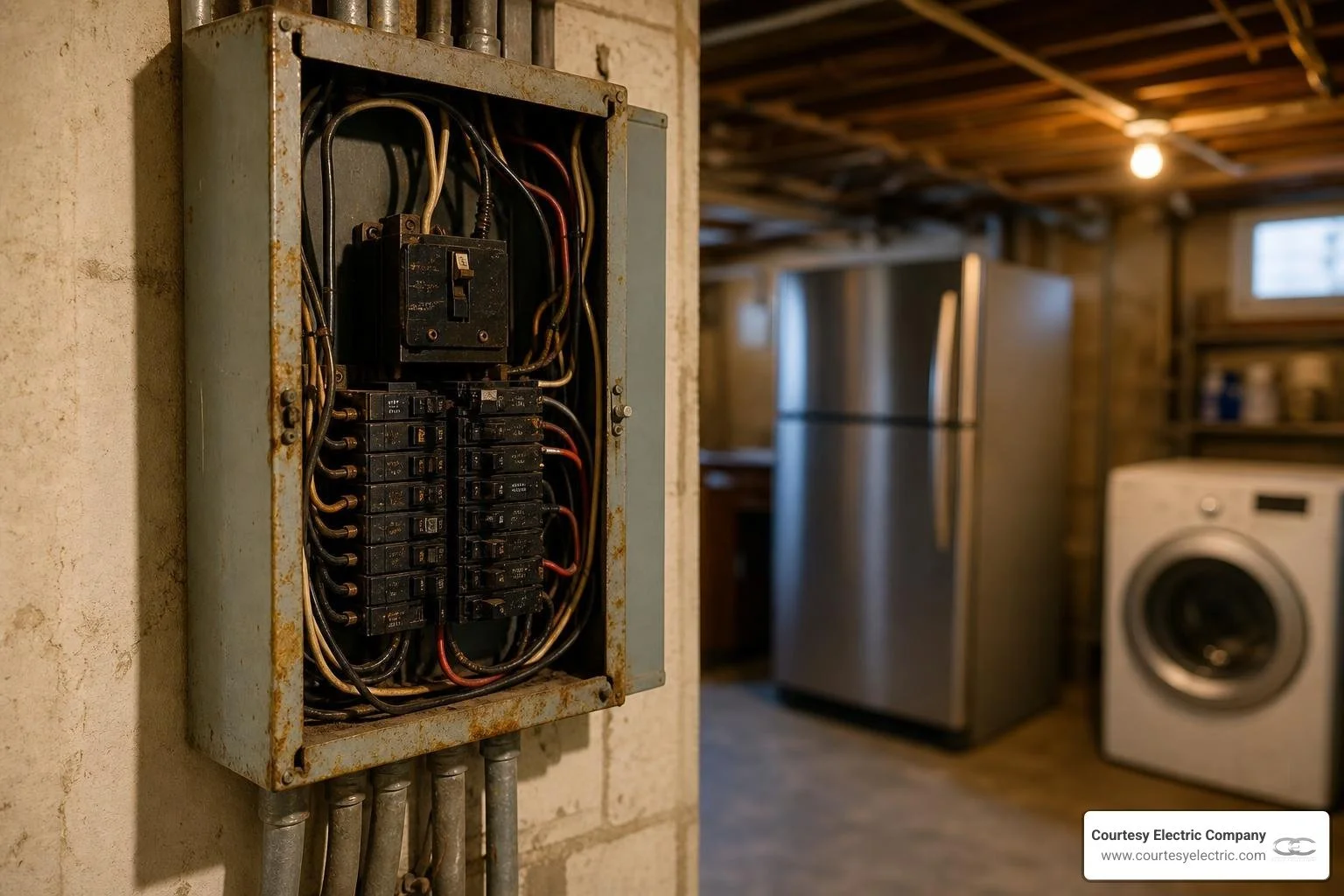
The risk is exponentially higher if your home features specific builder-grade panels from the 1970s through the 1990s. Brands like Federal Pacific Electric (FPE) and Zinsco were widely installed in residential developments across Colorado during this era.
These panels have well-documented design flaws. In a standard panel, a breaker trips to shut off power when it detects an overload or short circuit. In many Federal Pacific and Zinsco panels, the breakers fail to trip. Instead, they lock up, allowing massive amounts of electrical current to continue flowing through overloaded wires. This causes the panel itself to melt, spark, and catch fire.
If you suspect your home has one of these hazardous brands, it is vital to understand How Outdated Wiring Increases Fire Risk. Taking proactive steps and learning How to Prevent Electrical Fires in Your Home is essential for your family's safety. For more general guidelines, review these Electrical Safety Tips Every Homeowner Should Know.
The Critical Role of a Demand Load Calculation
When homeowners want to add a new appliance, they often open their breaker box, spot an empty plastic slot (a knockout), and assume they have plenty of room. This is one of the most common—and dangerous—misconceptions in home electrical work.
An empty physical slot in your panel only represents space; it does not represent electrical capacity. Think of your electrical panel like a water pipe. Just because you can tap another faucet into the pipe doesn't mean the main water line has the volume to supply it.
To determine if your home can safely handle a new appliance, a licensed electrician must perform a demand load calculation. This is a precise mathematical formula mandated by the National Electrical Code (NEC). It takes into account:
- The total square footage of your home (to calculate general lighting and outlet loads).
- The fixed appliance loads (refrigerator, range, dryer, water heater).
- The heating and air conditioning loads (calculating whichever is larger, as they typically don't run at the same time).
- The demand factor of temporary loads.
The result of this calculation tells us the absolute peak demand load of your home. If your calculated peak load is 95 amps, and you have a 100-amp panel, you cannot safely add a new 40-amp EV charger—even if your panel has five empty physical slots.
Understanding how your home utilizes and manages power is key to avoiding these overloads. You can learn more about how managing your household loads intelligently by reading How Energy Management Reduces Your Electric Bill.
Upgrading Your System: Resale Value, Insurance, and Smart Panels
Upgrading your electrical panel is an investment in your home’s safety, convenience, and future. Beyond the peace of mind that comes with knowing your home is safe from electrical fires, a panel upgrade offers several tangible benefits:
- Homeowner's Insurance Eligibility: Many insurance carriers now refuse to write new policies—or renew existing ones—for homes with Federal Pacific or Zinsco panels. Upgrading your panel eliminates this hurdle and keeps your insurance rates stable.
- Increased Resale Value: When you list your home for sale in competitive Front Range markets like Parker or Highlands Ranch, an outdated electrical panel is a major red flag for home inspectors. Upgrading the panel beforehand prevents buyers from using it as leverage to demand steep price discounts during negotiations.
- Compliance with Modern Safety Codes: Modern panel upgrades must comply with the latest National Electrical Code (NEC) standards. This includes installing mandatory outdoor emergency disconnects (which allow first responders to cut power to your home safely from the outside), whole-home surge protection to guard your sensitive electronics, and advanced Arc-Fault Circuit Interrupter (AFCI) breakers that detect dangerous sparking inside your walls.
For homeowners looking to truly future-proof their properties, traditional panels are no longer the only option. Smart panels, such as the SPAN smart panel, allow you to monitor and manage your home’s energy use down to the individual circuit level directly from an app on your phone.
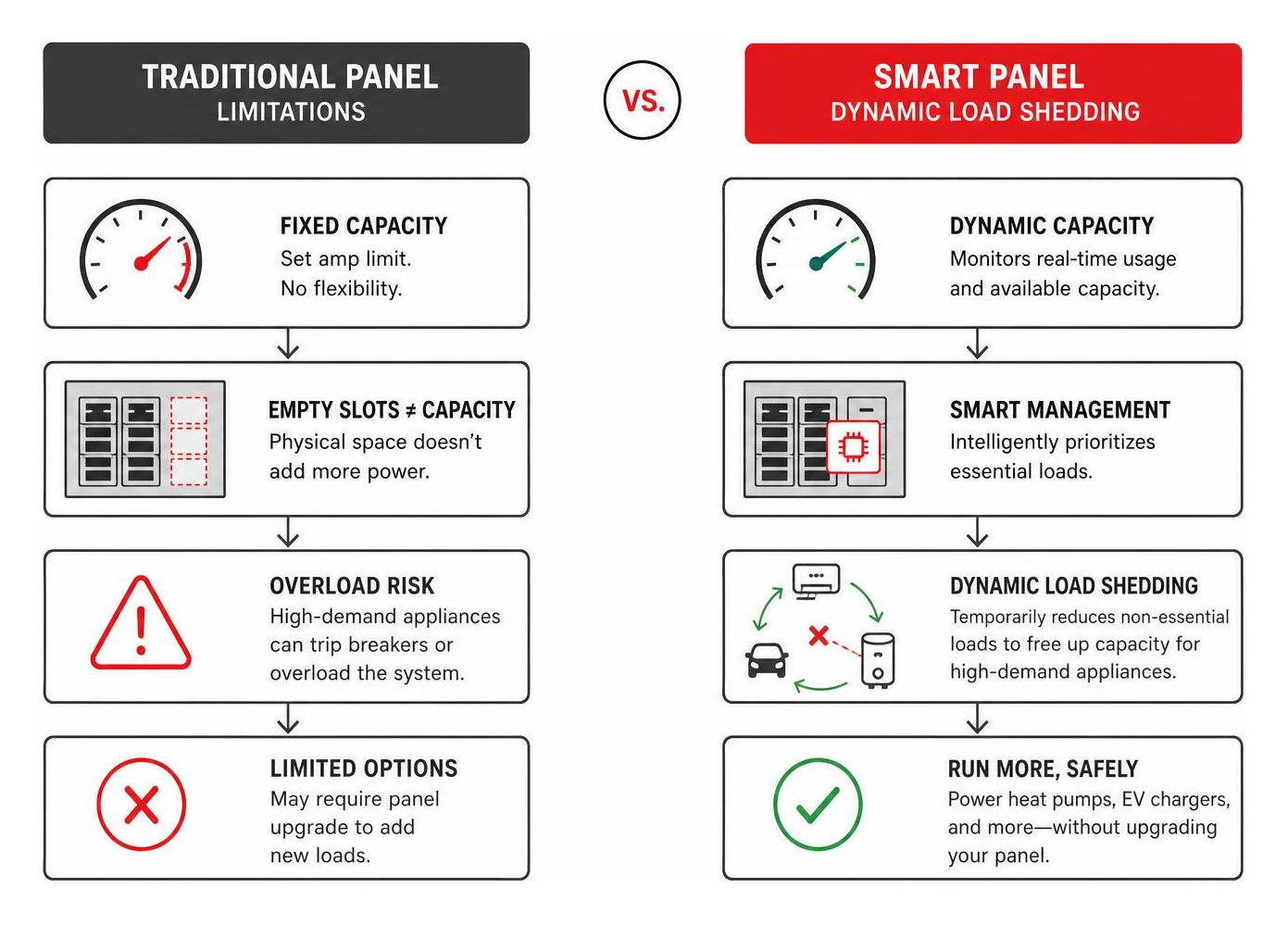
When comparing a Smart Energy Management vs Traditional Panel, smart panels offer the unique ability to dynamically shed non-essential loads. This means you can safely run high-draw appliances like heat pumps and EV chargers on a smaller electrical service without overloading your system.
Frequently Asked Questions About Outdated Electrical Panels
Does an empty slot in my breaker panel mean I can add a new appliance?
No. An empty slot only indicates physical space for a breaker switch. It does not mean your electrical service has the remaining amperage capacity to handle the load of a new appliance. A professional electrician must perform a demand load calculation to determine if your overall system can handle the added electrical demand.
Can I run modern smart home devices on a 1970s panel?
While basic smart devices like smart bulbs and smart plugs will work, a comprehensive smart home ecosystem requires clean, stable power. Older panels are prone to voltage fluctuations and lack whole-home surge protection, which can shorten the lifespan of sensitive electronic control boards and smart home hubs.
How does an outdated panel affect my home insurance policy?
Many insurance companies view outdated panels—especially hazardous brands like Federal Pacific Electric (FPE) and Zinsco—as high-risk safety hazards. If your home has one of these panels, your insurer may refuse to renew your policy, increase your premiums significantly, or require you to replace the panel within 30 days of purchasing a new home.
Conclusion
The mismatch between yesterday's electrical infrastructure and today's high-tech appliances is a challenge that millions of homeowners face. If you live in Denver, Parker, Highlands Ranch, Black Forest, or anywhere along the Colorado Front Range, ensuring your home's electrical system can safely support your modern lifestyle is essential.
At Courtesy Electric Company, we have been helping Colorado homeowners navigate these exact upgrades since 1976. Whether you need a standard upgrade to a robust 200-amp panel, are interested in the cutting-edge load management of a SPAN smart panel, or want to integrate backup power with Franklin battery storage or a Generac/Cummins home standby generator, we are here to help.
Don't wait for a tripped breaker or a damaged appliance to tell you your system is overloaded. Contact us today for a free estimate on your panel upgrade, and let’s make sure your home is ready for the future.
To schedule your service or request an evaluation, visit the Courtesy Electric Company Electrical Services page today.


