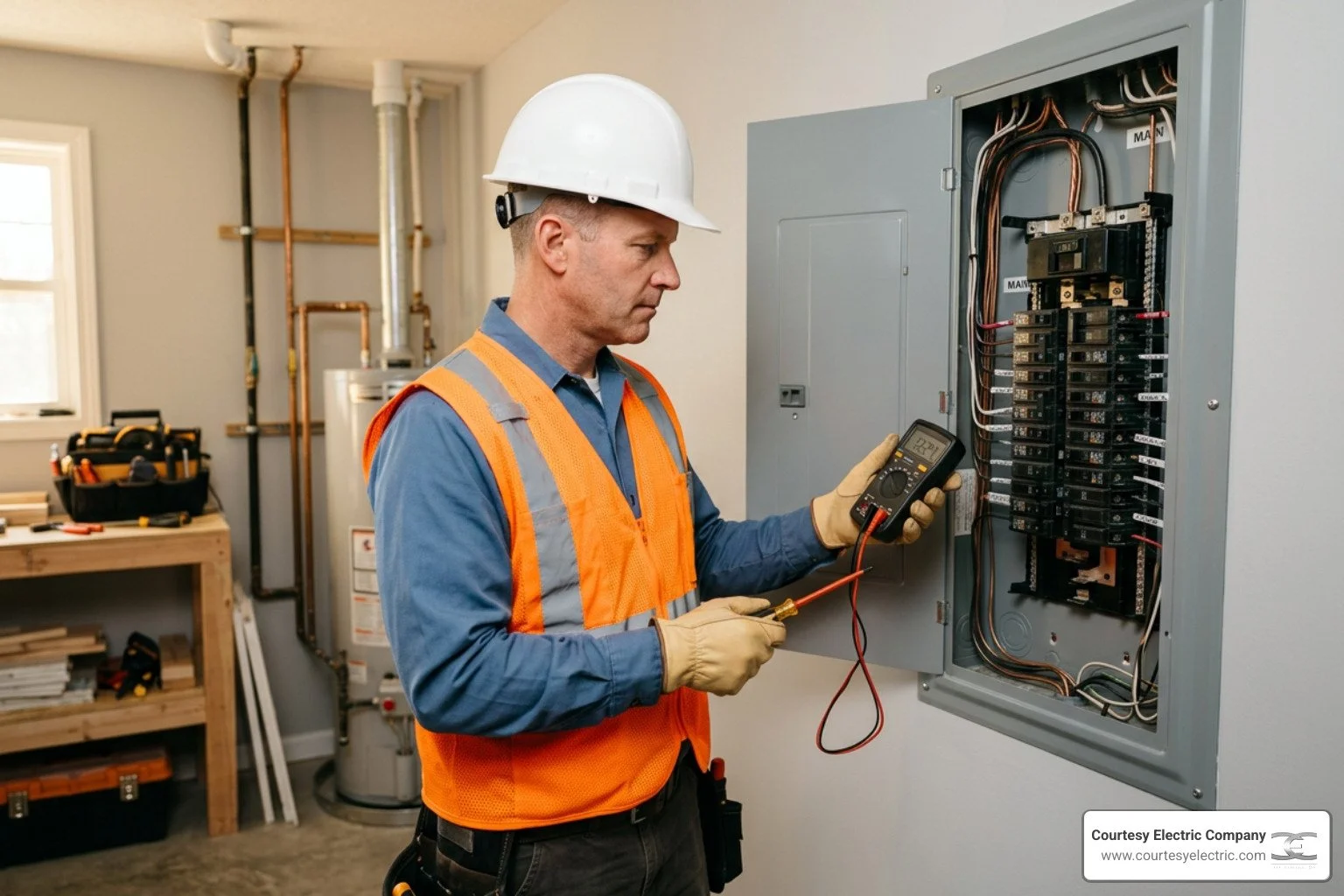
When Do You Actually Need a Licensed Electrician?
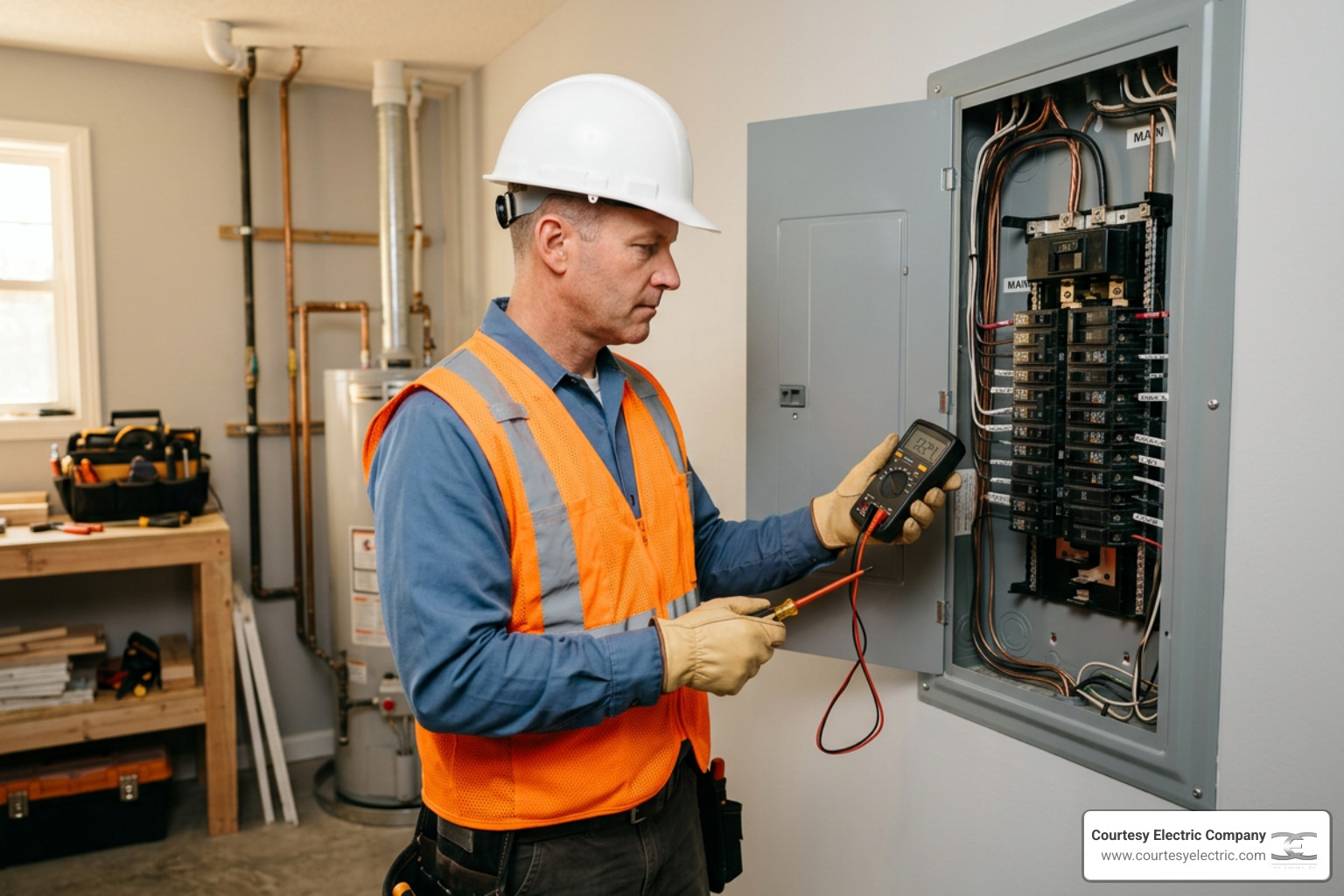
Electrical issues that require a licensed electrician are more common than most homeowners realize — and the stakes for getting it wrong are high. Here is a quick look at the most important ones:
Electrical issues that always require a licensed electrician:
- Electrical panel upgrades or replacements — including dangerous legacy brands like Federal Pacific Stab-Lok or Zinsco
- Frequent or unexplained circuit breaker trips — especially breakers that will not stay reset
- Outdated wiring systems — knob-and-tube, aluminum branch wiring, or ungrounded two-prong outlets
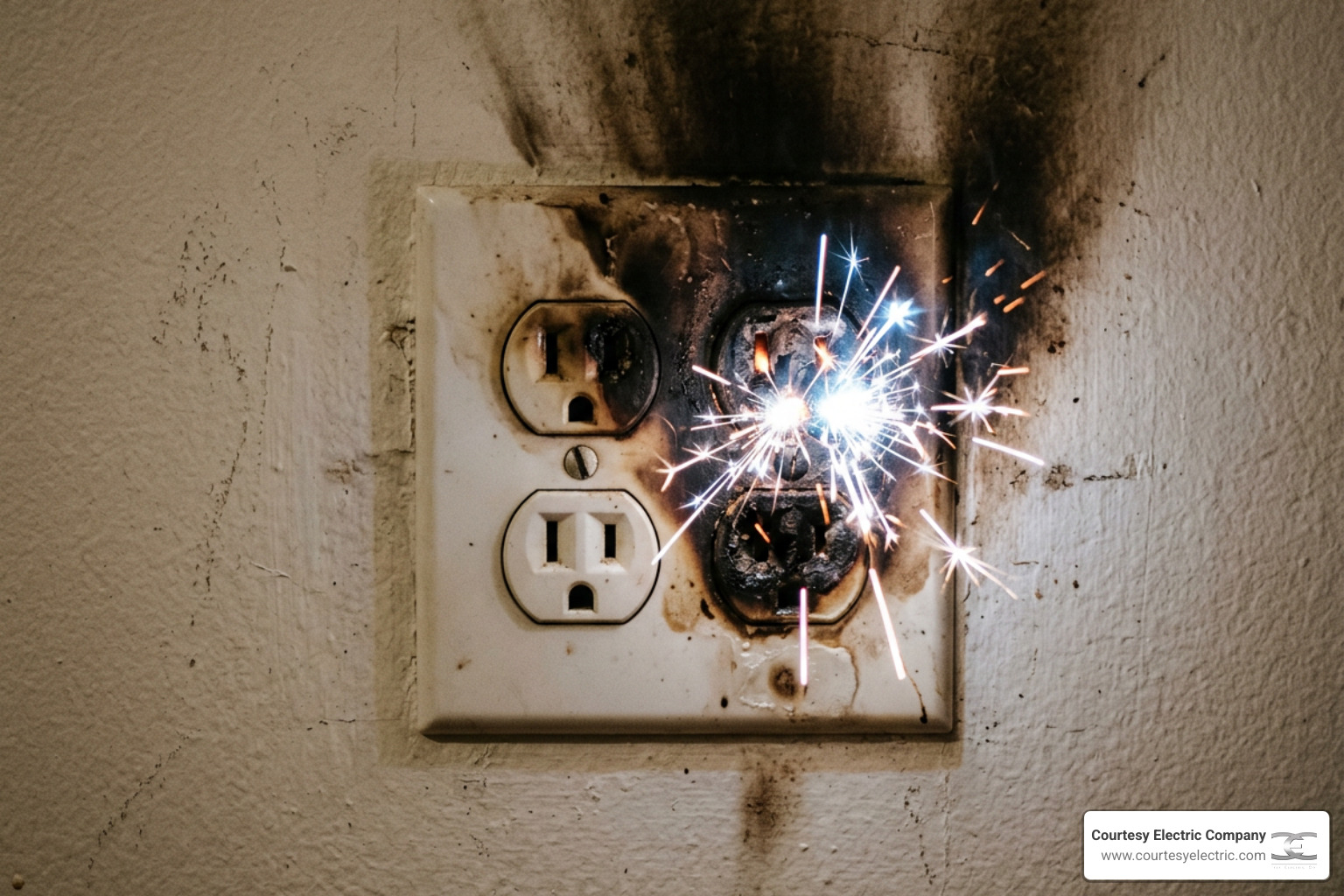
- Sparking, warm, or discolored outlets — signs of active arcing or a loose connection
- Burning smells or a fishy odor near outlets, switches, or the panel
- Level 2 EV charger installation — requires a dedicated circuit and a load calculation
- Any new circuit installation or wiring alteration — permit-required in virtually every jurisdiction
- GFCI and AFCI device installation or failure — especially in kitchens, bathrooms, and bedrooms
- Service entrance or meter upgrades — must be coordinated with your utility provider
- Storm damage or water intrusion into electrical systems — treat as an immediate emergency
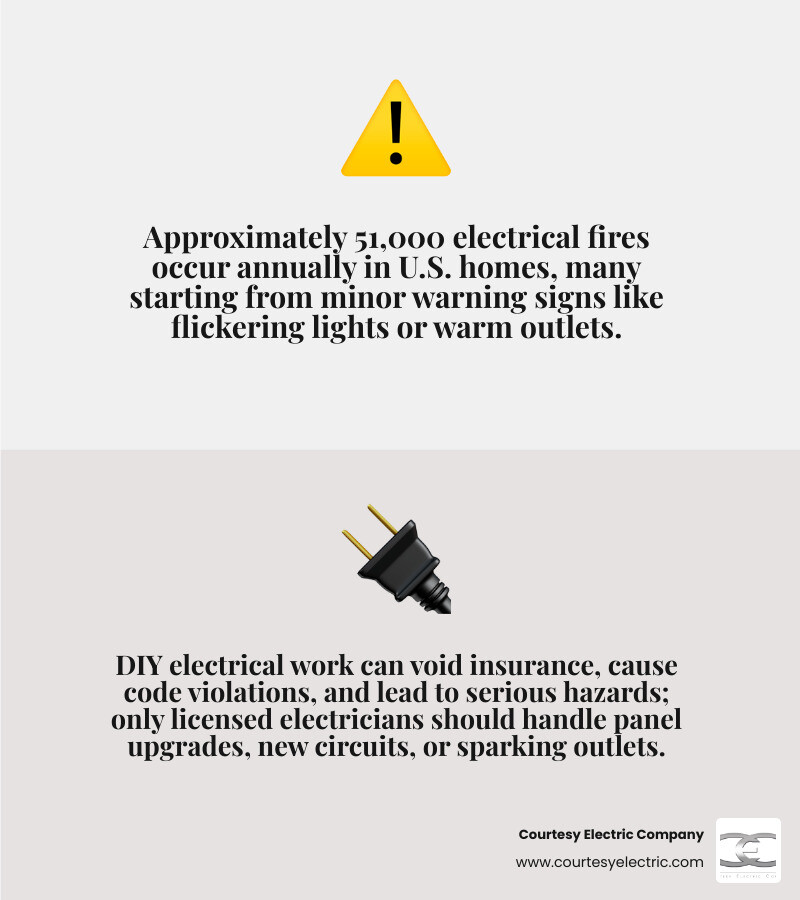
Electrical problems have a way of hiding in plain sight — a light that flickers a little, a breaker that trips once in a while, an outlet that feels slightly warm. It is easy to write these things off as minor quirks. But according to the Electrical Safety Foundation International, roughly 51,000 electrical home structure fires occur every year in the United States. Many of them start with exactly those kinds of "minor" warning signs, long before a homeowner picks up the phone.
For Denver and Colorado Front Range homeowners, the question is not just about safety — it is also about code compliance, insurance coverage, and protecting the value of your home. Attempting electrical work without a license can void your homeowner's insurance, trigger costly code violations, and in strictly regulated jurisdictions, result in serious legal penalties.
I'm David Meyer, Vice President of Courtesy Electric Company, and after decades of hands-on electrical work across Colorado — from residential panel upgrades to modern battery storage and smart panel installations — I have seen the full range of electrical issues that require a licensed electrician, including the ones that homeowners did not realize were dangerous until it was almost too late. In the sections below, I will walk you through exactly what those issues are, when to call immediately, and what to watch for before a small problem becomes an expensive — or dangerous — emergency.
Critical Electrical Issues That Require a Licensed Electrician
When it comes to the complex network of copper and insulation running behind your walls, there is a very thin line between a minor convenience and an immediate safety hazard. Many homeowners enjoy tackling weekend home improvement projects, but electrical systems are entirely unforgiving. Unlike a slowly leaking pipe that leaves a visible puddle, a compromised electrical circuit can remain completely silent until the moment it sparks a fire.
Understanding how to spot electrical problems before they become dangerous is a critical skill for any property owner. Many common household issues are actually symptoms of deep systemic failures that must be diagnosed by a professional. Two of the most frequent catalysts for these problems are short circuits and ground faults:
- Short Circuits: This occurs when a hot wire accidentally makes direct contact with a neutral wire. This creates an immediate path of almost zero resistance, causing a massive surge of electrical current. If your breaker does not trip instantly to starve this fault, the wires will overheat, melt their insulation, and ignite surrounding materials.
- Ground Faults: Similar to a short circuit, a ground fault occurs when a hot wire touches a grounding path, such as the metal junction box, a green grounding wire, or even water. If you feel a mild tingle or shock when touching an appliance, you are experiencing a live ground fault, which can quickly escalate to a lethal electrocution hazard.
When you are weighing the decision of when to call an electrician vs DIY, safety and physics should always dictate your choice. A professional electrician has the specialized diagnostic equipment, such as insulation resistance testers and thermal imaging cameras, to locate hidden arcing — where electricity literally leaps across gaps in loose connections — without tearing down your drywall.
Why Outdated Wiring and Panel Upgrades Are Electrical Issues That Require a Licensed Electrician
If your home was built several decades ago, its electrical system was simply not designed to handle the massive power demands of a modern household in July 2026. Older properties in historic Front Range neighborhoods often rely on obsolete wiring materials and outdated electrical panels that pose extreme risks.
Understanding how outdated wiring increases fire risk is the first step toward securing your home. Let's look at the primary culprits that we routinely discover and replace:
- Knob-and-Tube Wiring: Popular before the 1950s, this system uses porcelain knobs to run single insulated wires through wall cavities. Because it lacks a grounding wire, it leaves your modern electronics completely vulnerable to surges and significantly increases your risk of shock. Furthermore, because these wires rely on open air to dissipate heat, covering them with modern home insulation is a major fire hazard.
- Aluminum Branch Wiring: Widely installed between 1965 and 1973 due to copper shortages, small-gauge aluminum wiring is highly problematic. Aluminum expands and contracts with temperature changes (thermal cycling) at a much higher rate than copper. Over time, this causes connections at outlets and switches to gradually work themselves loose, leading to severe arcing. In fact, studies show these connections are 55 times more likely to reach fire-hazard conditions than copper.
- Federal Pacific Stab-Lok Panels: These legacy panels were installed in millions of homes from the 1950s through the 1980s. Independent testing has proven that Stab-Lok breakers fail to trip during overcurrent events at an alarmingly high rate. Essentially, when a short circuit occurs, these breakers refuse to shut off, sending continuous current through the fault until a fire starts.
- Zinsco and Sylvania-Zinsco Panels: These panels suffer from a severe design defect where the circuit breakers physically fuse to the copper bus bars over time. Once fused, the breaker cannot trip, creating an incredibly dangerous pre-fire condition that can only be resolved by replacing the entire panel.
Reviewing an electrical safety checklist for older homes is essential if you suspect your property still relies on these outdated materials. Swapping out a single bad breaker on a modern, reputable panel is a standard task, but replacing these dangerous legacy systems requires a complete system redesign, utility coordination, and a comprehensive permit process that only a licensed professional can execute.
High-Draw Installations: Why EV Chargers and Smart Panels Are Electrical Issues That Require a Licensed Electrician
As we embrace clean energy and smart home technology, our home electrical systems are working harder than ever. Installing a Level 2 EV charger or a smart electrical panel is not a simple "plug-and-play" task. These modern additions represent heavy, continuous loads that test the thermal tolerances of your entire electrical infrastructure.
A continuous load is defined as any electrical demand that runs at its maximum rated current for three hours or more. Unlike a microwave or toaster, which runs for only a few minutes, an EV charger will pull its full amperage (often 40 to 48 amps) continuously overnight. This sustained draw generates massive amounts of heat. If your panel has a loose connection or a double-tapped breaker, that heat will rapidly degrade the components and cause a thermal event.
Before adding any major load to your home, we must perform a calculated load assessment in accordance with National Electrical Code (NEC) standards. This calculation evaluates your home’s square footage, existing high-draw appliances (like your A/C, electric dryer, and range), and determines if your current service panel can safely support the new demand.
If you are wondering does your electrical panel support an EV charger, the answer often depends on your panel's capacity. Many older homes on the Front Range are limited to 100-amp service. Trying to add a 60-amp EV circuit to a 100-amp panel without a load management system or a panel upgrade will lead to constant breaker trips and severe safety hazards.
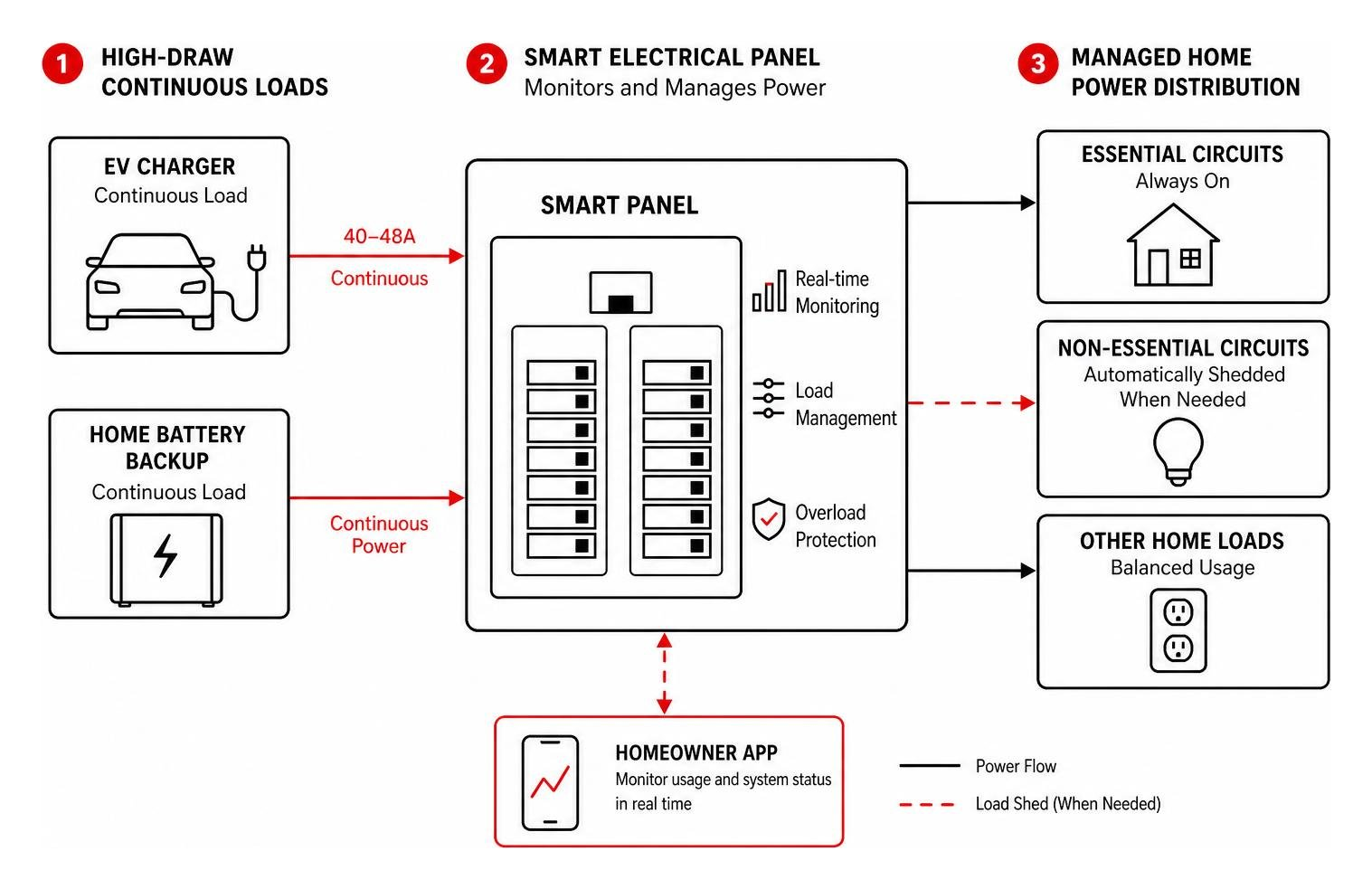
To avoid a complete utility service upgrade, many homeowners are choosing to how to future proof your home electrical system by installing smart panels like SPAN. These advanced smart panels allow you to monitor your energy usage in real-time and automatically manage your continuous loads, shedding power from non-essential circuits when your EV is charging. However, installing these highly sophisticated smart systems requires precision engineering, careful blueprint interpretation, and specialized training that only a licensed master electrician can provide.
The Legal and Financial Risks of Unlicensed Electrical Work
Attempting to bypass the licensing and permitting process to save a few dollars is a gamble that rarely pays off. In Colorado, electrical work is strictly regulated to protect public safety. When an unlicensed handyman or well-meaning neighbor performs electrical modifications, the consequences can follow you for years.
The permitting process is designed to act as a crucial safety net. When we pull a permit for an electrical installation in Denver, Parker, or Highlands Ranch, it triggers a mandatory inspection by a local building official. This inspector provides a second set of professional eyes to verify that every wire gauge, conduit run, and grounding connection complies with the latest National Electrical Code.
If you choose to skip this step, the financial and legal risks are substantial:
- Voided Homeowners Insurance: If an unpermitted electrical modification causes a house fire, your insurance carrier has the legal right to deny your claim entirely. You could be left holding the entire financial burden of rebuilding your home.
- Failed Home Inspections and Resale Delays: When you eventually decide to sell your home, a certified home inspector will quickly spot unpermitted work, double-tapped breakers, or code violations in your panel. You will be forced to hire a licensed electrician to tear out the unpermitted work, pull retroactive permits, and reinstall everything up to current codes before the sale can proceed.
- Liability: If an unlicensed installation shocks a guest, a family member, or a utility worker, you can be held personally and legally liable for damages and injuries.
Understanding how an electrical inspection prevents problems is the best way to understand the value of doing things right the first time. It secures your property value, keeps your insurance policy valid, and provides invaluable peace of mind.
Landlord Responsibilities and Code Compliance
For property owners who manage rental units along the Front Range, the legal obligations are even stricter. Landlords have an absolute, non-negotiable duty to maintain their rental properties in a safe, habitable condition.
Under Colorado law, this means ensuring that the residential electrical systems are fully compliant with local building and safety codes. If a tenant reports a loose outlet where plugs slip out easily, or lights that flicker in the basement, a landlord cannot simply send an unlicensed family member or a general handyman to perform a quick fix.
Loose outlets are a major hazard because the worn-out internal tension springs create a high-resistance connection, leading to localized arcing and heat build-up inside the wall. If a fire occurs due to unlicensed maintenance, the landlord can face extreme personal liability, massive fines, and potential lawsuits for negligence. Always hire a licensed professional to protect your tenants and your investment.
Warning Signs of an Immediate Electrical Emergency
Your home's electrical system will almost always try to communicate with you before a catastrophic failure occurs. Recognizing these subtle warning signs can mean the difference between a simple service call and a devastating house fire.
If you experience any of the following symptoms, do not wait until normal business hours. You should immediately turn off the affected circuit breaker if you can do so safely, and contact us for emergency electrical care:
- A Distinct Fishy or Burning Odor: When plastic wire insulation, outlet covers, or breaker casing begins to overheat and melt, it does not smell like a typical chemical fire. Instead, it emits a highly distinct, pungent, fishy odor. If you smell fish in a room and have no seafood in the kitchen, you are likely smelling an active electrical pre-fire.
- Warm or Hot Panel Covers: Your main electrical panel cover should always remain at ambient room temperature. If the deadfront cover feels warm or hot to the touch, it indicates that the components inside are generating excessive heat due to a loose connection or a chronically overloaded bus bar.
- Sparking Outlets or Scorch Marks: If an outlet spits sparks when you plug in a device, or if you notice brown or black discoloration around the receptacle slots, active arcing is occurring behind the wall plate.
- Electrical Shocks: Receiving even a mild tingle or shock when touching an appliance or switch plate indicates that electricity is escaping its intended path and seeking a ground through you.
Reviewing electrical fire prevention tips for homeowners is an excellent way to keep your household safe. To help you distinguish between standard maintenance issues and immediate emergencies, we have compiled this quick comparison table:
| Urgent Emergency (Call a Licensed Pro Immediately) | Non-Urgent (Schedule Standard Service) |
|---|---|
| Pungent fishy or burning plastic odors near outlets or the panel | A single lightbulb that burns out quickly |
| A main electrical panel cover that is warm or hot to the touch | An outlet where the wall plate is slightly loose |
| Visible sparking, popping sounds, or scorch marks on receptacles | A three-way switch that occasionally requires an extra toggle |
| Receiving mild shocks or tingles from appliances or switches | Upgrading standard outlets to USB-compatible outlets |
| Flickering or dimming lights across the entire house | Replacing an outdated light fixture in an existing outlet |
| A circuit breaker that instantly trips again after being reset once | Labeling a poorly marked breaker panel directory |
Frequently Asked Questions About Professional Electrical Work
To help you navigate your home’s electrical needs, we have answered some of the most common questions we receive from Front Range homeowners.
Can I replace a single circuit breaker myself?
We strongly advise against attempting to replace a circuit breaker yourself. While a single breaker rated for 30 amps or under may seem like a simple, inexpensive part to swap, the physical process of replacing it requires working directly inside the main panel.
Even when you turn off the main breaker, the heavy service entrance cables coming from the utility meter remain fully energized with lethal voltage. One slip of a screwdriver can result in severe arc flash, catastrophic burns, or fatal electrocution.
Reviewing electrical safety tips every homeowner should know is a great reminder that some tasks are simply too risky for DIY. Leave panel work to the professionals who have the proper safety gear and training.
How often should my home's electrical system be inspected?
As a general rule, we recommend having your home's electrical system professionally inspected every 5 years. However, if your home is more than 40 years old, or if you have recently moved into a new property, you should schedule an inspection immediately.
Understanding how often should you have your electrical system inspected helps you stay ahead of hidden wear and tear. Over time, thermal cycling causes screw terminals to loosen, pests can chew through wire insulation in your attic, and older safety devices like GFCIs can degrade and fail to protect you. Regular preventative maintenance is the most cost-effective way to secure your home.
What should I look for to verify an electrician is licensed?
When hiring an electrical contractor, you should never hesitate to ask for proof of licensing and insurance. A reputable professional will gladly provide this information to protect you and your home.
For Colorado homeowners, always verify the following:
- Active State License: Ensure the contractor holds an active Master Electrician or Electrical Contractor license registered with the Colorado Department of Regulatory Agencies (DORA).
- Liability Insurance: Verify they carry at least $1,000,000 in general liability insurance, along with active workers' compensation coverage, to protect you from liability in the event of an accident on your property.
- Pulling Permits: A professional electrician will always pull the required permits in their company name, never asking you to pull a homeowner permit for work they are performing.
Conclusion
Your home’s electrical system is the unseen heartbeat of your daily life. It powers your appliances, charges your vehicles, keeps your family warm during freezing Colorado winters, and keeps you connected to the world. But when components begin to wear out, or when modern demands exceed your system's capacity, those minor issues can quickly escalate into serious safety hazards.
Whether you are dealing with a flickering light in Parker, upgrading an outdated panel in Highlands Ranch, or looking to integrate advanced backup power solutions, we are here to help. At Courtesy Electric Company, we have been proudly serving Denver and the Colorado Front Range since 1976. We specialize in providing high-quality residential and multi-family electrical installations, from complete system rewiring to modern smart-home integrations.
We are proud to partner with industry-leading manufacturers to offer state-of-the-art power solutions, including:
- Generac and Cummins home standby generators to keep your home fully powered during severe storms and utility outages.
- Franklin Battery Storage systems for clean, reliable backup power and smart energy management.
- SPAN Smart Panels to give you complete, app-based control over every circuit in your home.
Don't leave your family's safety and your home's value to chance. If you are experiencing any of the warning signs of an electrical issue, or if you are ready to future-proof your home, reach out to us today. Contact Courtesy Electric Company for a free estimate on your next upgrade, and let our licensed, experienced team deliver the quality, integrity, and dependability you deserve.
To learn more about how we can help protect and power your home, visit our Electrical Service page today.


