When an Electrical Panel Upgrade Is a Safety Issue — And Why It Can't Wait
When an electrical panel upgrade is a safety issue, the consequences of waiting can range from flickering lights and tripped breakers all the way to a house fire. Here are the clearest signs your panel needs immediate attention:
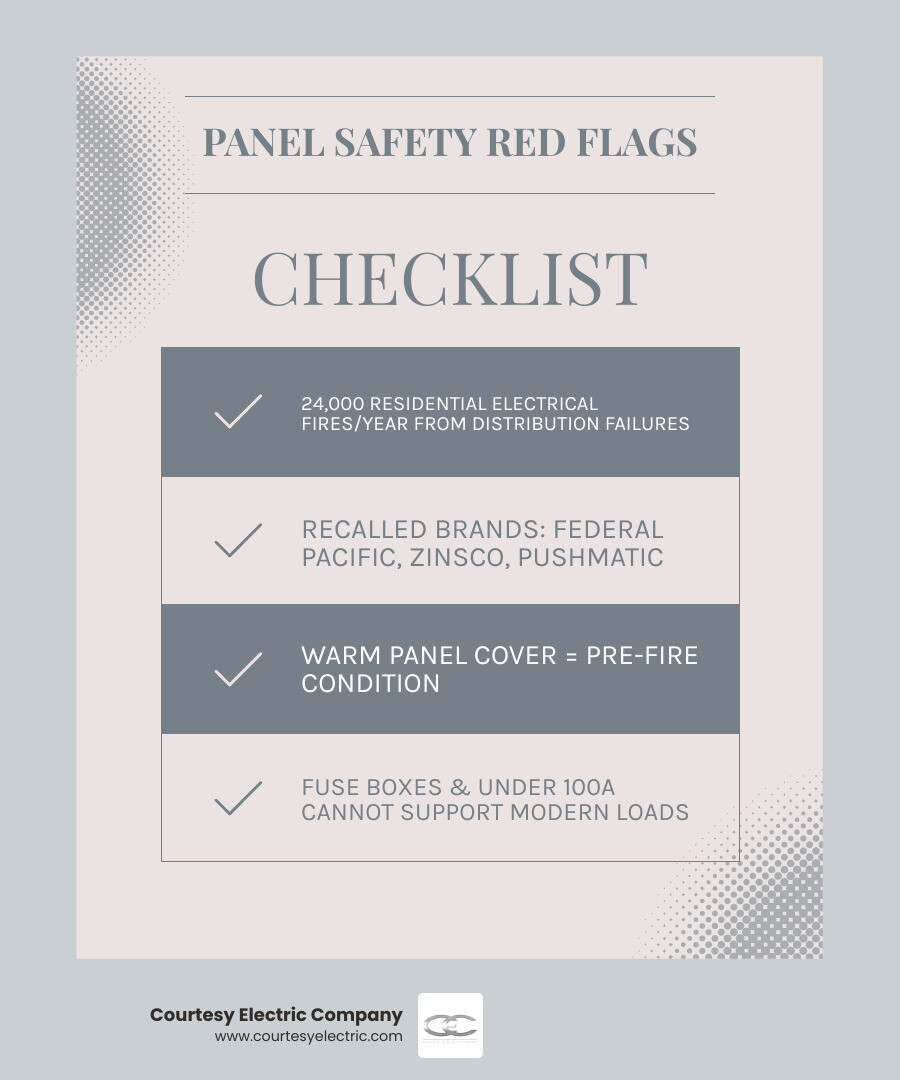
- You have a recalled panel brand — Federal Pacific Stab-Lok, Zinsco, or Pushmatic panels have documented failure rates and must be replaced now
- Your panel cover is warm to the touch — this signals a loose connection or chronic overload, both pre-fire conditions
- You smell burning plastic near the panel — stop reading and call a licensed electrician today
- Breakers trip repeatedly under normal household load — not just when you run too many appliances at once
- Your home has a fuse box or service under 100 amps — it cannot safely support modern electrical demands
- You are adding a Level 2 EV charger or heat pump — high-draw appliances can push an undersized panel past its safe limit
- Your panel lacks AFCI or GFCI protection — missing code-required safeguards leave your home exposed to arc faults and ground faults
The U.S. Fire Administration attributes approximately 24,000 residential electrical fires every year to electrical distribution and lighting equipment failures. Many of those fires start inside panels that showed warning signs long before anything went wrong. Yet most homeowners rarely think about their panel until something fails.
That gap between "I'll deal with it later" and a genuine emergency is exactly where this guide lives.
I'm David Meyer, Vice President of Courtesy Electric, a Colorado electrical contractor with roots going back to 1976 — and I've seen what happens when aging panels are left too long in homes across the Denver Front Range. Understanding when an electrical panel upgrade is a safety issue is one of the most important things a homeowner can know, and I'll walk you through every key indicator in plain language.
Dangerous Legacy Brands That Require Immediate Replacement
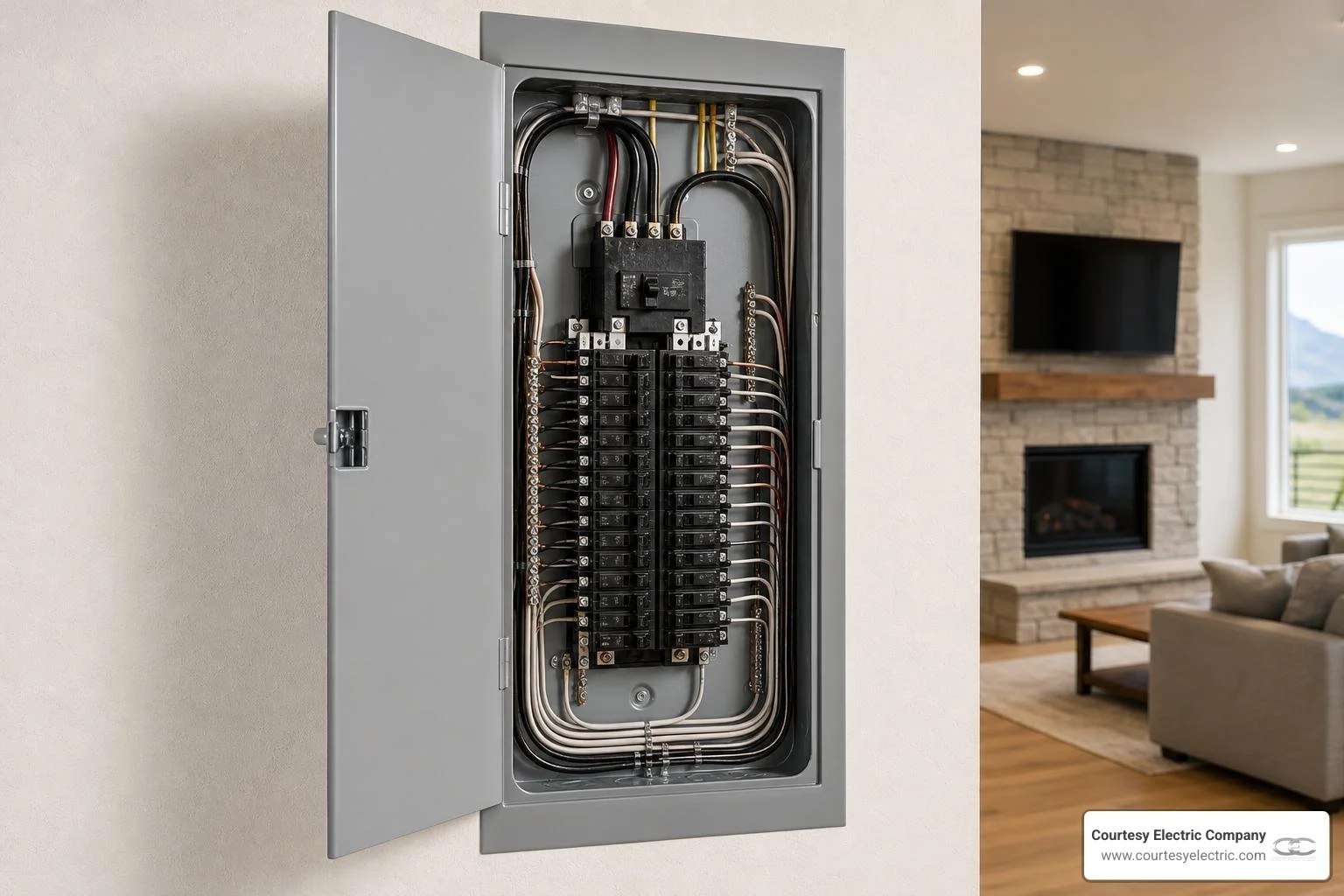
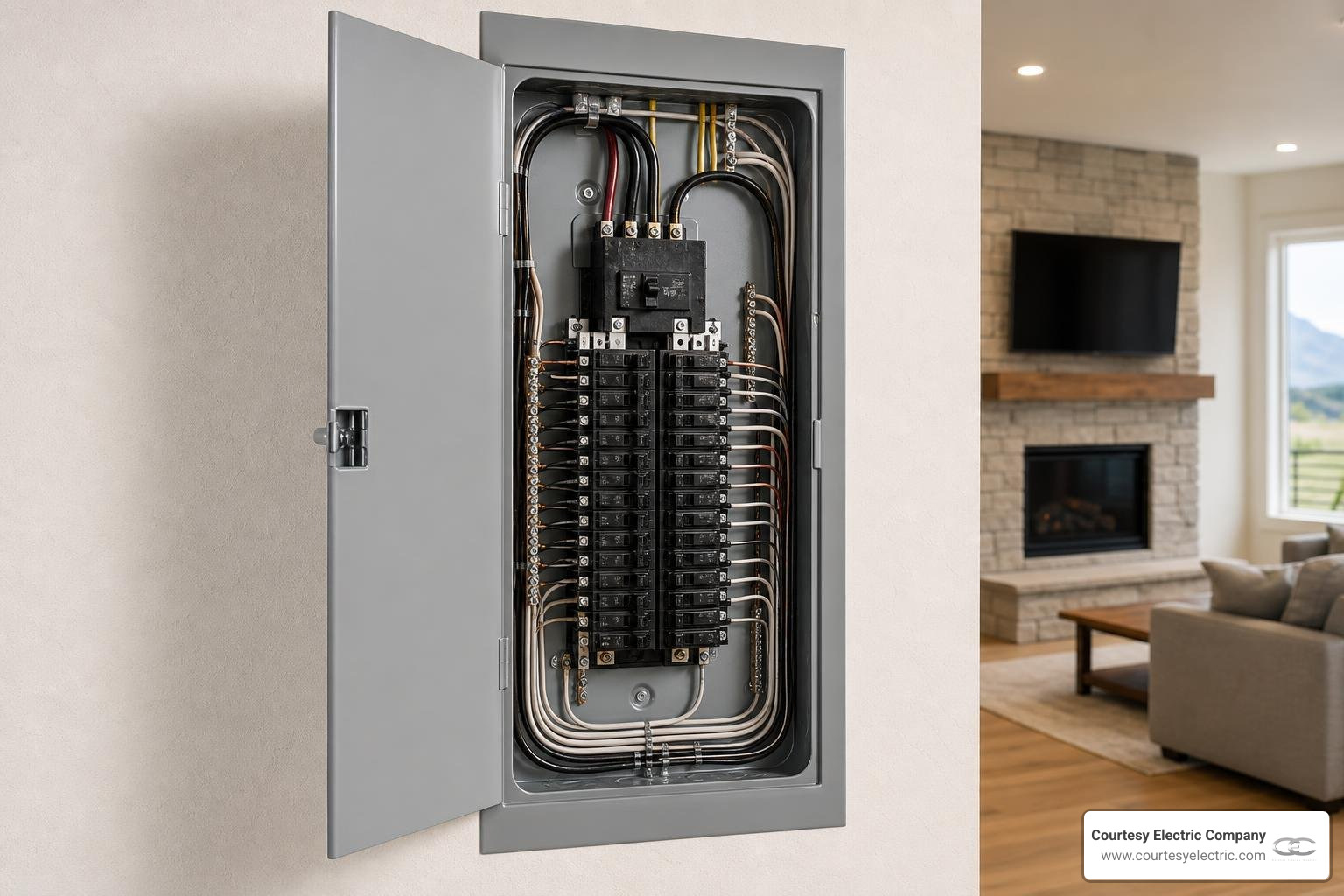
If you live in an older home in Denver, Parker, or Highlands Ranch, one of the most critical steps you can take is to physically open the door of your electrical service panel and read the manufacturer's label. While most modern panels from brands like Square D, Eaton, or Siemens are built to incredibly rigorous modern safety standards, several legacy brands installed between the 1950s and 1980s are fundamentally defective.
These panels are not just outdated; they are active fire hazards. Over the decades, testing has revealed that certain brands feature catastrophic design flaws. Because of these flaws, when a short circuit or overload occurs, the breakers fail to trip. Instead of cutting the power, they allow dangerous amounts of current to continue flowing, which quickly causes components to melt and ignite.
For these specific brands, there is no option to "just replace a breaker." The underlying design of the bus bars and the breakers themselves is flawed. If you identify any of the brands below, you are dealing with a situation where an electrical panel upgrade is an immediate safety issue. To protect your family, you should read about How to Spot Electrical Problems Before They Become Dangerous and schedule a complete panel replacement as soon as possible.
Federal Pacific Electric Stab-Lok Panels
Federal Pacific Electric (FPE) Stab-Lok panels were installed in an estimated 28 million homes across the United States from the late 1950s through the 1980s. While they were incredibly common, independent laboratory testing eventually revealed a terrifying reality: Stab-Lok breakers have an extremely high rate of failing to trip on overload and short-circuit conditions.
In a normal panel, if a circuit draws too much current, the breaker flips to cut off the electricity and prevent the wires from overheating. In an FPE panel, the breaker often remains closed, allowing the current to flow uninterrupted. This sustained overcurrent creates massive thermal stress, which can quickly lead to the ignition of the surrounding structural wood framing. A 2002 class-action lawsuit in New Jersey officially found that FPE had knowingly misrepresented its UL (Underwriters Laboratories) safety listing. Because of this documented fraud and the clear physical risk, carrying an active FPE panel in your home is a major liability that can even cause insurance companies to cancel your homeowner policy.
Zinsco and Pushmatic Systems
Zinsco (often labeled as Zinsco-Sylvania or GTE-Sylvania) and Pushmatic (Bulldog) panels are two other legacy systems that present severe risks.
Zinsco panels feature a design flaw where the circuit breakers fail to make a secure connection to the aluminum bus bars. Over time, this loose connection causes electrical arcing, which generates intense localized heat. This heat actually welds the breaker directly to the bus bar. Once welded shut, the breaker can never trip, turning a simple overloaded outlet into a direct path to a structural fire. It is common for our technicians to pull off a Zinsco cover and find completely melted plastic components and heavily corroded bus bars, even though the homeowner had no idea anything was wrong.
Pushmatic panels, recognizable by their distinct rectangular push-button breakers instead of toggle switches, suffer from a different issue. While they were robustly built in their day, they utilize a complex mechanical design that stiffens and fails as the grease inside dries out. Over time, the buttons become difficult or impossible to push, preventing them from tripping during a fault. Furthermore, because Pushmatic parts have been obsolete for decades, finding replacement components is nearly impossible, and using refurbished parts only compounds the safety hazard.
Physical Warning Signs of an Unsafe Electrical Panel
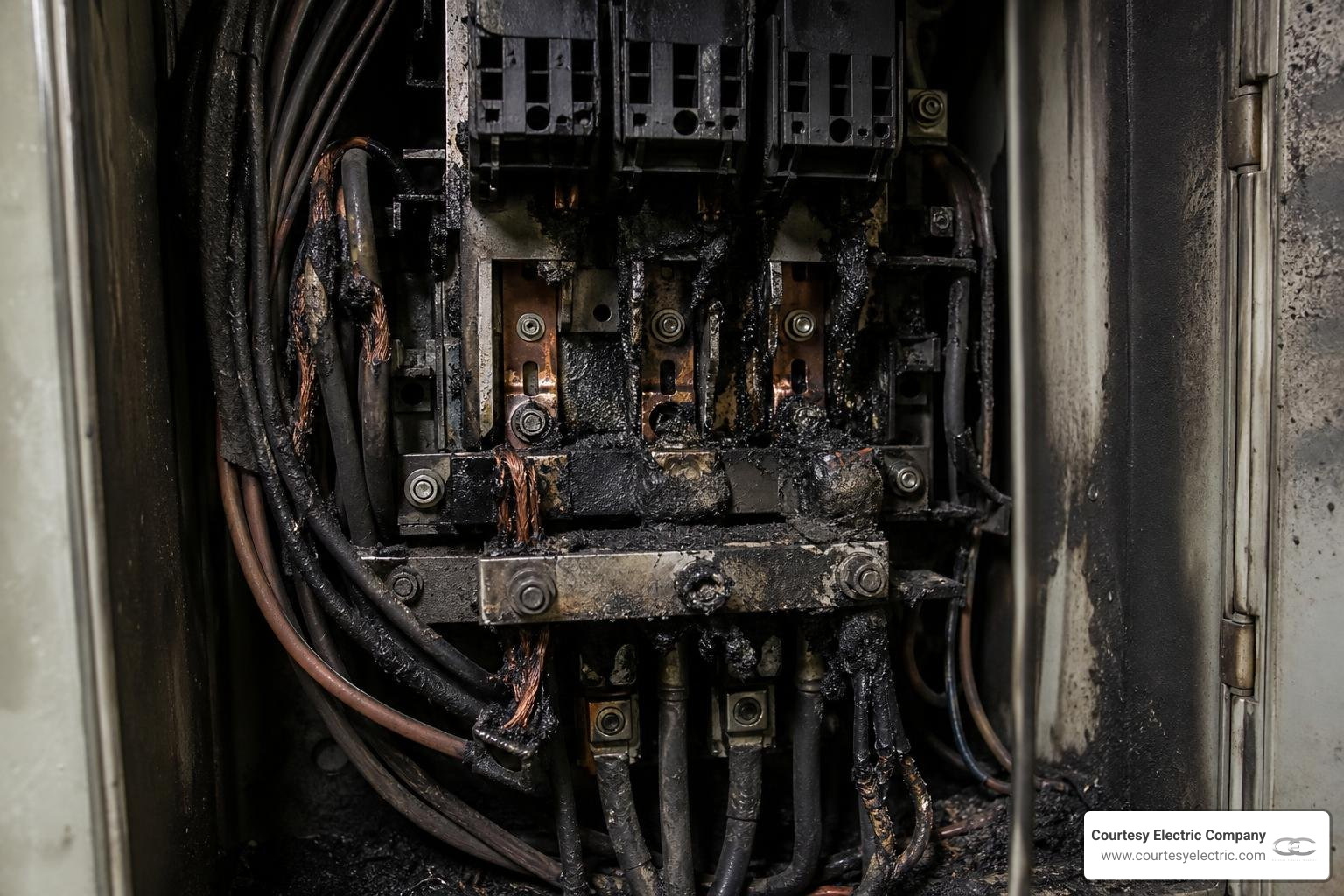
Even if your electrical panel is not one of the recalled legacy brands, it can still deteriorate over time. Like any mechanical or electrical system, a panel has a finite lifespan — typically 25 to 40 years. In the dry, high-altitude climate of the Colorado Front Range, we do not have to worry about the extreme humidity of coastal regions, but our panels still face wear and tear from intense seasonal temperature swings and the heavy electrical loads of modern living.
When a panel begins to fail structurally, it will usually leave physical clues. Recognizing these signs early can mean the difference between a quick proactive upgrade and an emergency call to the fire department.
The most critical physical warning signs include:
- A Warm Cover: The flat metal cover of your panel (the deadfront) should always feel cool or match the ambient temperature of the room. If it feels warm or hot to the touch, you have an active emergency. This warmth is a primary indicator of a loose wire connection or a chronic overload that is generating heat.
- A Burning Smell: If you detect a sweet, acrid, or chemical smell resembling burning plastic or fish near your panel, it means wire insulation or plastic breaker casings are actively melting.
- Flickering or Dimming Lights: If your lights flicker or dim when major appliances (like your refrigerator or air conditioner) kick on, your panel is struggling to distribute power effectively.
- Corrosion or Rust: If you see rust streaks, water stains, or white powdery corrosion on the breakers or the metal enclosure, moisture has penetrated your electrical system. Water and electricity are a deadly combination, and corrosion ruins the physical connection points required for breakers to trip safely.
If you notice any of these signs, your system is trying to tell you something. You can learn more by reading about the Signs Your Home Is Due for an Electrical Inspection to catch these issues before they turn into major hazards.
Recognizing When an Electrical Panel Upgrade Is a Safety Issue in Older Homes
Older homes built between the mid-1960s and the mid-1970s often carry a hidden hazard: aluminum branch wiring. Due to a copper shortage during this era, builders widely used 12 AWG and 10 AWG aluminum wire for general lighting and outlet circuits.
While aluminum is still safely used today for heavy-duty service entrance cables, small-gauge aluminum branch wiring is a completely different story. Aluminum expands and contracts much more than copper when heated by electrical current. This cycle causes the connections at outlets, switches, and inside the electrical panel to loosen over time. According to the Consumer Product Safety Commission (CPSC), homes with aluminum branch wiring are 55 times more likely to reach fire-hazard conditions at connection points than homes wired with copper.
Additionally, many older homes still rely on outdated fuse boxes. While fuses are technically highly reliable at blowing when overloaded, they present a major user-error hazard. Homeowners in the past would frequently get tired of replacing blown 15-amp fuses and would screw in a 30-amp fuse instead. This dangerous practice, known as "overfusing," allows a wire rated for only 15 amps to carry double its safe capacity, heating the wire inside the walls to temperatures that can easily ignite insulation. If you want to understand how these systems fail, take a look at How Outdated Wiring Increases Fire Risk.
Tripping Breakers: Normal Operation vs. System Failure
A tripping circuit breaker is actually a safety device doing exactly what it was designed to do. If you plug in a vacuum cleaner and a hair dryer on the same circuit and the breaker trips, that is normal operation. The breaker detected an overload and cut the power to prevent the wires from overheating.
However, when does frequent tripping signal a system-wide safety problem rather than normal operation?
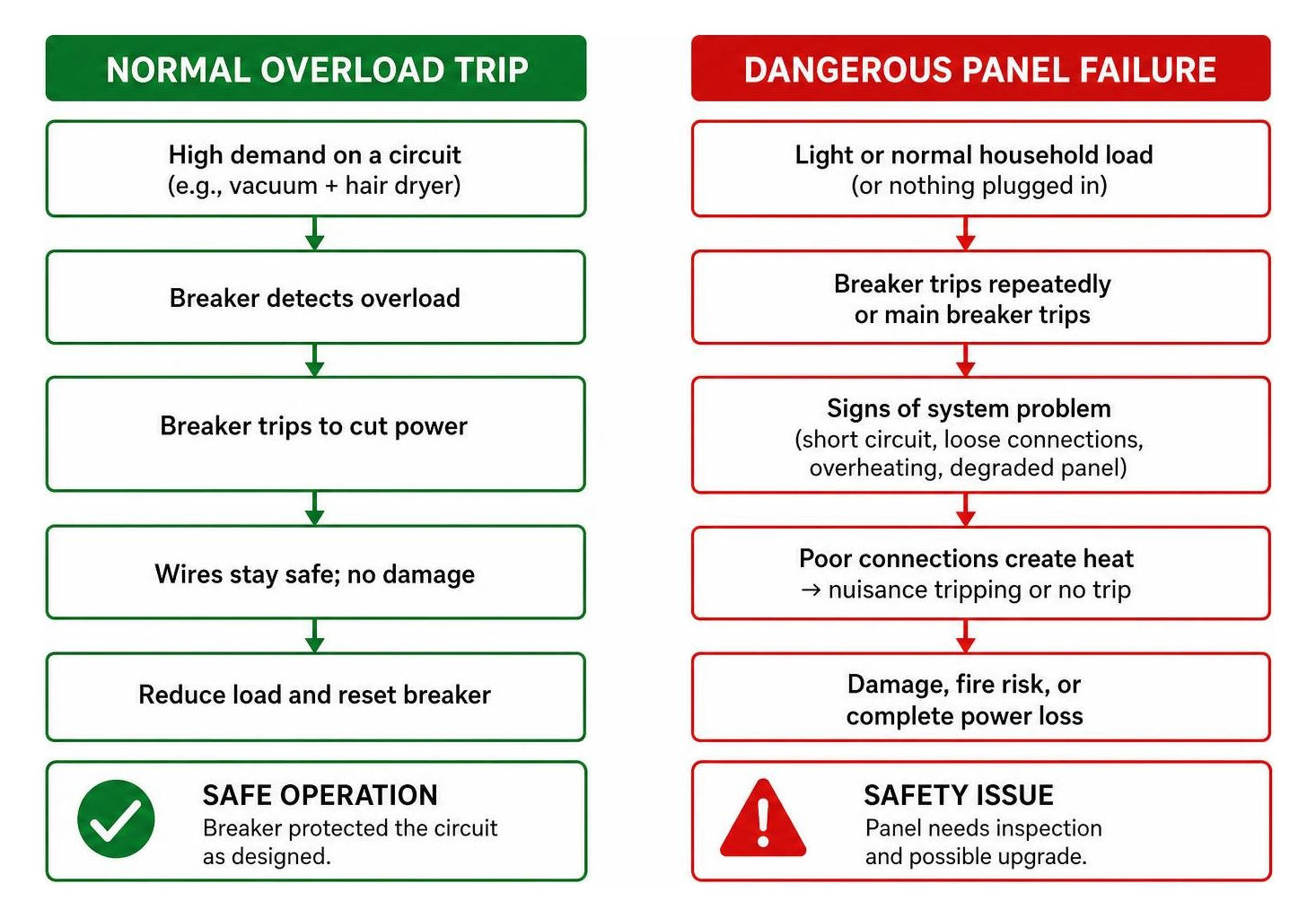
If a breaker trips immediately after you reset it, even when nothing is plugged into that circuit, you likely have a direct short circuit or a ground fault. More dangerously, if breakers across your entire panel trip under very light, normal household loads, or if the main breaker itself trips, your panel is experiencing systemic capacity issues.
When connections inside the panel degrade, they create electrical resistance. Resistance generates heat, and because breakers rely on thermal-magnetic mechanisms to detect overloads, this ambient heat inside the panel can cause "nuisance tripping" or, conversely, lead to thermal runaway where the breaker fails to trip at all. If your panel lacks a main master disconnect switch — common in old "split-bus" panels — emergency responders cannot easily cut power to your home in an emergency, which adds a massive layer of risk.
When an Electrical Panel Upgrade Is a Safety Issue: Capacity and Code Gaps
Many homeowners assume that if their lights are on and their outlets work, their electrical panel must be perfectly safe. However, safety hazards are often hidden in the gap between what your panel was originally designed to handle and the demands you place on it today.
An electrical system can suffer from three distinct types of hazards:
- Capacity Hazards: Your home's service amperage is simply too small for your lifestyle, leading to chronic overloading.
- Component Hazards: The physical parts inside the panel (bus bars, lugs, breakers) have degraded, corroded, or failed.
- Code-Gap Hazards: The panel lacks modern safety mechanisms like Arc-Fault Circuit Interrupters (AFCIs), Ground-Fault Circuit Interrupters (GFCIs), or proper grounding systems.
To put this in perspective, let's look at how service capacities compare:
| Service Amperage | Common Era | Typical Capacity Limit | Modern Safety Suitability |
|---|---|---|---|
| 60 Amps | Pre-1960s | Extremely low; cannot support modern appliances | Severe safety hazard; requires immediate upgrade |
| 100 Amps | 1960s–1980s | Limited; can support basic appliances but struggles with EV chargers or heat pumps | Marginal safety; requires a strict load calculation |
| 200 Amps | Modern Standard | Excellent; supports full home electrification, EV charging, and smart systems | Highly safe and code-compliant for modern homes |
To determine if your panel is a safety risk under the National Electrical Code (NEC), we look to NEC Article 220.82 (for new or renovated homes) and NEC Article 220.83 (for existing homes adding new loads). These sections govern the official "load calculation." A load calculation is a mathematical formula that takes into account the square footage of your home, your fixed appliances, and heating/cooling systems to determine your peak electrical demand.
If you add new loads without performing this calculation, you run the risk of exceeding your panel's physical capacity, which can lead to severe overheating. For a comprehensive look at how to protect your property, read our guide on How to Prevent Electrical Fires in Your Home.
How Modern Appliance Demands Show When an Electrical Panel Upgrade Is a Safety Issue
The way we use energy in Colorado is changing rapidly. As homeowners transition away from fossil fuels, we are seeing a massive push toward home electrification. Adding a Level 2 Electric Vehicle (EV) charger, converting to a whole-home heat pump system, or installing a hot tub all add massive, continuous loads to your electrical system.
Under the NEC, a continuous load is defined as any load that runs for three hours or more continuously. EV chargers are classic examples of continuous loads. Because of this, the code requires these circuits to be sized at 125% of the continuous load. For example, a 48-amp EV charger actually requires a 60-amp dedicated breaker.
If you try to squeeze a 60-amp EV charger circuit onto an older 100-amp panel that is already powering an electric dryer, a range, and an air conditioner, you will easily exceed the safe capacity of your system. This is when an electrical panel upgrade is a safety issue. Forcing an undersized panel to run at or near its maximum capacity for hours at a time causes thermal stress that can degrade wire insulation and melt panel bus bars.
Fortunately, modern technology offers incredible solutions. We specialize in installing SPAN smart electrical panels. Unlike traditional passive panels, a SPAN smart panel allows for dynamic load management. It can automatically pause or throttle high-demand appliances (like your EV charger) if your home approaches its total capacity limit, keeping your system perfectly safe. You can check if your current setup is ready by reading Does Your Electrical Panel Support an EV Charger.
Missing Code Protections: AFCI, GFCI, and Grounding
The National Electrical Code is updated on a strict three-year cycle to incorporate the latest safety research. An older electrical panel acts as a time capsule, missing decades of life-saving code advancements.
When we upgrade an electrical panel, we don't just swap the box; we bring the entire system up to modern code. This includes adding three critical layers of protection:
- Arc-Fault Circuit Interrupters (AFCIs): Standard breakers only trip during massive overloads or short circuits. AFCI breakers use advanced microprocessors to detect tiny, sparking electrical arcs (often caused by a damaged wire behind a wall or a loose outlet connection). These sparking arcs can reach temperatures exceeding 3,500°F — hot enough to instantly ignite wood framing — yet they don't draw enough current to trip an old-fashioned breaker.
- Ground-Fault Circuit Interrupters (GFCIs): GFCI protection is required in wet areas like kitchens, bathrooms, garages, and outdoors. It detects microscopic leaks in electrical current and cuts the power in milliseconds to prevent fatal electrocution.
- Grounding and Bonding (NEC 250.50): Older panels often lack a proper grounding electrode system (such as dual ground rods driven into the earth). Proper grounding provides a safe path for stray electricity — such as from a nearby lightning strike — protecting your appliances and your family from severe shocks.
To see how your older home measures up, take a look at our Electrical Safety Checklist for Older Homes to identify any missing safety layers.
Frequently Asked Questions About Electrical Panel Safety
Can I just replace a bad breaker instead of the whole panel?
If you have a modern, safe panel brand (like Square D, Siemens, or Eaton) and a single breaker has failed mechanically, a licensed electrician can easily replace just that breaker. However, if your panel is a legacy brand like Federal Pacific or Zinsco, replacing individual breakers is a dangerous band-aid. The underlying issue is a defective bus bar design. Furthermore, if your panel is showing widespread physical signs of wear, such as corrosion, rust, or scorched metal, the entire unit must be replaced to eliminate the safety risk.
Is a warm electrical panel cover always an emergency?
Yes, a warm panel cover is a serious warning sign that requires immediate professional evaluation. The metal deadfront cover of your panel should always remain at ambient room temperature. Warmth indicates that electricity is meeting resistance, which produces heat. This is typically caused by loose wire terminations, overloaded circuits, or failing breakers. Over time, this heat will melt wire insulation and can easily spark an electrical fire.
Do I need a permit to upgrade my electrical panel?
Absolutely. In Denver, Parker, Highlands Ranch, and throughout the Colorado Front Range, local building codes strictly require a permit and a post-installation inspection for all electrical panel upgrades. A panel upgrade involves coordinating with your utility company (such as Xcel Energy or CORE Electric Cooperative) to safely disconnect and reconnect the high-voltage service lines. Skipping a permit is not only illegal, but it can also void your homeowner's insurance policy and create massive disclosure issues when you try to sell your home in the future.
Conclusion
Understanding when an electrical panel upgrade is a safety issue is the first step toward securing your home and your peace of mind. Your electrical panel is the absolute heart of your home's infrastructure. When it is outdated, recalled, or overloaded, it ceases to be a silent protector and becomes a severe safety hazard.
At Courtesy Electric Company, we have been serving families across Denver, Parker, Highlands Ranch, Black Forest, and the wider Colorado Front Range since 1976. We specialize in bringing older homes into the modern era safely and efficiently. Whether you need a standard panel upgrade, a cutting-edge SPAN smart panel installation, a Generac or Cummins home standby generator, or a Franklin battery storage system to keep your home running during a winter storm, our team of licensed electricians is here to help.
Don't wait for a flickering light to turn into an emergency. Contact us today to schedule a free estimate on your next electrical installation, and let us help you build a safer, more reliable home. If you are ready to take the next step, visit our Electrical Service page to learn more about how we can protect your property.


