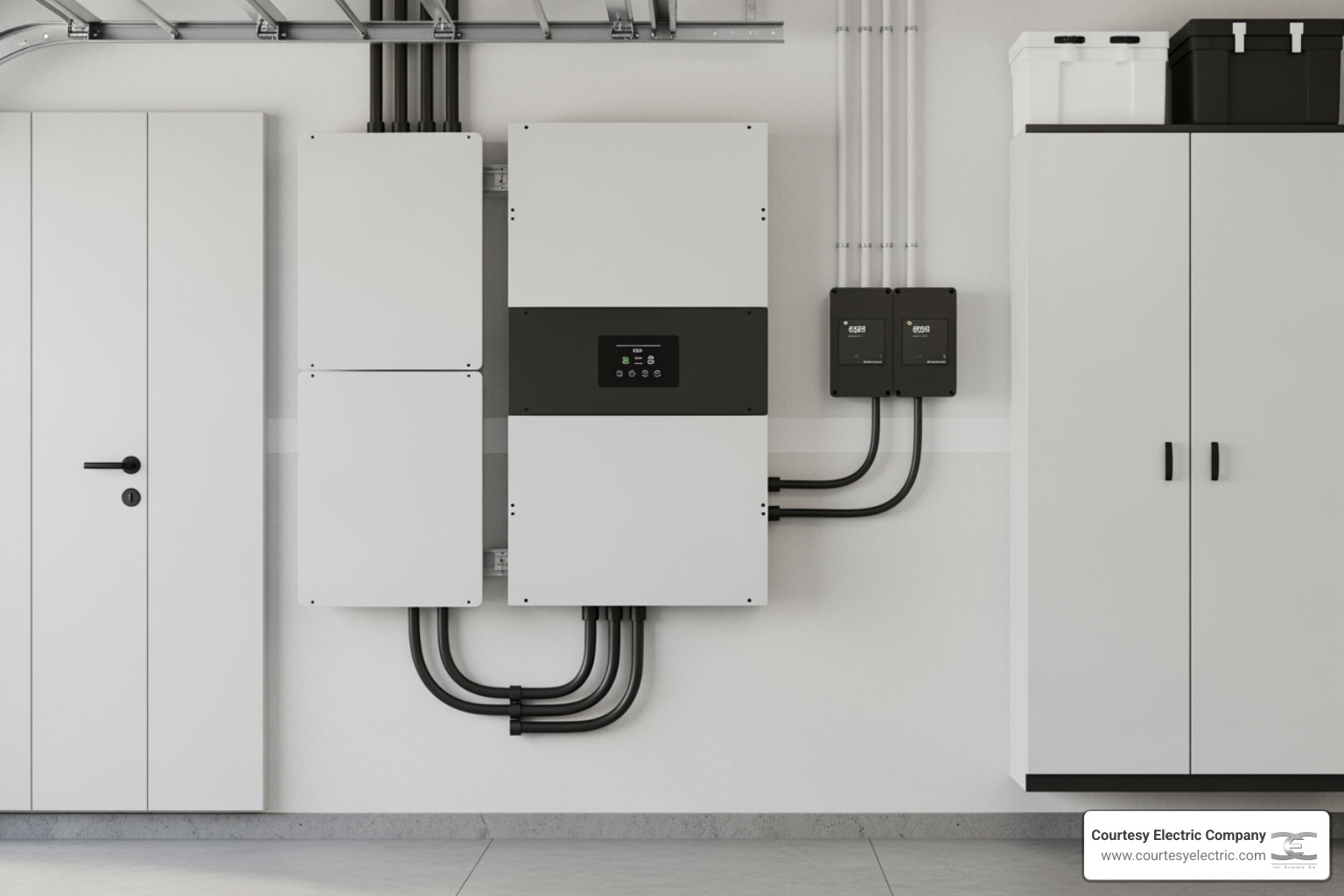
The Secret to Long-Lasting Battery Storage in Granby, Colorado

Understanding Battery Storage Maintenance in Granby, CO
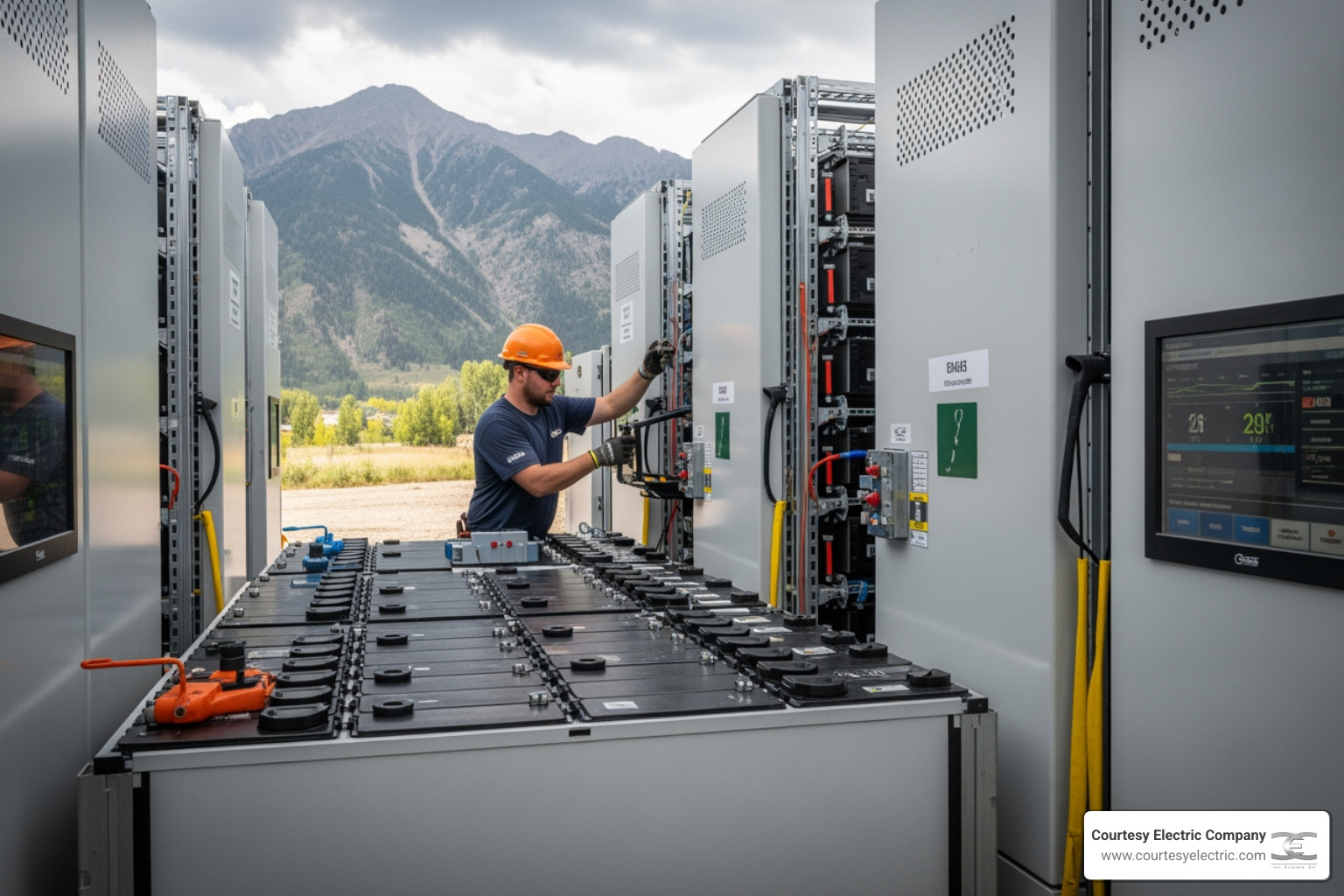
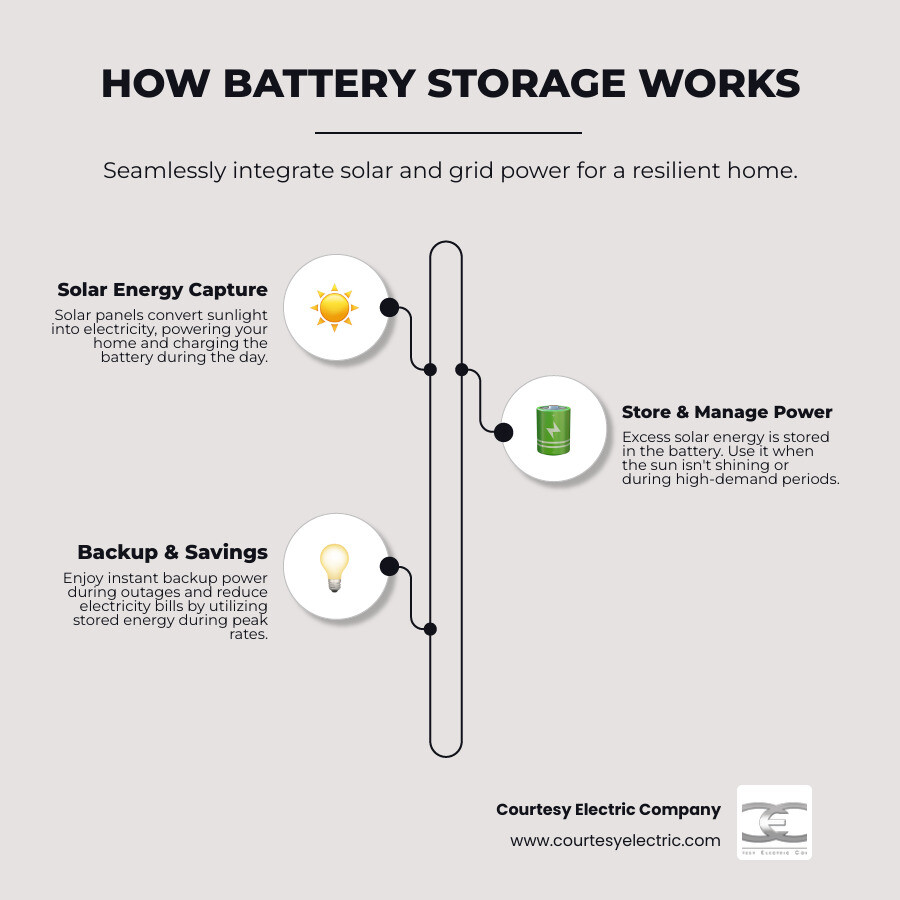
battery storage maintenance in granby, co

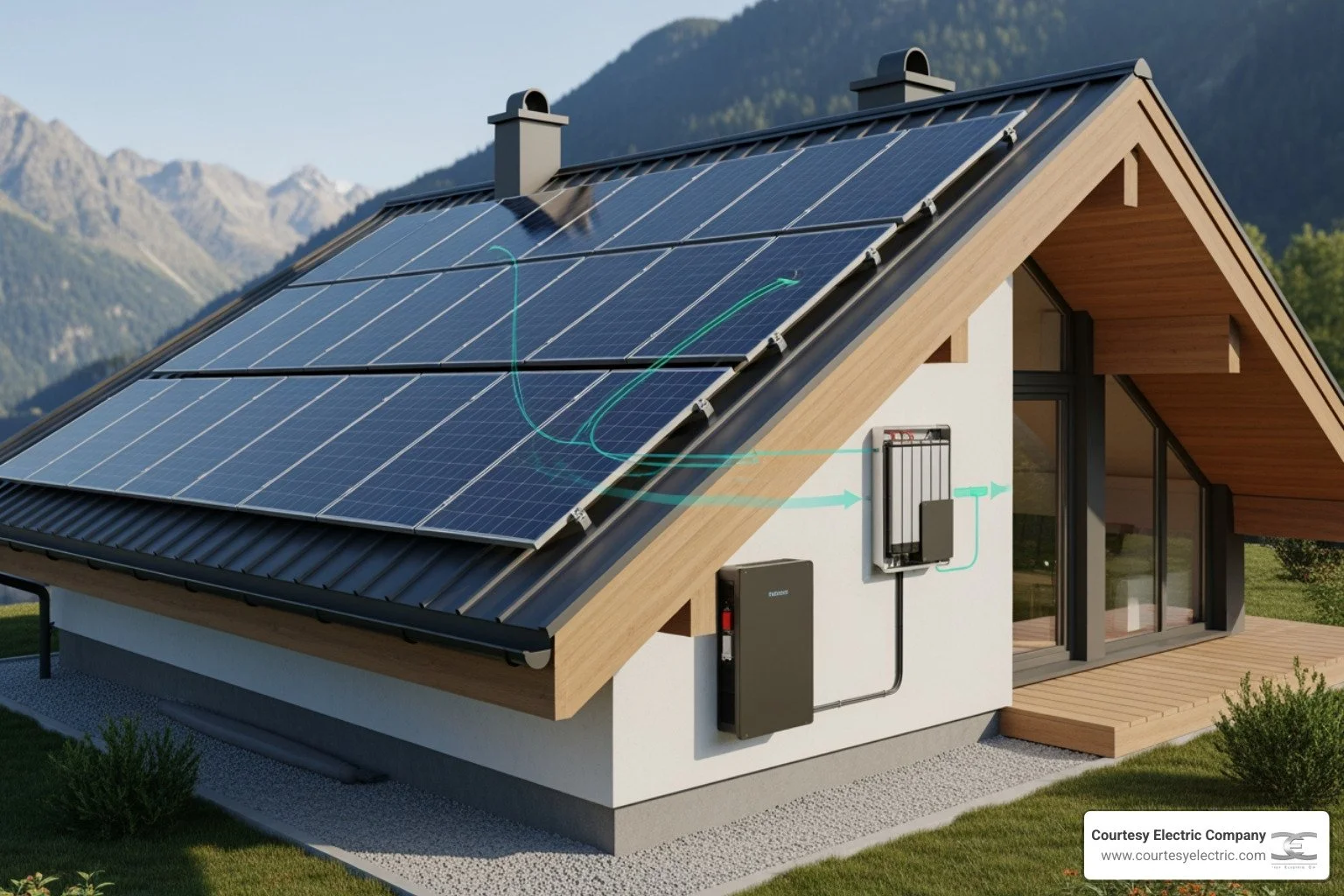
When we talk about battery storage maintenance in granby, co, we are really talking about protecting a sophisticated piece of technology from a very unsophisticated environment. Granby is beautiful, but it is tough on equipment. Most modern homes in our area use lithium-ion technology-the same high-density power source found in your smartphone, but scaled up to run a whole house.

At Courtesy Electric, we specialize in advanced systems like the FranklinWH energy storage solution. These units are designed to be "set it and forget it," but the reality of mountain living means "forgetting it" can lead to shorter lifespans. High altitude is not just about thinner air for humans; it affects how heat dissipates from electrical components. When you combine that with Granby's notorious temperature fluctuations-where it might be 60°F at noon and -10°F by midnight-your battery chemistry is constantly working to stay stable.

Effective residential electrical solutions focus on preventive care. By staying ahead of the curve, we ensure that your system maintains its energy efficiency. Think of it like a high-performance vehicle; you would not drive a truck over Berthoud Pass for three years without changing the oil. Your battery storage system deserves the same level of respect.

Common Battery Types in Grand County

While lithium-ion is the king of modern residential storage due to its depth of discharge and compact size, it is not the only player in town. Depending on when your system was installed, you might encounter several different types:

  • Lithium Iron Phosphate (LFP): The gold standard for modern home backups like the FranklinWH. They are safer, last longer, and handle temperature changes better than older lithium chemistries.
  • Solar-Integrated Storage: These are systems specifically designed to "DC-couple" with your solar panels, allowing for maximum efficiency by keeping the power in its native DC form as long as possible.
  • Lead-Acid and Deep Cycle Variants: Often found in older off-grid cabins or standard backup setups. These require much more hands-on maintenance, including checking electrolyte levels and ensuring they are not "sulfating" from sitting at a low charge.
  • Performance Thresholds: Every battery has a "cliff." Once a battery drops below a certain voltage (often around 12.4V for lead-acid components), permanent damage can occur. Professional maintenance ensures your system never hits that danger zone.

Essential Steps for Maintaining Your Energy Storage System

Maintaining a battery system involves a mix of high-tech monitoring and old-school "eyes-on" inspection. We always tell our neighbors in Granby that while you can do some of this yourself, having a professional touch is vital for safety.

First, visual inspections are your first line of defense. We look for "white fuzz" or corrosion on terminals, which indicates acid leaks or moisture intrusion. We also check cable integrity—mountain rodents love the taste of wire insulation, and a single chewed cable can lead to a ground fault that shuts down your entire backup system.

Second, firmware updates are the silent heroes of maintenance. Manufacturers like FranklinWH or Generac constantly release software updates that optimize how the battery charges and discharges based on new data. If your system isn't connected to the internet or hasn't been updated, you might be leaving 10-15% of your capacity on the table.

Finally, professional electrical service is required to check the "tightness" of the system. Over time, the heating and cooling of wires (thermal cycling) can actually loosen the screws holding your wires in place. A loose wire creates heat, and heat is the enemy of battery life.

Professional Battery Storage Maintenance in Granby, CO

When we come out for a service call, we don't just look at the box and leave. A true professional maintenance plan includes:

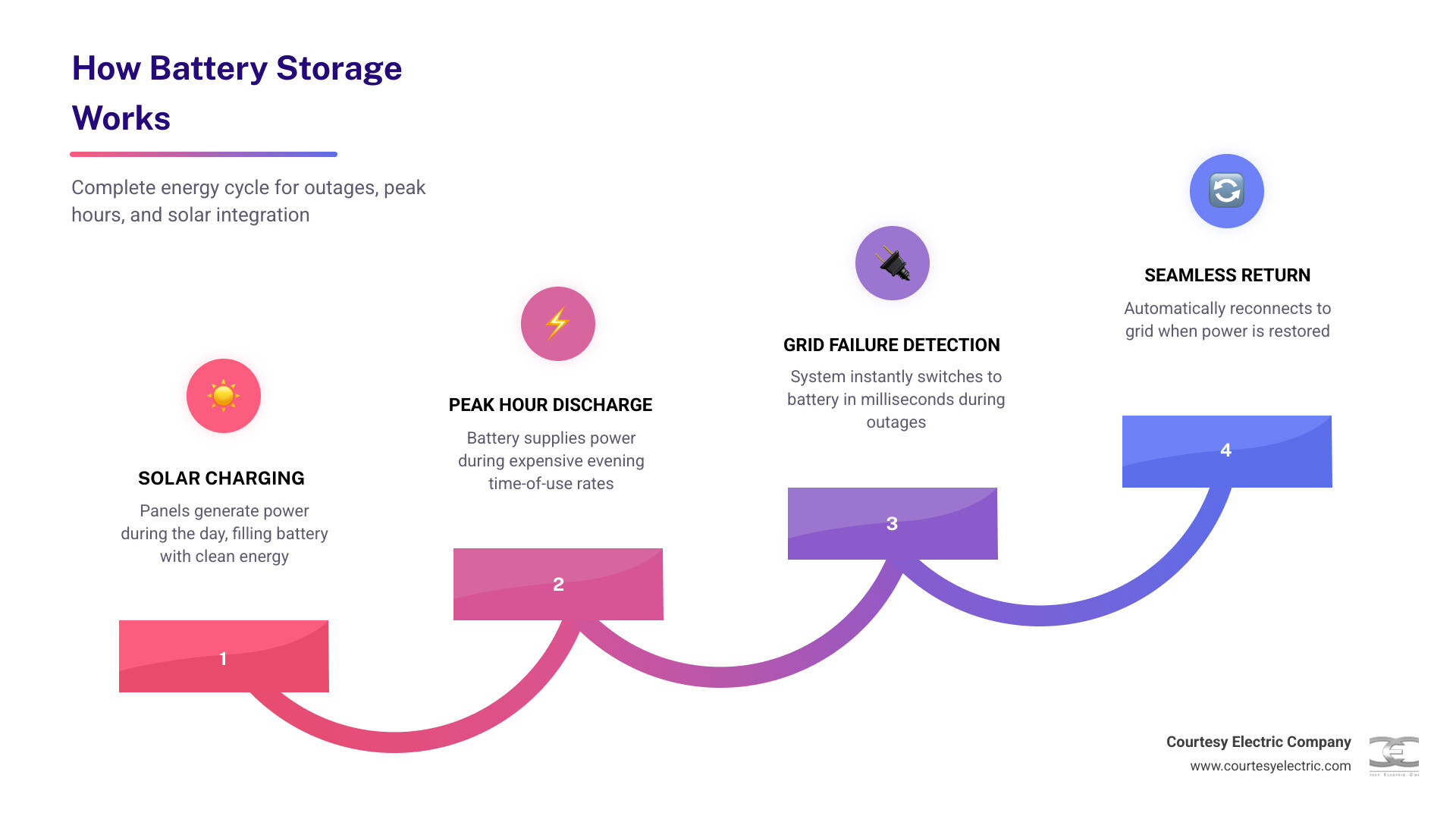
  1. Bi-Annual Outage Tests: We simulate a grid failure to see exactly how the system reacts. Does it pick up the load in milliseconds, or is there a lag? This is the only way to be 100% sure you won't be in the dark during a blizzard.
  2. 6-Point Safety Inspections: We check the mounting brackets (important in shifting mountain soils), venting, internal temperatures, breaker health, and surge protection.
  3. System Cleaning: Dust and debris can clog the cooling fans of your inverter. We clean these out to ensure the system doesn't overheat during heavy use.
  4. Quarterly Remote Monitoring: We can log in every three months to confirm your battery is free of alerts and that the "state of charge" is healthy. This allows us to catch a failing cell before it takes down the whole battery bank.

Granby is a "high-stress" environment for electronics. The high altitude means there are fewer air molecules to carry heat away from your equipment. If your battery is working hard to power your well pump and electric range during an outage, it can get hot. Without proper ventilation and thermal management, that heat degrades the internal chemistry.

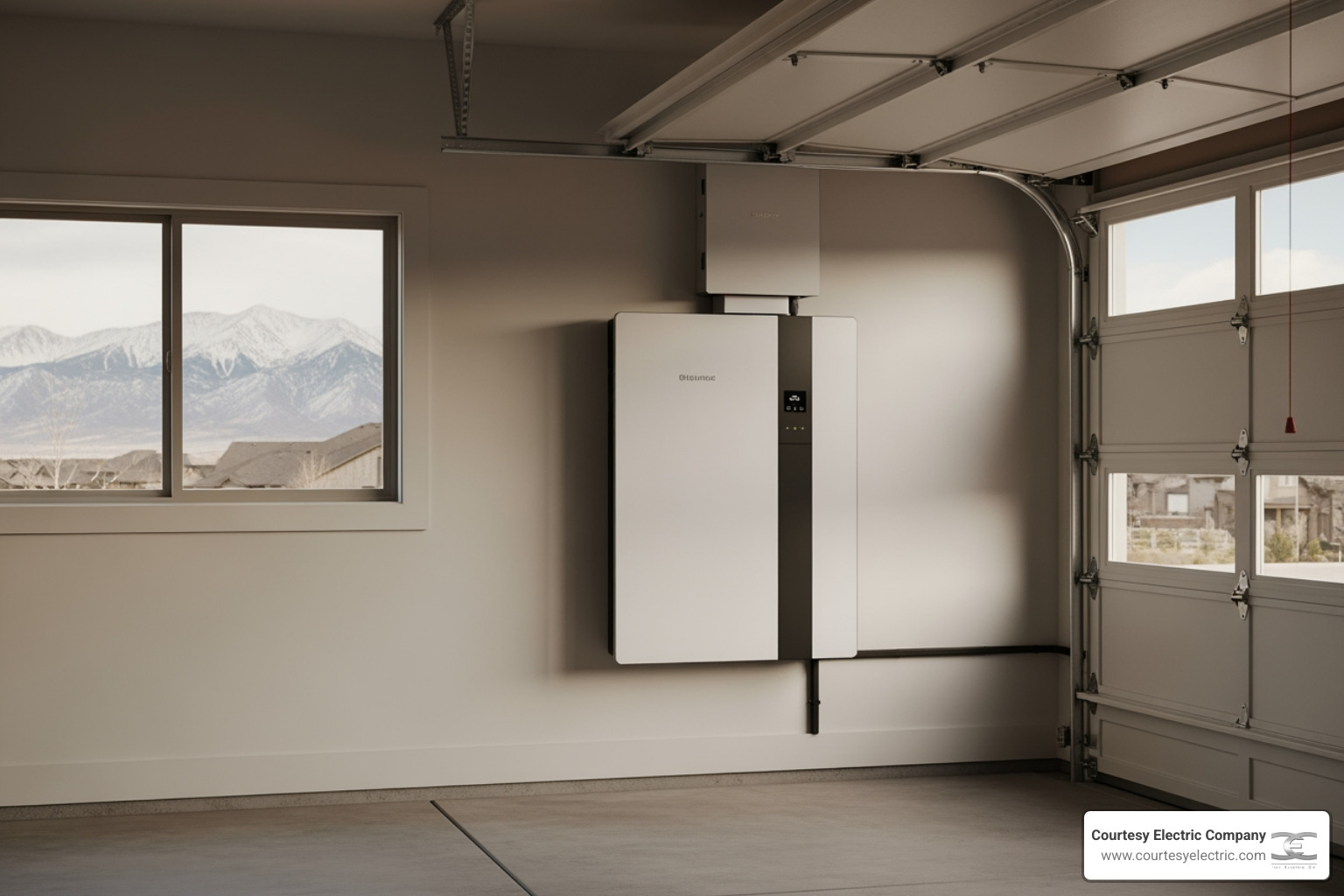
Extreme cold is the other side of the coin. Most batteries see a spike in their self-discharge rates when the mercury drops. If a battery is stored in an unheated garage in Grand County, it could lose a significant portion of its charge just trying to stay warm. We often recommend installing batteries in conditioned spaces or using specialized thermal blankets and heaters designed for the Rockies.

For those looking to understand how to prep their homes for these shifts, we provide resources for homeowners that cover everything from ventilation requirements to seasonal adjustments.

Signs of a Malfunctioning Battery Storage System

You shouldn't wait for a power outage to find out your battery is unhappy. Keep an eye out for these "red flags":

  • Warning Lights: Most modern systems have an LED ring or status light. If it’s anything other than the "all clear" color (usually green or blue), call us immediately.
  • Slow Response Times: If your lights flicker for several seconds before the battery kicks in during a brownout, your inverter or "transfer switch" may be struggling.
  • Physical Swelling: If the casing of the battery looks "pregnant" or bowed out, this is a major safety hazard. This indicates internal gassing and requires immediate professional intervention.
  • Capacity Loss: If you used to be able to run your whole house for 10 hours on a charge, but now you’re only getting 6 hours, your cells are degrading or out of balance.
  • Unexpected Shutdowns: If the system turns itself off even when the grid is active, it’s likely a "ground fault" or an internal safety trip.

The Benefits of Routine Service for Solar and Storage

The math is simple: regular maintenance is a proactive alternative to a full system replacement. By prioritizing battery storage maintenance in granby, co, you are maximizing your system's longevity. A well-maintained lithium system can last 10 to 15 years, but a neglected one might start failing at year seven.

Beyond the technical benefits, there is the safety assurance. Batteries store a massive amount of energy. If connections are loose or cells are damaged, there is a risk of electrical fire. Routine service ensures that all safety protocols—like rapid shutdown and arc-fault protection—are functioning perfectly. This gives you the peace of mind to enjoy your mountain home, knowing your smart home tech and electrical services are in top shape.

How Maintenance Contributes to Solar Longevity

Your battery and your solar panels are a team. If the battery is struggling, it can actually put "back-pressure" on your solar inverter.

  • Inverter Health: The inverter is the "brain" that converts sun into usable power. Maintenance ensures it isn't working overtime to compensate for a weak battery.
  • Animal Damage Mitigation: As mentioned, squirrels and pack rats are a real threat in Grand County. We check the conduit and "critter guards" to make sure no one is nesting behind your panels or inside your battery cabinet.
  • Weather Resilience: We check the seals on all outdoor equipment. Granby's wind-driven snow can find its way into the smallest cracks, leading to moisture buildup and eventual short circuits.

Frequently Asked Questions about Battery Maintenance

How often should battery storage systems be inspected in Granby?

We recommend a "Two-Plus-Four" approach. You should have an in-person professional inspection twice a year (ideally once before the winter snow hits and once in late spring). Supplement this with quarterly remote monitoring where a technician checks your system's data logs for any "silent" errors or firmware needs.

What are the risks of neglecting battery maintenance?

The biggest risk is unexpected failure. There is nothing worse than the grid going down during a January blizzard only to realize your battery didn't charge because of a loose wire. Additionally, neglecting maintenance can void your manufacturer warranty. Most companies require proof of professional service to honor their 10-year performance guarantees. Finally, there is the risk of efficiency drops, where you generate solar power that you can't actually store because your battery is underperforming.

Where can I find qualified technicians in Grand County?

Not every electrician is a battery expert. You need someone who understands "Energy Storage Systems" (ESS) and the specific codes required for mountain installations. Look for certified installers who have specialized diagnostic tools—like thermal cameras and cell balancers. If you need a team that knows Granby's unique climate inside and out, contact a professional at our office.

Conclusion: Powering Your Granby Lifestyle

At Courtesy Electric Company, we believe that energy independence is the ultimate luxury for a mountain homeowner. Whether you are looking for a robust backup for your primary residence or a reliable system for a vacation rental, battery storage maintenance in granby, co is the secret to making that dream a reality.

We’ve spent 50 years perfecting our craft across the Colorado Front Range and the high country. From FranklinWH installations to SPAN smart panels that let you control your backup power from your phone, we provide the expertise needed to steer the challenges of our local environment. Don’t wait for the next big storm to wonder if your batteries are ready. Schedule your electrical service today and let us help you keep the lights on, no matter what the Colorado weather throws your way.
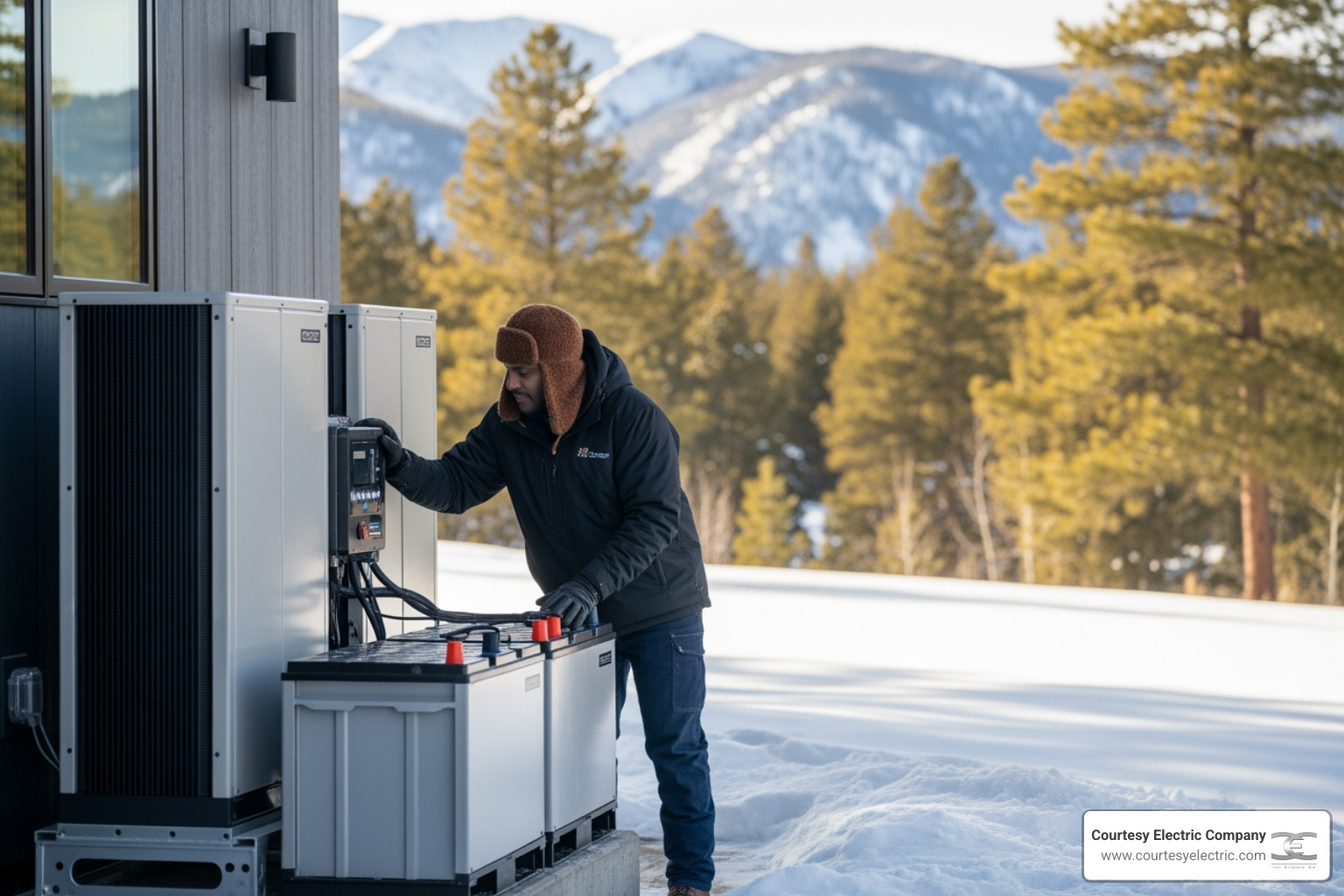
Don't Get Zapped: Maintaining Your Battery Storage in Winter Park, CO

Why Battery Storage Maintenance in Winter Park, CO Matters More Than You Think

battery storage maintenance in winter park, co

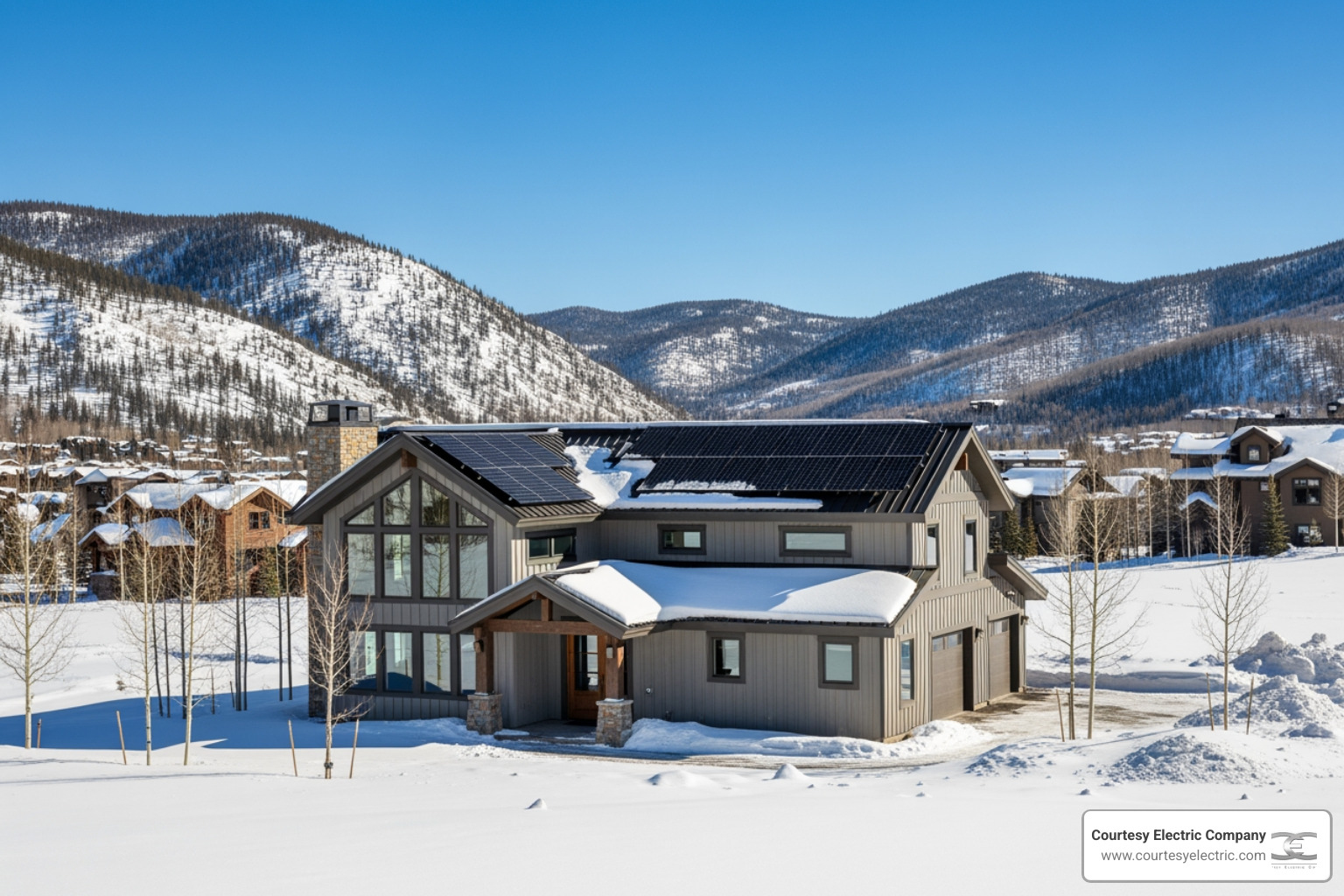
Battery storage maintenance in Winter Park, CO is essential for keeping your home powered through cold snaps and heavy snow. Winter Park's high-altitude climate—with temperatures regularly dropping below freezing—puts unique stress on battery systems that can reduce performance, shorten lifespan, and even cause permanent damage if not properly managed.

Quick Answer: Essential Winter Maintenance Steps

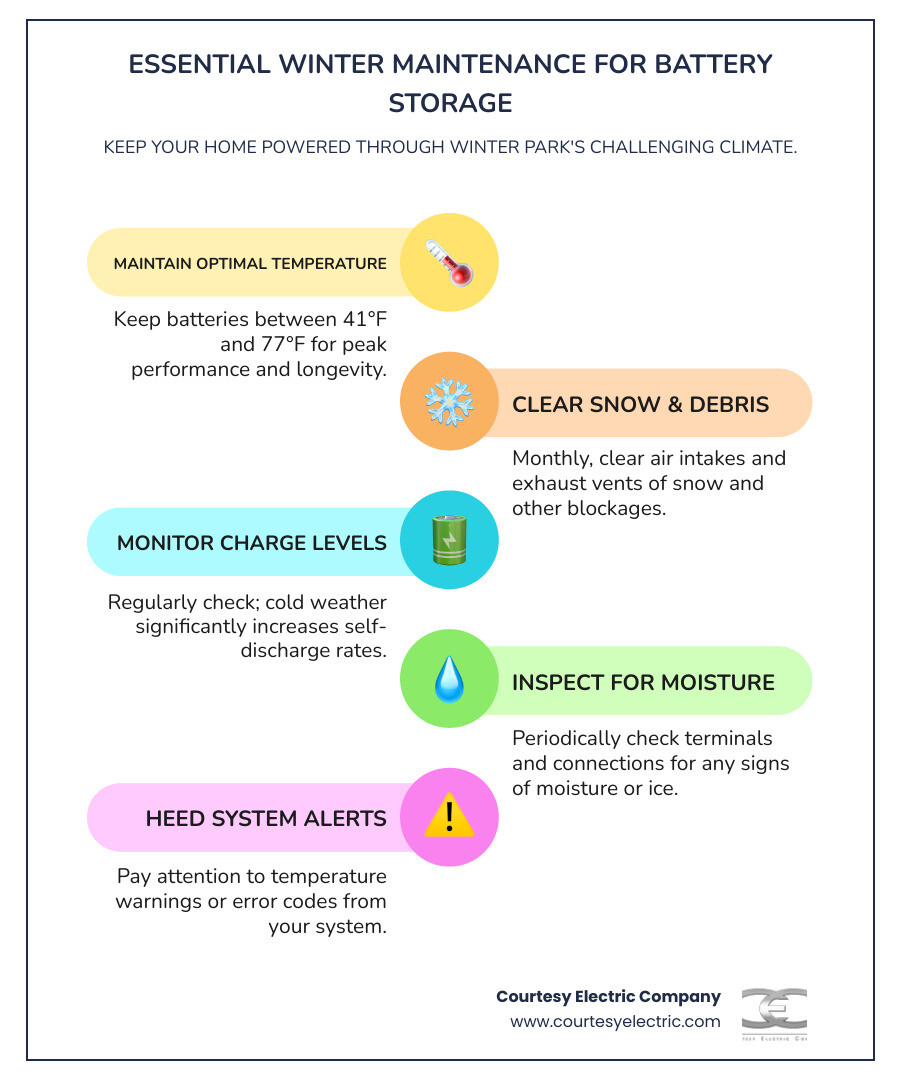
  1. Keep batteries between 41°F and 77°F for optimal performance
  2. Clear snow and debris from air intakes and exhaust vents monthly
  3. Check charge levels regularly—cold weather increases self-discharge rates
  4. Inspect for moisture around terminals and connections
  5. Monitor system alerts for temperature warnings or error codes

Winter Park sits at over 9,000 feet elevation, where temperatures can plunge well below zero and snow accumulates from October through May. According to Colorado climate data, the Front Range receives an average of 56.5 inches of snow annually, and these conditions can significantly impact battery storage performance. Cold temperatures slow the chemical reactions inside batteries, reducing available capacity by 10-30% depending on the severity. Batteries stored below 40°F experience impaired performance, and subzero conditions below -15°F can crack battery casings and cause substantial charge loss.

Learn more about residential electrical services or schedule a maintenance check today.

I'm David Meyer, Vice President of Courtesy Electric, and I've spent years working on cutting-edge battery wall and backup energy systems across Colorado's challenging climate. Through hands-on experience with battery storage maintenance in Winter Park, CO, I've seen how proper winter care protects both your investment and your energy independence.

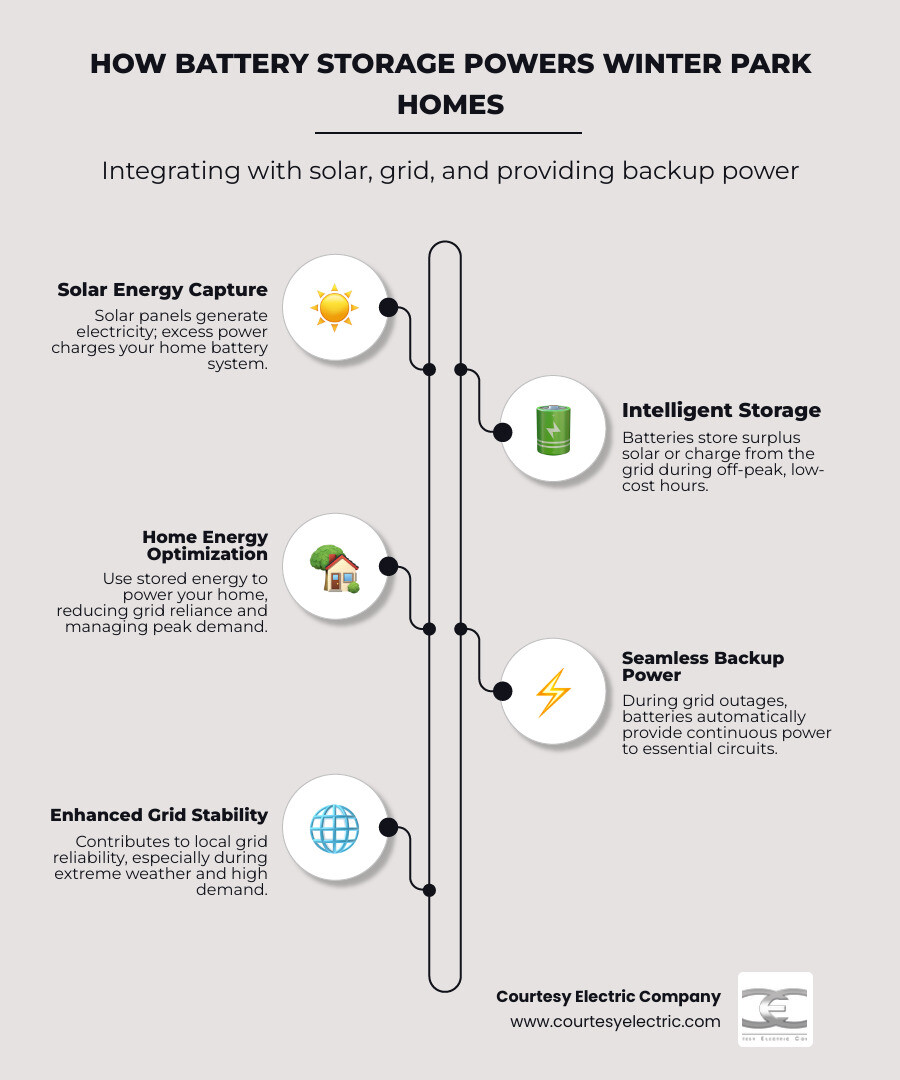
infographic showing optimal battery storage temperature ranges, winter performance impacts, monthly maintenance checklist including snow clearance and charge monitoring, and warning signs like rapid discharge or error codes - battery storage maintenance in winter park, co infographic infographic-line-5-steps-colors

Essential Steps for Battery Storage Maintenance in Winter Park, CO

When the snow starts piling up in Grand County, your battery storage system becomes your home’s lifeline. At Courtesy Electric Company, we’ve found that a proactive approach to residential maintenance is the difference between a cozy home during a blackout and a cold, dark night.

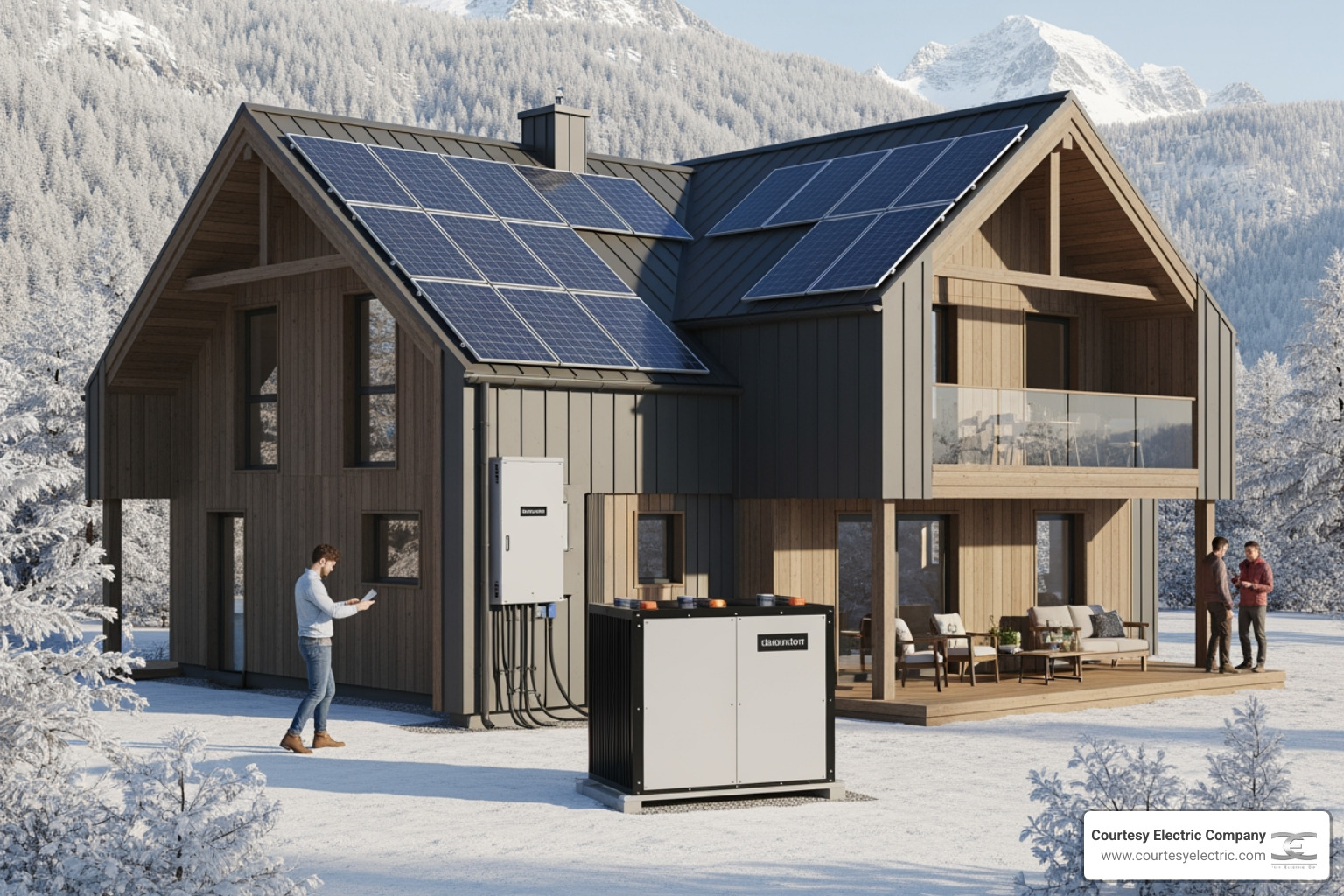
The first step in battery storage maintenance in Winter Park, CO is ensuring your system is physically protected. Whether you have a Tesla Powerwall, a FranklinWH system, or a Generac PWRcell, the hardware needs to be kept dry and unobstructed. Snow is a master at finding its way into tight spaces, and as it melts and refreezes, it can cause expansion damage to electrical conduits and housing.

Winterization Toolkit

Before the first major storm hits, we recommend gathering a few basic tools:

  • Soft-bristled brush: For clearing snow from unit casings without scratching the finish.
  • Voltmeter: To manually check charge levels if your app-based monitoring goes offline.
  • Microfiber cloths: For wiping down terminals and removing moisture.
  • Non-conductive lubricant: To protect exposed metal connections from oxidation.

Terminal cleaning is a critical,, part of winter prep. Cold air is often dry, but the transition from snowy outdoor air to a heated garage can create condensation. This moisture leads to corrosion on battery terminals, which increases electrical resistance and forces your system to work harder, generating unnecessary heat and wasting energy.

If you aren't comfortable opening your system's access panels, it’s best to schedule a professional inspection to ensure all internal connections are torqued to manufacturer specifications.

Best Practices for Battery Storage Maintenance in Winter Park, CO

To get the most out of your investment, you need to respect the chemistry inside the box. Most modern lithium-ion and LiFePO4 (Lithium Iron Phosphate) batteries have a "sweet spot" for operation.

  • Temperature Regulation: The ideal storage range is between 41°F and 77°F. In Winter Park, this almost always means your battery should be installed in a conditioned space like a basement or an insulated garage. If your system is in an unheated area, consider adding specialized battery blankets or ensuring the room is properly insulated.
  • Ventilation Requirements: While we want to keep the batteries warm, we cannot suffocate them. Systems like the Powerwall 3 or FranklinWH require specific airflow to manage internal heat during heavy discharge cycles. Ensure that your insulation efforts don't block the air intake or exhaust ports.
  • Firmware Updates: Manufacturers frequently release software updates designed specifically to improve cold-weather charging algorithms. Ensure your system is connected to your home Wi-Fi so it can download these "winter mode" updates automatically.
  • Charging Habits: In the winter, try to keep your battery's state of charge (SoC) higher than you would in the summer. A battery at 10% charge is much more vulnerable to freezing damage than one at 90%.

If you’re unsure if your current setup meets these environmental standards, you should contact our team for a site evaluation.

Signs You Need Professional Battery Storage Maintenance in Winter Park, CO

How do you know if the Colorado cold is winning the battle against your backup system? Keep an eye out for these red flags:

  1. Rapid Discharge: If your battery is losing 20% of its charge overnight while under a minimal load, the cold may be causing excessive internal resistance.
  2. Error Codes: Most modern systems will display specific codes for "Low Temperature Charging Fault" or "Internal Resistance High." Don't ignore these; they are designed to prevent permanent cell damage.
  3. Physical Casing Damage: Check for cracks in the ABS plastic or metal housing. Subzero temperatures (below -15°F) can cause materials to become brittle and fail under the weight of snow or internal pressure.
  4. Ice Buildup: If you see ice forming directly on the battery unit or its cooling fins, your thermal management system may have failed.
  5. Moisture and Corrosion: Use a flashlight to look for "white fuzz" or greenish buildup around wires. This is a sign that snow melt is getting where it shouldn't.

For homeowners in the Front Range, these issues can often be covered under warranty, provided you have maintained the system according to the manufacturer’s guidelines.

Understanding the Impact of Colorado’s Cold on Energy Storage

To master battery storage maintenance in Winter Park, CO, you have to understand the science of the "Cold Soak." When a battery sits in a freezing environment, the liquid or gel electrolyte inside becomes more viscous (thicker). This slows down the movement of ions between the anode and the cathode.

Battery Performance: 77°F vs. 0°F

Feature Performance at 77°F (Ideal) Performance at 0°F (Winter Park Peak)
Available Capacity 100% 60% - 70%
Charging Speed High / Normal Very Low / Restricted
Internal Resistance Minimal High
Self-Discharge Rate 2-3% per month 5-10% per month (if BMS is active)
Risk of Damage None High (if charging while frozen)

One of the most dangerous phenomena in cold-weather battery care is "lithium plating." If you attempt to fast-charge a lithium battery when its internal temperature is below 24°F, the lithium ions can't move into the anode fast enough. Instead, they coat the surface of the anode in a metallic form. This can lead to internal short circuits, permanent capacity loss, and in extreme cases, a fire hazard.

This is why high-quality systems like Battle Born or Tesla have built-in protections that won't allow a charge if the internal temperature is too low. However, relying on these protections daily can shorten the overall lifespan of the system. Proactive battery storage maintenance in Winter Park, CO involves keeping the system warm enough that these emergency shut-offs never have to engage.

How to Prepare Your Battery System for Heavy Snowfall

Winter Park is famous for its "Champagne Powder," but that light, fluffy snow can be a heavy burden for your electrical infrastructure. When a big storm is forecasted for the Front Range or the mountains, your preparation should start outside.

Air Intake and Exhaust Clearance Most home battery systems use active cooling (fans). If snow drifts block the intake or exhaust vents, the system can overheat—yes, even in the winter! When the battery works hard to power your heaters during an outage, it generates internal heat. If that heat can't escape because of a snowbank, the system will throttle its power output or shut down entirely.

Structural Protection If your battery is mounted on an exterior wall, ensure it has a "snow roof" or protective overhang. The weight of several feet of snow sliding off a roof can easily shear a battery unit right off the wall or crush the electrical-service conduits.

Backup Power Readiness Check your solar panels. While we focus on the battery, in Winter Park, an average of 56.5 inches of snow falls annually. If your panels are covered in snow, your battery won't recharge. Use a soft roof rake to gently clear your panels so they can provide the "trickle charge" your battery needs to stay healthy through the winter.

Frequently Asked Questions

What is the ideal temperature for home battery storage?

The "Goldilocks" zone for most residential batteries is between 41°F and 77°F. While many units are rated to operate down to -4°F, they do so at significantly reduced efficiency. If the internal temperature drops below 40°F, you will notice "de-rating," where the system limits how much power you can pull from it to protect the cells. This is why we almost always recommend indoor or insulated garage installations for our Winter Park clients.

Can snow accumulation damage my battery system?

Yes, in three ways: weight, moisture, and airflow. Heavy snow can physically damage the mounting brackets or conduits. As snow melts, it can introduce moisture into the electronics, leading to short circuits. Finally, snow drifts can block essential cooling vents, causing the system to trigger a high-temperature shutdown even in sub-zero weather. Regular clearing is a must.

How does subzero weather affect battery lifespan?

Extreme cold is a silent killer for batteries. Beyond the immediate loss of capacity, subzero temperatures (specifically below -15°F) can cause the ABS plastic casing of some batteries to crack. Furthermore, if a battery is left completely discharged in subzero weather, the electrolyte can freeze, leading to internal structural failure of the cells. Keeping your battery at least 50% charged during extreme cold snaps provides a "thermal mass" that helps prevent freezing.

Conclusion

Living in Winter Park means embracing the cold, but your battery storage system doesn't have to suffer for it. By following these steps for battery storage maintenance in Winter Park, CO, you ensure that your home remains a sanctuary of warmth and light, no matter what the Colorado sky throws at you.

From monitoring your state of charge to ensuring your vents are clear of snow, these small habits protect a significant investment in your home's resilience. At Courtesy Electric Company, we pride ourselves on our local expertise. We understand the Front Range weather patterns because we live and work here too.

Don't wait for the next blizzard to find out if your backup system is up to the task. Whether you need a routine winter check-up, a firmware update, or a complete system winterization, we are here to help.

Contact Courtesy Electric Company today for professional battery storage maintenance in Winter Park, CO and keep your energy independence "frozen-proof" all season long.

Centennial's Power Play: Finding the Right Battery Storage Contractor

Powering Your Home: An Introduction to Battery Storage in Centennial, CO

battery storage installation in centennial, co

Are you considering battery storage installation in Centennial, CO? Homeowners in Centennial are increasingly seeking ways to secure their energy supply and achieve greater independence. With power outages becoming more common—reports show a 64% increase from 2011-2021 compared to the previous decade—having a reliable backup plan is more important than ever. A home battery backup system allows you to store electricity from the grid or your solar panels, ensuring your essential appliances stay powered when the unexpected happens. This guide will walk you through everything you need to know about integrating a robust battery system into your Centennial home.

If you're looking for quick answers on the benefits of battery storage installation in Centennial, CO, here's what you need to know:

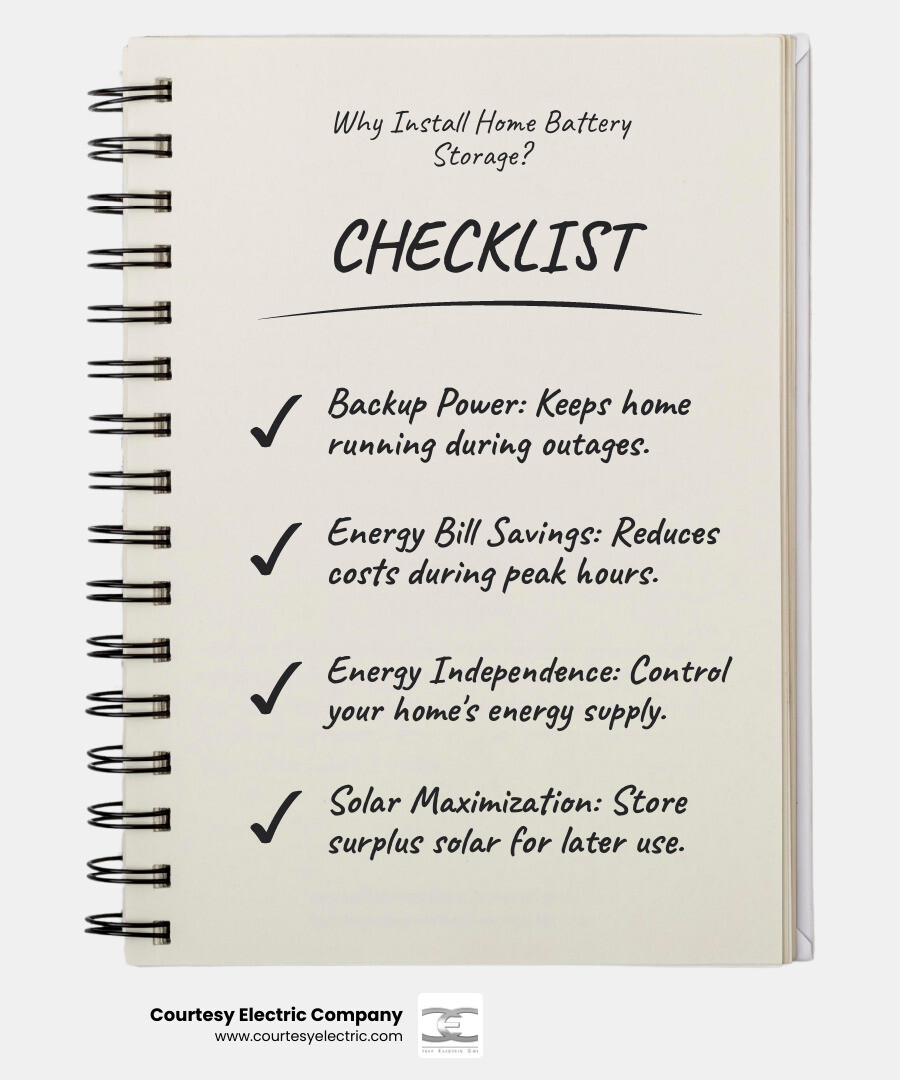
  • Backup Power: Keeps your home running during power outages, ensuring essential appliances remain operational.
  • Energy Efficiency: Reduces reliance on the grid during peak hours, optimizing energy usage.
  • Energy Independence: Provides greater control over your home's energy supply, reducing vulnerability to grid issues.
  • Solar Maximization: Stores surplus energy from solar panels for use after sunset or on cloudy days, increasing self-sufficiency.
  • Environmental Impact: Reduces carbon emissions by relying more on stored renewable energy.
  • Grid Support: Depending on your utility program options, stored energy may be able to support the grid during high demand.

As David Meyer, Vice President of Courtesy Electric, I've seen the increasing demand for reliable energy solutions, including expert battery storage installation in Centennial, CO. My background in the field and passion for advanced electrical infrastructure drive our commitment to providing cutting-edge backup energy systems for homes and communities.

Infographic explaining how home battery storage works - battery storage installation in centennial, co infographic checklist-notebook

Why Consider Battery Storage Installation in Centennial, CO?

The landscape of energy in Colorado is changing. While we enjoy beautiful sunny days, our electrical infrastructure is under more pressure than ever. Between the surging demand for electricity and the increasing frequency of weather-related events, the grid is feeling the strain. In fact, power outages have increased by a staggering 64% over the last decade. For a Centennial family, a power outage isn't just an inconvenience; it can mean spoiled food, a freezing house in the winter, or the inability to work from home.

Investing in battery storage installation in Centennial, CO is about more than just keeping the lights on. It is a comprehensive Residential energy solution that provides peace of mind. By installing a system that can store energy, you create a "buffer" between your home and the utility company. This setup is incredibly eco-friendly because it allows you to use energy more efficiently, reducing the need for the grid to fire up high-emission "peaker" plants during times of high demand.

Maximizing Solar Energy with Battery Storage Installation in Centennial, CO

If you already have solar panels, you know the feeling of pride when the sun is shining and your meter is spinning backward. But what happens at 8:00 PM when you’re running the dishwasher and the sun has long since set? Without a battery, you’re back to buying power from the grid.

For Homeowners in Centennial, a battery system acts as a reservoir for that surplus power. Instead of sending all your extra renewable energy back to the utility for a small credit, you keep it. This allows you to power your home with clean, renewable energy 24/7. It significantly shrinks your carbon footprint and ensures you are getting the absolute most out of your solar investment. Sustainable living in the Front Range has never been more achievable.

Reducing Grid Reliance and Optimizing Energy Usage

Even if you don't have solar panels, battery storage installation in Centennial, CO can be a strategic advantage. Many utility companies use "time-of-use" (TOU) rate plans. This means electricity demand is much higher during the late afternoon and early evening—precisely when most families are home cooking dinner and doing laundry.

With a smart Electrical Service and battery setup, we can program your system to charge from the grid when rates are lowest (usually in the middle of the night) and discharge to power your home when demand is highest. This "load shifting" strategy improves your home's energy efficiency and can lead to improved energy management. Furthermore, participating in certain utility programs might even allow you to earn credits by helping the grid stay stable during peak periods.

Leading Technologies for Home Energy Storage

When it comes to choosing the right hardware for your home, the options have never been better. We specialize in installing the industry's most reliable and advanced systems.

One of the most popular choices is the Tesla Powerwall 3. This system is built for performance and intelligent energy management. It includes features like "Storm Watch" mode that can prepare the system ahead of severe weather so you have more backup capacity when you need it.

Another excellent option is the SolarEdge Home Battery. These units are known for their strong efficiency and safety standards. They are designed to work seamlessly with SolarEdge inverters and are highly "stackable," meaning we can add more capacity if your energy needs grow in the future. We also frequently work with FranklinWH systems, which offer robust whole-home backup capabilities.

Feature Tesla Powerwall 3 SolarEdge Home Battery FranklinWH
Usable Capacity 13.5 kWh 9.7 kWh (per module) 13.6 kWh
Continuous Power 11.5 kW (on-grid) Up to 5 kW 10 kW
Installation Wall or Floor Wall or Floor Wall or Floor
Warranty 10 Years 10 Years 12 Years

Smart Integration with SPAN Panels

To truly master your home's energy, we often recommend pairing your battery with a SPAN smart electrical panel. Traditional panels are "dumb"—they just sit there and distribute power. A SPAN panel gives you total Services control via a smartphone app.

Imagine being in the middle of a power outage. With a SPAN panel, you can see exactly how much power your refrigerator is using versus your heating and cooling system. If your battery is getting low, you can remotely turn off non-essential circuits (like the guest bedroom or the dryer) to extend your backup time for the essentials. This level of load management helps you make the most of every kilowatt stored.

For homeowners who want a more holistic approach to comfort and energy planning, it can also be helpful to coordinate with your HVAC provider so your equipment settings and electrical loads are aligned. Learn more here: HVAC SERVICES.

The Step-by-Step Process for Battery Storage Installation in Centennial, CO

We believe in a "measure twice, cut once" philosophy. Our process for battery storage installation in Centennial, CO is designed to be seamless and stress-free for our neighbors in the Communities we serve.

  1. Site Evaluation: We start with a thorough assessment of your current electrical system. We look at your main panel, your energy usage history, and where the battery can be safely mounted (usually in a garage or on an exterior wall).
  2. System Design: Based on your goals—whether it’s whole-home backup or just keeping the lights and fridge on—we design a custom configuration.
  3. Permitting: Centennial has specific building and electrical codes. We handle all the paperwork, pulling the necessary permits to ensure your system is 100% legal and safe.
  4. Electrical Wiring & Installation: Our licensed electricians mount the battery units, install the necessary transfer switches or smart panels, and handle all the high-voltage wiring.
  5. System Testing & Commissioning: We don't just flip a switch and leave. We simulate a power outage to make sure the system kicks in instantly and show you how to use the monitoring software.

One of the best parts about being in Colorado is the support for renewable energy. While the initial transition is significant, there are several ways to support the transition. You can learn more About these options during our consultation, but here are the heavy hitters:

  • Federal Tax Credit (ITC): Under current federal law, homeowners may be eligible for a tax credit for the installation. This is a significant incentive that supports your transition to renewable energy.
  • Xcel Energy Battery Programs: For those in Xcel territory, there are often specific "Renewable Battery Connect" programs that provide incentives in exchange for allowing the utility to occasionally use a bit of your stored energy during grid emergencies.
  • State and Local Initiatives: Programs like the Denver Climate Action initiatives (which sometimes extend or have equivalents in surrounding areas) can provide additional support for renewable energy adoption.

Maintenance and Longevity of Your Backup System

One of the reasons we love modern lithium-ion batteries is that they are remarkably low-maintenance. Unlike gas-powered generators, there are no spark plugs to change, no oil to check, and no fuel to store. However, a little care goes a long way.

Most home batteries are rated for a lifespan of 10 to 15 years, often maintaining about 70% of their capacity even at the end of that period. To ensure yours lasts as long as possible, we recommend:

  • Annual Visual Checks: Ensure the area around the battery is clear of debris and that all connections look secure.
  • Firmware Updates: Most systems like the Tesla Powerwall connect to your Wi-Fi and update their software automatically, improving performance and safety protocols over time.
  • Temperature Regulation: While these units are weather-resistant and NEMA-rated for outdoor use, keeping them in a tempered environment like a garage can help optimize their chemistry.

Frequently Asked Questions about Centennial Battery Storage

How long does a home battery last during an outage?

This depends entirely on your "essential loads" and the capacity of the battery. A single 13.5 kWh battery can typically run a refrigerator, Wi-Fi, lights, and a few outlets for 24 hours or more. If you are conservative with your energy consumption, it can last much longer. If you have multiple batteries and a solar array to recharge them during the day, you can stay powered indefinitely.

Can I install a battery without solar panels?

Yes! This is a common misconception. You can install a "standalone" battery that charges from the grid. This is perfect for homeowners who want protection against power outages or those who want to use time-of-use management to manage their energy usage more effectively.

What qualifications should a Centennial installer have?

You should always look for a licensed and insured electrical contractor. Furthermore, look for "Certified Premier Installers" for specific brands like Tesla. This ensures the technicians have undergone specialized training and that your manufacturer's warranty will be fully honored. Local experience is also key because we understand the specific permitting requirements of Arapahoe County and the City of Centennial.

Conclusion

Taking control of your home’s energy is a "power play" that pays dividends in safety, efficiency, and sustainability. Whether you are looking to maximize your solar panels or simply want the peace of mind that your family won't be left in the dark during the next Colorado blizzard, battery storage installation in Centennial, CO is the answer.

At Courtesy Electric Company, we have built our reputation on quality, integrity, and dependability since 1976. We live and work in the same communities you do, from Parker to Highlands Ranch and everywhere in between. Our team is ready to help you design a system that fits your home and your lifestyle perfectly.

Ready to take the next step toward energy independence? Contact us today to schedule your consultation. Secure your home's energy future with professional battery storage installation and join the hundreds of Centennial homeowners who are already enjoying the benefits of a smarter, more resilient home.

Local Heroes: Finding the Best Battery Storage Installers in Fraser

Why Battery Storage Installation in Fraser, CO is a Game Changer

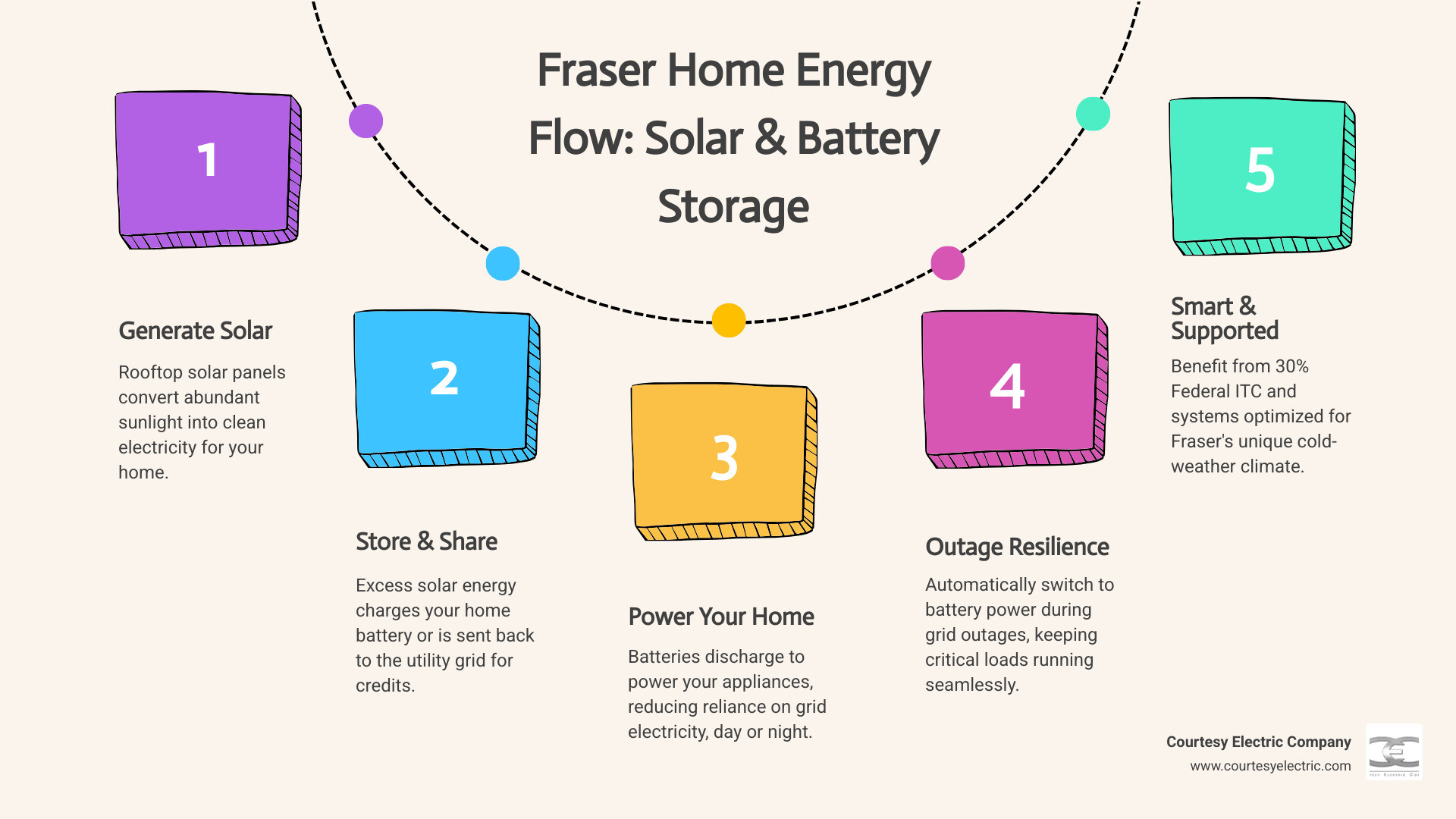
residential battery storage system - battery storage installation in fraser, co

Homeowners in Fraser, CO, are increasingly looking for ways to secure their power supply and manage rising utility costs. The idea of living without constant worry about power outages, especially in our unique mountain climate, is becoming a top priority. A battery storage installation in Fraser, CO offers a reliable solution, providing energy independence and grid resilience. This technology lets you capture and store excess energy, ensuring your home stays powered when the grid goes down or electricity prices surge. It's about more than just backup; it's about smart energy management for a comfortable, efficient home.

Ready to take control of your energy? Explore our residential services or get a free consultation today.

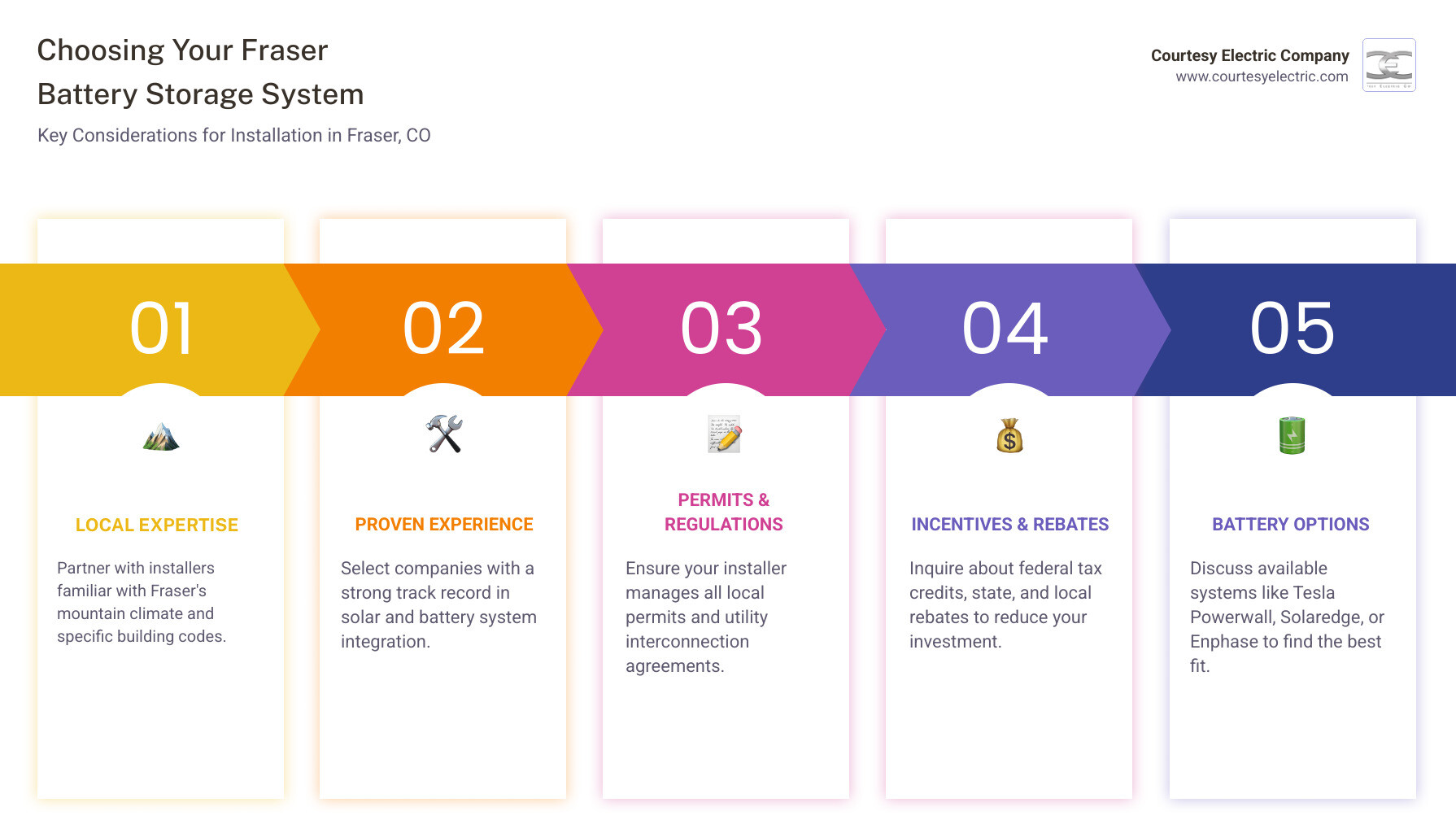
If you're looking for battery storage installation in Fraser, CO, consider these essential factors:

  • Local Expertise: Partner with installers who understand Fraser's unique mountain climate and local building codes.
  • Proven Experience: Choose companies with a strong track record in solar and battery system integration.
  • Permitting & Regulations: Ensure your installer handles all necessary local permits and utility interconnection agreements.
  • Incentives: Inquire about federal tax credits or any state and local rebates that can reduce your investment.
  • Battery Options: Discuss available battery systems like Tesla Powerwall, Solaredge, or Enphase to find the best fit for your needs.

I'm David Meyer, Vice President of Courtesy Electric, and I've spent my career ensuring homes and infrastructure stay powered. My passion lies in leading the charge toward modern electrical solutions, especially in cutting-edge areas like battery storage installation in Fraser, CO.

Infographic detailing key considerations for battery storage installation in Fraser, CO, including local expertise, experience, permits, incentives, and battery options. - battery storage installation in fraser, co infographic pillar-5-steps

Living in Fraser means embracing the "Icebox of the Nation" lifestyle, but it also means dealing with a grid that is constantly challenged by heavy snowfall, high winds, and extreme temperatures. When a winter storm rolls through Grand County, grid stability isn't just a luxury—it’s a safety requirement. We’ve seen how battery storage installation in Fraser, CO transforms a home from a passive consumer of electricity into an autonomous energy powerhouse.

For many homeowners, the primary draw is backup power. When the lines go down on Highway 40, a battery system kicks in instantly, keeping your furnace running and your pipes from freezing. But the benefits go deeper than just emergency use. Through "peak shaving," these systems allow you to avoid high utility rates. By storing energy during low-demand periods (or from your solar panels) and discharging it when rates are highest, you effectively take control of your monthly overhead.

Beyond the individual home, these installations support our wider communities. By reducing the strain on the local grid during peak times, we contribute to a more resilient infrastructure for everyone in the Fraser Valley. It’s a sustainable, forward-thinking approach that aligns perfectly with the environmental values we hold dear in the Colorado mountains.

Essential Components of a Mountain-Ready Storage System

Not all battery systems are created equal, especially when they have to live at 8,500 feet. A professional battery storage installation in Fraser, CO requires specialized components that can handle the altitude and the cold.

At the heart of a modern setup is the battery chemistry. Most top-tier systems now use Lithium Iron Phosphate (LFP) technology, which is prized for its long lifespan and safety. We often work with stackable energy units that allow you to scale capacity over time; a small cabin might only need 5 kWh to 10 kWh, while a large custom home might require 40 kWh or more to maintain full energy autonomy.

There are two primary ways to integrate these into your electrical service:

  1. AC-Coupled Systems: A strong option for retrofitting. If you already have solar panels, an AC-coupled battery can often be added without replacing your existing inverter. It converts the AC power from your home back into DC to store it, and then back to AC when you need it.
  2. DC-Coupled Systems: Often used in new builds, these are highly efficient because the energy stays in DC form from the panels all the way to the battery, reducing conversion losses.

For builders working on new mountain modern homes, integrating smart power controllers is essential. These "brains" of the system allow for sophisticated discharge management. Through smartphone apps, you can watch your homes energy flow in real-time and decide whether to save your stored power for a predicted storm or use it to offset tonight's dinner-time energy spike.

Customizing Your Battery Storage Installation in Fraser, CO

Every home has a different "energy fingerprint." Before we pick up a wrench, we perform a deep energy load analysis. We look at your high-draw applianceswell pumps, heat tapes, and kitchen rangesto determine what needs to stay on during an outage.

Our services focus on backup circuit prioritization. You might not need to power your entire guest wing during a blackout, but keeping the refrigerator and the internet router alive is non-negotiable. By customizing which circuits the battery supports, we ensure your stored energy lasts as long as possible.

Fraser’s climate presents technical problems that "flatland" installers often overlook. Batteries are like humans; they don't perform well when they are shivering. Most lithium-ion batteries see a drop in efficiency when temperatures dip below freezing. This is why we prioritize battery preconditioning and thermal management systems. These internal heaters keep the battery cells at an optimal temperature, ensuring they can charge and discharge even when it’s -20°F outside.

When it comes to about the area, altitude adaptations are also critical. The thinner air at high elevations provides less cooling for electrical components. We ensure that all inverters and controllers are rated for high-altitude performance to prevent overheating and premature failure. We also implement ice prevention for conduits and use heavy-duty, weatherproof enclosures to protect exterior equipment from the relentless Colorado sun and blowing snow.

Technical Requirements for Battery Storage Installation in Fraser, CO

The "behind-the-scenes" work is just as important as the hardware. A proper battery storage installation in Fraser, CO involves several layers of bureaucracy and safety standards:

  • Permit Acquisition: Fraser and Grand County have specific building and electrical codes. We handle the submission of detailed plans to ensure everything is above board.
  • Utility Interconnection: Your utility company (often Mountain Parks Electric in this region) needs to approve the system to ensure it won't back-feed into the grid during a repair, which is a major safety hazard for line workers.
  • Safety Shutoff Systems: We install rapid shutdown devices and emergency disconnects to meet National Electrical Code (NEC) requirements.
  • HOA Approvals: Many neighborhoods in the Fraser Valley have strict aesthetic guidelines. We help provide the documentation needed to show that the installation meets home security and visual standards.
  • Warranty Standards: We ensure all work meets the manufacturer's warranty standards so your investment is protected for the next 10 to 25 years.

Maximizing Long-Term Benefits and Integration

The transition to a "smart home" doesn't stop at the battery. For many of our clients, a battery is the missing link that brings their entire home ecosystem together. For example, combining a battery with lighting control systems allows the home to automatically dim non-essential lights during a power outage, stretching your battery life by hours.

There is also a massive synergy with EV charging. By using your battery to store solar energy during the day, you can charge your electric vehicle at night with sun power, rather than pulling from the grid. This integration with low volt systems and high-power chargers is a practical way to build energy independence.

Feature Grid-Only Power Solar + Battery Storage
Outage Protection No power until grid is fixed Instant backup for critical loads
Energy Management Limited control Greater control over when stored power is used
Sustainability Depends on utility fuel mix Supports clean, renewable energy use
Home Modernization Standard Adds smart-home resilience and flexibility
Grid Resilience Low Can reduce peak-time strain; may operate "islanded"

In addition to daily performance benefits, many homeowners appreciate that modern storage systems are designed with long service life, strong manufacturer warranties, and app-based monitoring to keep everything running smoothly.

Frequently Asked Questions about Fraser Energy Storage

How does extreme cold affect battery performance in Fraser?

Cold temperatures can slow down the chemical reactions inside a battery. However, modern systems designed for Colorado include insulated housings and internal heating elements. These features ensure that the battery maintains its capacity and performance even in sub-zero temperatures.

Can battery storage be added to an existing solar array?

Absolutely. Using AC-coupling technology, we can integrate a battery into almost any existing solar setup. We handle the ISP hookup for monitoring and ensure the new battery inverter communicates perfectly with your old solar inverter.

What are the maintenance requirements for home batteries?

Home batteries are remarkably low-maintenance. They don't have moving parts like a generator. Most maintenance involves remote software updates and occasional visual inspections to ensure enclosures are clear of debris or snow. You can easily schedule service for a routine health check to ensure all connection points are tight and the thermal management system is functioning correctly.

Conclusion

At Courtesy Electric Company, we take pride in being the local experts for battery storage installation in Fraser, CO. From battery storage systems to smart electrical panel integration and generator pairing, we provide the tools you need for true energy autonomy. We don't just install equipment; we build resilient systems that protect your family and your home.

Whether you are looking to improve reliability during outages or simply want the peace of mind that comes with a warm, powered home during a blizzard, we are here to help. Our team serves Denver, the Front Range, and the mountain communities with the highest standards of electrical excellence.

Contact our experts today to discuss your needs, or schedule your battery storage installation in Fraser, CO and start your journey toward a more sustainable, independent future.

Fraser's Finest: Discovering the Best Generator Contractors

Why Reliable Backup Power Matters in Fraser, CO

best generators services in fraser, co

Best generators services in Fraser, CO provide essential power protection for mountain homes facing frequent winter outages, high-altitude challenges, and extreme weather conditions that can leave families without heat, water, or critical systems for days.

Top Generator Service Providers in Fraser, CO:

  1. Certified Sales and Service Providers - Certified sales and service covering Grand County, Fraser, Winter Park, and surrounding areas
  2. Licensed electrical contractors - Offering installation, maintenance, and emergency repair for standby and portable systems
  3. Authorized brand dealers - Specializing in generator solutions with local parts and service support

Living at 8,574 feet elevation means Fraser residents face unique power challenges. Winter storms regularly knock out grid power, sometimes for extended periods. When temperatures drop below zero and snow piles up, a reliable backup generator isn't just convenient-it's essential for protecting your home from frozen pipes, preserving food, and keeping your family safe and comfortable. Professional generator services ensure your system starts automatically when the power goes out, runs efficiently in thin mountain air, and receives the maintenance needed to perform when you need it most.

I'm David Meyer, and through my work at Courtesy Electric, I've helped countless Colorado homeowners steer the complexities of backup power systems and understand what it takes to deliver reliable best generators services in Fraser, CO that perform in harsh mountain conditions. With 50 years of powering homes and communities across Colorado, we understand exactly what mountain residents need from their backup power systems.

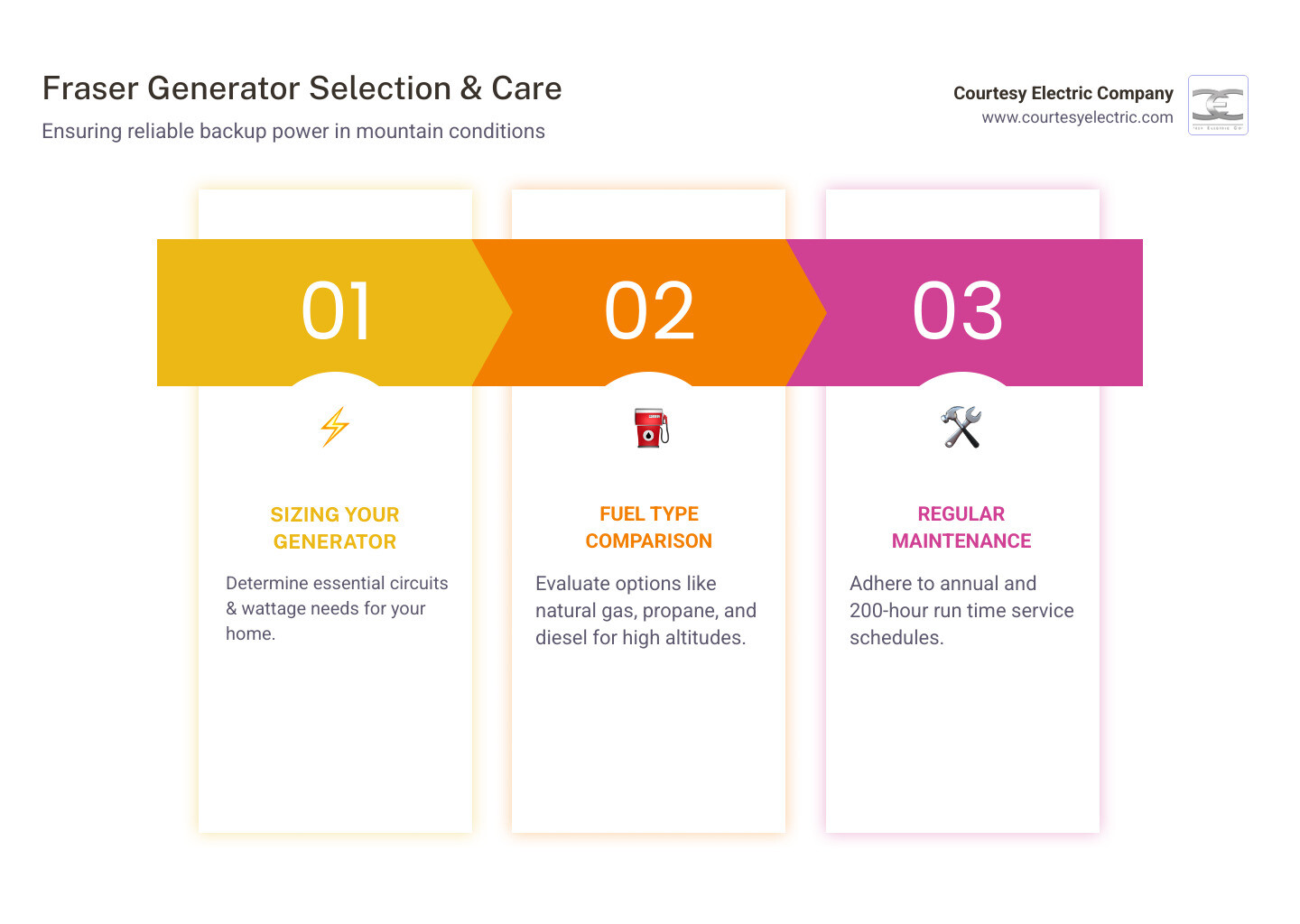
infographic showing generator selection process including sizing calculation based on essential circuits, fuel type comparison for high altitude, and annual maintenance schedule with inspection checklist - best generators services in fraser, co infographic pillar-3-steps

If you're ready to protect your Fraser home with professional backup power, explore our comprehensive electrical services or schedule a consultation to discuss your specific needs.

Key Features for Mountain-Region Generators

When we talk about the best generators services in Fraser, CO, we have to address the "elephant in the room": the altitude. Fraser isn't just any mountain town; it’s one of the coldest spots in the lower 48 states. This extreme environment dictates exactly what features your generator needs to survive and thrive.

High-Altitude Considerations

At over 8,500 feet, the air is thinner. Engines—whether they are in your car or your generator—need oxygen to burn fuel. In high-altitude regions like Fraser and the surrounding Grand County, generators often experience "derating," which means they produce less power than they would at sea level. When we help homeowners select a unit, we always account for this power loss to ensure the generator isn't overworked.

Cold Weather Kits

In a place where winter temperatures can plummet well below zero, a standard generator might struggle to start. The best generators services in Fraser, CO will always recommend a "Cold Weather Kit." These kits typically include battery warmers and oil heaters. Think of it like an electric blanket for your generator; it keeps the vital components warm enough so that when the grid fails in a blizzard, the engine turns over instantly.

Fuel Types and Reliability

Most residential standby generators in the Fraser Valley run on Liquid Propane (LP) or Natural Gas. LP is particularly popular in more remote mountain properties where natural gas lines might not reach. Propane has a long shelf life and doesn't degrade like gasoline, making it an excellent choice for emergency preparedness.

The Role of Transfer Switches

A generator is only as good as its connection to your home. A professional installation includes a transfer switch, which acts as a traffic cop for your electricity. It safely disconnects your home from the utility grid and connects it to the generator. This prevents "backfeeding," which is incredibly dangerous for utility workers trying to repair the lines.

Choosing the Best Generators Services in Fraser, CO

Selecting a contractor for your generator project is a big decision. You aren't just buying a piece of machinery; you're investing in a long-term relationship for safety and maintenance. In our region, local expertise is the difference between a system that works and one that fails when the snow starts falling.

Working with builders and homeowners across the Front Range and mountain corridors, we've seen that the most reputable services share a few common traits:

  • Factory training and authorization: They should be authorized by the generator manufacturers they service. This helps ensure access to genuine parts and model-specific training.
  • Single-trip readiness: The best providers often keep their trucks stocked with common replacement parts so repairs can be completed efficiently.
  • Warranty support: A local pro will help you steer warranty requirements and documentation so your investment stays protected.

Sizing Your System with the Best Generators Services in Fraser, CO

One of the most common mistakes is buying a generator that is too small for the home's needs. A professional services-1 provider will perform a detailed load assessment.

We look at your "essential circuits"-the things you absolutely cannot live without during a Fraser winter. This usually includes:

  • Your furnace or boiler (freeze protection is #1!)
  • Well pumps (if you aren't on city water)
  • Refrigerators and freezers
  • Security systems and basic lighting

A small generator (5,000 to 8,000 watts) can usually handle these essentials. However, if you want "whole-house" power-meaning you can run your oven, dryer, and every light in the house-you'll likely need a unit providing 10,000 to 22,000 watts or more.

Reliable Maintenance from the Best Generators Services in Fraser, CO

A generator is a lot like a car; if it sits in the driveway for a year without an oil change or a test run, it might not start when you need it. Regular maintenance is the heartbeat of a reliable backup system.

Industry standards suggest:

  • Monthly Exercises: Most modern standby units are programmed to run for 10-20 minutes once a week or month to keep the engine lubricated.
  • Annual Service: This involves changing the oil, replacing spark plugs, and checking the battery.
  • 200-Hour Interval: If you experience a major outage and the generator runs for several days straight, it needs to be serviced every 200 hours of run time.

For those who like to be prepared, using a Parts Lookup tool can help you identify exactly what filters or plugs your specific model requires, though we always recommend professional service to maintain your warranty. You can easily schedule routine check-ups to ensure you're never left in the dark.

Standby vs. Portable: Selecting the Right Backup Power

In Fraser, you generally have two paths to take: a permanently installed standby generator or a high-quality portable unit. Both have their place, but the experience of using them is very different.

Feature Standby Generator Portable Generator
Start-up Automatic (within seconds) Manual (requires setup/pull-start)
Fuel Source Natural Gas or Propane Gasoline or Propane
Power Capacity High (Whole house) Moderate (Essential circuits)
Convenience Set it and forget it Requires moving/plugging in
Installation Professional required Minimal (Transfer switch recommended)
Best For Primary residences, cold climates Small cabins, temporary use

For many of our projects, we find that standby units are the preferred choice for a permanent home in Fraser. When a pipe-freezing cold snap hits at 2:00 AM, most people don't want to be outside in the snow dragging a portable generator out of the garage and fumbling with frozen gasoline cans.

Integrating Renewable Energy and Emergency Preparedness

The future of backup power in Colorado is increasingly "hybrid." Many residents are looking at how to integrate solar power and battery storage with their generator systems. This creates a "layered" defense against power outages.

For example, a Franklin battery storage system can handle short flickers in power or provide silent energy during the night. If the outage lasts for days and the batteries run low, the generator kicks in to recharge the batteries and power the heavy loads. This integration is part of modern plans for energy-efficient mountain homes.

We often discuss these advancements on our blog, as they represent a major shift toward self-sufficiency. In Fraser, being self-sufficient isn't just a trend—it's a way of life. Emergency preparedness means having a plan for your well pump, your heating system, and your communication lines.

Frequently Asked Questions about Generator Services

How often should my generator be serviced in Fraser?

In our climate, we recommend a professional inspection at least once a year. The extreme temperature swings in Grand County can be hard on batteries and rubber seals. If you’ve had a particularly active winter where the generator ran for more than 24–48 hours total, it’s wise to check the oil levels and air filters immediately after the storm clears.

Do I need a permit for generator installation in Grand County?

Yes. Installing a permanent standby generator involves both electrical and gas plumbing work. Local regulations in Fraser and Grand County require permits to ensure the installation meets safety codes. This protects you from fire hazards and ensures that the exhaust is properly vented away from your home's windows and doors. Professional installers handle this paperwork as part of the service.

What are the signs my generator needs professional repair?

Don't wait for a blackout to find out your generator is broken. Watch for these red flags:

  • Warning Lights: Most modern units have a status light (usually green for "OK" and red or yellow for "Service Needed").
  • Starting Issues: If the unit struggles to turn over during its weekly exercise, the battery likely needs replacement.
  • Unusual Noises: Clunking or high-pitched squealing often indicates a mechanical issue with the alternator or engine.
  • Fluid Leaks: Puddles of oil or coolant under the unit are a sign of failing gaskets or hoses.

Conclusion

Living in the Fraser Valley offers some of the most beautiful scenery in the world, but it demands respect for the elements. Ensuring you have the best generators services in Fraser, CO is about more than just convenience—it's about the security of knowing your home will remain a warm sanctuary no matter what the Colorado sky throws at it.

At Courtesy Electric Company, we take pride in being a trusted partner for Colorado residents. From selecting the right Generac or Cummins unit to professional installation and long-term maintenance, we are here to help.

If you are ready to take the next step in home protection, we invite you to browse our sales options or contact our team today. Let us provide the Expert electrical-service for Fraser residents that you can rely on for the next 50 years.

Buyer's Guide: Best Generators in Fraser Co

Why Generators in Fraser Co Are Critical for Mountain Living

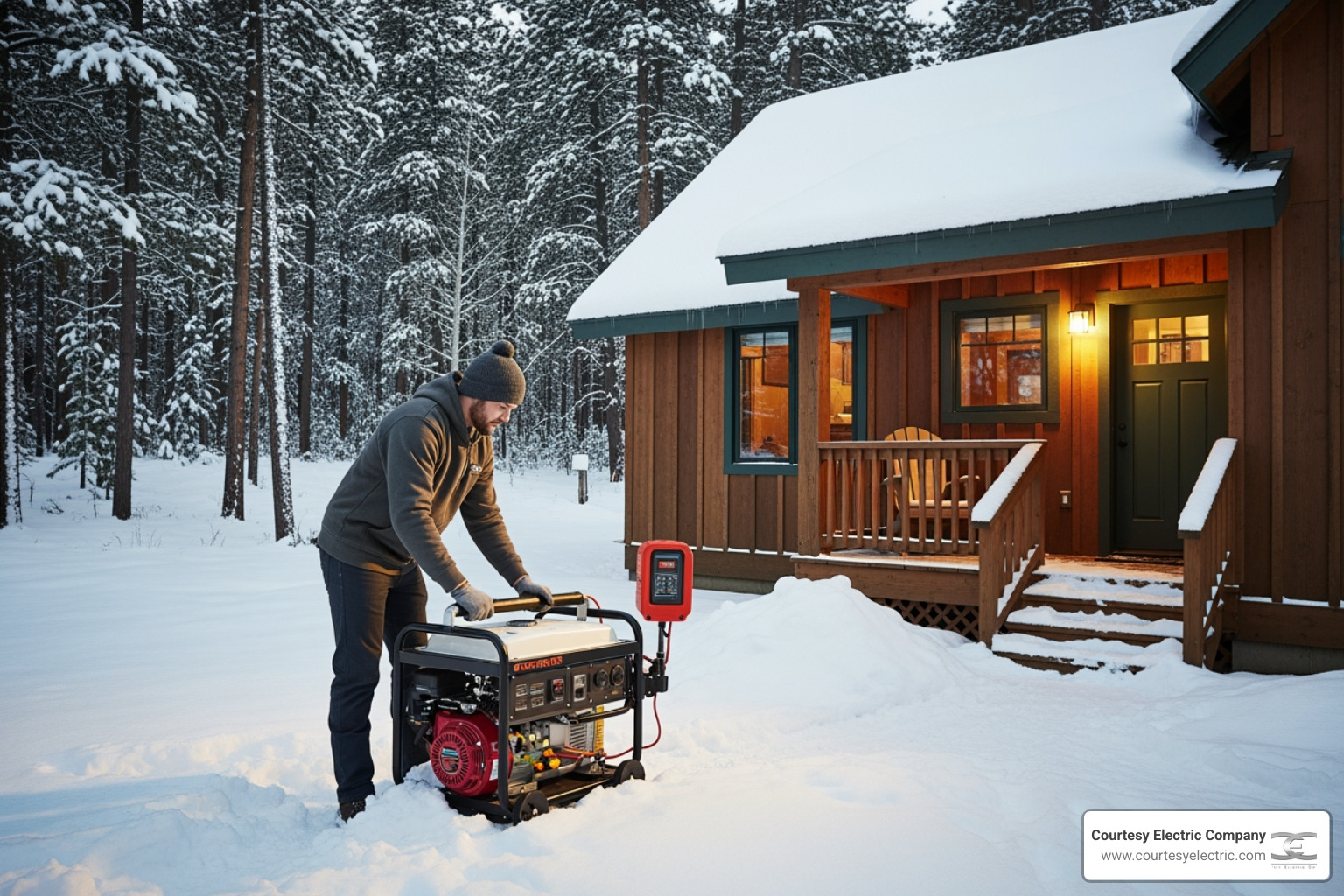
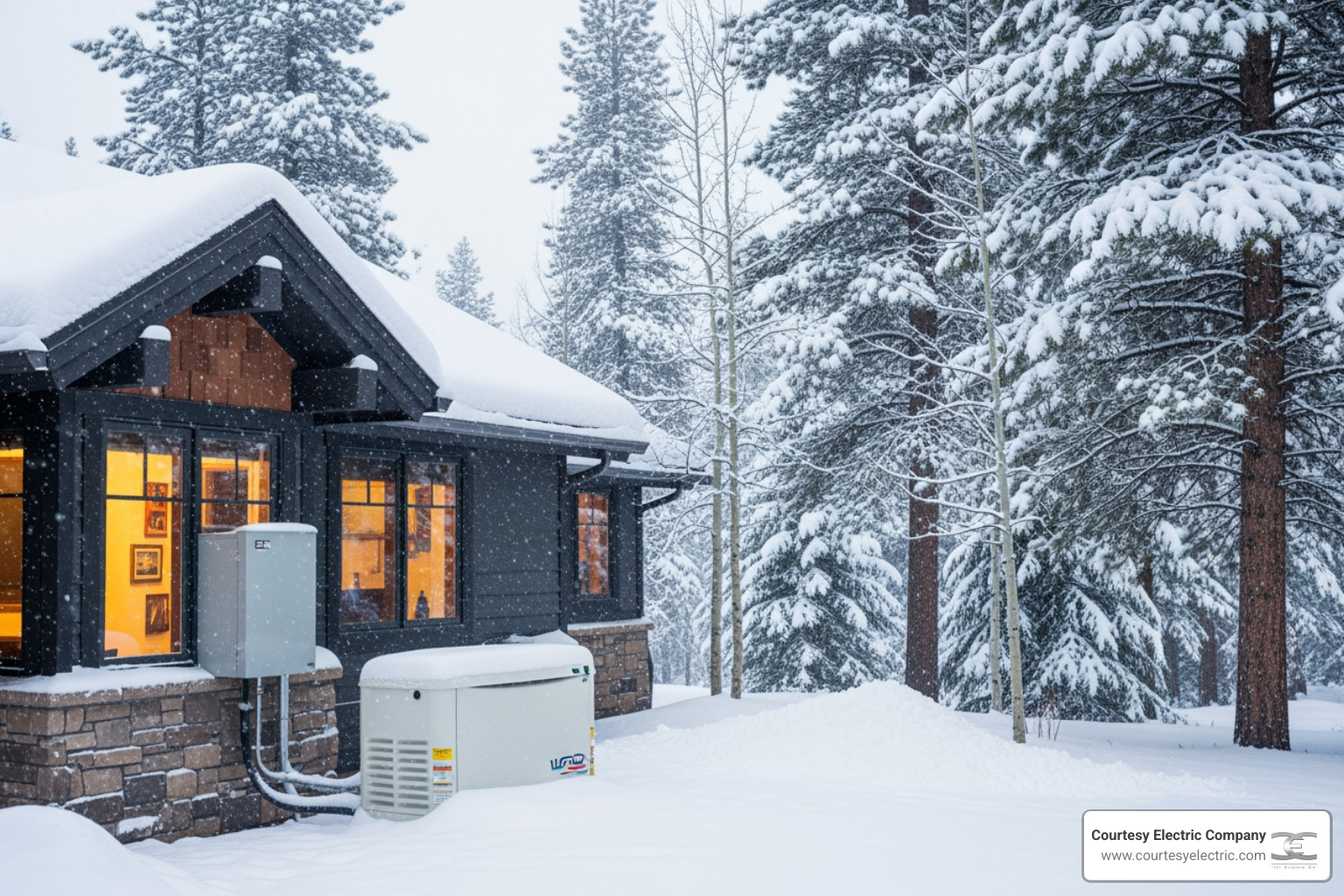
standby generator at mountain home in winter - generators in fraser co

Generators in Fraser Co are essential for homeowners and ranchers facing frequent power outages caused by harsh mountain weather, heavy snowfall, and remote grid infrastructure. Courtesy Electric provides comprehensive support for mountain residents, ensuring your property is prepared for any conditions.

Generator Solutions for Fraser Residents:

  • Professional Installation - Expert setup of standby and portable systems custom to high-altitude environments
  • System Maintenance - Routine checks to ensure reliability during extreme winter temperatures
  • Custom Sizing - Precise calculations to match your home's specific power requirements
  • Fuel Versatility - Options for propane, natural gas, or tri-fuel models to suit your property's resources

Generator Types Available:

  • Standby generators (Generac, Cummins) for automatic whole-home backup
  • Portable generators for flexibility and targeted power
  • Tri-fuel and dual-fuel models for maximum fuel choice

When winter storms knock out power in Grand County, you need backup systems that protect your heating, well pump, and essential appliances. The combination of high elevation, remote location, and severe weather makes Fraser particularly vulnerable to extended outages that can threaten both comfort and property.

I'm David Meyer, Vice President of Courtesy Electric, and over our 50 years serving Colorado communities, we've installed countless backup power systems in mountain properties where reliable electricity isn't optional—it's essential for safety and survival during generators in Fraser Co conditions.

infographic showing how standby generators automatically detect power outages, start within seconds, power essential home systems through a transfer switch, and run on propane or natural gas until grid power returns - generators in fraser co

Why Reliable Generators in Fraser Co are Essential

Living in the Fraser Valley means embracing one of the most beautiful—and most demanding—climates in the United States. Often cited as the "Icebox of the Nation," Fraser experiences extreme cold and heavy snow loads that put immense pressure on the local electrical grid. When you are looking for generators in Fraser Co, you aren't just shopping for a convenience; you are investing in a lifeline.

The mountain climate and remote geography of Grand County mean that when the power goes out, it might stay out for a while. Utility crews have to steer treacherous mountain passes and deep snow to reach downed lines. This grid vulnerability makes backup power a cornerstone of property resilience.

For many residents, a power outage is more than just sitting in the dark. It’s a race against the clock to keep pipes from freezing. Without electricity, your furnace or boiler’s circulation pumps stop working. Furthermore, many homes and ranches in the area rely on private wells. If the power is out, your well pump is out, leaving you without running water for drinking, sanitation, or livestock. Investing in electrical service that includes a robust generator system ensures that your home remains a warm, functional sanctuary regardless of the weather outside. Courtesy Electric specializes in providing these critical services to mountain communities like Fraser, ensuring your home is protected year-round.

Choosing the Right Type of Backup Power

Selecting the right generator involves balancing your power needs, your fuel availability, and how much "hands-on" work you want to do when a storm hits. In Fraser, where a blizzard can make it difficult to even walk to the shed, the type of unit you choose matters significantly.

Feature Portable Generator Standby Generator Tri-Fuel Generator
Activation Manual start & plug-in Automatic detection Manual start & plug-in
Fuel Source Gasoline (usually) Propane or Natural Gas Gas, Propane, or Natural Gas
Power Output Smaller loads (3k–10k Watts) Whole-home (10k–26k+ Watts) Versatile (variable)
Installation Minimal (Transfer Switch) Permanent / Professional Minimal (Transfer Switch)
Maintenance High (fuel stabilization) Scheduled / Automatic Moderate

Standby Generators in Fraser Co for Whole-Home Power

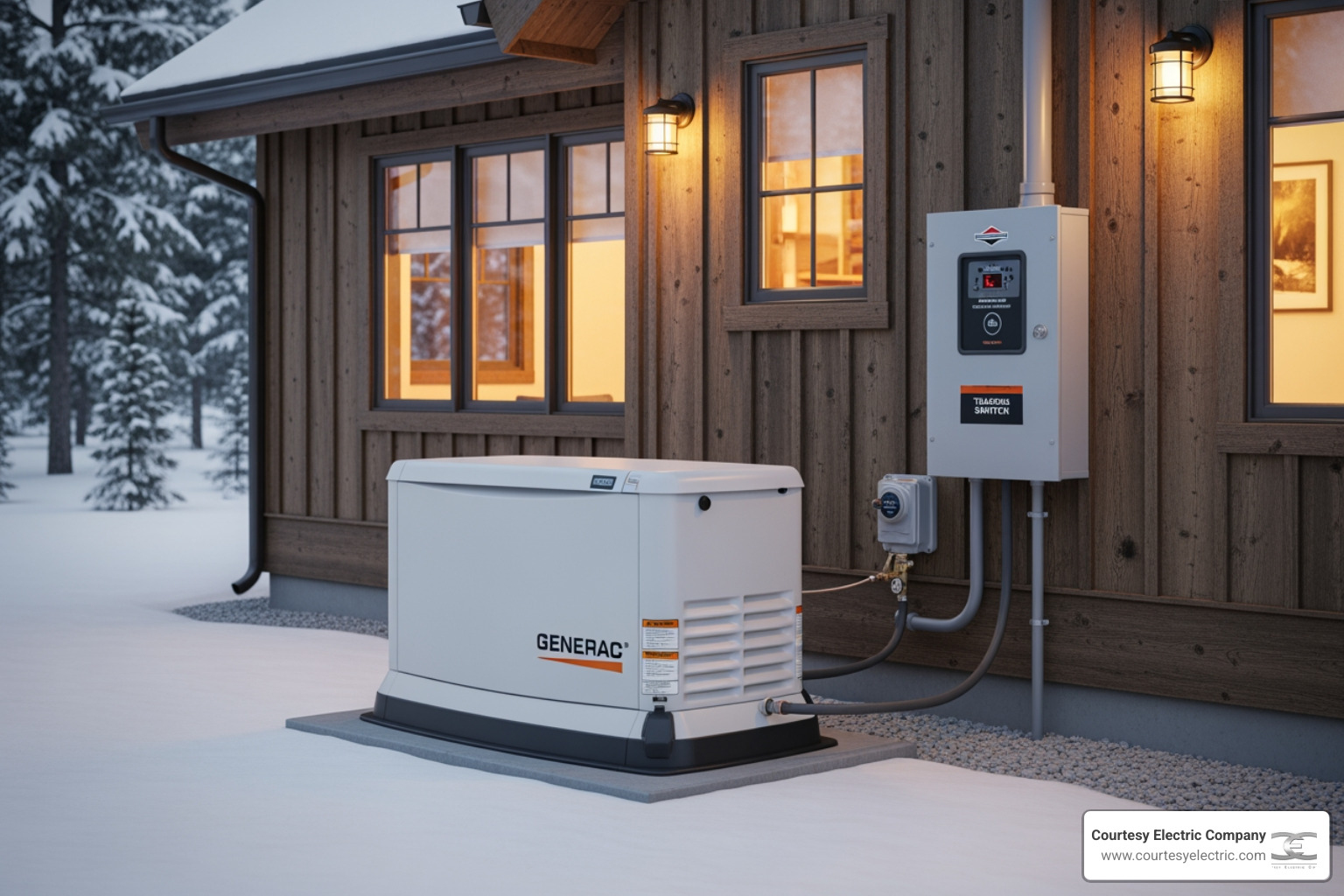
For the ultimate peace of mind, standby generators in Fraser Co are the gold standard. These units are permanently installed outside your home, much like an air conditioning condenser. They are connected directly to your home's electrical panel via an automatic transfer switch (ATS).

When the grid fails, the standby unit (often from trusted brands like Generac or Cummins) detects the loss of voltage and starts automatically, usually within seconds. This seamless transition is vital for residents who may be away from their property or for those who don't want to wrestle with a heavy portable unit in three feet of snow. These systems typically run on propane—which is widely available in Grand County—or natural gas.

For those looking to maximize their energy independence, we often see residents pairing these systems with battery storage in granby co to create a hybrid system that can manage peak loads even more efficiently. Standby units come with weather-proof enclosures specifically designed to handle the high-altitude UV rays and heavy snow common in the Fraser Valley.

Portable and Tri-Fuel Options for Ranches

If you are managing a ranch or have more modest power requirements, portable or tri-fuel options might be the better fit. High-quality portable units are available in a wide range of capacities, typically ranging from 3,500W to 12,500W.

Tri-fuel generators are particularly popular in rural Grand County because they offer the flexibility to run on gasoline, propane, or natural gas. This is a huge advantage if one fuel source becomes scarce during a prolonged emergency. However, portables require a manual transfer switch to safely power your home's circuits. You’ll also need to keep a fresh supply of fuel on hand and be prepared to move the unit into place and plug it in during a storm.

Sizing and Installation Requirements for Grand County

Calculating the correct size for your generator is the most critical step in the process. If the unit is too small, you risk damaging your appliances or the generator itself. If it’s too large, you’re wasting fuel and reducing the overall efficiency of your backup plan.

To determine your needs, we look at "Essential Loads" versus "Total Loads."

  1. Essential Loads: This includes your well pump (often 240V and requiring a high "surge" wattage to start), furnace blower, refrigerator, and a few lights.
  2. Total Loads: This adds in "luxury" items like your electric range, hot tub, or clothes dryer.

Most typical homes in Fraser require at least a 10kW to 15kW unit to cover the basics, while larger ranches or homes with high-draw appliances may need 20kW to 26kW. Our team at Courtesy Electric specializes in residential electrical services that ensure your electrical panel can handle the added capacity of a generator and that all transfer switches are installed to code.

In Grand County, local building codes and permit requirements are strictly enforced to ensure safety. Generators must be properly grounded, and exhaust must be vented away from windows and soffits to prevent carbon monoxide poisoning. Professional wiring is not just a recommendation; it’s a safety requirement to prevent "backfeeding," which can be fatal to utility workers repairing the lines.

Maintenance Tips for Harsh Mountain Winters

A generator is only as good as its last maintenance check. In Fraser, the environment is particularly tough on mechanical equipment. Cold temperatures can thicken oil, and snow can block intake vents.

To ensure your generators in Fraser Co perform when you need them most, follow these mountain-specific tips:

  • Install a Cold Weather Kit: This includes battery warmers and oil heaters that activate when temperatures drop, ensuring the engine can crank in sub-zero weather.
  • Clear the Snow: After every significant snowfall, ensure the area around your generator is clear. The unit needs to "breathe" to stay cool and prevent exhaust from backing up.
  • Annual Professional Servicing: Just like your car, a generator needs oil changes, filter replacements, and spark plug checks. Learn more about our team and how we help homeowners keep their systems in peak condition.
  • Monthly Exercise: Most standby units are programmed to run for 10-12 minutes once a week or month. This keeps the seals lubricated and ensures the battery stays charged.
  • Fuel Stabilization: If you use a portable gasoline generator, always use a fuel stabilizer. Gasoline can degrade in as little as 30 days, clogging the carburetor.

Frequently Asked Questions

What are the best generators in Fraser Co for winter?

The best units for Fraser are standby generators with air-cooled engines and factory-installed cold-weather accessories. Brands like Generac and Cummins are favorites because they offer high-altitude kits that adjust the fuel-to-air ratio for our thin mountain air. If you're looking for a portable option, tri-fuel models that can run on propane are ideal, as propane doesn't "go bad" like gasoline does. If you need help deciding, contact us for more information.

How do I maintain generators in Fraser Co?

Maintenance in Fraser is all about combatting the cold and snow. You should perform a "monthly exercise" of the unit, keep a clear path for exhaust, and check oil levels after every 24-48 hours of continuous use during an outage. Professional inspections once a year are highly recommended to check battery health and electrical connections.

How do I calculate the wattage I need?

Start by looking at the labels on your most important appliances. Pay close attention to the "starting watts" or "surge watts"—this is the extra kick of power needed to get a motor (like your well pump or fridge compressor) running. Add these up for all essential items. For example, a well pump might need 1,500 running watts but 4,000 starting watts. Your generator must be able to handle that peak surge.

Conclusion

At Courtesy Electric Company, we understand that living in the Fraser Valley requires a different level of preparedness. Whether you are looking for a permanent standby solution or need to upgrade your panel for a portable unit, we bring local expertise and a commitment to quality to every project. We are proud to bring our expertise to Grand County, offering the same reliable service we provide across the Front Range. Don't wait for the next blizzard to find out your backup plan isn't up to the task. Secure your peace of mind and protect your mountain home today.

Schedule your professional electrical service today and let us help you find the perfect power solution for your needs.

Smooth Running: Expert Generator Maintenance for Fraser Homes

Why Backup Power Reliability Matters in Fraser's Mountain Climate

generator maintenance - generators maintenance in fraser, co

Generators maintenance in Fraser, CO keeps your home powered through winter storms, summer lightning strikes, and the unpredictable outages that come with mountain living. At 8,574 feet elevation, Fraser experiences extreme temperature swings and heavy snow loads that put extra stress on backup power systems—meaning your generator needs regular attention to work when you need it most.

If you're looking for generators maintenance in Fraser, CO, here's what you need to know:

  • Annual service is recommended, or after 200 hours of run time
  • Professional maintenance includes oil changes, filter replacements, battery testing, and load verification
  • Monthly exercise runs (without load) keep internal components lubricated
  • Signs you need service now: difficulty starting, strange noises, fluid leaks, or warning lights
  • Local technicians understand Fraser's altitude and cold-weather requirements

When power goes out in Fraser—whether from a blizzard knocking down lines or summer monsoons triggering grid failures—your generator becomes your home's lifeline. It protects your pipes from freezing, keeps your refrigerator running, and maintains comfortable temperatures for your family. But a generator that hasn't been properly maintained won't start when you flip that transfer switch, leaving you scrambling in the dark.

Regular maintenance extends your system's lifespan, prevents costly emergency repairs, and ensures your investment performs reliably year after year. The altitude, temperature extremes, and shorter exercise cycles common in mountain environments mean Fraser generators work harder than those at lower elevations—and need more attentive care.

If you need help with your residential electrical systems, including comprehensive generator care, contact Courtesy Electric to schedule a maintenance visit with certified technicians who understand Fraser's unique power challenges.

I'm David Meyer, and over my years leading Courtesy Electric through Colorado's demanding climate conditions, I've seen how critical proper generators maintenance in Fraser, CO is for mountain homeowners who depend on uninterrupted power. We've serviced backup systems across Grand County and know exactly what Fraser's environment demands from your equipment.

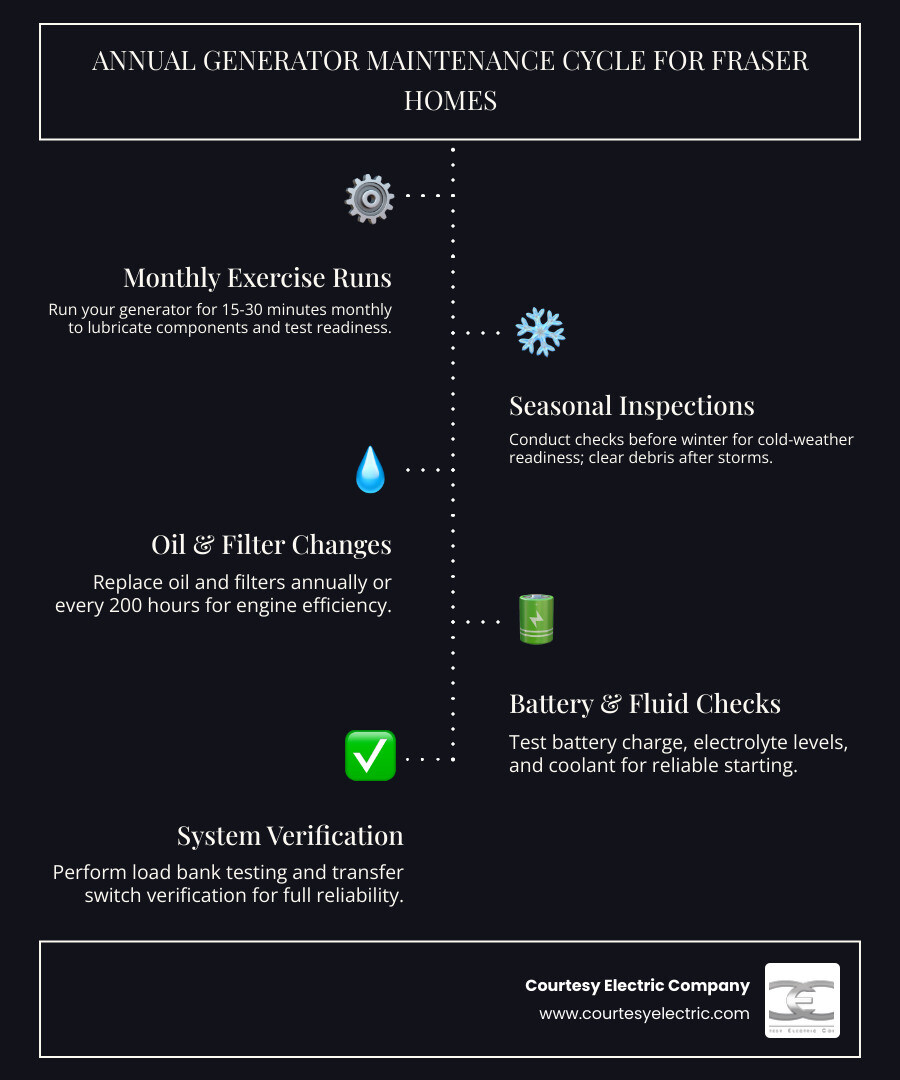
Infographic showing annual generator maintenance cycle including monthly exercise runs, seasonal inspections, oil and filter changes every 200 hours or annually, battery testing, coolant checks, load bank testing, and transfer switch verification specific to Fraser's high-altitude cold-weather conditions - generators maintenance in fraser, co infographic infographic-line-5-steps-dark

Why Regular Generators Maintenance in Fraser, CO is Essential

Living in "The Icebox of the Nation" isn't just a catchy nickname; it’s a reality that impacts every mechanical system in your home. Fraser’s unique geography creates a set of challenges that make generators maintenance in Fraser, CO a non-negotiable part of homeownership.

Fraser Altitude and Cold Weather Performance

At over 8,500 feet, the air is thinner. This means internal combustion engines—which power your generator—operate differently than they do at sea level. The air-to-fuel ratio must be precise. Furthermore, Fraser’s legendary winters mean your generator often has to start in sub-zero temperatures. Without regular maintenance, the oil can become too viscous, and the battery can lose the "cranking amps" necessary to turn the engine over when the grid goes down.

System Longevity and Preventing Breakdowns

A standby generator is a significant investment. Like a car, it requires fluid changes and part inspections to reach its full life expectancy. Regular residential maintenance helps identify small issues—like a fraying belt or a tiny coolant leak—before they turn into a catastrophic engine failure during a blizzard.

Freeze Protection and Electrical Safety

In the mountains, a power outage isn't just an inconvenience; it’s a threat to your home's infrastructure. If your generator fails to kick in, your furnace stops. Within hours, pipes can begin to freeze and burst. Proper maintenance ensures the freeze protection systems within the generator itself (like oil warmers and battery heaters) are functioning correctly. This keeps the unit ready to provide the electrical service your home depends on for safety.

Engine Efficiency and Component Wear

Thinner air means the engine works harder to produce the same amount of power. This leads to faster component wear. We often find that spark plugs in high-altitude generators carbon up faster, and air filters need more frequent cleaning due to the dry, dusty mountain summers. Keeping these components clean ensures the engine runs efficiently, consuming less fuel and producing cleaner power for your sensitive electronics.

Step-by-Step Guide to Professional Generator Care

When we arrive for a generators maintenance in Fraser, CO service call, we follow a rigorous protocol. While some homeowners are handy, the complexity of modern standby systems requires a professional touch to ensure the warranty remains valid and the system is safe.

The Professional Maintenance Process

  1. Oil and Filter Change: Just like your vehicle, a generator needs fresh oil. In our climate, we often recommend synthetic oils that flow better in extreme cold.
  2. Air Filter Replacement: We ensure the engine can breathe, which is vital at high altitudes.
  3. Spark Plug Inspection: We check for proper gap and signs of engine health.
  4. Battery Testing: This is the #1 reason generators fail to start. We check the voltage and the "cold cranking amps" (CCA).
  5. Coolant Check: For larger, liquid-cooled units, we verify the antifreeze levels and its "freeze point" to ensure it won't gel up when the temperature drops to -30°F.

Standby vs. Portable Maintenance Needs

It is important to understand that different types of generators require different levels of care.

Feature Standby Generator Portable Generator
Service Interval Annual or every 200 hours Every 50-100 hours of use
Fuel System Natural Gas/Propane (low maintenance) Gasoline (requires stabilizer/draining)
Exercise Automatic weekly/monthly Manual (must be started by owner)
Cooling Air or Liquid cooled Mostly Air cooled
Battery Integrated trickle charger Manual charging required

Essential Tasks for Generators Maintenance in Fraser, CO

Beyond the basics, we focus on mountain-specific needs:

  • Fuel Quality: For those using diesel or propane tanks, we check for moisture or contaminants.
  • Control Board Diagnostics: We run a full diagnostic on the digital controller to check for "fault codes" that might not be visible to the homeowner.
  • Terminal Cleaning: Battery terminals in our dry climate can still develop oxidation, which hinders starting.
  • Debris Removal: We ensure that snow, pine needles, and rodent nests are cleared from the enclosure. Mice love the warmth of a generator, but they can wreak havoc on wiring.

Advanced Testing for Generators Maintenance in Fraser, CO

For the ultimate peace of mind, we perform Load Bank Testing. This involves connecting the generator to a machine that simulates the full electrical load of your house. It forces the generator to run at its maximum capacity, ensuring it won't overheat or stall when it’s actually needed. We also verify the Transfer Switch—the device that safely disconnects you from the grid and connects you to the generator—to ensure it transitions smoothly and safely.

When to Schedule Your Service

Timing is everything when it comes to generators maintenance in Fraser, CO. You don't want to realize you need service during the first major snow dump in October.

  • The Annual Rule: At a minimum, your generator needs a full professional service once a year.
  • The 200-Hour Rule: If we have a particularly rough winter with frequent outages, your generator might hit 200 hours of run time in just a few months. Once you hit that 200-hour mark, the oil is spent and needs to be changed immediately.
  • Monthly Exercise: Most modern standby units are programmed to "exercise" themselves once a week or once a month for about 12 minutes. Homeowners should listen for this. If you don't hear your generator running its weekly test, it's time to call us.
  • Seasonal Readiness: We recommend scheduling your service in late summer or early fall. This ensures your system is primed and ready before the "Fraser freezer" sets in.

Recognizing Signs Your System Needs Repair

Sometimes, a generator will try to tell you it’s struggling before it completely fails. Being an observant homeowner can save you from a dark, cold night.

  1. Strange Noises: Clunking, whining, or surging sounds are indicators of mechanical or electrical stress.
  2. Fluid Leaks: If you see puddles of oil or colored coolant under the unit, call for services immediately.
  3. Starting Delays: If the generator cranks for a long time before firing up, the battery or the fuel system is likely failing.
  4. Warning Lights: Most units have a status light (usually green for "ready"). If you see a yellow or red light, the system has detected an error.
  5. Fuel Odors: While a slight smell is normal during operation, a strong smell of gas or propane when the unit is off could indicate a dangerous leak.
  6. Visible Corrosion: Fraser’s salt and moisture can lead to rust on the enclosure or internal components, which can eventually lead to structural or electrical failure.

Frequently Asked Questions about Generator Upkeep

Can I perform maintenance myself?

While we encourage homeowners to perform basic visual inspections and clear snow away from the intake vents, most generators maintenance in Fraser, CO should be handled by a professional. Standby generators involve high-voltage electricity, pressurized fuel lines, and complex engine mechanics. Furthermore, many manufacturers require proof of professional service to honor warranty claims. Safety is the priority; an improperly serviced generator can pose a fire risk or lead to carbon monoxide poisoning.

What are the risks of skipping service?

The biggest risk is unexpected failure. A generator is a "dormant" technology—it sits idle for 99% of its life. During that idle time, seals can dry out, batteries can drain, and fuel can degrade. If you skip service, the engine could seize the moment it tries to start under load. This results in a much more expensive engine replacement rather than a simple maintenance visit.

What should a service plan include?

A quality service plan for a Fraser home should be comprehensive. It should include:

  • Full fluid and filter replacement.
  • Battery health assessment.
  • Remote monitoring setup (so you get an alert on your phone if the unit fails).
  • Priority scheduling for emergency repairs.
  • A multi-point inspection of the transfer switch and home integration.

Conclusion

At Courtesy Electric Company, we know that your generator is more than just a piece of machinery; it is your insurance policy against the elements. Our team of expert technicians specializes in the high-altitude electrical service required to keep Fraser homes safe and warm. We provide top-tier installations and maintenance for Generac and Cummins systems, ensuring that when the lights go out in Grand County, yours stay on.

Don't wait for the next blizzard to test your backup power. Whether you need a routine check-up or a complex repair, we are here to help.

Contact Courtesy Electric today for a consultation and ensure your home is ready for whatever the Colorado mountains throw your way.

Get Wired: Professional Generator Installation in Fraser, Colorado

Why Backup Power Matters in Fraser's Mountain Environment

generator installation - generators installation in fraser, co

Generators installation in Fraser, CO is becoming essential for homeowners facing frequent winter storms and extended power outages in the Colorado Rockies. When the grid goes down at 8,700 feet elevation, you're not just dealing with darkness—frozen pipes can burst, food spoils, heating systems fail, and medical devices lose power. Professional generator installation provides automatic backup power that kicks in within seconds, keeping your home safe and comfortable regardless of weather conditions.

Quick Overview: Getting Generator Installation in Fraser

  1. Assessment - Licensed electrician evaluates your home's power needs and site conditions
  2. Selection - Choose between standby (automatic, whole-home) or portable units based on your specific requirements
  3. Permitting - Obtain required Grand County permits and ensure code compliance
  4. Installation - Professional setup of transfer switch, fuel connections, and generator unit
  5. Testing - System startup, load testing, and safety verification before final sign-off

Local Providers: Contact Courtesy Electric Company or other licensed Colorado electrical contractors for comprehensive residential services including generator installation.

Power outages cause significant financial impact for American households, with individual losses resulting from burst pipes and spoiled food. In Fraser's harsh winter climate, where storms can knock out power for days, a professionally installed standby generator isn't just convenience—it's protection for your home and family. The installation process involves careful planning, proper permitting through Grand County, fuel source connections (natural gas, propane, or diesel), and integration with your home's electrical panel through an automatic transfer switch.

I'm David Meyer, Vice President of Courtesy Electric, and over the past decades working in Colorado's electrical industry, I've seen how critical reliable backup power is for mountain communities, making generators installation in Fraser, CO one of the most valuable investments homeowners can make. Our team has completed thousands of projects across Colorado, including complex backup energy systems that keep homes running when the grid fails.

Infographic showing the generator installation process: 1) Home assessment and power load calculation, 2) Generator and fuel source selection, 3) Permit acquisition and site preparation, 4) Transfer switch installation, 5) Generator placement and electrical connections, 6) Fuel line hookup, 7) System testing and startup, 8) Final inspection and homeowner training - generators installation in fraser, co infographic infographic-line-5-steps-dark

Why Generators Installation in Fraser, CO is Essential for Homeowners

Fraser isn't called "The Icebox of the Nation" for nothing. While the title is a badge of honor for locals, it presents significant challenges for home infrastructure. When winter storms roll through Grand County, they often bring heavy, wet snow and high winds that can easily snap power lines or cause grid instability.

The primary reason generators installation in Fraser, CO is so critical is the prevention of frozen pipes. In our climate, a home without heat can reach freezing temperatures internally in a matter of hours. The resulting burst pipes can lead to extensive water damage—a situation that underscores the value of a backup power system.

Beyond structural protection, a generator ensures:

  • Food Preservation: Keeping refrigerators and deep freezers running prevents the loss of your food supply.
  • Medical Equipment: For residents relying on CPAP machines, oxygen concentrators, or home dialysis, power is a literal lifeline.
  • Home Security: Modern security systems and smart home cameras require constant power to protect your property while you are away.
  • Well Pumps: Many homes in the Fraser Valley rely on well water. Without electricity, the pump stops, and you lose access to running water for drinking and sanitation.

By investing in residential electrical services, you are essentially buying an insurance policy against the unpredictability of mountain living.

Selecting the Best Generator for Mountain Climates

Not all generators are created equal, especially when you are operating at high altitudes where the air is thinner. Choosing the right unit requires a balance between your power needs and the available fuel sources in your specific part of Fraser.

Standby Units vs. Portable Options

We generally recommend permanent standby generators for Fraser residents. Unlike portable units that you have to drag out of the garage and hook up in a snowstorm, standby units are permanently installed outside—much like an AC unit. They monitor the utility line 24/7 and start automatically the moment power is lost.

Top Brands: Generac and Cummins

At Courtesy Electric, we specialize in Generac and Cummins generators. These brands are the industry gold standard for durability and energy efficiency. They are designed to withstand the extreme temperature swings we experience in Colorado and offer remote monitoring so you can check your generator's status from your phone while you're down in Denver or traveling.

Fuel Source Comparison

The "best" fuel source often depends on what is already available at your property.

Fuel Source Efficiency Availability in Fraser Best For
Natural Gas High Available in town limits Continuous run time; no refilling needed.
Propane High Common for rural/mountain lots High shelf life; reliable in cold weather.
Diesel Moderate Requires delivery/storage Large properties or commercial needs.

Professional Installation Standards and Local Regulations

Installing a generator is definitely not a DIY weekend project. It involves high-voltage electricity and combustible fuel lines—a combination that requires professional expertise to ensure safety and compliance with Grand County codes.

Permit Requirements and Inspections

Any generators installation in Fraser, CO must adhere to local building codes and National Electrical Code (NEC) standards. This includes obtaining the proper permits from the Grand County Building Department. Professional installers handle this paperwork for you, ensuring that the unit is placed at a safe distance from windows and vents to prevent carbon monoxide from entering the home.

Noise Ordinances

Modern standby generators are surprisingly quiet. Most quality units operate at around 60 decibels—roughly the volume of a normal conversation. However, local ordinances may dictate where a generator can be placed relative to property lines to ensure your backup power doesn't become a nuisance to your neighbors.

To ensure your home meets all safety criteria, it is best to consult with experts in electrical service who understand the specific nuances of mountain installations.

Preparing Your Property for Generators Installation in Fraser, CO

The first step in the physical installation is the site assessment. We look for a level, well-drained area close to the electric meter and fuel line.

The "brain" of the system is the Automatic Transfer Switch (ATS). This is installed near your main electrical panel. When the ATS senses a drop in utility power, it disconnects your home from the grid (to prevent "backfeeding," which can be deadly for utility workers) and connects it to the generator. Once utility power is restored, the ATS safely switches you back and shuts the generator down. For more complex needs, we also offer residential electrical solutions like SPAN panels that allow you to prioritize which circuits get power during an outage.

Final Testing and Generators Installation in Fraser, CO Compliance

Once the generator is bolted to its pad and the electrical and fuel connections are secure, we perform a rigorous startup sequence. This isn't just about turning it on; we perform a "load test" to ensure the generator can handle the startup surge of your well pump or heating system. We verify that the automatic restoration works seamlessly and that all safety shut-offs are functional. Our goal is for you to feel completely confident in the system before we leave. If you have questions about the final steps, you can always contact our team.

Essential Maintenance for Reliable Backup Power

A generator is a mechanical engine, much like your car. Because it may sit idle for weeks or months, regular maintenance is vital to ensure it starts when you actually need it.

  • Annual Service: This should include oil changes and filter replacements.
  • Cold-Weather Kits: In Fraser, we highly recommend "cold weather kits" which include battery warmers and oil heaters to ensure the unit can crank in sub-zero temperatures.
  • Battery Health: The most common reason a generator fails to start is a dead battery. We check battery voltage and connections during every service visit.
  • Exercise Cycles: Most modern units are programmed to "exercise" themselves once a week for 10-15 minutes to keep parts lubricated and the battery charged.

For those looking for even more resilience, you might consider Battery Storage in Granby, CO as a silent backup or a supplement to your generator system.

Frequently Asked Questions about Fraser Generator Services

How loud is a modern standby generator?

Modern units from brands like Generac and Cummins are designed with sound-dampening enclosures. They typically run at about 60 dB. To put that in perspective, it’s about the same noise level as a central air conditioning unit or a conversation held a few yards away. While you will hear a low hum, it is rarely intrusive inside the home.

How quickly does a generator restore power?

A professionally installed standby generator usually restores power in about 10 to 30 seconds. The system must detect the outage, start the engine, and ensure the voltage is stable before the transfer switch moves the load over. It is a seamless transition that happens whether you are home or not.

What fuel sources are available in Fraser?

Most residential generators installation in Fraser, CO uses either natural gas (if you are within the town's service area) or liquid propane (LP), which is very common in the surrounding mountain subdivisions. Both are highly reliable. Natural gas offers an "infinite" fuel supply, while propane is excellent for high-altitude performance and can be stored in large on-site tanks. Learn more about our expertise in handling these various systems.

Conclusion

Living in the Fraser Valley offers unparalleled beauty, but it requires a level of preparedness that city living does not. Generators installation in Fraser, CO is the ultimate way to protect your property investment and ensure your family's comfort during the inevitable Colorado winter outages.

At Courtesy Electric Company, we pride ourselves on providing the peace of mind that comes with professional, high-quality installations. Whether you are looking for a whole-home Generac system or exploring smart home energy management, we are here to help. Get started with your electrical service today and never worry about the lights going out again.

Finding Your Spark: Local Battery Storage Companies in Granby, CO

Why Battery Storage Matters for Granby Homeowners

Battery storage is becoming an essential upgrade for homeowners in Granby who want reliable backup power, better use of their solar energy, and more peace of mind during mountain weather.

Quick Answer: Battery Storage for Granby Homes

Courtesy Electric Company helps Granby homeowners plan and install battery energy storage systems that can:

  • Provide backup power during outages

  • Store excess solar production for nighttime use

  • Support critical loads (refrigeration, well pumps, Wi‑Fi, medical devices, heating controls)

  • Improve resilience during winter storms and grid disruptions

Granby's mountain climate presents unique challenges for electrical systems. Winter storms can knock out power for hours or days, and the town sits at over 7,900 feet elevation where temperature swings test equipment durability. The good news? Battery energy storage systems (BESS) have evolved to handle these conditions while helping you store solar energy and maintain power during outages.

If you're exploring battery storage in Granby, CO or ready to move forward with installation, Courtesy Electric Company can provide expert consultation.

I'm David Meyer, and at Courtesy Electric, we've been helping Colorado Front Range homeowners steer advanced electrical solutions for 50 years, including designing backup energy systems that stand up to mountain weather. Our hands-on experience with modern battery installations means we understand what works at altitude and how to integrate these systems seamlessly with your home's electrical infrastructure.

Understanding Battery Energy Storage (BESS) in Grand County

When we talk about Battery Energy Storage Systems (BESS), we are referring to a technology that captures energy—usually from solar panels or the grid—and stores it in a chemical form to be used later. In Grand County, this technology is moving from a "luxury" to a "necessity." Most modern systems use lithium-ion technology, which is favored for its high energy density and long lifespan.

A BESS does more than just wait for a blackout. It performs "grid services," such as storing energy when it is plentiful (like a sunny Tuesday at noon) and discharging it during "peak" hours when electricity demand is highest. By utilizing battery storage in Granby, CO, homeowners can effectively "smooth out" their energy consumption, relying on their own stored power rather than pulling expensive energy from the grid during high-traffic times.

Why Local Battery Storage Companies in Granby, CO are Essential

Living in the Rocky Mountains is a dream, but the mountain climate can be tough on infrastructure. Granby residents know that heavy snow, high winds, and lightning can lead to frequent power outages. This is where local battery storage companies in Granby, CO provide a lifeline.

Beyond just backup power, these systems offer significant energy savings. If your utility uses time-of-use (TOU) pricing, you can charge your batteries when rates are low and use that energy when rates spike. Furthermore, as we see more renewable energy adoption in Grand County, battery storage acts as the "bridge" that makes solar power viable 24/7, even when the sun isn't shining.

Battery Storage Technology Options for Granby Homes

Choosing the right battery is a bit like choosing the right vehicle for a mountain pass; you need reliability, capacity, and the ability to handle the cold. Courtesy Electric helps Granby homeowners select a battery storage solution that fits the homewhether you want essential-backup coverage or a more robust whole-home approach.

What We Look At When Recommending a Home Battery System

Rather than focusing on a single model, we evaluate the factors that matter most for performance in Grand County:

  • Usable capacity (kWh): How long the battery can run your selected loads

  • Power output (kW): Whether it can start and run larger loads like well pumps or refrigeration

  • Chemistry and safety features: Stable performance, long cycle life, and strong safety certifications

  • Cold-weather charging support: Features that help batteries operate reliably in unheated spaces

  • Monitoring and controls: App-based visibility, alerts, and system health reporting

  • Future expandability: Options to add more storage later as needs change

High-Altitude Performance and Safety

Granbys altitude and temperature fluctuations require specific safety and performance features. You can't just put any battery in a cold garage and expect it to work in January. Thats why many of the systems we install feature:

  • Cold-weather support: Design features that help protect performance when temperatures drop.

  • Smart monitoring: So you can check system status and battery state of charge.

  • UL 9540 certification: A key safety standard ensuring components work together safely.

  • Proper enclosure and ventilation: To help manage moisture, airflow, and temperature swings.

Courtesy Electric handles the electrical design details that matter most for safety and reliability, including load planning, code-compliant disconnects, and clean integration with your existing service equipment.

Integrating Solar and Storage with Mountain Parks Electric

One of the most exciting developments for Granby residents is the shift in how local power is managed. On February 1, 2025, Mountain Parks Electric (MPE) transitioned to a new wholesale power supplier, Guzman Energy. This move was a game-changer for local renewables.

Under the previous contract with Tri-State, MPE was capped at a 5% limit for local power generation. The new contract with Guzman provides a massive 60,000 MWh of flexibility—roughly 18% of MPE's total load. Even more impressive is the "carve-out" specifically for solar and battery projects: 5,000 MWh has been allocated for 2025 and 2026. This means MPE is actively looking for ways to integrate more local storage into the grid.

A prime example of this is the Granby Solar + Storage project. This facility features nearly 13,000 solar panels (4.7 MW) paired with a 2,000 kW / 4,054 kWh DC-coupled lithium-ion battery system. By storing energy midday and discharging it during peak evening hours, the project provides essential grid services that help keep the local power supply stable and cost-effective.

Navigating Permitting with Local Battery Storage Companies in Granby, CO

We often get asked if the paperwork is a nightmare. While the Statutory Town of Granby does require specific building permits and engineering plans, the process is becoming much more streamlined.

Many jurisdictions in Colorado are adopting SolarAPP+ (Automated Permit Processing). This platform, already used in over 335 jurisdictions, automates the code compliance check for residential solar and battery storage. It has saved over 105,000 staff hours nationwide and allows compliant projects to receive permits almost instantly. When you work with professional local battery storage companies in Granby, CO, they typically handle these submissions to the Granby Building and Safety Department for you, ensuring your system meets all National Electrical Code (NEC) and local fire safety requirements.

Community Benefits of Renewable Energy in Granby

The push for battery storage isn't just about individual homes; it’s about the community as a whole. When Granby invests in storage, everyone wins.

  • Grid Reliability: Battery systems can perform "peak shaving," which reduces the strain on MPE’s infrastructure during the busiest times of the year.

  • Economic Growth: Projects like the Granby Solar + Storage initiative generate millions in land lease and property tax revenues, which fund local schools, police, and fire departments.

  • Job Creation: The construction and maintenance of these systems create local jobs for electricians, technicians, and project managers.

  • Property Value: According to Zillow, homes with solar and storage systems can see a value increase of approximately 4.1%.

  • Environmental Stewardship: By using more locally generated solar energy and storing it for later, Granby reduces its reliance on fossil-fuel-heavy "peaker plants."

Frequently Asked Questions about Battery Storage

How does battery storage improve grid reliability in Granby?

Battery storage acts as a shock absorber for the grid. During peak hours—like when everyone gets home and turns on their heaters—the grid is under immense stress. Batteries can "shave" that peak by discharging stored energy, reducing the risk of brownouts. For the individual homeowner, it provides seamless backup power; when the grid goes down, your lights stay on without the noise or fuel requirements of a traditional generator.

What maintenance is involved with a BESS installation?

One of the best things about modern BESS units is that they are relatively low-maintenance. Unlike a generator, there are no oil changes or spark plugs to worry about. Maintenance usually involves:

  • Software Updates: Most systems update automatically via Wi-Fi to improve efficiency and safety.

  • Visual Inspections: Checking enclosures for debris or signs of wear.

  • Monitoring: Keeping an eye on your app to ensure the system is cycling correctly. BESS units typically have an operational life of 15-20 years, while the solar panels they are paired with can last 30 years or more.

Can I add battery storage to an existing solar system?

Absolutely! This is known as a "retrofit." If you have an older solar system, we can use an AC-coupled battery (like the Tesla Powerwall) that connects to your home's electrical panel. If you are installing a new system, a DC-coupled approach (like the one used in the Granby Solar + Storage project) is often more efficient because it avoids multiple conversions between DC and AC power. A professional installer can evaluate your current inverter and panel to find the most compatible storage solution.

Conclusion

The landscape of energy in the High Country is changing fast. With the support of Mountain Parks Electric and the expertise of local battery storage companies in Granby, CO, homeowners have more power—literally—than ever before. Whether you are looking to protect your family from winter outages, save on your monthly utility bill, or contribute to a greener Grand County, battery storage is the key.

At Courtesy Electric Company, we pride ourselves on being more than just installers; we are your neighbors. Serving Denver, the Front Range, and mountain communities like Granby, we specialize in high-quality electrical infrastructure. From smart home tech and SPAN panels to robust backup solutions like Franklin battery storage and Generac/Cummins generators, we ensure your home is ready for whatever the Colorado climate throws at it.

Ready to find your spark? Contact Courtesy Electric Company today for more information about our electrical services and let us help you build a more resilient, energy-independent home.

Beyond the Grid: Exploring Battery Storage Options in Centennial, CO

Why Homeowners in Centennial Are Turning to Energy Independence

modern home battery storage system - battery storage in centennial co

Battery storage in Centennial, CO is becoming essential for homeowners who want reliable backup power during storms, protection from rising electricity rates, and the ability to maximize their solar investment. With available rebates, federal tax credits, and Colorado's own incentives, now is the best time to explore how battery systems can keep your lights on when the grid goes down—and save you money year-round.

Top Battery Storage Options in Centennial:

  • Tesla Powerwall - Industry standard with 13.5 kWh capacity and proven reliability
  • Enphase IQ Battery - Modular system that scales to your needs
  • Franklin WH aPower - Integrated with smart panels for whole-home management
  • Generac PWRcell - American-made with flexible capacity options

Key Benefits:

  • Backup power during outages (average 1.8 per year in Xcel territory)
  • Take advantage of federal, state, and utility incentives
  • Significant reduction in electric bills when paired with solar
  • Increased home value premium for solar + storage homes

Centennial homeowners face unique challenges—from spring windstorms that knock out power to Xcel's time-of-use rates that make electricity more expensive during peak hours. Battery storage gives you control over when you use grid power and ensures your home stays comfortable and connected when storms roll through the Front Range. The city's own Energy Action Plan supports this shift toward resilient, distributed energy, and major projects like the Front Range Energy Storage facility show how seriously Colorado takes grid modernization.

I'm David Meyer, and at Courtesy Electric, we've spent 50 years wiring homes across Colorado—and now we're helping families future-proof their properties with advanced battery storage in Centennial, CO. Whether you're protecting medical equipment, keeping your home office running, or just want peace of mind during the next big storm, we'll help you find the right system.

If you're ready to explore your options, check out our full range of electrical services, or contact us today to schedule a free assessment.

infographic showing how battery storage works during outages and peak hours, including charging from solar during day, discharging during peak rates, and automatic backup switching during grid failures - battery storage in centennial co infographic step-infographic-4-steps

Understanding Battery Storage in Centennial, CO

When we talk about battery storage in Centennial, CO, we are talking about more than just a big battery in your garage. We are talking about a sophisticated energy management system that acts as your home’s personal "fuel tank" for electricity. In the past, if the power went out, you were in the dark unless you had a noisy, fuel-hungry generator. Today, lithium-ion technology allows us to capture clean energy and deploy it the millisecond the grid falters.

Grid Reliability and Resilience

Centennial sits in a unique spot on the Front Range. While our utility providers work hard, the reality is that Xcel Energy customers in Colorado experience an average of 1.8 outages lasting more than five minutes every year. When you add up the total time residents spend in the dark, it reaches about 127 minutes annually. However, for those of us living near open spaces or in areas prone to high winds, those numbers can be much higher.

Wildfire resilience is another major factor driving adoption. As we’ve seen in nearby communities, utilities may occasionally implement Public Safety Power Shutoffs (PSPS) during extreme weather to prevent fires. Having a battery means your refrigerator stays cold and your well pump (if you have one) keeps running even when the grid is intentionally powered down for safety. This level of security is similar to what homeowners look for when considering Battery Storage in Granby CO, where mountain weather can be even more unpredictable.

Why Centennial Homeowners are Choosing Battery Storage in Centennial, CO

The shift toward residential storage isn't just about avoiding the occasional blackout; it’s about financial strategy. Centennial homeowners are increasingly savvy about "Time-of-Use" (TOU) rates. This is when the utility charges you more for electricity during the late afternoon and evening—exactly when you’re home making dinner and running the AC.

By using battery storage in Centennial, CO, you can "load shift." Your battery charges during the day (either from the sun or from the grid when rates are low) and then powers your home during those expensive peak hours. This can lead to a substantial reduction in your monthly electric bill. Furthermore, the city is leading by example, exploring Energy Efficiency Opportunities for Community Facilities to reduce the overall strain on our local infrastructure.

Performance in Colorado’s Climate

One question we often get at Courtesy Electric is: "Can these batteries handle a Colorado winter?" The answer is a resounding yes, provided they are installed correctly.

Modern systems like the Franklin WH or Tesla Powerwall feature advanced thermal management. Even when Centennial hits sub-zero temperatures, these batteries use a small amount of energy to keep their internal cells at the optimal operating temperature. Altitude also plays a role; at 5,800 feet, electronics can sometimes struggle with heat dissipation, but the liquid-cooling systems in top-tier batteries are designed to handle our thinner air without breaking a sweat.

Even during "Smoke Season," when wildfire smoke might reduce your solar panels' output, your battery remains a reliable asset. It can be programmed to maintain a high "reserve" level whenever the National Weather Service issues a Red Flag Warning or severe storm alert for Arapahoe County. We also see large-scale infrastructure like the Front Range Energy Storage project being built right here in our backyard, which validates that battery technology is the preferred solution for Colorado's specific climate challenges.

Maximizing Incentives and Local Energy Programs

If you’ve been waiting for the "right time" to invest in battery storage in Centennial, CO, the current incentive landscape is likely the best it will ever be. We often help our clients "stack" different layers of savings:

  1. Federal Investment Tax Credit (ITC): You can claim a portion of the total installation cost as a credit on your federal taxes.
  2. Colorado State Tax Credit: Colorado offers a state income tax credit for energy storage systems, which can further reduce the net investment.
  3. Xcel Energy Renewable Battery Connect: This is one of the most aggressive utility programs in the country. Xcel offers an upfront rebate in exchange for the ability to occasionally draw a small amount of power from your battery during peak grid stress. Plus, you can earn an additional annual incentive for participating.

To qualify for the maximum amount of these incentives, pairing your battery with solar panels is often required. While you can install a battery on its own, the federal government and Xcel Energy provide the most significant support when the system is integrated with renewable generation. You can even look into Business Energy Assessments if you own a local facility, as many of these programs extend to commercial properties in Centennial as well.

Integrating Battery Storage in Centennial, CO with Solar and EVs

Centennial has an ambitious EV Action Plan, with a goal to increase the number of electric vehicles in our zip codes. If you are one of the many residents making the switch to an EV, a home battery is your best friend.

Charging an EV can significantly increase your home’s peak demand. A battery system allows you to buffer that load, ensuring you aren't pulling massive amounts of expensive power from the grid all at once. For more on how the city is supporting this transition, you can explore the resources for Electric Vehicles in Centennial.

Supporting the Local Energy Landscape

By installing battery storage in Centennial, CO, you aren't just helping your own household; you’re helping the whole community. When homes use stored energy during peak times, it prevents the utility from having to fire up expensive and "dirty" peaker plants. This supports the Xcel Energy EV Vision and aligns with the Front Range Energy Storage Project Overview, which aims to make our regional grid more efficient and reliable for everyone.

Selecting the Right System for Your Home

Choosing a battery isn't a one-size-fits-all process. At Courtesy Electric, we look at your "critical loads"—the things you absolutely cannot live without.

Franklin Batteries and SPAN Panels

We specialize in the Franklin WH system, which we find particularly robust for Colorado homes. When paired with a SPAN smart panel, you gain unprecedented control. Instead of choosing just a few "backup circuits" during an installation, a smart panel allows you to toggle which appliances receive power in real-time from an app on your phone.

Capacity Planning Breakdown:

  • Essential Backup (5-10 kWh): Keeps the lights on, the Wi-Fi running, and the fridge cold.
  • Partial Home Backup (10-15 kWh): Adds the ability to run a microwave, some bedroom outlets, and perhaps a small window AC unit or furnace blower.
  • Whole-Home Backup (20-30+ kWh): Allows you to live normally, running large appliances like your dishwasher or central air conditioning, even during an extended outage.

Technical Features and Warranties

When comparing battery storage in Centennial, CO, pay attention to the "chemistry." Most modern batteries use Lithium Iron Phosphate (LiFePO4), which is known for being incredibly safe and having a long "cycle life"—meaning it can be charged and discharged thousands of times before losing significant capacity.

Most top-tier brands offer a 10-year warranty. For example, a Tesla Powerwall typically retains about 85-90% of its capacity after a decade of daily use. We’ve seen systems in Highlands Ranch and Parker that are five years old and still holding 94% of their original capacity.

Installation and Integration Steps

The process of getting battery storage in Centennial, CO involves several key steps:

  1. Site Assessment: We visit your home to check your existing electrical panel and find the best location for the battery (usually the garage).
  2. Panel Upgrades: If your home is older, we might need to upgrade your main service panel to handle the new load.
  3. Permitting: The City of Centennial has specific codes for battery storage. We handle all the paperwork and inspections.
  4. Utility Interconnection: We coordinate with Xcel Energy to ensure your system is safely connected to the grid.
  5. Commissioning: We turn the system on, walk you through the app, and show you how to monitor your savings.

For a deeper dive into what to expect, you can read our Home Battery Installation Guide.

Frequently Asked Questions about Centennial Battery Storage

Can I install a battery without solar panels?

Yes! This is called "standalone storage." While you won't get the federal tax credit (which requires the battery to be charged by renewables), you can still qualify for the Xcel Energy rebates and the Colorado state credit. Standalone batteries are great for homeowners who want backup power but have too much shade for solar panels. They charge from the grid when rates are low and provide peace of mind during outages. You can use tools like the Xcel Home Charging Advisor to see how grid-tied systems fit into your energy plan.

How long will a battery power my home during an outage?

It depends entirely on what you run. A standard 13.5 kWh battery can typically power "essential loads" (fridge, lights, Wi-Fi, phone chargers) for 18 to 24 hours. If you are conservative and turn off everything but the essentials, you can stretch that even further. If you have Solar With Battery Backup, your panels will recharge the battery every morning, allowing you to stay off the grid indefinitely as long as the sun is shining.

What maintenance does a home battery require?

Very little! Unlike a generator, there are no oil changes or fuel filters. The most important "maintenance" is keeping the firmware updated, which usually happens automatically via your home Wi-Fi. We recommend a quick visual inspection once a year to ensure the vents are clear of dust or debris. If you have an EV, you might also want to check your Residential EV Charging setup to ensure the battery and charger are communicating efficiently.

Conclusion

Investing in battery storage in Centennial, CO is a move toward a more secure, affordable, and sustainable future. Whether you’re looking to dodge Xcel’s peak rates or ensure your family stays warm during a winter blizzard, the technology is ready, and the incentives have never been better.

At Courtesy Electric Company, we pride ourselves on being more than just installers; we are your local energy partners. We use our own W-2 employees—not subcontractors—to ensure every connection is perfect and every permit is filed correctly. From Denver to the Colorado Front Range, we’ve built our reputation on quality and trust.

Ready to take control of your power? We offer free assessments to help you determine the perfect battery size for your lifestyle. Explore our electrical services or give us a call today to see how we can help you go beyond the grid.

Powering Up Fraser: A Guide to Local Battery Storage

Why Battery Storage Matters for Fraser Homeowners

mountain home with solar panels and battery storage system - battery storage in fraser co

Battery storage in Fraser CO is becoming an essential component of modern home energy systems, especially as mountain communities face rising utility rates, unpredictable winter storms, and increasing interest in energy independence. Whether you're looking to back up your home during outages, maximize solar panel efficiency, or reduce your electric bills, understanding your local options is the first step.

Quick Answer: Local Battery Storage Availability in Fraser

  • Available Systems: Tesla Powerwall 3 (13.5 kWh), Franklin whole-home batteries, SPAN smart panels, and stackable lithium-ion systems
  • Installation Services: Professional electrical contractors serving Grand County with permitting expertise
  • Incentives: Federal Investment Tax Credit (ITC) available on battery systems paired with solar
  • System Types: Grid-tied with backup, off-grid capable, and AC-coupled retrofit options
  • Local Considerations: Cold-weather rated systems for high-altitude mountain climates

For homeowners considering residential electrical services, battery storage offers a practical solution to Fraser's unique energy challenges—from managing Xcel Energy's demand charges to maintaining power during winter storms. Ready to explore your options? Contact our team to schedule a site assessment.

I'm David Meyer, Vice President at Courtesy Electric, and over the past 50 years our team has been at the forefront of electrical innovation across Colorado, including advanced battery storage in Fraser CO installations that help mountain homeowners achieve true energy resilience. Now let's break down how these systems work in our local climate and what you need to know before making an investment.

infographic showing energy flow from solar panels through battery storage to home loads, with grid connection and backup capabilities during outages, plus federal tax credit information and local Fraser climate considerations - battery storage in fraser co infographic process-5-steps-informal

The Benefits of Battery Storage in Fraser CO

Living in "Icebox of the Nation" requires a certain level of grit and preparation. When the wind picks up and the snow starts piling against the door, the last thing you want to worry about is whether your lights will stay on. Integrating battery storage in Fraser CO into your home’s electrical system isn't just about being "green"—it's about energy independence and financial savvy.

One of the primary drivers for Fraser residents is the ability to break free from the cycle of utility rate inflation. Colorado has seen significant shifts in how utilities charge for power, and having a dedicated reservoir of energy allows you to dictate when you use the grid and when you use your own stored power.

Beyond the immediate peace of mind during a blackout, there is a clear financial upside. According to real estate analysis, solar panel installations paired with battery storage can increase a home’s value. In a competitive mountain real estate market like Grand County, having a "future-proofed" home is a massive selling point. Furthermore, Colorado law often provides tax-exempt value additions, meaning that while your home value goes up, your property taxes won't necessarily spike just because you added a high-tech storage system.

Our residential electrical services focus on maximizing these benefits. By using "peak shaving," your battery system can discharge during the most expensive times of the day, ensuring you never pay premium rates for your evening Netflix binge or dishwasher cycle.

Managing Utility Rates with Battery Storage in Fraser CO

If you’ve looked at your Xcel Energy or Mountain Parks Electric bill lately, you might have noticed terms like "Time-of-Use" (TOU) or "Demand Charges." These are essentially the utility’s way of saying, "It costs us more to give you power right now, so we’re charging you extra."

With a professional Electrical Service installation, we can program your battery to engage in "energy arbitrage." This means the system charges from your solar panels (or the grid) when rates are lowest and discharges when rates are highest.

Fraser residents also benefit from net metering policies. In a grid-tied system, any excess energy your solar panels produce is sent back to the utility. While they credit you for this, having a battery allows you to keep that "premium" energy for yourself first. This ensures that you are utilizing every kilowatt-hour your system produces before relying on the grid, potentially reducing or even eliminating your monthly electric bill.

Enhancing Sustainability and Reducing Diesel Dependency

For those living in the more remote areas surrounding Fraser, reliability often used to mean a loud, smelly diesel generator. While generators have their place, the shift toward battery storage is a game-changer for environmental sustainability.

In similar remote or off-grid scenarios across North America, the transition to Battery Energy Storage Systems (BESS) has resulted in a significant reduction in diesel usage. This isn't just good for the planet; it’s good for your ears and your wallet. No more hauling fuel through the snow or dealing with the mechanical maintenance of a combustion engine.

As we discuss in our look at Battery Storage in Granby, CO, the clean energy transition in Grand County is accelerating. By pairing solar with high-capacity batteries, Fraser homeowners can achieve a level of grid-independence that was once reserved for science fiction.

How Local Climate and Geography Impact Performance

Fraser isn't Denver. At over 8,500 feet, the air is thinner, the sun is more intense, and the winters are... well, legendary. These geographic factors play a huge role in how we design and install battery storage in Fraser CO.

High altitude can actually improve solar panel efficiency because there is less atmosphere to filter out the sun's rays, but it also means your equipment is exposed to more intense UV and extreme temperature swings. Most modern lithium-ion batteries, like the Franklin or Tesla systems, come with sophisticated thermal management. This keeps the battery cells at an optimal temperature, whether it’s a bluebird July day or a -20°F January night.

When choosing between systems, it’s important to understand the different configurations available through our Services. Here is a quick breakdown:

Feature Grid-Tied (No Battery) Grid-Tied with Battery Backup Stand-Alone (Off-Grid)
Power During Outage No Yes Yes
Energy Arbitrage No Yes N/A (Total Independence)
Grid Credits Yes Yes No
Complexity Low Medium High
Fraser Suitability Moderate High Moderate (Remote only)

Optimizing Battery Storage in Fraser CO for Winter Reliability

Snow is the biggest variable in Fraser. If your solar panels are covered in six inches of fresh powder, they aren't charging your batteries. This is why we often recommend larger storage capacities for mountain homes—so you can ride out a multi-day storm without worry.

Our About our team page highlights our experience with these "critical load" scenarios. We don't just "slap a battery on the wall." We help you identify which circuits are essential—think your furnace, refrigerator, well pump, and a few lights. By isolating these on a critical load panel, your battery storage can last significantly longer during a winter grid failure.

Available Technology and Federal Incentives

The technology behind battery storage in Fraser CO has leaped forward in the last five years. We are no longer limited to the massive, maintenance-heavy lead-acid batteries of the past. Today, we use high-density lithium-ion technology that is stackable, meaning you can start with a standard 13.5 kWh unit and add more as your family grows or you add an electric vehicle (EV) to the garage.

One of the most exciting developments is the integration of smart home tech. By pairing a battery with a SPAN smart panel, you can control exactly where your stored energy goes from your smartphone. If you see the battery is getting low during a storm, you can remotely turn off the water heater or the guest room lights to save power for the kitchen.

The best part? The federal government is currently offering significant incentives. The Solar Investment Tax Credit (ITC) has been extended, applying not just to the solar panels, but to the battery storage systems as well. For a typical Residential installation, this can mean substantial tax savings. This credit helps offset the investment in your home's energy future, making resilience more attainable.

Installation, Permitting, and Long-Term Value in Grand County

The journey to energy autonomy starts with a professional site assessment. Because Fraser has specific building codes and Grand County has unique permitting requirements for high-altitude electrical work, you want a team that knows the local inspectors and the local terrain.

The installation process typically follows this timeline:

  1. Site Assessment: We evaluate your current electrical panel, roof orientation (for solar), and space for the battery units.
  2. Engineering & Permitting: This is where we handle the "boring" stuff—submitting plans to the town of Fraser or Grand County to ensure everything is up to code. This usually takes 5-10 days.
  3. Installation: The actual mounting of the battery and wiring usually takes just 1-2 days.
  4. Inspection & Interconnection: The local utility and building inspector sign off on the work, and we flip the switch!

While the initial transition is a consideration, the long-term value for battery storage in Fraser CO is bolstered by more than just utility savings. You are buying long-term energy security. When the grid is under increasing pressure from extreme weather and aging infrastructure, having your own "personal power plant" is an asset that pays dividends in peace of mind every single day.

If you're curious about how this would look for your specific property, Contact us for details. We offer consultations to help you map out your energy future.

Frequently Asked Questions about Fraser Energy Storage

How does battery storage help during a power outage?

When the grid goes down, a standard grid-tied solar system actually shuts off for safety reasons (to prevent "backfeeding" power to lines that utility workers might be repairing). However, if you have battery storage in Fraser CO, your system creates a "microgrid." It automatically disconnects from the utility and begins powering your home’s critical loads seamlessly. You might not even notice the lights flicker.

Can I add a battery to my existing solar system?

Yes! This is called "AC-coupling." We can retrofit most existing solar installations with a battery system. This allows your current panels to charge the new battery, giving your older system a modern upgrade in resilience. Check out our Blog for more technical deep dives on retrofitting older systems.

What is the lifespan of a residential battery system?

Most modern lithium-ion batteries, like the Franklin or Tesla units, are warrantied for 10 years and are designed to maintain about 70-80% of their capacity even after a decade of daily use. With no moving parts, maintenance is virtually non-existent—just keep the area around the unit clean and let the smart software handle the rest.

Conclusion

At Courtesy Electric Company, we believe that the future of the Colorado Front Range and our mountain communities lies in smart, decentralized energy. Fraser is a beautiful, rugged place to live, and your home should be just as resilient as the landscape around it.

Whether you are in Fraser, Denver, or anywhere along the Front Range, we are here to help you steer the complexities of smart home technology and energy autonomy. From the initial Home assessment to the final inspection, our team is committed to quality and safety.

Don't wait for the next big storm to realize you need a backup plan. Schedule your electrical service today and let's build a more reliable, sustainable future for your home together.

Lights, Camera, Granby: Discover Local Home Theater Companies

Why Home Theaters in Granby CO Are Changing Mountain Living

luxury home theater room with comfortable seating in a mountain home - home theaters in granby co

Home theaters in Granby CO are becoming a must-have for mountain homeowners seeking cinema-quality entertainment without the drive to town. Whether you're looking for installation services, design consultations, or smart home integration, here's what you need to know:

What You'll Need:

  • 4K TV or projector with screen
  • Surround sound system or soundbar
  • Proper wiring and dedicated circuits
  • Comfortable seating
  • Universal remote or smart control

Professional installers serve the entire region—from Winter Park and Fraser to Grand Lake and the Front Range. Most providers offer free consultations, custom design services, and complete installation including acoustic treatment, in-wall speakers, projector mounting, and surround sound systems.

For reliable electrical infrastructure to support your theater—including dedicated circuits, low-volt cabling, and backup power—contact our team at Courtesy Electric Company.

The mountain lifestyle brings unique challenges: power reliability matters when you're miles from town, proper wiring is essential for handling high-end equipment, and internet connectivity can be spotty in rural areas. These factors make professional installation even more critical in Granby than in urban settings.

I'm David Meyer, Vice President of Courtesy Electric, and over decades of working with home theaters in Granby CO, I've seen how proper electrical planning—from surge protection to dedicated circuits—makes the difference between a good system and a great one. We've powered countless entertainment systems across Colorado's mountain communities, ensuring homeowners have the infrastructure to support cutting-edge audio-visual technology.

infographic showing home theater components including display options, audio systems, seating, lighting control, power requirements, and smart home integration with icons and brief descriptions - home theaters in granby co infographic mindmap-5-items

The Essentials of Home Theaters in Granby CO

When we talk about building home theaters in Granby CO, we aren’t just talking about a big TV and a couple of speakers. We are talking about creating a sanctuary where the outside world (and the mountain chill) disappears. To achieve that, you need a specific set of high-performance components that work in harmony.

The Visual Centerpiece: 4K TVs and Laser Projectors

The debate between a massive 4K Smart TV and a projector setup is a classic one. For many residential spaces in Granby, a 98-inch 4K Smart TV offers incredible brightness and clarity, which is great if your room has windows that let in the Colorado sun. However, for a true cinematic feel, many residents opt for laser projectors paired with a fixed or motorized screen reaching 135 to 150 inches. Laser projectors are particularly favored because they offer long-lasting performance and vibrant colors that don't fade over time.

Immersive Audio and Surround Sound

You can’t have a theater without the "boom." A high-quality surround-sound-system is what separates a movie night from a movie experience. This typically involves a combination of:

  • In-wall and in-ceiling speakers: These provide a sleek, clutter-free look while delivering immersive "height" channels that make it sound like a helicopter is actually flying over your roof.
  • Subwoofers: Essential for that deep, chest-thumping bass during action sequences.
  • Acoustic Panels: In the high-ceilinged, hard-surfaced homes often found in Granby, sound can bounce around and become muddy. Acoustic treatments help absorb echoes, ensuring every line of dialogue is crystal clear.

The Brains: Media Servers and Receivers

To manage all this hardware, you need a central processor or receiver. High-end media servers allow you to store and play high-bitrate movies that look and sound significantly better than standard streaming services. This is a huge plus in rural areas where internet bandwidth might occasionally fluctuate.

Designing Your Custom Mountain Cinema

Designing home theaters in Granby CO requires a different approach than a standard suburban build. You have to account for the unique architecture of mountain homes—think log walls, vaulted ceilings, and plenty of natural light.

Room Acoustics and Layout

The "bones" of your room dictate the quality of your sound. If you are building in a basement or a dedicated windowless room, you have a head start. However, if your theater is in a multi-purpose "Great Room," we focus on strategic speaker placement and low-volt cabling hidden within the walls. This ensures the tech doesn't distract from your home's aesthetic.

Lighting Control and Ambiance

Lighting is the "secret sauce" of any theater. With lighting-control systems, you can program "scenes." Pressing "Play" on your remote can automatically dim the overhead lights, turn on floor-level LED strips for safety, and close the motorized shades. This level of automation is a hallmark of modern homeowners who want a seamless transition from a bright afternoon to a dark cinema environment.

Rural Environment Considerations

Granby’s environment is beautiful, but it can be tough on electronics. Dust from rural roads, fluctuating temperatures, and the occasional power surge during a mountain storm mean your equipment needs protection. We always recommend high-quality surge protection and climate-controlled cabinets for your AV rack to prevent overheating.

Integrating Smart Technology and Automation

A modern home theater is often the hub of a larger smart home ecosystem. When we assist with the electrical-service for these projects, we ensure the infrastructure can handle the heavy lifting of data and power.

TV vs. Projector: Which is Right for Your Granby Home?

Feature 4K Smart TV (e.g., 98") Projector & Screen (120"+)
Brightness Excellent; works in high light Best in dark/controlled rooms
Size Large, but fixed Extremely large (Cinematic)
Installation Easier (Wall Mount) Complex (Mounting & Alignment)
Lifespan Long Laser is long; Bulbs need replacing
Aesthetics Modern Classic Cinema

Networking and Wi-Fi Optimization

In Granby, your home theater is only as good as your network. Between streaming 4K content and managing home-security cameras, your Wi-Fi can get bogged down. We recommend a hardwired Gigabit Ethernet connection for all primary theater components. This bypasses Wi-Fi interference and ensures zero buffering during the climax of your favorite film.

System Integration and Automated Shades

Integration means one remote to rule them all. Instead of fumbling with five different controllers, a smart hub integrates your audio, video, and even your window treatments. Automated shades are particularly popular in Grand County, where the sun reflecting off the snow can create intense glare. One tap, and your room is perfectly darkened.

The Professional Installation Journey

The process of bringing home theaters in Granby CO to life involves several meticulous steps. Professional installation teams follow a proven path to ensure quality.

  1. Initial Consultation: This is where you share your vision. Do you want a dedicated "man cave," or a family-friendly media room?
  2. Design and Planning: Pros will map out the acoustics, seating sightlines, and speaker angles. This is the stage where we at Courtesy Electric often get involved to plan the dedicated circuits and low-volt pathways.
  3. Infrastructure Wiring: Before the drywall goes up (or via careful retrofitting), we run the miles of cable needed for surround-sound-systems and networking.
  4. Equipment Calibration: This is the "fine-tuning" phase. Installers use microphones and light meters to calibrate the audio and video specifically to the unique shape and color of your room.
  5. Testing and Quality Assurance: Every button is pressed, and every speaker is tested. We pride ourselves on the about us standards of excellence, ensuring that the electrical backbone is rock solid.

Frequently Asked Questions about Local AV Services

What are the must-have components for home theaters in Granby CO?

To get started, you need a high-quality display (4K TV or Projector), a screen if using a projector, a receiver to power your surround-sound-systems, and at least a 5.1 speaker setup. Don't forget the "invisible" essentials: high-speed HDMI cables, a dedicated electrical circuit to prevent tripped breakers, and comfortable, tiered seating so everyone has a great view.

How does the mountain environment affect home theaters in Granby CO?

The biggest factor is power stability. Mountain towns can experience more frequent flickers or outages than Denver. We highly recommend battery-storage-in-granby-co solutions or a standby generator to keep your sensitive electronics safe and running. Additionally, high altitude can actually affect the cooling fans in some high-end projectors, so choosing "High Altitude Mode" in your settings is a pro tip we always share!

Can I integrate my theater with other home systems?

Absolutely. Most modern theater installs are designed to talk to your home-security system, allowing you to see who is at the front door via a picture-in-picture alert on your big screen. You can also integrate whole-home audio, so the movie's soundtrack follows you into the kitchen when you go to grab more popcorn. For a custom integration plan, you can contact us for an electrical consultation.

Conclusion

Building a world-class cinema experience in the heart of the Rockies is an exciting journey. From the initial spark of an idea to the first time the lights dim and the sound swells, home theaters in Granby CO offer a level of comfort and luxury that perfectly complements the mountain lifestyle.

By working with experienced professionals for your equipment and design, and partnering with Courtesy Electric Company for your surround-sound-systems infrastructure and power needs, you ensure a setup that is as reliable as it is breathtaking. Whether you are in Granby, Winter Park, or anywhere across the Front Range and Parker, we are here to help you power your dreams. Ready to start your project? Let’s get to work.

Winter Park's Energy Future: What You Need to Know About Battery Storage

Why Battery Storage Matters for Winter Park Homeowners

Modern mountain home with solar panels in Winter Park Colorado - battery storage in winter park co

Battery storage in winter park co is becoming essential for homeowners who want reliable power in a region known for extreme weather, heavy snow, and an aging electrical grid. As Winter Park transitions toward renewable energy alongside broader Colorado initiatives, battery storage systems are emerging as a practical solution for backup power, energy independence, and integration with solar panels. Whether you're concerned about outages during peak ski season or looking to reduce your reliance on utility power, understanding your battery storage options is the first step toward a more resilient home energy system.

Key Battery Storage Options in Winter Park:

  • Utility-Scale Projects: Platte River Power Authority is developing a 100 MW / 400 MWh system (operational late 2026) to support the local grid with renewable energy integration
  • Residential Systems: Tesla Powerwall 3 (13.5 kWh), Franklin batteries, and other stackable lithium iron phosphate (LFP) options for home backup and solar pairing
  • Grid-Integrated Solutions: Systems that work with net metering, manage peak demand, and provide backup during outages
  • Incentives Available: 30% Federal Investment Tax Credit (ITC), potential state rebates, and property value increases without property tax penalties

For more information about electrical upgrades and modern energy solutions, visit our residential services page. If you're ready to explore battery storage for your home, contact us for a consultation.

I'm David Meyer, Vice President of Courtesy Electric, and over the past decade I've seen how battery storage in winter park co has evolved from a niche technology to a practical necessity for mountain homeowners facing grid challenges and seeking energy independence. Our team has been installing backup energy systems and advanced electrical infrastructure across Colorado for 50 years, and battery storage represents one of the most impactful upgrades we can offer today's homeowners.

Infographic showing how battery storage systems integrate with home solar panels, the local utility grid, and backup circuits during outages, including charging during off-peak hours and discharging during peak demand or power failures - battery storage in winter park co infographic infographic-line-5-steps-elegant_beige

The Rise of Battery Storage in Winter Park CO

The energy landscape in Grand County is shifting rapidly. For years, we relied almost exclusively on large, centralized power plants. Today, the move toward a 100% non-carbon energy mix is driving the adoption of decentralized solutions. A major player in this transition is the Platte River Power Authority (PRPA), which serves our community. They are currently working with Weld Energy Storage to develop a massive battery project that will fundamentally change how we use electricity.

This shift isn't just about being "green"—it's about survival in a mountain environment. When the wind howls through the Fraser Valley or a heavy spring snow downs a line, the grid is put to the test. Battery storage in winter park co allows the grid to store excess energy generated by wind and solar and release it when demand is high or when production drops. By integrating these systems, we can maintain grid reliability even as we retire older, carbon-heavy power sources.

If you are looking to see how these changes affect your own property, we invite you to explore our residential services to see how we can bring these modern technologies into your home.

Supporting State Energy Initiatives

Colorado is a leader in clean energy, and the Colorado Energy Office has set ambitious greenhouse gas reduction goals. The state is aiming for deep carbon neutrality, and battery storage is the "missing link" that makes this possible. Because renewable energy like solar and wind is intermittent (the sun doesn't always shine in the Rockies, believe it or not!), batteries provide the stability needed to make non-carbon energy our primary source of power. By installing a battery system, you aren't just helping your own home; you're participating in a statewide effort to protect the very environment that makes Winter Park so special.

Utility-Scale Projects and Local Grid Reliability

While we focus a lot on what happens inside your garage, the "big picture" projects are equally exciting. The Weld Energy Storage project is a beast of a system, designed with a 100 MW discharge capability and a 400 MWh capacity. To put that in perspective, it can store enough energy to power thousands of homes for four hours during peak times.

This is especially critical during our peak tourism seasons. When the town is full of skiers and every condo has the lights on and the heaters running, the strain on the grid is immense. Large-scale battery energy storage systems (BESS) act as a buffer, preventing brownouts and ensuring that the "apres-ski" vibe isn't interrupted by a blackout.

Grid Reliability Benefits Include:

  • Peak Shaving: Reducing the load on the grid during the busiest hours of the day.
  • Frequency Regulation: Keeping the electrical current stable and consistent.
  • Emergency Backup: Providing a "safety net" if a main transmission line fails due to extreme weather.
  • Renewable Smoothing: Ensuring that sudden clouds over a solar farm don't cause a dip in power.

Impact on the Winter Park Community

The partnership between PRPA and NextEra Energy Resources is a game-changer for us. By integrating battery storage directly into the transmission system and new substations, the utility can manage energy more efficiently than ever before. For Winter Park residents, this means a more stable local grid and a faster transition to clean energy. At Courtesy Electric, we stay on top of these utility-scale developments so we can better advise you on how your home system can interact with the changing grid. To learn more about how we handle these complex connections, check out our electrical services page.

Residential Benefits: Solar Integration and Energy Independence

Now, let's talk about your home. Why should you consider battery storage in winter park co? The most common answer we hear is "peace of mind." In our climate, a power outage isn't just an inconvenience; it can lead to frozen pipes and costly damage.

Modern residential batteries typically use Lithium Iron Phosphate (LFP) chemistry. We love LFP because it’s incredibly safe, has a long lifespan, and handles the temperature fluctuations we see in Colorado better than older chemistries. These systems are also "stackable," meaning if you start with one battery and realize you need more backup time for your hot tub or home office, we can easily add more capacity later.

Maximizing Battery Storage in Winter Park CO with Solar

If you already have solar panels, or are thinking about getting them, a battery is a "must-have." Without a battery, most solar systems actually shut down during a power outage to prevent back-feeding the grid (a safety rule for utility workers). With a battery, you can create a "solar microgrid." Your panels charge the battery during the day, and the battery powers your home at night or during an outage.

We specialize in high-end systems like the Tesla Powerwall 3 and the Franklin battery. These systems allow for sophisticated peak demand management. This means you can store energy when it's cheap (or free from your sun) and use it when utility rates are at their highest. For those living nearby, you can see how we apply these same principles for battery storage in Granby CO.

EV Charging and Smart Home Integration

Winter Park is seeing a massive surge in Electric Vehicles (EVs). However, plugging in a DC fast charger can put a huge "spike" in your home's energy demand. By pairing your EV charger with a battery system and a smart panel like SPAN, you can manage these loads effortlessly.

The battery can "trickle charge" from the grid or your solar panels and then dump that energy into your car quickly, avoiding high demand charges from the utility. It’s like having a private gas station in your garage that runs on sunshine. Plus, with a smart energy app, you can monitor exactly where every watt is going right from your phone.

We won't sugarcoat it: permitting in a home rule municipality like Winter Park can be a bit of a trek. Because Winter Park has its own specific building codes and regulations, you need an experienced team that knows the local landscape. We handle the site surveys, the structural engineering requirements for snow loads, and the electrical diagrams required by the town. Our deep roots in the Colorado Front Range and mountain communities mean we know exactly who to call to get your project moving. You can read more about our team's experience and why local knowledge matters.

Incentives for Battery Storage in Winter Park CO

The financial side of battery storage has never been more attractive. The Federal Investment Tax Credit (ITC) currently offers a 30% credit on the total cost of your battery installation. This is a dollar-for-dollar reduction in your federal income tax. Additionally, adding a battery can increase your home's resale value—research shows solar and storage can add about 4.1% to a home's value—and in Colorado, these energy improvements are often exempt from increasing your property taxes.

Feature Residential Storage Utility-Scale Storage
Typical Capacity 10 kWh - 40 kWh 100 MWh - 400 MWh
Primary Use Backup power & self-consumption Grid stability & renewable integration
Chemistry Lithium Iron Phosphate (LFP) Various (often LFP or NMC)
User Control Smartphone app / Smart panel Utility dispatch center
Incentives 30% Federal ITC Federal grants & PPA agreements

Environmental Impact and Carbon Reductions

Every time a battery discharges instead of pulling power from a coal-fired plant, we reduce CO2 emissions. In fact, large-scale projects in Colorado are estimated to reduce emissions by thousands of metric tons annually—the equivalent of taking over 1,400 cars off the road. For a town that relies on "sustainable tourism," protecting our air and snowpack isn't just a moral choice; it's an economic one.

Future Outlook for Energy Storage in the High Country

The future is bright (and well-stored). We are seeing organizations like Holy Cross Energy building 15 MWh facilities that combine solar and storage to power entire campuses. The next step is the "Virtual Power Plant" (VPP). In a VPP, hundreds of residential batteries in Winter Park could be linked together to help support the grid during emergencies, with homeowners potentially getting paid for their participation.

As Grand County continues to grow, we expect battery storage to become as standard as a furnace or a water heater. If you want to be part of this energy revolution, we're here to help. Contact us for more information and let's start planning your system.

Frequently Asked Questions about Battery Storage

How does Winter Park’s cold climate affect battery performance?

Cold temperatures can slow down the chemical reactions inside a battery, potentially reducing its efficiency. However, we install residential batteries in conditioned spaces like garages and use systems with built-in thermal management (internal heaters) to ensure they stay at the optimal temperature year-round.

Can battery storage systems work during a grid outage?

Yes! That is one of their primary functions. When the grid goes down, the battery "disconnects" your home from the street and creates a "power island." This happens so fast (usually in milliseconds) that you might not even notice the lights flicker.

What is the typical lifespan of a residential battery system?

Most modern LFP batteries are rated for 10 to 15 years, or about 6,000 to 10,000 "cycles" (a cycle is one full charge and discharge). Many manufacturers provide warranties that guarantee the battery will still hold a significant percentage of its original capacity after a decade of use.

Conclusion

At Courtesy Electric Company, we believe that the transition to battery storage in winter park co is one of the most important steps our community can take toward a sustainable, resilient future. From supporting large-scale utility projects to installing individual units in mountain homes, we are proud to be your local experts in this energy transition.

Sustainable mountain living doesn't mean sacrificing comfort or reliability. With the right battery system, you can enjoy the peace of mind that comes with knowing your lights will stay on, your car will stay charged, and your home will be powered by clean, efficient energy. Ready to take the next step? Schedule your electrical service today and let’s build Winter Park’s energy future together.

Your Guide to Energy Storage in Granby, Colorado

Why Battery Storage in Granby, CO Matters for Your Home

battery storage system - battery storage in granby co

Battery storage in Granby, CO is becoming essential for homeowners who want reliable backup power, energy independence, and the ability to integrate renewable energy into their homes. Whether you're concerned about power outages during Colorado's unpredictable weather or looking to maximize the value of a solar installation, understanding your energy storage options is the first step toward a more resilient electrical system.

Quick Overview: Battery Storage Options in Granby, CO

  • Residential Battery Systems – Provide backup power during outages and store solar energy for use during peak demand
  • Grid-Tied Solutions – Allow you to draw from stored energy when rates are highest, reducing utility costs
  • Off-Grid Configurations – Offer complete energy independence for remote properties
  • Hybrid Systems – Combine solar panels with battery storage for maximum efficiency and reliability

Battery storage systems are no longer just for utility-scale projects—they're practical, proven solutions for Colorado homeowners who want to take control of their energy future. As renewable energy integration grows across the Front Range and statewide carbon reduction goals push the grid toward cleaner sources, battery storage helps bridge the gap between when the sun shines and when you actually need power. For those interested in comprehensive electrical solutions, explore our residential services or contact us to discuss your specific energy needs.

I'm David Meyer, Vice President of Courtesy Electric, and I've spent years helping Colorado homeowners modernize their electrical systems, including advanced battery storage in Granby, CO and across the Front Range. Our team stays on the leading edge of energy storage technology to ensure your home is ready for whatever comes next.

Infographic showing how residential battery storage integrates with solar panels, grid connection, and home electrical panel, including charge/discharge cycles during day and night, backup power activation during outages, and energy flow management - battery storage in granby co infographic infographic-line-3-steps-elegant_beige

The Growing Importance of Battery Storage in Granby, CO

As we look at the landscape of energy in Colorado, it’s clear that the way we power our homes is shifting. For years, we relied solely on a one-way street: the utility company sent power to your home, and you used it. Today, the grid is becoming a two-way conversation. With the rise of renewable energy and the increasing frequency of extreme weather events in the High Country and along the Front Range, battery storage in Granby, CO has moved from a "luxury" item to a core component of a modern home.

The importance of these systems boils down to grid stability. When everyone turns on their air conditioning or heaters at the same time, the grid faces "peak demand." Battery systems allow us to store energy when demand is low (or when the sun is hitting your solar panels) and use it when the grid is under stress. This doesn't just help the utility; it protects you. By participating in residential energy storage, you are effectively creating a buffer for your home.

For homeowners, the benefits are multi-faceted. Beyond the obvious peace of mind that comes with backup power, these systems help Colorado meet its ambitious carbon goals. By storing clean energy produced during the day, we reduce the need for "peaker plants"—often natural gas-fired plants that only kick on when demand spikes.

How Battery Storage in Granby, CO Improves Reliability

We’ve all been there: a heavy spring snowstorm knocks out a transformer, and suddenly the house is freezing and the fridge is off. This is where battery storage in Granby, CO shines. Unlike a traditional generator that might take a few seconds to kick over (and requires fuel), a battery backup system is nearly instantaneous.

Reliability is improved through several key functions:

  • Backup Power: The most direct benefit. When the grid goes down, your battery takes over, powering your lights, internet, and essential appliances.
  • Load Shifting: This is the practice of using your stored energy during times when utility rates are at their highest. It ensures electrical-service continuity without relying on the most expensive "peak" electrons.
  • Microgrids and Virtual Power Plants: On a larger scale, communities can link their battery systems together. This creates a "virtual power plant" that can support the local grid during emergencies, preventing widespread brownouts.

Future Outlook for Battery Storage in Granby, CO

The future of energy in our region is tied to infrastructure. You might have seen the massive 345 kV transmission lines that traverse parts of the state. These are the "superhighways" of electricity. However, the energy transition isn't just about big lines; it’s about the "last mile"—the distribution systems that bring power to your street.

We are seeing a trend toward "community storage" and featured-projects that integrate large-scale batteries near substations. For example, some Colorado power authorities are already deploying 5-megawatt batteries to help integrate more wind and solar into the local mix. This regional shift makes it even easier for individual homeowners to connect their own systems, as the local infrastructure becomes more "storage-friendly."

Understanding Battery Energy Storage Systems (BESS)

When we talk about "BESS" or Battery Energy Storage Systems, we aren't just talking about a big version of the battery in your phone. These are sophisticated industrial or residential enclosures designed for longevity and safety.

Most modern systems use lithium-ion technology. Why? Because it offers the best balance of energy density (how much power it can hold) and footprint (how much space it takes up). However, with great power comes the need for great safety.

A key concern often raised is "thermal runaway"—a situation where a battery cell overheats and triggers a chain reaction. To prevent this, the industry uses UL 9540A testing. This is a rigorous fire safety standard that ensures if a failure does occur, it is contained and does not spread. Modern systems also include:

  • Remote Monitoring: We can see the health of your battery 24/7.
  • Fire Suppression: Built-in systems to manage heat.
  • Safety Protocols: Automatic shutdowns if the system detects an electrical surge or moisture.

Our projects always prioritize these safety certifications to ensure that your family is protected while you're enjoying the benefits of stored power.

Safety and Environmental Considerations

In Granby and the surrounding mountain communities, we are stewards of a beautiful but sensitive environment. One of the primary considerations for any energy project—whether it's a small residential setup or a larger commercial one—is the protection of our water resources.

In many parts of Colorado, we live atop vital aquifers. It is crucial that battery systems are designed with leak containment and situated away from sensitive water runoff areas. Furthermore, proper "plume modeling" and emergency response training for local fire departments ensure that in the rare event of an incident, the community is prepared. We also look at the full lifecycle of the system, including decommissioning plans to ensure batteries are recycled properly at the end of their 10- to 15-year lifespan.

Technical Specifications for Modern Systems

If you're looking at the "specs" of a system, you'll see a few common terms.

  • Capacity (kWh): This is the total amount of energy the battery can hold. Think of it like the size of a fuel tank.
  • Power (kW): This is how much energy the battery can put out at once. This determines if you can run just your lights or your entire HVAC system.
  • DC-Coupling vs. AC-Coupling: DC-coupled systems are often more efficient when paired with solar panels because the energy doesn't have to be converted as many times.

Understanding these services-1 helps us tailor a system that fits your specific square footage and energy habits.

Lessons from Recent Energy Storage Developments

While we focus on residential installations, we can learn a lot from the utility-scale developments happening across the country. In places like Connecticut, large-scale projects have faced intense scrutiny from "Siting Councils" and local residents.

One notable project, the KCE CT 11 proposal, highlighted how important community engagement is. Residents raised valid concerns about proximity to aquifers and the readiness of local first responders. The developer in that case surrendered the project after significant community feedback.

The lesson for us in Granby, CO is clear: transparency matters. Whether it's a town-wide project or a system for your backyard, understanding the environmental impact assessments and the regulatory landscape is vital. In Colorado, we have our own sets of standards and local zoning laws that ensure these projects are built responsibly.

Addressing Community Concerns in Siting

When a battery project is proposed, whether it's a 5-megawatt facility or a smaller commercial unit, the "siting" (where it's placed) is the most debated topic. Key factors include:

  • Visual Barriers: Using landscaping or fencing to make the units invisible to neighbors.
  • Noise Mitigation: Ensuring the cooling fans don't disturb the peace and quiet of the mountains.
  • Land Use: Prioritizing "brownfield" sites or less sensitive land over pristine wilderness.

By addressing these concerns early, we can enjoy the benefits of battery storage in Granby, CO without compromising the character of our neighborhoods.

The Role of Regulatory Oversight

In many states, a central body—like a Siting Council—has the final say on where large energy projects go. They hold public hearings and evidentiary sessions where experts testify about safety and environmental impact.

In Colorado, we work closely with local building departments and utilities to ensure every installation meets the "interconnection process" standards. This ensures that when your battery pushes power back to the grid, it does so safely and without disrupting your neighbors' electrical-service.

Frequently Asked Questions about Battery Storage

What are the primary benefits of installing battery storage?

The biggest benefit is grid resiliency. You gain a personal safety net during power outages. Additionally, it allows you to store intermittent renewable energy (like solar) so you can use it even when the sun isn't shining. This reduces the overall strain on our local infrastructure and can help lower your long-term energy costs through load shifting.

How safe are modern battery energy storage systems?

They are incredibly safe when installed by professionals. Modern systems undergo UL 9540A testing, which is the gold standard for fire safety. They feature 24/7 remote monitoring, automatic shutdown capabilities, and are housed in weather-rated, fire-resistant enclosures. We also coordinate with local emergency personnel to ensure they are familiar with the technology.

What is the difference between utility-scale and residential storage?

Utility-scale storage involves massive "battery farms" that support the entire electric grid for thousands of people. Residential storage is a smaller unit (often about the size of a small refrigerator) installed at your home to provide you with individual backup and solar storage. Both types of systems work together to make the entire grid more stable and "green."

Conclusion

Navigating battery storage in Granby, CO might seem complex, but the goal is simple: a safer, more reliable, and more efficient home. At Courtesy Electric Company, we pride ourselves on bringing the latest smart home tech and high-quality infrastructure to the Front Range and mountain communities.

From installing advanced SPAN panels to integrating Franklin battery storage, our mission is to ensure your home’s electrical-service is ready for the future. We live and work in these communities—from Denver to Parker and up into the mountains—and we understand the unique challenges our climate presents.

If you're ready to explore how a battery system can transform your home's energy profile, we're here to help with expert advice and quality installations. The energy landscape is changing, and with the right storage solution, you can lead the way.