
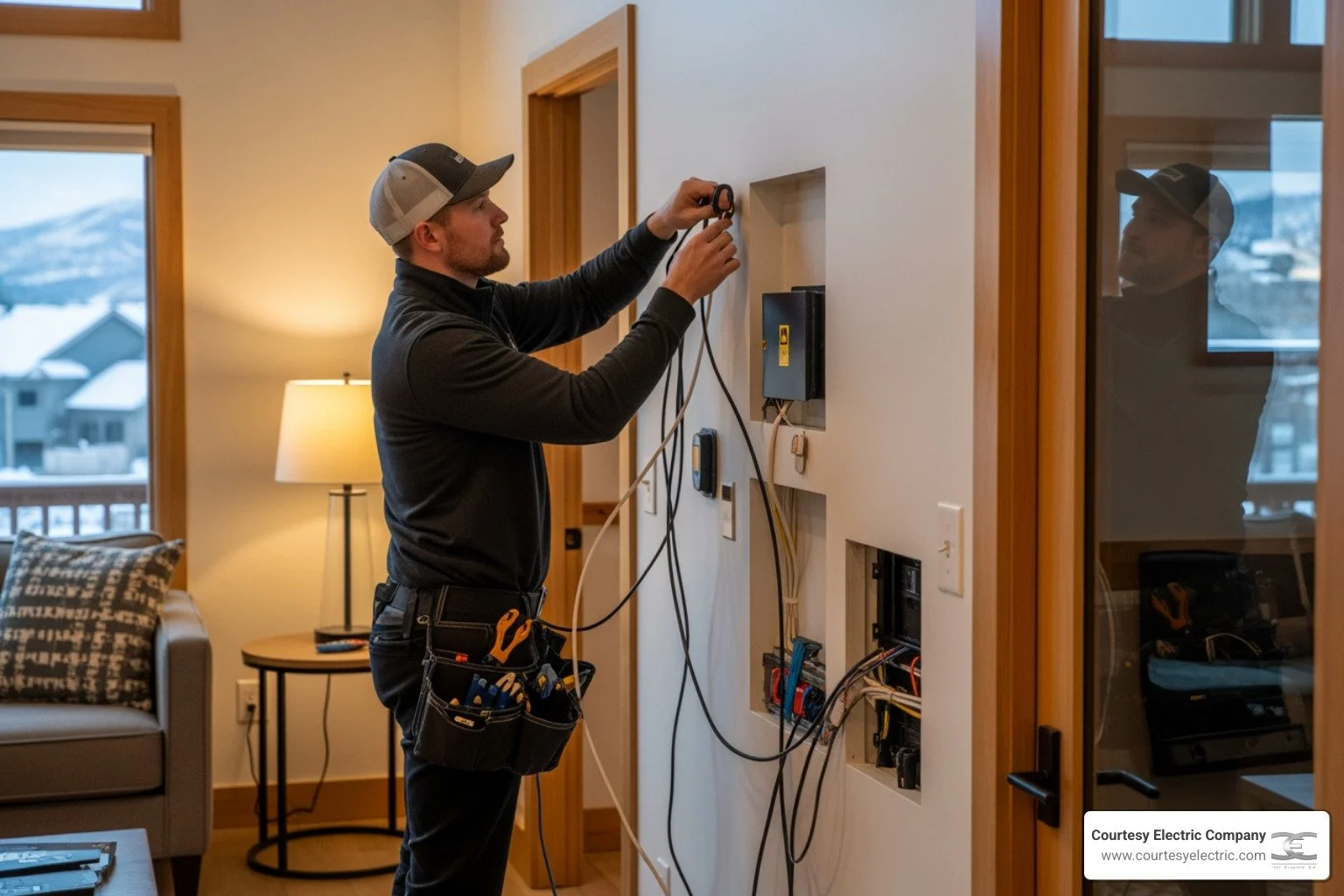
Why Low-Voltage Integration Installation in Granby, CO Is Essential for Modern Mountain Homes
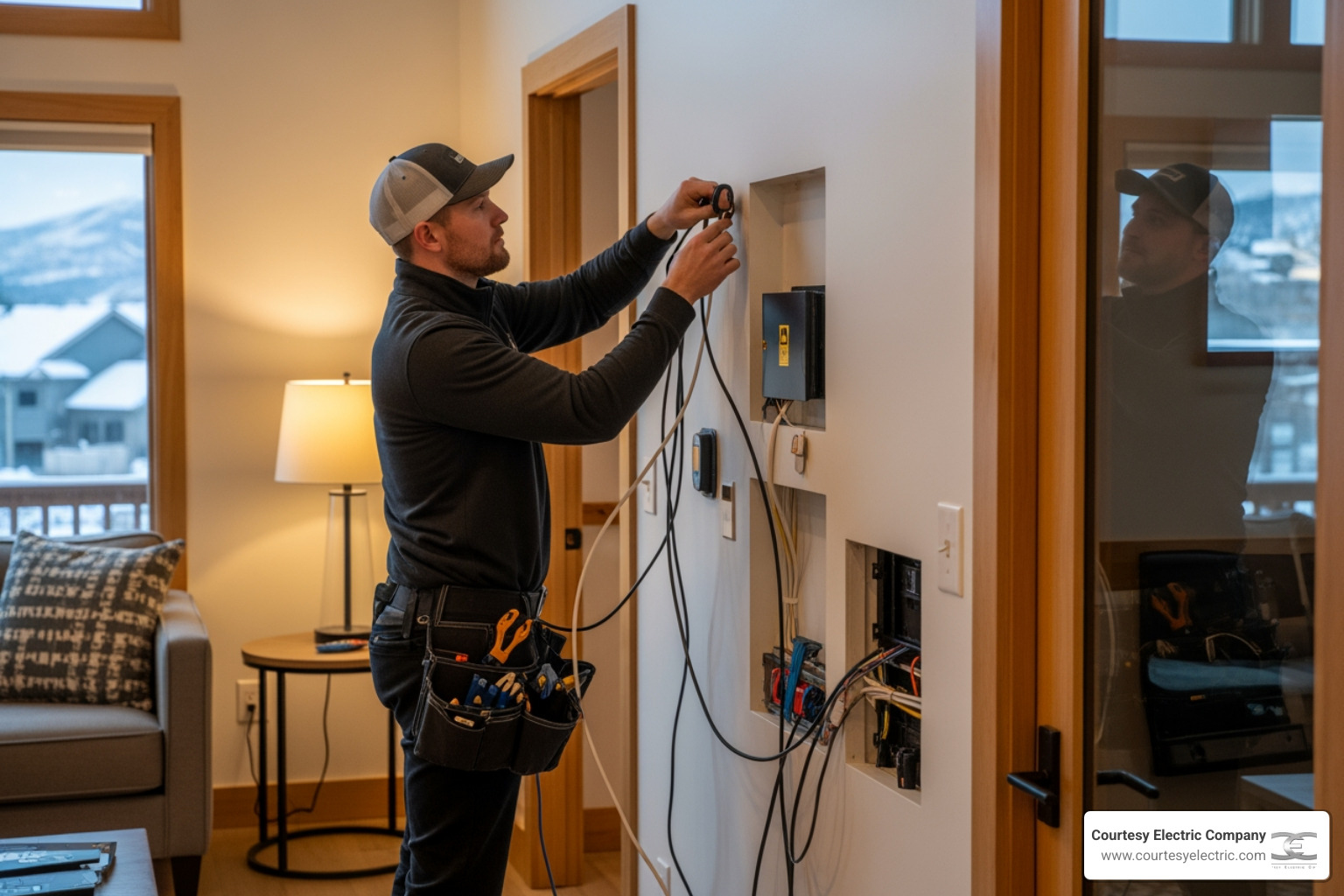
Low-voltage integration installation in Granby, CO covers a broad range of home and business technology systems — all running on 50 volts or less. Here's a quick look at what that includes:
- Audio-video systems – home theaters, distributed speakers, 4K video
- Data and network cabling – structured wiring, fiber optics, Wi-Fi mesh
- Security systems – cameras, smart locks, motion sensors, access control
- Smart home automation – lighting control, climate management, and centralized hubs
- Intercoms and gate controls – whole-property communication
These systems work together behind the scenes — wired quietly through walls and ceilings — to make your home safer, smarter, and more connected. For homeowners near ski areas like Winter Park and Breckenridge, or anyone managing a seasonal property in Grand County, that kind of reliable integration isn't a luxury. It's becoming a practical necessity.
Granby presents some real challenges that don't exist in lower-elevation cities. Harsh winters, remote terrain, signal interference from mountain geography, and aging property infrastructure all make low-voltage installation more complex here than in metro areas. Add in local utility requirements and Grand County building codes, and it's clear that getting this right takes more than just plugging things in.
I'm David Meyer, Vice President of Courtesy Electric, a Colorado electrical contracting company with 50 years of experience powering homes and infrastructure across the state — including the kind of low-voltage integration installation in Granby, CO that modern mountain homeowners depend on. In this guide, I'll walk you through everything from the basics of these systems to what it takes to install and maintain them in Granby's unique environment.
Understanding Low-Voltage Integration Installation in Granby, CO
When we talk about "integration," we aren't just talking about running a few wires for a TV. We are talking about creating a cohesive digital ecosystem where your devices talk to one another. In a place like Granby, where homes are often tucked into valleys or perched on ridges, this infrastructure is the "nervous system" of the property.
True system synergy happens when your Low-Volt Services are planned from the ground up. Instead of having five different apps for five different gadgets, integrated technology uses smart home hubs to centralize control. This residential infrastructure ensures that your Wi-Fi doesn't drop out when you're in the basement and your security cameras don't lose their feed during a blizzard.
Core Components of Low-Voltage Integration Installation in Granby, CO
A comprehensive installation usually touches several "pillars" of home technology:
- Audio-Video Systems: This includes everything from immersive Surround Sound Systems in the living room to hidden speakers on the deck.
- Data Communications: The backbone of the home. We use high-grade Ethernet (Cat6 or Cat6A) to ensure high-speed internet reaches every corner.
- Security and Safety: Modern Home Security integrates smart cameras, glass-break sensors, and smoke detectors that can alert your phone instantly.
- Intercoms and Access: Great for large mountain estates where you need to see who is at the front gate or call the kids for dinner from the other side of the house.
- Climate Control: Smart thermostats integrated into the low-voltage network allow you to pre-heat the house before you drive up from Denver.
Essential Connectivity for Mountain Properties
Granby’s geography is beautiful, but it can be a nightmare for wireless signals. Thick logs, stone fireplaces, and metal roofs — common in Rocky Mountain architecture — act as shields against Wi-Fi.
To combat this, a professional ISP Hookup involves more than just plugging in a provider's modem. We look at network cabling and fiber optics to create a "hardwired" foundation. Using Wi-Fi 6 mesh systems and signal boosters, we can ensure seamless roaming. This is especially vital for remote access; if you are managing a rental near Winter Park from afar, you need to know that your smart locks and cameras are always online.
Navigating Local Requirements and Environmental Challenges
Installing low-voltage systems in Grand County isn't a "wild west" scenario. There are strict building codes and National Electrical Code (NEC) standards that must be met to ensure safety and insurance compliance.
| Feature | Indoor Low-Voltage Wiring | Outdoor Low-Voltage Wiring |
|---|---|---|
| Cable Rating | CL2 or CL3 (General Purpose) | Direct Burial (DB) or UV-Rated |
| Protection | Within wall cavities or J-hooks | Conduit (PVC or Rigid) recommended |
| Moisture Resistance | Standard | High (Gel-filled or Water-block) |
| Temperature Range | Controlled | Extreme (-30°F to 90°F+) |
Following local utility guidelines is also critical. Before any trenching for outdoor lighting or gate controls, calling 811 for utility locates is a non-negotiable step to avoid hitting existing power or gas lines.
Adapting to Granby’s Mountainous Terrain and Climate
Granby’s climate is rugged. With frost lines that can reach deep into the soil and winters that see temperatures plummet well below zero, standard "big box store" wiring won't cut it.
We utilize moisture-rated cabling and specialized insulation designed to withstand extreme temperature fluctuations. For outdoor security or landscape lighting, we ensure that every connection point is sealed against snowmelt and ice. If a cable isn't rated for "cold bend" or UV exposure, the high-altitude sun and freezing nights will crack the jacket within a few seasons.
Technical Standards for Local Power Service
When integrating low-voltage systems with the main power grid, we have to be mindful of power quality. Local utility providers have specific standards to ensure stability. For instance, long secondary service runs can lead to voltage flicker — a quick dip in power that can crash sensitive electronics like servers or high-end AV receivers.
Utility guidelines suggest limiting customer-provided underground service to 300 feet to avoid these drops. We also pay close attention to grounding requirements and meter height (typically 4.5 to 5.5 feet above grade) to ensure that your low-voltage tech isn't fried by a surge during a summer lightning storm.
Enhancing Property Value with Integrated Technology
Investing in low-voltage integration installation in Granby, CO isn't just about fun gadgets; it’s about property value. Today’s buyers expect a home to be "smart-ready."
Energy efficiency is a major driver here. By using Lighting Control, you can ensure lights are never left on in empty rooms. Smart thermostats learn your schedule, lowering the heat when you're out on the slopes and raising it just before you return, significantly cutting down on those high mountain heating bills.
Custom Entertainment and Media Solutions
There is nothing quite like watching a movie in a professionally designed space after a day of hiking or skiing. Home Theaters in Granby, CO are popular because they provide a dedicated escape.
We focus on distributed audio and 4K video distribution, which allows you to start a movie in the theater and finish it in the master bedroom. Acoustic optimization is also key — mountain homes with vaulted ceilings and hard surfaces often have "echo" issues. We use low-voltage integration to balance the sound, ensuring every seat is the best seat in the house.
Advanced Security and Surveillance for Seasonal Homes
For many in Granby, their property is a second home. This makes remote monitoring essential. Integrated security systems allow you to check cameras, adjust smart locks for a guest, or receive an alert if a motion sensor is triggered — all from your phone in Denver or beyond. Given the proximity to Winter Park, these systems offer peace of mind that your investment is protected year-round, even when you aren't there to shovel the walk.
The Installation Process and Long-Term Maintenance
A successful installation follows a proven path:
- Consultation: We sit down to discuss how you live in your home and what technology you actually need.
- System Design: Mapping out every wire, speaker, and sensor.
- Rough-in Wiring: Installing the cables while the walls are open (in new builds) or carefully fishing them through (in remodels).
- Trim-out Phase: Installing the actual devices, faceplates, and hardware.
- Final Programming: Making sure the "brain" of the house works exactly as intended.
Maintaining Low-Voltage Integration Installation in Granby, CO
Maintenance is what keeps a "smart home" from becoming a "frustrating home." In Granby's environment, we recommend:
- Firmware Updates: Keeping your system's software current to patch security holes and add features.
- Hardware Cleaning: Dust and pet dander can clog up server fans and camera lenses.
- Weatherproofing Checks: Inspecting outdoor cameras and sensors every autumn to ensure seals are still tight against the coming snow.
- Annual Safety Inspections: Checking battery backups and surge protectors to ensure they are ready for summer storms.
Scalability and Future-Proofing Your System
Technology moves fast. That’s why we emphasize "headroom" in our structured wiring. By installing high-bandwidth cables today, we ensure your home can handle the 8K video or ultra-fast internet speeds of tomorrow. We also look at smart panel integration, like SPAN panels, which allow you to manage your home's power loads digitally, making it easy to add things like EV chargers or battery storage later on.
Frequently Asked Questions about Granby Low-Voltage Systems
How does the Granby climate affect outdoor low-voltage wiring?
The combination of deep freezes and intense high-altitude UV rays can degrade standard wire jackets. We use direct burial cables and conduit protection to shield the copper from moisture and physical damage. Cold-weather insulation is also vital so the wires don't become brittle and snap when the ground shifts during the spring thaw.
Can low-voltage integration improve my home's energy efficiency?
Absolutely. Through Lighting Control and automated HVAC scheduling, you can eliminate "phantom" energy use. Occupancy sensors can turn off lights in guest rooms that aren't being used, and energy monitoring tools can show you exactly where your power is going in real-time.
What is the difference between low-voltage and standard electrical wiring?
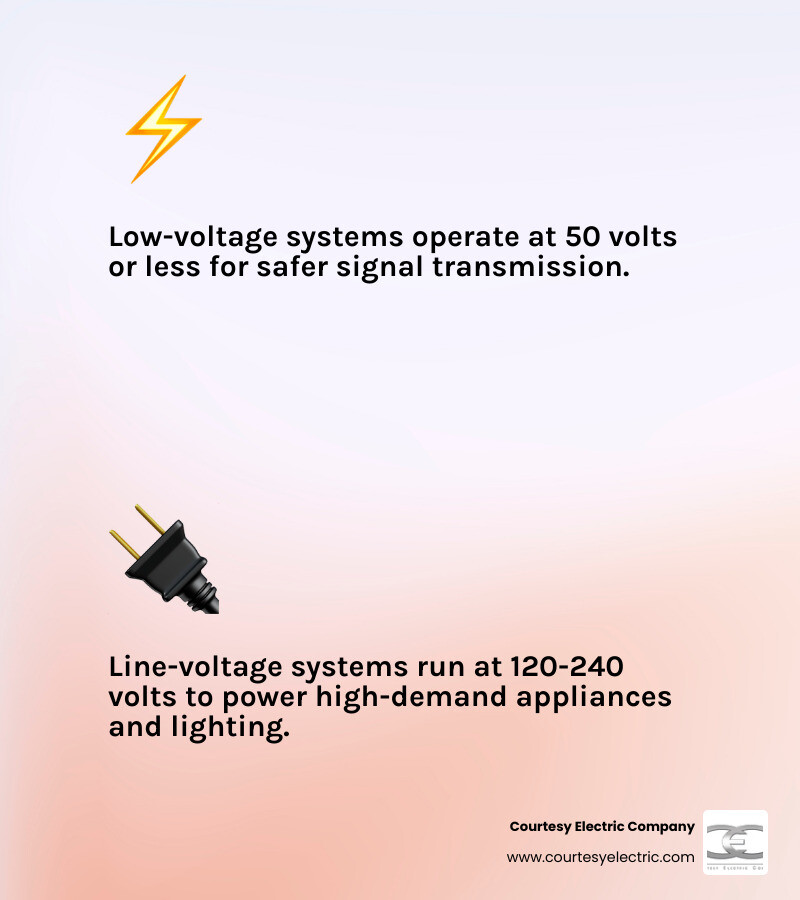
Standard (line-voltage) wiring is what powers your fridge and microwave, typically at 120 or 240 volts. It requires heavy-duty conduit and strict fire-stopping. Low-voltage wiring (50 volts or less) is designed for signal transmission and data. While it is safer to handle, it requires specialized connectors and a different set of skills to ensure data isn't lost or "noisy" due to interference.
Conclusion
At Courtesy Electric Company, we believe that your home should work for you, not the other way around. Whether you are building a new custom retreat or updating a classic mountain cabin, professional low-voltage integration installation in Granby, CO is the key to a modern, comfortable lifestyle.
From the first wire we pull to the final programming of your home theater, our team brings Rocky Mountain reliability and decades of local expertise to every project. If you're ready to see how Granby Low-Voltage Integration can transform your property, we’re here to help you get connected.


